REVIEW · FLORENCE
The Best of Florence Walking Tour in a Small Group
Book on Viator →Operated by All Around Florence · Bookable on Viator
Florence can feel overwhelming fast. This small-group walk is the antidote, with a local guide linking the big sights to the Medici story and the city’s street-level layout. I love the 15-person max (so questions actually get answered) and the whisper system (so you hear every key detail even on crowded corners). You should know it is packed into about 1 hour 45 minutes, so if you want long museum time, this won’t replace that.
What makes it work is the flow: you start in the Medici power zone, pivot to the Duomo complex for the architecture, then finish where Florence really feels like Florence at Ponte Vecchio. Guides like Manuel and Camilla are praised for turning facts into a story, with humor and practical tips about what to notice and where to eat. One caution: most interiors are listed as not included, so you’ll likely do lots of exterior viewing unless you separately plan tickets.
In This Review
- Key highlights before you go
- A small-group Florence walk that gives you bearings fast
- The Medici route: from San Lorenzo to the courtyards of power
- Duomo complex: how to see the dome and campanile as one design
- Piazza della Signoria and Palazzo Vecchio: where art and politics meet
- Ponte Vecchio finish and the Medici afterglow at Pitti
- Value and price: what $59.26 buys you in real terms
- Practical tips for a smoother 12:15 pm walk
- Who this tour is best for
- Should you book the Best of Florence Walking Tour?
- FAQ
- FAQ
- What’s the duration of the Florence walking tour?
- How much does the tour cost?
- How big is the group?
- Is the tour offered in English?
- What’s included in the tour price?
- Are admission tickets included for the stops?
- Where does the tour start?
- What time does the tour start?
- Where does the tour end?
- Are service animals allowed?
- Is there a weather-related backup plan?
Key highlights before you go
- Medici focus without the lecture: you’ll walk the turf of the family that shaped Florence’s culture and clout.
- Duomo complex photo stops with context: dome, Baptistery, and Campanile seen as a single visual system.
- Small group plus whisper system: capped at 15, with headsets so you can keep your attention on the guide, not the noise.
- A smart final finish at Ponte Vecchio: you end at the classic bridge area, handy for continuing your day.
- Guides bring practical street smarts: expect tips on what to watch for and where to grab a meal nearby.
A small-group Florence walk that gives you bearings fast
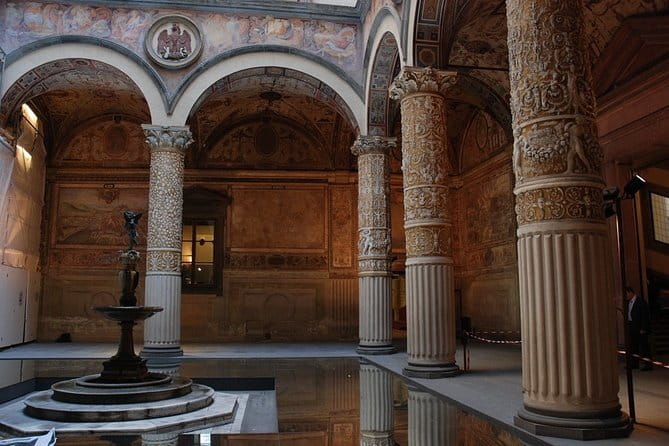
This tour is designed for the first day mindset. You get a guide who narrates the city as you walk, not as a list of monuments. With a start time of 12:15 pm and a total length around 1 hour 45 minutes, it fits neatly between lunch plans and your evening reservations.
The group size is the big deal. With a maximum of 15 travelers, you’re not stuck in a human funnel. You can ask short questions, and the guide can adjust pace. I also like the whisper system, which uses a discreet audio setup so the guide’s voice comes through clearly. On a city day filled with road noise and tour groups, that matters more than it sounds.
You’ll be moving at a comfortable walking pace with multiple short stops. In other words: you don’t get stranded for half an hour outside one entrance, but you also get enough time at each place to understand what you’re looking at.
Possible drawback: it’s an efficient route. That’s good for orientation, but it means you won’t get deep, time-heavy museum sessions here.
You can also read our reviews of more tours and experiences in Florence.
- Tuscany Day Trip from Florence: Siena, San Gimignano, Pisa and Lunch at a Winery
★ 5.0 · 21,634 reviews

The Medici route: from San Lorenzo to the courtyards of power
Florence’s “who mattered” names are everywhere, but this walk gives you a map of the Medici influence. You begin at the Basilica di San Lorenzo, set in the central market area. Even if you only see part of the complex from the outside, the point is clear: this is tied to the burial place of principal Medici figures from Cosimo il Vecchio to Cosimo III. The guide helps you connect that family name to the physical space, not just a chapter in a textbook.
Next comes the Biblioteca Medicea Laurenziana. This is one of those places where architecture is the message. The Medici, through papal patronage associated with Clement VII, helped shape a library meant to signal status beyond commerce. The building is linked with Michelangelo and is often discussed as an example of Mannerism. Even without a long interior visit, you’ll have a clearer sense of what this building was trying to prove.
Then you move to the Cappelle Medicee (Medici Chapels). The tour’s emphasis here is historical purpose. These chapels were added in the 16th and 17th centuries to complement Brunelleschi’s earlier church, and they were meant to celebrate the Medici as patrons and Grand Dukes of Tuscany. You’ll also hear about the Sagrestia Nuova, designed by Michelangelo, which is often where the story gets more specific about artistic ambition and family identity.
The walk continues at Palazzo Medici Riccardi, built for Cosimo de’ Medici between 1444 and 1484. This is a key transition point in the tour: you go from religious spaces and commemorative art to the political, residential, and civic aura of a ruling family’s palace.
What I like about doing this early in the day: when you reach the cathedral area later, you understand the competing forces at play. Florence isn’t just churches and art. It’s power, banking, patronage, and public image—all layered onto the same streets.
If you care about interiors, plan ahead. Several of these sites are listed as admission tickets not included, so you may only see certain areas during the walk. You can still enjoy the architectural storytelling, but you should not assume this includes full museum-style access.
Duomo complex: how to see the dome and campanile as one design
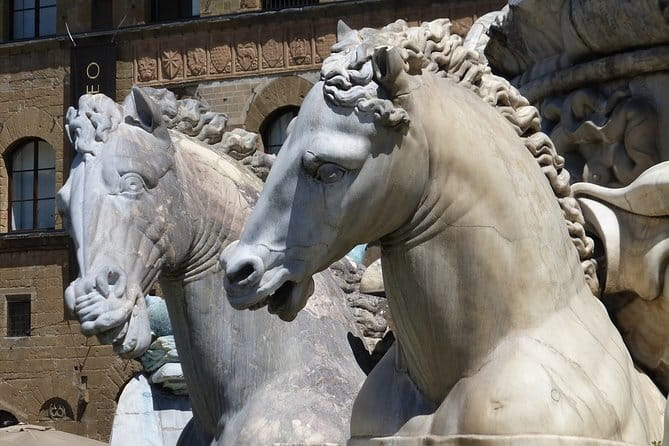
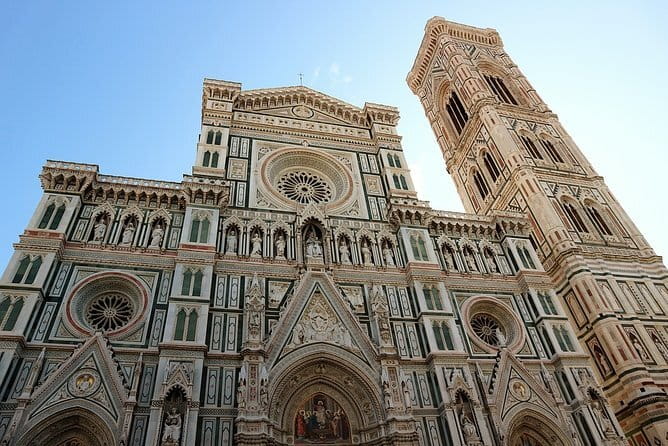
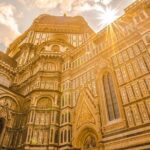
Then the tour pivots to the iconic cathedral zone: Piazza del Duomo and the cluster around it. You’ll stop at the Duomo (Cattedrale di Santa Maria del Fiore), plus the Battistero di San Giovanni and the Campanile di Giotto, and you’ll get specific attention on the Cupola del Brunelleschi.
Here’s what makes these stops valuable on foot: the city’s masterpieces are packed together, and the relationships matter. The Duomo was begun in 1296 in the Gothic style, associated with the design of Arnolfo di Cambio, and the façade is known for its white, green, and pink marble patterning. Standing in the square, you’ll understand that it isn’t one building—it’s a whole visual message carved into space.
The Brunelleschi dome stop is also handled well for first-timers. The dome is described as the largest brick dome ever constructed and as one of the biggest architectural “mysteries” people love to talk about. Even if you don’t climb to views today, the tour gives you enough context to look intelligently: scale, materials, and the daring engineering logic.
Next, the Campanile di Giotto. The focus is on Florentine Gothic showmanship: sculptural decoration and polychrome marble encrustations. Nearby is the Battistero di San Giovanni, constructed between 1059 and 1128 in Florentine Romanesque style. When you see these close together, the changes in design over time stop feeling abstract. You can literally compare styles with your eyes.
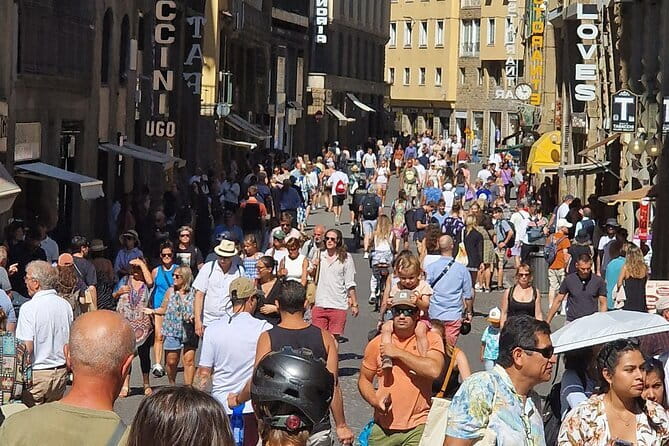
One practical note: Duomo-area crowds can be intense at midday, and this tour runs right through that pulse. The guide’s job is to get you into a good view angle and keep the group moving without losing the story. The whisper system helps you keep up, even when you’re surrounded by the constant shuffle of other tours.
Piazza della Signoria and Palazzo Vecchio: where art and politics meet
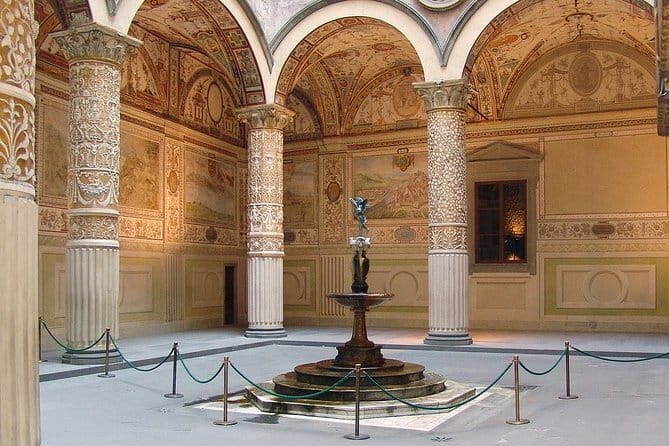
After the cathedral zone, you head to the dramatic open space of Piazza della Signoria—L-shaped and packed with people because it’s right beside both Palazzo Vecchio and the Duomo complex. This is a great moment in the tour because it shifts you from sacred spaces to public life.
You’ll stop at Palazzo Vecchio, the city’s old palace and town hall. The framing here is important: it’s a fortress-palace, meant to project authority. From the square, you’ll also spot the famed Michelangelo’s David statue replica and the statues in the adjacent Loggia dei Lanzi. Even if you don’t go inside, the outside view makes sense of why Florence built its power in stone.
Close by, you’ll reach Gallerie Degli Uffizi. The tour describes the Uffizi complex’s origin: it began in 1560 under Giorgio Vasari for Cosimo I de’ Medici so offices of Florentine magistrates could be housed there. This stop helps you connect the museum building to governance and administration—one of those details that makes the later museum visit feel more grounded.
If you’re the type who wants to go deeper today, you’ll likely still want to book Uffizi separately. Admission is listed as not included, and the tour’s time is focused on orientation rather than full-gallery time.
Ponte Vecchio finish and the Medici afterglow at Pitti
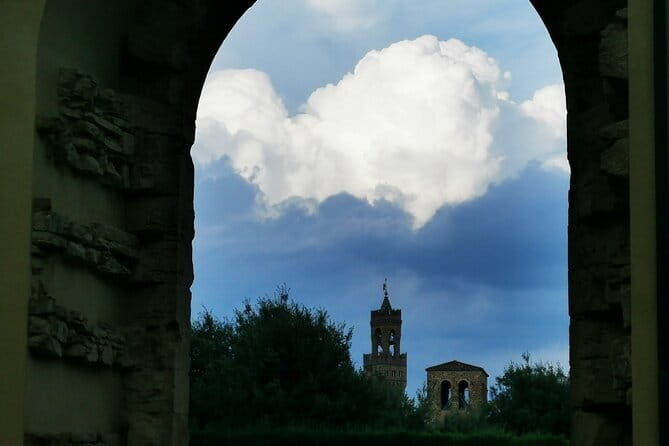
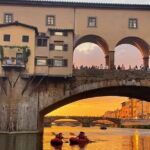
The walk ends in a very Florence way: Ponte Vecchio. This is the oldest bridge over the Arno River, with shops built along it for centuries. The tour explains how those stalls originally served trades like butchers, tanners, and farmers, and how the modern lineup is more jewelry and art dealing. Standing here, you get a feeling for how the city transformed its economy without changing its heart location.
The tour also includes a stop linked to Palazzo Pitti. The palace was bought by the Medici in 1549 and became the chief residence of the ruling families of the Grand Duchy of Tuscany. The idea to understand is scale: later generations turned it into a kind of treasure house, collecting paintings, jewelry, and luxury possessions. That Medici arc doesn’t end at San Lorenzo. It keeps expanding into residences and collections.
Why I like ending at Ponte Vecchio: you leave with a natural place to wander next. If you’re hungry, you’re close to the classic areas where you can choose from lots of options. If you’re a photo person, you’ll also get one of the best “last looks” over the river without needing extra transport.
- The Best tour in Florence: Renaissance & Medici Tales – guided by a STORYTELLER
★ 5.0 · 12,316 reviews


Value and price: what $59.26 buys you in real terms
The price is $59.26 per person for about 1 hour 45 minutes, in English, with a licensed guide, a small group, and the whisper system. On paper, that can look like a lot compared with a self-guided stroll. In practice, it changes your day because you’re not spending your time figuring out what things mean.
Here’s the value math I use:
- You’re paying for a guide to connect Medici patronage, architecture, and city layout.
- You’re paying for time efficiency, especially in the Duomo and Signoria areas where getting lost costs minutes.
- You’re paying for comfort through headsets and a group size that allows interaction.
What’s not included is key: several stops list admission tickets as not included. That means the tour is great for learning and orienting, but it is not designed to replace paid entry tickets at every site. If you want to go inside multiple buildings the same day, you’ll need a separate ticket strategy.
Also, tips and gratuities are not included (optional). I treat that as normal for guided experiences, and I budget for it.
Practical tips for a smoother 12:15 pm walk
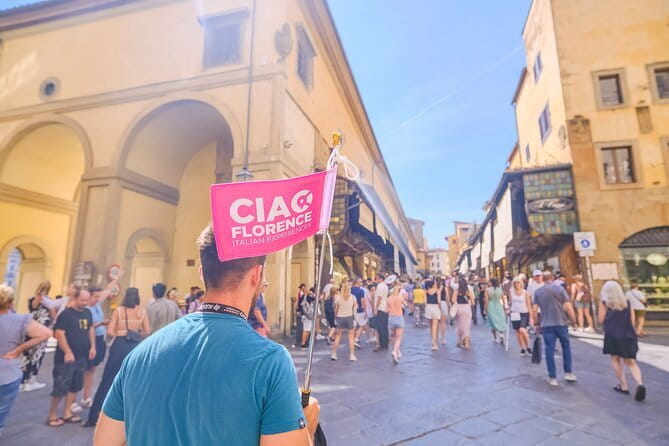
This tour is set for midday, which can mean sun and glare. I suggest you do three simple things:
- Bring water, even if you plan to buy one when you arrive.
- Wear shoes that handle stone streets and short sudden changes in sidewalk height.
- If you get heat-sensitive, ask the guide for shade breaks when you can; several guides are known for managing comfort during stops.
Ticket mindset: because admission isn’t included for many sites on the route, set your expectations accordingly. You’ll get what you paid for—the guided seeing—plus strong cues on where to go next if you want interiors later.
One more practical advantage: the meeting point is by Caffè Scudieri Firenze at Piazza di San Giovanni, 19R, and the tour ends around Ponte Vecchio. That’s a convenient arc if your day includes Duomo-area sights and then a river-walk finish.
Who this tour is best for
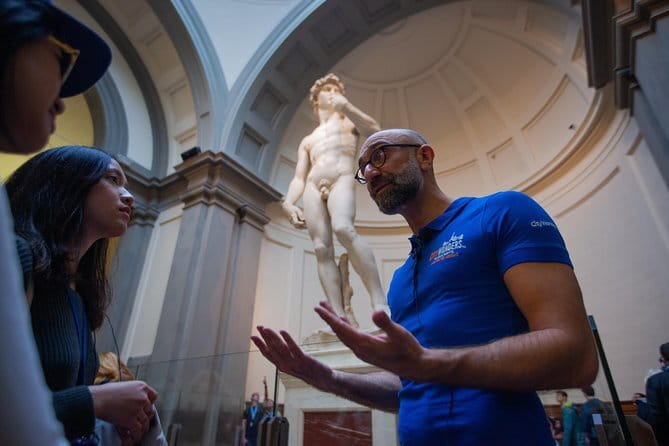
This one is ideal if:
- You’re in Florence for the first time and want the city’s main stories lined up in the right order.
- You prefer walking with guidance over reading in a guidebook.
- You want practical dining and sightseeing suggestions along the way, not just monument talk.
It also works well if you’re traveling with children or want the guide to keep energy up. Guides are praised for humor and for adjusting to the group, including families.
Consider skipping or adding another plan if:
- You only want museum interiors and long stays inside major sites.
- You’re trying to pack multiple ticketed attractions back-to-back on the same day without breathing room.
Should you book the Best of Florence Walking Tour?
I’d book it if you want a smart introduction that helps the rest of your Florence day make sense. The combination of small group size, clear audio, and a route built around the Medici and the Duomo complex is exactly what you want when you land and need bearings fast.
I’d think twice only if your priority is guaranteed entry into multiple interiors during the same 1 hour 45 minutes. This tour is built for seeing, understanding, and moving, not for full museum time.
If your schedule is flexible, the weather note matters too. It requires good weather, and if it’s canceled for that reason, you’ll be offered another date or a refund.
FAQ
FAQ
What’s the duration of the Florence walking tour?
The tour lasts about 1 hour 45 minutes.
How much does the tour cost?
The price is $59.26 per person.
How big is the group?
The group is capped at a maximum of 15 travelers.
Is the tour offered in English?
Yes, it’s offered in English.
What’s included in the tour price?
Included items are a licensed tour guide, small group, and a whisper system. You also get a mobile ticket.
Are admission tickets included for the stops?
Admission tickets are listed as not included for many stops. One Duomo complex stop is listed as free, but you should plan on separate tickets if you want to go inside certain buildings.
Where does the tour start?
It starts at Caffè Scudieri Firenze, Piazza di San Giovanni, 19R, 50123 Firenze FI, Italy.
What time does the tour start?
The listed start time is 12:15 pm.
Where does the tour end?
The endpoint is Ponte Vecchio, in the area of 50125 Firenze FI, Italy (the exact spot may vary slightly).
Are service animals allowed?
Yes, service animals are allowed.
Is there a weather-related backup plan?
Yes. If the tour is canceled due to poor weather, you’ll be offered a different date or a full refund.
You Might Also Enjoy
More Tour Reviews in Florence
- Tuscany Day Trip from Florence: Siena, San Gimignano, Pisa and Lunch at a Winery
★ 5.0 · 21,634 reviews - The Best tour in Florence: Renaissance & Medici Tales – guided by a STORYTELLER
★ 5.0 · 12,316 reviews