REVIEW · ROME
Appian Way Aqueducts Bike Tour (Catacombs & Lunch Option)
Book on Viator →Operated by Roma STARBIKE · Bookable on Viator
Trade traffic for ancient roads. This Appian Way Aqueducts e-bike tour takes you out of the city bustle and into the green lanes around the Parco della Caffarella, past aqueduct giants and Roman monuments you rarely see this close.
I love how the tour stays small (max 12), so you get real help at the start and more time at the stops instead of constant rushing. My other favorite: you ride a route that mixes big-ticket ruins with quieter park sections, so the day feels like you are seeing different Rome, not just repeating the same sights.
One real consideration: this is not a casual pedal. Even with electric assist, you’ll handle Roman traffic at the beginning and then deal with cobblestones and some dirt sections, so it helps a lot if you ride bikes confidently.
In This Review
- Key highlights at a glance
- Meeting at Roma Starbike and getting rolling fast
- Porta San Sebastiano: the southern gate where Via Appia begins
- Into Parco della Caffarella: Rome’s green escape
- Via Appia Antica: Regina Viarum and why the road still matters
- Aqueducts and Roman water power (and why this tour is built around it)
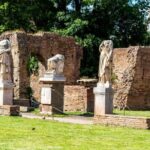
- Egeria, Cecilia Metella, and the ruins that tell stories
- Ninfeo di Egeria
- Mausoleo di Cecilia Metella and Castrum Caetani
- The 5-hour option: Catacombs of San Callisto plus lunch and aperitivo
- Circus of Maxentius and Baths of Caracalla: finishing with big Roman scale
- Circus of Maxentius
- Baths of Caracalla
- How hard is the ride really? (terrain, timing, and comfort)
- E-bikes, group size, and the guides who keep things safe
- Value: is $78.60 a good deal for what you get?
- Who should book (and who should consider skipping)?
- Should you book the Appian Way Aqueducts bike tour?
- FAQ
- How long is the Appian Way Aqueducts e-bike tour?
- What is included in the 4-hour vs 5-hour versions?
- Where do I meet for the tour?
- Is the tour offered in English and do I get a mobile ticket?
- Do I need to know how to ride a bike?
- What’s the group size?
- Are there weight and child limits?
- What’s the cancellation policy?
Key highlights at a glance
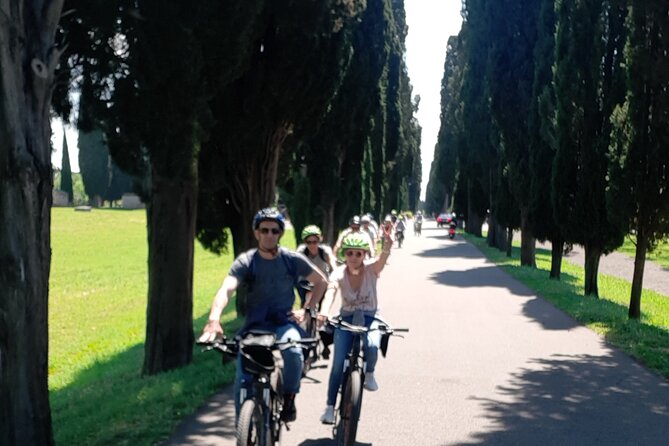
- E-bikes that actually help on hills and long stretches, with a helmet and phone/handlebar holder included
- Small-group feel (up to 12), with frequent stops for context and photos
- Porta San Sebastiano into quiet parks, including the Parco della Caffarella area
- Aqueduct park immersion, where Roman water engineering is still visible
- Catacombs option on the 5-hour tour, plus included lunch and an afternoon aperitivo
- Finishes on major ruins like the Circus of Maxentius and the Baths of Caracalla
Meeting at Roma Starbike and getting rolling fast
The tour meets at Roma STARBIKE (Via dei SS. Quattro, 58, 00184 Roma RM), and it ends back at the same spot. Expect a quick, practical setup: helmet on, e-bike fitted, and then a short ride through the central streets before you reach the ancient walls and start moving into the greener side of town.
This part matters more than you might think. Several riders note the start can feel like a lot, mainly because you are mixing bike riding with city movement and decision-making. The good news is that the operation is built for it: you get fitted, you get instructions, and the group stays controlled so nobody gets left behind.
Also worth knowing: the e-bikes include a mobile phone holder and handlebar holder, which is handy for navigation and photos without juggling your gear.
You can also read our reviews of more tours and experiences in Rome.

Porta San Sebastiano: the southern gate where Via Appia begins
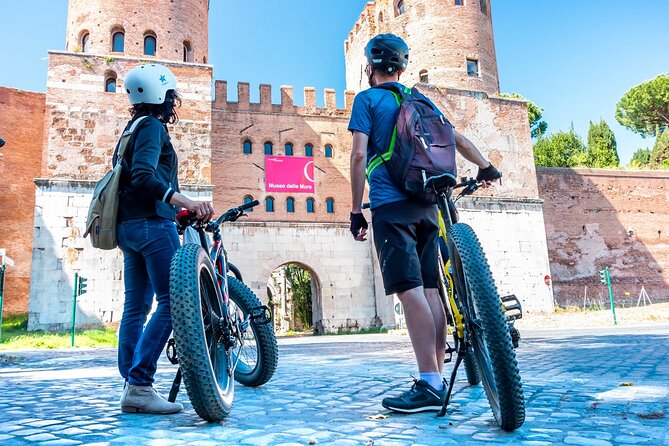
Right away you reach Porta San Sebastiano, a major southern gateway in Rome. It is tied to the Aurelian Walls (built around 275 AD) and it marks the beginning of the historic Via Appia Antica.
What I like about starting here is that it gives you a clear mental picture. You are not just biking for views—you are moving from one layer of Rome into the next. You’ll also see medieval graffiti, which adds a human note to the stones that otherwise look untouchable. It is the kind of detail that makes the ruins feel less like a museum display and more like something people have been walking past for centuries.
The stop is short, about 15 minutes, so the guide uses the time to set context and get you ready for the longer stretch ahead.
Into Parco della Caffarella: Rome’s green escape
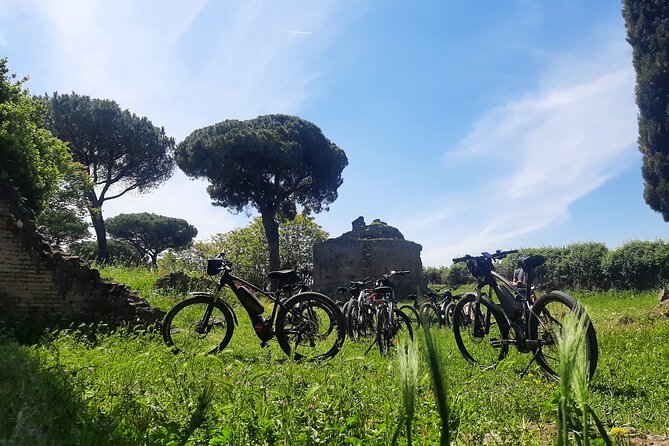
After Porta San Sebastiano, the ride leads into Parco della Caffarella, a large park area inside the Appia Antica Regional Park. This is where the whole experience shifts. The streets calm down, the pace feels more relaxed, and suddenly you are biking through a landscape that feels like it belongs outside a big city.
You get a feeling for how the Appian region functions as both history and daily outdoor space. The park is tied to ancient remains, paths, and groves, so you’re not just coasting—you’re passing meaningful structures while still feeling the “escape Rome” effect.
This is also a good time for photos, because the route tends to open up and you can see ruins set against greenery rather than squeezed between buildings.
Via Appia Antica: Regina Viarum and why the road still matters
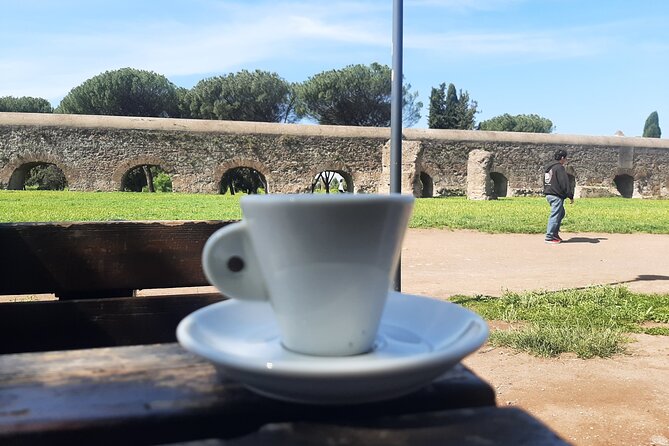
The Appian Way section is the heart of the tour. This road is often called Regina Viarum (the queen of roads), and the guide usually connects the dots between Roman ambition and real-world engineering.
The story you’ll hear here includes:
- The road’s origins in the 4th century BC, connected to Appius Claudius the Blind
- How it started as a military logistics route and later stretched far beyond Rome
- The bigger point: Rome didn’t just build monuments—they built systems that moved people and power
Even if you’ve read about the Appian Way before, this part feels different on a bike. You are traveling along the same corridor where the scale is long and straight, so you get a sense of distance and purpose that walking tours often compress.
Aqueducts and Roman water power (and why this tour is built around it)
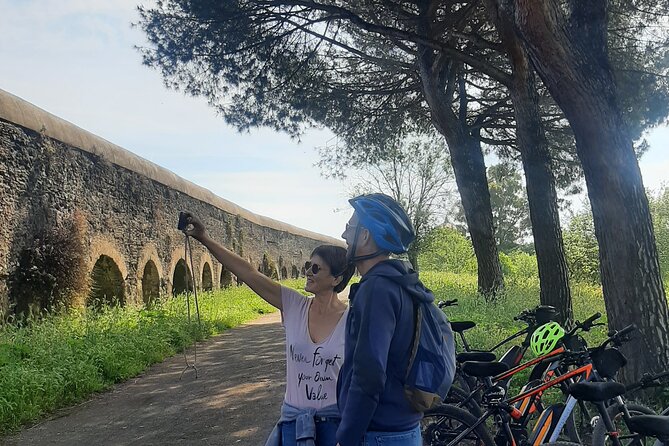
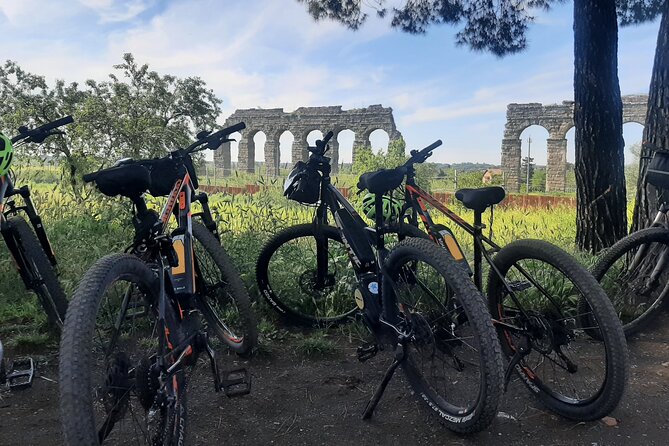
One of the most praised parts of this experience is the aqueduct scenery. You’ll pass through the Parco degli Acquedotti area inside the Appia Antica Archaeological Park, where you can see major Roman water infrastructure still standing in remarkable sections.
The whole point of this stop is that it turns “Roman aqueducts” from a trivia item into something you can visually track: water traveled here, the engineering made it work, and the remains still show the logic of Roman design. You’re also riding through a broad green corridor (not just a single ruin), which helps the aqueducts feel like part of a system rather than isolated monuments.
On the longer, 5-hour option, the aqueduct area also becomes your lunch moment (more on that next). On the 4-hour version, you still get the key aqueduct park passage, just without the extended food and catacombs time.

Egeria, Cecilia Metella, and the ruins that tell stories
Between the aqueduct stops, the route includes several stops that feel like chapters in a single book.
Ninfeo di Egeria
This is a sacred spot connected to the love story between nymph Egeria and Numa Pompilius, the second king of Rome. The tradition says Egeria grieved after her beloved’s death, and that grief connects to a spring. It’s a small stop (about 20 minutes), but it gives you a mythic layer—Rome isn’t only stone; it’s also stories attached to water and places.
Mausoleo di Cecilia Metella and Castrum Caetani
This part is about the scale and preservation. The Mausoleo di Cecilia Metella dates to the 1st century BC and remains one of the best preserved mausoleums along this route. You’ll also see the medieval Castring/Castra area elements around it and the remains connected to the wealthy Caetani family and the church of San Nicola (only the perimeter walls remain).
These stops are short (about 20 minutes each), so the guide tends to focus on what you can actually see and what it likely meant for the people who built it.
The 5-hour option: Catacombs of San Callisto plus lunch and aperitivo
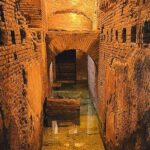
If you choose the 5-hour tour, you add a guided visit to the Catacombe di San Callisto (often linked to St. Callixtus). This is the largest underground cemetery in Rome, with corridors that stretch about 20 km, and it is associated with early Christian burial traditions, including accounts of martyrs, popes, and large numbers of Christians.
This stop is 50 minutes, and that time tends to make the tour feel like it goes deeper. It’s darker, quieter, and very different from the outdoor aqueduct parks. If you want Rome to feel varied—ancient road, countryside ruins, and then the underground world—this is the version to pick.
The 5-hour option also includes:
- Lunch during the aqueduct-park section (labeled as lunch as part of the stop plan)
- An afternoon aperitivo later
A practical note: the lunch is included, and the day’s structure usually means it arrives after you’ve already ridden for a while. If you want energy earlier, plan to eat before you meet the guide.
Circus of Maxentius and Baths of Caracalla: finishing with big Roman scale
After the park sections, the tour returns toward massive Roman landmarks inside the ancient context of Rome.
Circus of Maxentius
You’ll stop at the Circus of Maxentius, described as one of the best-preserved Roman circuses still surviving. The guide points out the spina still visible and shares what happened to monuments tied to it—like the Agonale obelisk being moved during the Renaissance to Piazza Navona, where it ended up part of the Fountain of the Four Rivers.
This stop feels like the payoff for seeing Rome as entertainment and power, not just water systems and tombs.
Baths of Caracalla
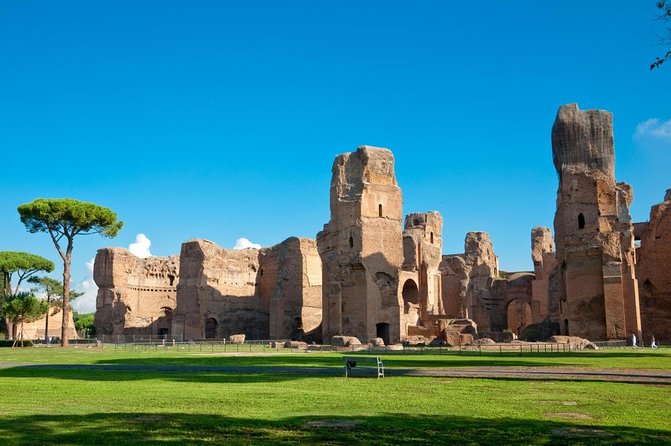
Then you reach the Baths of Caracalla, built under the emperor of the same name. The structure is largely preserved, and the route connects the baths to aqueduct supply: water came via a branch of the Aqua Marcia through the Antoninian aqueduct.
The stop is relatively short (about 15 minutes), but it’s impressive because you get that sense of scale quickly. You’ll also see small remains connected to the water system near earlier areas like Porta San Sebastiano.
How hard is the ride really? (terrain, timing, and comfort)
Even with electric assist, this is a long ride. The basic reason is simple: the route covers several hours of cycling, and Rome’s surfaces are rarely smooth.
Expect mixed terrain:
- Some city riding at the start
- Then paths in and around parks
- Cobblestones and rougher patches
- Some dirt trail segments in the broader route area
In practice, you’ll feel it most in your legs and seat after enough time on the bike, especially if you are not used to riding. A few riders also mention seats can feel less forgiving on longer stretches—so consider that if you’re sensitive to saddle time.
Also, you’ll want to be comfortable steering and braking smoothly. The e-bikes make hills more manageable, but you still need bike control in crowds of cyclists or pedestrians on shared paths, and the cobbles can be bumpy.
If you haven’t ridden in a while, choose your level carefully. The tour data is clear that you must know how to ride a bike well, and your physical fitness should be at least moderate.
E-bikes, group size, and the guides who keep things safe
The e-bike package is more than a nice-to-have. The bikes are electric-assisted, and you get included safety and comfort items: helmet, plus phone/handlebar holders. Child equipment is also offered, including a child seat up to 25 kg, and a specific rule for children aged 6–10: they can ride only if they are under 143 cm (because the setup uses a trailer bike, not a normal saddle bike).
Group size stays small, up to 12, which is a big deal on a route that mixes tight turns, parked cars near street sections, and then open park paths.
Guides are consistently described as patient and focused on instructions. Names like Iman, Ava, Alex, Lorenzo, Paolo, Ricardo, and Chris show up in positive experiences, and the common thread is clear: they don’t just recite facts—they manage the group’s movement so you can actually enjoy the ride.
Value: is $78.60 a good deal for what you get?
At $78.60 per person, this tour has a straightforward value equation: you’re paying for time-saving logistics (bikes, helmets, setup), a guided route across multiple standout archaeological areas, and a planned structure that includes major stops without forcing you to piece together transportation.
What makes the price feel fair is that:
- You get the e-bike included
- You get a small-group guided experience
- You see more than one “Rome theme” in a single outing: gates/roads, aqueduct park engineering, tomb and myth stops, and large public ruins
If you choose the 5-hour version, the added catacombs visit plus lunch and an afternoon aperitivo adds real value. The 4-hour version is simpler, but it still focuses on the Appian corridor and the aqueduct park essence.
Who should book (and who should consider skipping)?
This tour is a strong match if you:
- Like biking and want a break from foot-only sightseeing
- Want Rome’s quieter, green side without giving up serious ancient monuments
- Enjoy guided storytelling tied to what you see, not just stand-and-stare history
It may be a tough fit if you:
- Are not comfortable riding a bike in mixed surfaces or city conditions
- Want an easy, flat, fully predictable route the entire time
- Have trouble with longer saddle time and bumpy cobblestones
If you are traveling with kids, double-check height rules for the child discount/setup and remember you need a bike experience that works with the child equipment style.
Should you book the Appian Way Aqueducts bike tour?
Yes, if your ideal Rome day includes outdoor space, ancient engineering, and a route that feels like a real journey instead of a checklist. Pick the 5-hour version if catacombs and included lunch/aperitivo matter to you, and choose the 4-hour version if you want a shorter ride with the aqueduct and road core intact.
My advice: go into it thinking like a cyclist for half a day. If you’re ready for cobblestones, some dirt, and a bike that asks you to pay attention, this is one of the better ways to see Rome beyond the city-center crowd lines.
FAQ
How long is the Appian Way Aqueducts e-bike tour?
It runs about 4 to 5 hours, depending on the option you book.
What is included in the 4-hour vs 5-hour versions?
The 4-hour tour includes the e-bike tour with the main outdoor stops. The 5-hour tour includes a guided visit to the Catacombs of San Callisto, plus lunch and an afternoon aperitivo.
Where do I meet for the tour?
Meet at Roma STARBIKE – Rome eBike Tours & Experiences, Via dei SS. Quattro, 58, 00184 Roma RM, Italy. The tour ends back at the same meeting point.
Is the tour offered in English and do I get a mobile ticket?
Yes. The tour is offered in English, and you receive a mobile ticket.
Do I need to know how to ride a bike?
Yes. You must know how to ride a bike well. The tour also lists a moderate physical fitness level requirement.
What’s the group size?
This activity has a maximum of 12 travelers, keeping it small-group.
Are there weight and child limits?
The tour lists a maximum weight of 120 KG (265 pounds). Child options include a child seat up to 25 kg, and a 6–10 child reduction applies only if the child is under 4/7 feet (143 cm) because a trailer bike is used.
What’s the cancellation policy?
You get free cancellation up to 24 hours in advance for a full refund. The experience also requires good weather; if it’s canceled due to poor weather, you’ll be offered another date or a full refund.