REVIEW · FLORENCE
The Other Side of Florence Food Tour with Eating Europe
Book on Viator →Operated by Florence Food Tours by Eating Europe · Bookable on Viator
Florence has two faces: postcard Duomo lanes and the grittier, food-first streets locals actually use. This tour takes you to that second side, mixing Oltrarno neighborhood stops with tastings that make the city feel edible. I especially like the way the route is built around everyday institutions—an alimentari, a pasticceria, a street-food counter, and a classic fiaschetteria—so you get variety without the tourist-brochure fluff.
My other big plus is the focus on specific Tuscan signatures you can’t fake at home, like cantucci and lampredotto, plus a proper sit-down tasting style moment with Tuscan dishes and Chianti. The one consideration: if you have severe or life-threatening food allergies, this experience isn’t suitable, and the tastings can vary by day or season.
In This Review
- Key points before you go
- Oltrarno instead of the obvious Florence postcard route
- Price and value: what $113.72 buys you in about 3 hours
- The walking route: start near Porta-area history, end at Santo Spirito
- Stop 1 at Formaggi E Salumi Sandro & Ivana: pecorino and finocchiona basics
- Pasticceria Buonamici: cantucci, millefoglie, and a bakery with a stubborn past
- Seeing Porta San Frediano: medieval walls as a food-tour “instruction manual”
- Da Simone street food and lampredotto: yes, cow stomach, but worth trying
- Wine windows: tasting culture through tiny openings in old buildings
- Fiaschetteria Fantappié in Oltrarno: cucina povera and Chianti through a wine window
- Santo Spirito gelato at La Sorbettiera: how to spot truly artisanal gelato
- The guide experience: Chiara and Elisa’s storytelling style is part of the deal
- Practical tips so you enjoy every stop
- Who this Florence food tour is best for
- Should you book the Other Side of Florence Food Tour?
- FAQ
- How long is The Other Side of Florence Food Tour?
- Where does the tour start and end?
- What’s included in the price?
- Is the tour in English?
- What’s the group size?
- Can the tour accommodate dietary requirements?
- Are children allowed?
- How do drinks work if I want more than what’s included?
- What’s the cancellation policy?
Key points before you go
- Small-group pace (max 12) keeps the tour from feeling like a conveyor belt
- Oltrarno focus means you’ll spend real time away from the busiest central streets
- Tasting variety covers cheese, salumi, sweets, street food, wine, and gelato
- Food + place stories include things like medieval walls and Florence wine windows
- Guide style matters: several guides (like Chiara and Elisa) are highlighted for storytelling and friendliness
Oltrarno instead of the obvious Florence postcard route
A lot of Florence food tours promise authenticity. This one does something more practical: it steers you toward the Oltrarno side of town and keeps the walking grounded in real neighborhood rhythm. You’ll start near Piazza Nazario Sauro and end at Piazza Santo Spirito, so the day naturally flows from “here’s Florence” to “here’s how people actually eat and drink.”
You also get a good mix of Florence traditions that don’t rely on museum tickets or long museum lines. The tour leans on small food shops and food windows—places you’d likely miss if you only planned around big monuments. That matters because Florence isn’t just about sight-seeing. It’s about daily habits.
One other thing I appreciate: the tour doesn’t act like every bite is trendy. It treats food as culture—how neighborhoods recover from floods and wars, how families keep recipes alive, and how street food earned its place.
You can also read our reviews of more tours and experiences in Florence.
- Tuscany Day Trip from Florence: Siena, San Gimignano, Pisa and Lunch at a Winery
★ 5.0 · 21,634 reviews

Price and value: what $113.72 buys you in about 3 hours
At $113.72 per person for roughly a 3-hour walking tour, this sits in the “pay for convenience and guidance” category. You’re paying for someone to connect the dots: where to go, what to taste, and what each item means locally.
What makes it feel like value is the number of meaningful stops and the fact that tastings aren’t just decorative. You’re looking at multiple food moments: pecorino and salami from a traditional alimentari, cantucci and other baked goods in a long-running pasticceria, lampredotto from a local street stand, Tuscan dishes with wine at a historic fiaschetteria, and gelato from an award-winning shop. Plus, you get local English-speaking guidance and Food & the City insider tips.
Two practical notes for planning:
- This tour is often booked well ahead (on average about 61 days), so if your dates are fixed, don’t wait until the last minute.
- There’s no hotel pick-up, so you’ll want to be ready to meet the group at Piazza Nazario Sauro and walk your way through.
The walking route: start near Porta-area history, end at Santo Spirito
The tour begins at Piazza Nazario Sauro and ends at Piazza Santo Spirito. That matters because you finish in a lively area where you can keep the evening going on foot, instead of getting dropped in the middle of nowhere.
Along the way, the itinerary uses a smart mix of food stops and “what you’re looking at” moments. You don’t spend all your energy scanning menus; you learn what specific structures were built for. For example, you’ll see Porta San Frediano, a historic gate tied to Florence’s medieval walls (dating to 1333). It’s brief, but it gives you context for why the city looks the way it does—and why food and street life were so tied to neighborhood design.
You’ll also pass by or spend time with the wine windows—small openings in historic buildings used to serve wine directly to locals. It’s the kind of detail that makes Florence feel less like a theme park and more like a lived-in city with centuries of routines.
Stop 1 at Formaggi E Salumi Sandro & Ivana: pecorino and finocchiona basics
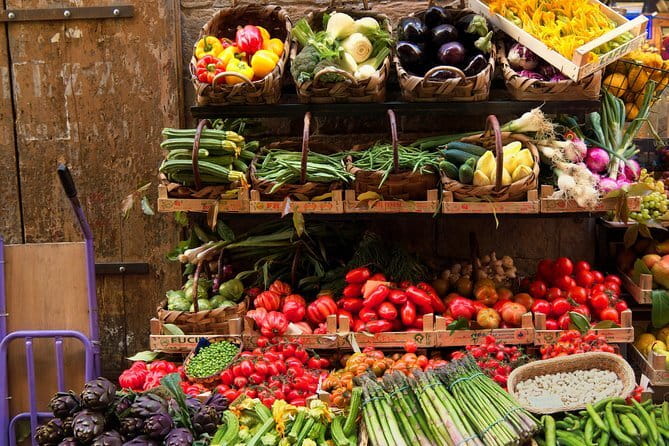
Your first big flavor hit is at Formaggi E Salumi Sandro & Ivana, a traditional alimentari. This is where you get your Tuscan foundation. You’ll taste two varieties of pecorino cheese and finocchiona, a fennel-infused salami that’s an iconic regional pairing.
Why this works: tasting begins with ingredients, not sugar or bread. Pecorino and cured meats force you to pay attention to salt level, texture, and the herbal note from fennel. That makes later stops—where sweets and wine show up—feel like a real progression instead of a random collection.
Time is tight here (about 20 minutes), so don’t expect a slow culinary lecture. But you’ll come away with enough practical understanding to order confidently later. Think of it as your “Tuscan cheese and salumi reading lesson,” delivered through a real local shop.
Pasticceria Buonamici: cantucci, millefoglie, and a bakery with a stubborn past
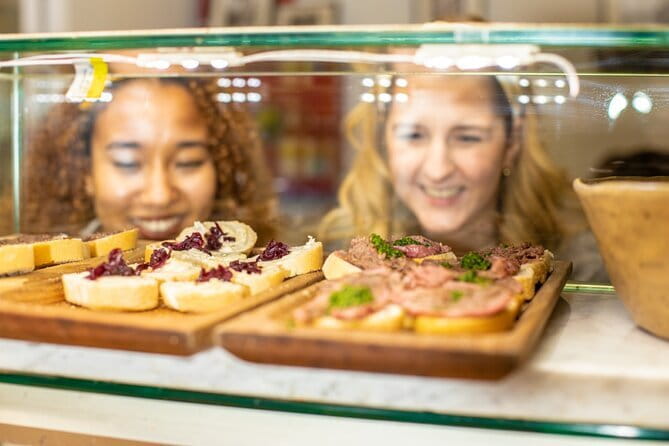
Next up is Pasticceria Buonamici, a historic pasticceria now run by the third generation. It’s the kind of place that has lasted through serious disruptions—floods, wars, and pandemics—so it feels less like a “heritage photo stop” and more like a neighborhood institution that learned how to keep going.
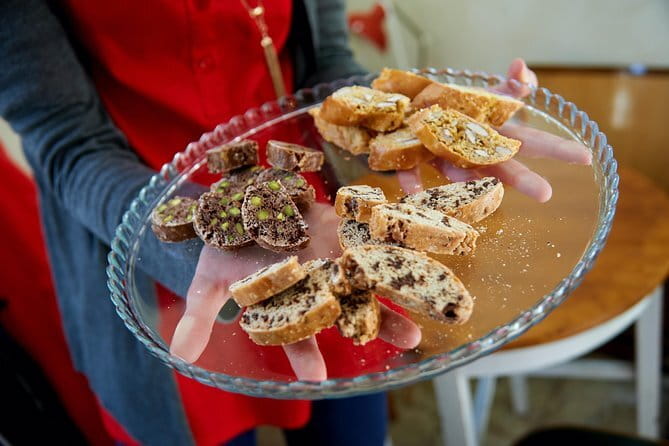
You’ll taste cantucci biscotti (the cookie that earns its own category), plus millefoglie—a delicate layered cake—and you’ll get a freshly brewed coffee or cappuccino. Even if you’ve had cantucci before, tasting them here helps you understand how they fit into daily Tuscan coffee culture: crisp, sturdy, and made for dipping or pairing rather than melting away.
A small warning in your planning brain: because this is a busy neighborhood bakery experience, it’s still a walking tour pace. You’ll enjoy the bites, but you won’t linger for a long sit-down dessert ritual.
- The Best tour in Florence: Renaissance & Medici Tales – guided by a STORYTELLER
★ 5.0 · 12,316 reviews
Seeing Porta San Frediano: medieval walls as a food-tour “instruction manual”
Between food stops, you’ll pause to see Porta San Frediano, part of Florence’s medieval wall system. The tour dates this gate to 1333, which sounds like a trivia fact until you connect it to daily movement—who could enter, where neighborhoods formed, and why streets became the stage for markets and food.
This stop is short, but it supports the bigger theme of the tour: food isn’t floating in time. It lives in real streets shaped by real boundaries. If you like walking tours that explain what you’re actually looking at, this kind of stop is the right balance of history and usefulness.
Da Simone street food and lampredotto: yes, cow stomach, but worth trying
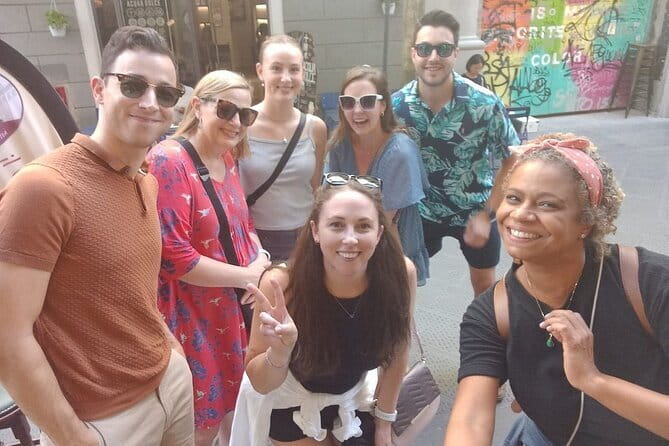
Next you’ll stop at Da Simone, a local Florence street food stand. This is where the tour gets brave in a good way: you’ll try lampredotto, a classic panino made from cow stomach.
I get why this is intimidating on paper. But this is also why it’s valuable. Florence street food has rules and flavors that don’t match foreign expectations. Lampredotto is seasoned and served in a way that turns a weird-sounding ingredient into something comforting and craveable for locals.
The tour timing is about 20 minutes at this stop, so you’re not ordering a full meal. You’re getting an iconic taste in the format locals eat it: quick, practical, and meant for walking-between-destinations life.
Wine windows: tasting culture through tiny openings in old buildings
One of the coolest non-tasting elements here is the wine windows. These are small openings in historic buildings that once allowed wine to be served straight to locals. Seeing them in place helps you understand the social mechanics behind wine culture: it wasn’t only for restaurants and special occasions.
The tour also pairs this with real wine at later stops, so the windows aren’t just decoration. They become a bridge between what the city used to do and what you’re experiencing now—small-scale hospitality, neighborhood access, and a relationship between food, drink, and street life.
If you’re the type who likes “how people lived” details, this is one of the reasons the tour feels more memorable than a standard tasting list.
Fiaschetteria Fantappié in Oltrarno: cucina povera and Chianti through a wine window
For a classic Florence flavor experience, the tour heads to Fiaschetteria Fantappié, a historic fiaschetteria serving locals since the 1950s. This is where the tastings feel more like a mini meal than a snack sampler.
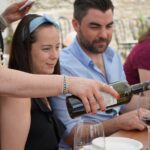
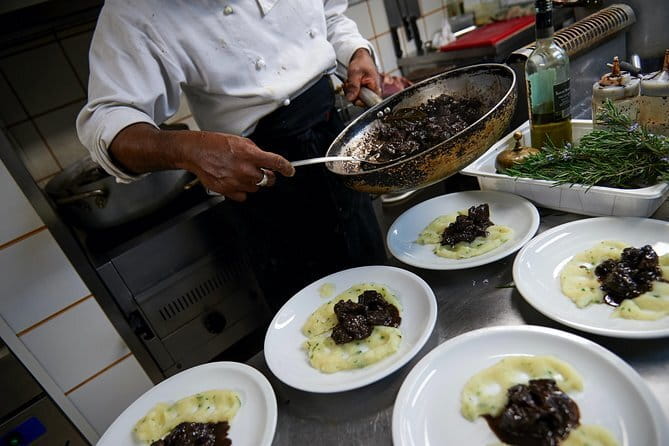
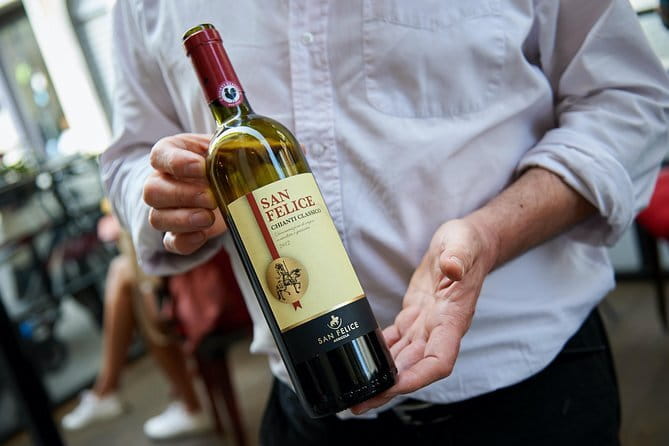
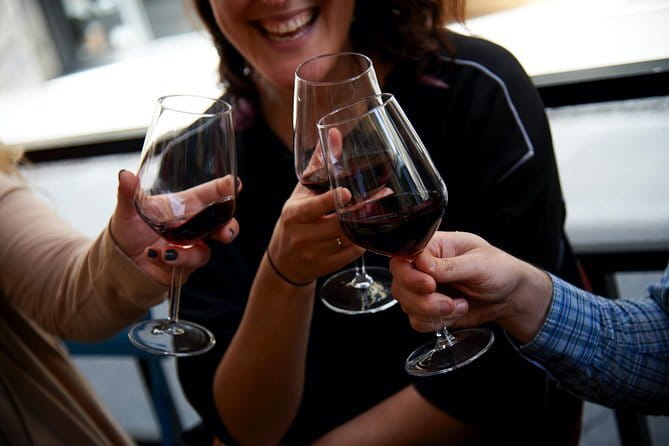
You’ll learn about Tuscan cucina povera—food traditions tied to making do with local ingredients—and taste Tuscan soup, wild boar stew, and a glass of Chianti Classico. And yes, it’s served through an iconic wine window, which ties the earlier wine-window fascination into a real moment of service.
Why this is a strong stop for you: cuisine povera isn’t just a label. It’s an approach—slow-cooked, ingredient-driven, and meant to be satisfying rather than delicate. Wild boar and hearty soup teach you something about the Tuscan palate: bold flavors, deeper aromatics, and food built for appetite.
Time here is longer than most stops (about 55 minutes), so you have enough room to eat, ask questions, and settle in without the tour rushing you every 60 seconds.
Santo Spirito gelato at La Sorbettiera: how to spot truly artisanal gelato
The final food “big finish” is Gelateria Artigianale La Sorbettiera | Santo Spirito. This shop is noted as Florence’s Best Gelato, and the tour treats it like more than a dessert stop.
You’ll get a quick crash course—about 10 minutes—on how to spot true artisanal gelato, then choose a 2-flavor cup or cone. This matters because “gelato” is one of those words that gets used loosely. Learning what to look for helps you avoid the watery, overly air-churned stuff.
One more bonus: Santo Spirito is where the tour also points out Church of Santo Spirito and mentions a hidden feature inside: Michelangelo’s secret crucifix. You don’t have to be a Renaissance expert to appreciate this. It gives you a satisfying end-of-tour cultural moment right where you finish.
The guide experience: Chiara and Elisa’s storytelling style is part of the deal
A food tour lives and dies by the guide. Here, the names showing up most clearly are Chiara and Elisa, praised for friendliness and story energy. One account describes feeling like the guide was introducing people to extended family, which is exactly the right vibe for a tasting tour. You want warmth, plus real explanations.
What’s also noticeable is how the guide approach blends food facts with location details. In one example, a guide used visual teaching (including maps and diagrams) to explain wine qualities and regional Tuscany history. You don’t need wine jargon to enjoy it, but it helps you taste with better instincts.
Bottom line: you’re not just eating. You’re learning how to interpret what you’re tasting and where it comes from.
Practical tips so you enjoy every stop
Here’s how to make this tour work smoothly for you:
- Come hungry but pace yourself. You’re tasting multiple items, and gelato is last for a reason.
- Wear comfortable walking shoes. The route is a multi-stop walk across neighborhoods.
- Ask about pairings when you’re offered wine or coffee. The guide can explain what locals prioritize.
- Have your dietary needs ready at booking. The tour says it will do its best for vegetarians, gluten-free guests, and other dietary needs, but severe allergies aren’t suitable.
- Expect variation. The tour notes that offerings and stops may change by day or season, so plan to be flexible and trust the selection.
Who this Florence food tour is best for
This tour is a strong fit if you:
- Want a small-group, food-forward introduction to Florence
- Love Oltrarno and want to spend time in neighborhoods that feel like real city life
- Prefer learning through tastings rather than long lectures
- Are curious enough to try iconic local street food like lampredotto
It may not be your best choice if:
- You have severe allergies or are dealing with life-threatening food allergy concerns
- You hate walking between stops and need a very slow schedule
- You only want purely sweet tastings, since there’s a lot of savory work up front
Should you book the Other Side of Florence Food Tour?
If your goal is to experience Florence through its food culture—not just its monuments—this one is an easy yes. The mix of cheese + salumi, bakery classics like cantucci, street food with lampredotto, hearty Tuscan dishes with Chianti Classico, and top-end gelato gives you a full sensory story of the city.
I’d book it especially if you’re the type who likes being guided to places you might not find alone, like the wine-window tradition and a historic Oltrarno fiaschetteria. And with a max group size of 12, you should feel the tour stays personal instead of rushed.
If you’re short on time but want something that feels local and practical, this is a smart use of those 3 hours.
FAQ
How long is The Other Side of Florence Food Tour?
The tour lasts about 3 hours.
Where does the tour start and end?
It starts at Piazza Nazario Sauro, 50125 Firenze FI, Italy and ends at Piazza Santo Spirito, 50125 Firenze FI, Italy.
What’s included in the price?
The tour includes tastings such as cantucci with espresso or cappuccino, Tuscan dishes and street food, wine windows tastings with Tuscan wines, and gelato, plus a local English-speaking guide and Food & the City insider tips.
Is the tour in English?
Yes, it’s offered in English.
What’s the group size?
The tour has a maximum of 12 travelers.
Can the tour accommodate dietary requirements?
The tour says you can email or add a note at booking and they’ll do their best for vegetarians, gluten-free guests, or other dietary needs. It also notes the experience isn’t suitable for severe or life-threatening food allergies.
Are children allowed?
Children under 4 years old join for free, but food is not included. Tickets with food included are available for ages 4 and up.
How do drinks work if I want more than what’s included?
Extra drinks aren’t included. The tour says you can email to purchase 3 additional drinks with a Premium Drink Package for €16.
What’s the cancellation policy?
You can cancel for a full refund if you cancel at least 24 hours before the experience start time. If you cancel less than 24 hours before, the amount paid isn’t refunded.
You Might Also Enjoy

More Tour Reviews in Florence
- Tuscany Day Trip from Florence: Siena, San Gimignano, Pisa and Lunch at a Winery
★ 5.0 · 21,634 reviews - The Best tour in Florence: Renaissance & Medici Tales – guided by a STORYTELLER
★ 5.0 · 12,316 reviews