REVIEW · VENICE
Venice: Leonardo Da Vinci Museum Entrance Ticket
Book on GetYourGuide →Operated by Leonardo da Vinci Museum - Venice · Bookable on GetYourGuide
Da Vinci’s ideas still work today. This interactive museum in Venice turns his inventions into hands-on stations, organized by four elements.
I especially liked the working reproductions of machines you can actually try, not just stare at. It’s also surprisingly strong on the man behind the art, with anatomy studies and high-resolution backlit replicas.
One heads-up: the museum is small, so it’s easy to finish quickly if you’re craving a long, full-day museum crawl.
In This Review
- Key points to know before you go
- Venice’s Leonardo Ticket: What You’re Really Buying
- Getting There and Finding the Entrance Without Stress
- How Long the Visit Takes (and Why Small Can Be Good)
- The Four Elements Rooms: Science as a Story
- Earth: Machines, Structures, and Practical Thinking
- Water: Ideas About Flow and Motion
- Air: Gears, Leverage, and the Logic of Movement
- Fire: Energy Thinking Without the Overheating
- The Interactive Highlights I’d Prioritize
- Anatomy and Art: Why Leonardo Was More Than One Thing
- Languages, Media, and How to Make It Easier to Follow
- Photos and the Museum Shop: Don’t Skip the Last Stop
- Who This Museum Is Best For (and Who Might Want to Skip)
- Price Check: Is $10 Good Value Here?
- Practical Tips for a Smoother Visit
- Should You Book This Leonardo da Vinci Museum Ticket?
- FAQ
- FAQ
- How much does the Leonardo da Vinci museum ticket cost?
- How long should I plan to spend inside?
- Where is the museum meeting point?
- Is this a guided tour?
- What’s included with the ticket?
- What are the main exhibit themes?
- Does the museum have information in multiple languages?
- Are children allowed, and are there age rules?
- What should I know about the machines?
- When is the last time I can enter?
Key points to know before you go
- Working models built from da Vinci-style designs, with only small adjustments when needed for proportions.
- Earth, Water, Fire, Air sections that keep the visit moving and make the science feel story-like.
- Human anatomy + art replicas side by side, so you see Leonardo as both medical thinker and artist.
- Photo-friendly inside exhibits, plus a 360-degree mirror room and other hands-on puzzles.
- Family-friendly design, including kid drawing activities on iPads and activities across ages.
Venice’s Leonardo Ticket: What You’re Really Buying
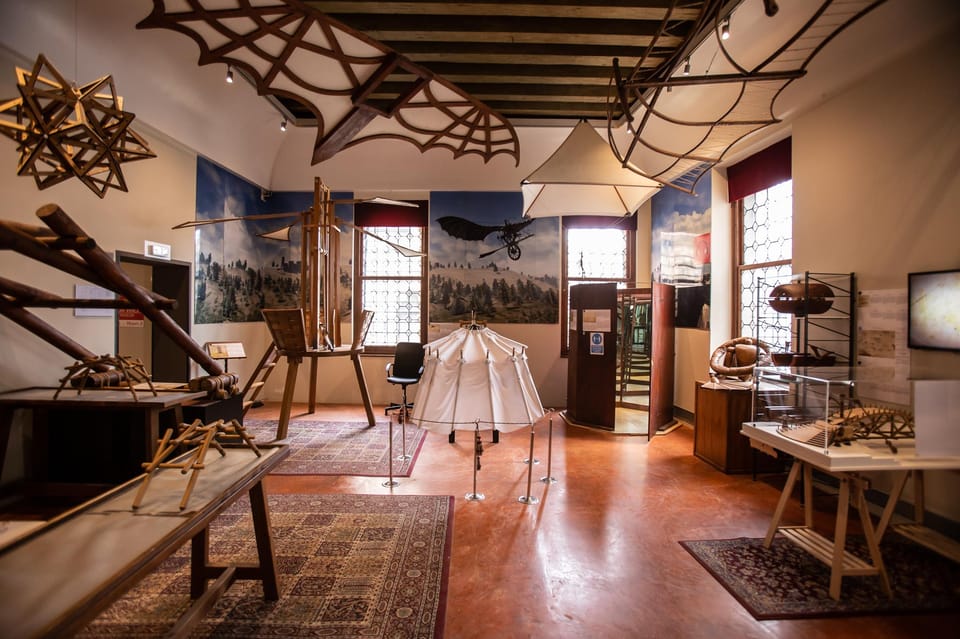
For about $10, you’re not buying a generic “Leonardo overview.” You’re buying access to an interactive space built around how da Vinci thought—through experiments, designs, observation, and a lot of tinkering.
The format is refreshingly straightforward: you enter on your own schedule, wander through exhibit areas themed around earth, water, air, and fire, and interact with machines and displays at your pace. If you’re tired of standing in line for the big-ticket sights, this is a calmer indoor break where your brain gets to work a little.
Also, this is one of those museums where you don’t need to be a Leonardo superfan. Even if you only remember him for paintings, you’ll come away understanding why his notebooks and sketches mattered for both art and engineering.
You can also read our reviews of more tours and experiences in Venice.



Getting There and Finding the Entrance Without Stress
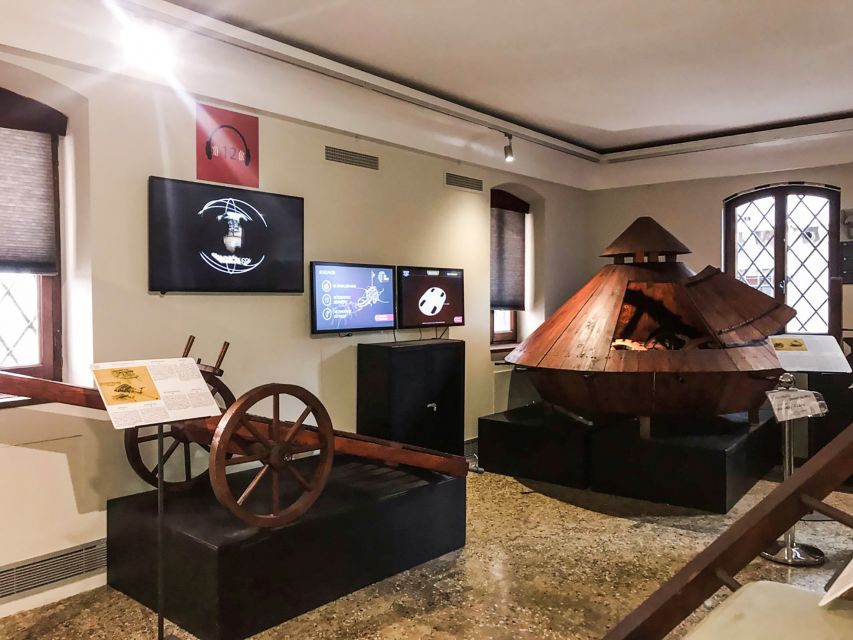
The museum entrance is at CAMPO SAN ROCCO, 3052 VENEZIA, inside the Edificio Scoletto di San Rocco, in front of the Scuola Grande di San Rocco and behind the Chiesa dei Frari.
Practically, this is the kind of location that works well if you’re already walking the Venice sights. You don’t need a special transport plan. Just build it into your day as an indoor pause.
Timing matters more than you’d think. There’s a last entrance 1 hour before closing, so if you arrive late, you might end up rushing. The museum is small enough that you can still get a good visit if you walk in earlier, not at the last minute.
How Long the Visit Takes (and Why Small Can Be Good)
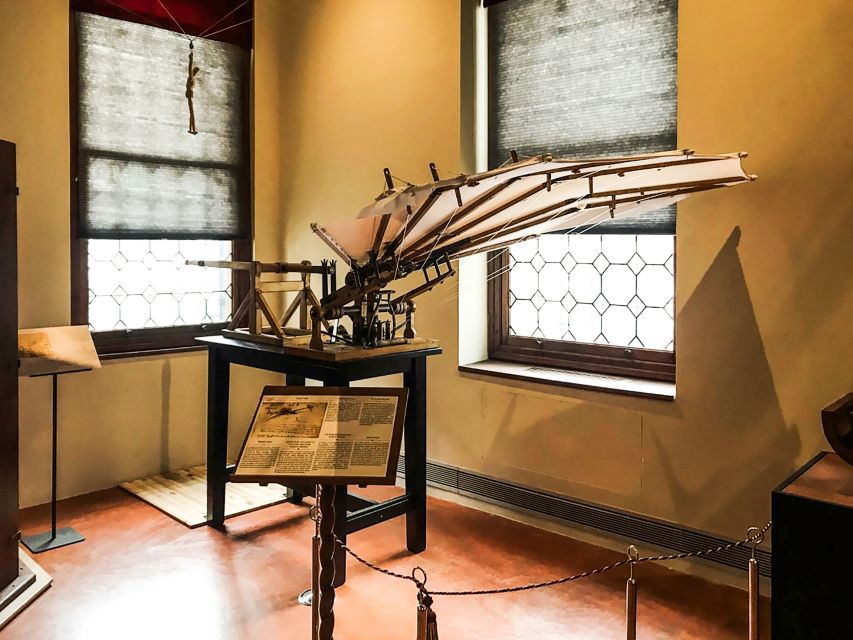
A lot of people finish this museum in about 30–90 minutes, depending on how hands-on you go and how much you read. Some visitors spend longer—around 1.5 hours—especially if kids are engaged or you pause for the puzzles and mirror-room moments.
Here’s the upside: you can fit it between other Venice stops without feeling like you planned your whole day around one ticket. It’s also a solid option on hot days. One thing you’ll likely appreciate is that it’s indoors, which makes a difference in Venice when the sun is doing its thing.
The one downside is obvious: if you’re expecting a sprawling museum campus, you might feel like you could have used another room or two. But if you go in with the right mindset—interactive stations, not hours of galleries—you’ll probably be happy with the time-to-value.
The Four Elements Rooms: Science as a Story
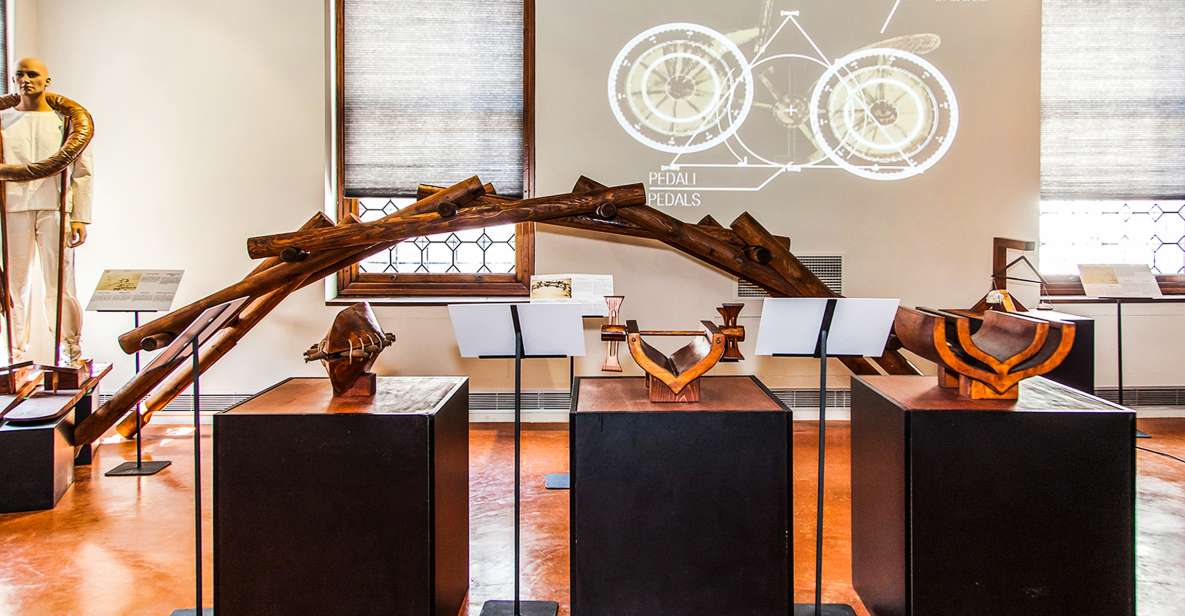
The museum is organized into four sections: Earth, Water, Air, and Fire. This is more than decoration. It helps you mentally sort what you’re seeing. Each area frames da Vinci’s ideas through forces and materials people understood long before modern engineering terms.
Earth: Machines, Structures, and Practical Thinking
In the Earth section, you’ll see invention-style exhibits that connect to materials, structures, and movement. The point isn’t to teach modern physics formulas. It’s to show you how da Vinci approached problems: observe carefully, design something plausible, and test the idea.
This part also tends to work well for hands-on visitors, because structures and mechanisms naturally invite interaction. If you like building, don’t be surprised if you end up enjoying yourself more than you expected.






Water: Ideas About Flow and Motion
Water-themed displays help explain how Leonardo thought about pressure, movement, and systems. Again, you’re not just reading. The museum’s interactive style means you’re more likely to “get” the concept through action than by memorizing facts.
Even if some details are more technical than your comfort zone, you’ll still get the big picture: da Vinci wasn’t only painting; he was thinking like an engineer who wanted mechanisms to behave predictably.
Air: Gears, Leverage, and the Logic of Movement
In the Air section, expect exhibits that connect to mechanisms and how they move. This is where Leonardo’s obsession with motion starts to feel personal. You can watch the machine logic at work and notice patterns—how force transfers, how parts relate, and how small design choices can change results.
If you enjoy puzzle-solving, you’ll likely like this area most. The museum leans into “try it, see what happens,” which makes the science feel less academic.
Fire: Energy Thinking Without the Overheating
Fire-themed content keeps the theme moving into transformation and energy ideas. Even if you can’t physically replicate heat in a museum room, the design of the exhibits aims to show cause and effect.
This is a good reminder of why da Vinci was so future-facing. He wasn’t treating the world like separate categories. He wanted the same thinking to explain art, bodies, and machines.
The Interactive Highlights I’d Prioritize
If you only have a short window, I’d focus on the moments that make this museum different from a typical ticketed exhibit.
Working models you can operate
A big part of the fun is that the museum isn’t all static displays. You can interact with machines and reproductions designed according to da Vinci’s plans (with necessary adjustments). That single choice makes the place feel alive.
The 360-degree mirror room
There’s a mirror experience that one of the memorable highlights described as a 360-degree room. Even if you’re not a “mirrors are fun” person, it’s a great breather between more technical exhibits. It also helps kids understand that the museum isn’t only about reading.
The wood bridge puzzle
On the second floor, there’s mention of a wood bridge puzzle that seems to work best with help from a second person. If you’re visiting with someone else, pair up early. If you’re solo, it can still be fun, but expect more trial and error.
The hexagon challenge and hands-on construction
More than one review mentioned building or puzzle activities involving wooden structures and hexagon elements. This is one of those “you start playing before you realize it” setups. If you’re traveling with kids, this is often the section that locks in attention.
Art + science visuals on the same level
This isn’t either-or. You see art-related elements like backlit high-resolution replicas, plus notes that connect his artistic work to observation and engineering habits.
Anatomy and Art: Why Leonardo Was More Than One Thing
One of the strongest parts of the visit is how the museum treats Leonardo as a whole thinker. You don’t just get machines. You also get human anatomy studies and explanations of his medical work alongside his artistic accomplishments.
This matters because da Vinci’s curiosity wasn’t limited to what was visible in front of him. He studied bodies with the same attention he brought to designs. That connection helps explain why his figures in paintings can feel so alive: he understood form, movement, and structure from direct observation.
You’ll also see high-resolution backlit replicas of major paintings, which give you a closer look than you’d get from tiny printed copies. It’s a good fit if you’ve seen big works in other museums and want to learn the thought process behind them.
Languages, Media, and How to Make It Easier to Follow
The museum offers descriptions in multiple languages: Italian, English, French, German, Spanish, and Russian, plus multimedia displays about Leonardo’s life and works.
This is a real comfort feature. Even if you’re not fluent in everything, you can usually find a language mode that keeps you from losing the thread. The interactive stations are fun on their own, but explanations make the experience stick.
One practical tip: there are mentions of a QR code audio guide tied to the starting point near the front shop. If you want audio support, look for that QR and get it going early. It can be easy to miss if you walk right past the shop.
Photos and the Museum Shop: Don’t Skip the Last Stop
Yes, you can take photos inside, which is handy for remembering the exact machines and exhibits you enjoyed.
Then there’s the bookshop. It’s not just souvenirs on display—it’s where you can buy Leonardo-themed gifts and items, and you get a 10% discount on bookshop purchases as part of the ticket.
If you like collecting a small “I was here” thing, this is the moment to do it. You’ll already be in a Leonardo mood, and the discount makes the purchase feel less like an afterthought and more like a bonus.
Who This Museum Is Best For (and Who Might Want to Skip)
This experience is a strong match for:
- Families with kids who need hands-on distractions
- Teens and curious adults who like mechanisms, puzzles, and science made human
- Art-and-history visitors who want Leonardo explained beyond one famous painting
- Travelers who want an indoor break that still feels meaningful
It might be less satisfying for:
- People who want a huge museum with galleries and long looping exhibits
- Anyone expecting a guided tour experience, since this is not a guided tour
- Visitors who want only Leonardo’s paintings and nothing else (this place balances art with engineering and anatomy)
Price Check: Is $10 Good Value Here?
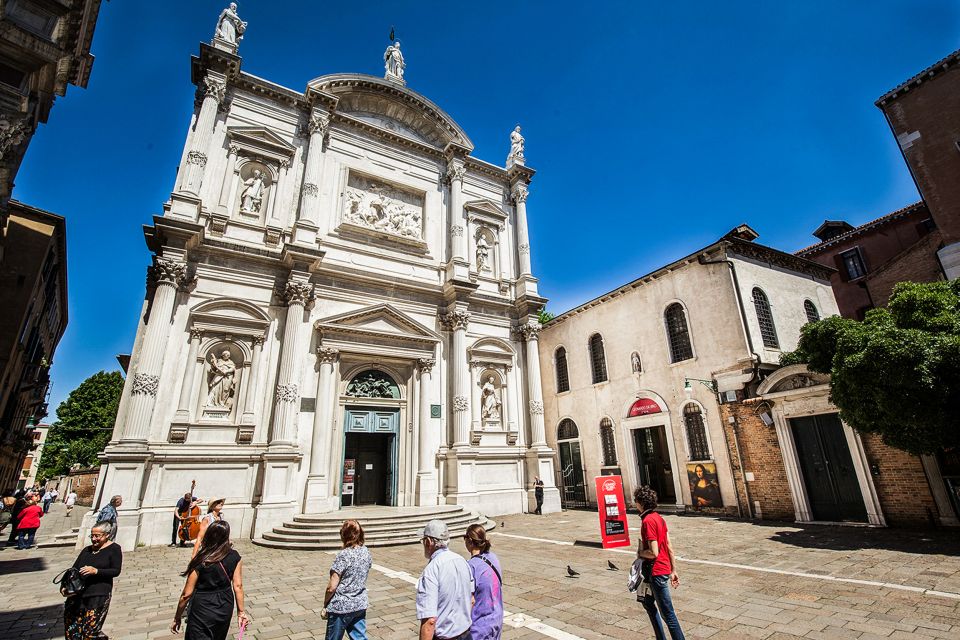
At $10, the value is mostly about interaction. You’re paying for access to working-style inventions, themed sections, and multimedia explanations, not just a hall with text panels.
If you go with kids, it also helps that there’s free admission for children under 3. That can make the whole outing easier to justify budget-wise.
The museum’s small size keeps costs reasonable and time efficient. You may leave thinking, That was short—but also: It didn’t feel overpriced, because you actually used the exhibits, not just walked past them.
Practical Tips for a Smoother Visit
A few small things can make a big difference:
- Plan for about 1 hour to 1.5 hours. It’s easy to extend if you’re doing the puzzles and reading, and easy to finish if you’re moving quickly.
- Go earlier rather than later. Remember the last entrance is one hour before closing.
- Pair up if you can. Some puzzles are easier with two people, especially the wood bridge setup.
- Watch for the QR audio guide near the shop area if you want extra narration.
- Expect hands-on rules. With interactive displays, you may find staff nudge visitors toward respectful use of exhibits.
Should You Book This Leonardo da Vinci Museum Ticket?
If you’re visiting Venice for a few days and want one ticketed activity that mixes learning with play, I think this is an easy “yes.” The machines are the centerpiece, the anatomy and art pieces add depth, and the price is reasonable for what you can do inside.
Book it if:
- You want a low-stress, indoor activity
- You like interactive exhibits, puzzles, and hands-on learning
- You’re traveling with kids who need to touch something besides gondola railings
Skip or reconsider if:
- You’re specifically chasing long, gallery-style museums
- You want a staffed guided tour with a person leading the story
- You only want classic art and don’t want Leonardo’s engineering and studies emphasized
FAQ
FAQ
How much does the Leonardo da Vinci museum ticket cost?
The ticket price is listed as $10 per person.
How long should I plan to spend inside?
It’s valid for 1 day, but most visitors seem to spend about 30–60 minutes for a quick visit to around 1.5 hours if you do more hands-on activities.
Where is the museum meeting point?
The location is Leonardo da Vinci Interactive Museum, CAMPO SAN ROCCO, 3052 VENEZIA, inside the Edificio Scoletta di San Rocco, in front of the Scuola Grande di San Rocco, behind the Chiesa dei Frari.
Is this a guided tour?
No. The ticket includes entry, but guided tour is not included.
What’s included with the ticket?
Included features are entry, opportunity to take photos inside, free admission for children under 3, and a 10% discount on bookshop purchases.
What are the main exhibit themes?
The museum is organized into four sections themed around Earth, Water, Fire, and Air.
Does the museum have information in multiple languages?
Yes. Descriptions are available in Italian, English, French, German, Spanish, and Russian, supported by multimedia displays.
Are children allowed, and are there age rules?
Yes, but children under 15 must enter with an adult. Children under 3 have free admission.
What should I know about the machines?
The machines are rebuilt according to Da Vinci’s designs, unless changes are needed due to original proportions.
When is the last time I can enter?
The last entrance is 1 hour before closing time.