REVIEW · FLORENCE
4 – Courses Dinner Interactive Cooking Lesson In Florence
Book on Viator →Operated by Doing business as: In Tavola · Bookable on Viator
In Florence, your dinner starts at the cutting board. This 4-course hands-on cooking class turns a typical Tuscan meal into a step-by-step group project. You learn classic Italian technique in a real kitchen, then you sit down and eat what you made.
I really like two things here: first, the Chef-led format (with instruction in English, Spanish, and Italian) means you are not just watching—you’re cooking, tasting, and fixing little mistakes on the fly. Second, the class ends with a proper meal and includes the recipes to take home, so the learning sticks after you leave.
One consideration: because the kitchen is designed for groups, the experience can feel a bit busy when more people are in the session, and some parts may move faster than you expect if your group is large or you’re newer to cooking.
In This Review
- Key highlights worth knowing
- Florence by Fork: Why This 4-Course Class Works So Well
- InTavola Meeting Point and What to Expect on Arrival
- Chef Instruction in English, Spanish, and Italian: How the Teaching Style Impacts Your Results
- The 3-Hour Flow: How the Four Courses Come Together
- What You Might Cook: Fresh Egg Pasta, Gnocchi, Ravioli, and More
- Dinner With Red Wine: Included, But Know What That Means
- Vegetarian and Vegan Options: How to Make Sure Your Menu Fits
- Clean Kitchen and COVID Safety: Comfort You’ll Actually Feel
- Price and Value in Florence: What You’re Really Paying For
- Group Size, Pace, and the One Trade-Off
- Who This Cooking Class Is Best For (and Who Might Prefer Something Else)
- FAQ
- FAQ
- What is the duration of the Florence cooking lesson?
- Where does the class meet?
- What time does the class start?
- How many courses do you cook?
- Is the class taught in English?
- Are vegetarian and vegan options available?
- What does the meal include besides food?
- Do you get recipes to take home?
- What is the minimum age for participants?
- What COVID safety measures are mentioned?
- Should You Book This 4-Course Cooking Lesson in Florence?
Key highlights worth knowing
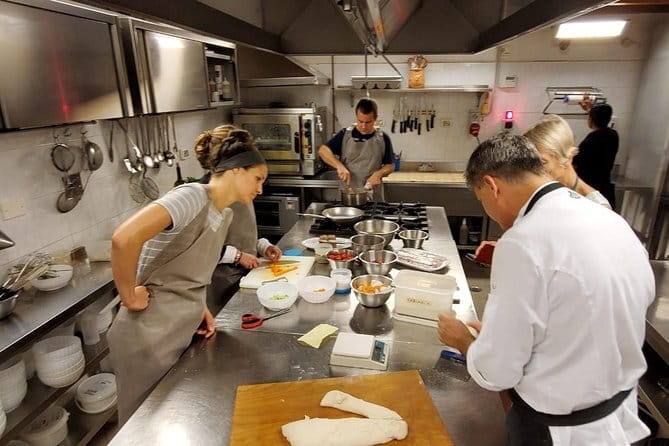
- Four courses, cooked by you: appetizer, first course, second course, dessert, then you all eat together
- Chef instruction in multiple languages: English, Spanish, and Italian on different sessions
- You get Tuscan red wine at dinner: included with the meal (not an open bar)
- Takes dietary requests seriously: vegetarian and vegan options available, plus other restrictions at booking
- High-touch kitchen hygiene: strong sanitation practices are part of the experience
- Small class feel: lesson max is typically 12, even though total activity capacity can be larger
Florence by Fork: Why This 4-Course Class Works So Well
The best food experiences in Florence tend to do one thing well: they connect you to how locals actually eat and cook. This class does it by making your evening revolve around a full menu—start to finish—so you taste the result at the table, not only the idea of it.
A 3-hour format also makes sense in Florence. You avoid the “too many stops, too little time” problem you get with food tours that jump around. Here, you start in the kitchen, you finish with dinner, and you keep your momentum instead of constantly switching locations.
You’ll also appreciate the social side. This is a group cooking session, so you get that shared energy—someone will be rolling pasta while someone else is learning timing for a sauce. If you like meeting new people through an activity (not a stiff walking tour), this fits the bill.
You can also read our reviews of more tours and experiences in Florence.
- Tuscany Day Trip from Florence: Siena, San Gimignano, Pisa and Lunch at a Winery
★ 5.0 · 21,634 reviews


InTavola Meeting Point and What to Expect on Arrival
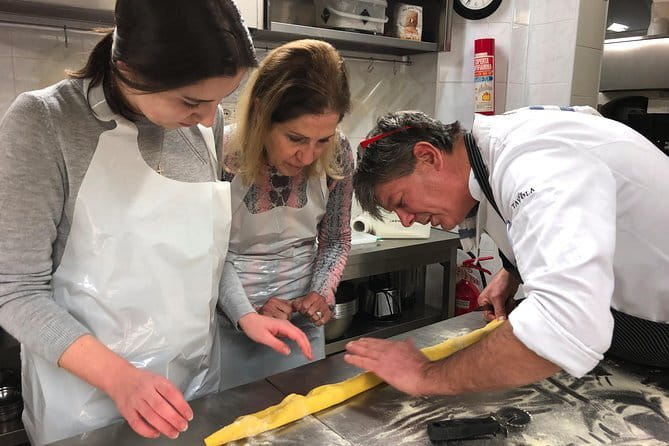
You meet at InTavola, Via dei Velluti, 20R, 50125 Firenze FI. The location is near public transportation, which matters in Florence because you don’t want to burn your whole evening hunting for parking or second-guessing bus routes.
When you show up for a class starting in the early evening (the schedule notes Monday and Friday at 5:00 pm, with a listed start time of 5:30 pm on the activity details), you should think of it as a pre-dinner commitment. Plan for an evening built around cooking, then a full sit-down meal afterward. You are not meant to treat this as something to squeeze between other plans.
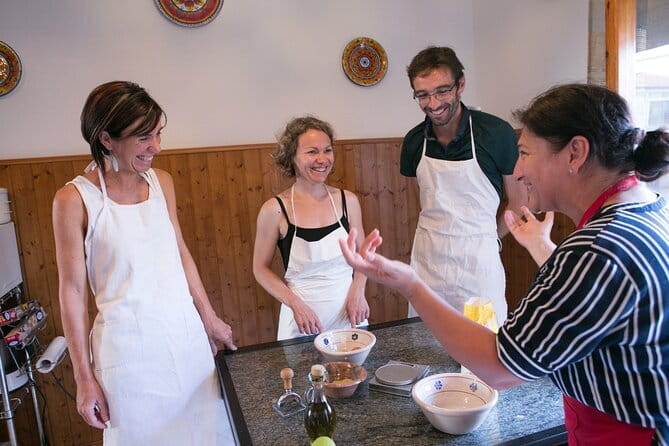
Once you’re in, the kitchen setup is part of the value. People have commented on clean, high-end equipment and a kitchen that stays well organized. That’s important because cooking classes can get chaotic fast. Here, the vibe is structured enough that you can focus on technique instead of constantly searching for tools.
Chef Instruction in English, Spanish, and Italian: How the Teaching Style Impacts Your Results
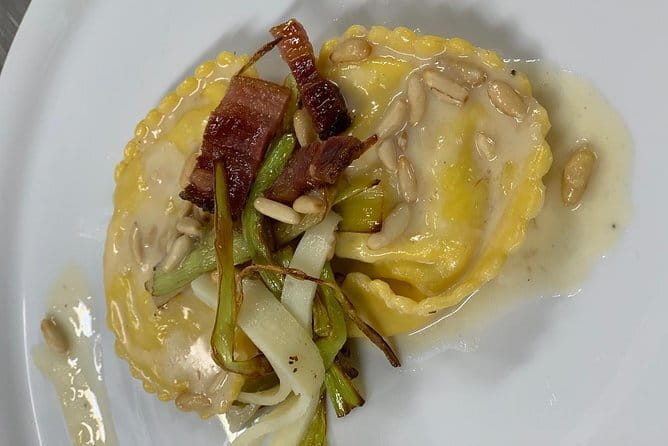
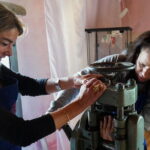
This is chef-led instruction, and that matters because technique is the whole point of learning to cook Italian food beyond basic recipes. Your chef teaches as you work—so if something is off, you can correct it right away rather than guessing later.
One practical advantage: classes are offered in English, Spanish, and Italian. That means more people can follow the steps with confidence instead of relying on partial translation. In a hands-on setting, clarity is not a luxury—it’s the difference between a smooth pasta night and a frustrating one.
You may cook with chefs like Gustavo, Giacomo, Matteo, or Fabrizio (names vary by session). The common thread is teaching with humor and patience. That shows up in the small details: helping you get the technique right, guiding you through each course, and keeping you moving at a workable pace.
If you are cooking with family or friends, it also helps that instruction supports mixed skill levels. Some people in group sessions have cooked with teenagers and with adults who were completely new to making pasta from scratch, and everyone still got meaningful hands-on roles.
The 3-Hour Flow: How the Four Courses Come Together
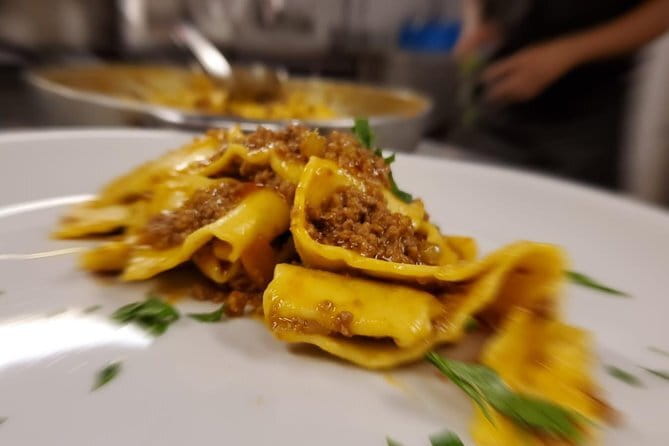
The class is built around a simple idea: work through four courses—appetizer, first course, second course, dessert—then eat everything together. That flow makes the evening feel complete, not like a random tasting at the end.
In practice, you’ll spend your time in phases:
- Appetizer prep: learn the basics of flavor and portioning so the menu has a strong start
- First course (often pasta): you’ll work on dough or fresh pasta handling, with guidance so you don’t end up with sticky, uneven results
- Second course (meat dish): you practice timing and cooking method for a heartier plate
- Dessert: you close with a sweet course that gives you something to look forward to while cooking
What makes this more valuable than a simple meal is that the chefs teach process, not just ingredients. You’re learning how to do steps in the right order—like how timing changes when you’re cooking multiple items in the same window.
Also, because it is a small-team format, you usually get enough attention to feel capable. The lesson maximum is listed as 12 participants, which is a sweet spot. It’s still social, but you aren’t stuck watching from the sidelines.
What You Might Cook: Fresh Egg Pasta, Gnocchi, Ravioli, and More
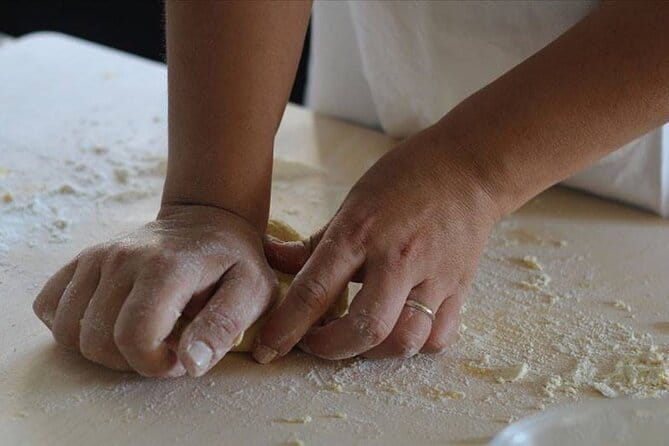
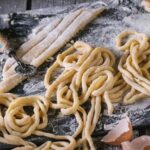
The menu framework is consistent: appetizer, fresh egg pasta as a first main, a meat second course, and an Italian dessert. But the exact dishes can vary by session and chef choices, and that’s actually a plus if you like the idea of learning fundamentals.
From real class experiences, you might see:
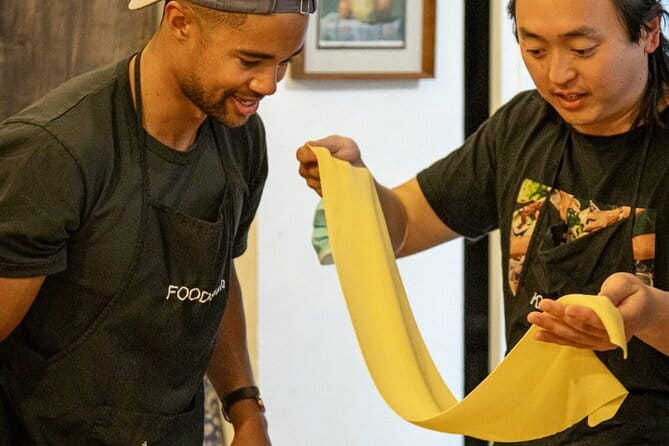
- Fresh pasta work where you learn dough handling and shaping
- Gnocchi from scratch as a hands-on pasta skill
- Ravioli preparation in some sessions
- An asparagus-style appetizer in at least one described menu
- A meat course like chicken cacciatore or veal dishes, depending on what the chef has planned
- Desserts such as a chocolate soufflé in some classes
Think of this as learning transferable skills. Even if the exact recipe differs from one night to another, the core methods—pasta texture, sauce logic, dessert timing—are what you’ll actually use later at home.
If you’re a food nerd, you’ll also like the fact that chefs often teach technique you can build on. People have taken away tips on how to execute recipes more professionally, which is exactly what you want from a cooking class that claims to be more than entertainment.
- The Best tour in Florence: Renaissance & Medici Tales – guided by a STORYTELLER
★ 5.0 · 12,316 reviews





Dinner With Red Wine: Included, But Know What That Means
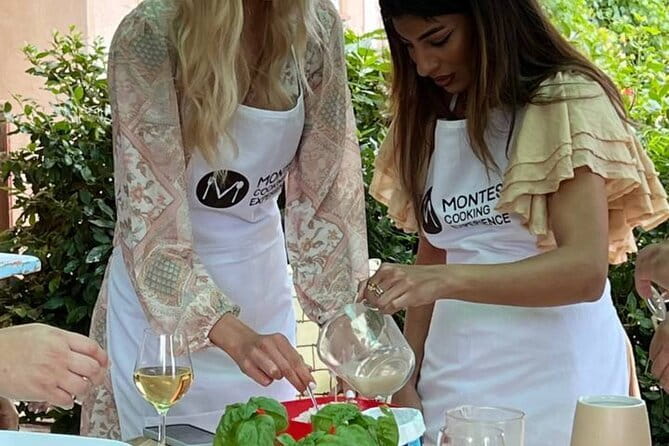
After cooking, you eat the meal you prepared. This is one of the biggest reasons the class feels worth it. You do not just taste a sample and move on—you sit down and treat the menu as your dinner.
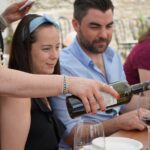
Tuscan red wine is included with the meal. It’s part of the atmosphere, not just a free add-on. One detail you should be aware of: this is not positioned like unlimited wine. The school serves wine as part of the experience, and the amount is structured for the group (for example, one bottle for every four guests has been explained in responses to questions).
So if you’re expecting a wine-flavored party night, you might feel differently than you would at a bar. But if you want a relaxed, Italian-feeling dinner where the wine supports the meal, it fits the mood well.
Also included is bottled water. That helps you stay grounded, especially if you’re actively cooking and then jumping into tastings.
Vegetarian and Vegan Options: How to Make Sure Your Menu Fits
If you eat vegetarian or vegan, this class can still work well. Vegetarian and vegan options are available, but you need to request them when booking so the kitchen can plan correctly.
The booking notes also ask you to share dietary restrictions such as lactose intolerance and dietary limits like no pork or no seafood. If you have gluten concerns, the details mention gluten free as an example of what to tell the provider, which is useful because cooking classes often involve pasta and dairy.
My practical advice: send your needs clearly up front and keep the message specific. When the kitchen knows what to swap, you are more likely to get a full menu experience rather than a reduced plate.
Clean Kitchen and COVID Safety: Comfort You’ll Actually Feel
Hygiene is not a side note in this class. The safety policy includes measures such as social distancing, face masks, hand gloves, sanitizing, and temperature control for staff and participants.
Even without focusing on the health-policy details, you’ll likely notice cleanliness. People have specifically praised hand-washing and hygiene practices, plus a kitchen that stays organized. That’s a big deal because pasta dough and dessert stations can turn messy in less controlled environments.
One more comfort point: some described the space as having air conditioning. In a warm Florence evening, that can make the difference between enjoying the class and feeling exhausted before dessert.
Price and Value in Florence: What You’re Really Paying For
At $100.38 per person, you’re paying for more than a meal. You’re paying for:
- Four-course instruction with hands-on participation
- A full dinner created during the session
- Included drinks (Tuscan red wine) and bottled water
- Recipes you take home
This price can feel high if you compare it to buying dinner at a trattoria. But compare it to what it costs to do a cooking class plus a real dinner afterward. Here, the meal isn’t an afterthought—it’s the outcome of the work you do.
You’re also paying for structure. Smaller classes generally mean the chef can correct technique, and the kitchen has equipment ready for everyone. Reviews have flagged clean, high-end tools and professional teaching, which suggests you’re paying for execution quality, not just a demo.
One more value angle: this gives you a memory that isn’t just a photo. When you take the recipes home and can recreate even one course—like fresh pasta technique—it keeps paying off after your trip.
Group Size, Pace, and the One Trade-Off
This is where you should set your expectations realistically. The lesson maximum is 12 participants, but the overall activity capacity can be higher, and some sessions may feel like a lot of people in one kitchen workflow.
When the group is large, there are two possible effects:
- You may spend a bit more time waiting for ingredients or tools
- The chef may move quickly to keep the menu timing on track
Most people seem to love the energy and teamwork, but if you prefer slow, quiet instruction, this might not match your style. The class is designed for a fun evening and a full dinner timeline, so the pace can be firm.
That said, even in busier moments, people have said the staff and chefs were kind and supportive. And in smaller or well-managed sessions, the hands-on experience can feel very personal.
Who This Cooking Class Is Best For (and Who Might Prefer Something Else)
This is a great fit if you:
- Are a food-focused traveler who wants to learn technique, not just taste
- Want a full evening activity that includes dinner and wine
- Like group settings where everyone gets a role
- Travel with a family member or friend and want shared memories
It may not be your best choice if you:
- Want a flexible food crawl where you can wander freely between stops
- Hate structured schedules and prefer open-ended experiences
- Are extremely sensitive to timing and waiting during busy kitchen moments
If you’re the type who loves pasta—fresh egg pasta, gnocchi, ravioli—this class is especially appealing. You’re not only eating Italian food. You’re learning how it’s built.
FAQ
FAQ
What is the duration of the Florence cooking lesson?
The lesson is approximately 3 hours, including the cooking and the dinner you eat afterward.
Where does the class meet?
You meet at InTavola, Via dei Velluti, 20R, 50125 Firenze FI, Italy.
What time does the class start?
The listed start time is 5:30 pm, and the class is scheduled Monday and Friday at 5:00 pm all year round.
How many courses do you cook?
You cook a typical 4-course Italian dinner: an appetizer, a first course, a second course, and dessert.
Is the class taught in English?
Yes. The experience is offered in English, and lessons may also be held in Spanish and Italian.
Are vegetarian and vegan options available?
Yes. Vegetarian and vegan options are available, and you should advise the provider when booking.
What does the meal include besides food?
The experience includes bottled water and Tuscany red wine served with the meal.
Do you get recipes to take home?
Yes. You receive the recipes for what you prepared.
What is the minimum age for participants?
The minimum age is 7 years.
What COVID safety measures are mentioned?
The safety policy includes social distancing, face masks, hand gloves, sanitizing, and temperature control for staff and participants.
Should You Book This 4-Course Cooking Lesson in Florence?
If you want a Florence dinner that teaches you something real, I’d book this. The combination of Chef-led hands-on cooking, a full four-course menu, and recipes included makes it feel like more than an evening activity—it’s a skill-building meal you can recreate later.
Book it with confidence if you like pasta and Italian home-style technique, and if you can plan your evening around a kitchen session. Consider skipping or looking for a smaller, more flexible alternative if you dislike group cooking pace or you strongly prefer unlimited wine-style nights.
You Might Also Enjoy


More Tour Reviews in Florence
- Tuscany Day Trip from Florence: Siena, San Gimignano, Pisa and Lunch at a Winery
★ 5.0 · 21,634 reviews - The Best tour in Florence: Renaissance & Medici Tales – guided by a STORYTELLER
★ 5.0 · 12,316 reviews