REVIEW · FLORENCE
Florence: Museo Galileo Entry Ticket
Book on GetYourGuide →Operated by Museo Galileo · Bookable on GetYourGuide
The Galileo story isn’t in a lecture hall here. It’s all around you, in instruments that show how people measured the sky, explained motion, and built technology long before computers. I especially liked the major collection of scientific instruments and the chance to see Galileo’s original tools in a museum layout that’s easy to follow. One possible drawback: the museum is self-guided, so you’ll want to plan for time and reading so you don’t miss context.
For science lovers, this ticket is a smart use of a Florence day. You get a serious museum experience (not just a quick stop), and the building’s two-floor setup helps you move from Medici instruments to the Lorraine family’s mechanical and applied science displays. Just keep in mind that on Tuesdays, Museo Galileo is only open until 1:00 PM, so timing matters.
In This Review
- Key things to know before you go
- Museo Galileo in Florence: a science museum built for careful looking
- Ticket value: what your $20 gets (and what it doesn’t)
- Before you book: timing matters, especially on Tuesdays
- Getting in smoothly: use your confirmation voucher at the entrance
- First floor Medici rooms: quadrants, astrolabes, and the art of measuring the sky
- Galileo’s original instruments: thermometers, microscopes, and meteorology
- Second floor Lorraine rooms: clocks, sextants, octans, and scientific apparatus
- Audio support and labels: helpful, but plan for earphones
- How long should you plan for: 2 hours is a start, 3 feels ideal
- Crowd level and comfort: why this feels easier than many Florence sights
- Who this ticket is best for (and who may want a different plan)
- Should you book the Museo Galileo entry ticket?
- FAQ
- Is this ticket for a guided tour?
- How much time should I plan for Museo Galileo?
- How many rooms will I see?
- Do I need to book in advance?
- What does the ticket include?
- Is the museum wheelchair accessible?
- Are there any special hours I should know about?
Key things to know before you go
- 18 themed rooms spread across two floors, focused on how science instruments evolved over time
- Medici collections on the first floor with lots of astronomy-measuring devices like quadrants and astrolabes
- Galileo originals such as thermometers, microscopes, and meteorological instruments
- Lorraine family displays on the second floor, including clocks, sextants, octans, and scientific apparatus
- Self-guided works best with audio/phone support, and you may want earphones ready
- It can feel light on crowds, so you can slow down without feeling rushed
Museo Galileo in Florence: a science museum built for careful looking
Museo Galileo is a Florence change of pace. While much of the city pulls you toward art and church history, this museum is all about tools—objects that made ideas measurable. The big payoff is that you’re not just reading about Galileo Galilei. You’re seeing the kind of instruments that helped thinkers test, observe, and communicate their results.
The museum is also unusually approachable for a topic that can feel intimidating. The rooms are organized around themes, so you can follow a line from early astronomical measurement to later mechanical and applied science. I liked that it doesn’t assume you’re already a physicist. It invites you to look first, then understand what you’re seeing.
You can also read our reviews of more tours and experiences in Florence.
- Tuscany Day Trip from Florence: Siena, San Gimignano, Pisa and Lunch at a Winery
★ 5.0 · 21,634 reviews

Ticket value: what your $20 gets (and what it doesn’t)
At about $20 per person for an entry ticket, this is good value if you like real objects. You’re not paying for a lecture or a guided tour. You’re buying access to a large collection of instruments and related displays, including Galileo’s original equipment and collections linked to the Medici and Lorraine families.
What you should not expect is a guided storyteller walking you through every room. The ticket includes entry (and the booking fee), but no guided tour. That means your experience will depend on how you use the museum tools—labels, room organization, and any audio support available during your visit.
If you want the freedom to go at your own pace, this works well. If you need someone to explain everything, you may find yourself wishing for more front-loaded interpretation. That’s a common trade-off with self-guided museum tickets, and it’s worth deciding in advance.
Before you book: timing matters, especially on Tuesdays
One practical detail that can swing your day: Tuesdays, Museo Galileo is open only until 1:00 PM. If you’re visiting midweek, build in a cushion. If you’re trying to combine this with other sights in the center of Florence, decide your order early so you don’t get stuck with a half-finished museum visit.
Also, remember the museum is designed for slow looking. Even if someone tells you it’s doable in an hour, you’ll likely enjoy it more with 2–3 hours. The exhibits are packed, and the labels and audio (if you use them) add time.
Getting in smoothly: use your confirmation voucher at the entrance
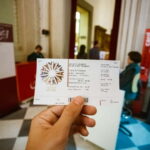
This ticket experience is straightforward. You show your confirmation voucher at the museum on the day of your visit, then you enter. There’s no special day-long activity to coordinate, which is great in Florence where plans can change fast.
You’ll also appreciate that the museum is wheelchair accessible. The layout is not just accessible in theory; people with mobility needs can use an elevator, which makes it realistic to enjoy both floors.
First floor Medici rooms: quadrants, astrolabes, and the art of measuring the sky
The first floor is where the museum leans into the Medici collections. These rooms focus on instruments used to observe and calculate—especially for astronomy. You’ll see devices that help measure angles and positions, including quadrants and astrolabes, along with other tools such as meridians, dials, and compasses.
The museum also ties these tools to the cultural world that supported them. This matters, because science instruments weren’t only about equations. They were about craftsmanship, display, and funding. When the Medici and related patrons treated scientific and artistic work as a shared project, it helped create the conditions for major collections to exist.
One way to enjoy this floor is to treat it like a “measurement walkthrough.” Pick one instrument type and keep returning to it as you move room to room. You’ll start noticing how different devices solve similar measurement problems in different ways.
- The Best tour in Florence: Renaissance & Medici Tales – guided by a STORYTELLER
★ 5.0 · 12,316 reviews





Galileo’s original instruments: thermometers, microscopes, and meteorology
If you came for Galileo Galilei, this is the section you should guard time for. The museum highlights Galileo’s original instruments, and the topics jump from human-scale observation (like microscopy) to weather and atmospheric measurement.
You’ll encounter items such as thermometers, microscopes, and meteorological instruments. Even if you’re not into science trivia, these displays make a strong point: Galileo wasn’t only thinking about the cosmos. He was also interested in how the physical world behaves up close and how conditions change.
Some exhibits also help you understand the relationship between motion and mass using model-style learning. That kind of copy or demonstration approach can make the concepts click even if you aren’t reading every line of text.
There’s also a small, memorable detail you might notice connected to Galileo himself. One display includes an amusing reference to Galileo’s missing finger, which adds a human moment to an otherwise very technical setting.
Second floor Lorraine rooms: clocks, sextants, octans, and scientific apparatus
The second floor shifts the tone. Instead of focusing mostly on astronomy measurement, it expands into mechanical, electrostatic, and pneumatic applications. The displays associated with the Lorraine family show how instrument design spread into many practical uses.
Expect to see:
- mechanical clocks
- sextants and octans (navigation and angular measurement tools)
- pharmaceutical and chemical apparatus
- weights and measures used to make results repeatable
This floor is where you can connect the dots from “cool instrument” to “useful technology.” Seeing clocks and navigation tools in the same museum makes the bigger point: scientific progress isn’t one invention at a time. It’s a chain where new measurement tools improve engineering, and improved engineering gives scientists better ways to test ideas.
If you like “how it worked” history, take extra time here. The objects are often elegant, and the room organization helps you see categories rather than a random assortment.
Audio support and labels: helpful, but plan for earphones
Most visitors can enjoy the museum with just labels. Still, audio support is part of the modern experience. Several people found the audio guide on their phone useful, while others struggled with how to navigate the app.
Here’s the practical takeaway: bring or have earphones ready so you can use the audio option smoothly. Some earphones may be available for purchase at the front desk, but don’t rely on that if you can help it.
Also, don’t expect all explanations to be obvious from the exhibit alone. A good move is to start at the front with whatever introductory information you can find, then return to exhibits once you know the museum’s key themes. That simple order helps the technical displays land better.
How long should you plan for: 2 hours is a start, 3 feels ideal
This museum is not a museum you sprint through. Some people spend around 1–2 hours and still feel satisfied, especially if they focus on the Galileo original instruments and skip part of the room-by-room reading. But if you want the full effect—how one scientific development leads to another—you should plan for more.
A realistic range:
- 1–2 hours if you’re skimming and focusing on highlights
- 2–3 hours if you want a more relaxed pace and time for audio/labels
- Longer if you’re a true science-history fan or you like revisiting rooms
One thing I appreciate: the museum layout doesn’t punish you for slowing down. If you want to linger at a globe, a clock-related exhibit, or a navigation instrument, you can. The building doesn’t feel like a factory conveyor belt. It supports a careful route.
Crowd level and comfort: why this feels easier than many Florence sights
A big reason people enjoy this museum is that it can feel less crowded than other top Florence stops. That makes it easier to read labels, take photos, and actually look at the instruments up close. It also helps with pacing—especially if you’re sensitive to noise in busy museums.
Comfort matters too. Some visitors noted that seating is limited in parts of the museum and that breaks may be necessary for tired feet. There was also a note about bathroom cleanliness needing attention, which is worth factoring into a “know before you go” mental checklist.
Who this ticket is best for (and who may want a different plan)
This ticket is perfect if you like science history, engineering, astronomy, navigation, or hands-on explanations of how measurement works. It’s also a great choice for families with curious kids, since the displays are varied and the museum doesn’t require advanced math to enjoy.
It may be less ideal if you only want Galileo as a character study. The museum’s emphasis is broader: it includes Galileo, but it also heavily features the Medici and Lorraine instrument collections and the evolution of scientific technology across time. If you’re expecting a narrow Galileo-only exhibit, you might still enjoy it, but you’ll likely want to spend extra time on the rooms that explicitly highlight his originals.
Should you book the Museo Galileo entry ticket?
Book it if you want a standout Florence museum day focused on real instruments and a strong sense of scientific evolution. The value is in what you’re getting: original Galileo items, major instrument collections, and enough room variety (across two floors and themed galleries) to make it feel like an actual museum visit, not a quick detour.
Skip or reconsider if you dislike self-guided museums or you need a live guide to connect every display to a storyline. Also reconsider if you can’t fit in time before the Tuesday 1:00 PM closing.
If you’re planning a day between other central sights, this ticket is a smart option. It gives you a completely different lens on history—one that pairs well with your broader Florence itinerary instead of competing with it.
FAQ
Is this ticket for a guided tour?
No. This is an entry ticket to Museo Galileo. It does not include a guided tour.
How much time should I plan for Museo Galileo?
Plan for at least 2 hours. If you like reading and taking your time, 3 hours can feel better.
How many rooms will I see?
The museum is organized into themed rooms (18 thematic rooms are mentioned).
Do I need to book in advance?
Yes, booking in advance is part of the entry ticket option. You’ll show your confirmation voucher at the museum on the day of your visit.
What does the ticket include?
It includes entry to Museo Galileo plus a booking fee.
Is the museum wheelchair accessible?
Yes. The museum is wheelchair accessible and has an elevator.
Are there any special hours I should know about?
Yes. On Tuesdays, Museo Galileo is only open until 1:00 PM.
You Might Also Enjoy



More Tour Reviews in Florence
- Tuscany Day Trip from Florence: Siena, San Gimignano, Pisa and Lunch at a Winery
★ 5.0 · 21,634 reviews - The Best tour in Florence: Renaissance & Medici Tales – guided by a STORYTELLER
★ 5.0 · 12,316 reviews