REVIEW · PALERMO
Discover the Charm of Palermo: A 3-Hour UNESCO Sites Walking Tour
Book on Viator →Operated by Towns of Italy · Bookable on Viator
Palermo hits you with layers. In just 3 hours, you get a focused hit of UNESCO-caliber architecture and street-level life. Expect baroque drama, Norman power, and Arab-tinged details all woven into walkable stops.
I love how this tour mixes big monuments with normal Palermo moments. You’ll get the opera-house grandeur of Teatro Massimo, then reality check yourself in open-air markets and alleyways where locals actually move.
One thing to consider: it’s a walking tour with a quick pace and lots of stops. If you want long museum time, you may want to pair this with a return visit to your favorite building.
In This Review
- Quick hits before you go
- Why this 3-hour Palermo walk feels like the smart first move
- Starting on Via Volturno: what to expect from the format
- Teatro Massimo and Galleria delle Vittorie: big-city drama meets faded ambition
- From markets to baroque fountains: San Domenico, Piazza Caracciolo, and the Garraffo Fountain
- Palazzo life and street legends: the Stock Exchange, the Descent of the Judges, and La Martorana
- Piazza Pretoria and Quattro Canti: where Palermo stages its own drama
- Entering Cattedrale di Palermo: Norman architecture with Arab details
- Villa Bonanno’s garden: where Roman mosaics matter even when you can’t see them
- Palazzo dei Normanni: the Palatine Chapel story, and what you should notice from outside
- Food stop: cannolo or granita, plus how to use the tip wisely
- How much walking is it, really, and who should book
- So, should you book it?
- FAQ
- What is the duration of the Palermo UNESCO walking tour?
- How much does it cost?
- What’s included in the price?
- What isn’t included?
- Where does the tour start and end?
- Is the tour offered in English?
- Can I cancel for a full refund?
Quick hits before you go
- Three UNESCO-linked stops, delivered fast through Palermo’s Arab-Norman story
- Cathedral entrance included, so you’re not stuck only looking from the outside
- Real-market breaks, not just postcard scenery
- Piazza Pretoria and Quattro Canti for that signature Palermo street-corner drama
- Cannolo or granita included, an easy win for value
- Small groups (max 20) make it easier to hear your guide and ask questions
Why this 3-hour Palermo walk feels like the smart first move
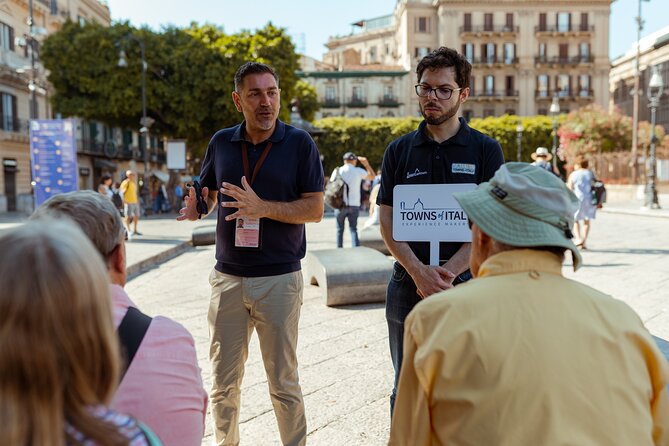
If Palermo feels confusing at first, this tour gives you a map that’s more than directions. You learn what you’re looking at: why certain buildings exist, how different cultures shaped the city, and what to notice when you go back on your own.
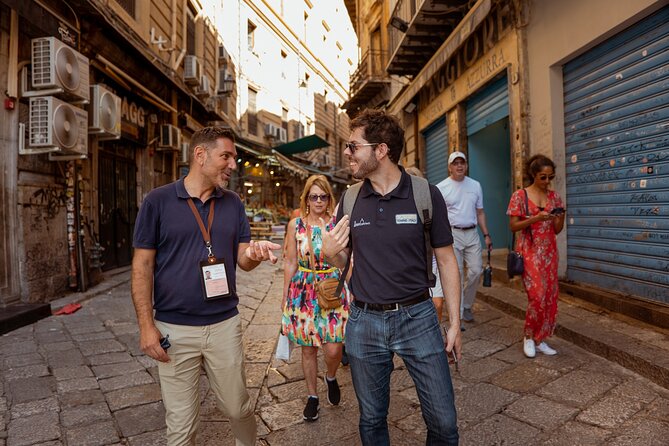
I like that the route doesn’t treat Palermo like a theme park. You’ll pass public squares and churches, but you’ll also hit a typical open-air market crossing via Bandiera and the food scene around Piazza Caracciolo. It’s the kind of mix that helps you understand the city’s rhythm.
At $31.88 per person for about 3 hours, the value comes from the mix of included access and timing. Cathedral entry is included, and you also get a classic Sicilian sweet at the end, which keeps your day-plan from turning into a spend-more-by-default situation.
You can also read our reviews of more tours and experiences in Palermo.
Starting on Via Volturno: what to expect from the format
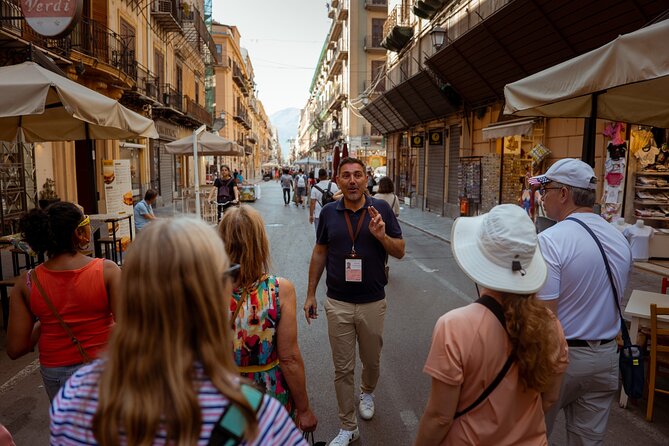
The tour starts at Via Volturno, 44 (90138 Palermo) and ends back near the same meeting point. You’ll get a mobile ticket, and the experience runs in English with a licensed guide.
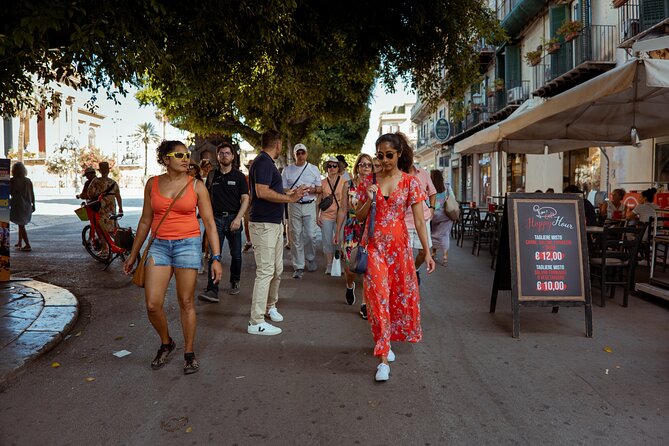
It’s designed for most travelers, and the group is capped at 20 people, which keeps it manageable. You’ll be walking in a historic center where foot traffic, storefronts, and scooters can make navigation tricky, so having a guide and likely some kind of audio support really helps.
The tour runs regardless of weather, so pack for sudden changes. Palermo can be warm, windy, or rainy without warning, and you’ll still be moving between stops.
Teatro Massimo and Galleria delle Vittorie: big-city drama meets faded ambition
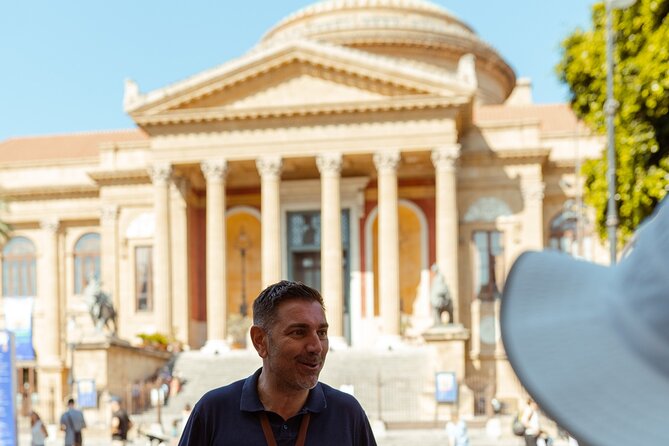
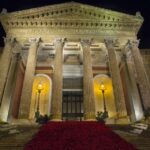
Your first major landmark is Teatro Massimo Vittorio Emanuele on Piazza Verdi. It’s the largest opera house in Italy and, at the time it opened, one of Europe’s biggest. People also rave about its acoustics, which is one of those details you’ll hear about because it’s part of why opera culture matters here.
From there, you’ll glance toward Galleria delle Vittorie on Via Maqueda. This was originally built like a commercial mall, and the structure has deteriorated over the decades, even after restoration attempts. It’s a useful stop because it shows how Palermo’s “grand plans” can drift over time, not just how the city looks at its best.
If you’re the type who likes architecture details, pay attention to how quickly the streets switch mood: opera-house scale, then everyday commerce. That contrast becomes a theme throughout the walk.
From markets to baroque fountains: San Domenico, Piazza Caracciolo, and the Garraffo Fountain
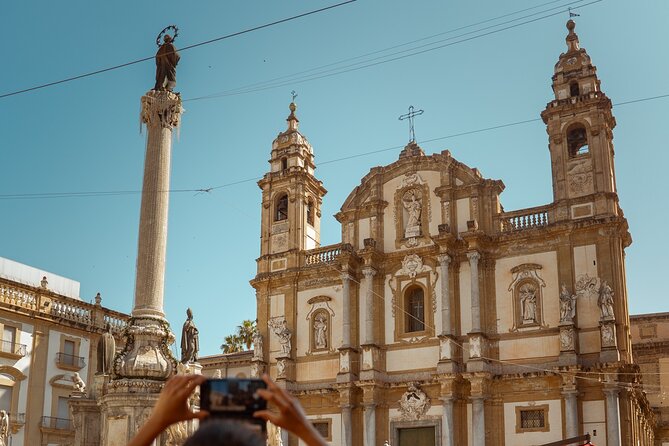
Next comes Chiesa di San Domenico in its square, which dominates the area. It’s loved by locals not only for its religious importance, but because it’s treated like a Pantheon of illustrious men of Sicily. The church is also described as a symbol in the fight against the mafia, so it carries meaning beyond aesthetics.
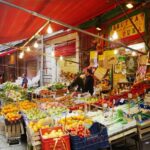
Then you move into the feel of daily Palermo at Piazza Caracciolo. This market winds through alleys and nearby streets, and it’s exactly the kind of place where you understand the city’s energy instead of just reading about it. The area was once called la Bucceria, tied to the French word for butcher shop (boucherie), which hints at how older functions shaped the neighborhood.
You’ll also see Fontana del Garraffo in Piazza Marina, down Palermo’s historic Cassaro street (now Via Vittorio Emanuele). It’s a baroque fountain in a baroque layout city, and even if you only stop briefly, it helps you train your eye for the ornament language Palermo uses so often.
Palazzo life and street legends: the Stock Exchange, the Descent of the Judges, and La Martorana
At some point you’ll pass the Palermo Stock Exchange site, once one of ten active Italian stock exchanges until 1997. Trading started in 1845, and Palermo’s exchange was one of the most important in Sicily. The story gets even more interesting because it wasn’t the only one on the island, with Messina, Catania, and Agrigento also active until the First World War.
After that, you’ll walk down the Descent of the Judges from Piazza Sant’Anna toward Piazza Bellini. The name comes from the Judges of the Praetorian Court, with links to where they lived, and the tour explains how the court’s judges were selected and how long they served. It’s one of those street-name stories that makes the whole city feel less random.
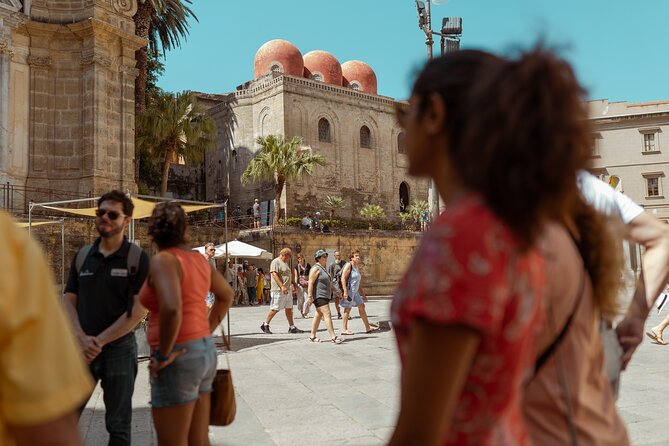
Then you reach Santa Maria dell’Ammiraglio, commonly known as La Martorana. Built between 1143 and 1185, it was tied to Greek-Byzantine clerics and stands in the longer thread of Palermo’s cultural blending. The guide also points out that the church’s clergy still officiates in ancient Greek or Albanian, connected to the Italo-Albanian Catholic tradition.
If you only remember one thing from this stretch, remember this: the Norman-Arab look of Palermo isn’t just a costume. It’s tied to people, institutions, and language choices that lasted.
Piazza Pretoria and Quattro Canti: where Palermo stages its own drama
Now you enter two of Palermo’s most photographed city-core moments, but the real trick is knowing what you’re seeing.
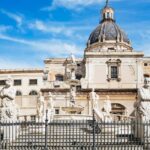
Piazza Pretoria is near Kalsa and by the intersection around Cassaro and Via Maqueda. It’s anchored by a fountain created for a garden in Florence for don Luigi de Toledo, then installed here in Palermo under commission to the sculptor Francesco Camilliani. Even if the piazza feels like an open-air picture set, it’s actually a lesson in how art moved and how cities borrowed prestige from each other.
A short walk leads to Quattro Canti, also called Piazza Vigliena. These four buildings frame the square, built between 1608 and 1620, with decorative elements completed in 1663. This is where you start to orient yourself in Palermo because the geometry of the city connects from here.
If you’re visiting for the first time, spend mental energy on alignment: learn which street spokes out from the corners. After the tour, that turns into easier choices for where to wander next.
Entering Cattedrale di Palermo: Norman architecture with Arab details
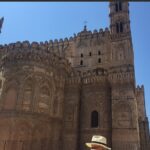
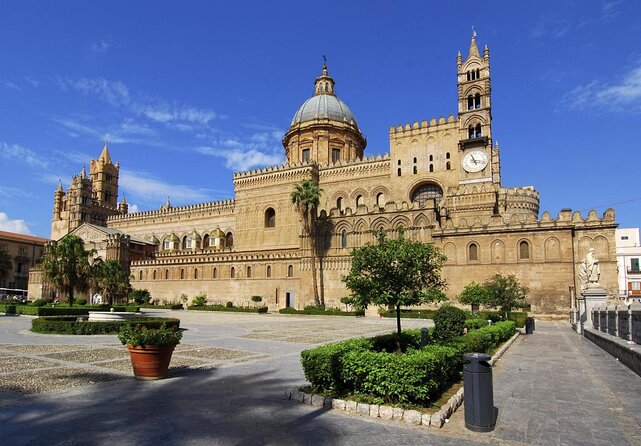
This is the big access stop: Cattedrale di Palermo. You’ll go inside for about 30 minutes, and the guide explains how it was built by the Normans in 1184, on top of earlier layers that included a Muslim mosque and earlier Christian structures.
What makes this cathedral special is the layering you can still feel. You’ll hear that Palermo’s church architecture shifts through Gothic, medieval, Arabic influences, and later Neoclassical additions. One detail to listen for: there’s an engraved text on a column that refers to a passage from the Koran, which is exactly the kind of “wait, that’s here?” moment Palermo does better than most cities.
Also, there’s a competitive streak baked into the story. The cathedral was built to surpass Monreale in beauty, which helps you interpret the style: Palermo often looks like it’s trying to win the argument with itself.
If you go quiet for a minute inside, you’ll usually notice how your guide’s explanation changes how the space feels. That’s one reason a guided visit is worth the money here.
Villa Bonanno’s garden: where Roman mosaics matter even when you can’t see them
After the cathedral, the walk shifts into calmer space at Villa Bonanno, a garden open to the public. It was built in 1905, behind the Palace of the Normans, in Victory Square.
Palm trees and sculptures sit alongside a different kind of treasure: the garden’s site includes remains of Roman patrician houses, including mosaics. The tour highlights mosaics like the Seasons and Orpheus, which are now kept in the National Archaeological Museum, so you’re learning about what’s missing as much as what’s present.
There’s also a fountain nearby with a monument to Philip V, connected to a 19th-century work by Nuncio Morello, with details about earlier design influence. It’s a good pause because it breaks the “church and piazza” rhythm without leaving the theme of Palermo’s layered past.
Palazzo dei Normanni: the Palatine Chapel story, and what you should notice from outside
Your final big landmark is the Palazzo dei Normanni, also known as the Royal Palace. Even if entrance isn’t included for this portion, your guide explains why it’s such a key site: it chronicles Palermo’s story from early settlements to later eras.
One highlight is the Cappella Palatina (Palatine Chapel), described as Arab-Norman art and marked as a World Heritage Site since 2015. If you can’t go inside today, you’ll still come away with a clear mental picture of what that chapel is known for, which makes a future return trip much easier to plan.
There’s also mention of the Torre Pisana housing the Palermo Astronomical Observatory and a museum space, plus temporary exhibitions in other halls. Even from the outside, you learn how the palace functions as more than a relic.
Food stop: cannolo or granita, plus how to use the tip wisely
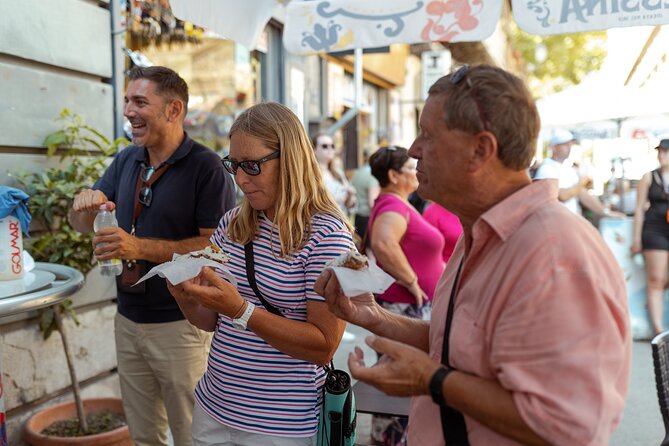
The tour includes a typical Sicilian cannolo or granita. This is one of those small inclusions that matter because it helps you budget without guessing where to go. You also learn what to try around the area, which can save you time later when you’re hungry and overwhelmed by choices.
One practical note: Palermo can be a noisy, traffic-heavy city center. If you’re the kind of person who needs restrooms, it’s smart to plan for it as you go. In historic cores, these aren’t always easy to find quickly.
How much walking is it, really, and who should book
This is a walking tour built around major sights and frequent orientation points. It’s ideal if you want to get your bearings fast, learn what to notice, and then return on your own for longer looks.
It’s less ideal if you hate walking in crowds or prefer deep museum time. Also, if you’re sensitive to heat or rain, bring a hat or umbrella and expect you’ll still be moving between points because the experience runs regardless of weather.
On the plus side, small group size helps with pacing and questions. And since this is a guided UNESCO-focused route, you’ll spend less time trying to figure out what you’re seeing and more time actually understanding it.
So, should you book it?
I think this tour is a strong choice if you’re spending limited time in Palermo and want a clean, organized start. The combination of cathedral entry, UNESCO-linked context, and a real taste of neighborhood life (markets, fountains, street-name stories) is the right mix for first-timers.
Book it if you like architecture with meaning, and if you want a guide to point out the details you’d otherwise miss. Skip it only if you already know Palermo well and you’re craving longer indoor time at specific sites, because this tour is built for overview and orientation, not prolonged stays.
FAQ
What is the duration of the Palermo UNESCO walking tour?
The tour lasts about 3 hours.
How much does it cost?
It costs $31.88 per person.
What’s included in the price?
You get a licensed English-speaking guide, the walking tour of main monuments, entrance to the cathedral, and a typical Sicilian cannolo or granita.
What isn’t included?
Hotel pickup and drop-off are not included, and some sites along the route may be viewed from the outside rather than with included admission.
Where does the tour start and end?
It starts at Via Volturno, 44, 90138 Palermo, Italy, and ends back at the meeting point.
Is the tour offered in English?
Yes, the tour is offered in English.
Can I cancel for a full refund?
Yes. You can cancel up to 24 hours in advance for a full refund.