In a few short hours, this guided walk strings together Palermo’s Baroque masterpieces and daily life in one easy route. I like that it keeps a tight pace without feeling rushed, and I also like the small group size (max 10) that makes questions actually possible. One thing to plan for: several major churches require separate tickets, so your budget may rise a bit depending on which interiors you choose to enter.
You’ll start at Piazza Pretoria, then zigzag through iconic squares and church stops that show how many cultures stacked on top of each other here. Guides like Barbara and Manuela (and other team members listed across past tours) have a knack for turning architecture into a story you can remember.
The tour is best as an orientation day. It’s also weather-dependent, so if rain rolls in, expect the walk to feel longer and some art/church access to change.
In This Review
- Key things to know before you go
- Price and logistics: Is $54.42 a good value?
- Walking the Baroque core: Piazza Pretoria and Quattro Canti
- Santa Caterina d’Alessandria: cloister calm and the monastery sweets
- La Martorana (Santa Maria dell’Ammiraglio): Norman-Baroque art, only when open
- Giudecca (Jewish Quarter) and Chiesa del Gesù marble drama
- Palermo’s oldest street, Cattedrale di Palermo, and the Norman kings
- Capo Street Market: the best kind of break (and real food fuel)
- Teatro Massimo: finishing at Palermo’s grand neoclassical icon
- Who this tour fits best
- A balanced caution list (so you’re not surprised)
- Should you book Discover Palermo?
- FAQ
- How long is the Discover Palermo walking tour?
- What does the tour cost?
- Is the tour guided in English?
- Do I need to pay for church entrances during the tour?
- Where does the tour start and end?
- Is La Martorana guaranteed to be open?
- How big is the group?
- What if the weather is bad?
- Is there a cancellation window?
- Is a mobile ticket used?
Key things to know before you go
- Small groups, big city context (max 10 people), so the guide can steer you around the old center
- Palermo Baroque highlights in tight stops: Piazza Pretoria, Quattro Canti, and Chiesa del Gesù
- Church choices come with separate entry fees for several interiors
- La Martorana access depends on opening hours, with route adjustments when needed
- Capo Street Market is built into the walk, not added as an afterthought
- Easy walk that ends at Teatro Massimo, with a clear finish point near Piazza Giuseppe Verdi
Price and logistics: Is $54.42 a good value?
For $54.42 per person and about 2 to 3 hours, you’re paying for a guided route that hits the old center’s top visual hits plus one of the city’s most lived-in food stops. A big value point here is concentration: you don’t spend half the day getting between sights on your own.
Your main variable cost is church interiors. Several stops are free to view from the outside, while others can include optional paid admission (for example Santa Caterina’s church/areas, La Martorana, and Chiesa del Gesù, plus Teatro Massimo). If you’re the type who loves stepping inside, plan for extra tickets; if you’re more into street scenes and squares, you can keep it simple.
The tour also runs in English and uses a mobile ticket, which is the right kind of hassle-free. With good weather required, you’ll get more from it when you can actually enjoy long outdoor stretches.
You can also read our reviews of more tours and experiences in Palermo.
Walking the Baroque core: Piazza Pretoria and Quattro Canti
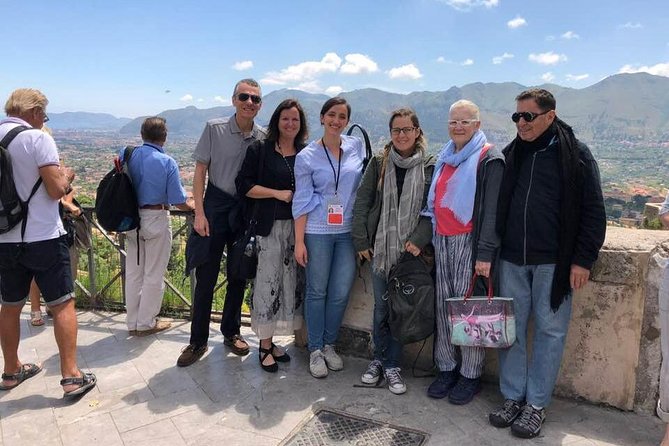
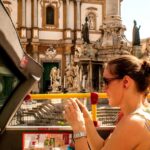
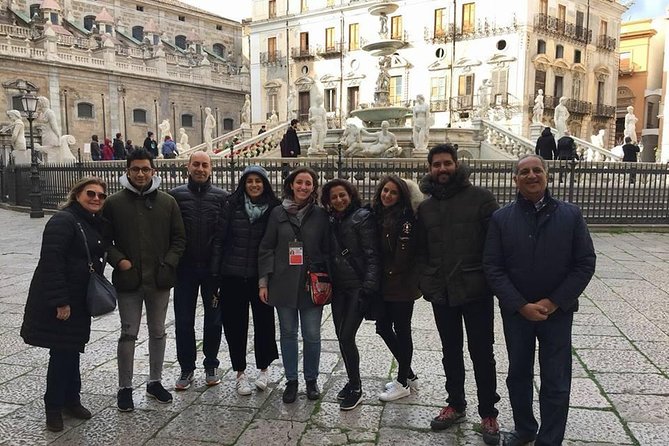
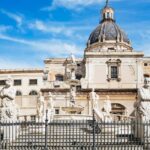
The tour kicks off at Piazza Pretoria, one of Palermo’s prettiest squares. The star is the white Carrara marble fountain people jokingly call the fountain of shame. Around it, you’ll notice the way grand civic buildings and church architecture sit together like stage sets.
This stop is more than a photo stop. It’s a quick lesson in how Palermo mixes official power (town halls and palaces) with religious artistry, and you’ll see that pattern echo again and again on your walk.
Next is Quattro Canti, the baroque crossroads of the historic center. This seventeenth-century square is the kind of place where details matter: sculptures and architectural drama line up at street corners, so you can’t really rush it. You’ll get a “map in your head” feeling for where you are and why the old streets are laid out the way they are.
Timing note: these are short stays (around 15–20 minutes), so wear shoes you can walk in and bring water if you’ll be there during warm hours.
Santa Caterina d’Alessandria: cloister calm and the monastery sweets
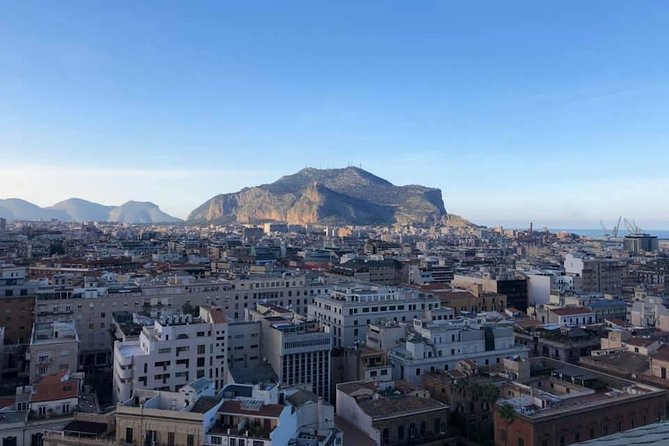
Your next stop is Church and Monastery of Santa Caterina d’Alessandria. Even when the route is moving, this place has a different mood from the street—more quiet, more internal, and very Palermo at the same time.
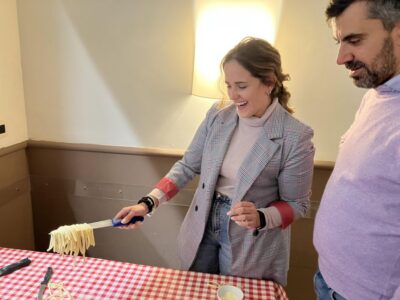
You’ll focus on the cloister and the monastic confectionery connected to the Dominican monastery. That combination is fun because it’s not just “look at pretty stone,” it’s also a hint that religious houses here were part of everyday life—through food, craft, and routine.
The baroque church portion may involve a paid ticket. If you’re trying to keep costs controlled, you can still enjoy the exterior and the key parts included in the walking plan, but you’ll have to decide whether church time is worth the extra entry.
Practical tip: If you care about entering every interior, be ready for those “not included” ticket labels. That way there are no surprises mid-walk.
La Martorana (Santa Maria dell’Ammiraglio): Norman-Baroque art, only when open
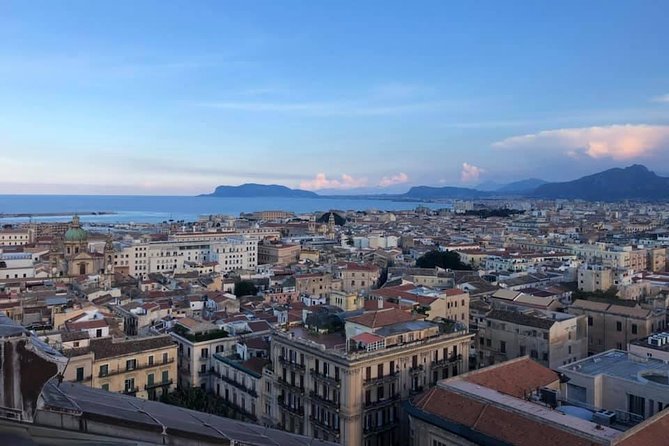
One of Palermo’s most striking church stories is Santa Maria dell’Ammiraglio, often called La Martorana. The big draw is the blend of Norman influence and Baroque art, giving you a “how did they mix these styles” moment without needing a museum ticket.
The smart thing to know is this: it’s visitable only when the site is available for visits. When it isn’t, the route may swap the plan for an alternative or add time elsewhere—like the Church of Jesus. That flexibility is helpful, but it also means you can’t treat this stop like a guaranteed interior visit.
So what’s the best way to plan? If La Martorana is a must-see for you, you’ll still get value even from outside viewing and surrounding context, but keep a little flexibility in your expectations for the exact interior access.
Giudecca (Jewish Quarter) and Chiesa del Gesù marble drama
After La Martorana, the walk turns toward Giudecca – Il Quartiere Ebraico, tied to the old Jewish community of Palermo. This area is connected to the Meschita neighborhood, where the community lived until their expulsion in 1493. It’s a heavy historical marker, but it’s also where the tour helps you read the city as more than architecture.
Then comes Chiesa del Gesù, one of those churches that earns its reputation fast. Palermo baroque here isn’t subtle. Expect the church to take your breath away with marble decoration and an overall sense of theatrical luxury.
This is another stop where entrance is not included, so you’ll pay for interior access if you choose it. If you do go in, treat it like a payoff for all the earlier outside-view context—your guide’s story should click into place.
If you’re deciding on tickets: In places like this, interiors are where Palermo baroque goes full power. If budget is tight, I’d prioritize the church with the strongest artistic impression for you.
Palermo’s oldest street, Cattedrale di Palermo, and the Norman kings
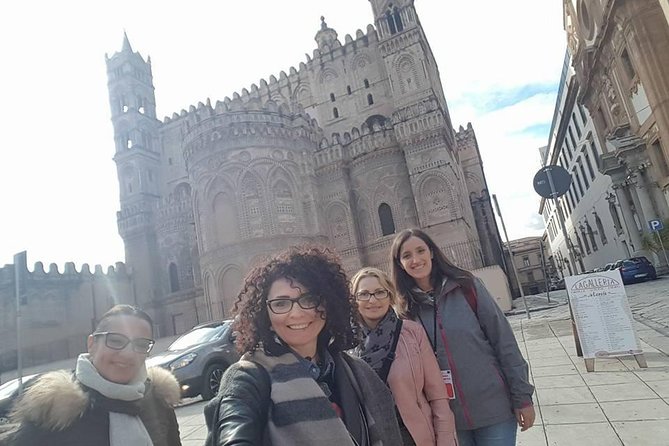
At this point you’ll walk along the city’s most ancient and important street, lined with noble palaces and shops of Sicilian craftsmanship. Even if you can’t name every building from memory, the feel of the street gives you the “this is the backbone of the city” understanding.
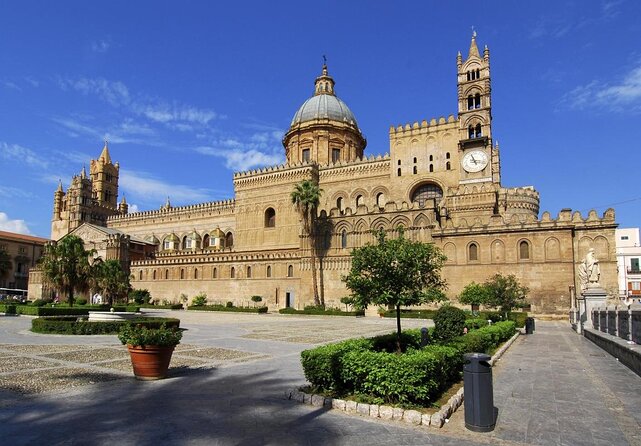
Then the route arrives at Cattedrale di Palermo (Palermo Cathedral), which is significant for being a palimpsest—different styles and cultures layered into one complex. Two details matter a lot here:
- The tombs of the Norman kings
- The silver chapel of Santa Rosalia
It’s one of those stops where the guide’s narration helps you see past the wow-factor and understand why the cathedral holds so much political and religious weight.
This is also labeled free, which makes it an easy win. You’re not paying to view the main cathedral presence as part of the route.
Time pacing: you’ll have around 20 minutes, so you’ll want to pick one or two focus points—Norman tomb connection or Santa Rosalia chapel—rather than trying to read everything at once.
Capo Street Market: the best kind of break (and real food fuel)
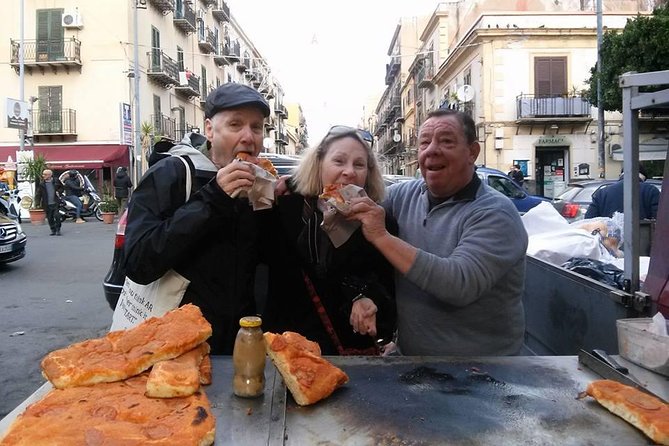
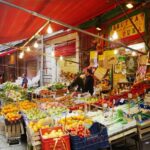
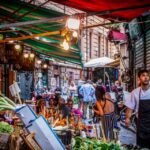
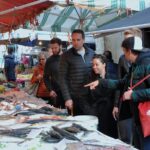
The tour ends its sight-heavy stretch with Capo Street Market. This is where Palermo feels most like Palermo: fruit, vegetables, fish, spices, and the constant energy of local commerce.
Even if you don’t plan a full meal, this stop is valuable because it grounds everything you just learned in daily life. The guide can point out what to try, and this is a great moment to taste something small and local—like arancini—before you move on.
Admission is free, and the market is usually an easier stop if you’re traveling with teens or picky eaters because options are visible and you can choose your pace.
Practical move: Wear layers and plan for sensory overload. Market smells are part of the experience here. If you’re sensitive, take it slow and step back between tastings.
Teatro Massimo: finishing at Palermo’s grand neoclassical icon
Your walk finishes near Teatro Massimo, stopping at Piazza Giuseppe Verdi. Teatro Massimo is described as the largest opera house in Italy and the third largest in Europe, and it’s in neoclassical style—big, formal, and instantly impressive even from outside.
This is a strong ending because it gives you a sense of the city’s modern cultural pride, after all the old-center baroque and medieval weight.
Entrance is not included, so whether you step inside depends on your time and your ticket appetite. Even without an interior visit, you’ll leave with a landmark that helps you navigate Palermo afterward.
Who this tour fits best
This is a great fit if you want:
- A first introduction to Palermo without doing heavy planning
- A fast route through Baroque squares and churches
- One real “city life” stop with Capo Market
- A format that works for couples, solo travelers, and families, thanks to a small group size (max 10)
It’s also a good “day one” plan. You’ll come away knowing where the historic core is and what parts of the city you want to return to on your own.
A balanced caution list (so you’re not surprised)
- Church tickets are separate: Santa Caterina’s certain areas, La Martorana (when visited), Chiesa del Gesù, and Teatro Massimo can involve paid entry.
- La Martorana depends on access: if the site is closed, the route adjusts.
- Weather matters: the experience requires good weather, and rain can make outdoor walking less fun.
- You’re on a walking timeline: short stops add up, so comfortable footwear is not optional.
Should you book Discover Palermo?
I’d book it if you want a guided overview that feels practical: key squares, major Palermo baroque moments, a grounded look at Jewish history in the old center, and a market stop that’s part of daily life. The combination of free viewing points plus optional paid interiors is flexible for different budgets.
If your plan is mostly about museum-style, ticket-heavy interiors, you may find that the outdoor pacing leaves you wanting more time inside each church. But for most visitors, this tour is a strong way to get your bearings fast and build a Palermo shortlist for the days after.
If you can only fit one guided walk into your trip, this is the kind that sets you up well for self-exploring later.
FAQ
How long is the Discover Palermo walking tour?
It runs about 2 to 3 hours.
What does the tour cost?
The price is $54.42 per person.
Is the tour guided in English?
Yes, it’s offered in English.
Do I need to pay for church entrances during the tour?
Some sights are free to view, but several churches/theater are listed as admission not included. You’ll pay for those optional or interior visits directly.
Where does the tour start and end?
It starts at Piazza Pretoria, Palermo, and ends at Piazza Giuseppe Verdi.
Is La Martorana guaranteed to be open?
No. Santa Maria dell’Ammiraglio (La Martorana) is visitable only when the site is available for visits, and the route may be adjusted if not.
How big is the group?
The tour has a maximum of 10 travelers.
What if the weather is bad?
This experience requires good weather. If it’s canceled due to poor weather, you’ll be offered a different date or a full refund.
Is there a cancellation window?
Yes. You can cancel up to 24 hours in advance for a full refund.
Is a mobile ticket used?
Yes. The tour uses a mobile ticket, and you receive confirmation at booking.