REVIEW · PALERMO
Markets and Monuments: Walking Tour in the Center of Palermo
Book on Viator →Operated by Cavallaro Fabrizio · Bookable on Viator
Palermo feels like it has two speeds: fast streets and slow beauty. I love how this walk mixes the Capo Street Market with big monuments, and I especially like the way you get Teatro Massimo and the Cathedral without feeling rushed. One thing to consider: it is a lot of walking in warm weather, so plan for heat and bring water.
I went in expecting a highlights loop. I came out with clearer context for why Arab-Norman Palermo matters, plus practical ideas on what to eat after you’re done with the churches. The guide for this experience is listed as Cavallaro Fabrizio, and his delivery is part of why people finish the tour feeling they actually learned something.
In This Review
- Key Things to Know Before You Go
- A First Taste of Palermo’s Center, from Market Noise to UNESCO Stones
- Meeting at Piazza Vincenzo Bellini: Where the Walk Starts and How It Ends
- Capo Street Market: The Best Place to Start Eating Like a Palermitano
- Teatro Massimo in 15 Minutes: Why Italy’s Big Opera House Still Feels Legendary
- Palermo Cathedral (Cattedrale di Palermo): Where Arab-Norman Logic Shows Up
- Quattro Canti and Piazza Vigliena: Baroque Geometry at a Street Crossroads
- Fontana della Vergogna in Piazza Pretoria: A Monumental Pause
- La Martorana (Santa Maria dell’Ammiraglio) and Frutta di Martorana
- San Cataldo’s Three Red Domes: A Simple Church Form with Big Character
- Price and Value: What $39.91 Gets You (and What You’ll Still Pay For)
- Pacing, Heat, and Rain: How to Make the Most of the Walk
- Who This Tour Fits Best (and Who Might Want Something Different)
- Should You Book This Palermo Center Walking Tour?
- FAQ
- How long is the Walking Tour in the Center of Palermo?
- Where does the tour start and where does it end?
- What language is the tour offered in?
- Is the tour ticket mobile?
- Are food and drinks included?
- Are entrance fees included for the major sites?
Key Things to Know Before You Go
- Capo Street Market is the classic entry point for local produce, fish, and everyday Sicilian life.
- Teatro Massimo is all about scale and stories, even when you’re not paying museum-style entrance fees.
- UNESCO Arab-Norman Palermo context is built into the stop at the Palermo Cathedral.
- Quattro Canti and Fontana della Vergogna give you baroque geometry and a major photo landmark.
- La Martorana (Santa Maria dell’Ammiraglio) connects church art to a famous Palermo snack tradition.
- Group size stays small, with a max of 18 travelers, which helps questions and pace.
A First Taste of Palermo’s Center, from Market Noise to UNESCO Stones
This is a smart way to start in Palermo’s historic core if you want both street-level flavor and serious architecture. You’re not just looking at buildings—you’re getting the why behind them, with quick stops that keep the walking from dragging.
What I like most is the balance. You get food and architecture in the same flow, so the city feels lived-in rather than staged. And you also get a sense of Palermo as a crossroads, not a single-style place.
You can also read our reviews of more tours and experiences in Palermo.
Meeting at Piazza Vincenzo Bellini: Where the Walk Starts and How It Ends
You meet at Piazza Vincenzo Bellini in the center. It’s convenient for getting there by public transportation, and the tour uses a mobile ticket, which cuts down on fuss.
The walk finishes in front of Santa Caterina church, about a 20-minute walk from where you start. That’s a plus if you want to keep exploring after the tour, since you’ll end near another pocket of the historic center rather than getting boxed back into the exact same spot.
One practical note: the tour is set up for smart casual dress. That matters because you’ll spend time outside in real street conditions, then move through church spaces where shoes and clothing matter.
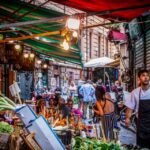
Capo Street Market: The Best Place to Start Eating Like a Palermitano
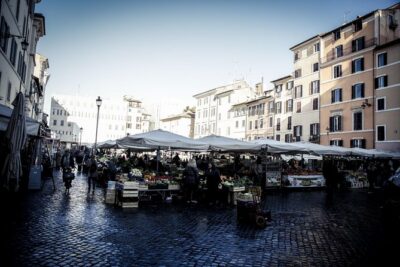
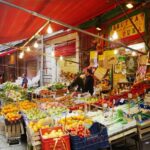
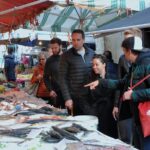
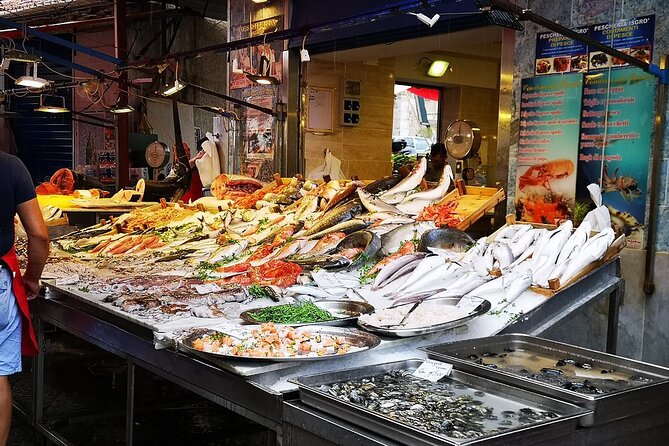
Capo Street Market is the first stop, and it sets the tone fast. This is a traditional, old-school food market where you’ll see typical Sicilian fruit and vegetables, plus fish. It’s the kind of stop that helps you understand the city’s day-to-day rhythm.
You’ll have about 20 minutes here, and admission is free for the market portion. That time is short on purpose. You’re not meant to shop for an entire week—you’re meant to look, taste your curiosity, and pick up snack ideas.
If you want to buy something, keep expectations realistic. This is not a sit-down tasting. The tour offers the option to purchase classic snacks, so you can grab something small and keep moving. If you’re doing this in the heat, I strongly suggest buying water early or planning your bottle refill between stops.
Teatro Massimo in 15 Minutes: Why Italy’s Big Opera House Still Feels Legendary
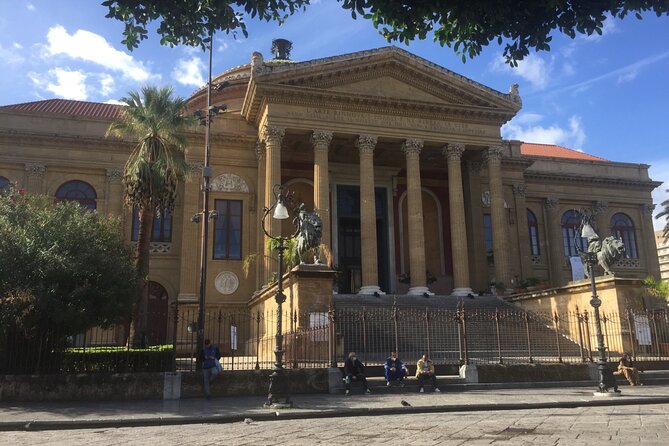
Then comes Teatro Massimo, the largest opera house in Italy and the third one in Europe. It was built in 1875, and the tour frames it with the legends and local lore that cling to major cultural sites like this.
You’ll pause for around 15 minutes. Entrance fees are not included here, so the stop is more about seeing and understanding the place than a full museum-style visit. In practice, that means you’ll want to decide in advance whether you want to pay separately for any indoor access you might be offered.
This stop is still worth it even if you don’t go inside. The building’s scale is the story. And even a quick look gives you something to connect to later, when you start noticing Palermo’s love of grandeur in smaller streets and squares.
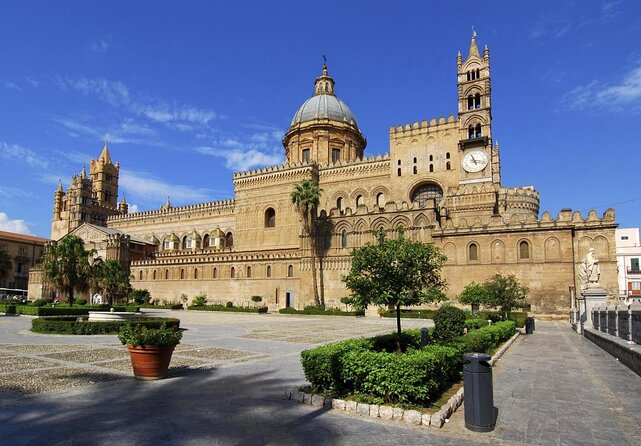
Palermo Cathedral (Cattedrale di Palermo): Where Arab-Norman Logic Shows Up
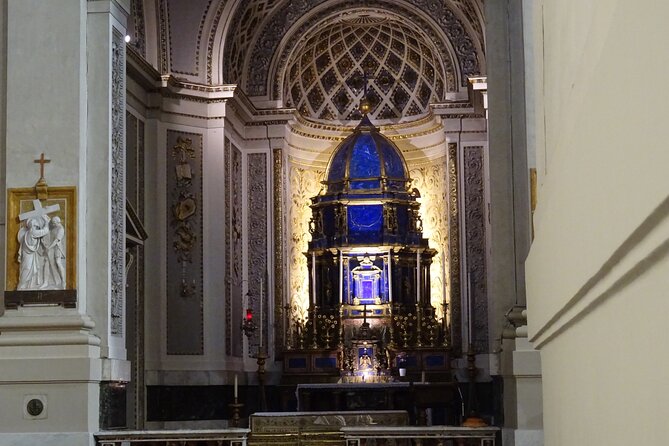
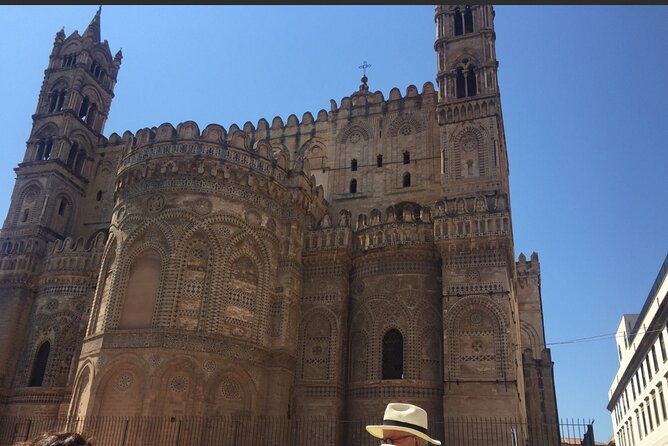
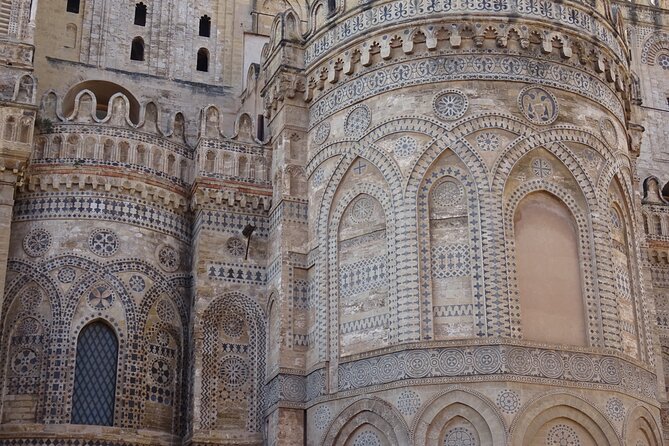
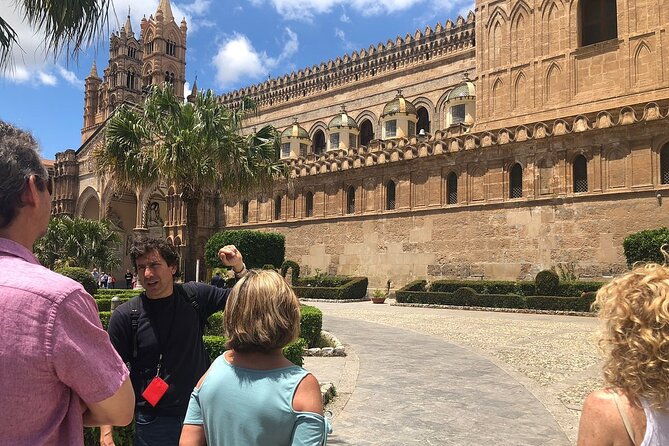
Next is the Palermo Cathedral, a key part of the Arab-Norman UNESCO story. This stop is one of the tour’s strongest learning moments because it connects architecture to history, not just aesthetics.
You get about 20 minutes, and admission is free for the Cathedral portions included on the tour. You’ll see it both outside and inside, which is important. The exterior gives you the big shape, and the interior lets you actually read the details.
If you care about how cultures overlap, this is the stop. The Cathedral sits at the intersection of influences that helped define UNESCO’s Arab-Norman Palermo. The guide’s job is to make that feel clear in plain language, and that’s exactly the kind of context that makes a short walking tour feel worth it.
Quattro Canti and Piazza Vigliena: Baroque Geometry at a Street Crossroads
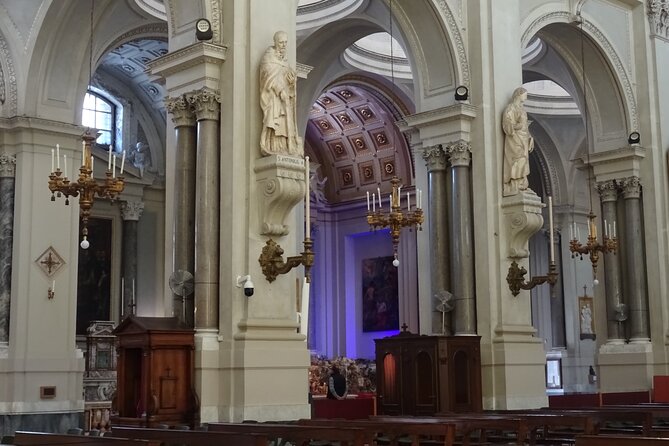
Quattro Canti is officially Piazza Vigliena, built during the 17th century at the intersection of Palermo’s principal streets: Via Maqueda and Corso Vittorio Emanuele. It’s baroque city planning as spectacle.
You’ll get a shorter stop here, about 10 minutes. That’s enough to orient your eye. Look for how the square is staged at a street crossing, turning something you’d normally pass through into a mini stage set.
This is also a good mental break. After churches and market noise, Quattro Canti gives you an easy win: you can stop, look up, take photos, and get your bearings before the next landmark.
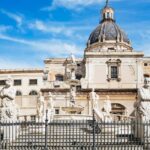
Fontana della Vergogna in Piazza Pretoria: A Monumental Pause
Then you’ll reach Fontana della Vergogna, a monumental fountain that sits in the heart of the historic center and serves as a major landmark of Piazza Pretoria. It was built in 1574, which helps you place it in the same long baroque era as Quattro Canti, even if the vibe feels different.
You’ll have about 15 minutes here. The fountain is the kind of stop where a few good explanations turn it from a photo moment into a real story about how power and art showed up in public space.
If you’re the type who likes details, linger slightly within the time you’re given. It’s easy to rush because the street scene is right there. Slow down just enough to notice the fountain’s scale and design. That pays off later when you compare it to other “public art” you see in Sicily.
La Martorana (Santa Maria dell’Ammiraglio) and Frutta di Martorana
Santa Maria dell’Ammiraglio is often called La Martorana, and this stop is about style layering. The church is known for the mix of artistic and architectural tastes that were added over centuries.
You’ll pause for about 10 minutes, and entrance fees are not included. That means you may see the key parts you’re meant to notice, but if you want a full, timed interior experience, you’ll likely need to pay separately.
Here’s the fun connection. The nuns of the Martorana were known for moulded marzipan made in the shape of fruits. The convent no longer exists, but frutta di Martorana is still one of Palermo’s most recognizable treats. Even if you don’t buy it on the spot, you’ll understand why it matters once you see the church context.
San Cataldo’s Three Red Domes: A Simple Church Form with Big Character
The final church stop is the Church of St. Cataldo (San Cataldo), built in the 12th century. It’s famous for its three red domes, and even a quick visit helps you imprint Palermo’s skyline details.
You’ll have around 10 minutes, and entrance fees are not included. Expect this to be more about spotting the domes and learning how the church fits into the broader timeline of the city’s architecture.
If you love clean visual identifiers, this is a good one to end on. Those red domes are memorable, and they give you something to carry home when you’re navigating on your own.
Price and Value: What $39.91 Gets You (and What You’ll Still Pay For)
At about $39.91 per person for roughly 3 hours, this tour is priced for value if you’re using it as a first-orientation walk. You get a local guide plus a professional guide setup, and there’s also port pickup included, which can matter a lot if you’re arriving by cruise or using a guided transfer model.
What’s also helpful is how the “free entry” stops are concentrated. The market and Cathedral portions are free for the included elements, while a few bigger-name buildings have entrances not included (like Teatro Massimo and some church stops).
Plan on extra spend only if you decide you want more than the quick tour look. The tour also does not include food and drinks, so snack purchases are optional. That’s not a flaw—it’s a chance to buy what you actually want instead of being forced into one set menu that might not match your tastes.
Pacing, Heat, and Rain: How to Make the Most of the Walk
This tour is designed to feel like a concentrated city lesson. Most stops are 10–20 minutes, so it moves. That’s good for energy. It can be tough if you’re not used to walking for long stretches.
A real consideration: Palermo’s summer heat can be intense. I’d treat water as a must, not an afterthought. Bring your bottle and plan to pause for a sip when you can.
Bad weather is less of a deal-breaker than you might think. With a walking tour, the day can feel different in rain, but you still get structure: you’ll have a set order of landmarks, and you won’t be stuck wondering what to do next.
Who This Tour Fits Best (and Who Might Want Something Different)
This is a great fit if you want a first pass through central Palermo and you’d like the city explained in plain language. It works well for couples, solo travelers, and anyone who likes “see it, understand it, then eat something” pacing.
It’s also a good choice if you want architecture and food in one package without booking separate tours for each. And because the group max is kept to 18 travelers, you’re less likely to feel lost in a crowd.
If you hate walking, or you want long inside-museum time, this may feel a bit tight. The tour is built for quick looks at multiple major sites, not for slow lingering in every building.
Should You Book This Palermo Center Walking Tour?
Yes, if you want an efficient, well-structured introduction to Palermo’s center with the right mix of markets and monuments. The Cathedral + UNESCO Arab-Norman context is a highlight, and the market stop gives you a real sense of local food life rather than just sightseeing.
I’d book it especially if you’re arriving for the first time and want a guide to help you read what you’re seeing. If you’re picky about long interior access or you expect the tour price to cover every entrance, double-check your priorities for Teatro Massimo and the church interiors that aren’t included.
FAQ
How long is the Walking Tour in the Center of Palermo?
The tour lasts about 3 hours.
Where does the tour start and where does it end?
It starts at Piazza Vincenzo Bellini and ends in front of Santa Caterina church.
What language is the tour offered in?
The tour is offered in English.
Is the tour ticket mobile?
Yes, the tour includes a mobile ticket.
Are food and drinks included?
No, food and drinks are not included.
Are entrance fees included for the major sites?
Some stops include free access, while others do not include entrance fees (for example Teatro Massimo, La Martorana, and St. Cataldo).
If you tell me your travel month and whether you’re coming from a cruise port or staying nearby, I can suggest the best snack and photo strategy for that day.