REVIEW · SICILY
Etna – Trekking to the summit craters (only guide service) experienced hikers
Book on Viator →Operated by Guide Vulcanologiche Etna Nord · Bookable on Viator
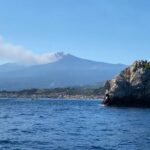
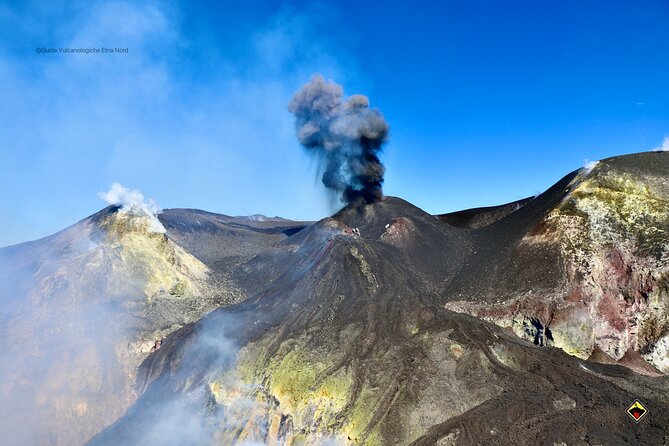
Mount Etna’s summit has a way of rewiring your sense of scale. This Etna Nord trek pushes past the usual viewpoints, mixing 4×4 drives through fresh lava with a guided walk along crater edges. You start in Piano Provenzana, then climb to around 3,000+ meters to reach the active summit craters with English-speaking volcanology guides.
What I like most is how the guides run this day for real conditions, not a script. They keep you moving at a safe pace, and the route can change depending on gas, heat, or fractures. I also love that the tour kits you out: poles, boots, helmets, warm layers, extra socks, and even a backpack, so you’re not hunting gear at the last minute.
One drawback to plan for: this is an experienced-hiker style outing. The summit walk is only part of the story; the return is a long descent with a big drop in elevation, and knee work becomes the main event.
In This Review
- Key things to know before you go
- Etna Nord: why the quieter north side feels more real
- Meeting at Piano Provenzana: what the morning setup gets right
- The 4×4 panoramic climb: where you start seeing Etna as a system
- Stop by Stop: what each phase of the day really gives you
- Stop 1: Piano Provenzana and the 2002 lava context
- Stop 2: Itinerario Crateri Sommitali and the wild north tracks
- Stop 3: the guided summit crater hike from 2,960 m to around 3,300+ m
- Stop 4: back to Piano Provenzana for the landing
- The descent: the part that can feel harder than the climb
- Guides make the difference: names you may hear on this tour
- Price and value: what you really pay for at €139.13
- Is this for you? Fitness, age, and safety checks
- Should you book the Etna Nord summit-craters trek?
- FAQ
- What time does the tour start and where is the meeting point?
- How long is the trekking experience?
- How high do you go on this itinerary?
- What’s included in the price of about $139.13?
- What is not included?
- Is this tour offered in English?
- What happens if weather or volcanic activity makes the tour unsafe?
Key things to know before you go
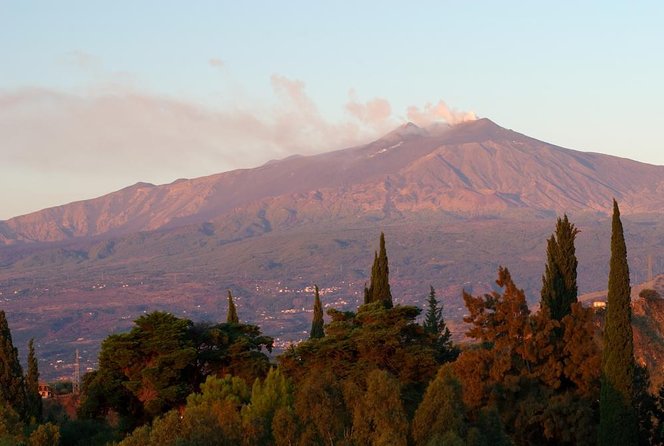
- North slope, smaller crowds: You’re on the less-touristy side, with a more personal group size (up to 12).
- 4×4 access into active terrain: You travel up tracks that cross lava fields and deep eruptive fractures before your feet hit the ground.
- Summit routing changes daily: Guides choose the safest, most active-but-secure crater option based on conditions.
- Gear and safety support included: Boots, poles, helmets, warm jacket, socks, plus insurance for accidents are part of the package.
- Altitude + crater edges can affect some people: Mild altitude effects are possible, and dizziness may happen on crater edges.
- The descent is tough: It’s long, steep enough to feel harder than the climb if your knees aren’t ready.
Etna Nord: why the quieter north side feels more real
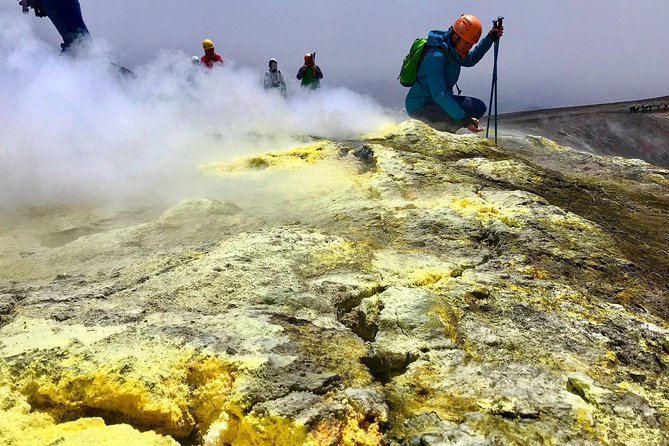
If you’ve visited volcanoes before, you know there’s a big difference between looking at Etna and being inside its weather system. This trek starts from the north side at Piano Provenzana, which tends to feel less crowded than routes closer to the south. You get a more direct connection to the volcanic terrain, including areas reshaped by the 2002 eruption.
The “realness” isn’t just in the vibe. You’ll be walking on ground that’s clearly volcanic—soft scoria, sandy gullies, and patches that look like they belong to another planet. And because this itinerary focuses on the northern flank, you get wide views over northern Sicily and, on clearer days, the Aeolian Islands, the Strait of Messina, and multiple sea basins.
You can also read our reviews of more tours and experiences in Sicily.
Meeting at Piano Provenzana: what the morning setup gets right
Your day starts at CHIOSCO BAR MARENEVE DI FERRARO Etna nord – Piano Provenzana, with a meeting time of 7:45 a.m. From there, you’ll depart roughly 8:00–8:15 a.m. (and there’s also an afternoon option that starts at 1:00 p.m. from May to October).
Before you head up, you meet your guides on-site at Piano Provenzana. There’s time to use restrooms and grab breakfast at the nearby café area if you need fuel. This matters because once you’re above 2,000 meters, you don’t want to think about logistics with cold hands and windy breathing.
Then comes the briefing. Your guides provide the hike kit (poles, trekking shoes, helmet, warm jacket, extra socks, and an extra backpack). It’s a practical advantage: you’ll walk with gear that matches the terrain instead of improvising with city shoes.
Two more small-but-important points:
- Parking can cost extra (weekday pricing and higher Sunday/holiday pricing apply).
- In winter, the access road is drivable, but you may need snow chains or winter tires to reach the area comfortably.
The 4×4 panoramic climb: where you start seeing Etna as a system
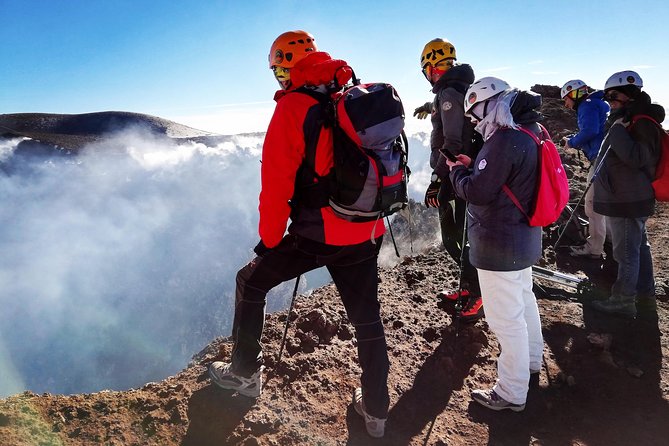
Before the summit hike begins, you’ll ride in authorized 4×4 vehicles. This is not a luxury detour—it’s how you reach crater country safely and efficiently while still seeing a lot.
On the main drive, the route follows an approximately 9.5 km panoramic track across the wild northern flank. You climb roughly from 1,800 m to 2,960 m, crossing forests, recent lava flows, a lava-flow channel, eruptive fractures, and lateral craters (some reported as deeper than 40 meters). Guides stay with you during the drive, so you’re not stuck watching through glass while they wait until the hike for all the explanations.
One of my favorite parts of the drive (based on what this itinerary is built to do) is the view range. On a rare clear day, you can see the Madonie range, the Gulf of Catania, Syracuse, Augusta, and the broad Valle del Bove. Even when visibility isn’t perfect, you still get the sense that Etna is changing the land in layers.
Stop by Stop: what each phase of the day really gives you
Stop 1: Piano Provenzana and the 2002 lava context
Piano Provenzana sits in the Etna Nord tourist area. The key detail is that this zone was destroyed by the October 27, 2002 eruption. So when you arrive there, you’re standing in a place that’s part of Etna’s timeline, not just a convenient parking lot.
This stop is also your buffer zone. You’ll meet your guides, do a quick planning briefing, and handle essentials like restrooms and a bite of breakfast before the long day above the clouds. It’s a nice pacing choice because the summit hike comes later, after you’ve been “activated” by altitude and cold.


Stop 2: Itinerario Crateri Sommitali and the wild north tracks
This is the phase where the itinerary does its best work: you’re taken along a rougher, off-the-beaten-path track where groups tend to be smaller for a more direct guide experience.
You’ll travel from around 1,800 m up to 2,960 m, and you’ll keep getting looks at how Etna builds and breaks land. You’re crossing features like eruptive fractures and lateral craters, plus lava textures you usually only see from photos.
The hike setup matters here too. When you reach the top area near 2,960 m, your body is already used to being higher and your head is ready to focus on walking safely.
Stop 3: the guided summit crater hike from 2,960 m to around 3,300+ m
This is the “why you came” part.
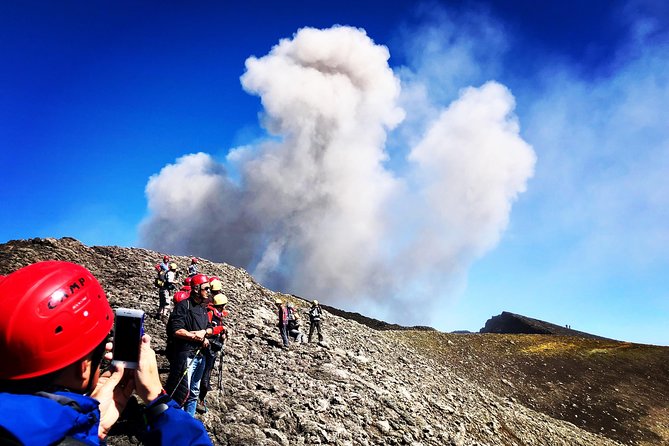
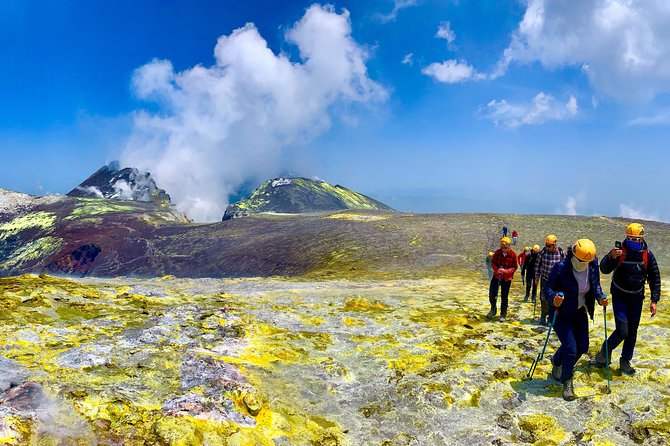
From about 2,960 m, your guided summit trek begins. You climb around 5 km with about 550 m ascent to reach the summit area and its four main craters: North-East, Voragine, Bocca Nuova, and South-East.
Here’s the part you should respect: activity varies daily. That means your guides choose the safest route toward the most active yet secure crater. If gas, heat, or fractures change, the plan changes. The goal is to get you close to crater edges without taking unnecessary risks.
Altitude range sits roughly around 2,960–3,323 m. That’s high enough that you can get mild altitude effects, especially if you rush. Guides manage pacing and can adjust paths if needed.
Also note the crater-edge caution: the route includes walking along crater edges, and that may cause dizziness in susceptible individuals. Bring your calm mindset. Take slow steps, and hold onto what you need for balance.
What the walk is like underfoot:
- soft scoria and sandy gullies through recent lava
- a wider area called Piano delle Concalze
- then a stretch across about 2.5 km of ski slopes, which is rougher and stony
In total, plan around 12–13 km overall with a total duration roughly about 6 hours (small route variations happen depending on what’s safe that day).
Stop 4: back to Piano Provenzana for the landing
After the summit portion, you return down on foot to the area around 1,800 m. Piano Provenzana is your regroup point again, where the area functions like a base with cafés, souvenir stops, and places to refill water bottles.
It’s also easy to reach by car on paved public roads. So even though the hike is big, the “come back to civilization” phase is straightforward.
The descent: the part that can feel harder than the climb
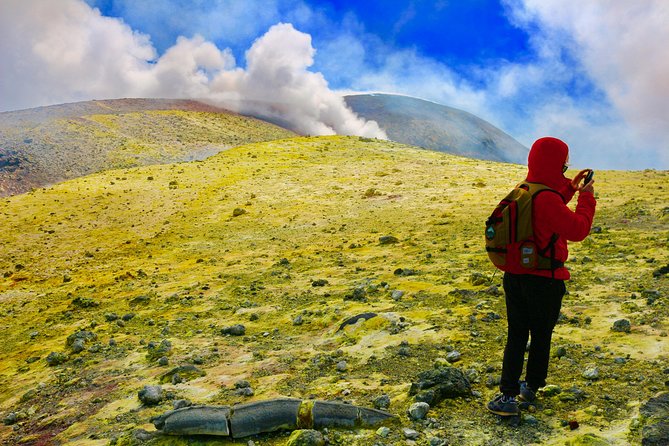
Let’s be blunt: the descent is long. From about 3,300 m back to around 1,800 m, you’ll cover roughly 7 km with about 1,500 m of negative gain.
That negative gain matters. Your quads and knees will do most of the work on the way down, especially on loose volcanic surfaces. Many experienced hikers say the descent feels harder than the ascent, even though the ascent is the dramatic part.
Practical things that help:
- Wear proper boots (if you don’t, insurance coverage can be affected).
- Use the provided poles if you like extra stability.
- Plan for wind. Even when the sun is out, higher altitude can cut fast.
Guides make the difference: names you may hear on this tour
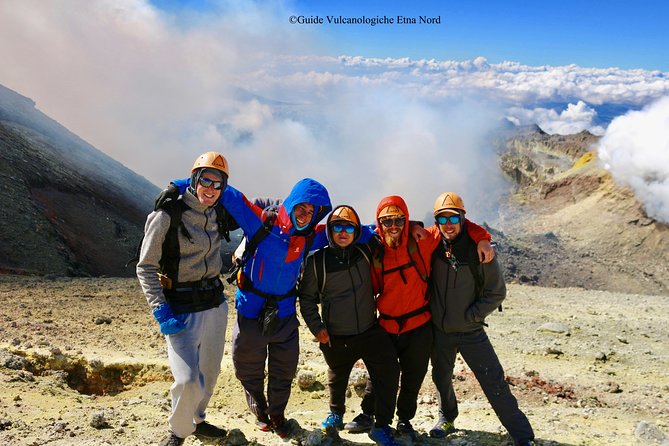
This itinerary has a reputation for strong guiding. If you’re trying to picture what that feels like, think of guides who explain geology and volcano behavior while still keeping the group safe and moving.
In the guide roles associated with this program, names that show up include Paolo, Nikos, Raphael, Poldo, Daniele, and Vincenzo. People describe them as attentive, supportive on tough moments, and good at adjusting pace. You also see comments about guides helping people stay confident, especially when the hike turns steep or the weather changes.
One more pattern: when weather is right, the views can feel shockingly close. When weather isn’t right, guides still run the day by safety rules and adjust how far up you go.
Price and value: what you really pay for at €139.13
At about $139.13 per person, the price looks reasonable only because you’re getting more than a simple walking tour.
What you’re paying for includes:
- a licensed volcano guide
- key gear: trekking poles, trekking shoes, helmet, warm jacket, extra socks, and an extra backpack
- insurance for accidents
- entry/admission to Mount Etna
That gear package alone can make or break value. If you show up without proper boots and layers, you’ll either struggle or end up renting and improvising. This tour tries to prevent that.
What can add cost later:
- Parking costs apply at the access area.
- Hat and gloves aren’t included (during autumn, winter, spring, you’ll want them).
- There may be a paid option for an off-road vehicle one-way from 1800 m to 2825 m at €50 per person.
- If you choose to return by bus from 2,850 m to 1,800 m, that can cost €70 instead of €50.
You don’t have to treat those add-ons like surprises. You should treat them like “this is how you control fatigue.” If you’re a strong hiker, you may prefer to keep the whole thing on foot. If you’re trying to protect knees and energy for crater time, it may be worth considering.
Is this for you? Fitness, age, and safety checks
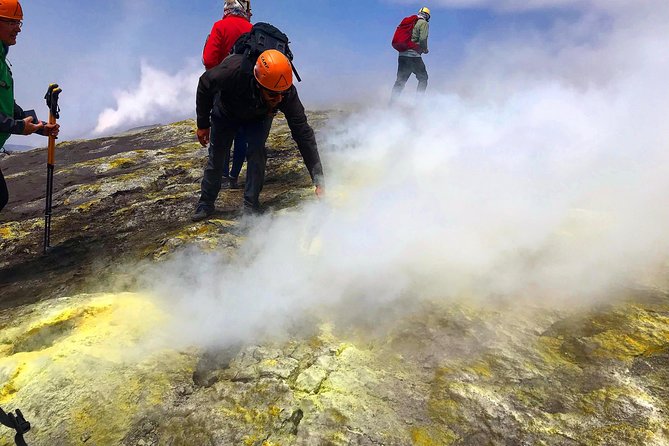
This is not a casual nature walk. The tour is set for people with strong physical fitness. It’s also not suitable for everyone medically. The information provided says it’s not appropriate for people with particular breathing problems or hypertension.
Health and body considerations that matter:
- altitude range can cause mild effects
- dizziness is possible on crater edges
- the soil is unstable and volcanic, with constant gaseous exhalations
Suitability limits:
- Not suitable for children under 12
- Pregnant women who have passed the third month are not allowed
- You should tell your guide about health conditions so they can reduce risk
Gear and comfort tips that keep you from hating the day:
- Avoid contact lenses due to volcanic gases and ash.
- Bring long pants and long socks if you tend to get sand in your shoes.
- Plan for wind and cold. Reviews also mention how chilly it can get and that wind is common.
Should you book the Etna Nord summit-craters trek?
Book it if you want:
- a guided summit-crater hike with a real volcano focus
- the quieter north side experience rather than the most crowded routes
- a day where equipment is provided and safety decisions are made on the fly
- strong legs and knees, and comfort with long uphill and long downhill
Skip it if:
- you want an easy walk or a quick photo stop
- you’re not confident on steep, loose terrain and a steep descent
- you can’t handle altitude or crater-edge dizziness
- you’re traveling with a child under 12 or you’re beyond three months pregnancy
This is one of those Sicily experiences that’s hard to fake. When the day lines up with clear skies and safe activity, the crater views are the kind of memory you carry home without trying.
FAQ
What time does the tour start and where is the meeting point?
You meet at CHIOSCO BAR MARENEVE DI FERRARO Etna nord – Piano Provenzana, Via Provenzana, 95015 Linguaglossa CT, Italy. The start time is 7:45 a.m., departing about 8:00–8:15 a.m. There’s also an afternoon start at 1:00 p.m. from May to October.
How long is the trekking experience?
The duration is about 5 hours 30 minutes on average. The summit part plus overall walking is roughly around 6 hours, depending on route variations and conditions.
How high do you go on this itinerary?
You reach about 2,960 m before the summit hike starts. The summit hike operates in a range roughly around 2,960–3,323 m, with the exact reachable crater area depending on volcanic conditions.
What’s included in the price of about $139.13?
Included items are a licensed volcano guide, trekking poles, trekking shoes, helmets, a warm jacket, extra socks, an extra backpack, insurance for accidents, and entry/admission to Mount Etna.
What is not included?
Not included: transport from your accommodation, hat and gloves, parking ticket costs, and an optional off-road vehicle one-way from 1,800 m to 2,825 m (50€ per person to pay on the spot). If you return by bus from 2,850 m to 1,800 m, the cost is 70€ instead of 50€.
Is this tour offered in English?
Yes. The experience is offered in English, and you’ll be guided by licensed volcanology guides.
What happens if weather or volcanic activity makes the tour unsafe?
The excursion requires good weather and operates based on volcanic conditions. If it’s canceled due to poor weather, you’ll be offered a different date or a full refund. The guides may vary the route or stop where it’s still safe to arrive, depending on environmental, climatic, or volcanic conditions.