REVIEW · SICILY
Summit Etna North 3380mt: 4×4 and trekking
Book on Viator →Operated by Guide Vulcanologiche Etna Nord · Bookable on Viator
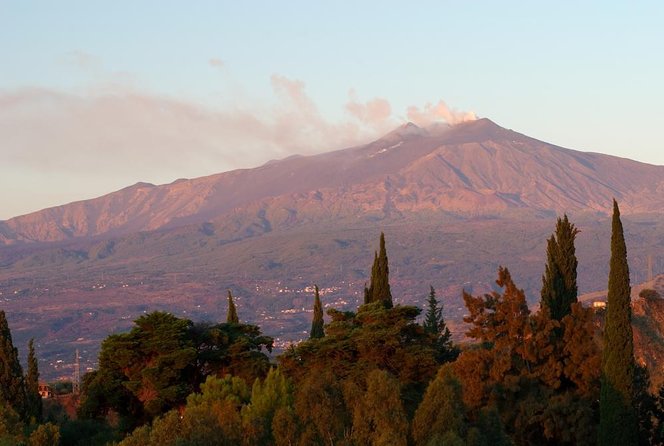
Etna’s north side feels wilder and calmer. I love how this outing builds in two stages—a panoramic 4×4 ride up the flanks, then a guided hike to the crater rims—so you’re not just marching, you’re also seeing how the volcano works. The big draw is altitude and access: you start around Piano Provenzana and end near the active craters, with guides adjusting the route as conditions change.
My second favorite part is the safety-minded, practical guiding. You get full head-to-toe basics like helmets, poles, jackets, and clear guidance on what to do when gas, heat, or unstable ground shifts the safest line. The one drawback to plan for: this is not a casual stroll. At roughly 2,960–3,380 m, the trek can feel hard, especially if you’re not used to physical activity or higher elevations.
In This Review
- Key things that make this Etna North 3380m tour worth your time
- Entering Piano Provenzana: where the mountain resets your expectations
- The 4×4 panoramic drive on Etna’s north flank
- The summit trek: 5 km, about 550 m up, then a long descent
- What the timing feels like
- Crater rims and fumaroles: what you’ll actually do at the top
- Gear, cold weather, and the contact-lens reality check
- Pace, group size, and how to avoid the common frustrations
- Price and what you should budget on top of the ticket
- Who this Etna North 3380m hike suits best
- Practical logistics: starting point and what to expect when the day starts
- Should you book the Etna North 3380m summit trip?
- FAQ
- What time does the tour start?
- How long does the experience take?
- Is the group small?
- What’s included in the price?
- What costs extra on the day?
- Do I need to bring trekking poles or helmets?
- Is it suitable for children?
- What fitness level do I need?
- What if there’s bad weather or volcanic conditions?
Key things that make this Etna North 3380m tour worth your time
- North-side focus: less crowded than the south, with smaller groups and more volcanic variety.
- A two-part climb: 4×4 takes you high; trekking brings you close to the craters.
- Route flexibility: guides choose the safest path toward the most active yet secure crater.
- Big views on the way up: clear panoramas across Sicily, the seas, and (sometimes) distant ranges.
- Gear is handled for you: helmets, poles, footwear guidance, and protective layers.
- Altitude you can feel: you reach up to 3,380 m, so pace matters.
Entering Piano Provenzana: where the mountain resets your expectations
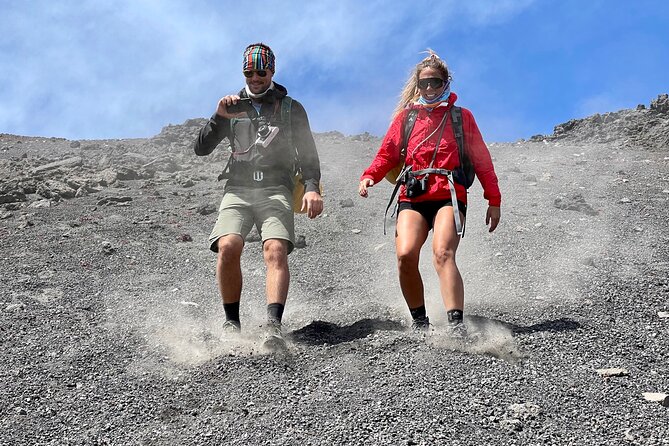
Most Etna trips start with the big show—short walks, quick photo stops, and crowds. This one starts by steering you toward Piano Provenzana on the north side, a spot that sits in pine forest country and volcanic terrain, but away from the most packed routes.
The practical win here is that Piano Provenzana is easy to reach by regular car. The road access is drivable to the starting area, and there are parking zones and facilities like cafés and bars for coffee or an early breakfast. Before the climb, you’ll have time to use restrooms, grab a quick snack, and get your gear in order without feeling rushed.
There’s also a strong sense of place. Piano Provenzana was destroyed by the October 27, 2002 eruption, and the area you’re in now reflects that reality. You’re not just “going near a volcano”; you’re entering a landscape still shaped by a major event. That matters because it helps you understand why the guides follow strict rules on where to walk.
One small note for winter trips: snow conditions can apply. Plan on snow chains or winter tires if you’re driving yourself.
You can also read our reviews of more tours and experiences in Sicily.
The 4×4 panoramic drive on Etna’s north flank
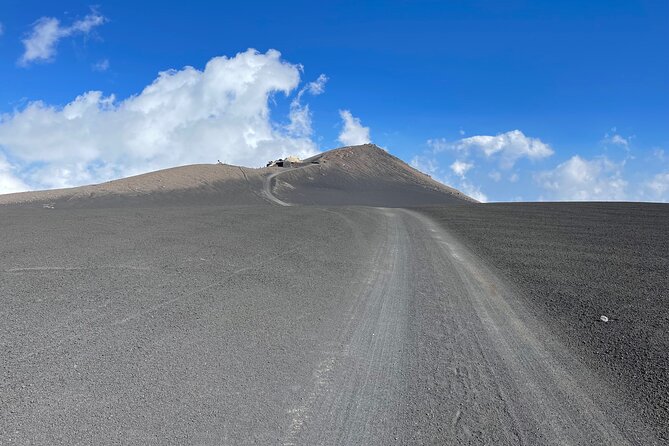
After your briefing and gear check, you move into the authorized 4×4 vehicles. This is not a sightseeing bus. You’ll go along a steep, volcanic track that crosses lava fields and lateral craters as you climb toward the trekking start zone around 2,960 m.
The drive portion is where the tour earns its keep for many people. It reduces the “just get there” time, and it also helps you warm up to the feel of the mountain: rough ground, wind exposure, and big height changes without having to hike every meter.
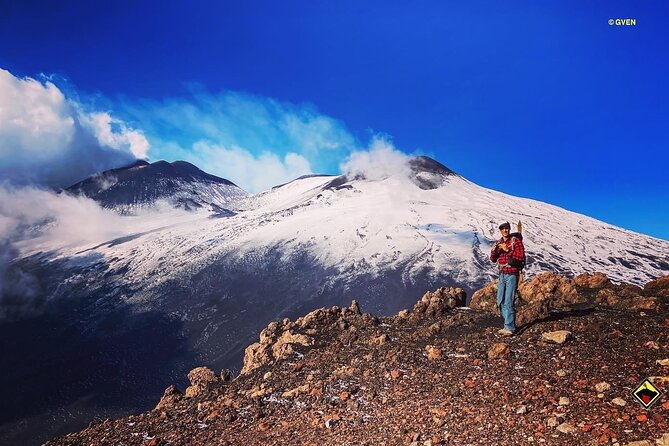
On the route up, you’ll pass a series of volcanic features: recent lava flows, a lava-flow channel, eruptive fractures, and deep lateral craters (over 40 m). The track itself is unpaved and runs about 9.5 km as you climb from roughly 1,800 m up to around 2,960 m. In clear weather, you can see far across northern Sicily. There are also views toward the Aeolian Islands, the Strait of Messina, and out over both the Ionian and Tyrrhenian Seas. On rare clear days, even the Madonie range can show up.
Why this matters for your comfort: you’ll feel the cold and wind earlier than you think, and being driven high first means your hike starts with less time wasted on “catching up.” It’s also one of the reasons guides can keep groups moving without pushing people beyond what the day allows.
The summit trek: 5 km, about 550 m up, then a long descent
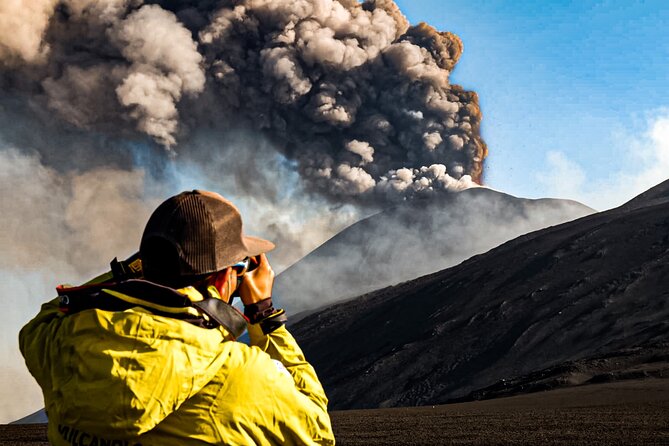
From around 2,960 m, your summit hike begins. The trekking portion is guided and designed for close access to the active crater zone.
Expect roughly a 5 km hike with about 550 m of ascent. That sounds straightforward on paper, but altitude changes the whole equation. Oxygen thins out, and the ground can be uneven. Guides typically include short pauses (often around 10 minutes) to help people catch their breath.
Here’s the most important operational detail: the volcanic activity changes daily. That means guides don’t lock you into a single rigid route. They choose the safest path toward the most active yet secure crater. If gas, heat, or fractures make one line risky, they can adjust.
At the top, you’re dealing with altitude and exposure at the same time. The tour climbs up toward 3,380 m, so mild altitude effects are possible. If you know you’re sensitive to altitude, tell the guides early. And if you have heart or breathing concerns or hypertension, this type of hike is strongly discouraged based on the tour’s guidance.
What the timing feels like
The full outing runs about 5 hours. The uphill hike is about 2 hours, and after you reach the summit area you’ll spend time near the crater rims before starting your descent.
The descent is not a gentle stroll. You’ll go down along softer scoria channels—about 4 km with around 600 m of drop. That’s why the shoes and poles you’re given (plus smart pacing) matter so much.
Once you finish, you ride the 4×4 back (around 25–30 minutes) to the starting point.
Crater rims and fumaroles: what you’ll actually do at the top
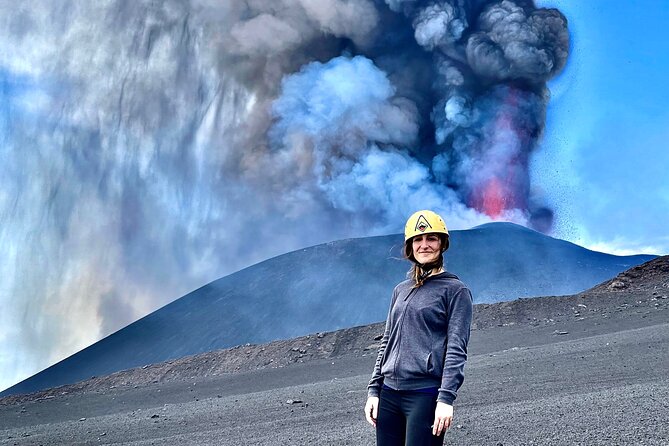
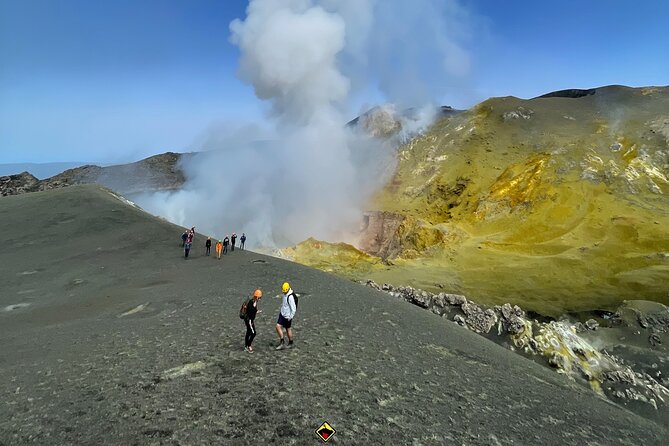
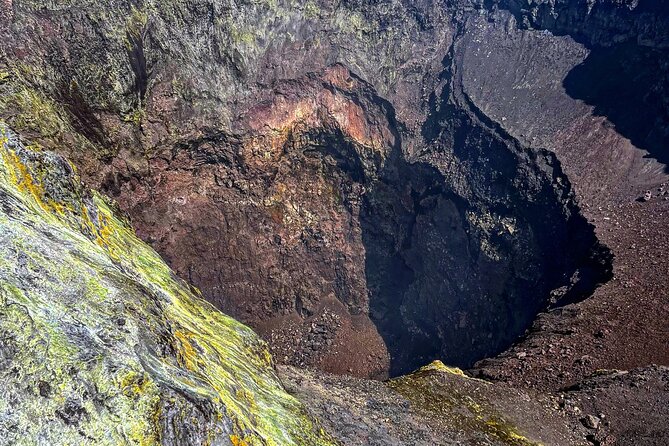
The summit area includes four main craters: North-East, Voragine, Bocca Nuova, and South-East. On a typical day, you’re not just looking at a crater from far away. You’re walking near the rim where you can observe fumarolic gas vents and mineral colors in the rock.
You’ll likely notice recent volcanic deposits—stark materials that look fresh enough to make the scale feel real. And you get sweeping views back across Sicily, both seas, and the islands offshore when visibility allows.
One of the best parts is the sense that the mountain is actively “present.” Gas and heat can affect where you’re able to stand safely, so you’re not in control of the route—your guide is. That’s a good thing, even if it can mean you don’t get the exact photo angle you had imagined.


Gear, cold weather, and the contact-lens reality check
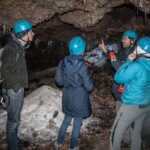
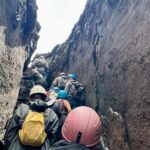
This tour includes trekking footwear support (tied to the hike needs), trekking poles, socks, protective helmets, jackets, and a backpack. You’re also given guidance on what to wear for the conditions.
I strongly recommend you think about layers as your main strategy. Late in the year, the top can get very cold. One of the most useful real-world pointers from people who went: even in late September, it can be around 2°C at the summit. That means windproof layers and warm coverage for your head and hands help more than you’d guess.
The tour also suggests you bring items like a k-way rain jacket, hat, and gloves for autumn, winter, and spring. Even if rain isn’t the forecast, fog or wind can make the “feel colder” factor jump quickly.
And then there’s the contact lens warning. Volcanic gases and ash can cause problems, so contact lenses are not recommended. If you wear them, switch to glasses for the day.
Sunglasses and sunscreen matter too. At altitude with wind, you can burn faster than you expect.
Pace, group size, and how to avoid the common frustrations
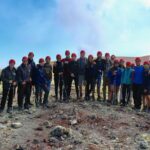
The group limit is small: maximum 10 people. That’s a major quality point because it makes pace management possible. Guides can slow down for people who need it, and they can also keep spacing safer on uneven ground.
Still, the activity is demanding. One important reality: there are limited moments for long stops. The summit climb is a moving system—drive up, hike up, observe near the craters, then descend. If you’re hoping for lots of picture time or long breaks, you might feel a squeeze.
If you want the best experience, aim to show up with a decent fitness baseline. Regular physical activity makes the altitude hike much more reasonable.
Price and what you should budget on top of the ticket
The advertised price is about $78.61 per person for the tour experience. That’s not the whole story, though. A separate payment is required for the off-road vehicle segment (round trip from about 1,800 m to 2,825 m): €60 per person, paid on the spot.
Other costs to plan for:
- Parking ticket: about €5 weekdays, €8 Sundays and public holidays.
- Lunch: not included.
What’s included is valuable: an authorized volcanological guide, accident insurance, and the hiking gear basics like helmets, trekking poles, and jackets.
So is it good value? For me, the best way to judge it is this: you’re paying for guided access to the summit zone, plus real altitude trekking, and not just a quick ride with a short walk. If you’re going to spend the day on Etna anyway, this structure can offer better “time on the mountain” than cheaper options that cut the hiking portion down to almost nothing.
Who this Etna North 3380m hike suits best
This tour fits best if you want:
- the north side of Etna, with fewer people and more volcanic variety
- a guided trek that actually reaches the active crater zone
- a day with both driving and hiking, so you still get high altitude without a full-day slog
It’s not ideal if you:
- have cardio-vascular issues, breathing problems, or hypertension
- don’t do physical activity regularly
- are traveling with children under 12 (the tour is not suited for them)
If you’re debating between “easy Etna photos” and “real volcanic experience,” this one leans toward the real part.
Practical logistics: starting point and what to expect when the day starts
You meet at CHIOSCO BAR MARENEVE DI FERRARO Etna Nord–Piano Provenzana (Via Provenzana, 95015 Linguaglossa CT, Italy). The day typically starts early, around 7:45 a.m. meeting time with departure about 8:00–8:15 a.m.
There’s also an afternoon option that runs from May to October: it starts around 1:00 p.m. instead.
You’ll receive a mobile ticket, and the tour is offered in English. Service animals are allowed.
Because it’s a volcano experience, conditions matter. The tour can be adjusted or interrupted due to environmental, climatic, or volcanic changes if safety requires it. That’s not a failure; it’s how this kind of outing stays responsibly run.
Should you book the Etna North 3380m summit trip?
Book it if you want the north side of Etna and you’re okay with a real hike at altitude. The combination of a high 4×4 approach, a guided crater-rim trek, and a small group size makes it feel like a controlled way to get close to the mountain’s active zone.
Don’t book it if you’re hoping for a slow, flexible walk with lots of stops and minimal physical demand. This is a summit day, and the pace reflects that. If you’re unsure about altitude comfort, heart/lung limitations, or physical readiness, it’s worth talking with your doctor before committing.
If you do book, pack smart: layers, sun protection, rain protection if needed, and skip contact lenses. Then bring the right mindset—this is less about conquering steps and more about moving safely through a living volcano.
FAQ
What time does the tour start?
The morning departure typically starts after a 7:45 a.m. meeting time, with departure around 8:00–8:15 a.m. There is also an afternoon start at 1:00 p.m. from May to October.
How long does the experience take?
It’s about 5 hours on average.
Is the group small?
Yes. The maximum group size is 10 travelers.
What’s included in the price?
You get an authorized volcanological guide, accident insurance, and trekking gear including trekking shoes, trekking poles, socks, protective helmets, jackets, and a backpack. The tour ticket is offered via mobile ticket and in English.
What costs extra on the day?
The off-road vehicle segment (round trip from about 1,800 m to 2,825 m) costs €60 per person, paid on the spot. You may also need a parking ticket (about €5 weekdays or €8 Sundays and public holidays). Lunch is not included.
Do I need to bring trekking poles or helmets?
No. Trekking poles and protective helmets are included.
Is it suitable for children?
No. The excursion is not suited for children under 12.
What fitness level do I need?
The tour is recommended for people with moderate to good physical fitness. It reaches up to around 3,380 m, and the tour specifically discourages people with cardio-vascular problems, breathing problems, or hypertension.
What if there’s bad weather or volcanic conditions?
This experience requires good weather. If it’s canceled due to poor weather, you’ll be offered a different date or a full refund. It can also be modified or interrupted based on safety needs from environmental or volcanic conditions.