Etna makes geology feel personal fast. This trekking day pairs 4×4 + cableway access with summit views that look almost impossible, including sulfur smells, gas plumes, and a skyline far below. You also get a proper guide-led explanation of what you’re seeing, not just a walk and a handout.
What I really like here is the mix of small-group pacing (max 10) and the practical inclusions that help you start the day ready. You’ll have breakfast included, plus a helmet, and you can request items like poles, backpacks, wind jackets, or even boots in advance.
One thing to weigh: this is for people with strong fitness. The route goes high, involves rough volcanic ground, and lunch is not included, so you need to plan for what you’ll eat at your picnic stop.
In This Review
- Key highlights worth your attention
- Why this Etna trekking tour feels different from a basic hike
- The morning plan: meeting in Fornazzo and building momentum fast
- Getting to altitude: 4×4 up to Etna’s edge, then cableway to 2500m
- Walking the lava worlds: 2002 and 2017 terrain up to Barbagallo and beyond
- Valle del Bove (Ox Valley): big views, less technical time
- Descending the North slope: ash, lapilli, and Piano delle Concazze at 2800m
- Final steps down to Piano Provenzana (1900m) and the ride back
- What’s included (and why that affects comfort)
- Price and value: what $145.12 buys you on Etna
- Who should book this Etna trek (and who should rethink it)
- Practical tips that make a difference on volcanic trails
- Should you book this Etna trekking tour?
- FAQ
- How long is the Etna trekking tour?
- What language is the tour offered in?
- Where is the meeting point, and when do we start?
- Is the entrance/admission ticket included?
- What’s included in the tour price?
- Is lunch included?
- How many people are in the group?
- What fitness level do I need?
- What if the weather is poor or I need to cancel?
- Is a mobile ticket provided?
Key highlights worth your attention
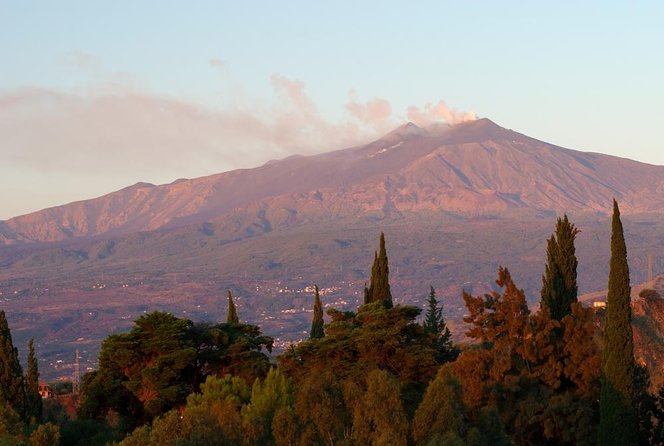
- Up to 2500m by cableway from Rifugio Sapienza, so your hike starts at altitude without wasting energy on the slow grind.
- Barbagallo Craters at 2900m and walking through terrain shaped by the 2002 eruption.
- Summit Craters in a lunar-like zone with gas emissions and a near-total lack of vegetation at the top.
- Valle del Bove (Ox Valley) for a focused hour of big Etna panorama time.
- Piano delle Concazze with a volcanology observatory nearby at 2800m, plus sandy ash-and-lapilli walking on the descent.
- Gear support available: helmets are included, and you can arrange poles, backpacks, wind jackets, and boots if needed.
Why this Etna trekking tour feels different from a basic hike
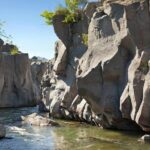
Mount Etna can be touristy from a distance. Up close, it’s not. This trek is designed around the idea that the mountain is changing, and you’ll walk through the evidence—old lava roads, ash fields, sandy canyons, and crater edges that feel eerily otherworldly.
Instead of just getting “a view,” you get motion. You’re carried partway by 4×4 and the cableway, then you walk through the textures left behind by eruptions. That matters because lava terrain isn’t uniform. You’ll step from darker, older flows to lighter volcanic sand, and the surface changes enough that your boots (and your balance) actually matter.
The best part is the guidance. A good guide helps you connect the dots: which crater area you’re seeing, why sulfur hangs in the air, and how the landscape came to look like it does. In the feedback I saw, Cristian stands out for clear explanations of Etna—often the kind that make you notice small details you’d otherwise miss.
You can also read our reviews of more tours and experiences in Sicily.
The morning plan: meeting in Fornazzo and building momentum fast
You meet at Bar & Restaurant Mareneve, Via Mongibello 41, 95010 Fornazzo (CT), Italy. The tour window runs 9:00 AM to 9:30 AM, Monday through Sunday. Since you’re checking in at the start time window, I’d treat this like a real hike day: arrive early enough to settle, use the restroom, and get your layers right before loading up.
This tour also uses a mobile ticket, which is convenient if you’re traveling light. Once everyone’s together, you board the 4×4 jeeps and start working your way toward the volcano’s higher slopes. That drives home one practical point: you’re not spending your best energy stuck in transfers. You’re using that energy where it counts—on the walking segments.
Timing can be longer than you expect. The overview lists 6 to 7 hours approximately, but the schedule shows 11 hours for the full experience. I suggest planning your day as a longer one. Even on the right weather day, Etna’s timing depends on conditions at altitude and how the group moves.
Getting to altitude: 4×4 up to Etna’s edge, then cableway to 2500m
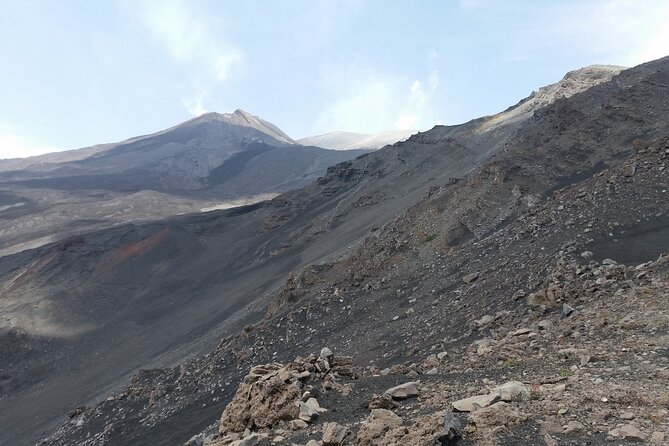
The day’s vertical move is split into two parts. First, the jeeps take you up from the Riviera dei limoni area toward Etna’s villages and then along routes that cross older pathways—mulattiere (ancient mule roads) and coalmen trails. This isn’t just scenery. It’s a way to reposition you across the mountain efficiently.
Then you hit the signature climb method: from the south slope ski station at Rifugio Sapienza, the cableway brings you from 1800m to 2500m. That’s a big jump in altitude without forcing you to walk a long uphill before you even start trekking.
For you, the value is straightforward:
- You spend less time grinding uphill.
- You arrive closer to the volcanic zones you came for.
- You have more time for actual crater-edge walking.
What to consider: at higher altitude, even if you’re fit, your breathing can feel different. Bring water, move steadily, and don’t treat the cableway as the moment to “power through.” Let your body adjust.
Walking the lava worlds: 2002 and 2017 terrain up to Barbagallo and beyond
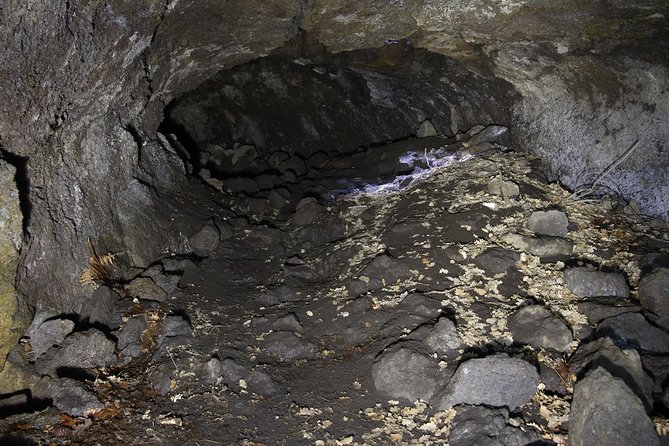
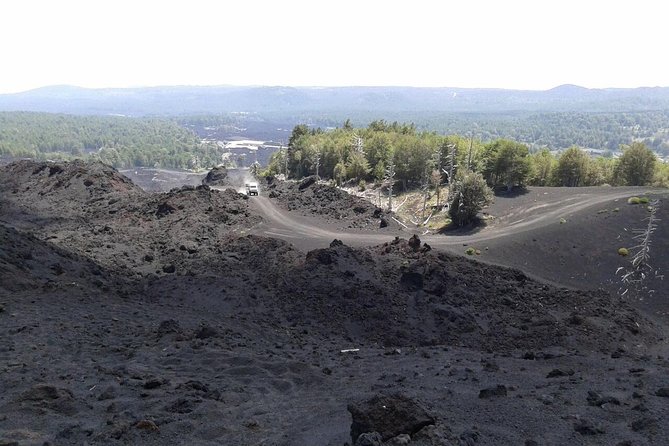
Your trekking path begins around 2500m, running among lava flows from the 2002 eruption. That eruption created features like the Barbagallo Craters at around 2900m, and the route continues across the volcanic surfaces that formed after later activity, including flows linked to the South East Crater in 2017.
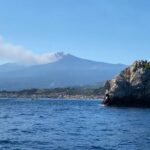
The top part of the day is the payoff: you reach crater areas where the view turns almost sci-fi. Expect a lunar-like landscape—very little vegetation, a sulfur smell, and gas emissions drifting on the wind. People often remember this as a “world’s rooftop” moment, not because it’s just high, but because your senses get pulled in. You’re looking at a wide horizon, hearing the mountain in the way sound carries in open spaces, and noticing how weather sits lower in the distance (clouds below, clearer sky above on the right day).
Also: summit visibility matters. On a very clear day, the operator info suggests you can see as far as the Aeolian Islands, the Calabrian coast, and a large part of the Sicilian hinterland. Don’t assume it will always happen. Etna weather can change fast, and you’ll feel that on a bare, open ridge.
On the ground, surfaces vary. Some parts are rock; some parts feel like volcanic grit or ash. This is where the right footwear makes a difference.
Valle del Bove (Ox Valley): big views, less technical time
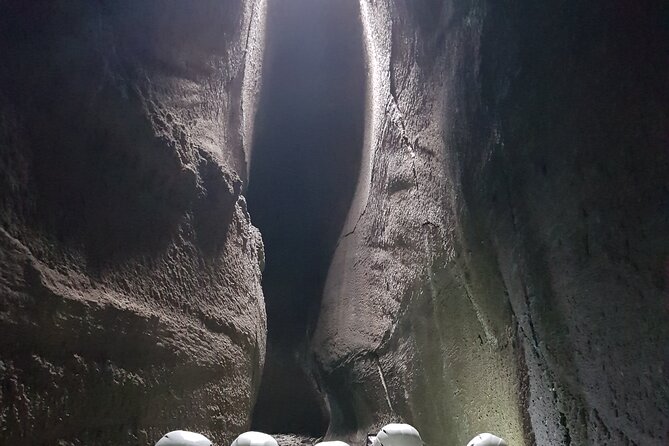
After the main crater-zone walking, the route includes a clear, panoramic stop: Valle del Bove, often described as the Ox Valley. You get about one hour focused here, with a view designed to help you understand Etna’s broader structure.
This is a good moment in the day. It’s less about technical footing and more about letting your eyes map the mountain. Even if your legs are tired, this segment gives you a sense of scale—what you walked across and where you are relative to the wider Etna system.


Descending the North slope: ash, lapilli, and Piano delle Concazze at 2800m
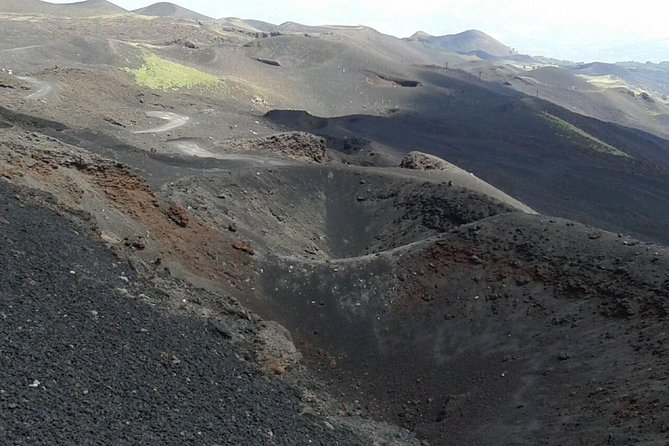
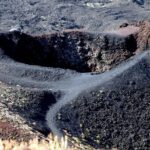
The descent shifts the challenge from “going high” to “moving safely on volcanic ground.” On the North slope, the terrain includes rocks shaped by volcanic action and sections where your boots may sink into volcanic sand. The route passes through sandy canyons covered by ashes and lapilli—small stone and gravel-like volcanic material that can make footing tricky if you rush.
If you want a simple strategy: short steps, check your footing often, and keep your pace steady. This isn’t the place for long strides.
At about 2800m, you reach a wide highland known as Piano delle Concazze, and the volcanological observatory is located there. Even though you might not tour the observatory building itself, this stop gives context: Etna isn’t just a dramatic mountain; it’s actively studied, measured, and monitored. Your guide can connect what you see on the ground to why researchers watch the area so closely.
You’ll also get a picnic break at a comfortable spot once the guide finds a suitable area.
A key practical note: packed lunch is not included in the tour price. You can bring your own lunch or pick something up at local shops at the beginning of the tour. This is one of the biggest planning items you can control. If you skip it, you’ll be stuck making do with whatever you can get on the fly.
Final steps down to Piano Provenzana (1900m) and the ride back
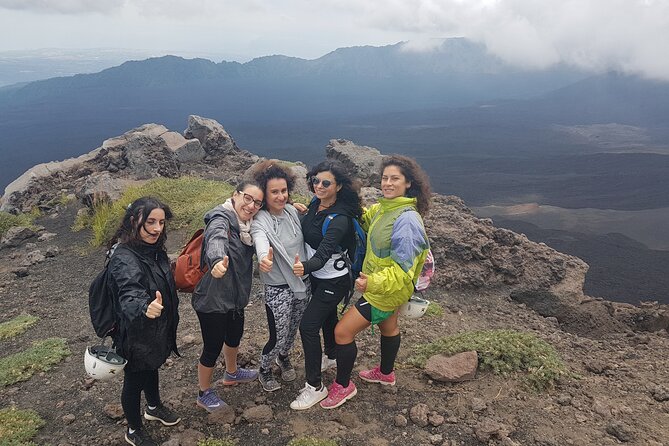
After your break, you continue descending. The route eventually meets a path linked to the 2002 lava flow area, then you move through a beech forest section before reaching Piano Provenzana at 1900m—the final step of the excursion.
This part matters for a different reason: the vegetation shift changes the feel of the hike. You go from bare volcanic surfaces to an environment with more typical ground cover, which can feel like a relief for your eyes and your senses.
Once the walking finishes, you return with the group. The route crosses Parco dell’Etna again and heads back over antique lava flows toward Fornazzo. The “tired but happy” ending is real here, because the day gives you both effort and a story you can’t get from a simple viewpoint.
What’s included (and why that affects comfort)
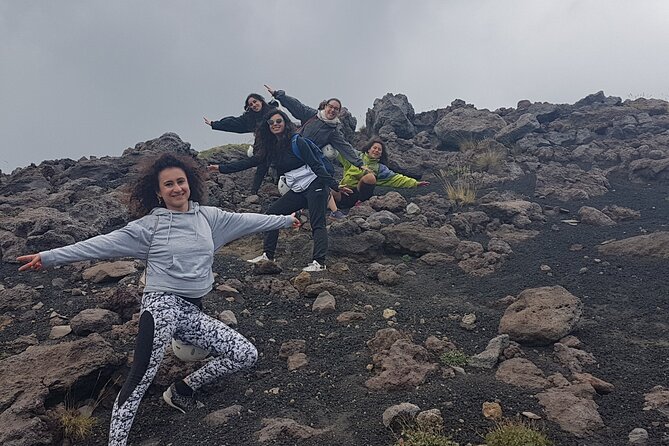
This trek includes:
- Authorized tour guide
- Insurance
- Helmet
- Breakfast
- GST
- Gear support options: hiking poles, backpacks, wind jackets, and hiking boots can be provided if you tell the operator the size you need in advance.
For your day-to-day comfort, the most meaningful inclusions are breakfast, helmet, and the option to borrow gear. If you don’t have the right footwear or poles, you don’t necessarily have to buy everything before Sicily. Still, you should communicate your needs early so the guide can bring the right sizes to the meeting point.
The helmet inclusion is a small detail that signals something bigger: you’re walking in terrain where safety gear matters. Even if the walk feels scenic, you’ll still be moving across volcanic ground and uneven surfaces.
Price and value: what $145.12 buys you on Etna
At $145.12 per person, this tour isn’t the cheapest way to visit Etna. But value here comes from the combination:
- Professional guidance through crater terrain
- Transportation up via 4×4
- Altitude access via cableway from Rifugio Sapienza
- Included breakfast and safety gear (helmet)
- Small group size (maximum 10 travelers)
If you tried to copy this day on your own, you’d likely pay for transportation, cableway access, and then still need to piece together a route that fits your fitness and the conditions on the mountain. A guided plan makes that smoother, especially because Etna is weather-dependent and can shift what’s safe or realistic day to day.
So for many people, the price feels fair because you’re paying for coordination plus time on the ground in the areas that matter.
Who should book this Etna trek (and who should rethink it)
This tour is for people with strong physical fitness. That doesn’t mean you need to be a mountain racer, but you should be comfortable walking for long stretches on rough volcanic ground, including sandy ash areas where footing gets slower.
You’ll also want to be ready for altitude conditions. Even with a cableway jump, you’re spending time around high elevations like 2900m and 2800m along the route.
You might love it if:
- You want more than a viewpoint and you like walking through real terrain.
- You enjoy geology, crater landscapes, and seeing how the mountain changes after eruptions.
- You prefer a smaller group where the guide can pace and explain.
You may want to skip it if you:
- Struggle with steep, uneven, or sandy surfaces.
- Don’t handle altitude well.
- Can’t manage a long day that may run closer to 11 hours depending on conditions.
Service animals are allowed, which is helpful information for some visitors, though the day is still physically demanding.
Practical tips that make a difference on volcanic trails
A few things will help you have an easier time:
- Wear proper hiking shoes. Volcanic sand and ash can be slippery and uneven.
- Bring layers. Conditions at crater altitude can feel colder than lower slopes, even if the morning starts mild.
- Pack your lunch plan. Since lunch isn’t included, either bring something and keep it simple, or buy food at local shops at the start.
- Use provided gear if you need it. If you want poles, boots, or a wind jacket, make sure you request sizes in advance so they’re at the meeting point.
- Respect the weather. The experience requires good weather. If it’s canceled for poor conditions, you’ll be offered a different date or a full refund.
If you’re the type who likes to know what to expect, here’s your mental picture: you’ll move from lava-flow terrain to crater edges, then down through ash canyons and into a forested section. It’s one continuous arc, and the terrain keeps changing.
Should you book this Etna trekking tour?
Yes, if you want a guided Etna day that goes beyond “standing and looking.” The biggest strengths are the small group size, the transport plan that gets you high without wasting hours, and the walking through 2002 and 2017 lava landscapes with a guide who can explain what’s happening on the mountain. The chance to hear or notice real volcanic activity varies by conditions, but the day is set up so you’re positioned for it when it’s happening.
Skip it if you’re not comfortable with long hours, high altitude, and uneven volcanic ground. And don’t forget the basics: plan your lunch, wear good footwear, and show up ready to walk.
If that sounds like your kind of day, this is a strong way to experience Mount Etna as more than a postcard.
FAQ
How long is the Etna trekking tour?
The experience is listed at about 6 to 7 hours, and the full schedule can run up to around 11 hours depending on the day.
What language is the tour offered in?
The tour is offered in English.
Where is the meeting point, and when do we start?
You meet at Bar & Restaurant Mareneve, Via Mongibello 41, 95010 Fornazzo CT, Italy. The start window is 9:00 AM to 9:30 AM, Monday through Sunday.
Is the entrance/admission ticket included?
Admission is listed as free.
What’s included in the tour price?
Included items are an authorized guide, insurance, helmet, GST, breakfast, and optional gear like hiking poles, backpacks, wind jackets, and hiking boots (if you provide your size in advance).
Is lunch included?
No. Lunch is not included. You can bring your own packed lunch or grab something at local shops at the beginning of the tour.
How many people are in the group?
The tour has a maximum of 10 travelers.
What fitness level do I need?
This activity requires a strong physical fitness level.
What if the weather is poor or I need to cancel?
The experience requires good weather. If it’s canceled due to poor weather, you’ll be offered a different date or a full refund. You can cancel up to 24 hours in advance for a full refund.
Is a mobile ticket provided?
Yes. The tour uses a mobile ticket.