REVIEW · ROME
Rome: Pantheon Small Group Tour and Skip-the-Line Ticket
Book on GetYourGuide →Operated by Touriks · Bookable on GetYourGuide
Rome’s Pantheon still feels unreal. This small-group, skip-the-line tour turns the dome, marble, and history into something you can actually see and understand fast. I like the skip-the-line entry and the way the guide keeps the pace friendly, so you spend your time inside the monument instead of stuck outside.
Two standout parts are the Pantheon dome and engineering details you’ll notice right away, and the extra context about how this pagan temple became a working Christian church. One thing to consider: the Pantheon is an active church, so you’ll need to meet the dress rules before you go in.
Small-group tips and what makes it worth it
- Skip-the-line entry means you start seeing the Pantheon sooner, with less time wasted in queues
- Inside focus: you’ll look up at the dome and down at the floor, not just snap photos and leave
- Engineering explanations: learn why this huge structure still stands, despite centuries of gravity and wear
- Church layers of Rome: you’ll connect the dots from ancient “all gods” worship to later Christian use
- Optional extension takes you beyond the Pantheon into nearby squares like Piazza della Minerva and Piazza Navona
In This Review
- First Step: Getting In at the Pantheon Without the Wait
- The 40-Minute Core: What the Guide Helps You Notice Inside
- The dome: more than a pretty ceiling
- Marble details: preservation you can spot with your eyes
- Look down too: the original marble floor
- Corinthian Columns and the “All Gods” Idea
- When It Became a Church: Christian Layers Without the Confusion
- Tomb Spotting: Raphael and Other Important Names
- Piazza della Minerva: A Quick Look With Real Payoff
- Temple of Hadrian and the Rome-You-Thought-You-Knew Moment
- Piazza Navona: Finishing Your Tour With a Classic Roman Square
- Optional Add-On: Extending Beyond the Pantheon
- Price and Value: Is $53 Reasonable for This Tour?
- Who This Tour Fits Best
- Notes on Guides: The Names You’ll Hear
- Should You Book This Pantheon Small Group Tour?
- FAQ
- Where is the meeting point for this Pantheon tour?
- How long is the tour?
- What’s included in the price?
- Is food or drinks included?
- Can I add extra time to visit nearby areas?
- What languages are available for the guide?
- What should I wear to enter the Pantheon church?
- What if the church closes due to special events?
First Step: Getting In at the Pantheon Without the Wait
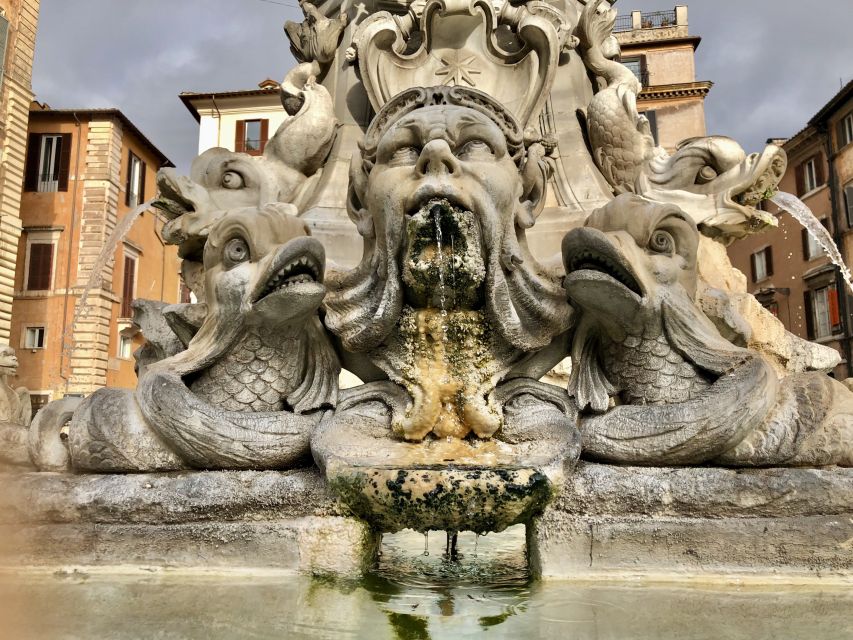
You’ll meet at the Fontana del Pantheon right by the Pantheon entrance area, at the fountain in front. Your guide holds a yellow Touriks sign, and it’s worth arriving about 5 minutes early so you can start smoothly.
From there, the plan is simple: you’ll walk in with your group and get access quickly. That matters here. The Pantheon is popular year-round, and even when the building looks close on the map, the line time can eat your day. With the skip-the-line ticket, you trade that for time inside the monument, where the best details live.
Also, this is designed as a small group capped at 10 people, which is a big deal in a place where everyone wants to look at the same ceiling and the same inscription-style spots. You’re less likely to feel like you’re being herded. And you get headsets, so you don’t have to play guess-the-sentence when the architecture amplifies sound.
The 40-Minute Core: What the Guide Helps You Notice Inside
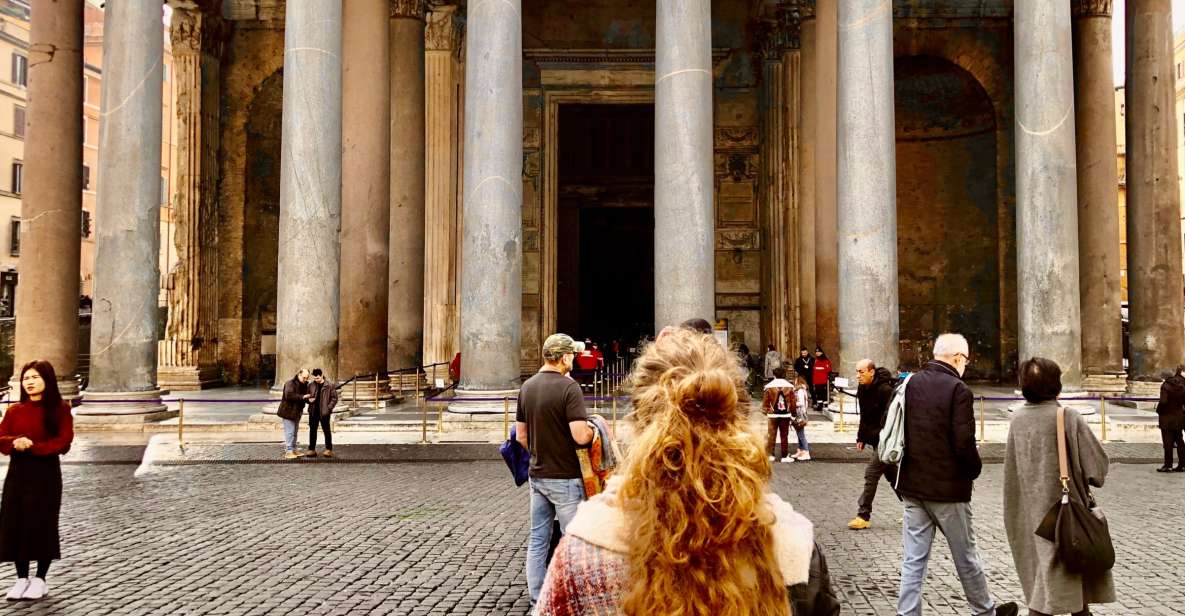
The main chunk of the tour stays centered on the Pantheon itself. Expect around 30 minutes inside, plus a little time to orient yourself. Even if you’ve seen pictures, the scale hits different once you’re standing there.
You can also read our reviews of more tours and experiences in Rome.


The dome: more than a pretty ceiling
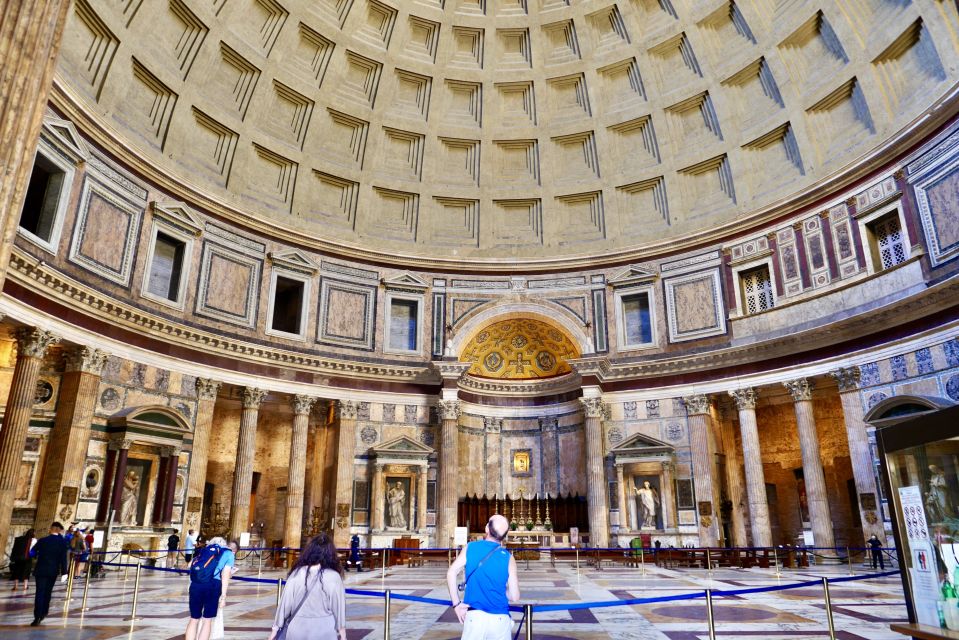
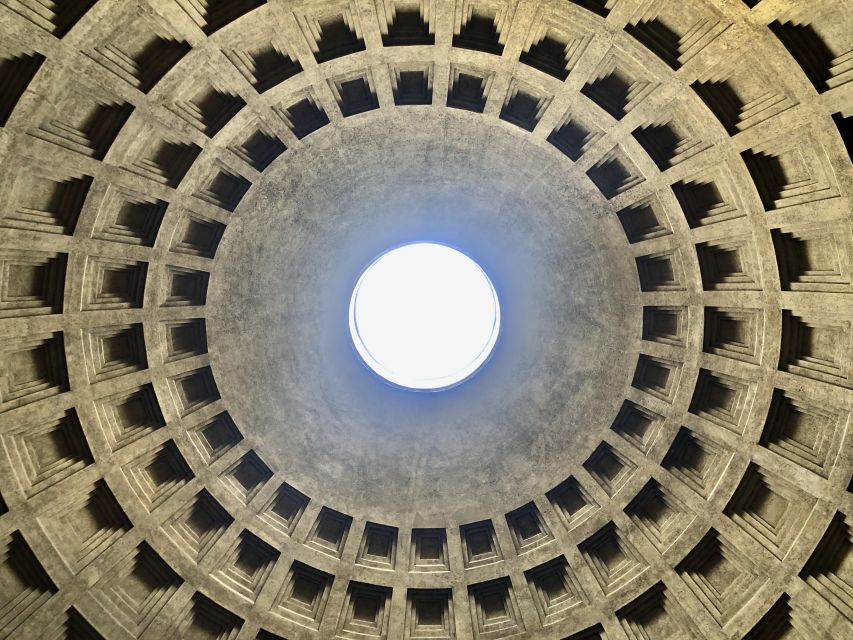
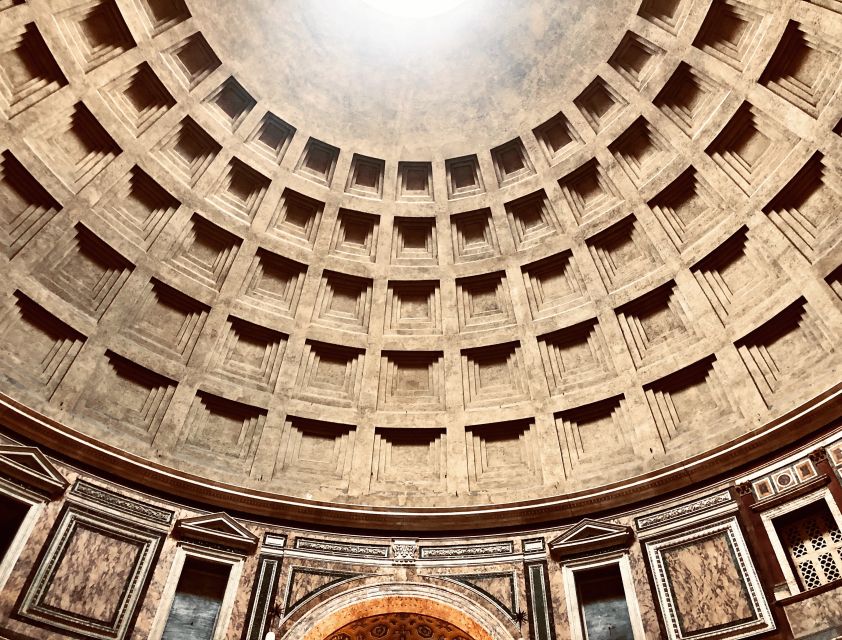
The Pantheon’s dome is the star, but the guide’s job is to help you understand why. You’ll look up and connect what you’re seeing with the engineering idea that made this construction survive so long. The dome isn’t just a dome; it’s a carefully balanced structure whose materials and shape work together. You’ll also learn why this monument is unusual for its size and age—many ancient buildings didn’t last as well.
Marble details: preservation you can spot with your eyes
Another thing I really like: the emphasis on the marbles and interior preservation. The Pantheon is famous for its beauty, but the tour pushes you to notice how it stays crisp and intact. Instead of rushing toward the obvious photo spots, you get a guided way of looking—proportions, materials, and the way sunlight interacts with the space.
Look down too: the original marble floor
You’ll also get a moment for the floor. There’s something grounding about stepping onto an ancient original surface in one of the busiest parts of Rome. It helps you shift from tourist mode to historical mode in about 10 seconds.
Corinthian Columns and the “All Gods” Idea
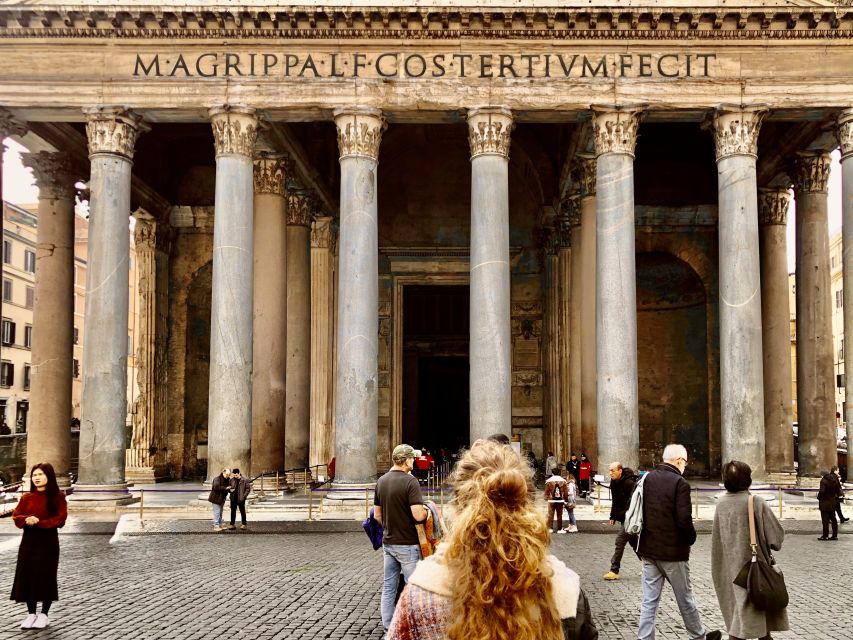
Here’s where the tour becomes more than sightseeing. The Pantheon started life as a Roman temple dedicated to the gods—so the symbolism isn’t random decoration. You’ll walk in past Corinthian columns and learn the backstory of how elements were sourced and used.
One of my favorite parts of these Pantheon-style tours is when they explain the logic behind the design. Rome liked order. It liked geometry. It liked messages you could read even if you didn’t know Latin. With your guide’s explanations, the proportions start to make sense instead of feeling like “just Roman fancy.”
And you’re not stuck inside the whole time. You’ll get a quick sense of how the monument sits in its neighborhood—enough to make the rest of your day easier.



When It Became a Church: Christian Layers Without the Confusion
One big reason this tour works so well is that it doesn’t treat the Pantheon as a single-era site. It shows the building’s second life as a church and what changed along the way.
The Pantheon is a Christian church today, so you’ll hear about that later use in a direct, clear way. You’ll also get the important reminder that attire rules apply. You’ll need knees and shoulders covered to enter, and that also means no shorts, short skirts, or sleeveless shirts. If you show up underdressed, you risk losing the entry timing you paid for.
There’s also a practical twist you should know: churches can close their doors for special events. When that happens, the tour may be rescheduled or you may be offered a full refund. It’s not something you can control, but your planning will be steadier if you know the contingency exists.
Tomb Spotting: Raphael and Other Important Names
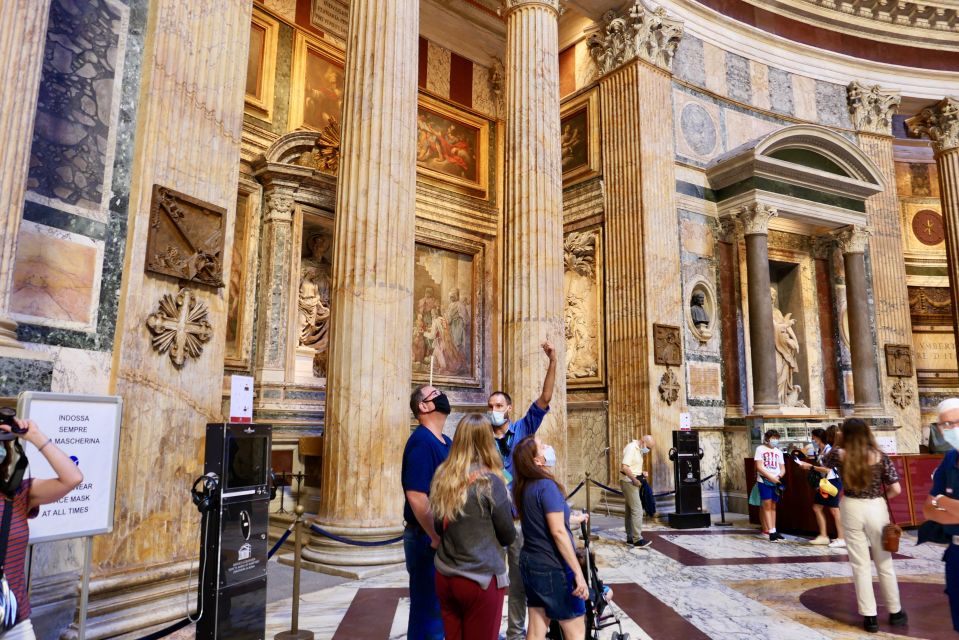
The Pantheon isn’t only about architecture. It’s also a place of memory, and the tour points you toward notable resting spots inside.
You’ll see the tomb of Raphael, along with other significant people. This is one of those moments where the guided context makes the space feel more human. Without explanation, you might walk right past markers and carvings. With the guide, you understand what you’re looking at and why it’s still culturally meaningful.
It’s also a nice change of pace from the engineering talk. You get to switch from structure to people, from math to memory—still within the same building, which is exactly what makes this stop such a time-saver.
Piazza della Minerva: A Quick Look With Real Payoff
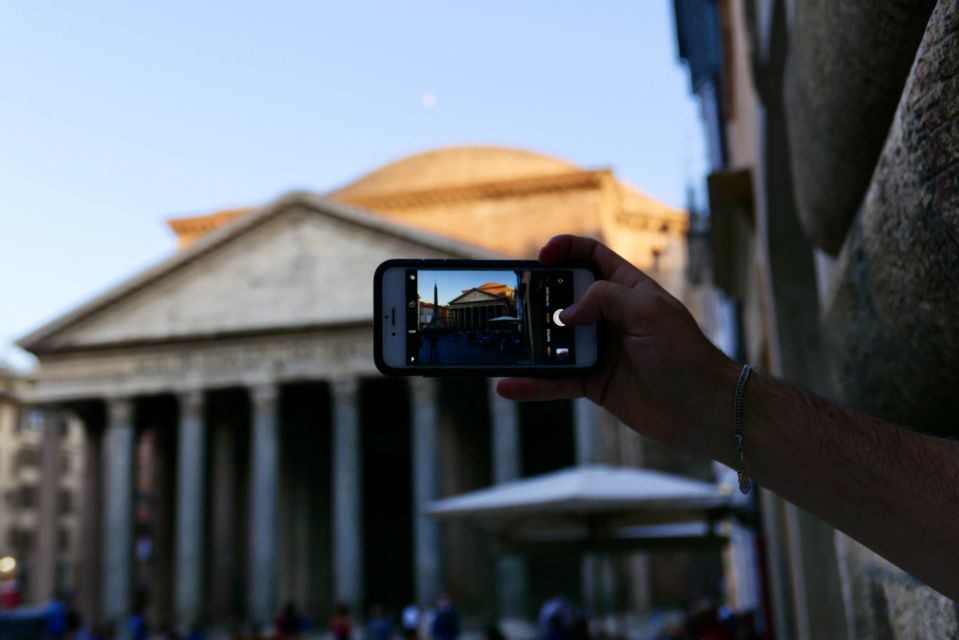
After the Pantheon portion, the tour moves into nearby sights. One stop is Piazza della Minerva.
This is brief—think about 10 minutes—but the value is in the framing. You’ll get a sense of how Rome layers monuments across different periods. Even if you’re not lingering for hours, this kind of stop helps you orient yourself on foot and gives your next stroll more purpose.
Temple of Hadrian and the Rome-You-Thought-You-Knew Moment
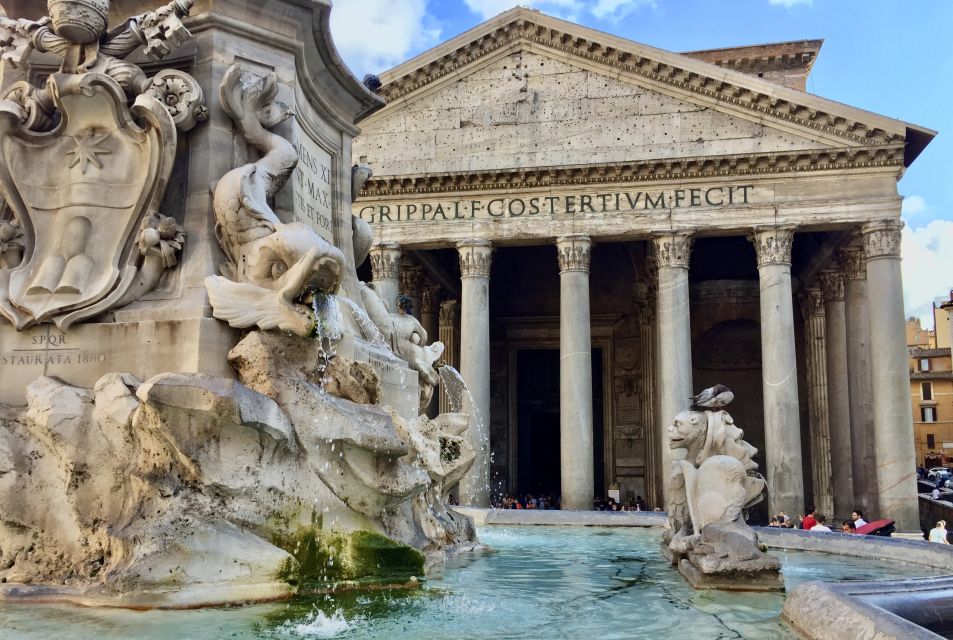
Next up is the Temple of Hadrian area, also a short about 10 minutes. The reason this works even in a small time slot is that it connects the Pantheon to a broader neighborhood of ancient forms.
When you’re fresh from the Pantheon, you tend to notice details you’d otherwise miss: column shapes, street-level placement, and how ruins and remains fit into modern Rome. Your guide helps you make those visual links instead of treating each stop as a separate postcard.
Piazza Navona: Finishing Your Tour With a Classic Roman Square
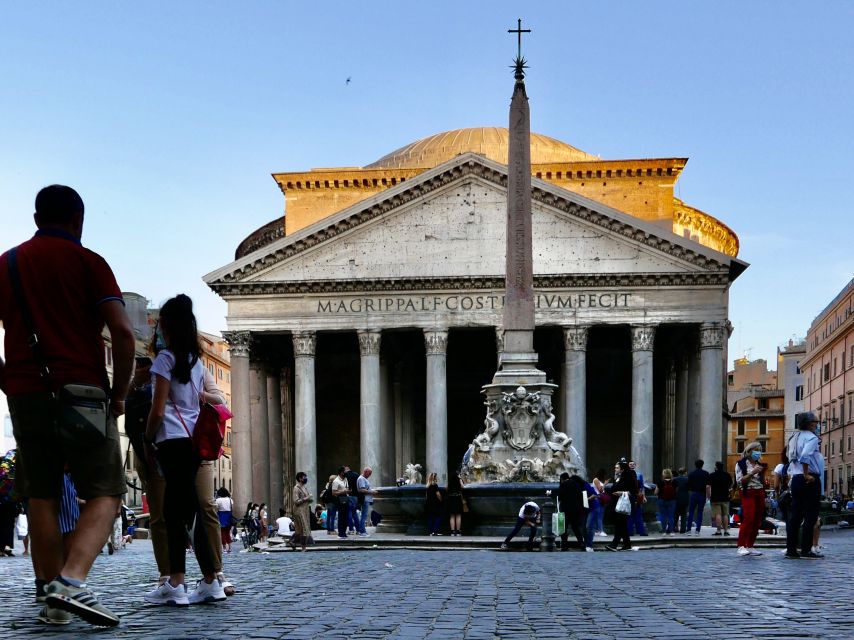
The final major stop is Piazza Navona, with about 20 minutes for sightseeing and walking.
This is the part of the tour where the mood shifts from monument focus to street-level Rome. Piazza Navona is one of the places where you’ll see Rome operating in real time: architecture, open space, and people moving through the square. It’s a satisfying end point because it gives you room to breathe and reset, plus it helps you decide what to do next.
And yes, you’ll be close to more major sights afterward. Even if you don’t add the extension, finishing here makes it easier to keep exploring.
Optional Add-On: Extending Beyond the Pantheon
You can choose to extend the tour with an extra 40 minutes to explore surrounding squares and churches with your guide.
This is worth considering if you want a guided route that helps you avoid the dead ends. A lot of first-time Rome days feel like point-to-point checklists. This option shifts you toward a more connected walking experience, where each stop answers a question your Pantheon stop started.
Price and Value: Is $53 Reasonable for This Tour?
$53 might sound like a lot until you look at what you’re getting: skip-the-line access, an on-site professional guide, headsets, and entrance fees. That bundle matters in the Pantheon area because time is expensive here—especially if you want to see the interior rather than just the exterior.
The tour duration is short enough to be realistic (about 40–80 minutes, depending on how the day’s stops are handled), but long enough to deliver more than a quick photo lap. And the small group limit (max 10) is a quiet quality marker. It helps the guide keep control of pacing and still answer questions without the group splitting apart.
In short: you’re paying for time, interpretation, and entry efficiency, not just the right to stand near a famous building.
Who This Tour Fits Best
This is a great choice if you:
- Want Pantheon-first Rome time without waiting in long lines
- Like architecture explanations that point you toward what to notice in the moment
- Prefer small groups and clear audio via headsets
- Plan to do more walking afterward and want an easier start point (Piazza Navona is a strong finish)
It may be less ideal if you hate dress rules for churches or you need very flexible timing due to other commitments, because entry depends on the church opening to visitors that day.
Notes on Guides: The Names You’ll Hear
A pattern shows up in the way this tour is delivered: the guides are praised for making the building feel understandable and fun. You’ll see names like Francesca, Samuel (Sam), Chiara, Paul, Mario, Aly, Federica, and Annalisa tied to great experiences. Many people also talk about the personal feel when the group is very small, sometimes even down to just a couple of people with the guide, which makes it easier to ask questions.
If your travel style includes curiosity—why something was built this way, how a pagan temple became a Christian church—this format is designed for that.
Should You Book This Pantheon Small Group Tour?
If you want the Pantheon to feel like more than a famous building you checked off, I’d book it. The skip-the-line entry, the headsets, and the tight focus on both the dome and the church layers make the experience efficient without feeling rushed.
The main reason to hesitate is simple: if you’re likely to show up with clothing that doesn’t meet the church rules, you could lose the smooth entry you’re paying for. Fix that first, then you’re in a good place.
FAQ
Where is the meeting point for this Pantheon tour?
Meet your guide at the Fontana del Pantheon, in front of the Pantheon entrance. The guide will be carrying a yellow Touriks logo sign.
How long is the tour?
The tour is listed as 40 to 80 minutes, depending on the selected experience and timing.
What’s included in the price?
The tour includes a live professional guide, headsets, and entrance fees.
Is food or drinks included?
No. Food and drinks are not included.
Can I add extra time to visit nearby areas?
Yes. There is an option to extend the tour with another about 40 minutes to explore the surrounding squares and churches with your guide.
What languages are available for the guide?
Guides are available in Spanish, French, German, Italian, English, and Portuguese.
What should I wear to enter the Pantheon church?
You need appropriate attire: knees and shoulders covered. Shorts, short skirts, and sleeveless shirts are not allowed.
What if the church closes due to special events?
If the Pantheon closes its doors for special events, you’ll be offered a choice to reschedule the tour or receive a full refund.