REVIEW · TAORMINA
From Taormina: Full-Day Guided Tour of Syracuse
Book on GetYourGuide →Operated by SAT Group · Bookable on GetYourGuide
Greek stones, lemon air, and one long bus ride. This full-day Syracuse trip is built around two big wins: the Greek Theater with its huge seating scale, and Ortygia Island with layers of Greek, Roman, Norman, and Baroque buildings. I also like how the route connects history to real sightseeing, including the quarries and the Fountain of Arethusa, not just a quick stop-and-snap. One thing to plan for: it can feel very hot and the multi-language narration can make the pacing feel a bit slower at the stops.
You start with the archaeological area, then shift gears to walk Ortygia on foot. I like that you get a live tour guide (English, German, Italian) and local guidance on the key sites, plus a bus ride that also gives you scenic views on the way. If you’re sensitive to heat or you hate standing around for explanations in multiple languages, you’ll want to manage your timing and water.
At $67.97 per person, this is a solid value if you’d rather have transportation handled and get expert signposting for the ruins. Transportation by coach, tour leader service, a local guide, and VAT/taxes are included, but drinks and meals are not, and entry fees are not included either. Bring comfortable shoes and a sun hat, and note the tour is not suitable for people with mobility impairments, and pets aren’t allowed.
In This Review
- Key things to know before you go
- Why Syracuse from Taormina feels like the right kind of Sicily day
- The bus ride and pickup rhythm: what to expect in real time
- The archaeological stop: Greek Theater, quarries, and the Ear of Dionysius
- Greek Theater: the huge room where drama happened
- Quarries and lemon orchard views
- The Ear of Dionysius: prison, legend, and rock architecture
- Ortygia Island: walking the layered city where buildings change languages
- Fountain of Arethusa: why this simple stop is a highlight
- How free time and walking are likely to feel on the ground
- Guide and driver impact: names you may hear and how that affects the day
- Price and value: is $67.97 a fair deal?
- What to bring (and what to plan around) for comfort
- Who this tour is best for
- Should you book the Syracuse day trip from Taormina?
- FAQ
- How long is the Full-Day Guided Tour of Syracuse?
- Where does the tour pickup in Taormina?
- What is included in the tour price?
- Are entry fees included?
- Does the tour offer a skip-the-ticket-line benefit?
- What languages are the live guides offered in?
- Is the tour suitable for people with mobility impairments?
- What should I bring for the day?
Key things to know before you go
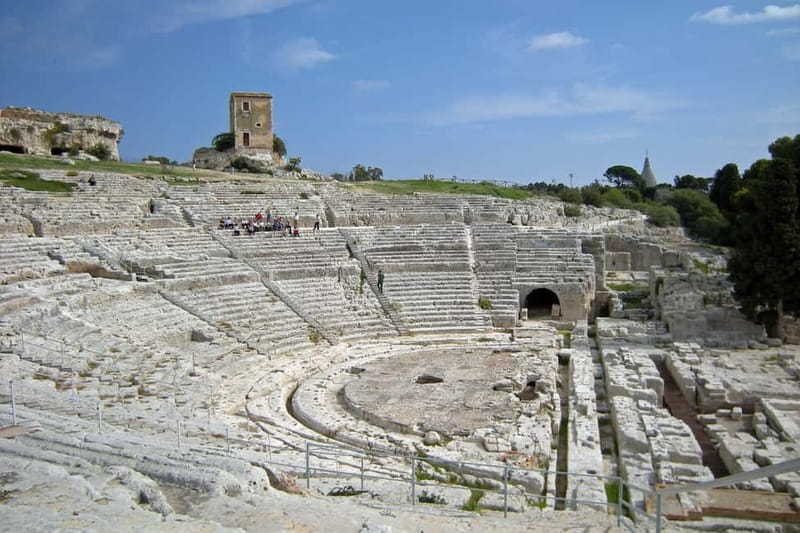
- Greek Theater scale: 59 rows and capacity for up to 15,000 spectators, with a theater setup in summer.
- Ear of Dionysius: a 20 m high, slender pointed arch cut into rock about 65 m deep.
- Lemon-quarry setting: the old quarries above the theater now host a fragrant lemon orchard.
- Ortygia’s architectural mix: Greek/Roman remnants, Norman medieval buildings, and a Baroque main cathedral.
- Fountain of Arethusa: a classic Syracuse stop where you can pause for photos and a breather.
- Guiding quality can matter: some guides handle the tri-language explanations smoothly, while others may make the flow feel less direct.
Why Syracuse from Taormina feels like the right kind of Sicily day
Syracuse is one of those places where the past doesn’t sit quietly behind ropes. Even before you dive into details like the Greek Theater or Ortygia’s churches, you can feel how important this city once was. At its peak, Syracuse was a heavyweight in Magna Graecia—famous for defeating Athens in 413 and for being home to major Greek thinkers like Archimedes. Cicero later described it as the greatest Greek city and the most beautiful.
What makes this tour work is that it doesn’t treat Syracuse like one museum stop. You get an archaeological base first—where the big stone structures do the talking—then you move to Ortygia, where the history is mixed into everyday streets, storefronts, and churches. That shift matters because it changes your experience from staring at ruins to walking through a living historic pocket.
The value piece is also real. You’re paying for a guided bus day: coach transportation, tour leader service, a local guide, and VAT/taxes. With entry fees and meals separate, the price becomes easier to manage if you plan ahead for what you’ll pay on-site.
You can also read our reviews of more tours and experiences in Taormina.


The bus ride and pickup rhythm: what to expect in real time
This is a full-day format, so your day starts with the Taormina transfer. The main pickup point is the Bus Terminal at Via Luigi Pirandello. Expect a 105-minute coach ride to Syracuse, plus additional time for scenic stops and walking once you arrive.
Timing is important with tours like this. The stops are planned, and the bus is not built for long delays—so if you’re hoping to sprint for that last pastry at pickup, you’ll want to be early. If your day trip starts before you’re fully awake, pack an easy snack you can grab later, because the long gap between morning and lunch can catch you off guard.
You’ll also see the kind of pacing that works well for many visitors: there’s a mix of guided stops (with explanation) and time to wander (so you can actually enjoy what you came for). Just remember that the narration is offered in multiple languages—English, German, and Italian—so you may spend a little extra time listening before you move on.
The archaeological stop: Greek Theater, quarries, and the Ear of Dionysius
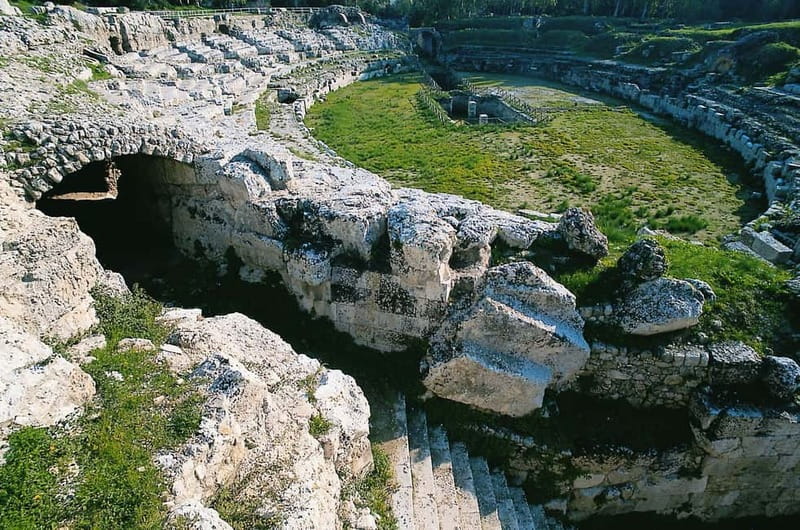
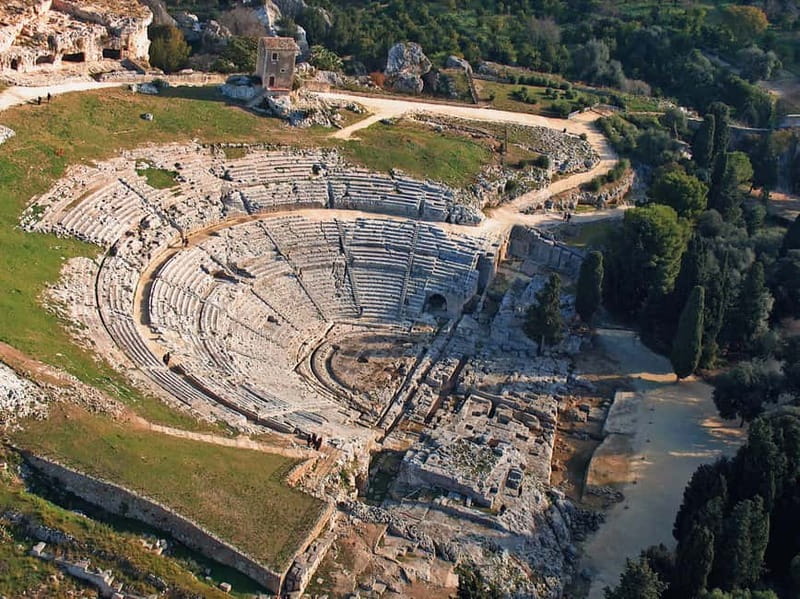
The archaeological area is where Syracuse feels most monumental. It sits northwest of town and brings together Greek and Roman remains in a way that’s easy to understand once your guide starts connecting the dots.
Greek Theater: the huge room where drama happened
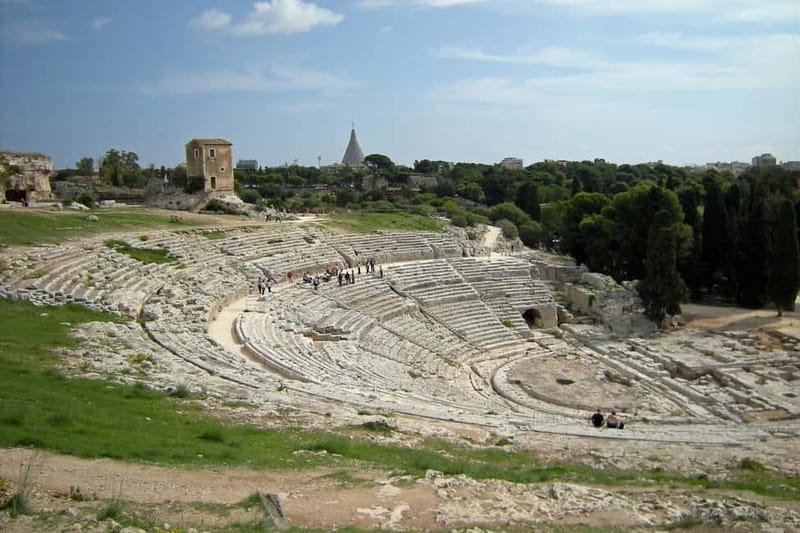
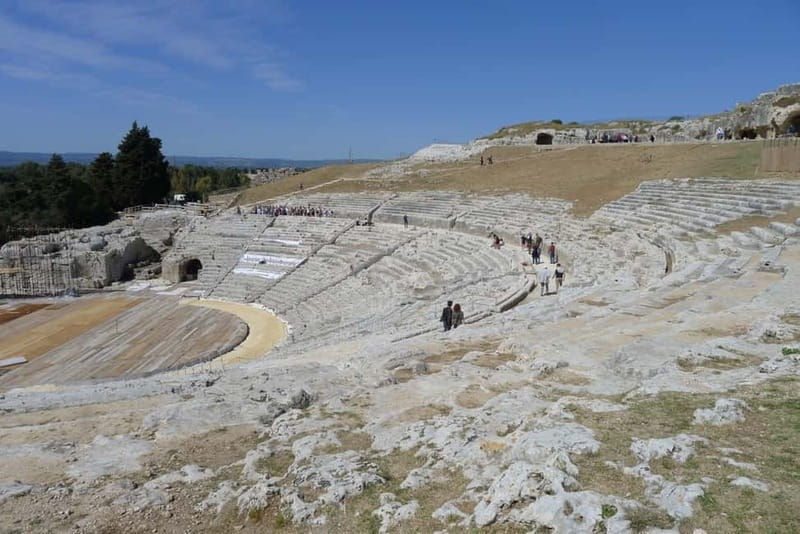
The big star is the Greek Theater, dating back at least to the 5th century BC. The cavea has 59 rows and could hold up to 15,000 spectators. That kind of scale changes how you view it. Instead of thinking of it as one old building, you realize it was a major social machine: built for sound, crowd control, and public life.
If you’re visiting in summer, the theater setup may be in place, which can make the space feel more alive without turning it into a theme park. Even if you don’t get a full performance, the structure is still dramatic in its own right.
Practical tip: wear shoes you can trust on uneven stone. The best views aren’t always right at the easiest path.
Quarries and lemon orchard views
Just over the ridge from the theater, you’ll see the old stone quarries. Today, those quarries support a lemon orchard, which gives the area a different mood than you might expect. It’s not just “ruins on a hillside.” It’s a working landscape layered on top of an older one.
This is a good moment to look slowly and take photos with context. If you only aim your camera at the theater seats, you might miss how the stone was sourced and reused around the city’s power centers.


The Ear of Dionysius: prison, legend, and rock architecture
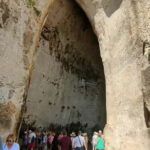
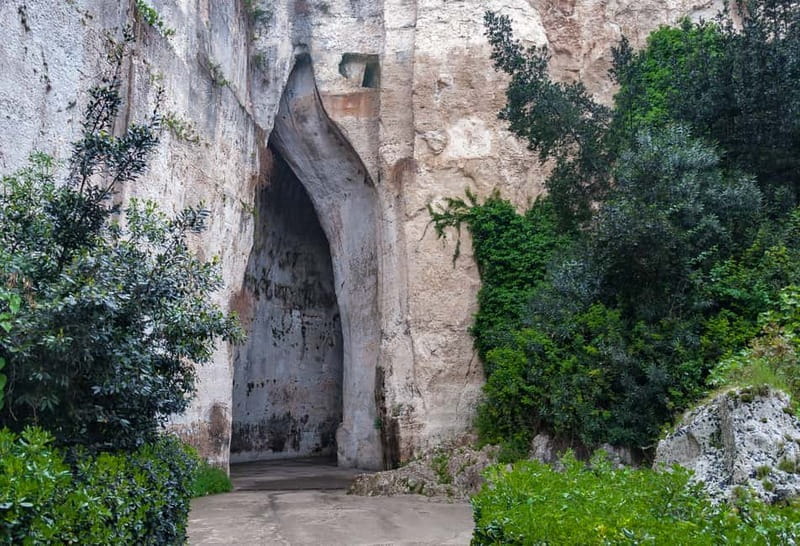
Next comes one of the most striking rock features: the Ear of Dionysius. It’s described as a 20 m high slender pointed arch cut into the rock face about 65 m deep.
What makes this stop click is the story it carries. Dionysius the Tyrant supposedly used the rock as a prison for his bitterest enemies. Whether you view it as history or legend, the physical form is what matters. Standing near it, you start to understand why people would talk about it for centuries—it feels purposeful, theatrical, and severe all at once.
Practical tip: bring shade if you can. Some sections can be bright with little cover, especially when the day is already warm.
Ortygia Island: walking the layered city where buildings change languages
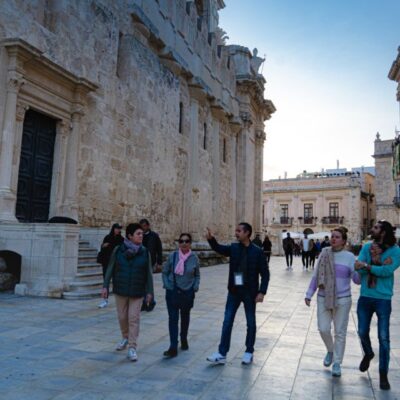
After the archaeological area, the tour shifts to Ortygia Island, where Syracuse becomes more human-scale. Ortygia is smaller than you’d expect, but it’s packed with over 2,500 years of history.
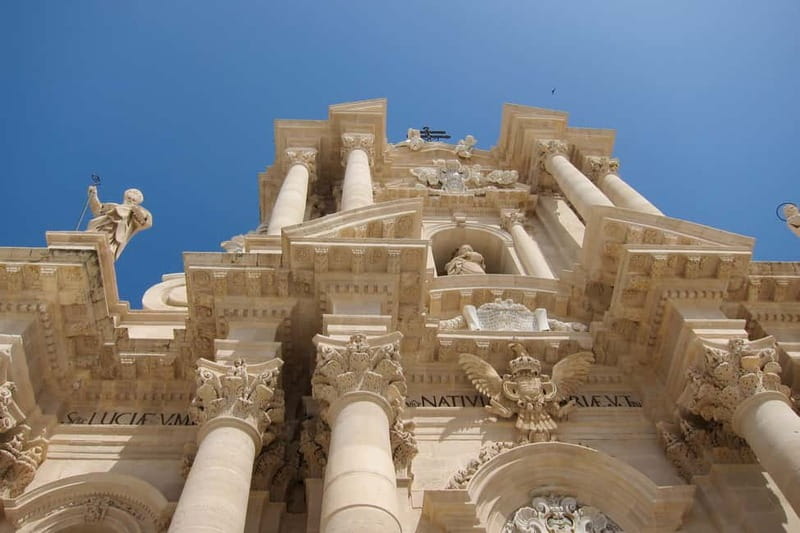
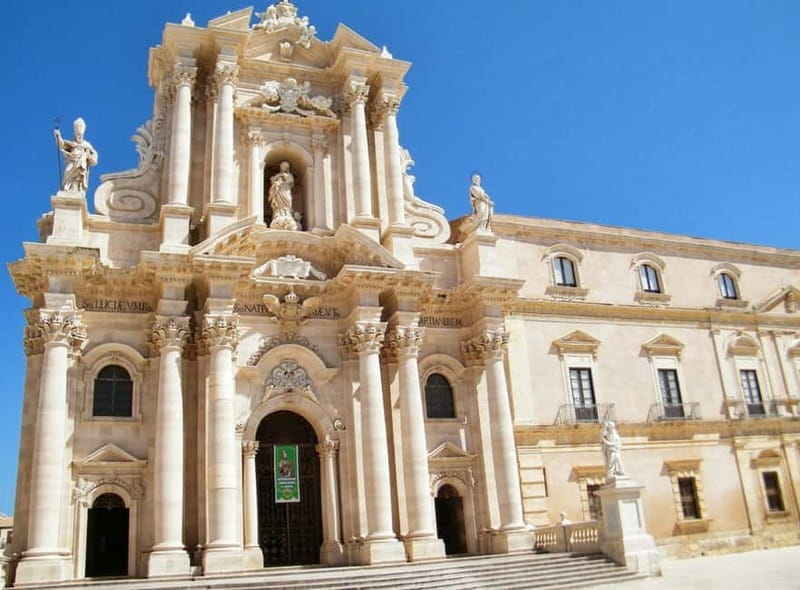
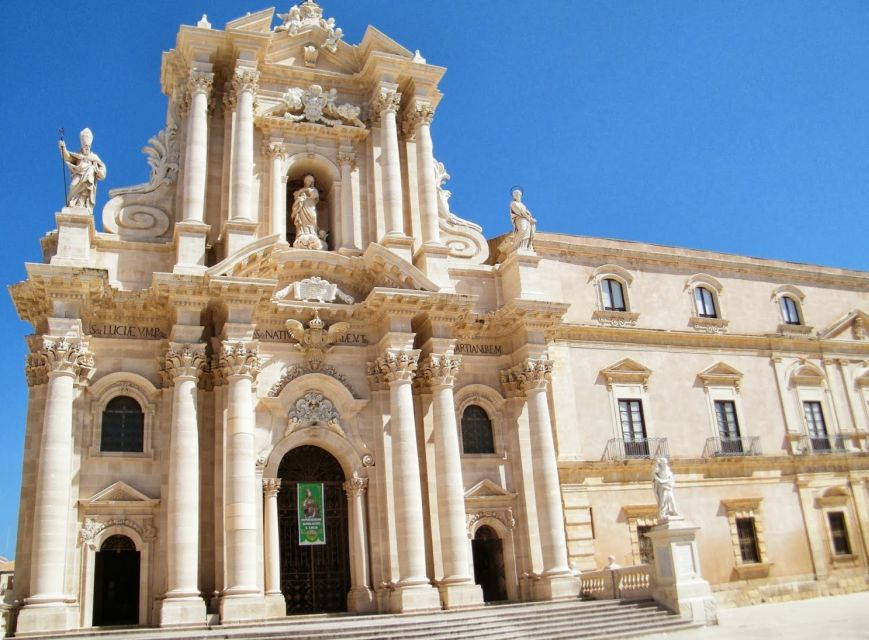
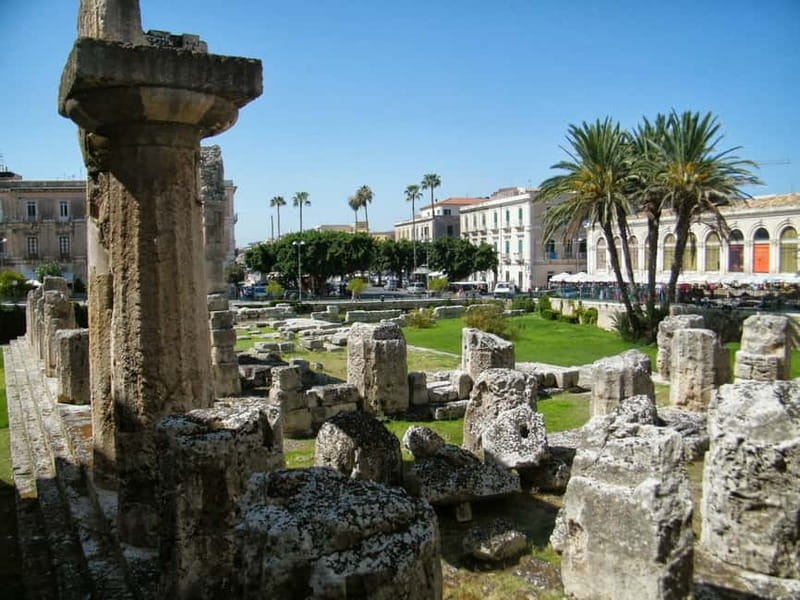
The reason Ortygia feels special is the way architecture stacks over time. You can see Greek and Roman remains side-by-side with Medieval Norman structures, and then the Baroque influence shows up around the main cathedral area. The result isn’t one single “style.” It’s a timeline you can walk through.
Ortygia is also a place where you can choose your pace. The tour gives you time to wander, meaning you can focus on streets, facades, viewpoints, or just finding a quiet corner to reset after the archaeological heat.
If you like photo routes, aim to take a few early photos before lunch crowds pick up. You’ll still have time later, but the light can shift fast once you’re farther into the day.
Fountain of Arethusa: why this simple stop is a highlight
The tour highlights the Fountain of Arethusa, and for good reason. In a city of large monuments, this kind of landmark gives you a softer landing spot—somewhere to slow down, look around, and think about Syracuse as a real place with real rhythms.
It’s also a useful marker for your Ortygia walk. When you reach the fountain area, you’re close to the heart of what makes Ortygia fun on foot: buildings, streets, and the sense that the old world is right where you’re standing now.
Practical tip: take a moment here even if you’re in “photo mode.” It’s a good point to regroup so the second half of your walk doesn’t blur together.
How free time and walking are likely to feel on the ground
This is a guided day, so you’ll move between stops with explanations. Still, the experience includes time to walk around Ortygia and enjoy the island at your own pace.
That balance is one of the best parts of this tour. You get the structure of a guided visit—so you know what you’re looking at—then you get room to wander and shop. If shopping isn’t your thing, you can use that time to sit down in a trattoria, grab a drink, or just recover from sun and stone.
One note: because the guiding is offered in English, German, and Italian, you might feel the time spent at each explanation varies depending on how the guide manages translations. Some guides handle the three languages so it feels clean and organized. Others may make the flow feel more fragmented. Either way, keep your expectations realistic: this isn’t a silent, fast skip-through.
Guide and driver impact: names you may hear and how that affects the day
A day like this lives or dies on communication. When the guide’s explanations are clear, Syracuse becomes far easier to “read” as a story: theater, quarries, prison-rock, then Ortygia’s architectural timeline. When translations feel choppy, you can lose that thread and spend more effort trying to catch up.
In the information you have for this tour, certain guides show up with standout praise. Renata is noted for strong knowledge and courtesy, along with detailed translations across three languages. Eva is also mentioned as knowledgeable, interesting, and funny. On the transport side, Alessandro is described as entertaining and very good.
If you’re booking and you care a lot about narration style, you can’t choose your guide in advance from what’s listed here. But you can plan for the best-case experience by bringing a small notebook or phone notes and focusing on one question at a time, like What was this used for? or What changed over time here?
Price and value: is $67.97 a fair deal?
At $67.97 per person, this tour prices like a midrange guided day trip. The main value comes from included logistics:
- Coach transportation
- Tour leader service
- Local guide service
- VAT and taxes
You also get a service benefit: skip the ticket line. One key detail: entry fees are not included. So you’ll still likely pay for site admissions on the ground. The value is that you spend less time queued and more time with the guide at the stops.
So here’s how I’d judge value for you:
- If you hate figuring out transit to Syracuse and back, this price buys convenience.
- If you want explanations tied to specific ruins and monuments, you’re paying for the meaning, not just the bus.
- If you plan to skip most paid entries anyway, the “skip-the-line” advantage might matter less, and you may prefer independent travel.
What to bring (and what to plan around) for comfort
This day is mostly outdoors and involves walking on stone, so pack for comfort, not just sightseeing.
Bring:
- Comfortable shoes
- A sun hat
Plan around:
- Heat, especially when the day starts early and the stone surfaces hold warmth.
- Meal timing. Drinks and meals are not included, and there can be a long gap between morning and lunch. If you tend to get grumpy when hungry, carry a snack.
Also note the basic constraints:
- Not suitable for people with mobility impairments
- Pets aren’t allowed
Who this tour is best for
This guided bus tour from Taormina is a strong fit if you:
- Want a guided overview of Syracuse’s key archaeological and Ortygia sights
- Prefer having transportation handled
- Enjoy history that you can see in physical structures, not just read about
It may be less ideal if you:
- Need a slow, flexible pace without extended standing time
- Are highly sensitive to heat
- Need accommodations for mobility challenges
If you’re a casual traveler who still wants the “big story” behind each landmark, this is one of the easier ways to do it in a single day.
Should you book the Syracuse day trip from Taormina?
Book it if you want a structured, guided introduction to Syracuse’s most important sights—especially the Greek Theater, the Ear of Dionysius, and the walking payoff of Ortygia. The included coach and live guiding make the day feel efficient, and the “skip the ticket line” service is a real time-saver once you’re on site.
Pass or rethink it if you’re trying to keep costs ultra-tight with no intention of paying any entry fees, or if you know you struggle with long hot days and multi-language pacing. In those cases, independent time in Syracuse might fit better.
If you do book, go in with the right mindset: this isn’t just a sightseeing checklist. It’s a way to connect architecture and ruins into one storyline—from ancient theater and quarry rock to the living streets of Ortygia—without the stress of planning the whole logistics yourself.
FAQ
How long is the Full-Day Guided Tour of Syracuse?
It’s listed as a 1-day experience. Starting times depend on availability, so you’ll want to check the schedule when you book.
Where does the tour pickup in Taormina?
The main pickup point is the Bus Terminal at Via Luigi Pirandello in Taormina, and the tour ends back at the meeting point.
What is included in the tour price?
The price includes transportation by coach, tour leader service, local guide service, and VAT and taxes.
Are entry fees included?
No. Entry fees are not included, so you’ll need to budget for admissions on the day.
Does the tour offer a skip-the-ticket-line benefit?
Yes, it’s listed as Skip the ticket line.
What languages are the live guides offered in?
Live tour guide service is available in English, German, and Italian.
Is the tour suitable for people with mobility impairments?
No. It’s listed as not suitable for people with mobility impairments.
What should I bring for the day?
Bring comfortable shoes and a sun hat.