REVIEW · TAORMINA
From Taormina: Syracuse and Noto Guided Day Trip by Bus
Book on GetYourGuide →Operated by Noema Viaggi Srl - Sicilyexcursions · Bookable on GetYourGuide
Greek ruins and Baroque streets in one day. This Taormina day trip threads Syracuse and Noto together with live guiding, so the big sights come with context instead of just photos. I like the way you move from ancient Greek stones to Ortigia’s sea-facing corners, then finish in Noto’s UNESCO Baroque center. One thing to think about: it’s a full 10 hours, with plenty of walking and timed stops.
I really enjoyed the guide-led format. On the bus you have an on-board guide, and once you arrive you get a local guide for the heavier sites, including the Neapolis area. In practice, the experience shines because the guide keeps history clear and organized, and the group stays on schedule.
The main drawback is pace. This is not a slow sightseeing day. Between transfers, the short photo windows, and the fact that some church interiors and archaeology spots cost extra, you’ll want to stay flexible and keep comfortable shoes on your feet.
In This Review
- Key takeaways before you go
- A long Sicilian day trip that actually feels organized
- Christy and the on-board + local guide combo
- Neapolis Archaeological Park: Greek Theatre to the Ear of Dionysius
- Cathedral of Syracuse: a short stop with big visual payoff
- Ortigia island: Fountain of Arethusa and the sea-front feel
- Noto, the Baroque UNESCO town you can walk through
- Price and value: what $68 gets you (and what costs extra)
- Logistics that affect your comfort: walking, timing, and tickets
- Who this tour suits best (and who should skip it)
- Should you book the Taormina to Syracuse and Noto day trip?
- FAQ
- How long is the Taormina to Syracuse and Noto day trip?
- What does the price include?
- Are monument entry tickets included?
- Is lunch included?
- What’s the main guided sightseeing in Syracuse?
- What’s the Noto part of the day like?
- What languages are the guides?
- Is it suitable for people with mobility impairments or wheelchair users?
Key takeaways before you go
- Christy runs the day with clear storytelling and keeps the group on track through a long route.
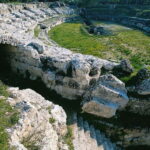
- Neapolis Archaeological Park is guided and hits the Greek Theatre, Latomia del Paradiso, the Ear of Dionysius, and the Roman Amphitheatre.
- Ortigia is best on foot, from the Fountain of Arethusa with papyrus to the Cathedral Temple of Apollo.
- Noto’s Baroque walk is structured, starting at Porta Reale and moving along Corso Vittorio Emanuele.
- Your time at each stop is short, so set expectations: tasters, not leisurely wandering.
A long Sicilian day trip that actually feels organized
From Taormina, this trip is all about stacking the two most tempting east-coast stops into one outing. The bus ride takes time, and you may be picked up from several locations depending on where you’re staying, with early departures starting around 7:00. That early start matters. It lets you see more before the light and crowds change, especially in Ortigia and Noto.
The good part is that the day is built around guided experiences, not random free time. You won’t just arrive, take a few photos, and hope someone explains what you’re looking at. The route is designed so the history is handed to you while you’re standing right in front of it.
One practical note: there’s a short services stop on the way. You’ll still want to plan for the rest of the day as “moving day.” If you need frequent breaks, bring your patience and maybe a snack before you go—lunch isn’t included.
You can also read our reviews of more tours and experiences in Taormina.
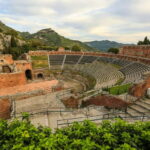


Christy and the on-board + local guide combo
What makes this tour work is the guidance structure. You’re not stuck with only a bus lecture, and you’re not left alone at the big sites either. There’s an on-board guide during the bus portion, and then you switch into on-site local guiding where details matter most.
I also liked the way this kind of guiding helps you read the places. In Neapolis, for example, it’s easy to see “old ruins.” It’s harder to know which part is Greek, what a latomia is, and why the Ear of Dionysius is famous. With a strong guide, you catch the meanings fast, and your photos look better afterward.
From what I saw of how the day runs, Christy’s approach is also efficient: short explanations, clear marching orders, and a lot of history delivered in a way that doesn’t stall the schedule. That matters, because a day trip like this lives and dies by timing.
Neapolis Archaeological Park: Greek Theatre to the Ear of Dionysius
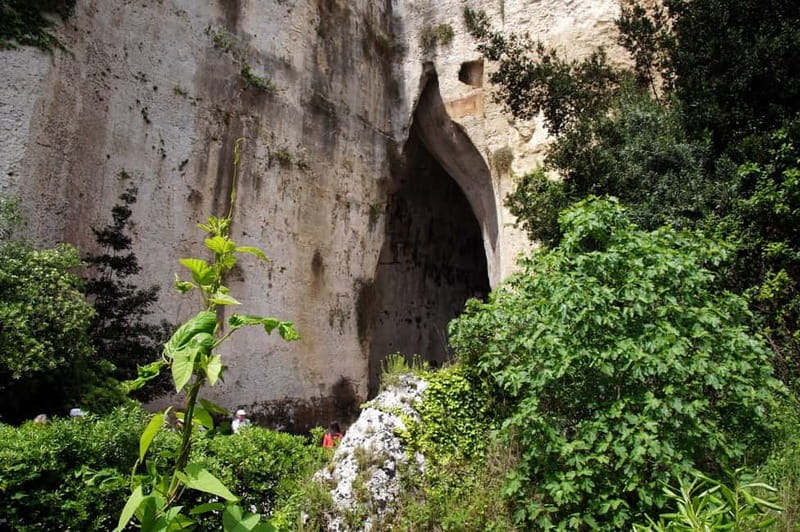
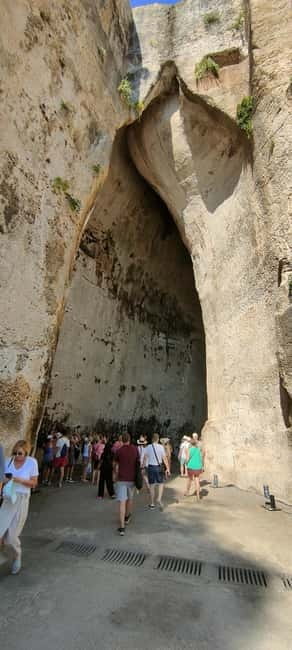
This is the heart of the ancient Syracuse portion, and it’s scheduled as a guided visit rather than a quick walk-by. Neapolis Archaeological Park is the most characteristic piece of the old Greek city, and you get time in the main highlights with a local guide.
Here’s what you’ll see:
- the Greek Theatre
- Latomia del Paradiso
- the Ear of Dionysius
- the Roman Amphitheatre
What’s worth your attention is how these structures show the city changing over centuries. The Greek Theatre gives you the scale and layout of performance spaces. The Latomia del Paradiso and the Ear of Dionysius are tied to the rock-hewn landscape, and they’re the kind of stops where a good guide helps you understand the purpose and the legend. The Roman Amphitheatre then adds the later layer, so you don’t treat Syracuse as one static moment in time.
Drawback? You won’t get an hour-long sit-down in the Greek Theatre. You’ll get enough to grasp what you’re seeing and take in the key views, but it’s still a “line up, look, listen, move” format. If you’re the type who could spend an entire afternoon in one ruin, this portion may leave you wanting more time.
Cathedral of Syracuse: a short stop with big visual payoff
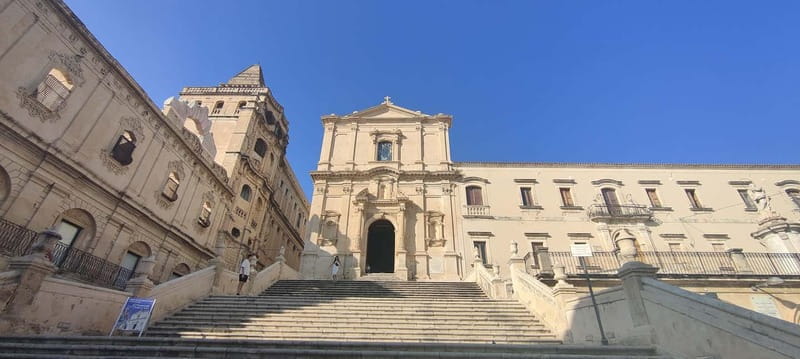
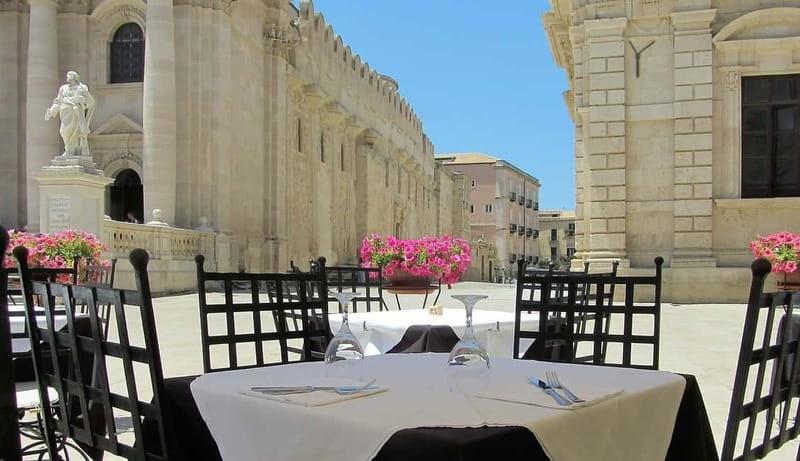
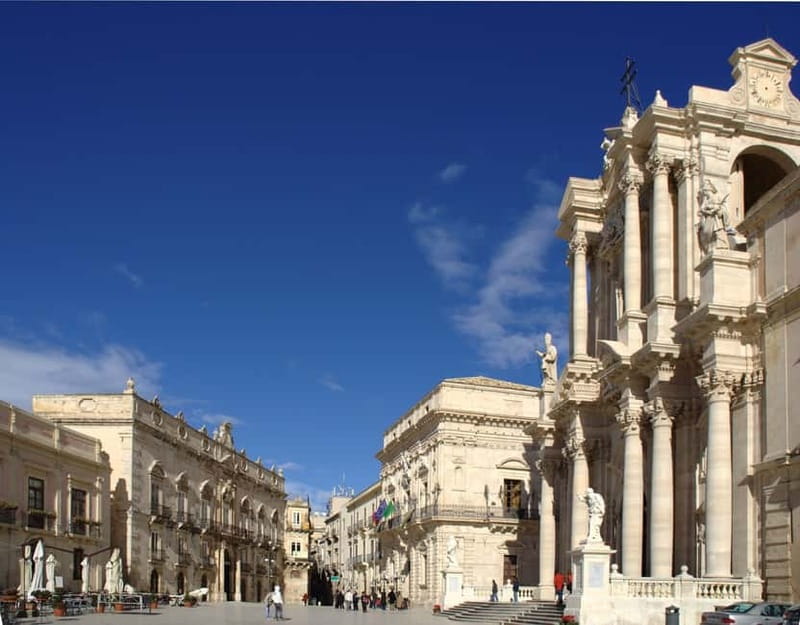
After Ortigia and the walk along the waterfront area, the day includes a visit time at the Cathedral Temple of Apollo and the related Baroque square area, with free time afterward. Then there’s also a scheduled visit to the Cathedral of Syracuse for about 30 minutes.
In a packed day like this, cathedral stops can feel like a checkmark. This one is short, but the surrounding setting helps. The cathedral and its square are made to be seen from the outside and from a few angles as you pause, check details, and reset your legs before the next transfer.
If you’re sensitive to churches being busy, aim to use the provided time for quick inside viewing. Don’t assume you’ll have extra time later.
Ortigia island: Fountain of Arethusa and the sea-front feel
Ortigia is where Syracuse turns human-scale. Instead of big archaeology fields, you’re on the historical center’s streets, walking with the sea in your peripheral vision and stopping for planned sights.
Your Ortigia sequence includes:
- a walk along Foro Italico
- the Fountain of Arethusa, a freshwater spring that forms a natural pool with papyrus plants, on a terrace overlooking the sea
- Cathedral Temple of Apollo
- time to wander with free moments after the major stops
Arethusa is the kind of place that rewards stopping even if you’re not a “fountain person.” The combination of freshwater spring, papyrus, and the sea view makes it feel like Syracuse has a hidden rhythm under the tourist layer. It’s also a nice reset between archaeological heaviness and Noto’s Baroque streets.
For lunch, I’d plan to eat here rather than rushing back to the bus mindset. One practical tip that comes up often is grabbing a sandwich from Borderi in Ortigia. It’s the right style of stop for a day trip: quick, local-feeling, and easy to do without losing the afternoon rhythm.




Noto, the Baroque UNESCO town you can walk through
After Syracuse, the trip heads to Noto, often called the capital of Sicilian Baroque. The timing is set up so you still get meaningful sight coverage and then free time to browse.
Noto’s guided walk follows a classic route:
- enter through Porta Reale
- walk along Corso Vittorio Emanuele
- see Church of S. Chiara
- Palazzo Landolina
- Cathedral of S. Nicolò
- reach Church of S. Domenico and the Municipal Theatre
There’s a reason Baroque towns feel different from “ruins.” In Noto, the decoration is the point: stonework, facades, and dramatic architectural lines. With a guide, you learn how to look. Without it, you’ll still enjoy the beauty, but you might miss why some buildings are arranged the way they are.
The scheduled walk time is about an hour, plus photo stops and free time. That’s usually enough for the main streets and key facades, but not enough to do a deep museum-style exploration. If you love Baroque architecture, you’ll probably want more time after the bus leaves. If you’re more “show me the highlights,” you’ll feel satisfied.
Price and value: what $68 gets you (and what costs extra)
At $68 per person, the value comes from two things: transportation plus live guiding. You’re paying for the organization to move you from Taormina to Syracuse and Noto and for someone to interpret what you’re seeing while you’re there.
Two items commonly add to your day budget:
- the Neapolis Archaeological Park ticket, about €16.50 per person
- the Duomo Ortigia ticket area, about €2.00 per person
Lunch and drinks aren’t included either, so you’ll want a plan for food that doesn’t eat into your limited free time. Comfortable shoes are also a must—this is a walking day, and the surfaces vary.
Also, keep realistic expectations about time. Some people feel the day is long before the first big stop, because pickups and transfers take over the morning. Still, the trade-off is that you get both Syracuse and Noto in one go, with real context rather than guesswork.
Logistics that affect your comfort: walking, timing, and tickets
This tour is not built for slow pacing. Even when the guide explains well, you’ll still be covering ground. One tip: treat this like a hike-lite day. Wear shoes you can walk in for hours. If you’re older or dealing with any mobility limits, it may feel tough.
It also helps to be organized with your entry items. When you pay for the archaeological area, don’t toss the ticket details immediately. You may need them at different entry points during the park visit. Keeping it in one place keeps you from losing a minute in a busy flow.
Weather is another factor. If rain hits early, outdoor ruins can feel less enjoyable and slippery. The good news is that the schedule is designed so you’re not waiting forever for good conditions—there’s still plenty of structured stops later in the day.
Finally, the bus itself is part of your day experience. You’ll spend enough time on the coach that comfort matters. One small warning: it can feel warm in a bus if the cabin ventilation isn’t great, so bring a layer you can manage.
Who this tour suits best (and who should skip it)
This is a strong fit if you:
- want guided context for Greek and Baroque Sicily
- like seeing a lot in one day but still want the meaning explained
- enjoy walking through historic centers and reading architecture
You might want to rethink it if you:
- need lots of downtime between stops
- don’t do well with a fast walking pace
- use a wheelchair or need accommodations for mobility limitations (this trip isn’t suitable for people with mobility impairments or wheelchair users)
If you’re the type who loves the idea of Neapolis Archaeological Park but also wants more time to sit in one place, consider pairing this with a separate Syracuse return on a calmer day. This tour gives a strong first look; it doesn’t replace a longer “wander and linger” visit.
Should you book the Taormina to Syracuse and Noto day trip?
If your priority is a first-rate introduction to Syracuse + Noto, I think this is a good booking. The combination of on-board interpretation and local guiding makes the heavy sites easier to understand. The day is structured, and the guide’s style—especially with history—does a lot to justify the pace.
I’d book it if:
- you’re short on time in Sicily and want two big destinations in one outing
- you like guided history tied directly to what you’re seeing
- you can handle a long day of transfers and walking
I’d pass or adjust expectations if:
- you want long stops and slow exploration
- you struggle with early pickup times
- you’re expecting this to feel like a relaxed day out rather than a schedule-driven tour
If you do book, come prepared: comfortable shoes, plan for extra monument tickets (especially Neapolis), and treat lunch as something you’ll grab in Ortigia rather than waiting for a sit-down meal.
FAQ
How long is the Taormina to Syracuse and Noto day trip?
The trip duration is listed as 10 hours.
What does the price include?
The price includes a tour guide and private bus transportation.
Are monument entry tickets included?
No. You’ll need to pay separately for key sites: Neapolis Archaeological Park around €16.50 per person and the Duomo Ortigia around €2.00 per person.
Is lunch included?
No. Lunch and drinks are not included.
What’s the main guided sightseeing in Syracuse?
You visit Neapolis Archaeological Park with a guided tour (including the Greek Theatre, Latomia del Paradiso, the Ear of Dionysius, and the Roman Amphitheatre) and you also spend time on Ortigia with guided and free time stops.
What’s the Noto part of the day like?
You travel to Noto, walk through the historic center from Porta Reale along Corso Vittorio Emanuele, and visit major Baroque highlights like Church of S. Chiara, Palazzo Landolina, Cathedral of S. Nicolò, Church of S. Domenico, and the Municipal Theatre. There’s also photo time and free time.
What languages are the guides?
Live tour guidance is offered in Italian, English, French, and German.
Is it suitable for people with mobility impairments or wheelchair users?
No. It is not suitable for people with mobility impairments or wheelchair users.