REVIEW · CAGLIARI
Guided Electric Bicycle Tour in Cagliari
Book on Viator →Operated by Viva Cagliari Tour · Bookable on Viator
Cagliari hills get easier on an e-bike. In about two hours, you glide through the city’s historic quarters with power-assist pedaling, then pause for dramatic viewpoints over the harbor and medieval lanes. I love that the route mixes major sights with neighborhood feel, and I love how guides like Valentina (and Simone) bring each district to life with clear, street-level storytelling.
One thing to plan for: parts of the ride run through busy pedestrian and car traffic. If you’re not riding near the front, you might miss some of the smaller details the guide shares.
In This Review
- Key highlights worth knowing
- Meeting at the port: where the ride starts
- The e-bike advantage on Cagliari’s steep streets
- Centro Storico: the historic lanes from above
- Portus Karalis: a Mediterranean harbor in city form
- The central boulevard vibe: city life beyond the medieval lanes
- Stampace: shrines, fortification remains, and Baroque San Michele
- Consideration in Stampace: short stop timing
- Castello quarter: the medieval core and museum-worthy stops
- Museums note: admission isn’t uniform
- Gates, towers, and the Cagliari skyline: Santa Croce to San Remy
- Villanova: colorful balconies and Holy Week meaning
- Pace check: what two hours feels like in real life
- Safety, comfort, and the small practical stuff that matters
- Price and value: where $56.86 makes sense
- Who should book this e-bike tour in Cagliari
- Should you book this Guided Electric Bicycle Tour in Cagliari?
- FAQ
- How long is the guided electric bicycle tour in Cagliari?
- Where does the tour start and where does it end?
- What language is the tour offered in?
- Do I need prior biking experience?
- Is there a minimum height requirement?
- How big is the group?
- Are admission tickets included for the stops?
- Are helmets provided?
- What if the weather is bad or I need to cancel?
Key highlights worth knowing
- Real hill climbing, minus the suffering: assisted pedaling makes steep streets manageable.
- Old-town districts you can actually connect: Stampace to Castello without wasting hours walking.
- Panoramas from multiple heights: viewpoints along the medieval walls and bastions.
- A guide who keeps the pace human: frequent regrouping and short stops so you don’t feel rushed.
- Mixed admission situations: some monuments are included/free, others are listed as not included.
- Small group feel: max 9 travelers, so it’s easier to hear and stay together.
Meeting at the port: where the ride starts
The tour starts at Via Molo Capitaneria di Porto, 17, right in the port area. This matters because Cagliari’s best views and oldest streets sit above the harbor, so starting near the water helps you get your bearings fast. You’ll ride back to the same meeting point at the end, which is handy if you’re continuing your day on your own.
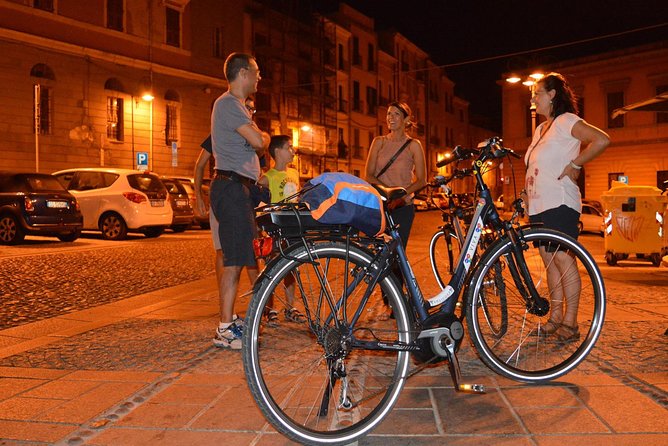
The group stays small, with a maximum of 9 travelers, so you’re not herded into a long line. That also means the guide can actually see who’s getting it and who’s struggling with the bike. A heads-up from the experience itself: you do need to know how to ride a bike, and the tour is best for travelers who feel comfortable steering and braking smoothly in a city setting.
You can also read our reviews of more tours and experiences in Cagliari.


The e-bike advantage on Cagliari’s steep streets
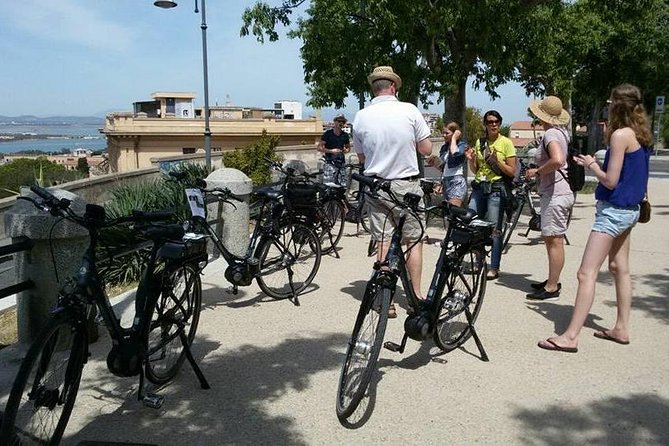
Cagliari is hilly. Even if you’re in decent shape, “just walk it” turns into a leg workout quickly. This is why the e-bike approach works so well: you’re not meant to grind uphill. Instead, you use assisted pedaling to keep moving through changing elevations—up, down, and back up—without arriving drenched or wiped out.
That shows up in the reviews in a big way. People praised how the assist handles steep climbs and how the ride barely feels like exercise. Still, use common sense: busy streets can make any speed feel faster than it is. Slow down when turning, and leave a little buffer space between you and the bike ahead.
Centro Storico: the historic lanes from above
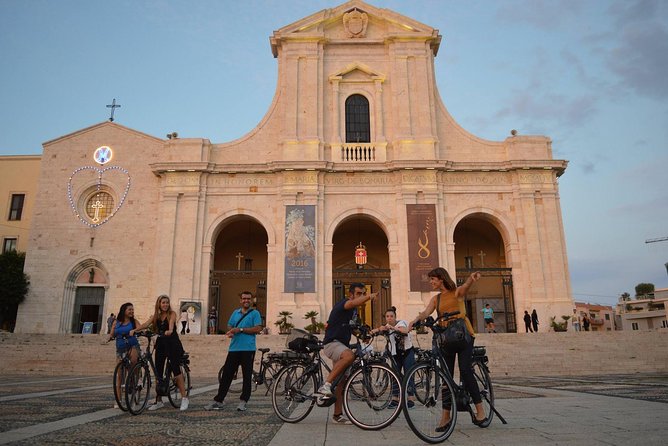
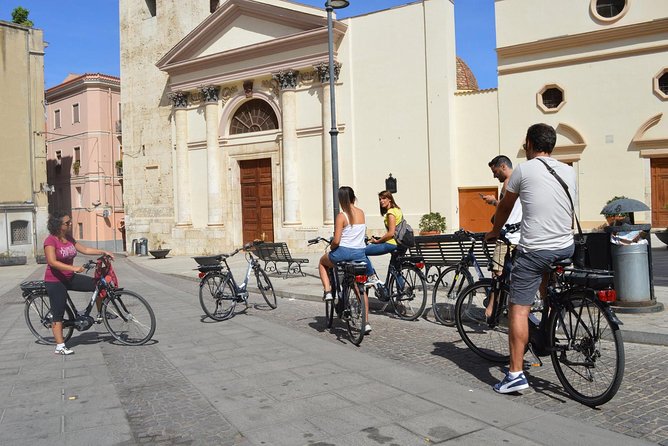
You spend the heart of your time in Cagliari’s old center, where the city’s neighborhoods stack up like layers. Expect you’ll be riding through historic districts including Stampace, Castello, and Villanova, with short stops at monuments and a couple of panoramic points where the view makes you stop talking for a second.
This part of the tour is valuable because it teaches the geography in a way a museum ticket never will. On foot, you might focus on one church or one square. On an e-bike loop, you start understanding how the city’s layout forces movement—how people historically connected ports to hillside districts.
The one drawback here is sound: if traffic is active and the group strings out, the back of the pack can miss bits of the guide’s narration. If you want the full story, stay attentive when you regroup and try to keep yourself within the main group.
Portus Karalis: a Mediterranean harbor in city form
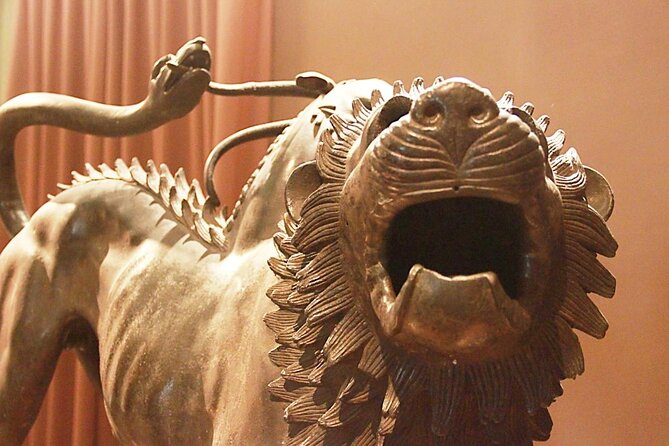
After the steep historic feel, the tour shifts toward Portus Karalis, part of Cagliari’s showcase today. This is a shorter stop—think a quick moment to look, orient, and connect the old town to the port life that shaped it.
Why it’s worth including: Cagliari’s story isn’t only medieval walls and churches. The harbor is the gateway that influenced who came, what goods moved, and why so many important buildings cluster where they do.
The central boulevard vibe: city life beyond the medieval lanes
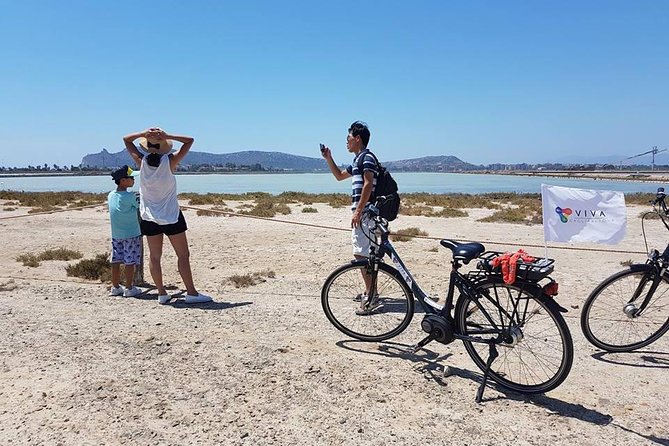
Between the big historical districts, you ride through one of Cagliari’s main streets, the kind of stretch locals use like a living room—porticoes on one side, and Art Nouveau buildings on the other. This segment helps you understand the modern layer on top of the older city fabric.
It’s a smart pacing tool too. After you’ve been riding in narrow lanes and stopping on hilltops, this more open street gives your eyes a rest, and it’s easier to reset before the route climbs again toward the medieval quarter.



Stampace: shrines, fortification remains, and Baroque San Michele
Stampace is where the tour really leans into atmosphere. You pass by the area associated with the seven churches, and you’ll see how small religious sites and shrines dot the neighborhood. These stops are short, but that’s the point—you get variety without spending 40 minutes inside every church.
You also visit Torre dello Sperone, described as the remaining tower linked to the fortifications that once encircled the district. Even if you’re not a “tower person,” it helps you picture how the city was defended and how people moved in and out over time.
The most memorable architectural stop here is Chiesa di San Michele. It’s highlighted as the city’s most important example of Baroque architecture, and you get it at the right moment: after the maze-like feel of Stampace’s smaller shrines, you reach a focal point.
Then the tour brings you to Chiesa di Sant’Efisio, a smaller eighteenth-century church tied to an ancient cult considered crucial across Sardinia. If you’re into cultural rituals and how they survive across centuries, this is the stop that gives you that clue.
Consideration in Stampace: short stop timing
All of this comes in quick bursts—some stops are around 10 minutes. That works if you want highlights and context. It’s not ideal if you want long, slow photography sessions in every church. Plan to treat churches here as “look and learn,” not as “study each artwork.”
Castello quarter: the medieval core and museum-worthy stops
When the ride moves toward Quartiere Castello, the feel shifts from neighborhood texture to historic landmark density. Castello is described as the historic district par excellence, packed with key monuments.
A big moment here is Porta Cristina, an ancient medieval gate tied to Maria Cristina di Borbone and still one of the more suggestive entrances to the medieval area. It also functions like a built-in viewpoint, so you get both history and a photo angle without adding extra walking.
Then you encounter the museum-focused side of Castello. The route points you toward a citadel of museums, including:
- the National Archaeological Museum, tied to the island’s Nuragic civilization finds, and
- collections like those of the National Art Gallery.
If your interests lean archaeology, this stop is the one that gives you the sense that Sardinia’s story is older than the medieval layers you’re riding through. You’ll hear about famous pieces such as small bronzes and statues associated with Mont’e Prama. Even if you’re not a hardcore archaeology nerd, the guide’s job is to translate what those objects mean in human terms: belief, craft, and power.
Museums note: admission isn’t uniform
Some parts connected to Castello are listed as admission ticket free, while others are explicitly not included. In practice, that means you may have to pay separately for certain specific sites (for example, some palace and gate-related stops). It’s not a dealbreaker, but it’s good to know so you don’t assume every door is handled for you.
Gates, towers, and the Cagliari skyline: Santa Croce to San Remy
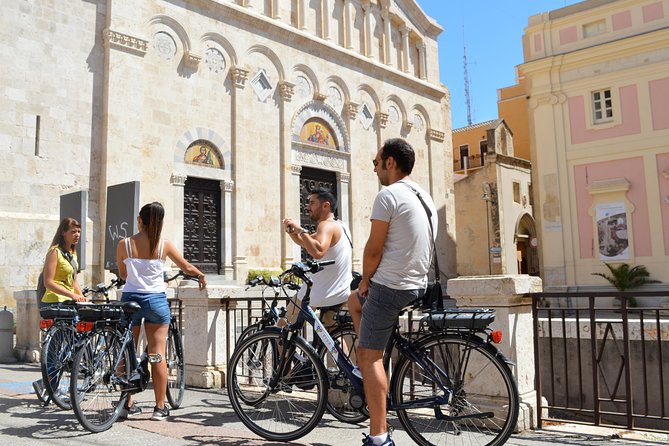
As you work through the medieval outskirts, you’ll hit key points tied to fortification and city control. Tower of San Pancrazio is described as an ancient north gate and strategic control point. Again, the stop is short, but it’s designed to show you where the city once guarded its edges.
You’ll also see Cattedrale di Santa Cecilia, placed in the setting of Piazza Palazzo and framed by major civic and administrative buildings. The story here is the hook: you learn how the Romanesque cathedral fits into the larger political and architectural footprint of the capital’s center.
A few stops in this zone are more administrative-political in flavor—places like the Palazzo Civico (Palazzo Baccaredda) and the royal viceroy setting connected with Aragonese through Savoy periods. Some admission is noted as not included, so think of these moments as “see from outside and learn,” unless you choose to pay at the site.
Then comes the part that often sticks in memory because it’s so visual: Torre dell’Elefante, the picturesque entrance symbolized by the city’s baby elephant. It’s the kind of stop where you might laugh at how instantly memorable it is, and that’s exactly why it works as a landmark.
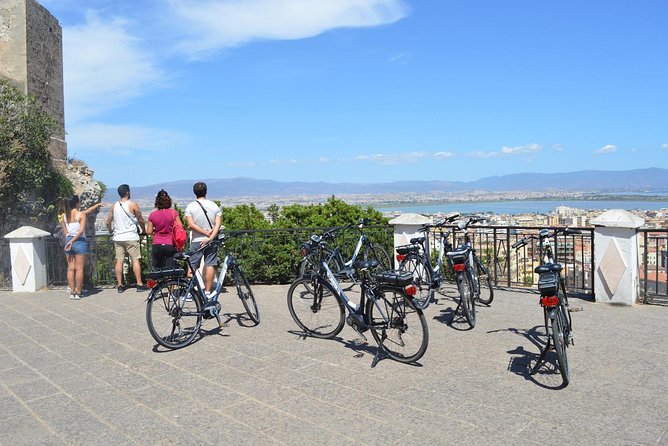
Finally, you reach Bastione San Remy, where you get one of the tour’s promised big payoffs: a terrace with a view that justifies the effort of getting up there. This is the moment to slow down, take photos, and look across the layers of Cagliari—port area, rooftops, and the older districts above.
Villanova: colorful balconies and Holy Week meaning
The ride ends with a look at Villanova, often described as a flower district with 1000 colorful balconies. Even if you’re visiting outside a seasonal festival period, the guide’s job here is to explain why these details matter—Villanova isn’t just pretty architecture. It’s also tied to the Holy Week tradition in the city.
This works especially well as a closing note. After churches, gates, and museum finds, you end on something lighter and more human-scaled: balconies, neighborhood character, and a sense of what everyday streets look like when locals turn them into tradition.
Pace check: what two hours feels like in real life
The tour is about 2 hours, and it packs a lot in because stops are timed to keep energy up and decision fatigue low. You get multiple districts, key monuments, and viewpoint moments without spending your whole day waiting in lines or walking uphill for too long.
What I like about this kind of timed structure is how it prevents decision paralysis. You don’t have to choose which church or gate to see first. The guide does the selecting, then you get context so the sights feel connected rather than random.
The one pacing risk: if you’re easily distracted or you stop to browse too long on your own, you can start to feel behind. City biking + regrouping means staying with the group keeps everything smooth.
Safety, comfort, and the small practical stuff that matters
You’re riding in an urban environment, and one review flagged the pace as potentially harrowing due to auto and pedestrian traffic. That’s not meant to scare you off. It’s meant to set your expectations. Keep your speed conservative, and don’t assume every pedestrian will notice a bike approaching.
Helmets are another area where feedback isn’t consistent. Some people reported helmets and a bottle of water being provided, while another comment said no helmets were offered. I’d treat helmets as a “check with the operator” item. If you have your own helmet, bring it.
Also, if you’re traveling with kids, the ride can still work. Reviews mention a guide being patient with kids’ needs and a family bike trip being a hit. The e-bike assist can make it easier for a wider range of ages and energy levels, but you still need a parent’s eye on traffic and spacing.
Price and value: where $56.86 makes sense
At $56.86 per person for around two hours, this tour competes well when you factor in three things:
1) you’re covering serious vertical ground (those hills add up fast),
2) you get guided context at multiple stops, and
3) it’s built for efficiency—great if you only have one or two days in Cagliari.
Some travelers compared it favorably against cruise-shore pricing, saying it felt like a fraction of what they’d paid elsewhere. Even if you don’t use cruise comparisons, the math generally works: guided time + e-bike transportation + access to multiple highlights for under a half-day is strong value.
Who should book this e-bike tour in Cagliari
This is a great fit if you want:
- a first-day orientation to Cagliari’s old town layout
- a low-effort way to see viewpoints and key districts
- a guided route that stitches neighborhoods together instead of random hopping
You might skip it if:
- you strongly dislike riding with traffic nearby
- you want long, quiet church visits (the stops are timed and fairly brief)
- you’re not confident biking in tight streets, turns, and regrouping
Should you book this Guided Electric Bicycle Tour in Cagliari?
I’d book it if you care about highlights with context and you want to cover the hillside old town without paying in sweat. The best part isn’t just the e-bike. It’s how the tour teaches the city’s map—port to medieval core to viewpoints—while still moving at a fun, approachable pace.
If you’re the type who likes to understand what you’re seeing, pick a day with good weather and go in expecting a guided “greatest hits” run through Stampace and Castello, capped with terrace views at Bastione San Remy. You’ll come away with a much clearer idea of how Cagliari fits together.
FAQ
How long is the guided electric bicycle tour in Cagliari?
It runs for about 2 hours.
Where does the tour start and where does it end?
It starts at Via Molo Capitaneria di Porto, 17, 09125 Cagliari CA, Italy, and ends back at the same meeting point.
What language is the tour offered in?
The tour is available in English (and it can also be in Italian).
Do I need prior biking experience?
Yes. It is essential to know how to ride a bike.
Is there a minimum height requirement?
Yes. The minimum height is 150 cm.
How big is the group?
The tour has a maximum of 9 travelers.
Are admission tickets included for the stops?
Some stops are listed as admission ticket free or included, while others are listed as admission ticket not included. You may need to pay separately for certain specific sites.
Are helmets provided?
Feedback includes mixed information. Some people reported helmets being provided, while another note said no helmets were offered. It’s smart to confirm with the provider, or bring your own if you prefer.
What if the weather is bad or I need to cancel?
The tour requires good weather. If it’s canceled due to poor weather, you’ll be offered another date or a full refund. You can cancel for a full refund up to 24 hours in advance; later cancellations are not refunded. If the minimum number of travelers isn’t met, you’ll be offered a different experience/date or a full refund.