REVIEW · MILAN
Milan: Cathedral and Terraces Guided Tour with Tickets
Book on GetYourGuide →Operated by Walks In Europe · Bookable on GetYourGuide
Skip the line, then see the real Duomo. This guided tour gets you into Milan’s cathedral quickly with skip-the-line priority, and it adds a guided walk that explains Gothic details and hidden symbols while you move between major sights. One catch: if there’s a liturgical closure, your guide may need to explain from outside rather than fully enter the church.
I also love how the route strings together landmarks so your brain builds a map of Milan fast, starting at Camparino in Galleria and looping through places like Galleria Vittorio Emanuele II and Piazza Mercanti. Guides such as Fadia, Barbara, and Valeria bring crisp storytelling (and plenty of humor), so you’re not staring at stone wondering what you’re supposed to see. Note the trade-off: it’s a walking tour and it’s not suitable for wheelchair users.
In This Review
- Key things I’d bet you’ll remember
- Skip-the-line Duomo access: what that saves you
- Meet at Camparino in Galleria and get oriented fast
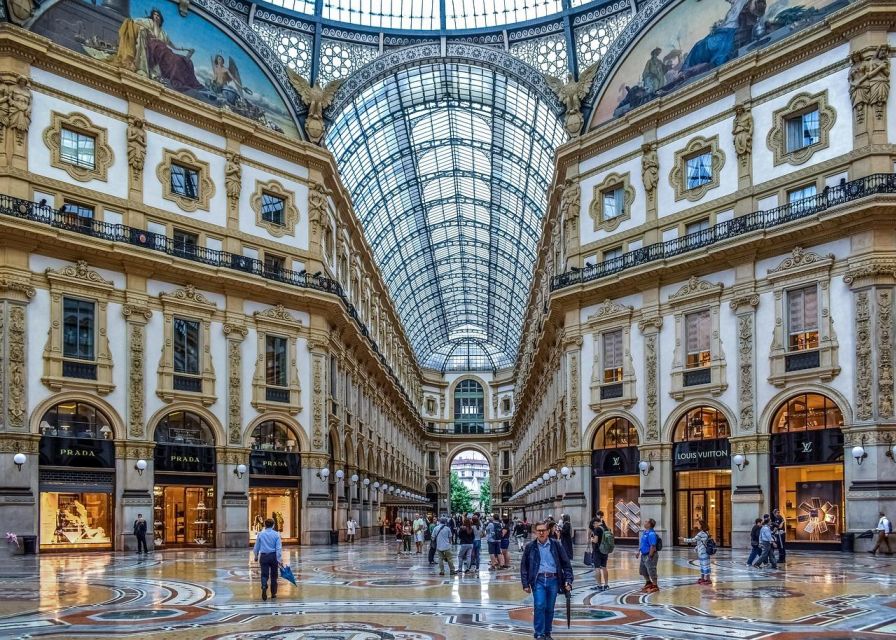
- Galleria Vittorio Emanuele II and the Bull Balls tradition
- Piazza della Scala, La Scala theatre, and the city’s public face
- Piazza Mercanti and Palazzo della Ragione: medieval Milan, in plain terms
- Inside Milan’s Duomo: stained glass, symbols, and construction stories
- What to watch for (so you don’t miss the good parts)
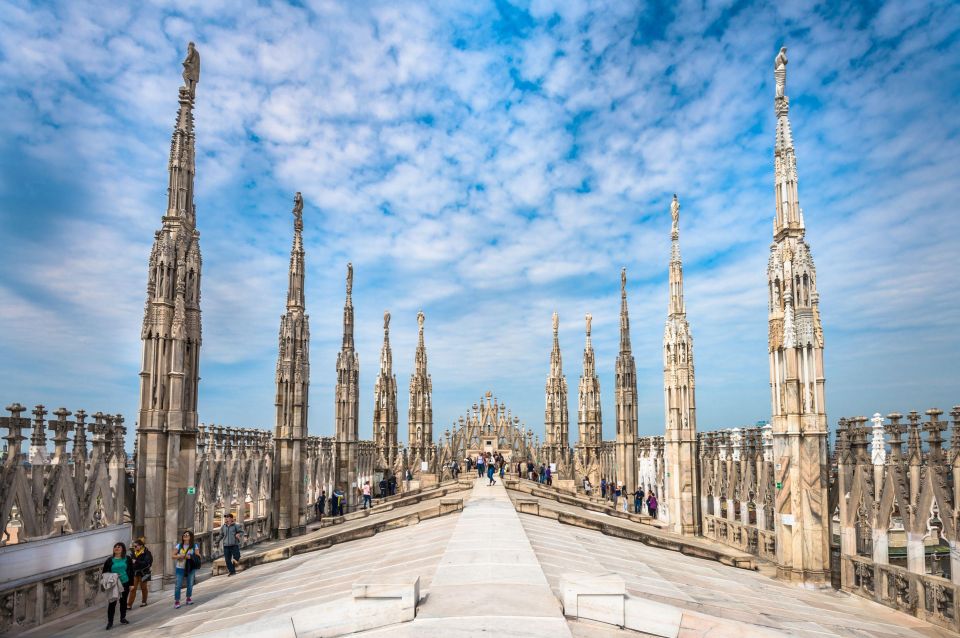
- Terrace access by lift: spires, Madonnina, and city views that land
- How the 2 to 2.5 hour pace works in the real world
- Price and value: why $79 often makes sense
- Who should book this Duomo and terraces guided tour
- Should you book this tour?
- FAQ
- Where is the meeting point?
- How long is the tour?
- Is skip-the-line entry included?
- Can I access the terraces?
- What languages are the guides?
- What items are not allowed inside the cathedral?
- What if the Duomo is closed due to a service?
Key things I’d bet you’ll remember
- Skip-the-line entry to the Duomo so you spend your time looking, not waiting.
- Small groups plus audio headsets, which makes the tour easier to follow even in crowds.
- Galleria Vittorio Emanuele II first, a beautiful warm-up with classic Milan details like the Bull Balls mosaic.
- La Scala and Piazza Mercanti stops, where the city’s cultural and medieval side comes into focus.
- Optional terrace access by lift for big views, spires, and the golden Madonnina.
- Photo stop on the terraces so you get real time for pictures, not just a quick pass-by.
Skip-the-line Duomo access: what that saves you
Milan’s Duomo is famous, which is another way of saying it can be crowded. What I like about this tour is that it treats your time like a resource, with priority entry so you’re less likely to lose your morning (or afternoon) to ticket lines.
You also get more value than a self-guided visit because the guide points out what people miss. From the structure of the Gothic roof to religious art details inside, the “wait-and-wander” problem gets replaced by “look-and-understand.”
And yes, there’s always a chance of closures for services. The important part is that your guide will adapt and explain the situation from outside when needed, rather than leaving you stuck with nothing to do.
You can also read our reviews of more tours and experiences in Milan.
Meet at Camparino in Galleria and get oriented fast
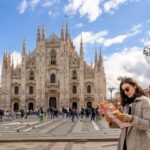
Your tour starts at Camparino Caffè, right at the entrance of Galleria Vittorio Emanuele II. If you’re arriving in Milan without a plan, this is a smart anchor point: it’s central, easy to recognize, and it sets a historic tone from the first minute.
When the guide carries a sign for Walks in Europe, you’re not hunting around. From there, the route is designed to move you through the core sights that connect the Duomo with surrounding Milan, instead of isolating the cathedral as a standalone stop.
This is also where you’ll feel the tour’s practical side: the walking pace is relaxed enough for a 2 to 2.5 hour window, but structured enough that you don’t waste time crossing the city like a lost tourist with a map app.
Galleria Vittorio Emanuele II and the Bull Balls tradition
Galleria Vittorio Emanuele II is one of those places where you instantly get why Milan has a reputation for elegance. You’ll walk through it with context, not just for Instagram purposes, and you’ll hear about the cafés and the building’s role as a meeting spot over time.
Then there’s the famous Bull Balls mosaic. It’s silly in the best way, and it’s the kind of cultural detail that makes the whole day feel more human. Don’t overthink it—just be ready for a quick moment where the guide explains the custom and keeps the tour flowing.
Starting in the Galleria matters because it softens the jump from “city streets” to “cathedral scale.” You’re building the Milan picture while your legs warm up.
Piazza della Scala, La Scala theatre, and the city’s public face
After the Galleria, you’ll head toward Piazza della Scala and the Teatro alla Scala area. This is a good pairing with the Duomo because it shows Milan isn’t only about religion and architecture—it’s also a major cultural engine.
In this part of the walk, you’ll get explanations as you pass key squares, so you’re not just looking at facades. The stop around La Scala is a chance to switch modes: from Gothic religious symbolism to the idea of Milan as a stage for public life and art.
One small practical note: because this is central, it can get busy. That’s where the audio headsets help—your guide’s commentary stays clear even when you’re surrounded by noise.
Piazza Mercanti and Palazzo della Ragione: medieval Milan, in plain terms
Piazza Mercanti (and nearby Palazzo della Ragione) is where Milan’s medieval identity comes through. Instead of treating history like trivia, this tour frames the square as a political and economic center—an explanation that makes the stones feel like they once did real work.
This part is also useful for understanding why the Duomo matters so much. The cathedral isn’t sitting alone in a vacuum; it’s connected to the city’s power, priorities, and civic life over centuries.
You’ll spend time here with guided stops, then continue toward Duomo Square. It’s a nice momentum builder: each stop adds a layer, so when you finally enter the cathedral, it doesn’t feel like a random landmark.


Inside Milan’s Duomo: stained glass, symbols, and construction stories
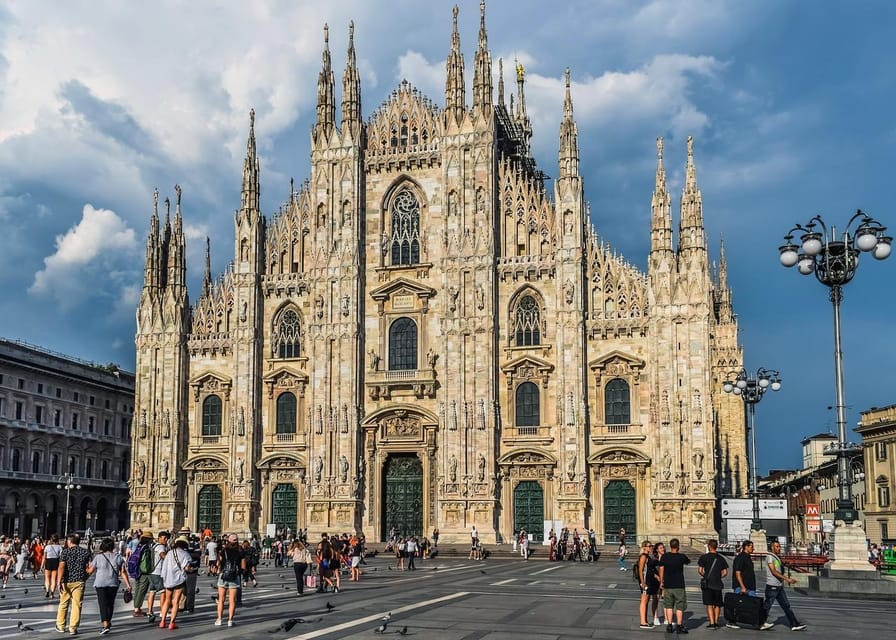
When you reach Piazza del Duomo, the tone shifts. The cathedral is enormous, and even with skip-the-line entry, you’ll want to slow down once you’re inside.
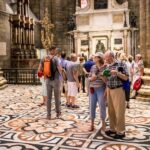
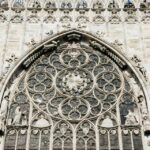
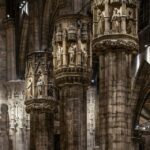
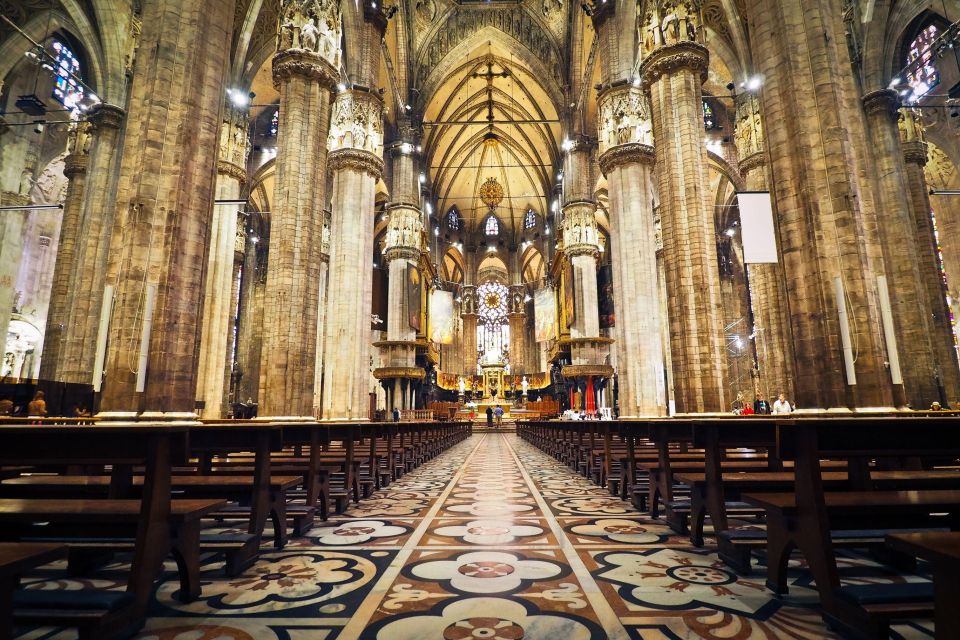
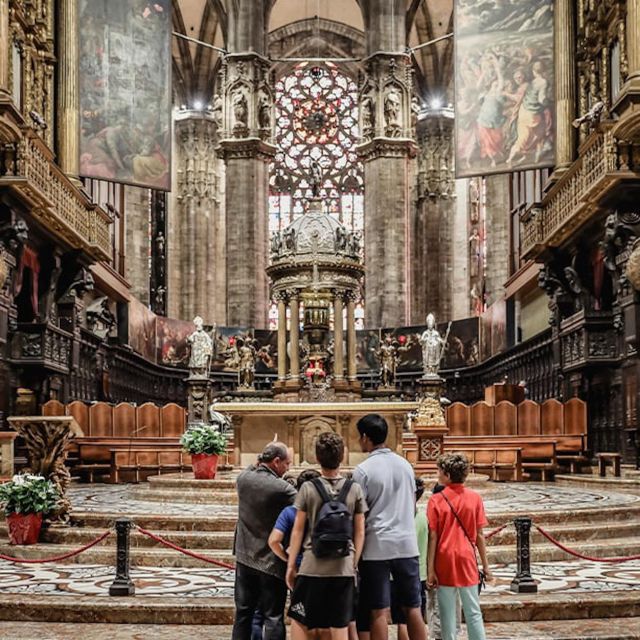
The guide focuses on what makes the Duomo special: intricate Gothic details, towering columns, and stained glass windows that change how the interior feels depending on light. It’s not only about beauty; you’ll also hear stories about construction that took centuries, along with hidden symbols and legendary artworks tied to Milan’s identity.
You’ll also stand beneath the soaring nave and admire the altar area. That “under the ceiling” feeling is one of the best arguments for doing it with a guide, because someone else can translate what you’re seeing into meaning.
One more practical thing: the Duomo is a working religious site. If there’s a service-related issue, your guide may need to adjust the plan, and you may have to rely on explanations from outside. Either way, it’s worth going in with the mindset that this is sacred space first, sightseeing second.
What to watch for (so you don’t miss the good parts)
- Look up for the structure and the layered Gothic forms, not only at the altar.
- Pay attention to the guide’s calls about symbols, because they help you interpret details you’d otherwise ignore.
- Take a breath in quiet moments; it’s easy to rush when the place feels so huge.
Terrace access by lift: spires, Madonnina, and city views that land
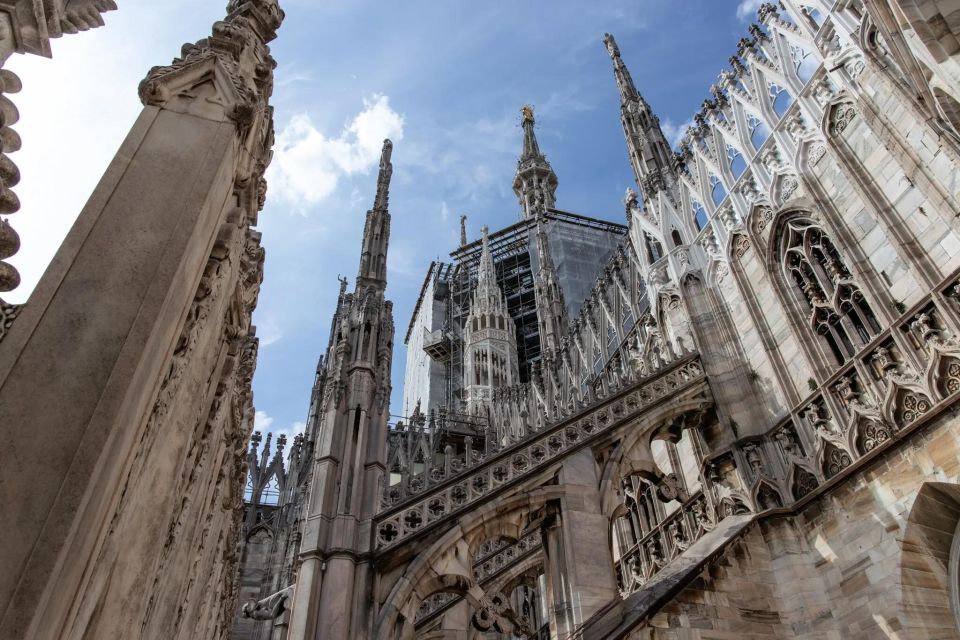
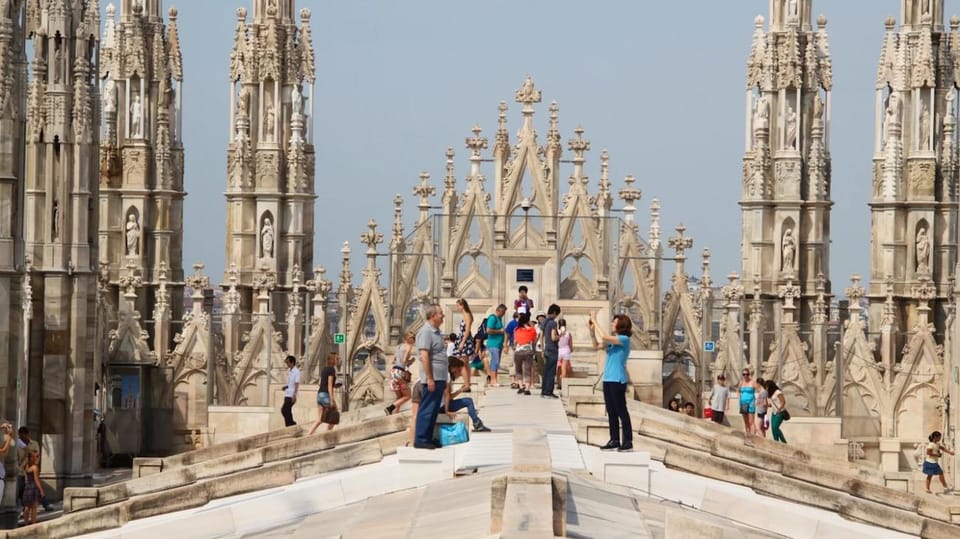
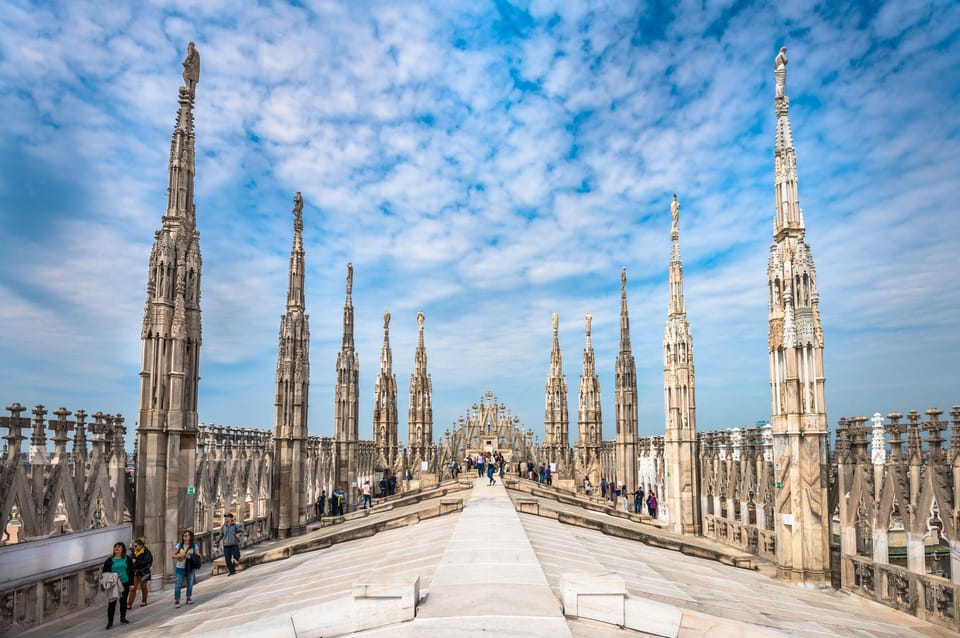
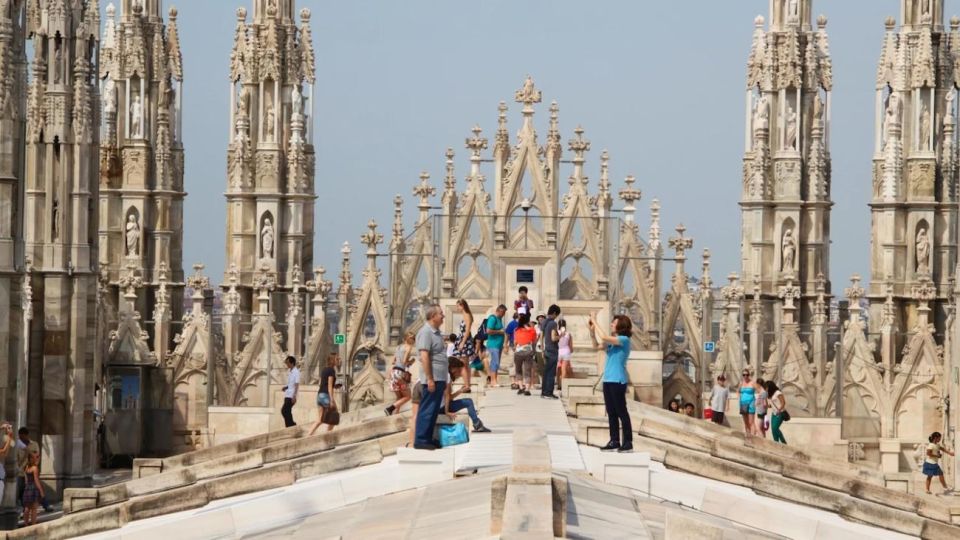
If you choose the terrace option, you’ll get priority entry to the terraces and a lift ascent, which is a big deal when you’re trying to conserve energy for views. Once you’re up there, you get 360-ish perspective over Milan, plus time for photos.
This is where the tour becomes more than history. Walking among the spires and seeing the golden Madonnina above gives the day a payoff moment. Even if you’re not a “views person,” the terraces help you understand the Duomo as a whole complex, not just the interior.
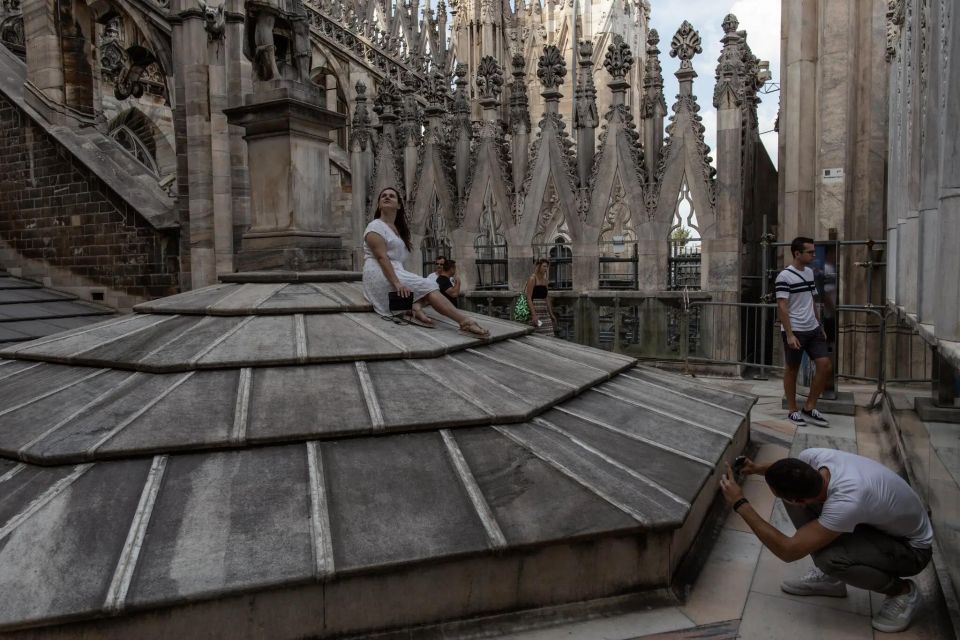
Plan for a photo-stop style experience rather than a long roam. Your time up there is structured (about 30 minutes for sight-seeing/photo stop), which keeps things efficient but still gives you enough moments to frame shots.
If you’re debating terrace tickets, I’d lean yes. The lift access reduces effort, and the terraces are the one place where the Duomo feels like it extends into the city skyline.
How the 2 to 2.5 hour pace works in the real world
This is a short-to-mid length guided walk, so every stop is built to fit. Expect a mix of short walk segments and guided sections, totaling about 2 to 2.5 hours depending on timing and how the cathedral entry situation plays out.
Because your group stays together and your guide uses headsets, the pacing usually feels smooth. In the best cases, you finish with a clear sense of what Milan’s center looks like and where you’ll want to go next on your own.
One thing I’d keep in mind: it’s not a sit-down tour. If you’re the type who gets restless standing still, bring that energy to the terraces, where the walking and photos feel more rewarding than waiting indoors.
Price and value: why $79 often makes sense
At around $79 per person for 2 to 2.5 hours, the value comes down to what you’re buying: skip-the-line access, a live guide, audio headsets, and (if selected) terrace lift access with priority entry.
If you tried to do it yourself, you’d still pay for entry tickets, and you’d spend extra time figuring out logistics, navigating crowds, and figuring out what’s worth your attention inside. Here, the guide effectively functions like a translator and a time-saver at the same time.
Also, Milan has a way of making you feel small compared to big sights. A guide helps you feel competent quickly. You’re not just looking; you’re understanding enough to enjoy what you see without needing a personal museum tour in your pocket.
Who should book this Duomo and terraces guided tour
This is a strong fit if you want:
- A guided walk through central Milan that connects the cathedral with major nearby sights.
- A plan that reduces time spent hunting tickets and sorting schedules.
- Clear explanations from guides who use humor and detailed stories (you’ll hear names like Fadia, Barbara, and Valeria showing up in the tour experience).
It may not be the best choice if:
- You need wheelchair-friendly options (the tour explicitly isn’t suitable for wheelchair users).
- You hate walking or want a minimal-footprint experience.
- You’re sensitive to the idea that sacred spaces can occasionally limit access during services.
Should you book this tour?
Yes, if Duomo is your must-see and you want the shortcut of skip-the-line entry plus a guide who points out what matters. I’d especially recommend booking with the terrace option if you like skyline views and want the Madonnina moment.
If you’re on the fence, here’s the decision rule I use: if you want a cathedral visit plus a guided “Milan connections” walk, book it. If you only want to take a quick look inside and you’re happy figuring everything out solo, you might choose a lighter option.
FAQ
Where is the meeting point?
Meet at Camparino Caffè bar at the entrance of the Galleria Vittorio Emanuele II. The guide will have a sign that says Walks in Europe.
How long is the tour?
The tour runs about 2 to 2.5 hours.
Is skip-the-line entry included?
Yes. The tour includes skip-the-line access to the Duomo.
Can I access the terraces?
Terrace access is optional. If you select it, you get priority entry and lift access to the terraces.
What languages are the guides?
Guided tours are offered in English and German.
What items are not allowed inside the cathedral?
Hats are not allowed, and you also can’t bring weapons or sharp objects, luggage or large bags, food, or glass objects.
What if the Duomo is closed due to a service?
The Duomo may experience unforeseen closures due to liturgical celebrations. In that case, your guides will provide explanations from outside the cathedral.