REVIEW · ROME
Borghese Gallery Guided Tour with Skip-the-Line Entry
Book on Viator →Operated by Doooing Experience · Bookable on Viator
Bernini everywhere, with real breathing room. This Borghese Gallery experience is interesting because it pairs skip-the-line entry with a small-group pace, so you can actually enjoy the art instead of losing your energy to queues. You get a mobile ticket, English commentary, and headsets if you need them.
I like this tour for two big reasons: I love the time protection that comes with skipping the long waits, and I love the guided focus on major masterpieces across the gallery’s main rooms. It’s also semi-private (max 15), which makes it easier to hear explanations and stay together without feeling herded.
The one drawback to plan around is time. In about 2 hours, you’ll see a lot, but you won’t get long, quiet “stare-only” sessions with every artwork, and late arrivals aren’t accommodated.
In This Review
- Key highlights you’ll feel right away
- Skip-the-Line at Borghese: how it changes your day
- Meeting Point at Piazzale Scipione Borghese: simple plan, no surprises
- Inside the Galleria Borghese: 2 hours across 20 rooms
- Stop-by-stop: the masterpieces you’ll focus on
- Apollo e Daphne: Baroque drama you can read in stone
- Pauline Bonaparte as Venus Victrix: power dressed as myth
- Two Busts of Cardinal Scipione Borghese: portrait power
- Truth Unveiled by Time: the story with a missing piece
- David: seven months of speed and pressure
- The guide’s job: turning marble into a narrative you follow
- Pacing trade-offs: when 2 hours feels tight
- Price and value: what you’re really paying for
- Who should book this Borghese tour (and who should consider alternatives)
- FAQ
- FAQ
- How long is the Borghese Gallery guided tour?
- Is skip-the-line entry included?
- What language is the tour offered in?
- Are headsets included?
- What’s the group size limit?
- Will I get a mobile ticket?
- What are the main sculptures you’ll see?
- Where is the meeting point?
- What if I arrive late?
- Can rooms be closed due to refurbishment?
- Should I plan for weather or Rome access changes?
- Should you book this Borghese Gallery skip-the-line tour?
Key highlights you’ll feel right away
- Skip-the-line entry helps you use your 2-hour window wisely
- Small group (max 15) keeps the experience manageable and easy to follow
- Headsets available so the commentary stays clear in busy rooms
- Bernini centerpieces like Apollo e Daphne and David anchor the visit
- Canova’s Venus Victrix brings a different style and story to the mix
- Designed to cover top works across many rooms, not just a quick sweep
Skip-the-Line at Borghese: how it changes your day
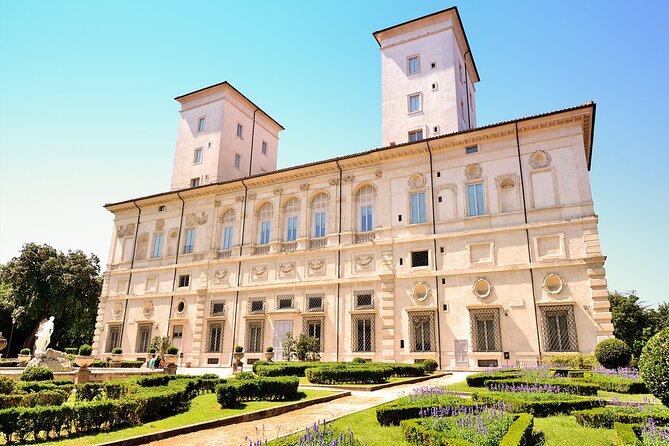
The Borghese Gallery is famous for being hard to access smoothly. Entry is regulated and limited, so waiting around outside can eat up the best part of your visit. This tour’s skip-the-line entry matters because it turns the experience from a “logistics challenge” into an “art first” outing.
Another plus: you’re not rushing through the museum with a huge crowd. This is a semi-private tour with up to 15 people, and you’ll have a guide shepherding the route. That keeps the flow tight enough that you still catch the big highlights in the time you have.
One practical detail I appreciate is the mobile ticket. It reduces fumbling right when you’re trying to meet up and get inside. Add headsets for better audio, and you end up spending less effort figuring things out and more effort looking closely.
You can also read our reviews of more tours and experiences in Rome.

Meeting Point at Piazzale Scipione Borghese: simple plan, no surprises
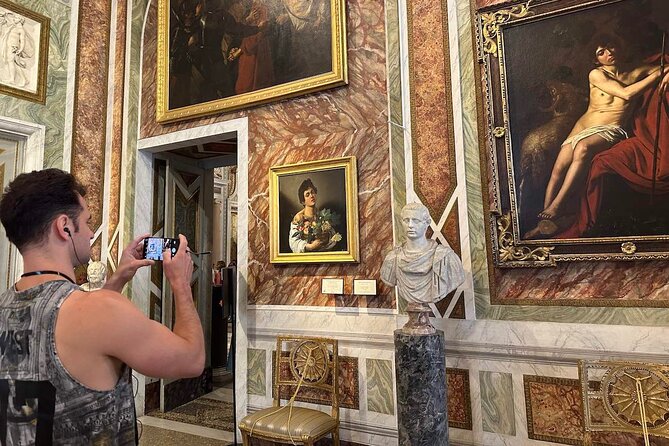
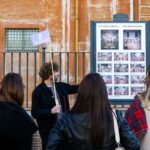
You meet at Piazzale Scipione Borghese, 5, 00197 Roma RM. The good news is it’s near public transportation, so you’re not forced into taxi-only planning.
Do yourself a favor and arrive early. The late arrival policy is strict: you must show up at least 15 minutes before departure, and late arrivals aren’t accommodated or refunded. That’s not a “fine print” detail—at the Borghese, everyone’s timing affects group entry.
Rome can also shift during special periods. With the Jubilee, some monuments may be under restoration and access routes could change, so check your messages for updates before you go. And keep in mind that some rooms of the gallery might be closed due to refurbishment works, which can slightly alter what you’re able to see on the day.
Inside the Galleria Borghese: 2 hours across 20 rooms
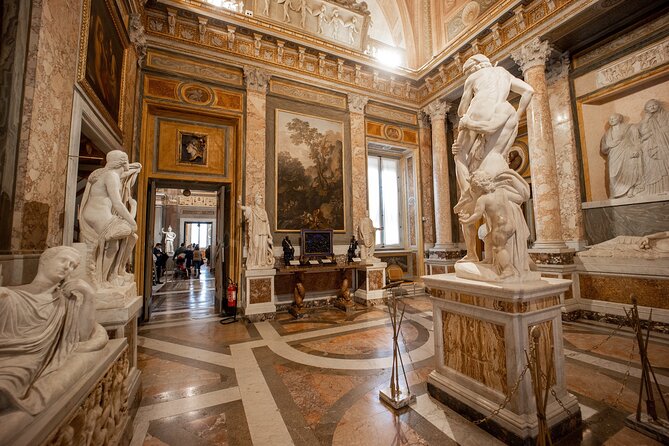
The tour runs about 2 hours and is built to cover highlights across roughly 20 rooms. You won’t be stuck staring at a single masterpiece for the full visit, either. The idea is movement with meaning: you hop between key sculptures, and the guide helps you connect what you’re seeing to myth, symbolism, and artist choices.
You’ll typically spend around 15–20 minutes at each featured stop. That time is long enough to notice details, but short enough that you don’t drift into “museum fatigue.” If you’re the type who loves art but gets restless after an hour, this structure usually works well.
Headsets are there to make a real difference. In galleries, sound bounces. If you’re farther back in the group, the commentary can get hard to catch without them. With headsets, you’re more likely to follow the story even when you’re standing at different angles to see the sculpture.
One more thing to note: this is not a private tour. You’re sharing the experience with others, which keeps it affordable and social, but it does limit how much the guide can slow down for a specific question.
Stop-by-stop: the masterpieces you’ll focus on
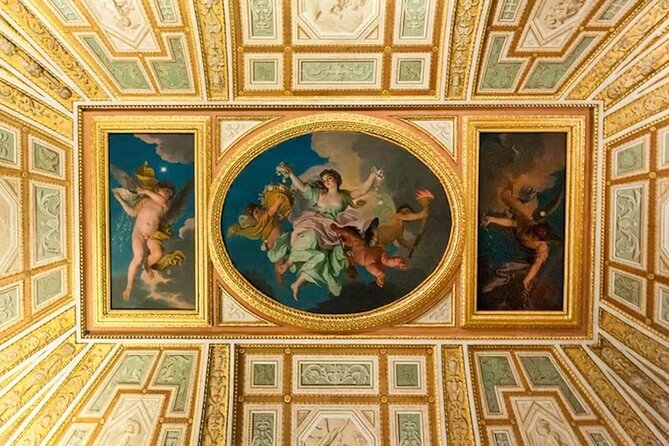
Here’s what anchors the experience, and why each stop is worth your full attention.
Apollo e Daphne: Baroque drama you can read in stone
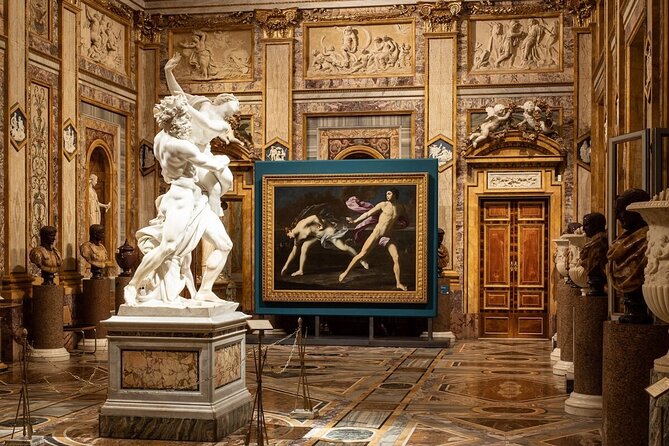
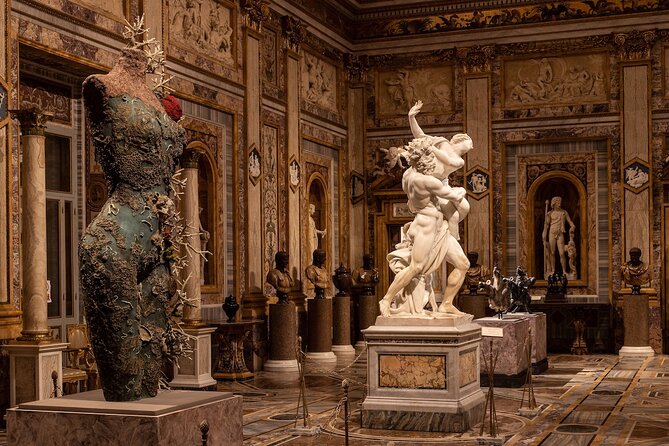
The tour starts (or at least kicks off the sculpture highlights) with Apollo e Daphne, Bernini’s marble in natural size, carved in the early 1620s. It’s Baroque in every sense: motion, emotion, and a scene that feels like it’s about to continue past the moment you’re standing in front of it.
The story comes from Ovid’s Metamorphoses. You’re seeing the culmination of Apollo and Daphne—myth as turning point—rendered with the physical immediacy that Bernini was famous for. If you’ve ever wondered how Baroque artists made action feel frozen but still alive, this is one of the clearest answers in Rome.
A small practical tip: at this stop, take a few seconds to shift your viewpoint. The drama changes depending on where you stand, and the guide’s explanation helps you see what you might otherwise miss.



Pauline Bonaparte as Venus Victrix: power dressed as myth
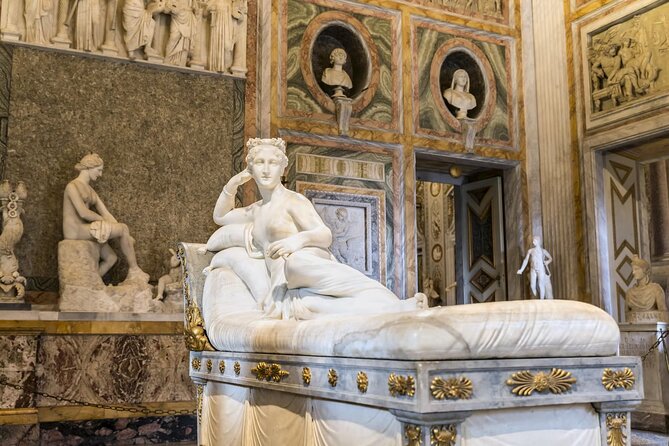
Next is Pauline Bonaparte as Venus Victrix by Antonio Canova. This is a life-size neo-Classical portrait sculpture—semi-nude, but also politically loaded. It was executed in Rome from 1805 to 1808 after Pauline married into the Borghese circle.
The sculpture’s journey is part of its appeal: it moved from Camillo Borghese’s house in Turin to Genoa, only arriving at the Galleria Borghese around 1838. So you’re not just looking at a body in marble; you’re looking at how art travels through wealth, marriages, and reputation.
If you’re expecting a gallery packed only with one style, this stop is a good reset. Bernini’s theatrical energy gives way to Canova’s cleaner, controlled classical approach.
Two Busts of Cardinal Scipione Borghese: portrait power
You’ll then see two marble busts of Cardinal Scipione Borghese by Bernini, created in 1632. The detail here is the point. Portrait busts can look similar at first glance, but the guide helps you compare how the faces communicate status, character, and control.
These busts matter because they connect the collection to the man who helped shape it. When you know who the patron was, the gallery feels less random and more intentional.
Truth Unveiled by Time: the story with a missing piece
One of the most thought-provoking stops is Truth Unveiled by Time, also by Bernini. The sculpture was executed between 1646 and 1652, with the idea that Truth appears as a naked young woman being unveiled above by a figure representing Time.
Here’s the twist: the figure of Time was never executed as originally planned, so Bernini managed to express the idea later by adding the Time figure in 1665. That history turns the sculpture into more than a beautiful object. It becomes evidence of a creative problem solved after the fact.
If you like art that raises questions, this stop gives you something to think about long after you leave the room.
David: seven months of speed and pressure
Finally, you’ll see David, the life-size marble by Bernini, completed in seven months (1623–1624). Cardinal Scipione Borghese commissioned it to decorate the Borghese Gallery, which means this was art meant to be seen and remembered in a specific space.
The subject is biblical David just before he throws the stone to bring down Goliath. That moment is loaded with tension—David is poised, not triumphant yet. Even if you know the story, the sculpture’s expression and posture make the suspense feel immediate.
One practical note: because it’s life-size, David can feel close and powerful. Give it a little extra attention here. This stop tends to be a favorite, and it’s one of the most “readable” Bernini works if you’re still learning how to look.
The guide’s job: turning marble into a narrative you follow
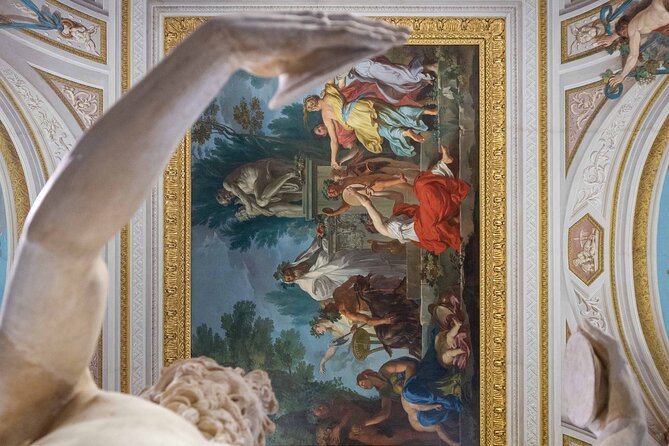
A big part of the value is the way the guide connects details. Without guidance, you might appreciate the workmanship but miss the “why this, why now” layer.
I’ve noticed a pattern in the quality of guides for this tour—English-speaking names like Martina, Francesca, Lorenzo, Serena, and others show up in past experiences. The common thread is clear communication and strong pacing. It’s not just facts dumped fast. The best guides in this format help you understand symbolism so the sculptures stop feeling like separate masterpieces and start feeling like a coherent collection.
You also get headsets when needed, which supports this “follow the story” approach. If you can hear the commentary clearly, you’re more likely to spot fine details—like how a myth is being staged, or how a patron’s identity shapes what you see.
This is also where the small-group size helps. With fewer people, the guide can move you through the room more smoothly and keep you aligned with what you should be looking at next.
Pacing trade-offs: when 2 hours feels tight
The tour is designed for coverage, not marathon lingering. That’s usually a good thing. You leave knowing what you saw and why it mattered. Still, the trade-off is that you won’t have unlimited time in front of every single piece.
One thing to watch for is standing and focus time. Even though each stop is timed (mostly 15–20 minutes), the gallery demands attention. If you prefer long quiet breaks and close study with no one talking, you might want extra time afterward on your own.
If you’re the kind of visitor who likes to re-check details at your own pace, plan a bit of buffer after the tour. You can come back to the one or two sculptures that hooked you most.
Also, if you’re sensitive to schedule changes, keep in mind that on some days the timing can run longer than expected. The tour works best when you treat it as a set experience and keep your day flexible.
Price and value: what you’re really paying for
At $91.95 per person, this isn’t a budget add-on. But it’s also not just a “ticket with a guide.”
Here’s what’s included that affects value:
- Skip-the-line entry that protects your time
- A guided visit in English
- Admission fees included
- Headsets if needed
- Semi-private group size (max 15)
For Rome, time is money, and queues can quietly ruin the day. With a timed entry museum like Borghese, paying for a guide and priority access is often the most rational use of your limited vacation hours.
It also helps that the tour is planned around a realistic duration (about 2 hours) and a structured set of highlight stops across many rooms. And since this is commonly booked about 9 days in advance on average, demand is clearly high—another sign that securing your slot early can be smart.
Who should book this Borghese tour (and who should consider alternatives)
This tour fits best if you want:
- A guided overview of the Borghese Gallery’s biggest sculpture highlights
- English commentary you can actually hear (headsets help)
- A manageable group size that keeps things moving without feeling chaotic
It’s also a strong pick if you love Bernini and want the stories behind the drama—like myth in Apollo e Daphne or the tension in David—explained while you’re standing in front of the stone.
Consider a different approach if you:
- Want long, independent time to study sculptures without listening to narration for most of the visit
- Prefer a flexible pace where you can stop and start freely in every room
The gallery’s rules mean you’re still looking at a guided format. This is not a self-guided “wander and see everything slowly” experience.
FAQ
FAQ
How long is the Borghese Gallery guided tour?
The tour lasts about 2 hours.
Is skip-the-line entry included?
Yes. The tour includes skip-the-line entry so you can avoid the longest queues.
What language is the tour offered in?
The tour is offered in English.
Are headsets included?
Headsets are included if needed, so you can better hear the guide’s commentary.
What’s the group size limit?
The tour is semi-private with a maximum of 15 travelers.
Will I get a mobile ticket?
Yes. A mobile ticket is provided.
What are the main sculptures you’ll see?
The highlights include Apollo e Daphne, Pauline Bonaparte as Venus Victrix, Two Busts of Cardinal Scipione Borghese, Truth Unveiled by Time, and David.
Where is the meeting point?
You meet at Piazzale Scipione Borghese, 5, 00197 Roma RM, Italy.
What if I arrive late?
Late arrivals will not be accommodated or refunded. Aim to arrive at least 15 minutes before the scheduled departure time.
Can rooms be closed due to refurbishment?
Yes. Some rooms of the gallery might be closed to visitors due to refurbishment works.
Should I plan for weather or Rome access changes?
The experience requires good weather, and during the Jubilee some access routes may change due to restoration work. Check your messages for updates before you visit.
Should you book this Borghese Gallery skip-the-line tour?
If your goal is to see the Borghese Gallery’s top masterpieces with clear explanations—and do it without wasting half your trip in lines—this is a strong choice. The included admission, headsets, and small-group format make the $91.95 price feel tied to real value, not just marketing.
Book it especially if you care about Bernini’s stories (Apollo e Daphne, Truth Unveiled by Time, David) and want context while you’re looking at the sculpture. If you’d rather linger alone and roam without structure, you might enjoy a self-guided visit more—but for a first-time Borghese stop, this guided, skip-the-line approach is usually the smarter way to spend your limited time in Rome.