REVIEW · MILAN
Milan: Last Supper Guided Visit
Book on GetYourGuide →Operated by YNT Your Next Tour srl · Bookable on GetYourGuide
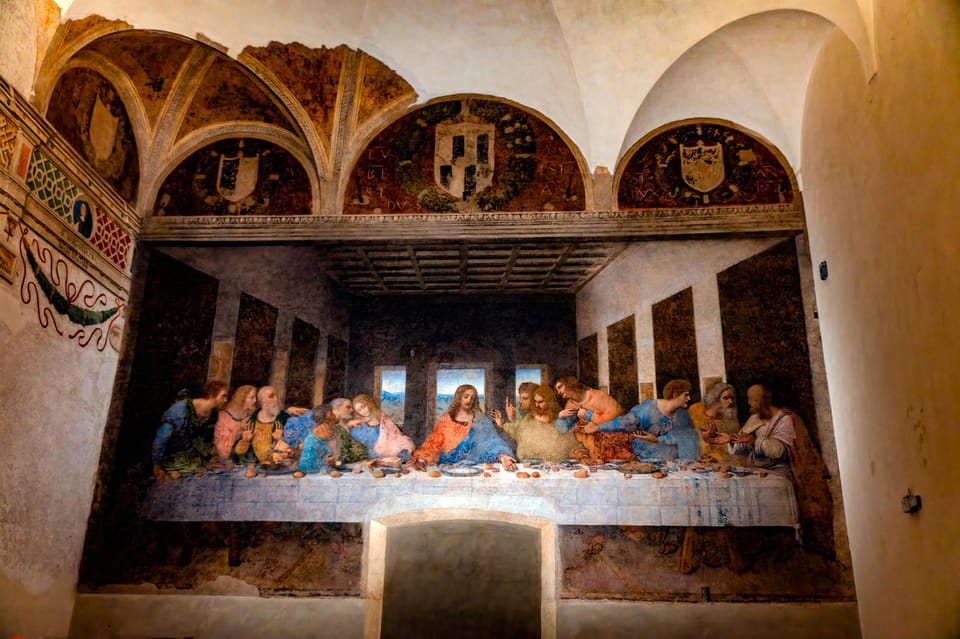
The Last Supper is small in person. That’s why this guided visit matters: your guide helps you notice the gestures, expressions, and perspective before the timed room closes. You’ll also get a quick look at the elegant exterior of Santa Maria delle Grazie while everything is handled for you.
I like two things a lot. First, the tour is led by a licensed art historian who explains how Leonardo built this scene between 1494 and 1498, including what the apostles are doing with their hands and bodies. Second, you’re given headsets so you can actually hear the guide, even when the space is busy.
One possible drawback: the museum limit is strict. You’re allowed only 15 minutes inside the Last Supper room, and at $75 per person that short wall-time can feel expensive if you expected to linger.
In This Review
- Key things to know before you go
- Where Santa Maria delle Grazie sets the mood (before the mural)
- Skip-the-line entry, and the reality of the 15-minute room limit
- What the art historian guide actually adds
- The viewing room: what to expect when you get there
- A mural with scars: preservation, war, and why it still feels urgent
- Photo time and how to not waste your 15 minutes
- Santa Maria delle Grazie beyond the mural: quick add-ons if you have time
- Price and value: is $75 per person worth it?
- Who this tour suits best (and who might be happier elsewhere)
- Practical dos and don’ts that affect your day
- Should you book this Last Supper guided visit?
- FAQ
- How long is the tour, and how much time do I spend inside the room?
- Is the guide tour in English?
- Where should I meet my guide?
- What ID do I need to bring?
- Are food and drinks allowed inside?
- Can I bring a big backpack or bag?
- Are very young children allowed without a ticket?
- Do I have to enter all traveler names to get in?
- Can I change my scheduled visit time?
- Is the tour wheelchair accessible?
Key things to know before you go
- Timed 15-minute viewing of the mural, even with a guided ticket
- Skip-the-line entry plus a licensed art historian guide in English
- Headsets included so the explanations stay clear in a crowded setting
- Leonardo details you might miss: perspective, expressions, and the scene’s structure
- Worth it if you care about art technique, not just a quick photo stop
Where Santa Maria delle Grazie sets the mood (before the mural)
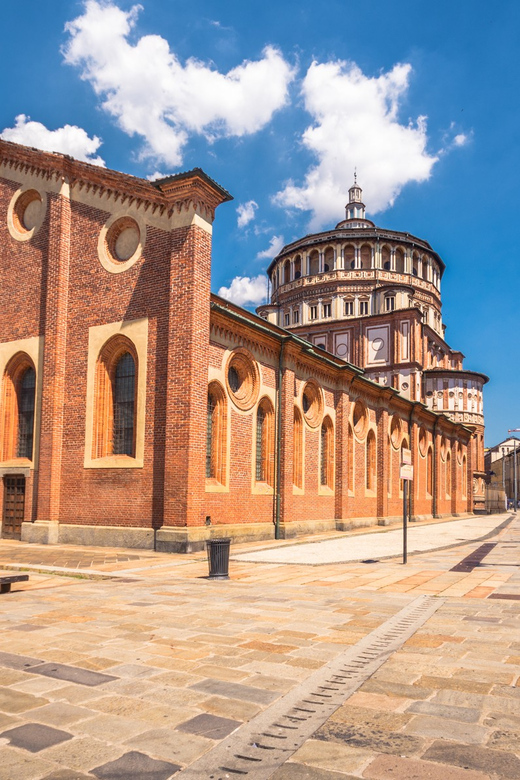
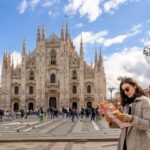
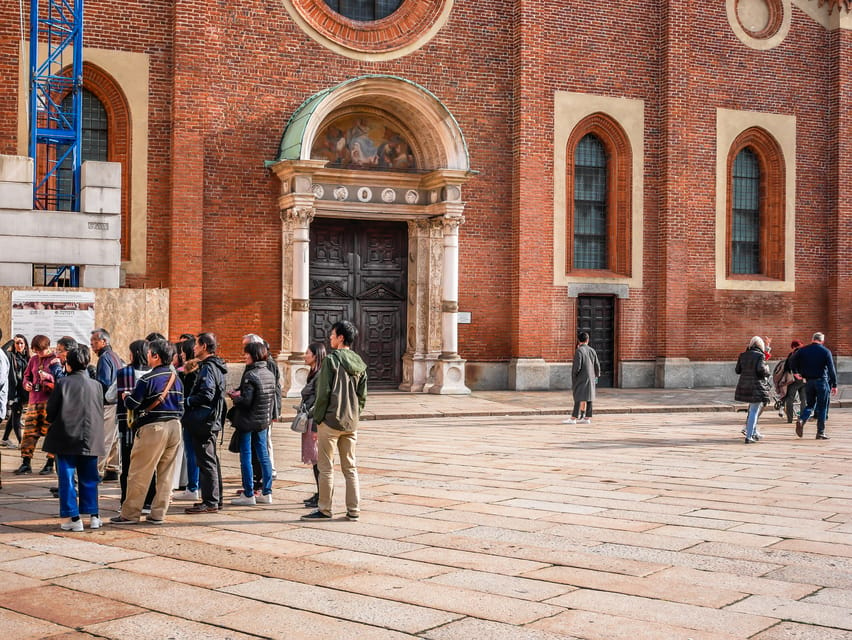
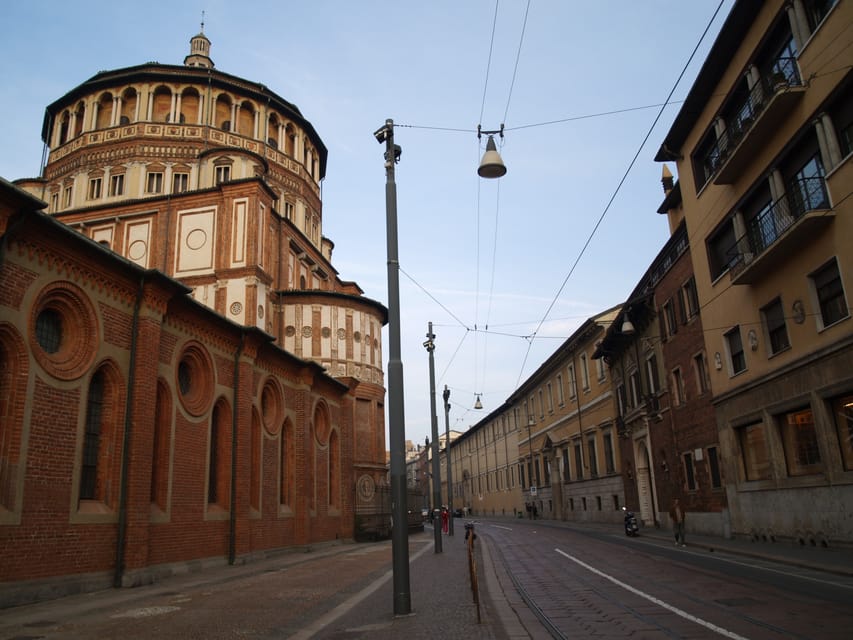
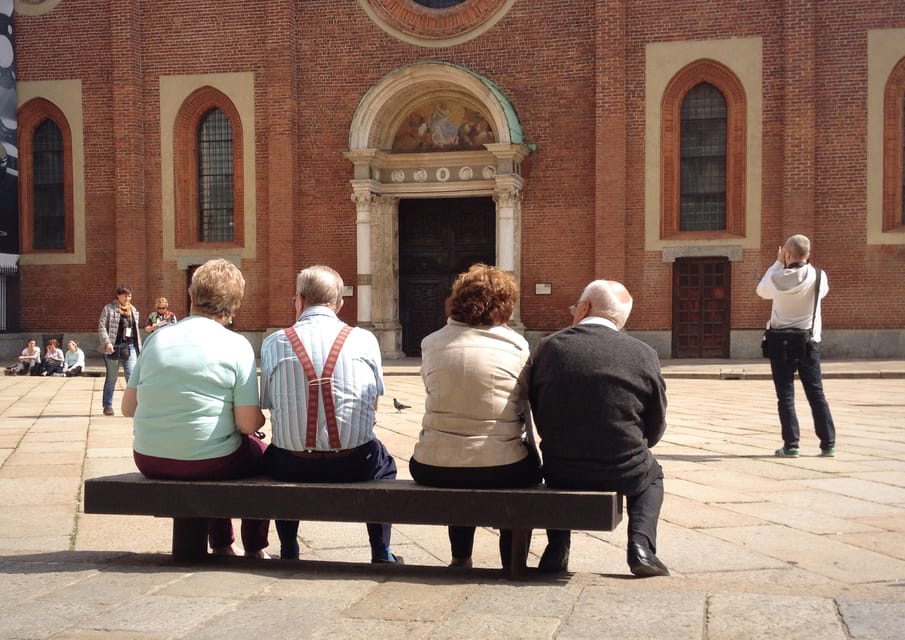
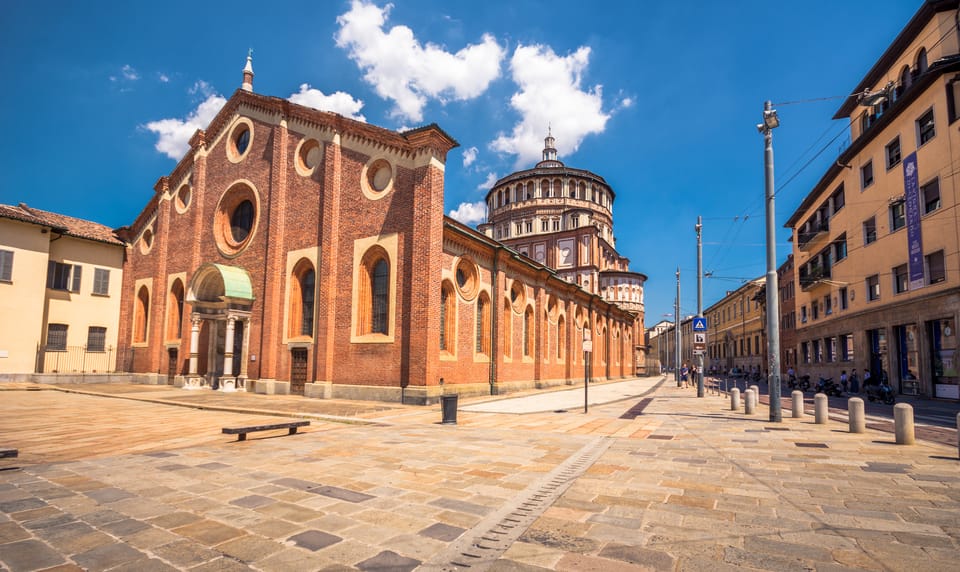
Milan’s Santa Maria delle Grazie isn’t just a container for the painting. The whole site helps you understand why the Last Supper became a cultural gravity well. The refectory is the main event, but the basilica exterior is a nice palate-cleanser, especially if you’re arriving in the middle of a city-day.
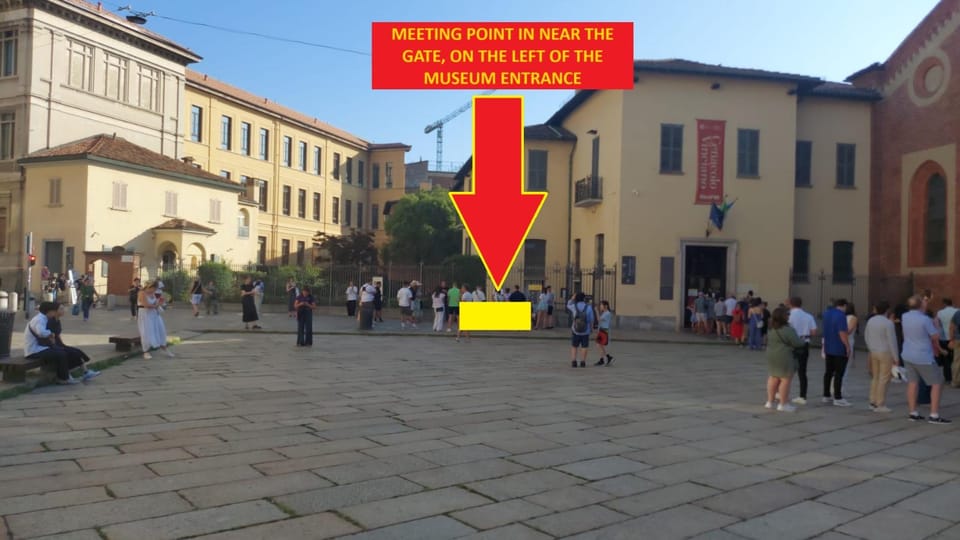
This tour starts outside the museum entrance door in the square. Look for the only door in that square with flags on top, and find the guide holding an orange Get You Guide sign. It sounds simple, but in this neighborhood, it’s easy to walk past the wrong entrance if you’re not watching closely.
You can also read our reviews of more tours and experiences in Milan.
Skip-the-line entry, and the reality of the 15-minute room limit
You get a skip-the-line entry ticket, and that’s genuinely useful here. The Last Supper is one of those places where lines can eat your energy. Still, skip-the-line doesn’t mean unlimited time inside.
The rules are clear: all visitors get only 15 minutes inside the room where the mural is displayed. That means the tour’s value isn’t that you’ll see it for a long time. The value is that you’ll arrive with context, and you’ll know what to look for during that short window.
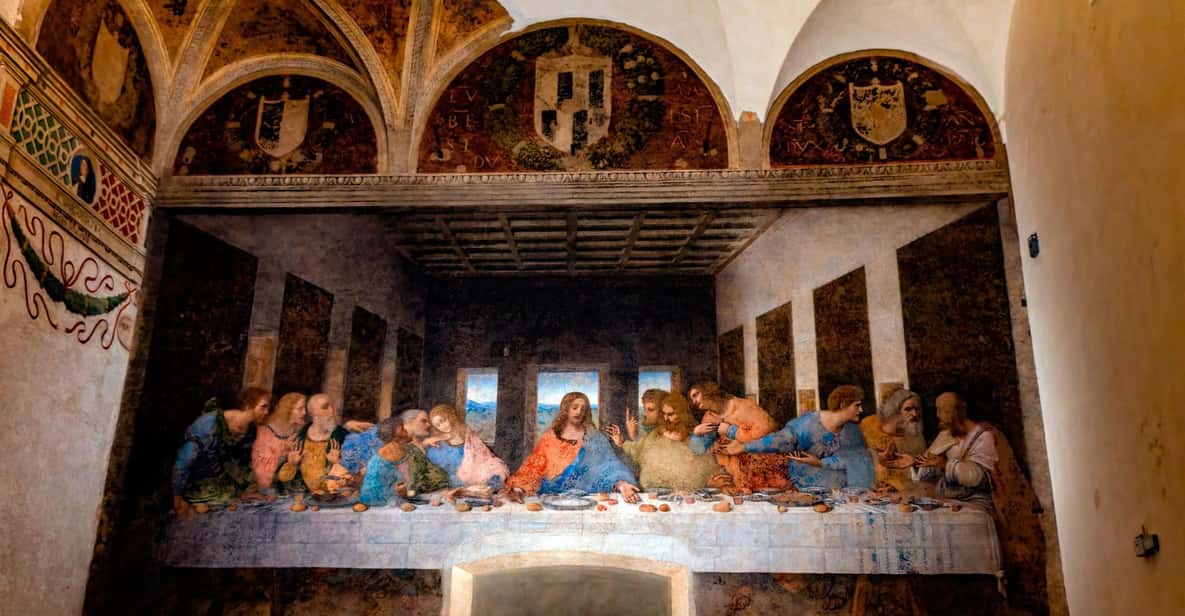
So go in with a plan. Decide what you want to notice fast: facial expressions, hand gestures, the way the group forms around Christ, and Leonardo’s sense of depth. Your guide’s job is to point those things out so your “15 minutes” turns into “a real understanding.”
What the art historian guide actually adds
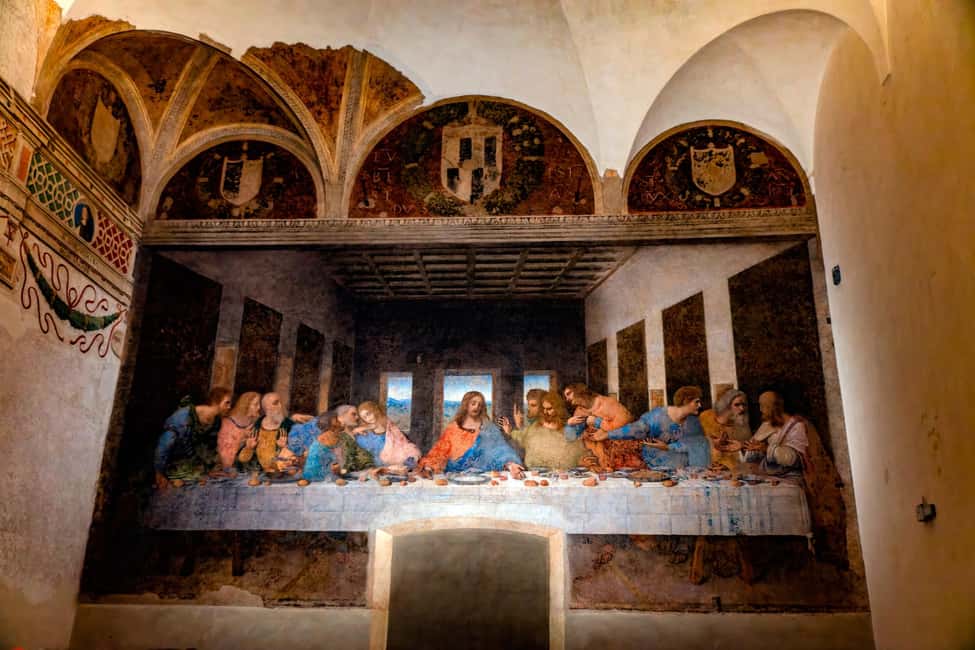
This is an art-interpretation tour, not a lecture you have to endure from a distance. The guide is an art historian, and the explanations focus on what makes the mural work—especially for people who don’t usually read Renaissance art.
During your visit, expect your guide to highlight details like:
- Expressions on Christ and the apostles and how their body language changes across the group
- Perspective: how Leonardo structured the scene so it feels anchored and believable
- Innovative techniques for the time, which help the painting communicate emotion
From what I’ve seen described by guides such as Gabriella and Sara Nuzzi, the best part is the clarity. They don’t just tell you what you’re looking at. They explain why Leonardo arranged it that way—and how the apostles’ reactions connect to the moment being shown.
Some guides also bring personality to the pacing. Gabriella is repeatedly described as warm, funny, and good at answering questions, which matters because the room time is so short. If you get stuck in a photo-bubble, a good guide helps you get back to the story.
The viewing room: what to expect when you get there
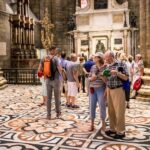
Once you’re inside, you’ll be close to the mural, but you’re not going to have unlimited space to stop, stretch, and take your time. The timing is tight, so you’ll want to keep movement efficient.
Also, manage expectations about what you see. One visitor noted that some parts of Christ’s figure area aren’t visible from today’s viewpoint, due to later architectural adaptations. Don’t let that ruin your mood—think of it as part of the mural’s long, complicated life, not a reason to feel cheated.
You may also notice other wall artwork in the refectory setting, including the Crucifixion on an adjacent wall. That’s not the main headline painting, but it can add meaning fast, especially if your guide calls it out during your time in the space.
A mural with scars: preservation, war, and why it still feels urgent
Leonardo’s Last Supper didn’t survive centuries untouched. It’s vulnerable, fragile, and—according to accounts connected to this site—there’s even a powerful preservation story tied to World War II. One standout description notes that the building was bombed, and only the two mural walls with the artworks remained standing.
That kind of context changes your viewing. Suddenly you’re not just looking at a famous painting. You’re looking at an image that has been protected through damage, time, and restoration attempts. It makes the expressions feel even more human and immediate, because the painting itself is a survivor.
Your guide is the person to ask about this. If preservation history is your thing, you’ll likely get a more satisfying explanation in person than from reading a quick label. And if religion isn’t your usual interest, don’t worry: the guide’s focus on technique and visual storytelling can still make the experience work.





Photo time and how to not waste your 15 minutes
With only 15 minutes in the room, photos can become a trap. You’ll want pictures, yes—but you also want the painting to register.
Here’s how I’d handle it:
- Take a short “wide” shot early, just to capture the whole composition.
- Then do a slow scan with your eyes—face to hands, then back to Christ.
- Only after you understand what’s happening, do your close-ups.
Your guide’s gestures and pointers help here. Several visitors note that guides manage the timing well so you’re ready to view at the right moment. That’s important because the best guide explanations tend to land while you’re actually looking at the painting, not after you’ve already moved on.
If headsets are included (they are), make sure yours is functioning. One description mentions that headset quality could be improved, so don’t ignore it if the sound isn’t clear—signal to the guide or staff so you can adjust.
Santa Maria delle Grazie beyond the mural: quick add-ons if you have time
A nice thing about this area is that the site isn’t only one room. After your Last Supper time slot, you can often add small context stops nearby without needing transportation.
For example, one visitor recommended stopping by a bookstore and the church right beside the site. That’s exactly the kind of easy add-on that helps turn a short visit into a fuller afternoon. Even if you don’t buy anything, browsing can give you a better map of what to notice next time you see Leonardo-related art.
Price and value: is $75 per person worth it?
At $75 per person, this is not a bargain. Some people openly call it pricey, and I get why. The time inside the room is only 15 minutes, and the tour itself lasts about 1 hour.
So the real value question is: what are you paying for?
- A skip-the-line ticket that protects your schedule
- A licensed art historian guide who points out what matters visually
- Headsets so you can hear the explanation clearly
- English-language interpretation when you want it
If you’re the kind of visitor who enjoys art labels and slow looking, a self-guided visit might feel tempting. But if you want the mural to make sense quickly—expressions, perspective, and technique—this guide format usually feels worth the money. Especially because the room time is limited anyway. Without guidance, you risk using your 15 minutes only for photos and surface impressions.
Who this tour suits best (and who might be happier elsewhere)
This tour fits you best if:
- You want Leonardo explained in plain language, not just a museum audio track
- You care about the visual mechanics: perspective, gesture, and composition
- You’d rather spend your limited room time looking intelligently than guessing
You might consider a different plan if:
- You only want a quick photo and don’t care about art technique
- You’re hoping for a long museum wander inside the refectory space (the room time is capped)
Either way, the smartest move is to arrive prepared. Bring passport or ID, and plan to travel light, because storage isn’t provided.
Practical dos and don’ts that affect your day
A few rules can make or break your visit, so treat them like part of the itinerary:
- Don’t bring food and drinks. Food, drinks, and liquid in general aren’t allowed inside.
- Avoid bulky backpacks or bags, and remember there’s no storage service.
- Names matter: you must enter the names of each traveler or entry can be denied.
- Time changes are not flexible: modifications to the scheduled visit time are strictly prohibited by the Last Supper authorities.
- The tour is English, and it’s wheelchair accessible.
If you’re coming from a day of Milan walking, wear shoes you can move in. You may spend time outside and then be ushered into a timed space—so comfort helps.
Should you book this Last Supper guided visit?
I’d book it if you want more than a famous photo. The guided explanations—especially about expressions, gestures, perspective, and technique—turn a short viewing window into something you can actually remember and talk through afterward.
I wouldn’t book it if you’re mainly chasing a long room-stay or you hate structured timing. The 15-minute cap is real, and at $75 per person you’re paying for interpretation and smooth entry, not extra minutes on the wall.
If you can, pick a time you can keep without stress. This is one of those experiences where arriving calm helps you absorb more.
FAQ
How long is the tour, and how much time do I spend inside the room?
The guided visit is listed as 1 hour, but you’re allowed only 15 minutes inside the room where the Last Supper is displayed.
Is the guide tour in English?
Yes. The tour is English, and headsets are provided so you can hear the guide clearly.
Where should I meet my guide?
Meet the guide outside the entrance door of the museum in the square. It is the only door in that square with flags on top, and the guide holds an orange Get You Guide sign.
What ID do I need to bring?
You should bring your passport or ID card.
Are food and drinks allowed inside?
No. Food and drinks, including liquids, are not allowed inside the museum.
Can I bring a big backpack or bag?
No bulky backpacks or bags are allowed, and there is no storage service provided for visitors.
Are very young children allowed without a ticket?
Kids up to 2 years old do not need a Last Supper ticket, but they must be taken to the museum in a stroller or held in an adult’s arms.
Do I have to enter all traveler names to get in?
Yes. It’s mandatory to enter the names of each traveler, or entry to the museum may be denied.
Can I change my scheduled visit time?
No. Modifications to the scheduled visit time are strictly prohibited by the Last Supper authorities.
Is the tour wheelchair accessible?
Yes. The experience is listed as wheelchair accessible.