REVIEW · MILAN
Milan: Sforza Castle Entry Ticket with Digital Audio Guide
Book on GetYourGuide →Operated by Vox City International · Bookable on GetYourGuide
Fortress + audio, and you go at your pace. This Sforza Castle entry ticket comes with a reserved time slot and a digital guide you can run on-demand. I like that it’s built for self-guided wandering with suggested routes, but one catch is that the audio can feel more like highlighted checkpoints than full room-by-room narration.
The format is simple: pick up your voucher at Piazza Castello and then explore the castle grounds and on-site museums for about 3 hours (though the site is big enough that you might want longer). If you’re an art-and-history fan, the museum collection hits a lot of eras, and the app is multilingual with English among them—helpful when you don’t read Italian signage as fast as you’d like.
In This Review
- Key points to know before you go
- Why Sforza Castle feels different from most Milan museums
- Getting in fast: Piazza Castello voucher pickup and reserved entry
- The Vox City app audio guide: what it does well (and what it can’t)
- How to plan your 3-hour visit without feeling rushed
- What you’ll actually see: museums, art highlights, and armoury collections
- The staff help is worth it: meeting point assistance and app setup
- Practical stuff you should bring so the experience works
- Price and value: what $15 includes, and when it’s a great deal
- Who this self-guided Sforza ticket suits best
- Should you book this Sforza Castle digital audio entry ticket?
Key points to know before you go
- Reserved entry helps you avoid the ticket-line squeeze at one of Milan’s most popular stops.
- Vox City digital audioguide means you control pacing and can pause when something grabs you.
- A preloaded tour approach: you’ll want to download the app/audio before arrival so it’s ready on-site.
- You’re walking a lot across a complex that includes multiple museums in different spots.
- Not a live guide: expect self-guided audio, not a person answering questions.
- Bring headphones—they’re not included, and the phone is your “brains” for the audio.
Why Sforza Castle feels different from most Milan museums
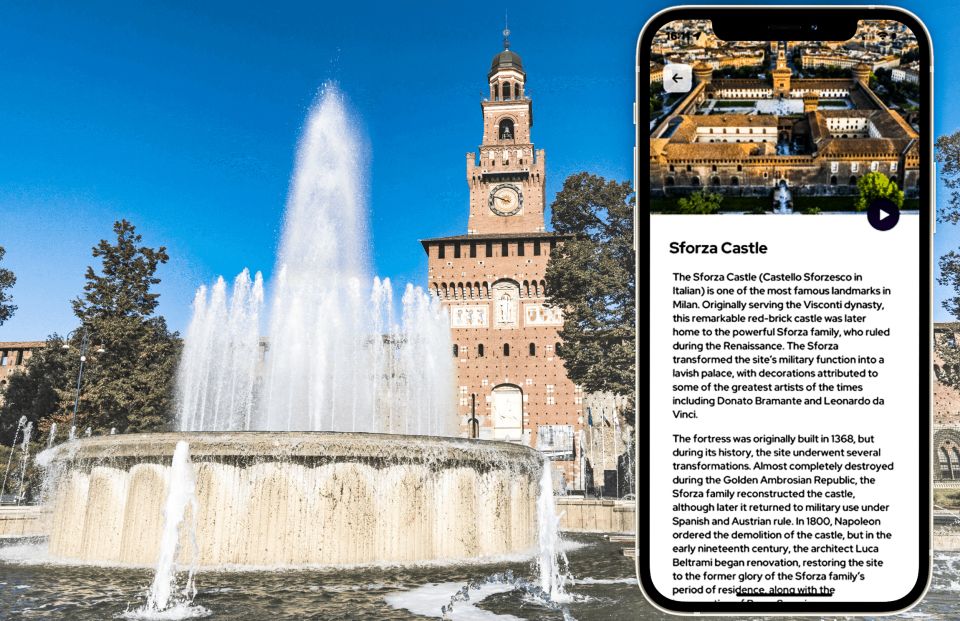
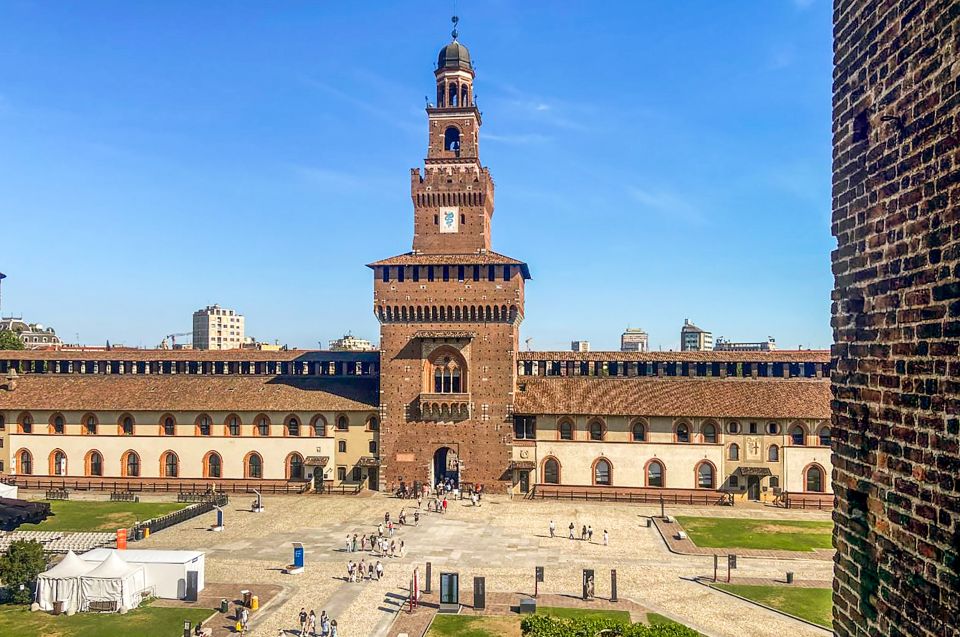
Sforza Castle is a fortress first, museum second—and that order matters. You don’t just “view objects behind glass.” You move through towers, courtyards, and galleries shaped by centuries of defense and power. It’s the kind of place where the architecture keeps interrupting your thinking: you pause because a room looks official, then you pause again because the walls explain why.
What makes this ticket worth considering is the pairing of entry access plus an app that helps you connect what you’re seeing to Milan’s story. Instead of reading every sign (often in Italian), you can listen while you walk, then decide what’s worth lingering on. And because it’s self-guided, you don’t have to march with a group when you’d rather take 10 minutes to stare at a ceiling or weapons display.
You can also read our reviews of more tours and experiences in Milan.



Getting in fast: Piazza Castello voucher pickup and reserved entry

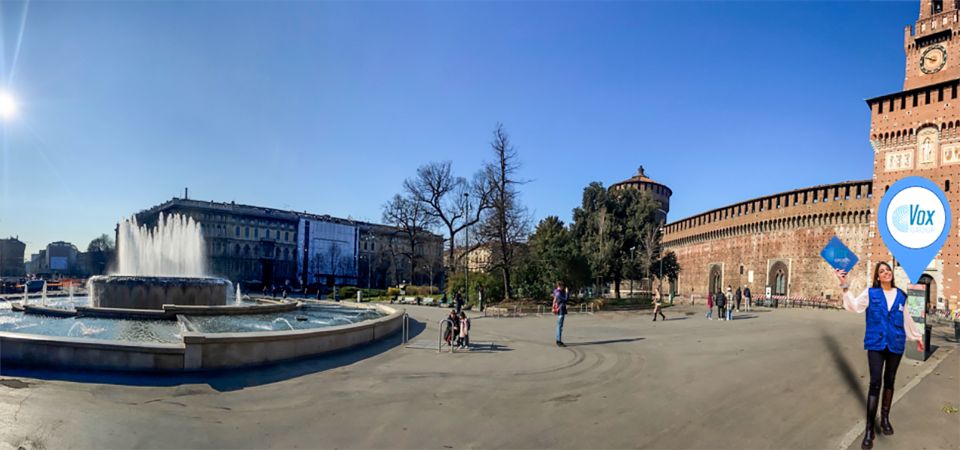
Your experience starts at Piazza Castello, 1 at the Autostradale ticket office, where you exchange your voucher for entry. The host/greeter is listed as English-speaking, and the on-the-spot help can be genuinely useful—especially when you need assistance getting the audio set up.
Timing matters here. The castle’s museum hours are Tuesday to Sunday, 10:00–17:30 (last ticket 16:30, last admission 17:00), and it’s closed on Mondays and on Dec 25, Jan 1, and May 1. If you arrive late in the day, you’ll feel it fast: the complex is large, and the “3-hour” visit assumes you manage your route well.
One practical tip: plan to arrive with your phone charged and ready, since the app setup is part of the experience. When you’re sorting headphones and charging cables next to a ticket office, you’ll quickly understand why people show up annoyed. Avoid that.
The Vox City app audio guide: what it does well (and what it can’t)

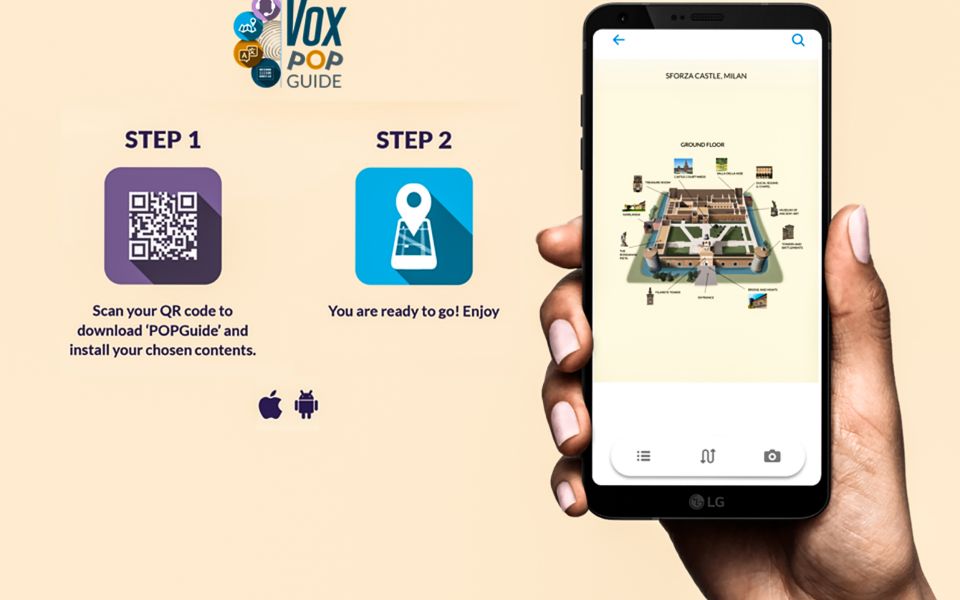
This ticket includes a digital audioguide via app, provided by Vox City International. It also lists multiple languages for the commentary (English, Chinese, German, French, Italian, and Spanish). In practice, the experience is designed around listening while you walk the castle.
Here’s the big advantage: the guide is on-demand. You can move at your pace, replay sections if you want to catch details, and stop when you see something you care about. Many visitors like that the audio guide helps with navigation through a big site—especially when the signage is not in your language.
Now the trade-off: several notes point out that this type of audio tour can be less like a deep lecture and more like a structured route with highlights. If you want a highly detailed explanation for every single room, you may find yourself wanting “official audio” at the venue instead. It’s still useful, just not the same as a full guided narrative.
Also, this is important: the guidance says you should download the app and the audio tour before you arrive. Some people had audio problems when their phone lacked data, so the safest approach is to treat this as a pre-download situation—arrive ready, headphones in hand, and phone at battery 100% if possible.
How to plan your 3-hour visit without feeling rushed

The ticket is listed at 3 hours, but Sforza Castle doesn’t behave like a tidy, one-building museum. The complex is big, and it includes multiple museums and collections in different locations inside the castle grounds. That’s why 3 hours can feel either perfect or not enough—depending on your style.
I’d use this simple strategy:
- Start with the museum sections you care about most (for many people, that’s art and the famous highlights like Leonardo da Vinci–related ceiling paintings).
- Don’t try to chase every single corridor. Pick a route, then let the audio checkpoints guide you.
- Build in time for detours. A fortress has lots of reasons to slow down: views from inside walls, courtyard pacing, and rooms that surprise you.
A lot of visitors recommend at least 2–4 hours if you want a proper sweep through several parts. If you’re only doing the absolute highlights, you can keep it closer to the listed duration—but if you enjoy weapons, furniture, and decorative spaces as much as paintings, you’ll likely stretch your visit.
What you’ll actually see: museums, art highlights, and armoury collections
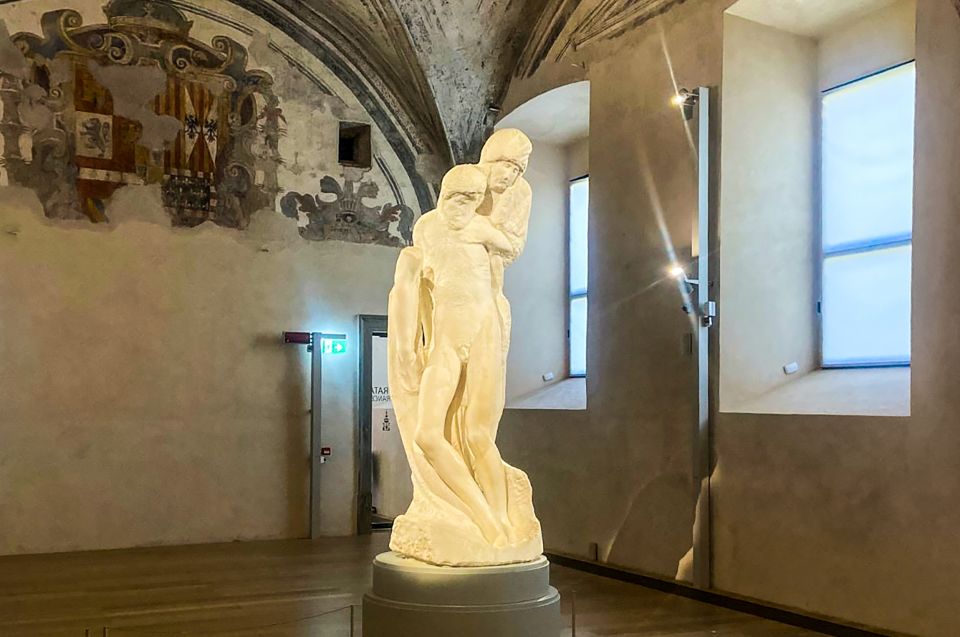
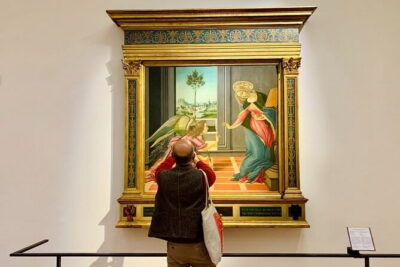
This is one of those Milan stops where the variety is the point. The on-site museum displays historic artworks and iconic pieces tied to major Renaissance artists. The information provided specifically mentions Michelangelo and Leonardo da Vinci, and reviews also call out da Vinci ceiling paintings as a must-see moment.
But it’s not only art on walls. The castle museum complex can include:
- Art galleries and rooms of historical works
- Decorative interiors and furniture-focused areas
- Music-related exhibits (some rooms are organized around cultural artifacts)
- Armour and weapon displays (including weapons/armoury collections that many people love)
Because the museums sit in different spots within the fortress, navigation matters. A few visitors note it can feel confusing once you’re inside, especially if you’re trying to follow Italian-only signage or if there’s no simple building map in front of you. That’s where the app’s suggested walking routes can help—assuming you actually use them, rather than wandering randomly (unless you’re into random wandering, in which case, you’ll still be fine).
The other reason to care: Sforza Castle isn’t just for Renaissance art. The fortress structure itself is part of the “exhibit,” and the history is visible in layout and scale. Even if the audio is highlight-based, you’ll still feel the place as a working monument.






The staff help is worth it: meeting point assistance and app setup

One thing that consistently shows up as a strong point: there’s assistance at the meeting point. You’ll exchange your voucher at the Autostradale ticket office, and the host/greeter can help with the process of getting the app running.
That support matters more than you’d think. The instructions emphasize downloading beforehand, but not everyone arrives perfectly prepared. People reported getting help scanning codes and getting the right app configured. If your phone is slow, your storage is tight, or you’re juggling two languages in menus, that guidance can be the difference between a smooth visit and a frustrating one.
Just remember: no live guide is included. The greeter helps you get started, but once you’re inside, it’s your pace and your audio.
Practical stuff you should bring so the experience works
This is where your visit lives or dies—because the tour relies on your phone.
Bring:
- Headphones (not included)
- A charged smartphone
And do this before you head over:
- Download the app/audio tour in advance so it’s ready on arrival
- Verify your phone battery and plan to keep it topped up
One more practical note from real-life experience: if your phone loses audio due to connection issues, you’ll feel it immediately. Pre-downloading fixes most of that. If you don’t, you might end up standing in a beautiful room while your audio does nothing. That’s a waste of a good afternoon.
If you’re visiting with kids or in a group, the self-guided format can still work well because it lets you slow down or speed up without negotiating with a live narrator.
Price and value: what $15 includes, and when it’s a great deal
The price is listed at $15 per person, and the value is tied to what you’re actually getting:
- Reserved entry
- Digital audioguide for the castle
- Digital audioguide for Milan
- Multilingual commentary availability
- Assistance at the meeting point
In other words, you’re paying not just for admission, but for the way the visit is structured—self-guided but guided. When compared with buying tickets and trying to improvise your own route, the pre-arranged audio helps a lot.
One nuance: a couple of notes mention that the grounds may be free, while this ticket gets you into the museum spaces and access to key exhibits, including da Vinci ceiling paintings. If your priority is museum access plus guided interpretation, this package makes sense.
When it may fall short: if you want maximum depth and highly detailed narration for every room, you might end up wanting more than this app provides. In those cases, the official audio at the venue (mentioned as more detailed by some) could be a better match. It’s not that the app is bad—it’s just not always what a detail-obsessed visitor expects.
Who this self-guided Sforza ticket suits best
This works best if you:
- Prefer your own pacing over a timed group tour
- Want audio support while navigating a large fortress-museum complex
- Enjoy art and history in a flexible way—art rooms now, armoury next, gardens when you feel like it
- Want multilingual options and an app that helps you understand what you’re looking at
It’s less ideal if you:
- Want a live guide or Q&A
- Are expecting a fully detailed, lecture-style audio track for every room
- Need a super-clear floorplan or map guidance (since some visitors find inside navigation confusing)
If that last point matters, bring your patience. The castle is huge, and its layout rewards curiosity. You’ll probably still have a good time—you just might spend some effort figuring out where you are before you settle into the rhythm.
Should you book this Sforza Castle digital audio entry ticket?
Book it if you want a smooth, pre-planned way to access the museums and get help interpreting what you’re seeing without paying for a live guided tour. The reserved entry, on-demand audio, and meeting point assistance make it a practical choice, especially if you like to wander and you’re the type who pauses often.
Skip or reconsider if you’re chasing maximum narrative detail or you know you’ll get frustrated by self-navigation inside a large complex. In those cases, it may be worth looking at options that include a live guide or a more in-depth audio format once you’re at the venue.
If you’re aiming for a great Milan afternoon and want to leave the thinking to an app, this is a solid pick. Just come prepared with headphones and a charged phone, and plan your route so you don’t end up racing the clock at 16:45.