REVIEW · POMPEI CAMPANIA
Pompeii: Guided Tour with Skip-the-Line Entry
Book on GetYourGuide →Operated by Enjoy Pompeii · Bookable on GetYourGuide
Pompeii is unreal, even before you start walking. What makes this guided option worth it is the fast skip-the-line entry and the way a trained guide helps you read the city, building by building. I also like that the tour is built as a focused walking route, so you get the main Pompeian landmarks without wandering for hours.
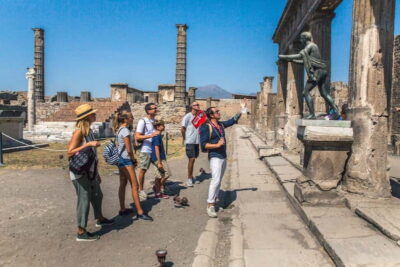
Two details I’d highlight right away: you’ll move through the site with an archaeology guide who explains how Pompeii worked as a real Roman city, and you’ll spend your limited time on the places that show civic life, neighborhoods, and daily routines. A reasonable drawback: it’s still a walking tour of a large archaeological site, so it may feel like a lot if you’re heat-sensitive or have medical limitations.
If you’re short on time or you want the city to make sense fast, this format is a strong pick for a first visit. If you’re the type who prefers reading slowly on your own, you might find 2–3 hours too tight to linger.
In This Review
- Key things to know before you go
- Skip-the-line entry that helps you start seeing Pompeii sooner
- Meeting at Ristorante Bar Sgambati (and what to watch for)
- The 2–3 hour walking route: what you’ll actually see
- Civic center: Antiquarium, Basilica, and the Forum area
- Thermal baths and the Theater: daily life with a Roman twist
- Neighborhood glimpses: bakery and typical housing blocks
- A bonus stop that often steals the show: the House of the Vettii
- What the archaeologist guide adds (and why it changes everything)
- Shade, heat, and crowd control: the real secret sauce
- Group size and private options: when the tour feels less rushed
- Value: is $58 worth it for a Pompeii guided tour?
- Planning your day: Pompeii plus Vesuvius timing
- Should you book this Pompeii guided tour?
- FAQ
- How long is the Pompeii guided tour with skip-the-line entry?
- Where do I meet the guide?
- What’s included in the price?
- What languages are offered?
- Is there a free entry day?
- Is parking included?
Key things to know before you go
- Skip-the-line, separate entrance so you waste less time waiting at entry points
- Expert guide-led route through Pompeii’s civic core and residential streets
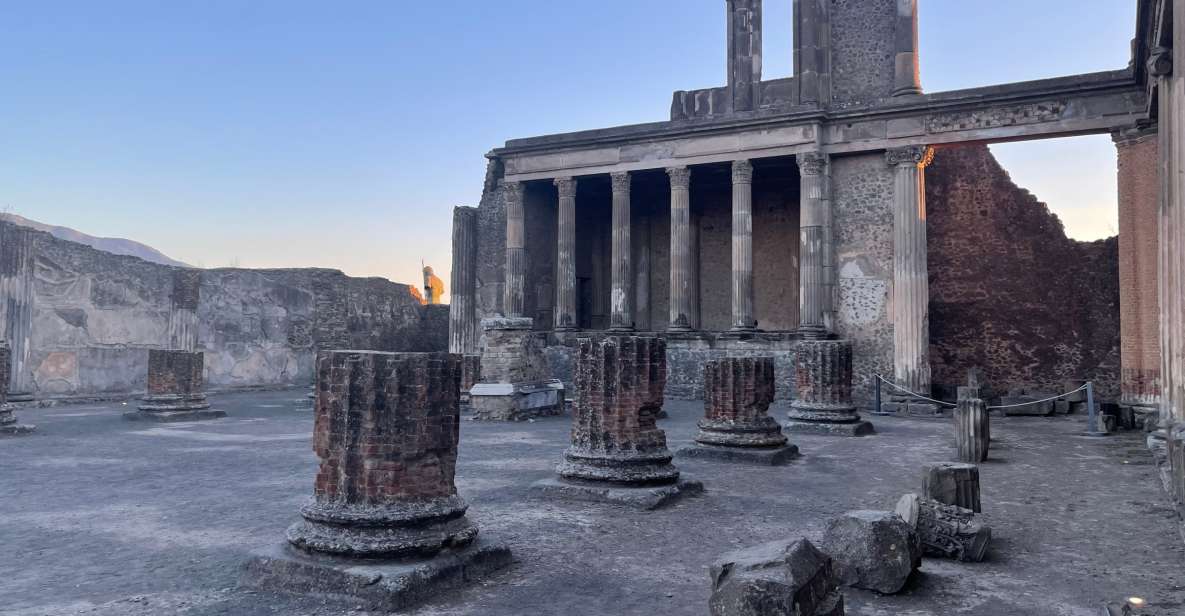
- Major stops included like the Forum area, Basilica, thermal baths, and the Theater
- Neighborhood glimpses such as a bakery and typical housing blocks
- Small groups or private tours with time for questions (and less “marching in a crowd”)
Skip-the-line entry that helps you start seeing Pompeii sooner
Pompeii is famous, so the lines can be the part that drains your energy. This tour solves that with a skip-the-line ticket and entry via a separate entrance, which is exactly what you want when you only have a couple hours.
That time matters because Pompeii isn’t just one big monument. It’s an entire city with layers of buildings—homes, markets, public spaces, and venues. When you’re in with a guide, you can connect what you’re looking at to how people lived, shopped, gathered, and governed.
You’re also not stuck at the back of a long group. The tour structure is designed for forward motion through the best-known areas without you having to constantly figure out where to go next.
You can also read our reviews of more tours and experiences in Pompei Campania.



Meeting at Ristorante Bar Sgambati (and what to watch for)
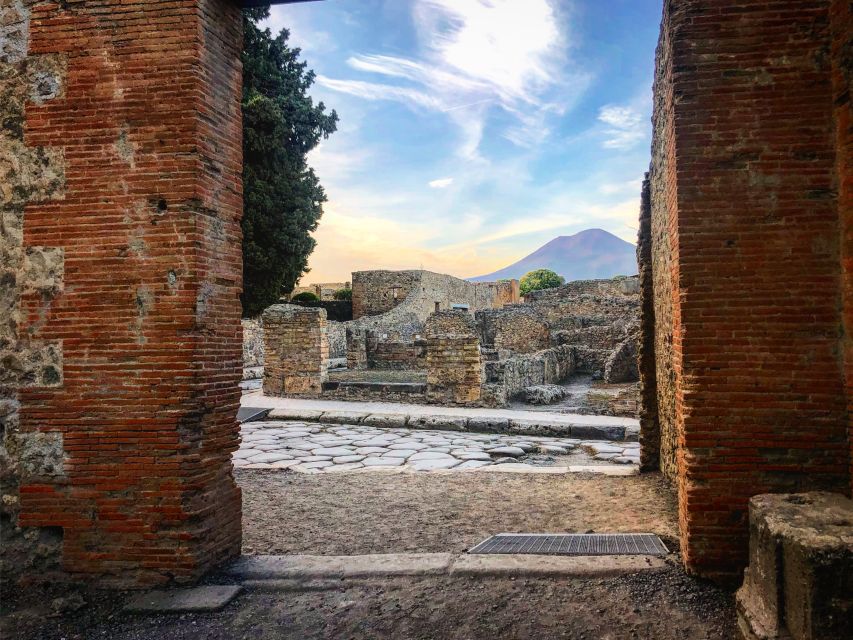
Meeting is simple. You meet your guide at Ristorante Bar Sgambati, and you should look for the Enjoy Pompeii red sign.
This matters more than it sounds. Pompeii days often get chaotic with trains, buses, and parking. A clear meeting point reduces stress, and it sets you up to enter the site quickly rather than scrambling right before the tour.
If you’re planning your day around Pompeii, aim to arrive early enough to find the meeting spot comfortably. Even if you’re not early, the key is not to cut it close, because Pompeii entry itself can take time.
The 2–3 hour walking route: what you’ll actually see
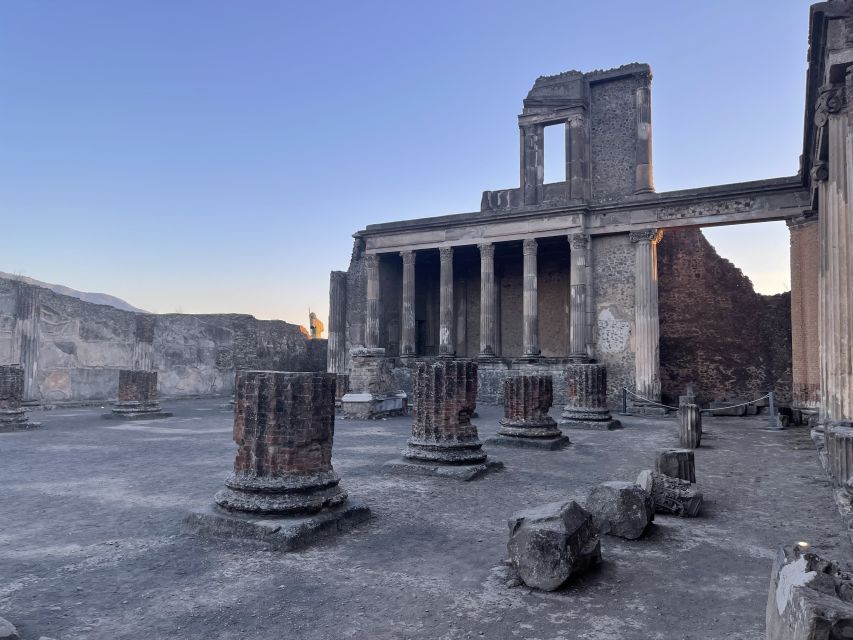
This is a guided walking tour, typically around 2–3 hours, focused on the big storytelling stops. You’re there to understand Pompeii as a living Roman city—until the eruption of Vesuvius in 79 AD ended it.
Civic center: Antiquarium, Basilica, and the Forum area
A highlight in the tour plan is the New Antiquarium, which helps you get your bearings. Think of it as the “how to read Pompeii” stop—so when you step into the ruins, you understand what kind of space you’re looking at.
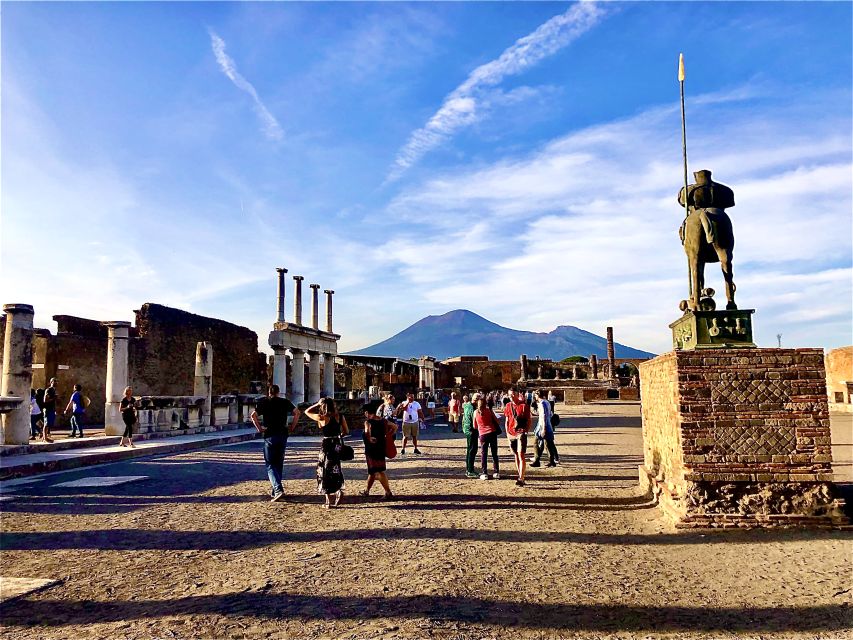
From there, you’ll move to civic architecture, including the Basilica and the Forum. These aren’t just impressive shells. This is where civic decisions happened and where public life concentrated. A good guide will point out how the layout supported gatherings, commerce, and everyday movement.
The upside of hitting these early or mid-tour: you start to understand the city’s logic quickly. The potential downside: if your energy is low, these classic “must-see” structures can start to feel similar unless your guide is actively explaining what makes each one different.
Thermal baths and the Theater: daily life with a Roman twist
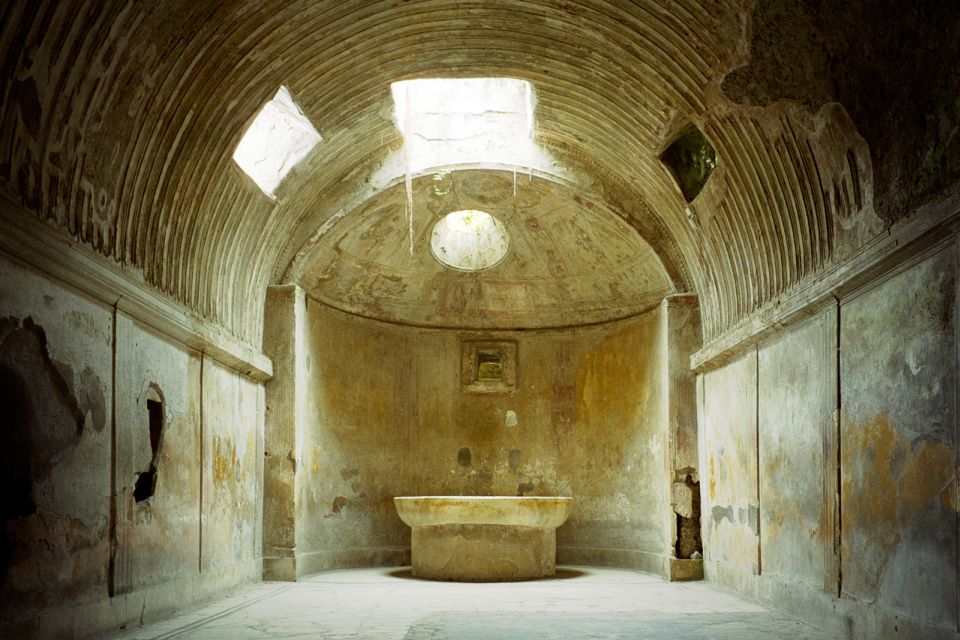
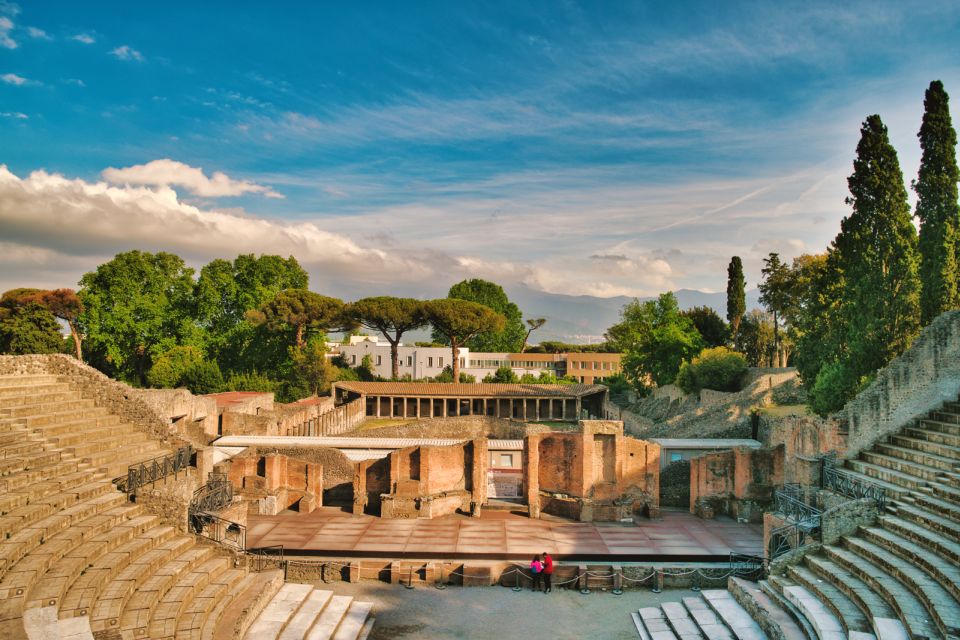
Next up are the thermal baths and the Theater. This is where Pompeii shifts from government to lifestyle.
Baths show how social life worked, including how people used public spaces beyond politics. The Theater helps you picture leisure—performances, public gatherings, and the kind of entertainment a Roman city kept at the center of life.
If you’re picturing Pompeii as purely tragic because of the eruption, these stops help correct that. You’re seeing a city where routine mattered, where people ate, worked, traveled, and took part in culture.





Neighborhood glimpses: bakery and typical housing blocks
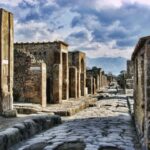
The tour doesn’t only stay in the biggest monuments. You’ll also see remaining traces of commercial and residential neighborhoods, including a bakery and typical housing blocks.
This is one of the most valuable parts for first-time visitors. A bakery isn’t just a building. It’s proof of how food was produced and sold, and it gives you something concrete to imagine daily routines.
Housing blocks and residential spaces let you connect the dots between public spaces and private life. You start to understand that Pompeii wasn’t only grand plazas and temples—it included ordinary buildings where families lived and managed everyday problems.
A bonus stop that often steals the show: the House of the Vettii
In many guided Pompeii experiences, one residence becomes a favorite: the House of the Vettii. Some guides have been noted for choosing timing and route choices that can make this kind of visit feel calmer and more meaningful.
If your guide incorporates a residence like this into your tour, you’ll get a strong contrast with the civic stops—how wealth, taste, and household life shaped Pompeii.
(If you’re the kind of traveler who loves houses and wall art, ask the guide which house they’re planning to prioritize. You’ll get the best match for your interests once you’re inside.)
What the archaeologist guide adds (and why it changes everything)
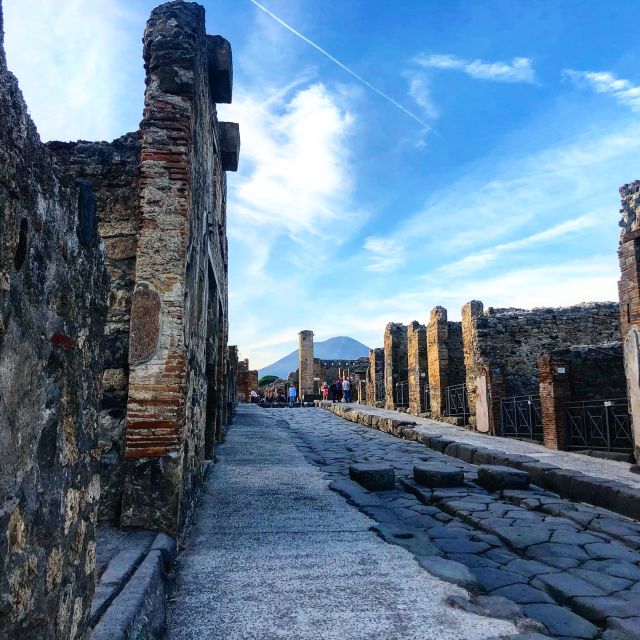
Skip-the-line gets you into Pompeii fast. The guide is what keeps it from turning into a blur.
The biggest value is interpretation: you’re not just looking at stones and trying to guess what they meant. Your guide explains the history and architecture of the city and links buildings to daily routines.
I especially like the way the better guides handle misconceptions. Pompeii can attract simplified stories, like one single moment of catastrophe. A strong guide re-centers the city as it was—busy, organized, and full of normal routines right up to 79 AD.
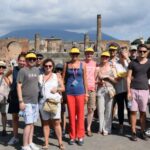
And yes, humor helps. Multiple guides associated with this tour have a knack for storytelling with personality, which makes the tour feel like a conversation rather than a lecture. Some guides also take questions seriously and adjust their pacing so you’re not stuck listening nonstop.
Shade, heat, and crowd control: the real secret sauce
Pompeii can get hot, and shade isn’t evenly distributed. This is where a good guide earns their fee.
You’ll often notice how your guide chooses when and where to stop—frequently guiding you into shady spots while they explain details. That’s not a small kindness; it can change your entire experience, especially in summer.
There’s also the strategy of route choices. Some guides have been praised for taking reverse routes or planning an order that helps you see major areas with fewer crowds. The practical point for you: it’s not just the “what” (the sites). It’s the “when” and “how”—how your group flows through narrow lanes and open plazas.
Timing can matter too. One guide approach you’ll hear about is using the afternoon pattern, when breezes can come in from the mountains and help the temperature feel more manageable than the still morning air. If you have scheduling flexibility, afternoon can be a smart move.
My advice: dress for heat, but also treat your guide’s shade guidance like a priority. If you follow their cues, the tour feels more comfortable and the information lands better.
Group size and private options: when the tour feels less rushed
This experience offers group tours or private/small-group options. That choice affects the feel of your entire visit.
In smaller groups, it’s easier to hear the guide, ask questions, and slow down when something catches your eye. It also helps with logistics inside Pompeii, where the crowd density can change street by street.
If you’re traveling with kids, a small group can be a huge advantage. Several guide styles have been described as balancing storytelling with keeping things watchable, though the tour itself isn’t presented as a kid-specific program. Translation: you’ll likely need to bring patience for your little ones, especially during the most architectural parts.
For seniors or anyone with mobility limits, the tour provider lists it as not suitable for people with pre-existing medical conditions. If that applies to you, don’t guess. Check with the provider and consider a gentler option.
Value: is $58 worth it for a Pompeii guided tour?
At $58 per person for a 2–3 hour guided visit with skip-the-line entry, you’re paying for two things: access and interpretation.
The access piece matters because the time you save at entry can quickly become time you spend actually seeing the city. Pompeii doesn’t “wait” for your schedule, so skipping queues is a real value add.
The interpretation piece is the long-term payoff. Pompeii is packed with structures that look similar if you don’t have context. A guide turns that into a readable city, with stops like the Basilica, Forum, thermal baths, Theater, plus neighborhood areas including a bakery and housing blocks.
I’d also call out that the tour’s short duration forces a selection. That can be good value if you want highlights with meaning. It’s less ideal if you’re hoping for a slow, museum-style visit of everything on the site.
So the equation is simple: if you want the best use of limited time, and you want someone to translate the city for you, $58 can feel like fair pricing. If you want to wander without structure, you’ll need to invest more time than this tour gives you.
Planning your day: Pompeii plus Vesuvius timing
Even if your ticket is for Pompeii only, a lot of people plan Vesuvius the same day. Guides associated with the tour have been known to give practical directions after the walk, including guidance for moving to the next stop (like a train station) based on where your group is headed.
What you should do: map out your next transfer before you show up, and keep a little buffer time. Pompeii days are full of “moving parts” such as weather, crowd flow, and how long you linger during questions.
If you’re already committed to Vesuvius, think of this tour as the history engine. You’ll leave Pompeii with a clearer sense of what the eruption interrupted and why the location mattered.
Should you book this Pompeii guided tour?

Book it if:
- You want skip-the-line entry and a fast route through the most important parts of Pompeii
- You like guided storytelling, not just self-guided wandering
- You’ll benefit from someone managing the flow to reduce crowd stress and find shadier stops
- You’re visiting for the first time and you want the city to make sense quickly
Skip it (or reconsider) if:
- You want hours of free-roaming without a set route
- You have medical constraints that make a walking tour a poor fit, since it’s listed as not suitable for people with pre-existing medical conditions
- You hate the idea of a timed experience, even if it’s only 2–3 hours
If you’re the type who wants a great first Pompeii visit without wasting energy on logistics, this guided, priority-entry format is a very solid choice.
FAQ
How long is the Pompeii guided tour with skip-the-line entry?
The tour typically lasts 2–3 hours.
Where do I meet the guide?
Meet your guide at Ristorante Bar Sgambati and look for the Enjoy Pompeii red sign.
What’s included in the price?
Included are the skip-the-line entry ticket, a walking tour of Pompeii, and a tour guide.
What languages are offered?
Tours are available in Italian and English.
Is there a free entry day?
Yes. The first Sunday of each month has free entrance.
Is parking included?
No. Parking is not included.