REVIEW · POMPEI CAMPANIA
Pompeii: Skip-the-line-Ticket and Guided Tour
Book on GetYourGuide →Operated by TOURISTATION · Bookable on GetYourGuide
Pompeii hits fast—and the ruins feel personal. This 2-hour guided walk uses an archaeologist guide to turn scattered stones into a working ancient city, with preserved frescoes, mosaics, and everyday places you’d otherwise miss. You also get reserved, skip-the-line entrance so you spend less time stuck at ticket lines.
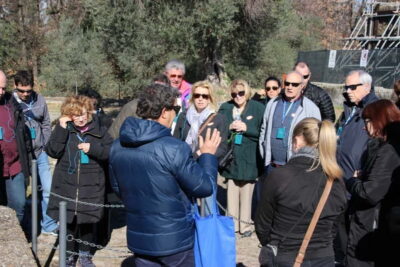
I like the reserved entry most. It’s not just convenience; it’s what keeps the tour moving through key areas without wasting your prime time. I also love the headset setup, which helps you actually hear the guide as you walk—especially when the crowd thickens.
One thing to consider: this isn’t an easy-going option for everyone. It’s not suitable for wheelchair users or people with mobility impairments, and the meeting point isn’t at the main Pompeii entrance.
In This Review
- Key things to know before you go
- Pompeii in two hours: why a guided route matters
- Reserved skip-the-line entry plus headset audio
- Getting there: Piazza Esedra and the IBT Center meeting point
- Porta Marina Superiore: your tour starts at a real gateway
- The forum and the big city moments (plus a Vesuvius view)
- Baths, temples, bakery, theater, and the brothel stop
- Frescoes and mosaics: how the guide makes the art readable
- Semiprivate option (max 12) and why group size affects the whole feel
- Languages and audio clarity: what to do if you struggle
- Price and value: what $64 covers (and what it doesn’t)
- Practical rules: ID, bags, umbrellas, and accessibility
- Should you book this Pompeii tour?
- FAQ
- How long is the Pompeii guided tour?
- Does this tour include skip-the-line tickets for Pompeii?
- What is the meeting point for the tour?
- Are headsets included?
- Which language options are available?
- Is Villa dei Misteri included?
- What do I need to bring?
- Is this tour suitable for wheelchair users or people with mobility impairments?
- What items are not allowed during the visit?
- Is the activity refundable?
Key things to know before you go
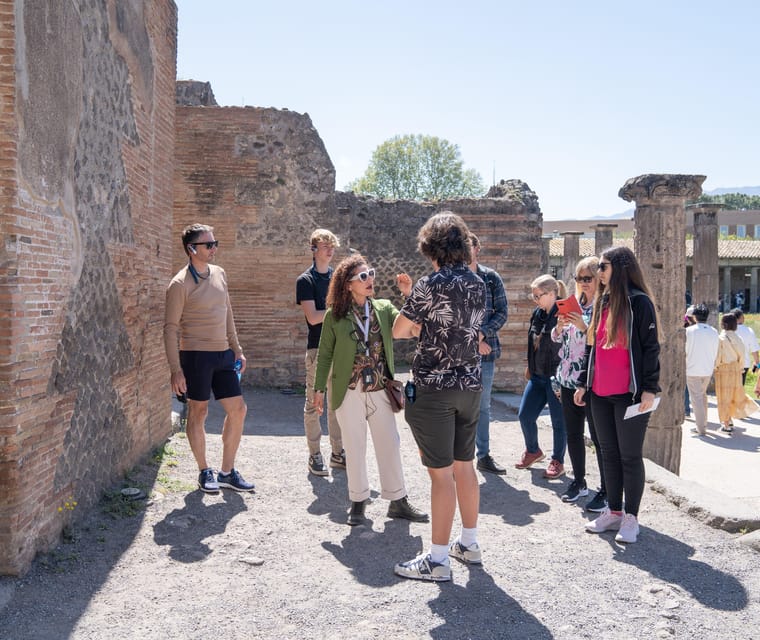
- Skip-the-line Pompeii ticket bundled with the guided tour, so your time is protected
- Headsets included, meaning clearer audio while walking between major sites
- A focused 2-hour route that hits Porta Marina Superiore, the forum, and the big “daily life” stops
- Artwork close-up time with frescoes, mosaics, and preserved interiors explained as you see them
- Semiprivate option available (max 12 people), which can feel calmer and more personal
Pompeii in two hours: why a guided route matters
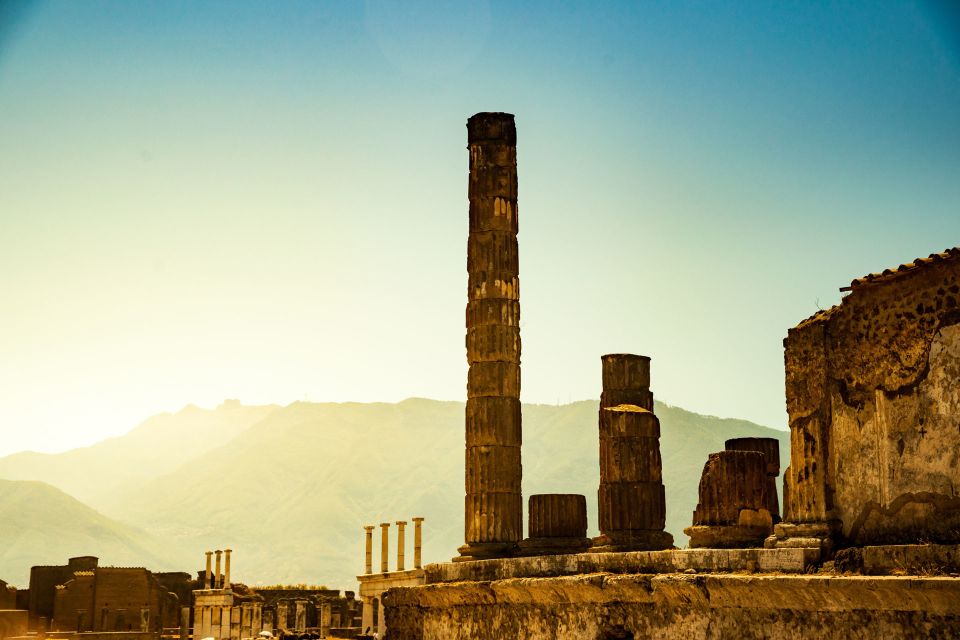
Pompeii is famous for a reason, but it can also be overwhelming. The site covers a lot of ground, and without context you can end up staring at walls that look similar from a distance.
This tour’s value is the way it strings the city together: gates, streets, the forum, homes and public buildings—then the volcanic story that preserved so much detail. Instead of treating Pompeii like a photo stop, you get a guided narrative that helps the place make sense.
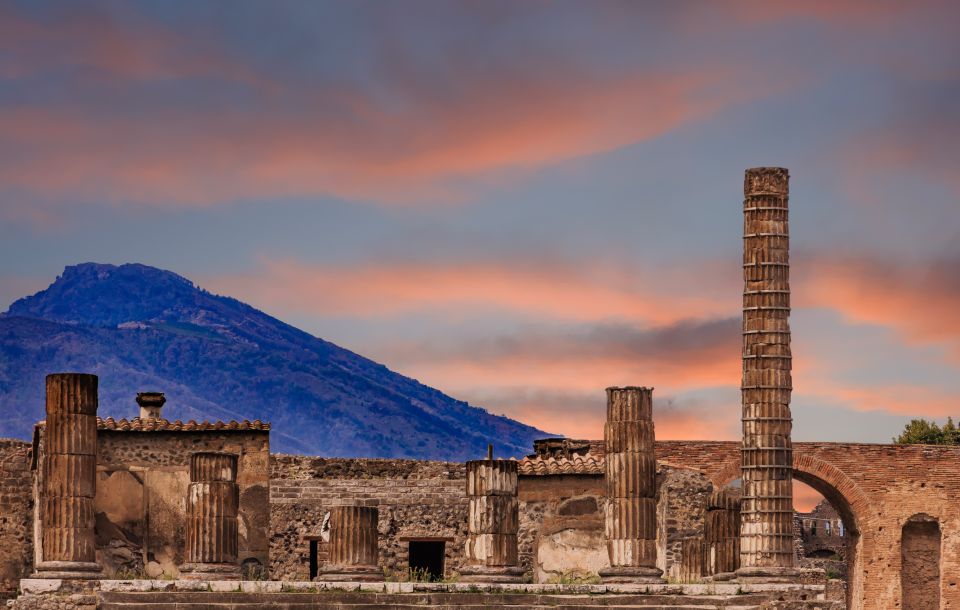
And yes, the views of Mount Vesuvius come in at the right moment. Standing higher or looking outward while the guide ties it back to the city’s disaster adds weight to what you’re seeing.
You can also read our reviews of more tours and experiences in Pompei Campania.

Reserved skip-the-line entry plus headset audio
The biggest practical win here is that you’re not hunting for tickets on arrival. You get the Pompeii skip-the-line ticket as part of the package, plus entrance handling that helps you get started with less friction.
Once you’re inside, the headset is a real quality-of-life upgrade. Pompeii is noisy in parts—footsteps, people stopping to photograph, and groups gathering at corners. The headset means you can keep moving while still catching the explanation.
You also get a city map and Wi‑Fi. That’s not just “nice to have.” The map helps you understand where you are when the tour ends, so you can keep exploring without spiraling into wrong turns.
Getting there: Piazza Esedra and the IBT Center meeting point
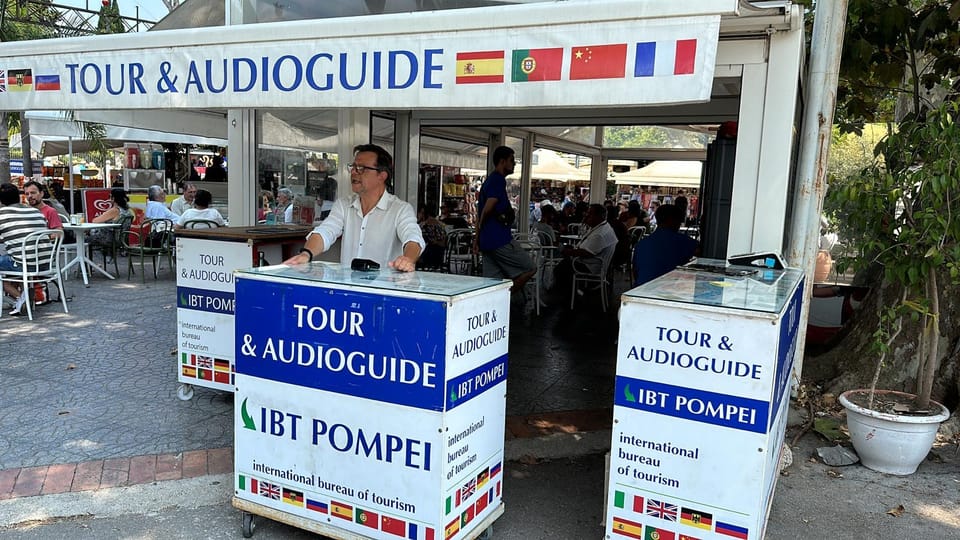
Plan to show up early. The tour’s starting location is listed as Piazza Esedra, 11, but the actual meeting is at the Office IBT Center/Touristation next to Chalet Donna Lucia.
Some people found this meeting point a bit tricky because it’s not right by the main Pompeii entrance. If you’re arriving by train or on a tight schedule, give yourself a buffer so you’re not sprinting at the last minute.
Tip: if your day includes Sorrento or Naples, build in time because tour timing doesn’t always match train timetables. When schedules don’t line up, it can cost you more time (or force you to wait for the next slot).
Porta Marina Superiore: your tour starts at a real gateway
You begin at Porta Marina Superiore, one of the city’s main gates. Starting at a gate matters because it frames Pompeii like a living place rather than a museum floor.
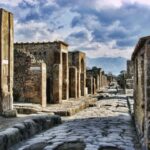
From there, you walk through the main streets, moving in a way that mirrors how people would have navigated the city. The guide uses that movement to explain what you’re looking at, so the route feels intentional rather than random.
If you tend to forget dates and names during tours, this starting approach helps. It’s easier to remember when the story starts with the city’s entry points and how people would flow through daily routes.
The forum and the big city moments (plus a Vesuvius view)
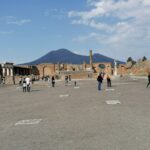
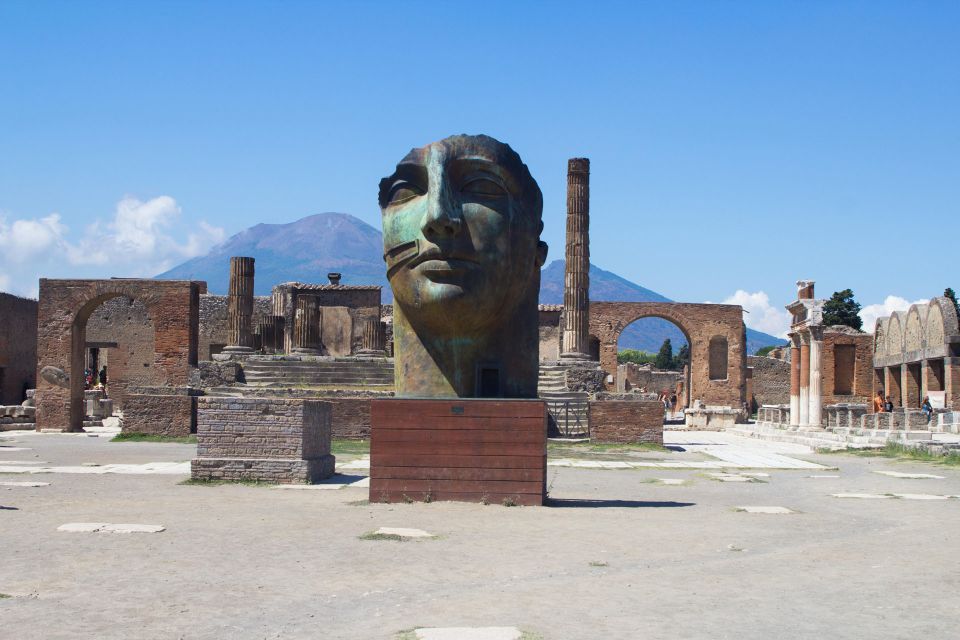
Next comes the forum—the heart of Pompeii. This is where the tour’s structure really helps. The guide connects buildings and streets so the forum doesn’t feel like a single square; it becomes a social and political hub you can picture in motion.
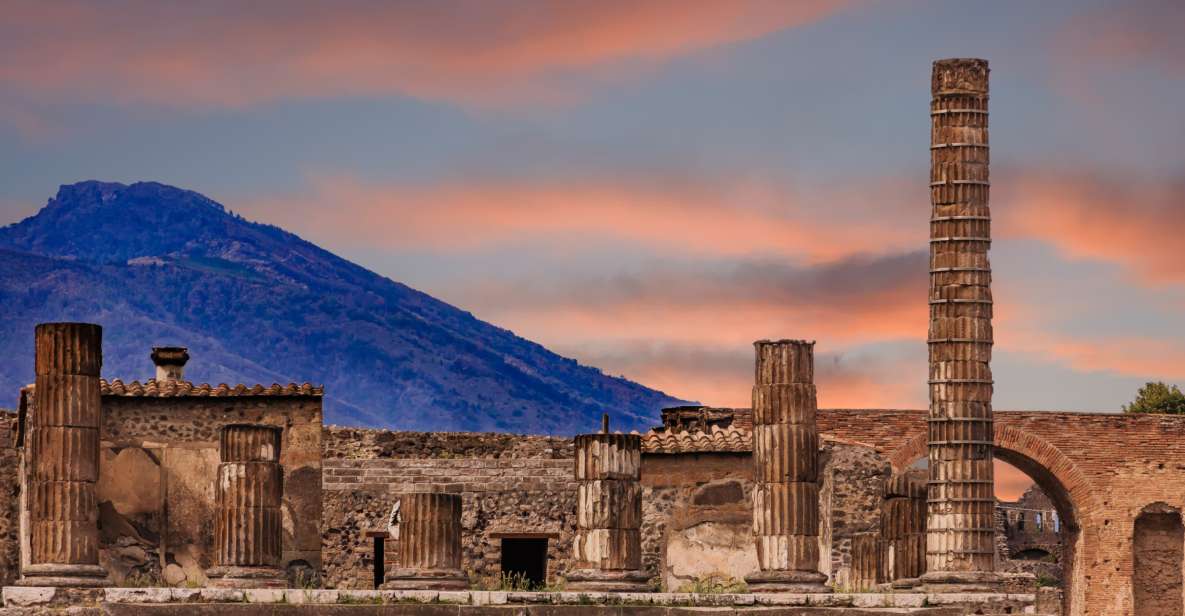
During the walk, you’ll also get views of Mount Vesuvius beyond the city. That perspective is one of the strongest emotional cues in Pompeii. It turns the “historic event” into something spatial—seeing the volcano in the same visual frame as the city.
You’ll likely notice how the guide keeps pulling you back to the big picture: not just what’s preserved, but what that preservation tells you about how people lived, worked, and gathered.



Baths, temples, bakery, theater, and the brothel stop
A well-run Pompeii tour balances “wow” with “daily life.” This one does that by hitting key building types, including baths and temples, plus practical places like a bakery.
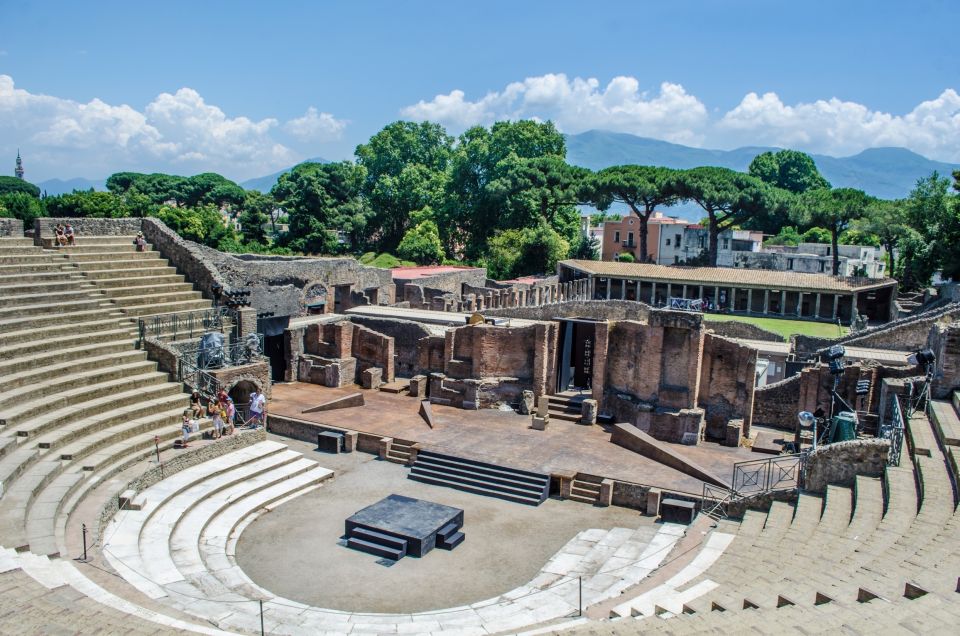
Then you move to entertainment and social spaces—the great theater is a major highlight—and the tour also includes a brothel. That combination is useful because it prevents the tour from becoming one-note. Pompeii wasn’t only houses and art; it was work, leisure, and commerce all mixed together.
One note on expectations: the tour is only 2 hours. That’s enough time for a strong overview, but it’s still a curated route. You’ll see a lot of essential stops, yet you won’t cover every street or side building in full detail.
Frescoes and mosaics: how the guide makes the art readable
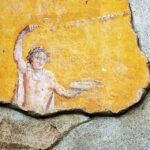
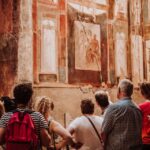
One of the best parts of Pompeii is how much art survives. This tour focuses on preserved artwork—especially frescoes, mosaics, and visual decorations—and the guide explains what you’re looking at while you’re standing there.
Seeing these close-up is important. From a distance, murals and floor designs can look like decoration. Up close, with someone pointing out themes and how these spaces were used, they become part of the city’s everyday identity.
This is also where an archaeologist guide earns their keep. The explanations help you connect art to function: what might have mattered to residents, what public or private spaces were signaling, and how these details fit the larger city story.
Semiprivate option (max 12) and why group size affects the whole feel
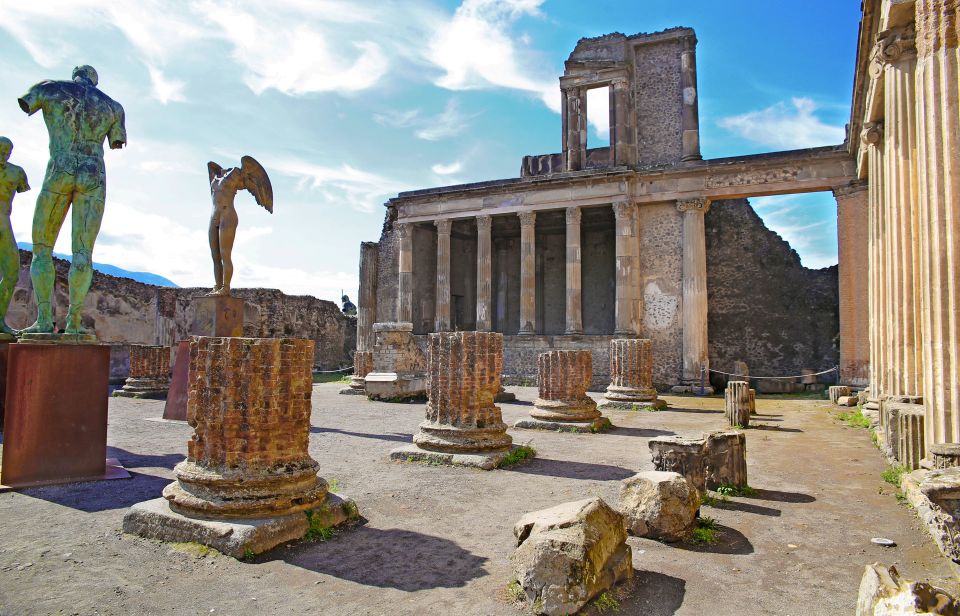
There’s a semiprivate option that limits the group size to a maximum of 12 people. That cap matters in Pompeii because space is tight in key areas and everyone wants the same photo angles.
Smaller groups usually mean smoother movement and fewer moments of waiting at corners. It also makes the tour feel less like a conveyor belt, even though the schedule is still paced.
Even beyond the semiprivate limit, the tour can feel flexible. Some departures end up quieter than expected, which can make it easier to hear the guide and ask questions without feeling rushed.
Languages and audio clarity: what to do if you struggle
Guides work in Italian, French, Spanish, and English, and the tour includes headsets to keep audio clear. That’s a smart setup because the guide’s job is harder when people are packed close and distractions pop up.
That said, accents can still affect comprehension. If you’re sensitive to audio clarity, choose your language carefully and arrive early so you can get settled before the tour starts. The headset check at the beginning is there for a reason, so it helps to stay attentive during that quick setup.
Price and value: what $64 covers (and what it doesn’t)
At $64 per person for about 2 hours, this is priced like a guided, skip-the-line package—meaning you’re paying for time saved plus interpretation, not just the ticket.
What’s included:
- Pompeii archaeological area skip-the-line ticket
- 2-hour guided tour
- Headset
- City map
- Assistance at the tourist office
- Wi‑Fi
What’s not included:
- Entrance to Villa dei Misteri
Here’s how I’d think about value: if you only have a short window in Pompeii, a guided format is usually the best use of your time. Without a guide, Pompeii can become a lot of “interesting, but… what am I looking at?” With a guide, the same two hours tends to feel more satisfying.
If Villa dei Misteri is on your personal must-see list, you’ll need a separate plan. This tour doesn’t include that entrance, so you should decide whether you want the focus of this route or the added time commitment.
Practical rules: ID, bags, umbrellas, and accessibility
Bring a passport or ID card. ID is required for all participants.
You also need to follow site rules:
- No smoking
- No luggage or large bags
- No umbrellas
- No oversize luggage
- Pets aren’t allowed (small dogs are permitted, but they must be on a leash and carried when inside buildings)
Accessibility is also clear: the tour is not suitable for people with mobility impairments and not for wheelchair users.
If you have a certified disability, the data you’ve been given notes free admission for disabled visitors. That’s worth double-checking before you go, but it’s a helpful policy to know.
Should you book this Pompeii tour?
Book it if:
- You want a guided overview that hits the main story points fast
- You care about hearing explanations while you walk, not just snapping photos
- You’d rather pay for skip-the-line entry than gamble on ticket lines eating your time
Skip it (or switch plans) if:
- Wheelchair access or mobility support is needed
- You specifically want Villa dei Misteri included in the same ticket window
- You like slow, self-paced wandering with no set route
If your goal is to understand Pompeii in a compact, well-organized format, this is the kind of tour that turns ruins into a readable city. The best part is how the guide ties the pieces together—streets, forum life, public buildings, and preserved art—so you leave with more than images. You leave with a sense of how people lived, and what the ash preserved so brutally well.
FAQ
How long is the Pompeii guided tour?
The guided tour runs for 2 hours.
Does this tour include skip-the-line tickets for Pompeii?
Yes. Your Pompeii archaeological area skip-the-line ticket is included.
What is the meeting point for the tour?
You should report to the Office IBT Center/Touristation next to Chalet Donna Lucia. The starting location is listed as Piazza Esedra, 11.
Are headsets included?
Yes. Headsets are included, so you can hear the guide during the walk.
Which language options are available?
The live tour guide is available in Italian, French, Spanish, and English.
Is Villa dei Misteri included?
No. Entrance to Villa dei Misteri is not included.
What do I need to bring?
Bring your passport or ID card.
Is this tour suitable for wheelchair users or people with mobility impairments?
No. It is not suitable for wheelchair users or people with mobility impairments.
What items are not allowed during the visit?
Smoking is not allowed. Luggage or large bags, umbrellas, oversize luggage, and pets are not allowed.
Is the activity refundable?
No. This activity is non-refundable.