REVIEW · ROME
Private Tour – Capitoline Museums
Book on Viator →Operated by Rome Guides · Bookable on Viator
Old Rome meets smart storytelling.
This private tour pairs the Capitoline Museums’ famous Roman collections with a quick walk to Michelangelo’s Piazza del Campidoglio, so you get history you can actually picture, not just read. The whole route is timed for about 2 hours 30 minutes, and it’s built around seeing the right works in the right order.
I especially love the guided context here: the museum’s mix of ancient Roman artifacts, plus later masterpieces, becomes much easier to understand when someone explains what you’re looking at and why it mattered. I also like that you’re not stuck in a crowd—reviews repeatedly highlight high-energy guides like Vincenzo and Martina who keep the pace up and make the facts stick.
One consideration: you’ll need to plan around the museum’s checkroom rule, since bags and backpacks must be left there. That’s normal for many museum visits in Rome, but it’s worth traveling light so you’re not juggling your stuff.
In This Review
- Key points before you go
- Capitoline Museums: Sixtus IV’s palace turns Roman art into a story
- Roman antiquities, bronze sculpture, and why the pacing feels right
- Piazza del Campidoglio: Michelangelo’s design and the Marcus Aurelius moment
- Your guide makes the difference: what to expect from Vincenzo, Martina, and friends
- Price and value: what you’re paying for (and what you’re not)
- Practical logistics in Rome: meeting point, checkroom, and how to show up ready
- Who this tour is best for
- Should you book this Private Tour – Capitoline Museums?
- FAQ
- How long is the Private Tour – Capitoline Museums?
- What’s included in the tour price?
- Is the tour offered in English?
- Where does the tour start?
- Does the tour end back at the meeting point?
- Are tickets included for the museum?
- Do I need to pay for the Piazza del Campidoglio stop?
- Do I need to leave bags or backpacks somewhere?
- Is hotel pickup or private transportation included?
- What’s the cancellation policy?
Key points before you go
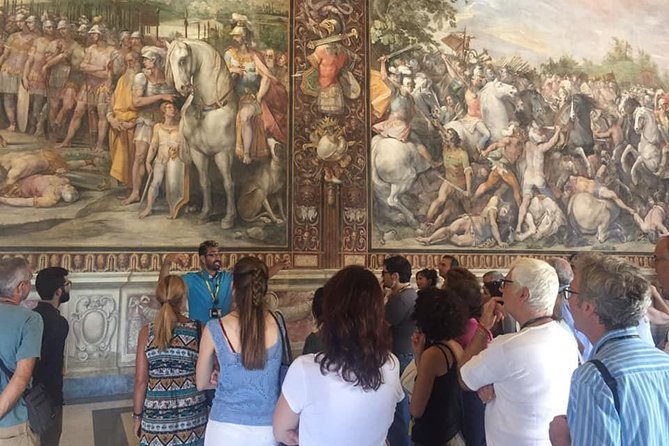
- Private, English-language guidance designed to make the Capitoline Museums make sense fast
- Tickets included for the museum visit, saving you time at the entrance
- Musei Capitolini focus on Roman antiquities, palace frescoes, and famous sculpture
- Piazza del Campidoglio stop includes Michelangelo’s layout and the Marcus Aurelius copy
- Bags/backpacks at the checkroom so keep day-packing simple
- Reviews repeatedly praise guides like Vincenzo, Martina, Massimo, Max, and Victoria for clarity and energy
Capitoline Museums: Sixtus IV’s palace turns Roman art into a story
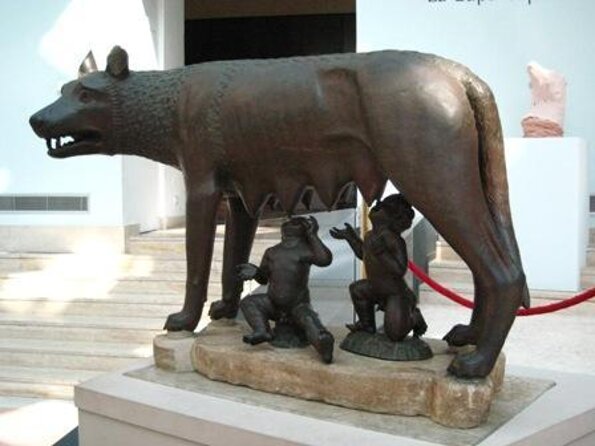
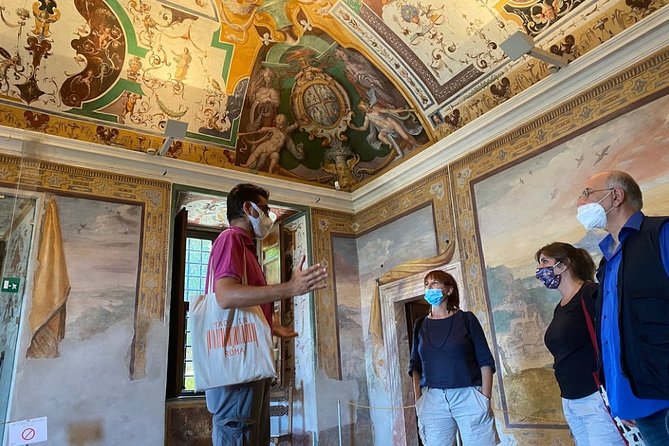
The Capitoline Museums are special for one big reason: they aren’t just a warehouse of statues. They’re housed in an ornate setting that feels like a chapter from Rome’s long cultural life, built into a palace with decorated frescoes. That matters because you’re not only seeing objects—you’re seeing how Romans and later collectors framed Roman identity for centuries.
You’ll spend the bulk of your time inside the Musei Capitolini, where the emphasis is on the Roman world—its art, power, and daily symbolism. And you’ll also notice the curatorship shift once you start spotting later works tucked among ancient pieces. Bernini’s Baroque statues, for example, are mentioned as part of what you’ll encounter, so the museum reads like a conversation between eras rather than a single timeline.
One smart thing about a private route like this: a good guide helps you connect what’s in front of you to the bigger picture—how Rome presented itself, and how viewers were meant to interpret emperors, myths, and civic values. Without that help, you can see plenty and still leave thinking, I liked it, but I’m not sure what I learned.
You can also read our reviews of more tours and experiences in Rome.

Roman antiquities, bronze sculpture, and why the pacing feels right
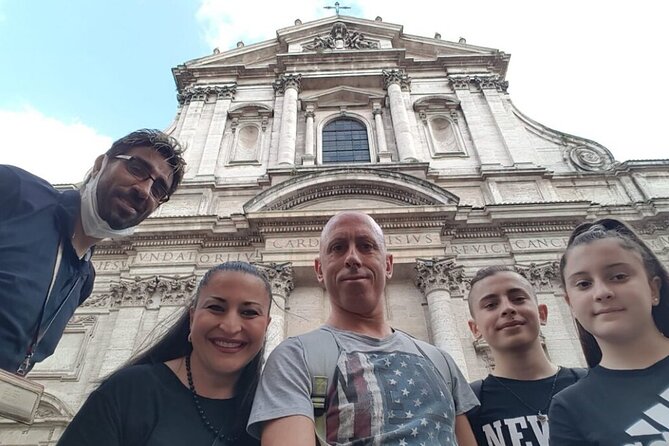
This tour is built around seeing the collection with intention. You’re not just drifting from room to room. You’re moving through highlights like bronze sculptures and courtyard spaces that change the mood between dense displays.
Courtyards are a big deal in museums like this. They give your eyes a break, and they help you reset before you tackle another group of statues or reliefs. If you’ve ever tried to “power through” a museum solo, you know how quickly your attention fades. Here, the rhythm helps you stay engaged long enough to actually remember what you saw.
Also, the museum’s layout and the way works are placed can be confusing if you don’t know what you’re aiming for. A private guide helps you notice relationships: how a sculptural style signals a period, how subject matter connects to Roman politics, or how copies and originals fit into the museum’s own storytelling.
And since you’re in English, you’re getting more than labels. You’re getting explanations in a way that keeps the visit lively. Reviews repeatedly describe guides who keep it interactive—asking questions, steering you to the right interpretation, and making it easier to follow even when you’re new to Roman art.
Piazza del Campidoglio: Michelangelo’s design and the Marcus Aurelius moment
After the museum, you step outside into Piazza del Campidoglio, where Rome shows off its Renaissance face. The square is tied to Michelangelo’s urban reorganization, so it doesn’t feel like a random place to pause—it’s part of the visual plan.
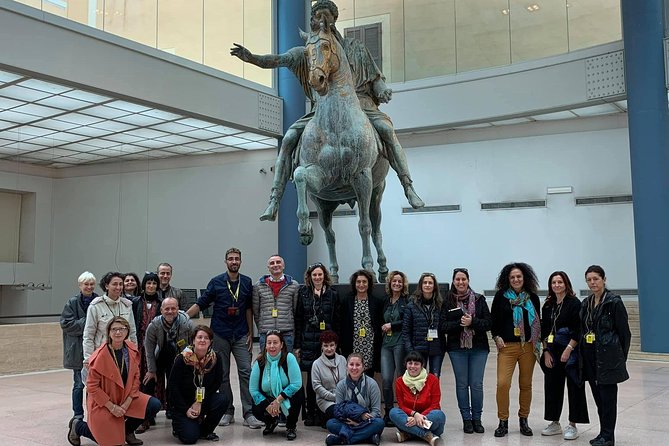
In the middle, you’ll see the copy of the Statue of Marcus Aurelius (the original is inside the museum). That one detail is worth your attention because it changes how you see both locations. Once you’ve spotted the copy here, the museum stop makes more sense—you understand the idea behind displaying an original elsewhere and placing a representative version in the city space.
This is a shorter stop—about 20 minutes—but it works well as a breather. You can look up, reorient, and connect the museum objects back to the city where power and art were meant to live together. If you love architecture, the Renaissance geometry and staging are a nice change from marble and glass cases.
Your guide makes the difference: what to expect from Vincenzo, Martina, and friends
In a private tour, the guide is the product. And this one seems to attract guides who bring real energy and strong communication. Reviews specifically mention guides including Vincenzo, Martina, Massimo, Max, and Victoria, with repeated praise for being engaging, clear, and effective at keeping attention.
A pattern shows up again and again: the best guides here do more than recite facts. They explain what you’re looking at in plain terms, then add context that helps you understand why the work exists and how it would have been read in its time. You’ll also often get guided interaction—discussion, questions, and moments that help you retain details.
Another detail I appreciate: some guides are described as adjusting for comfort, including noticing when someone needs to sit or stretch. That sounds small, but it’s real value when you’re touring for hours inside and outside. If you’re bringing teens or someone who usually gets bored at museums, this kind of pacing and engagement can make or break the day.
If you’re choosing this tour, I’d treat it like a learning experience you can enjoy—not a chore. Ask questions while you can, especially about empires, symbolism, and how Roman art communicated authority.
Price and value: what you’re paying for (and what you’re not)
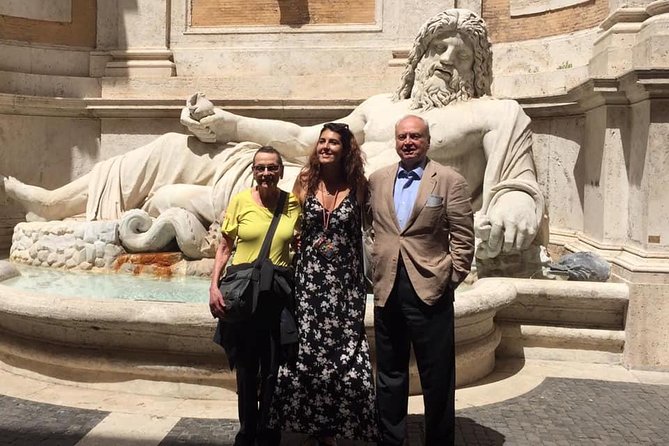
At $157.22 per person for roughly 2 hours 30 minutes, this isn’t a budget activity. But the value improves quickly when you compare what’s included.
What’s covered:
- A professional guide (with local guidance support)
- Private tour just for your group
- Tickets included for the museum portion
What’s not covered:
- Hotel pickup and drop-off
- Private transportation
So the math mostly comes down to this: you’re paying for time saved and understanding gained. Tickets being included matters because it reduces your friction at the entrance. More importantly, private guidance matters because the Capitoline Museums reward attention. Without help, it’s easy to skim famous names and still miss the connections that make the collection memorable.
This tour also says it can include group discounts, which is a strong signal for families or small friend groups. If your group is small (and you’re still paying per person), you’ll feel the price more. If you can spread the cost across a handful of people, the guide-led experience becomes easier to justify.
Timing-wise, private tours like this are often booked ahead. The average advance booking window is listed as about 81 days, so if you have fixed travel dates, don’t wait until the last minute.


Practical logistics in Rome: meeting point, checkroom, and how to show up ready
This tour starts at Piazza del Campidoglio (00186 Roma RM, Italy) and ends back at the same meeting point. That’s helpful. You don’t need to plan extra transport just to wrap up—your day stays simple.
It’s also noted as near public transportation, so you can build it into a day of museum hopping without overthinking how you’ll get there.
One logistics rule is firm: bags and backpacks must be left in the checkroom. That means your “day pack” should be more like a “hands-free pack.” Bring only what you truly need inside the museum—water, a light layer, camera/phone, and your essentials. It’ll make the visit smoother for everyone in your group.
Finally, confirmation happens at booking time, so you’ll want to have your details ready. And since it’s described as a private tour/activity, only your group participates, not a mixed crowd. That keeps the pacing tighter and the guide’s attention focused where you need it.
Who this tour is best for
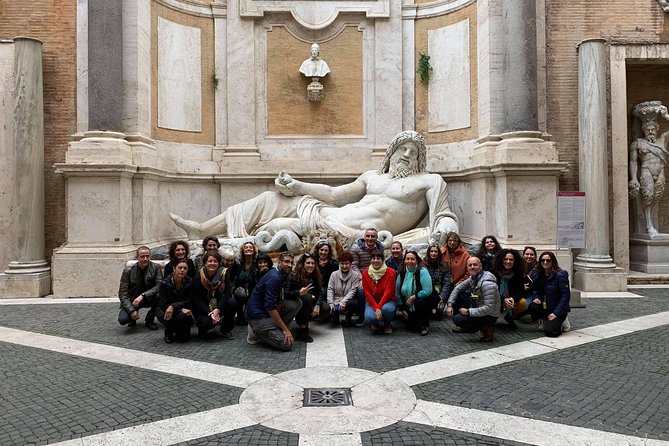
You’ll likely enjoy this most if you:
- Want a guided explanation of Roman art instead of a self-paced walk
- Care about context, like how Roman emperors and ideas were presented through sculpture
- Prefer a structured route that keeps you moving and lets you ask questions
- Are traveling with teens or a group member who needs a bit more engagement to stay focused
It may be less ideal if you prefer long, quiet wandering and you’re happy reading labels for hours. The tour is paced, with stops and time targets, so it’s built for learning with momentum.
Should you book this Private Tour – Capitoline Museums?
Yes—if your goal is to leave with real understanding, not just photos.
Book it when:
- You want Capitoline Museums guidance in English with tickets included
- You like the idea of pairing museum masterpieces with Piazza del Campidoglio so Roman art connects to Roman space
- You’re hoping for an engaging guide experience, with energy and interaction highlighted by names like Vincenzo and Martina
Skip or reconsider if:
- You’ll struggle with the checkroom bag rule and don’t want to travel light
- You prefer a very flexible, slow museum day and don’t want a set route
If you’re aiming for one strong Roman art-and-history anchor during your trip, this is the kind of tour that tends to turn a collection into a story you can repeat later.
FAQ
How long is the Private Tour – Capitoline Museums?
It runs about 2 hours 30 minutes (approximately).
What’s included in the tour price?
The tour includes a professional guide, local guide support, a private tour format, and tickets.
Is the tour offered in English?
Yes, it is offered in English.
Where does the tour start?
The meeting point is Piazza del Campidoglio, 00186 Roma RM, Italy.
Does the tour end back at the meeting point?
Yes. The activity ends back at the meeting point.
Are tickets included for the museum?
Yes. Admission Ticket Included applies to the museum stop.
Do I need to pay for the Piazza del Campidoglio stop?
That stop is described as Admission Ticket Free.
Do I need to leave bags or backpacks somewhere?
Yes. It’s mandatory to leave bags and backpacks in the checkroom.
Is hotel pickup or private transportation included?
No. Hotel pickup and drop-off and private transportation are not included.
What’s the cancellation policy?
You can cancel for free up to 24 hours in advance for a full refund. If you cancel less than 24 hours before the start time, the amount paid is not refunded.