REVIEW · ROME
Trevi Fountain Underground Aqueduct and Spanish Steps Tour
Book on Viator →Operated by Live Virtual Guide · Bookable on Viator
One small idea changes how you see Rome: follow the water. This Spanish Steps to Trevi route connects today’s landmarks to ancient plumbing, from the la Barcaccia fountain fed by an aqueduct for over 2,000 years to the underground workings of the city’s water system. I love that it’s paced for real strolling and conversation, and I especially like the tour’s focus on what’s under the streets, not just what’s on postcards.
The main trade-off: if you expect nonstop movement and nonstop photos, the tour’s story-led stops can feel like you’re pausing more than you want. In the small-group format, that can be perfect for deep attention, but if your preference is a quicker hit of sights, plan for a slower rhythm during the explanations.
In This Review
- Key highlights at a glance
- A tight schedule friendly walk: Spanish Steps to Trevi in about 2 hours
- Following the water: Piazza di Spagna, la Barcaccia, and why the Spanish Steps aren’t Spanish
- Colonna Dell’Immacolata and Christmas in Piazza di Spagna
- Acquedotto Vergine: seeing the aqueduct above ground (and spotting a mysterious door)
- Rinascente Roma Tritone: an aqueduct story inside a department store
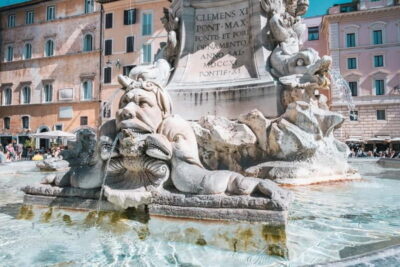
- Trevi Fountain: legends, significance, and what the photos hide
- Vicus Caprarius – City of Water: walking the underground layers of Rome (19 BC)
- The guide experience: names you might get, and how to get the most out of it
- Price and value check: what $62.75 buys you in Rome
- Who this tour suits best (and who should skip it)
- Should you book this Trevi Fountain Underground Aqueduct and Spanish Steps tour?
- FAQ
- How long is the Trevi Fountain Underground Aqueduct and Spanish Steps tour?
- How much does it cost?
- Is the tour offered in English?
- How many people are in the group?
- Where does the tour start?
- What ticket is included for the underground part?
Key highlights at a glance
- Small group (max 12) for a relaxed, no-rush feel
- Water story from Piazza di Spagna to Trevi with the aqueduct connections made clear
- Underground visit at Vicus Caprarius and an ancient water tank built in 19 BC
- Rinascente Roma Tritone stop where you’ll spot ruins tied to the city’s aqueducts
- Acquedotto Vergine ruins with visible overground remains and a nearby door
- A lively history guide in English with strong explanations of Roman-to-modern Rome
A tight schedule friendly walk: Spanish Steps to Trevi in about 2 hours
Rome can be a “choose-your-own-chaos” city. This tour is built for control. At around 2 hours, you can slot it into a day that already has Colosseum-sized plans or a long wander through the center without turning the day into an all-day endurance test.
What also helps: the route starts at Piazza di Spagna and it’s positioned near public transportation. That matters in Rome, where hopping across neighborhoods can eat up more time than you expect.
And because the group is capped at 12 people, you’re not packed shoulder-to-shoulder. You get time to look up at the architecture, check details at street level, and actually hear the explanation. If you’ve been burned by big-group tours where you spend more time staring at the back of someone’s head, this small format is a real upgrade.
You can also read our reviews of more tours and experiences in Rome.


Following the water: Piazza di Spagna, la Barcaccia, and why the Spanish Steps aren’t Spanish
The tour begins at the Spanish Steps (Piazza di Spagna), a meeting point so central it feels like Rome’s living stage. But the tour doesn’t stop at the surface glamour.
You’ll learn what the square has meant to Romans over time, and you’ll get a quick course on how this area turned into what you recognize today. Then comes one of the best “wait, really?” moments: the Spanish Steps are not Spanish at all. That kind of correction is useful because it forces you to look past the obvious brand names and into the real historical reasons a place became famous.
From there, the story pivots to water. The tour connects la Barcaccia, the fountain you’ll spot around the Spanish Steps area, to a real ancient power source: it’s still fed by an ancient Roman aqueduct that’s been at work for more than 2,000 years. That’s the tour’s brain: Rome didn’t just build impressive monuments. It engineered systems—water included—and then later generations built their lives directly on top of that.
Practical note: the Spanish Steps area is busy. You’ll be standing in public space while the guide talks, so expect normal crowds nearby. The upside is that you’re learning while you look, instead of trying to figure it out after the fact.
Colonna Dell’Immacolata and Christmas in Piazza di Spagna
Next you move to Colonna Dell’Immacolata, in the same Piazza di Spagna zone. This stop is short, but it does an important job: it shows how modern Roman traditions layer onto the same old geography.
The key point here is the column’s ties to local Christmas traditions. It’s a reminder that “ancient Rome” is not frozen in time. People still use these squares for celebrations, symbols, and seasonal rituals. Even if you only catch this for a few minutes, it adds context to the way Rome works—old structures become backdrops for new meanings.
If you’re the type who likes a quick story rather than a long museum moment, this stop hits the right length.
Acquedotto Vergine: seeing the aqueduct above ground (and spotting a mysterious door)
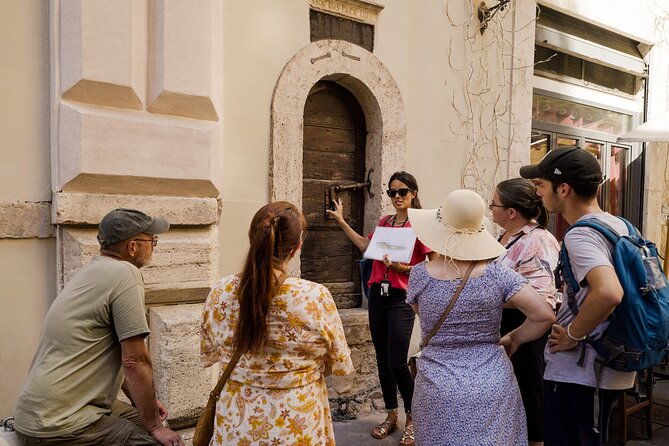
At Acquedotto Vergine, the tour shifts from iconic views to physical remnants. Here you start seeing parts of the aqueduct visible overground, not just explained.
And right next to the aqueduct area, there’s a mysterious door that the guide points out. That detail is the kind of thing most people walk past without noticing, because it looks like normal urban clutter. In this tour, it becomes part of the aqueduct story—one of those small “Rome is always hiding something” moments.
This stop is brief, but it matters because it teaches you a skill: how to identify what you’re looking at. Once you’ve been told what to notice, you’ll spot the relationship between ruins and the living city while you continue exploring on your own.
Rinascente Roma Tritone: an aqueduct story inside a department store
Then you reach Rinascente Roma Tritone, which is a department store. But the tour uses it for a very Roman reason: in this city, modern life often runs directly over ancient infrastructure.
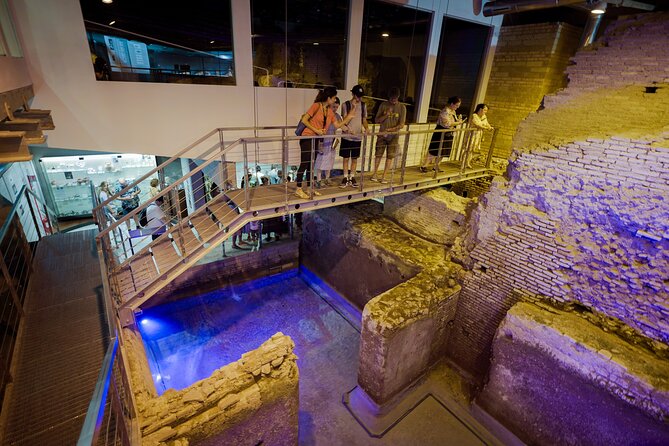
The highlight here is underground. Inside this shopping building, you’ll see ruins of the only ancient Roman aqueduct still functioning today. That’s a huge idea, even if it sounds technical. It means you’re not just looking at history as decoration. You’re looking at history as a working system—at least in part—still tied to the water network.
This stop also makes the tour feel different from other “monument-to-monument” walking routes. You get a lesson in how Rome grew: each era builds what it needs, and sometimes it literally keeps using what previous eras engineered.
What to expect: there will likely be a mix of outdoor walking and indoor/outdoor transitions, so wear shoes that can handle uneven streets and smooth floors without complaint.




Trevi Fountain: legends, significance, and what the photos hide
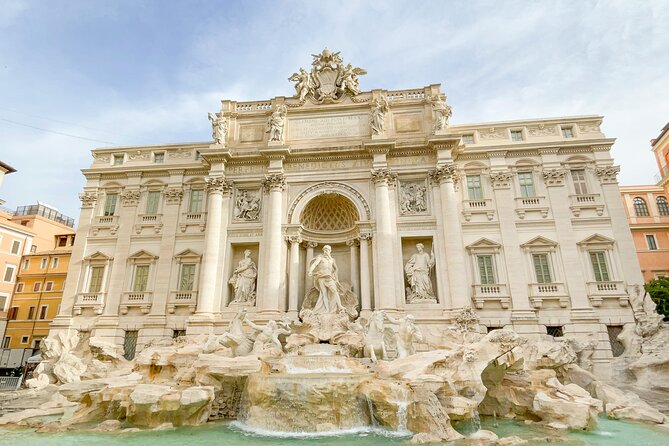
Of course, the tour reaches Trevi Fountain, one of the most photographed spots in Rome. Photos here are easy—understanding the deeper meaning isn’t.
This stop focuses on why Trevi mattered from ancient Roman times through today, including the legends and stories that have grown around the fountain. Instead of treating Trevi as a postcard backdrop, the guide connects it to the same theme you’ve been tracking all along: water, symbolism, and civic life.
You’ll still get to experience Trevi visually, but the goal is to help you interpret what you’re seeing. That’s the real value with a guided stop at Trevi: you walk away knowing what the fountain represents, not just that it’s famous.
If you’re visiting during peak hours, expect more people around the fountain. The small-group format helps because you can listen and look without feeling like you’re being shoved into a single viewpoint.
Vicus Caprarius – City of Water: walking the underground layers of Rome (19 BC)
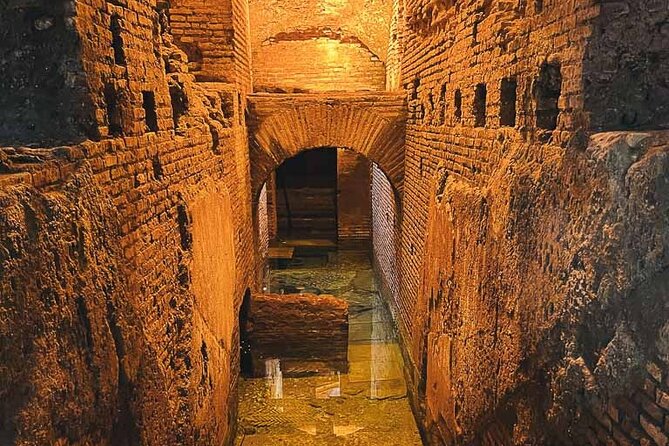
Now for the part many people remember most: Vicus Caprarius – the City of Water. This is where the tour goes underground to explore the ancient water system in a more literal way.
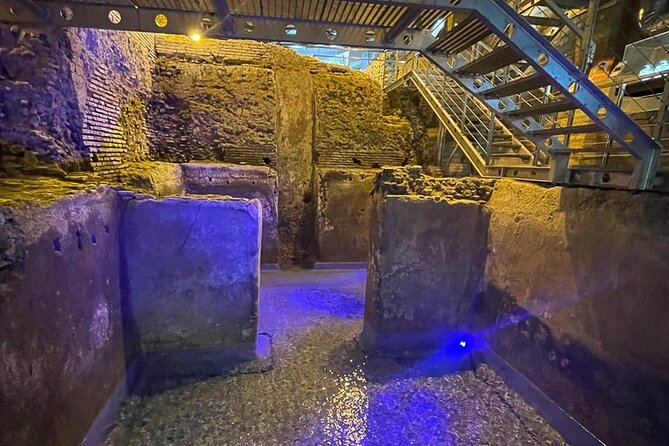
You’ll walk underground to visit the ancient water tank of the aqueduct built in 19 BC. It’s also where the tour’s “Rome is layered” theme becomes physical. The place is described like a lasagna of history, because buildings and homes have lived here through different centuries, one layer stacked on top of another.
This isn’t just a history lecture. It’s a change of perspective. Being underground makes the engineering feel real—water had to travel somewhere, and Romans built infrastructure that still shaped urban life long after the aqueduct itself stopped being a standalone novelty.
This stop includes an admission ticket, so you’re paying for access to something you probably wouldn’t find or understand without a guide. Even if you’ve been to Trevi before, this is the part that turns Trevi into a starting point rather than a destination.
The guide experience: names you might get, and how to get the most out of it
A big reason this tour scores so well is the way guides tell the story. From guide names associated with the experience, you might meet Sabrina, Frederica, or Ricardo—and the pattern is consistent: they keep the explanations engaging, connect details to bigger ideas, and make the aqueduct story feel human.
I’d treat the tour as best for people who enjoy interpretation. If you like questions answered on the spot, it’s ideal. One review highlighted jokes, another emphasized interactive details, and another praised guides for keeping the tour light while still covering serious material.
The one caution: if you’re sensitive to accents or you prefer crisp, high-audibility narration, language clarity matters. A couple of accounts mention either heavy accents or a slower, more standing-and-talking rhythm. That doesn’t mean the tour is bad; it means you should mentally prepare for an explanation-heavy format, not a sprint of photo stops.
Tip: if you want maximum value, bring your curiosity. Ask what connects one stop to the next. Once the water system clicks, everything else starts making more sense.
Price and value check: what $62.75 buys you in Rome
At $62.75 per person for about 2 hours, this tour isn’t the cheapest thing you can do in Rome—but it also isn’t overpriced for what it includes.
Here’s the value math in plain terms:
- You get multiple major stops clustered in one walk: Spanish Steps, Colonna Dell’Immacolata, Acquedotto Vergine, Rinascente Roma Tritone, Trevi Fountain, and Vicus Caprarius.
- Most admissions listed are free, which keeps your “what’s the real total?” anxiety low.
- The one major paid entry you get is the underground Vicus Caprarius visit, which is the main reason the tour isn’t just sightseeing trivia.
- The group size max of 12 is part of the value. Less crowd means you can actually hear and ask questions.
If your goal is first-time understanding—how modern Rome sits on ancient infrastructure—this is one of the better short tours for the money. If you already know a lot about aqueducts and Roman engineering, you might still enjoy it, but you’ll want to be ready for more storytelling than deep technical diagrams.
Who this tour suits best (and who should skip it)
Best fit:
- You like history, but you want it connected to real places you can see right now.
- You enjoy short walking tours with a relaxed pace rather than constant motion.
- You’re curious about how modern Rome was built around ancient ruins, not apart from them.
- You want a clear theme. This one is water—la Barcaccia, aqueduct remains, Trevi’s significance, and the underground tank at Vicus Caprarius.
Maybe skip or think twice if:
- You mainly want quick “stand in front of the thing, take photos, move on” sightseeing.
- You get impatient with times spent listening while the group pauses.
One more practical point: the mix of outdoor sights and underground time can work in different weather moods, since you’re not trapped in only one environment for the whole tour.
Should you book this Trevi Fountain Underground Aqueduct and Spanish Steps tour?
I’d book it if you want your Rome to feel connected. This tour doesn’t just show you famous spots—it explains the water system story that ties them together, and it gives you access underground at Vicus Caprarius where you can understand Rome as a stack of eras.
I would also book it if you value small-group pacing. With a max of 12, it feels more like a guided walk with smart storytelling than a crowded relay race.
If you hate explanations and love only the fastest photo route, then choose a different tour style. But if you’re the kind of traveler who likes to know what you’re looking at while you’re looking at it, this one is a strong match.
FAQ
How long is the Trevi Fountain Underground Aqueduct and Spanish Steps tour?
The tour is about 2 hours.
How much does it cost?
It costs $62.75 per person.
Is the tour offered in English?
Yes, it’s offered in English.
How many people are in the group?
The tour has a maximum of 12 travelers.
Where does the tour start?
It starts at the Spanish Steps (Piazza di Spagna).
What ticket is included for the underground part?
The underground stop at Vicus Caprarius – the City of Water includes an admission ticket. Other listed admissions are free.