REVIEW · ROME
Ancient Appian Way PRIVATE Bike Tour
Book on Viator →Operated by Roma STARBIKE · Bookable on Viator
The Appian Way is Rome, minus the stress. This private e-bike ride takes you along the edges of history—past gates, villas, tombs, and aqueducts—without the slow pace of buses or the chaos of trying to park.
I especially like the way the route breaks into scenery and monuments in a logical rhythm, so you keep moving but still get time to look. I also love that the tour leans into story—guides like Valerio, Claudio, and Chris bring details to life while you roll through the Appian Way landscape.
One thing to consider: you’ll spend part of the ride sharing space with traffic. If you’re nervous around cars on busy streets, plan carefully and choose this only if you’re comfortable on the road.
In This Review
- Key things that make this tour worth your time
- Rome’s Ancient Road Escape: Why the Appian Way works as a bike tour
- E-bikes, fitness, and the practical reality of riding here
- The value of a $147.54 private half-day
- Stop-by-stop on the Appian Way: from Porta San Sebastiano to Caracalla Baths
- Porta San Sebastiano: the southern gate and the mood shift out of town
- Parco della Caffarella: Roman remains inside one of Rome’s big green stretches
- Ninfeo di Egeria: myth you can walk around
- Parco degli Acquedotti: aqueduct engineering in a huge park space
- Villa dei Quintili and Santa Maria Nova: a villa tied to power and punishment
- Mausoleo di Cecilia Metella and Castrum Caetani: a tomb that survives
- Circus of Maxentius: a Roman circus that still holds its shape
- Terme di Caracalla: scale, water, and surviving grandeur
- How private guiding changes the whole ride
- Family-friendly, but be honest about fit
- Who this tour suits best
- Should you book the Ancient Appian Way private e-bike tour?
- FAQ
- How long is the Ancient Appian Way PRIVATE Bike Tour?
- How much does the tour cost?
- Is this tour private?
- What language is the tour offered in?
- What’s included with the tour?
- Do I need to know how to ride a bike?
- Will I visit the main Appian Way landmarks?
- Are entrance fees required for the listed stops?
- Can children join the tour?
- Is tipping required, and what’s the cancellation policy?
Key things that make this tour worth your time
- Private group attention: one guide for your group means more pacing control and better explanations at stops.
- High-quality e-bikes with helmets: gear is included, with phone/handlebar holders that make stops easier.
- Aqueduct Park highlights: you see major remnants of Rome’s water network, with some still in operation.
- A stop-by-stop mix of eras: from Aurelian Walls through circus and imperial baths.
- Family-friendly setup: child seats are included, plus a trailer bike option for shorter kids.
- Traffic is real in the middle: reviews note a chunk of the ride on busier roads.
Rome’s Ancient Road Escape: Why the Appian Way works as a bike tour
The Appian Way is one of those places where Rome stops feeling like a nonstop museum line and starts feeling like a place you can move through. You roll out from the city and into parkland, but you’re still surrounded by evidence of Roman life—roads, walls, tombs, and water engineering.
What I like about this tour style is the balance. You’re not just “riding through ruins” for photos. You get time at each stop to actually read the scene: what’s left, what it used to do, and why it mattered.
You can also read our reviews of more tours and experiences in Rome.


E-bikes, fitness, and the practical reality of riding here
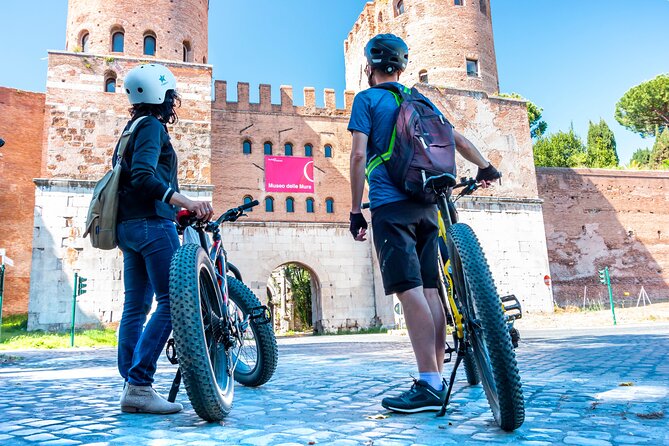
This is a bike tour, not a sit-and-watch. You’ll want moderate physical fitness, and you must know how to ride a bike well. Even with the e-bike assistance, you’re still pedaling and steering—especially on uneven ground and cobblestones you might hit along the way.
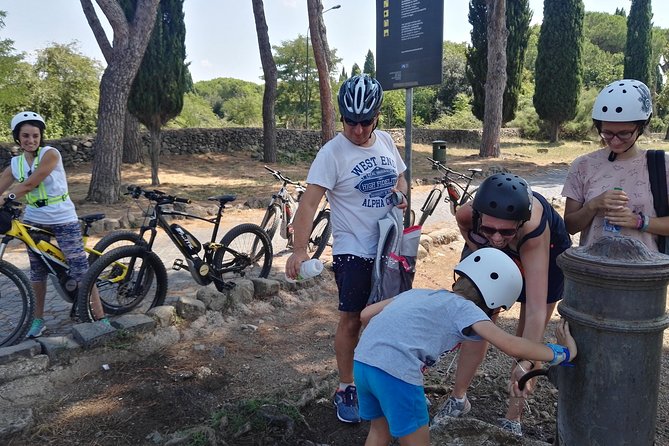
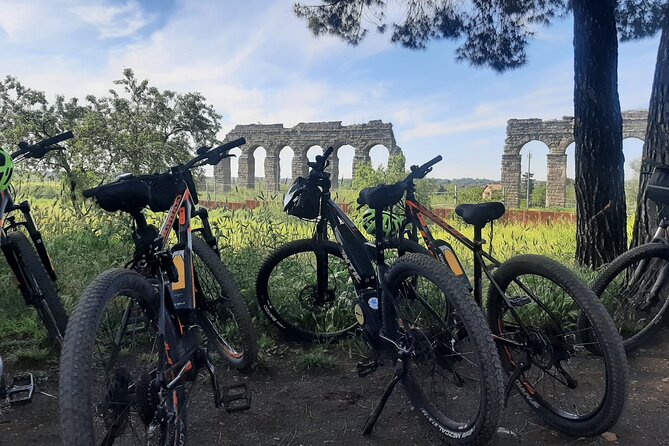
The e-bikes are described as high quality and come with a helmet. You also get a mobile phone holder and handlebar holder, which sounds small until you try to juggle a map and stop photos with gloves on. For many people, that’s the difference between stress and a smooth ride.
Now for the honest part: one review notes there’s about 20% city traffic, and that parts of the route can involve heavily trafficked streets where you share the road. You’ll be on your guide’s instructions, but if you’re truly uncomfortable around cars, factor that in. This tour is great when you trust your bike skills and you’re willing to ride confidently in Rome.
The value of a $147.54 private half-day
At $147.54 per person, this isn’t the cheapest way to see Rome’s ancient sites. But you’re paying for three things that add up quickly:
- Private guiding for your group for about four hours. That’s time and attention, not just a headset explanation.
- E-bike transportation plus safety and convenience gear (helmet, phone/handlebar holders).
- A carefully spaced route that hits multiple major landmarks without you needing to plan transfers or fight for parking.
If you’ve already done the classic center highlights and you’re craving a different slice of Rome—green areas, long views, and engineering that still shows its muscle—this price starts to make sense. It’s half-day energy with a full set of iconic stops.
Stop-by-stop on the Appian Way: from Porta San Sebastiano to Caracalla Baths
Expect eight major stops, each with time to look and listen. The pacing is built for understanding, not just checking boxes.
Porta San Sebastiano: the southern gate and the mood shift out of town
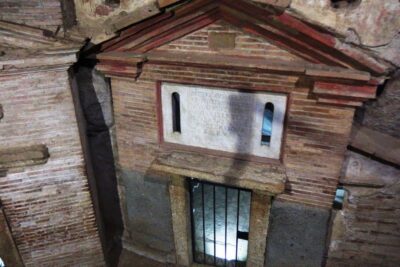
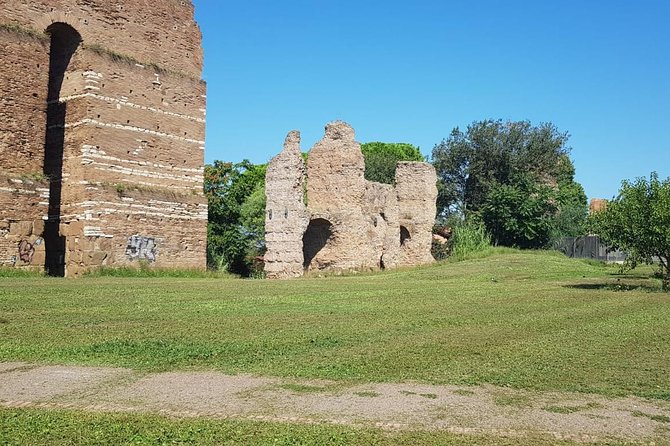
You start at Via dei SS. Quattro, 58, and then head to Porta San Sebastiano, an imposing southern gateway in Rome. It’s tied to the Aurelian Walls, built around 275 AD, and it also marks the beginning of the historic Via Appia Antica.
This is a strong first stop because it sets the tone immediately. You can feel the idea of Rome as something walled and deliberate. It’s also worth noticing the medieval graffiti left by pilgrims over centuries—proof that this road wasn’t just for armies and officials.


Parco della Caffarella: Roman remains inside one of Rome’s big green stretches
Next is Parco della Caffarella, now part of the Appia Antica Regional Park. This park is one of the largest green areas not only in Rome, but in Europe.
What makes this stop special is the blend. It’s peaceful park paths and groves, but you’re also seeing remains of ancient buildings tucked into the greenery. It’s a different way to experience ruins—less dramatic “monument on a pedestal,” more like archaeology integrated into the everyday landscape.
Ninfeo di Egeria: myth you can walk around
Then comes Ninfeo di Egeria, a sacred site tied to the story of the nymph Egeria and King Numa Pompilius. The legend says Egeria learned of her beloved’s death, burst into tears, and gave life to a spring.
This stop works well because the myth isn’t just a trivia fact. It helps you understand why people kept returning to this area. You’re standing in a place where water, ritual, and story overlap—one of the reasons the Appian Way is more than “old stones.”
Parco degli Acquedotti: aqueduct engineering in a huge park space
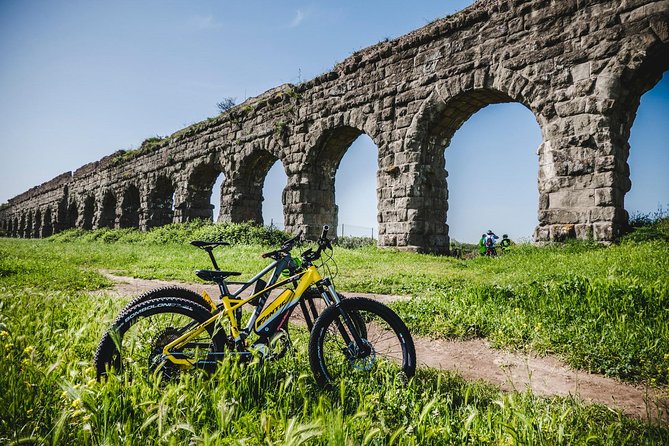
The ride continues into Parco degli Acquedotti (Parco Archeologico dell’Appia Antica). This is a massive green area that once sat under Rome’s water network and still shows it clearly today.
You’ll also hear the connection to Via Latina, described as Rome’s oldest road. That matters because the Appian Way didn’t exist in a vacuum—it was part of a broader system of routes and utilities that powered the city.
The highlight here is the aqueducts. You can admire remains in places that are well preserved, and you can even see that some water infrastructure is still in operation. That’s a rare feeling: Roman engineering you can track from history into the present.
Villa dei Quintili and Santa Maria Nova: a villa tied to power and punishment
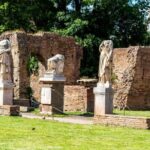
Stop five is Villa dei Quintili and Santa Maria Nova at the fifth mile of the Appian Way. The villa belongs to Sesto Quintilio Condiano and Massimo Valerio, consuls in the second century AD.
The story turns darker: they were killed by Commodus I, who then confiscated the villa and made it imperial property. This makes the remains more than architecture. You’re looking at the physical footprint of political control—who had the land, who lost it, and how the empire reshaped private spaces.
Mausoleo di Cecilia Metella and Castrum Caetani: a tomb that survives
Next is Mausoleo di Cecilia Metella, a pagan tomb dating to the 1st century BC. It’s dedicated to Cecilia Metella and is described as the best preserved mausoleum on the Via Appia Antica.
It’s also incorporated into the Castrum Caetani, which adds a layered timeline to what you see. Around it you can appreciate remains connected to the Caetani family’s medieval house, plus the perimeter walls of the church of San Nicola. The place is a timeline you walk around, not a single-era snapshot.
Circus of Maxentius: a Roman circus that still holds its shape
At Circus of Maxentius, you’ll see one of the best examples of a Roman circus still standing. Like other Roman entertainment spaces, it’s a reminder that public life was engineered as much as roads and water.
Pay attention to the spina, a central divider area still visible. It once housed the Agonale obelisk, moved later during the Renaissance to the Fountain of the Four Rivers in Piazza Navona. That’s a neat way to connect your ride to the city you’ll likely see later that day.
Terme di Caracalla: scale, water, and surviving grandeur
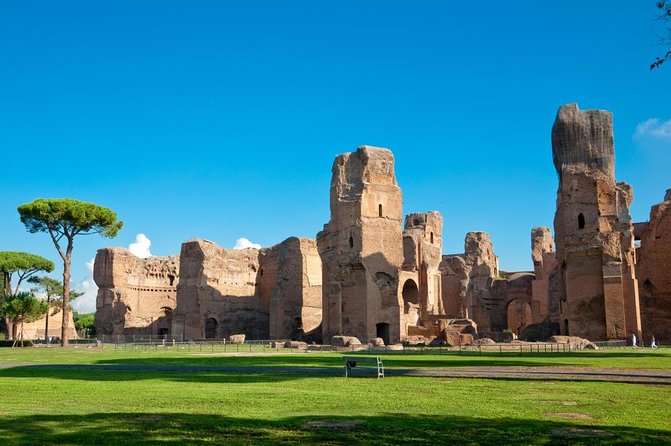
The last stop is Terme di Caracalla, the Baths of Caracalla. Built by Emperor Caracalla, these baths were for about a century the largest public baths ever built. A lot of the structure is preserved, which is exactly what you want from a half-day tour.
Water supply matters here too. A branch of the Aqua Marcia brought water to the baths through the Antoninian aqueduct. And while you’ll see this stop as the end of the tour, remember that small remains can also be seen at Porta San Sebastiano.
How private guiding changes the whole ride
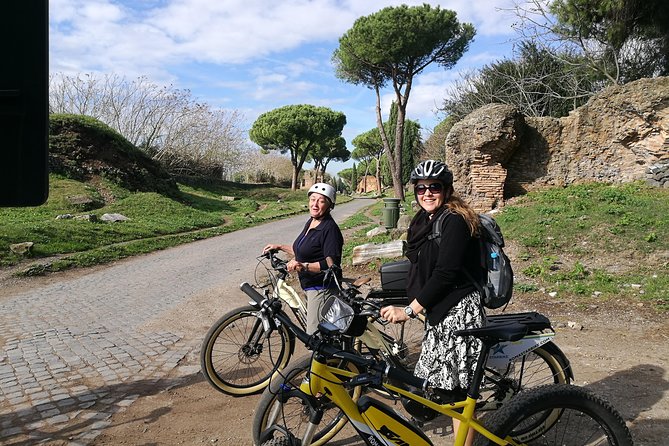
The private format is more than a label. A solo group guide can slow down when you want to read inscriptions and speed up when you’re just craving the view.
This matters on the Appian Way because different stops need different attention. At Porta San Sebastiano, you want orientation. At the aqueduct park, you want explanation of how the water system worked. At Cecilia Metella’s mausoleum, you want help noticing the layers—pagan tomb, medieval incorporation, and later church remains.
From the guides you might be paired with, names like Valerio and Claudio show up strongly in feedback for their patience and historical storytelling. Chris and Alex are also mentioned for clear, engaging explanations. Even when the riding gets busy, a good guide keeps you focused on what you’re seeing.
Family-friendly, but be honest about fit
This tour can be a great choice for families because it’s not just “one long walk.” The e-bike helps kids and parents move together.
Child seats are included until 25 kg. There’s also a child discount for ages 6–10, but there’s a key height rule: the discount is only valid if the child is less than 4/7 feet (143 cm), because they’ll ride on a trailer bike rather than a bike alone.
That height detail is important. If your child is tall enough to require a bike, you’ll need to be sure they can pedal confidently. And the tour’s overall requirement is that you must know how to ride a bike well—so you’ll want everyone in the group to be comfortable.
Who this tour suits best
I see this as a strong fit for three kinds of travelers:
- You want a break from central Rome crowds, but you still want major monuments.
- You like history that connects to real physical space: walls, water, roads, and tombs.
- You want the convenience of e-bikes without losing the chance to stop and look.
It may not be the best match if you hate sharing roads with cars. Reviews point out that parts of the ride include more traffic than you might expect, even though the experience still feels like a retreat once you reach the park sections.
Should you book the Ancient Appian Way private e-bike tour?
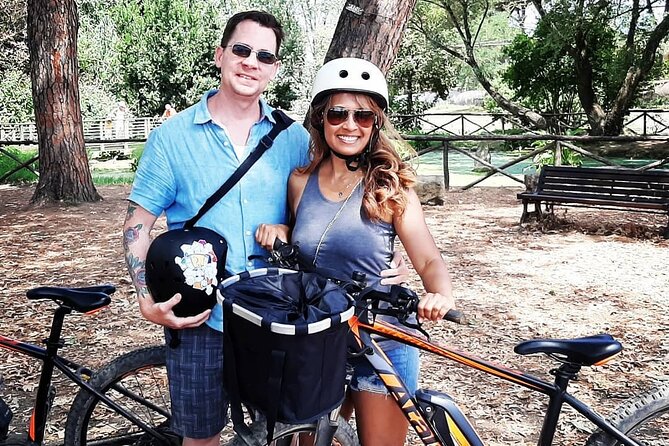
Yes, if you want a half-day that feels different from the usual Rome route and you’re comfortable riding a bike with guidance. The combination of e-bike ease, multiple high-impact stops, and private attention is a very practical way to see the Appian Way without spending your day figuring out logistics.
Skip it only if road-sharing makes you tense. Between the requirement to ride well and the fact that some of the ride can be on busier streets, you’ll enjoy this most when you feel confident in traffic or you’re traveling with a group that does.
If you do book, arrive ready to pedal, bring water for the warm days people mention, and let your guide steer you through the stories. That’s where this tour turns from sightseeing into the feeling that you’re moving along a real historical corridor.
FAQ
How long is the Ancient Appian Way PRIVATE Bike Tour?
It runs for about 4 hours.
How much does the tour cost?
The price is listed at $147.54 per person.
Is this tour private?
Yes. It’s private, so only your group participates.
What language is the tour offered in?
The tour is offered in English.
What’s included with the tour?
You get a high-quality e-bike, a helmet, and equipment such as a mobile phone holder and handlebar holder. A child seat is included up to 25 kg.
Do I need to know how to ride a bike?
Yes. You must know how to ride a bike well, and the tour is marked for travelers with moderate physical fitness.
Will I visit the main Appian Way landmarks?
You’ll stop at several major sites, including Porta San Sebastiano, Parco della Caffarella, Ninfeo di Egeria, Parco degli Acquedotti, Villa dei Quintili and Santa Maria Nova, Mausoleo di Cecilia Metella and Castrum Caetani, the Circus of Maxentius, and Terme di Caracalla.
Are entrance fees required for the listed stops?
No. The listed stops show admission tickets as free.
Can children join the tour?
Yes. Child seats are included until 25 kg. A child age 6–10 is valid for the discount only if they are under 4/7 feet (143 cm), because they ride a trailer bike rather than a bike alone.
Is tipping required, and what’s the cancellation policy?
Tipping is optional and not included. You can cancel for a full refund if you cancel at least 24 hours before the experience start time.