REVIEW · ROME
Rome Driving Tour By Vintage Fiat 500
Book on GetYourGuide →Operated by ROME 500 EXP · Bookable on GetYourGuide
A classic Fiat turns Rome into your set. In this Rome driving tour by vintage Fiat 500, you steer your way past big landmarks while your guide keeps the pace mellow and the route fun, including the Lungotevere area and spots most buses can’t reach. Even better, your candy-colored car draws constant attention, so you get that odd-but-awesome celebrity feeling without trying.
I like two things most: getting behind the wheel (not just watching from a group bus) and the “small-streets Rome” access that makes places like Trastevere feel real, not staged. One consideration: this is a manual transmission tour, and the operator can refuse the car if your manual skills aren’t up to it.
In This Review
- Key points before you pick a time
- Rome in a Vintage Fiat 500: The Real Celebrity Factor
- Your Route Starts Near the Colosseum, Then Gets Smaller Fast
- Driving the Lungotevere at 30 km/h: Slow Enough for Photos
- Colosseum Area to Roman Forum Energy: See It From the Street
- Trastevere in a Tiny Car: Where the Fiat 500 Shines
- Aventine Hill Keyhole and Piazza dei Cavalieri di Malta Stops
- Coffee, Espresso, and Gelato Breaks Along the Way
- Cars, Licenses, Manual Skills, and Traffic Reality
- Price and Value: What You Pay for at $169.93
- Who Should Book This Fiat 500 Rome Drive
- Should You Book the Rome Driving Tour by Vintage Fiat 500?
- FAQ
- FAQ
- What do I need to bring to drive the Fiat 500?
- Can I have someone drive instead of driving myself?
- How fast is the tour?
- Where does the tour start and end?
- Is luggage allowed?
- What stops and sights are included?
- Is the roof open?
- How long is the tour?
- Who is this tour not suitable for?
Key points before you pick a time
- Start meters from the Colosseum at Hotel Palazzo Manfredi, so you’re driving almost immediately instead of wasting time on transport
- Slow and photo-friendly driving (never faster than 18.5 mph / 30 kmph) with built-in stops for pictures
- Past the obvious stops, into tight lanes where the Fiat 500 can go, including Trastevere
- Aventine Hill keyhole and Piazza dei Cavalieri di Malta show up on the route for a more personal Rome
- Coach-level guidance from the driver’s seat via tour leader commentary (often with walkie-talkie in practice)
- Manual-only by design: bring an international license if needed and be ready for tight streets in a tiny car
Rome in a Vintage Fiat 500: The Real Celebrity Factor
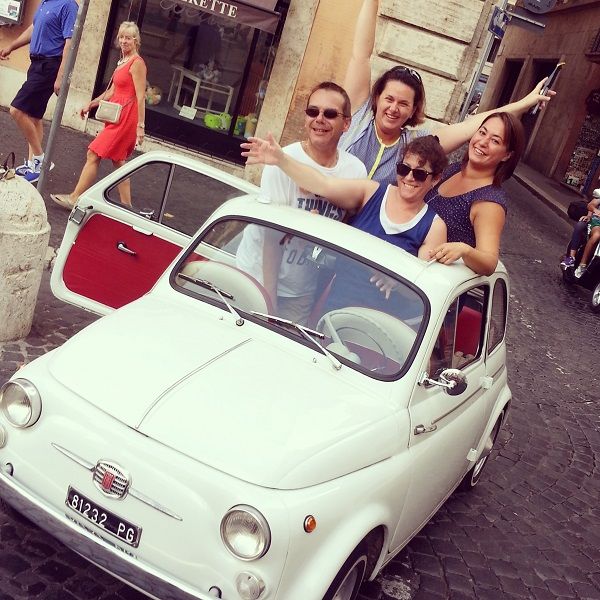
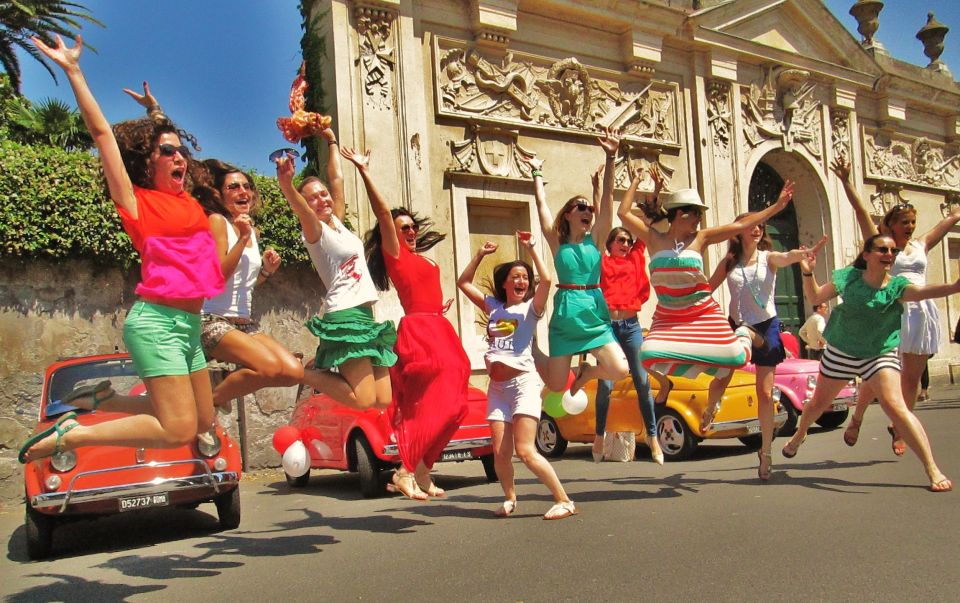
Rome is great at making you feel small. This tour does the opposite. The instant you roll out in a vintage Fiat 500, people notice. You’ll see phones come up, heads turn, and the occasional person crossing the street to get a better look at your car.
That attention is part of the fun, but the more practical payoff is the way the tour changes your viewpoint. You’re not just “arriving at” sights. You’re actively moving through the city fabric—the narrow lanes, the turning points, the moments where a big vehicle can’t squeeze through. It gives you that charioteer vibe your guide keeps talking about, where you’re in charge of your own Roman rhythm.
You also get a soft-top roof, which matters more than it sounds. On sunny days, you get the open-air feeling without the hassle of a full cab. Just plan for sun exposure—an easy hat helps.
You can also read our reviews of more tours and experiences in Rome.


Your Route Starts Near the Colosseum, Then Gets Smaller Fast
Meeting is right by the action: your vehicle is in front of Hotel Palazzo Manfredi (125 Via Labicana), about 100 meters from the Colosseum. Arrive 15 minutes early so you can get set up and ready before the convoy moves.
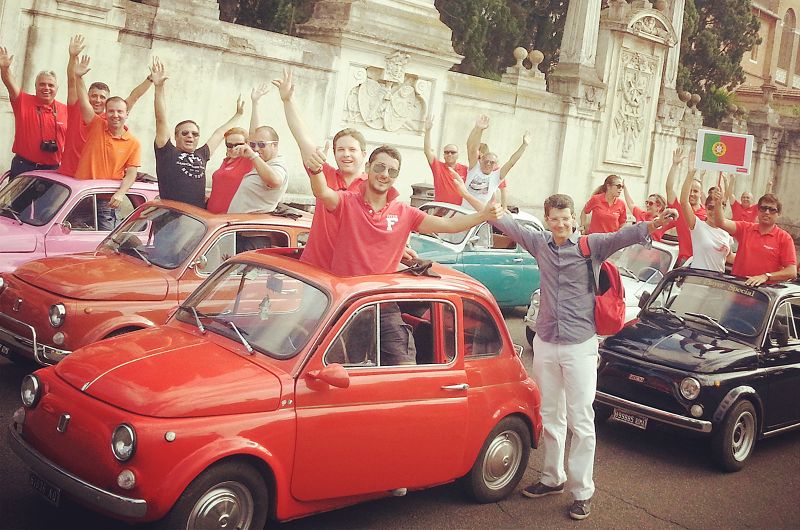
Once you’re in position, you drive behind your guide on a route designed for cars like yours. The operator aims for roads where larger tour buses can’t go. That’s why the Fiat 500 works so well here: it’s small enough for Rome’s tight turns and tight clearances.
Expect a convoy style of travel. In real operation, there’s often extra support (many groups are guided with a scooter chaperone who helps keep the flow safe). Even when you don’t think about it, that support reduces stress—especially when you’re learning manual in a city that doesn’t exactly wait for you.
Also note: your exact itinerary can shift because of traffic or public events. So don’t treat the day like a rigid checklist. You’re buying the overall experience and the route style, not a guaranteed frame-by-frame schedule.
Driving the Lungotevere at 30 km/h: Slow Enough for Photos
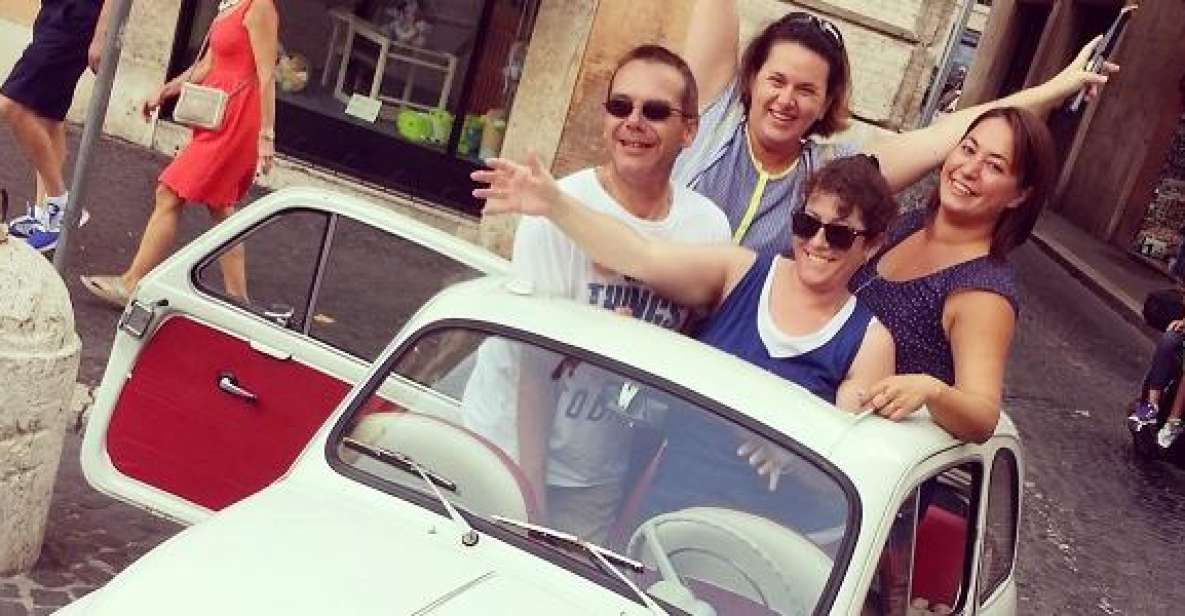
The route includes the banks of the River Tiber, along the Lungotevere. This part is valuable because it’s a different kind of Rome view. Instead of just stone-and-statues, you get a long, flowing city edge with an easy cruising rhythm.
The driving pace is set to be manageable: never faster than 18.5 mph (30 kmph). That slow speed is not a limitation—it’s the whole point. It gives you time to spot viewpoints, line up photos, and react to what’s happening on the road. It also makes the driving feel less like a test and more like a guided drive.
And yes, you can take photos from inside the car, but you’ll still want to step out at the stops. Those pauses at sights like the Arch of Constantine and Circus Maximus are where you get clearer shots and better angles than a quick phone snap at the curb.
Colosseum Area to Roman Forum Energy: See It From the Street
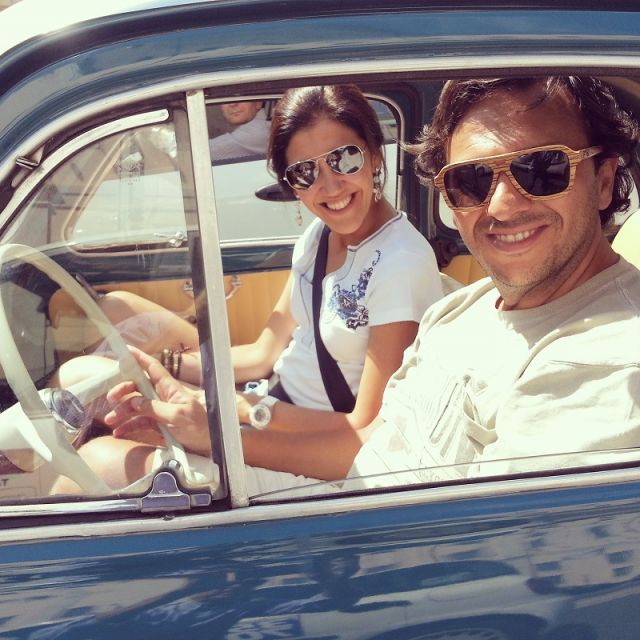
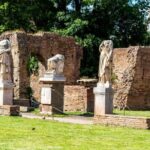
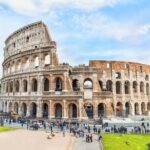
The tour’s meeting point is so close to the Colosseum that you’re effectively starting your Roman story in the same neighborhood as the big-ticket monuments. From there, you’ll pass by (and get perspective on) major sights, including the Colosseum and the Roman Forum area.
Here’s what feels different when you’re not just walking. From the driver’s seat, you notice how Rome channels movement—where people cross, where cars wait, how the street geometry changes as you approach historic zones. You’re seeing the sights through the city’s working layout, not through a postcard route.
It also helps if you’re the type who likes pattern recognition. Once you’ve seen these landmarks from the road, it’s easier to understand what you’re seeing later on foot. You get mental wayfinding: this is why the roads curve, why certain plazas feel like funnels, and why some areas feel calmer once you move into side streets.
Trastevere in a Tiny Car: Where the Fiat 500 Shines
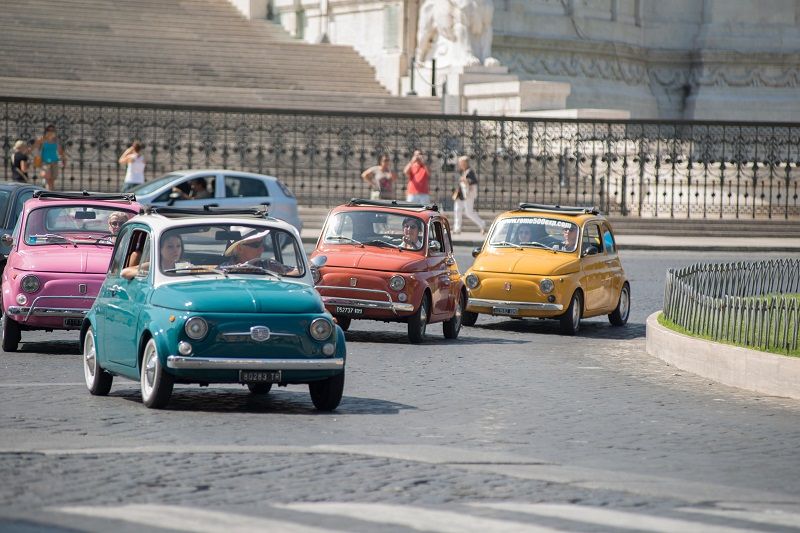
The most fun stretch for many people is the transition into Trastevere. That’s where Rome gets compact and human. The streets feel narrower, the turns come faster, and the whole place feels like it’s still in daily-use rather than set dressing.
This is also where the Fiat 500 earns its keep. You can go places that a larger vehicle can’t. In practical terms, that means you get a closer look at the city’s everyday corners—and you don’t need to stand behind barriers waiting for a bus to exhale tourists.
One helpful detail: the tour is paced leisurely. That matters because Trastevere-style streets can feel intense if you’re rushing. The experience is built for drivers and passengers to keep up calmly, take pictures, and listen to your guide’s brief insights between stretches.

Aventine Hill Keyhole and Piazza dei Cavalieri di Malta Stops
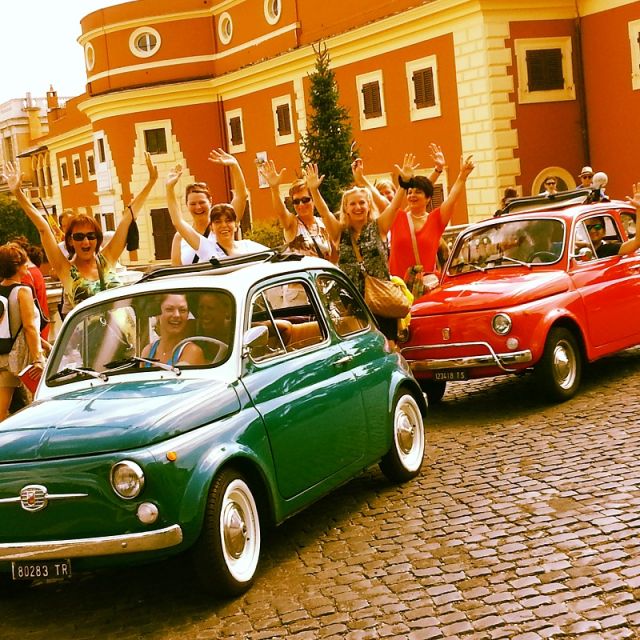
Two route elements add a layer beyond the usual sightseeing loop.
First is the secret keyhole of Aventine Hill. Even if you’ve seen photos of it online, there’s something different about seeing it in context—standing in the setting where the street-level view matches the legend.
Second is Piazza dei Cavalieri di Malta, the Piazza of the Knights of Malta. This stop brings you into a more intimate, characterful slice of Rome. It’s the kind of place that doesn’t scream for attention like the Colosseum does, which is why it can feel more personal once you reach it by car and not by tour-route foot traffic.
These stops also break up the drive. In a tiny car, you’ll feel every turn and bump. So the pauses are not optional entertainment—they keep the whole experience comfortable and photo-ready.
Coffee, Espresso, and Gelato Breaks Along the Way
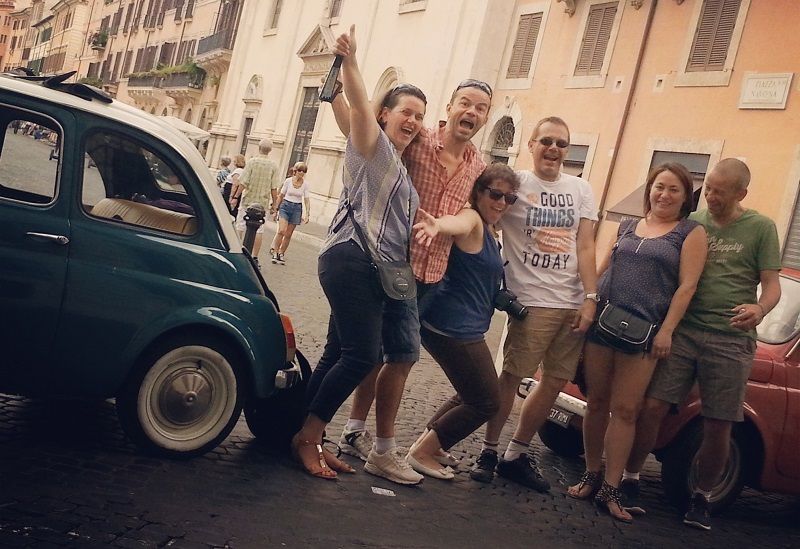
You’re not stuck in a car for the whole tour. There are breaks that can include coffee stops—cappuccino or espresso—and you may also have time for one of the city’s famous ice creams.
Just keep expectations clear: food and beverages are not included. That means you’re paying your own way for any coffee or gelato you choose. But the value is that the tour builds in time to do it with the group and without you having to figure out where you should stop.
This kind of pacing also helps your driving. If you’re learning manual and you’re a little tense, a quick break can reset you. If you’re a passenger, it gives you a moment to stretch and grab photos without worrying about parking time.
Cars, Licenses, Manual Skills, and Traffic Reality
Let’s talk about the part that can make or break your day: driving a vintage manual car in Rome traffic.
You must bring your driver’s license, and an international driver’s license if needed. The driver must carry a valid EU driving license or international driving license. Also, the operator requires drivers to be used to driving a MANUAL car. Occasional manual experience is not considered enough, and the tour operator reserves the right to refuse you the car with no refund.
So my practical advice is simple: if you’re even slightly unsure, treat this as a driving practice trip first, sightseeing second. If you can comfortably handle manual on inclines and in stop-and-go traffic, you’ll likely find the route manageable because the tour pace is controlled.
You should also know:
- No luggage or large bags are allowed.
- Fiat 500s have open-top roofs, so plan for sun (hat helps).
- The car is small compared to modern vehicles.
- It’s not suitable for people with back problems or mobility impairments.
- If you can’t drive manual transmission, the option you want is having a driver provided for a small surcharge.
If you’re nervous, that’s where the guide team matters. Several guides have been praised for patience and clear coaching in real conditions—names that come up include Alex, Alexis, Fernando, Francesco, and Marco. Even if your guide name differs, the general role is the same: keep you confident and moving.
Price and Value: What You Pay for at $169.93
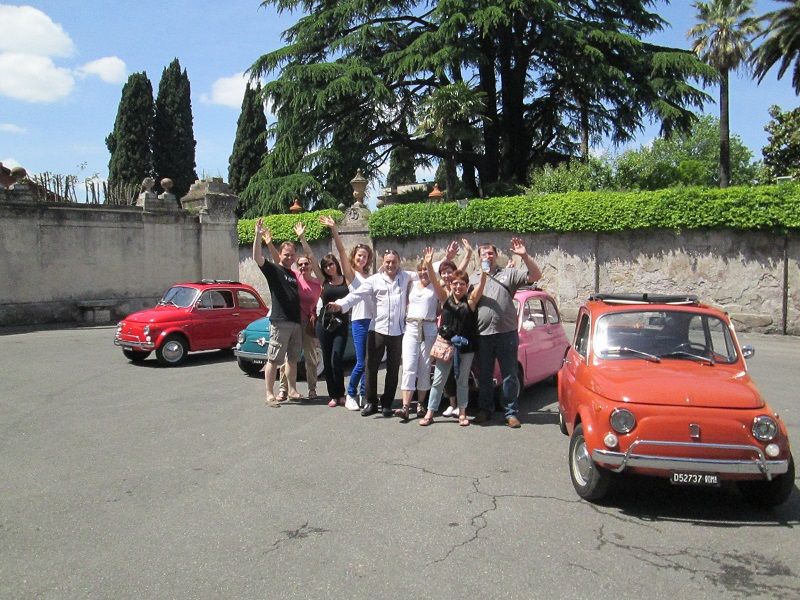
At $169.93 per person, you’re paying for three things that are hard to replicate on your own.
First, you’re paying for the car rental plus insurance plus fuel. That’s a real chunk of the cost, especially for a vintage vehicle with specialized handling.
Second, you’re paying for a live tour leader with commentary (English, French, Italian). You’re not just driving; you’re getting context for what you’re seeing—plus direction so you don’t waste time figuring out the best route through traffic.
Third, you’re paying for access. The whole promise is getting to parts of Rome buses can’t reach, including narrow streets like Trastevere. That access is the reason the tour feels special, not because it checks off big monuments alone.
What you don’t get:
- Food and beverages
- Entrance tickets to archaeological sites, galleries, villas, and similar attractions
So for value, I treat this tour as the “experience and access” piece of your trip. Then I plan any ticketed museum visits separately on another day. That keeps your budget predictable and your schedule smoother.
Also, length matters. Choose between about 1.5 hours or 3 hours. If you want more stops and more time for pictures, the longer option tends to feel worth it. If you’re short on time or you’re anxious about driving, the shorter route can be a smarter on-ramp.
Who Should Book This Fiat 500 Rome Drive
This tour fits best if you:
- Want a hands-on way to see Rome, not just walk-and-photo
- Like iconic cars and don’t mind standing out in a good way
- Can drive a manual car confidently
- Want access to tighter neighborhoods like Trastevere and along the Lungotevere
It may not fit if you:
- Have back problems or mobility limitations
- Can’t drive manual transmission
- Expect lots of museum-style time with paid entrances
- Hate dealing with traffic stress (even at a slow pace, Rome traffic has its own energy)
Should You Book the Rome Driving Tour by Vintage Fiat 500?
If you want the most memorable kind of driving in Rome—one where you’re treated like part of the action and the route is built for a tiny car—then yes, this is a strong pick. The price feels more reasonable once you factor in that you’re getting the car, insurance, fuel, and a guide focused on getting you through the right streets.
But only book if you’re honest about your comfort with a manual vintage car. If you’re a confident manual driver, the experience can be joyful and surprisingly manageable because the tour speed is capped and the route is guided. If manual driving makes you sweat, consider requesting a driver instead of forcing it. Rome’s streets don’t care about good intentions.
FAQ
FAQ
What do I need to bring to drive the Fiat 500?
You need your driver’s license and, if required, an international driver’s license. The driver must carry a valid EU driving license or international driver’s license.
Can I have someone drive instead of driving myself?
Yes. If you don’t feel like driving, the tour offers a driver option for a small surcharge.
How fast is the tour?
The tour drives at a leisurely pace and never goes faster than 18.5 mph (30 kmph).
Where does the tour start and end?
It starts at Hotel Palazzo Manfredi, 125 Via Labicana (about 100 meters from the Colosseum). It ends back at the same meeting point.
Is luggage allowed?
No. Luggage or large bags are not allowed.
What stops and sights are included?
You’ll see sights such as the Colosseum, Arch of Constantine, Circus Maximus, the Roman Forum area, Trastevere, Aventine Hill keyhole, Piazza dei Cavalieri di Malta, and drive along the Lungotevere (Tiber riverbanks).
Is the roof open?
The Fiat 500s have soft-top roofs, and you’ll likely want a hat for sun protection.
How long is the tour?
You can choose about a 1.5-hour or a 3-hour tour, depending on availability and starting times.
Who is this tour not suitable for?
It’s not suitable for people with back problems or mobility impairments, and it’s not suitable for people who can’t drive a manual transmission.