REVIEW · LUCCA
Self-guided Bike Tour from Lucca to Pisa
Book on Viator →Operated by TOURIST CENTER LUCCA SRL · Bookable on Viator
Lucca to Pisa sounds big, but it feels doable because the route gives you support without a group. You’ll bike out through calmer riverside paths, ride into Pisa on your own time, and end right by the Leaning Tower.
What makes this one interesting is the mix of easy self-navigation plus built-in stops, so you’re not just pedaling—you’re also seeing.
I really like two things here. First, you get a phone holder and a GPS-style app with suggested turns, which helps you keep moving instead of constantly checking paper maps. Second, the bike setup comes with practical extras like a lock and repair kit, so you can stop for snacks or photos and still feel in control.
One drawback to plan for: Pisa can be very crowded, and parts of the ride include sections with normal road traffic. If you’re picky about bike fit, do a careful seat-height check before leaving the shop.
In This Review
- Key highlights to know before you pedal
- Lucca-to-Pisa by bike: why this route works
- Price and value: getting a lot for about $35
- Where you start in Lucca (and why that matters)
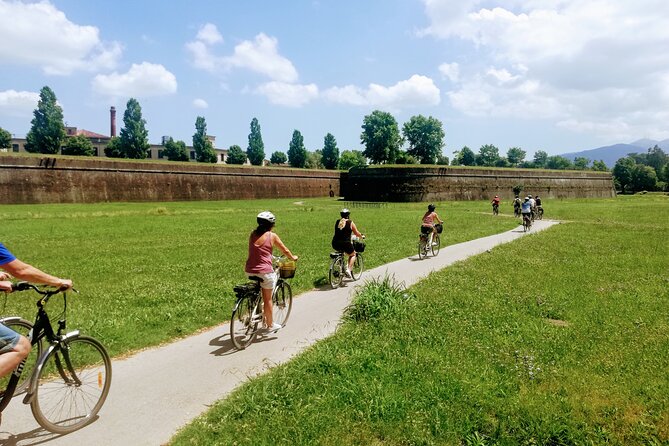
- Lucca stops 1 and 2: riding the walls and old streets without stress
- Riverside cycling on the Serchio River: the part you’ll remember
- San Giuliano Terme: a quick reset in thermal-bath country
- Arriving in Pisa: Leaning Tower time and what to do with it
- Return to Lucca: bike back for the full loop, or train back to save energy
- Bike comfort and safety: fit checks that matter more than you think
- App navigation and phone battery: the real “gear” you need
- Timing and weather: how to avoid the hot, rushed version of this day
- Who this self-guided Lucca to Pisa ride is best for
- Should you book this Lucca to Pisa self-guided bike tour?
Key highlights to know before you pedal
- Phone-holder + app directions: follow the route on an easy-to-see screen instead of guessing turns
- Serchio River cycle paths: the ride to Pisa has long stretches that feel calmer than city traffic
- San Giuliano Terme stop: a real pause in a small village with places to grab drinks and snacks
- Leaning Tower arrival: your itinerary ends near the tower, not miles away
- Return by bike or train: you choose how you want to come back at the end
Lucca-to-Pisa by bike: why this route works
This is the kind of trip that fits real travel life. You don’t have to coordinate a meeting time with a tour group, and you’re not stuck with a long, pre-scripted schedule. You rent the bike, get your briefing, then ride when you’re ready.
The smart part is the flow. Lucca gives you a proper start in a historic city with walls and stone streets. Then you leave the busy feel behind and follow a corridor that’s more like cycling than commuting. The payoff is that Pisa doesn’t feel like a separate trip. It feels like the next stop in the same day.
You also get value from the included timing. The ride one-way is about 33 km (20 miles), which many people cover in a couple of hours on e-bikes, then add time for stops in Lucca and Pisa. The total experience is listed as 4 to 8 hours, which is a wide window for a reason: your pace and photo stops matter.
You can also read our reviews of more tours and experiences in Lucca.


Price and value: getting a lot for about $35
At $35.07 per person, you’re basically paying for a full bike rental package for a half-day outing—plus navigation help and safety basics. That’s not just “bike hire.” You’re also getting:
- the phone holder
- an app with a suggested route
- a lock and repair kit
- a start briefing
If you’ve ever priced a one-off bike rental in a popular tourist area, you know how quickly costs add up when you include extras like locks, and when you need more than a simple route request. Here, the route is the point. You’re not just renting wheels—you’re renting an easy way to connect Lucca and Pisa.
One note: e-bikes are available, but the tour data sets height/age requirements for e-bike use. If that applies to you, you’ll likely get the most comfortable experience on the e-bike option.
Where you start in Lucca (and why that matters)
The meeting point is Tourist Center Lucca Bike rental at Piazzale B. Ricasoli, 203, 55100 Lucca. It’s easy to find, and it’s also described as being near public transportation. That matters if you’re arriving from another part of Tuscany or you’re trying to shape your day around trains.
The tour is also private in the sense that only your group participates. In practice, that means you get attention for fitting your bike and learning the app routine without feeling like you’re on a noisy cattle-queue schedule.
At the start, you’ll get a briefing and a phone tutorial. This is where you’ll want to ask anything you’re unsure about—like how to turn the app screen on quickly at every stop, or how to interpret the route when it temporarily goes off the most obvious path.
Lucca stops 1 and 2: riding the walls and old streets without stress
Your Lucca time is designed for independent wandering rather than structured sightseeing. Instead of a rigid guided checklist, you get a map with information and you use the itinerary in your own rhythm.
Stop 1 is the Tourist Center Lucca area itself, where you rent the bike for about 3 hours and start with the map. The idea is simple: get your bearings fast and then explore the historical center at your own tempo. Admission is listed as free, which is great because Lucca’s highlights are mostly about strolling streets and seeing the city’s architecture up close.
Stop 2 stays in Lucca as you wander the ancient streets and walls following the map or the downloadable app. This is the part that makes the day feel like more than a transfer to Pisa. You get to experience Lucca as a destination first—then you earn Pisa at the end.
Practical drawback: if your timing is tight, you can accidentally spend too long in Lucca’s most photogenic areas. The upside is that the Lucca-to-Pisa ride is long enough that you still won’t feel like you wasted the morning.
Riverside cycling on the Serchio River: the part you’ll remember
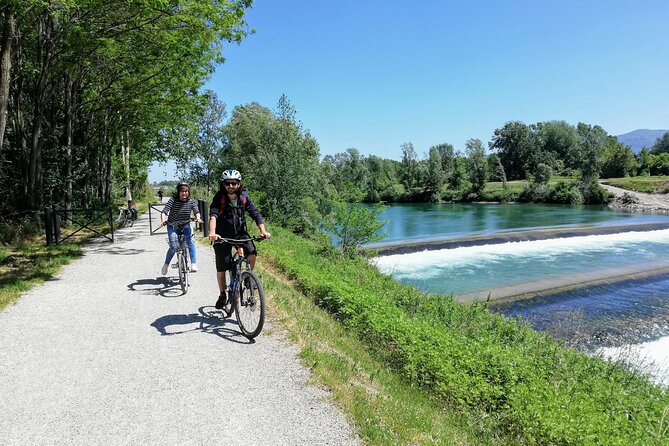
After Lucca, the route leans into calmer cycling. One of the big highlights is biking along the Serchio River and through the river park cycle paths. This section is often where the day turns from tourist logistics into a real ride.
Here’s what you can expect:
- more space than you’ll get in city cores
- paths that are easier to follow than you’d guess from a self-guided tour
- a steadier pace that lets you enjoy views as you go
From the ride description and feedback, you’ll also see a mix of surface types—some gravel and bumpy sections are part of the experience, even when the ride is considered straightforward. Also, parts of the route may include segments with car traffic. That’s why choosing an e-bike can make the difference between relaxed and tense on a warm day or a tiring return.



San Giuliano Terme: a quick reset in thermal-bath country
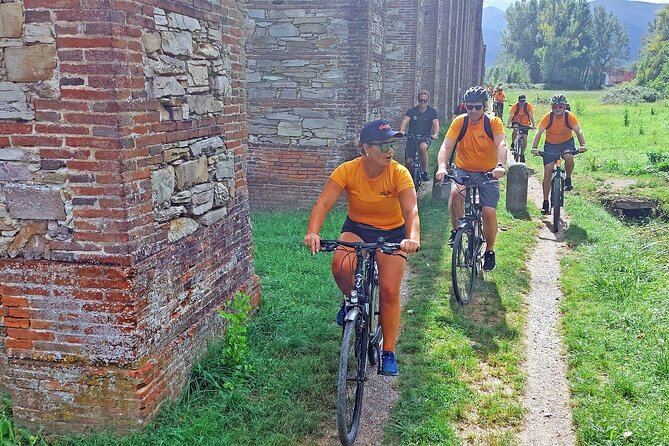
Stop 3 is San Giuliano Terme, where you get about 15 minutes. This is a small village with ancient thermal baths, and the practical purpose is a refresh break. You can stop in a bar, deli shop, or grocery.
Fifteen minutes doesn’t sound like much, but it’s enough time to:
- refill water
- grab something small
- cool down before the final approach to Pisa
If you’re sensitive to heat, this stop can save the whole day. The ride is described as requiring good weather, and the sun can hit hard depending on the season and time of day. A quick planned break is smarter than waiting until you feel awful.
Arriving in Pisa: Leaning Tower time and what to do with it
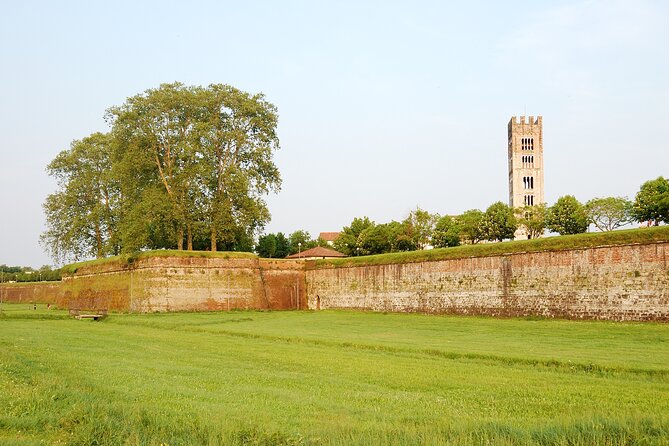
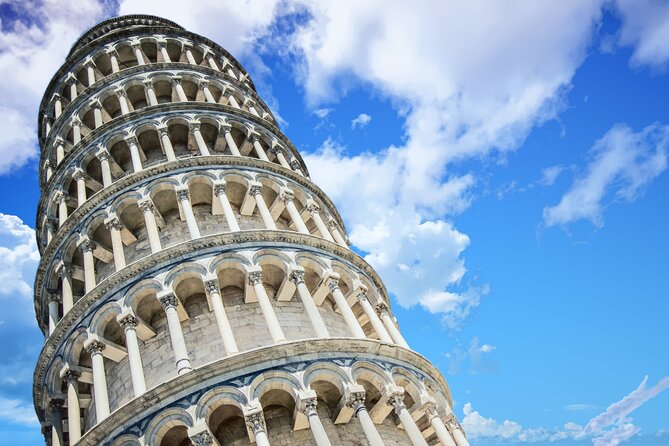
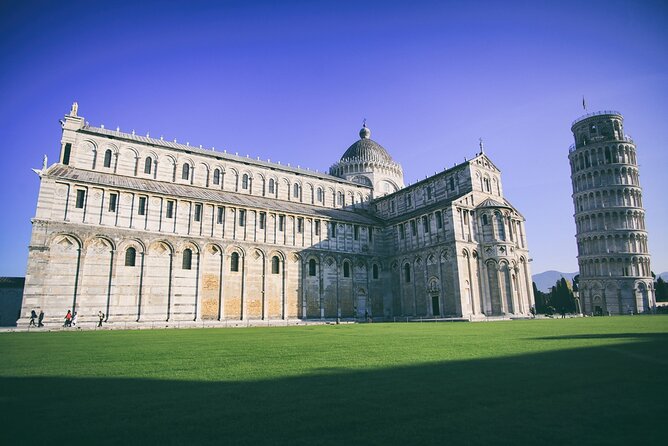
Stop 4 is Pisa, ending at the Leaning Tower of Pisa area, with about 30 minutes listed for this stop. Admission is also marked free here, which usually means you’re not paying for entry just to reach the main attraction.
The honest truth: Pisa can be extremely busy. Even if you love crowds, the area around the tower gets packed. The self-guided structure helps because you arrive under your own steam rather than as part of a large, synchronized group flow.
Use your Pisa time in a way that matches your goals:
- If you want the classic tower photo, go immediately and claim your spot early.
- If you want more than the tower, treat those 30 minutes as a prompt to wander a bit beyond the densest area, then return toward your bike.
Also, plan your lunch strategy. The route doesn’t include many built-in meals, so if you want a real sit-down, you’ll likely do it once you get to Pisa.
Return to Lucca: bike back for the full loop, or train back to save energy
You’ve got two return options.
Option 1: Ride back to the Tourist Center Lucca (about 2 hours).
This can feel like the hardest part, not because the distance changes, but because your legs are already used. If you started with the right intensity and you don’t rush your stops, the return is still very achievable.
A strong detail here: many people like having e-bike battery left for the way back. Some guidance from experience suggests carrying a battery pack for phone navigation rather than worrying only about your bike—your power needs can split between you and your phone screen.
Option 2: Take the train (22 minutes).
Train is listed as a real option, but it’s at your own expense. In practice, the bike situation matters. You may have to carry the heavy bikes up to the train platform, and bringing bikes can mean extra cost. If you choose train back, build in that extra effort so you don’t feel rushed.
If you want the full Tuscan-momentum feeling, ride back. If you’re time-crunched or want to preserve energy for the rest of Pisa/Lucca, train back can be a lifesaver.
Bike comfort and safety: fit checks that matter more than you think
This tour offers different bikes:
- E-bikes for people over 155 cm and 14 years old
- Trekking bikes for people over 150 cm
- no seat, trailer, or tag-along connected to e-bikes and trekking bikes
Those rules matter for families and for anyone short on confidence with bike size. There’s at least one report of a bike being hard to ride safely because it was too large for a petite rider. The fix is simple: confirm your fit before you roll out.
Do these at the shop:
- check seat height and test pedaling immediately
- make sure you can comfortably reach the brakes and handlebars
- verify the phone holder angle so you can glance at the app without twisting your neck
Also consider the route reality. Even though a lot of the ride is on bike paths, you may still hit normal roads with cars at points. You’ll want to ride predictably and stay alert around intersections.
App navigation and phone battery: the real “gear” you need
The bikes have fitted phone holders, and your turn-by-turn directions come through an app. This is a great setup because you can keep one hand ready for steering and just glance at the screen.
But there’s a practical problem: the navigation app can drain phone battery faster than expected. The best advice from experience is to:
- bring two fully charged phones or
- bring a power bank and keep it topped up before you start
If you only carry one phone and you’re low on battery, you can end up re-reading the route map less confidently when you need it most.
The good news: the app is described as easy to follow, and many people find the route logic straightforward—especially because it’s guided with clear turns instead of abstract directions.
Timing and weather: how to avoid the hot, rushed version of this day
The experience requires good weather. If it’s poor weather, you’re offered a different date or a full refund.
Plan for heat even if it doesn’t feel extreme at the start. One report noted getting sunburned even when it wasn’t scorching when riding began. Another noted that a 90-degree day made the trip feel much harder than expected. That lines up with what you’ll experience on riverside paths that may not stay shaded the whole time.
For timing, treat it like this:
- allow a couple of hours each way (often faster on e-bikes)
- add time for Lucca exploration
- add time for Pisa photos and wandering
If you want lots of stops, photos, and a slower pace, don’t plan this like a quick errand. It’s a full outing. Build a buffer into your train schedule for the next leg of your trip.
Who this self-guided Lucca to Pisa ride is best for
This works especially well if you want:
- a structured route without the rigidity of a guided tour
- a classic end point (Leaning Tower area) with real countryside riding in between
- flexibility to pause for drinks, snacks, and photos
It’s also a strong choice for couples and friends who like being on their own schedule. The e-bike option helps a lot if you want the experience without training for months first.
If you’re traveling with young children, the bike logistics and safety reality (car-road segments and ride demands) mean you should think hard. Likewise, if you’re very particular about bike fit or you’re unsure about riding comfort, take extra time at the shop to get the seat and setup right.
Should you book this Lucca to Pisa self-guided bike tour?
Book it if you want an easy win: a long, scenic ride that connects two major Tuscan stops without the stress of planning every turn. The phone-holder navigation, included lock and repair kit, and the fact that you end by the Leaning Tower make this a strong value use of a half day.
Skip or reconsider if you:
- get overwhelmed by navigation apps without backup power
- are anxious about riding near cars at points on the route
- know you need a very specific bike fit and you’re not comfortable stopping to adjust before you roll
If your priority is a memorable, practical way to see Lucca and Pisa in one day, this self-guided ride is a very solid choice. Just bring a power bank, check your bike fit, and treat Pisa crowds as part of the fun.