REVIEW · SICILY
Syracuse and Ortygia Island Day Trip from Taormina
Book on Viator →Operated by SAT Group · Bookable on Viator
Ancient Syracuse makes a long day worth it.
This 9-hour coach trip from Taormina takes you along the coast to see some of Sicily’s most famous classical remains, then shifts gears to Ortygia, the small island core where local life and baroque church facades share the same streets.
I love the way you get to stand in and around Syracuse’s Greek and Roman ruins with a guide who connects what you see to what the city was doing centuries ago. I also like that Ortygia isn’t just a photo stop; you get time to wander Piazza Archimede, the Fountain of Aretusa, and Piazza del Duomo at a comfortable pace.
One thing to consider is that it’s a long day, and the schedule can feel tight when pickups, narration, and heat stack up. On hot afternoons, bring your patience (and water), because you’ll be doing more walking than you might expect.
In This Review
- Key things I’d plan around
- Why this Syracuse and Ortygia day trip works (even if it’s long)
- The drive from Taormina: worth settling in for
- Parco Archeologico della Neapolis: how to get the most from Neapolis
- What you should know before you arrive
- The one Neapolis issue that can affect your photos
- Ear of Dionysius: the stop that turns ruins into stories
- Syracuse Cathedral (Duomo di Siracusa): the quick stop you shouldn’t skip
- Ortygia: where the day feels like a real town
- The Ortygia route you’ll experience
- How much free time you actually get
- Walking realities: what to expect beyond the website map
- Coach schedule and language: how to keep it enjoyable
- Price and value: is €78-ish a fair deal?
- When this tour is the best fit
- Should you book this Syracuse and Ortygia day trip?
- FAQ
- How long is the Syracuse and Ortygia day trip from Taormina?
- Where do we meet in Taormina?
- What’s included in the tour price?
- Are entrance fees included for the archaeological park?
- Do I need to pay for the Syracuse Cathedral?
- Is lunch included?
- Is the tour available in English?
- How big is the group?
- Is there a minimum number of travelers?
- Can I bring a service animal?
- What about cancellation?
Key things I’d plan around
- Neapolis is guided, but entry is extra, so budget for the archaeology ticket you’ll buy on site
- Ear of Dionysius is a must-see photo moment, and the guide context makes it more than a selfie stop
- Ortygia is the payoff, with time to roam from Aretusa’s fountain to the Duomo area
- Heat + sun protection matter, since you’ll spend plenty of time outside between stops
- Expect walking, since Ortygia is pedestrian and you may cover several kilometers even with stops planned
- Language pacing can slow things down, so headphones and patience help
Why this Syracuse and Ortygia day trip works (even if it’s long)
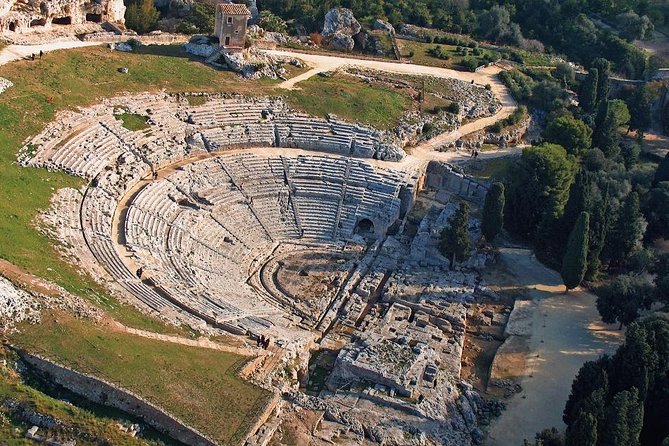
Syracuse and Ortygia sit on opposite moods. The mainland holds the big, dramatic classical structures of Parco Archeologico della Neapolis, where Greek and Roman layers overlap like a history lesson you can walk through. Then Ortygia flips the feeling: smaller streets, church domes, and everyday conversations spilling onto squares.
The tour format helps if you’re basing yourself in Taormina and don’t want to stitch together trains or rental cars for a single day. You get a coach ride along the coast, two guided blocks of sightseeing, and then an Ortygia window where you can slow down. That mix is what makes this trip work: structured viewing for the big-ticket ruins, plus breathing room where you can actually enjoy the town.
You can also read our reviews of more tours and experiences in Sicily.


The drive from Taormina: worth settling in for
You meet at Terminal Interbus Taormina in the early morning (start time 8:00 am). From there, you ride about 1.5 hours to Syracuse by coach. The morning timing is smart because the day’s outdoor walking starts early enough that you’re not fully baked by noon.
One practical heads-up: some people report that there can be multiple pickup points before departure. If that happens on your date, the bus time feels longer, and you’ll want to use it well—water on board, sunscreen on, and get your bearings mentally so you’re ready to focus once you arrive.
Parco Archeologico della Neapolis: how to get the most from Neapolis
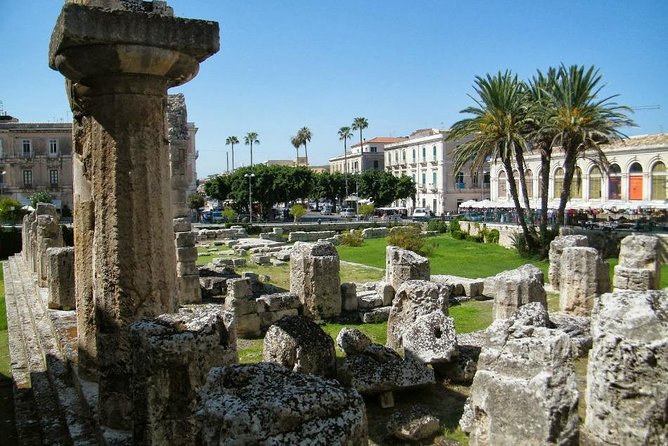
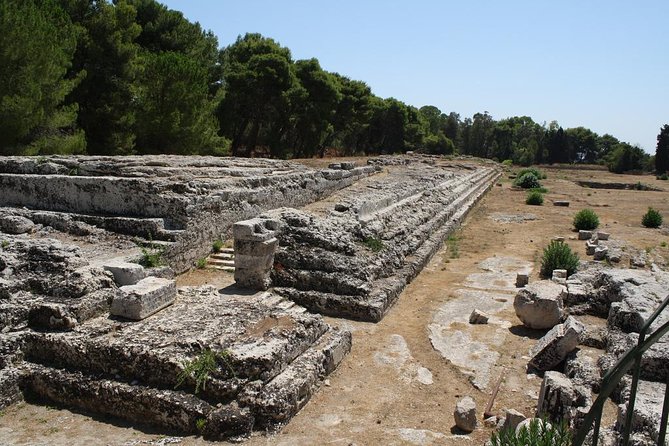
The day’s first major stop is Parco Archeologico della Neapolis, one of the best places in the area to see how Greek planning and Roman rebuilding changed what a city could look like.
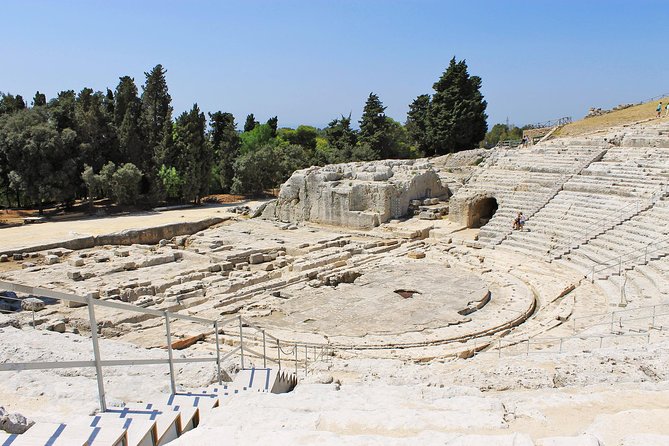
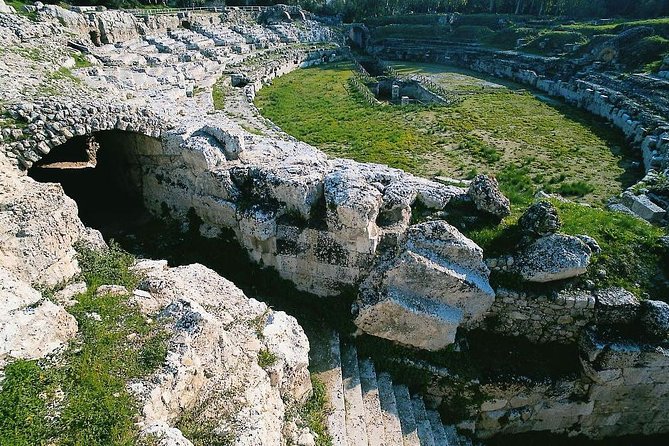
You’ll spend about 1 hour here with a local guide, and the big point is that this isn’t just wandering around stones. The guide helps you connect key monuments to the ancient city that built them. You’ll see well-preserved structures tied to the city’s religious and civic life, including the Roman amphitheater and Greek theater.
What you should know before you arrive
- Entrance to Neapolis isn’t included in the tour price. You’ll pay your own admission ticket at the park.
- EU citizens under 18 have free entry to the archaeological park, which can change what’s worth budgeting.
- Wear shoes that handle uneven ground and slopes. Even though your time inside is “just” an hour, the walking adds up in practice.
The one Neapolis issue that can affect your photos
The Greek theater and surrounding areas can be affected by seasonal stage setups. On some dates, the theater area may be covered with stage structures for performances in summer months. Even when you can still see the space, it won’t look like a clean postcard view of the stage area.
That doesn’t make Neapolis bad—it just means you should adjust your expectations. If your priority is seeing the theater in its bare, open form, aim for a different season, or at least know that the structure might be partly blocked during performance periods.




Ear of Dionysius: the stop that turns ruins into stories
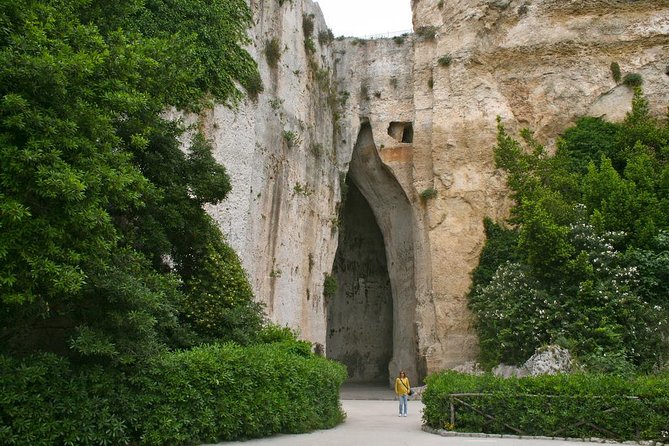
After Neapolis, the tour moves to the Ear of Dionysius area. You’ll spend another hour exploring the caves and stopping for key explanations.
This is one of those sights where the guide really matters. The place is famous for the way sound and limestone features are explained in the context of ancient Syracuse. Without that context, it can feel like another dramatic-looking cave. With it, the stop becomes a story about engineering, power, and how the city used space for control and spectacle.
If you want standout photos, this is the moment. The cave interiors and the exterior viewpoints give you that “I’m in an ancient movie set” feeling—but you’ll get more out of the visit if you listen for what makes the ear-shaped rock and acoustics part of the legend.
Syracuse Cathedral (Duomo di Siracusa): the quick stop you shouldn’t skip
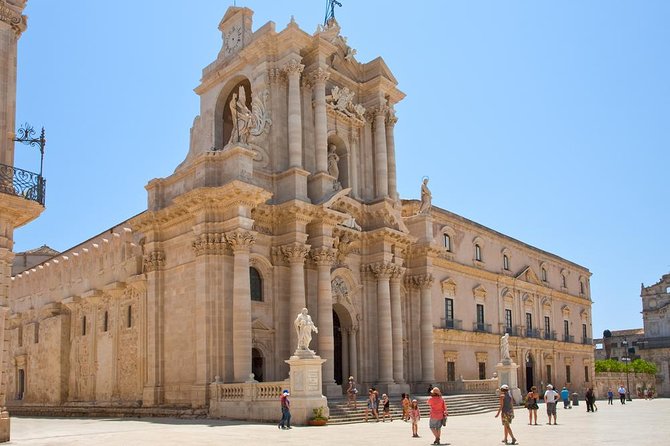
Next comes a short visit to Syracuse Cathedral (Duomo di Siracusa). Time here is brief—about 15 minutes—so it’s more about orientation than a slow, sit-down cathedral experience.
The Duomo entry is €2.00 per person, so bring a little cash or plan a card payment if the site allows. If you’re the type who loves architecture, focus on the exterior details and then take your few minutes inside to get the feel of the sacred space before you head back out into Ortygia’s streets.
Because the schedule is tight, you’ll want to be ready to move when the group does. This is one of those stops where “I’ll catch up later” can turn into “I missed it.”
Ortygia: where the day feels like a real town
Ortygia is the reason most people come away smiling. After your Neapolis blocks, you’ll pause for lunch in Ortygia—food and drinks aren’t included, so you’ll buy it during this free time window.
This is also where you get the best balance between guide and independent exploring. The tour takes you through the key public spaces, then you’re left to roam.
The Ortygia route you’ll experience
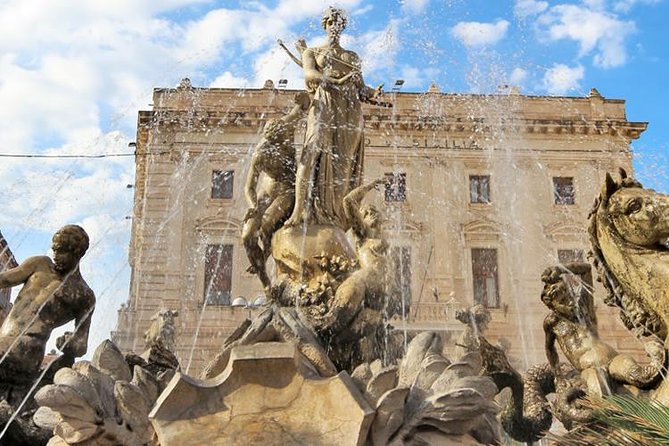
You’ll stop at Piazza Archimede to see the Fountain of Aretusa, a central landmark that locals treat like part of the daily rhythm. From there, you’ll walk toward Piazza del Duomo, where the surrounding buildings add a distinct look—palaces and church-related facades that hint at centuries of changing rulers and wealth.
You’ll also see major landmarks around the cathedral square area, including the Palace of Beneventano del Bosco, City Hall, and the Archbishop’s Palace. The group walks at a pace that lets you glance up at details and then regroup without feeling like you’re constantly sprinting.
How much free time you actually get
Ortygia’s independent time tends to be the most satisfying part of the day. Many people mention roughly two hours to roam freely on their own, which is enough to grab lunch, wander a few streets, and take a breather if it’s hot.
If you arrive with a plan—coffee first, then fountain photos, then Duomo square—you’ll use that free time well. If you wander without a pause, it’s easy to end up circling because Ortygia’s streets are narrow and full of detours.
Walking realities: what to expect beyond the website map
A major theme of practical planning is that Ortygia is pedestrian, so walking isn’t optional. Even with a planned route, you can end up covering extra distance depending on where the coach can park and how close you are dropped off during the afternoon.
One caution I’d take seriously: on very hot days, walking feels harder than it sounds. Some people report long stretches in extreme temperatures and even skipping the later portion to cool down and recover.
So bring the basics:
- Comfortable shoes (not just cute ones)
- Sun protection like a visor or cap
- Water, because midday heat can hit fast
- A small plan for shade breaks—Ortygia’s cafés are helpful, but you can’t live there all afternoon
Coach schedule and language: how to keep it enjoyable
This tour is offered in English, but the day can still involve narration in more than one language. On some dates, guides may repeat explanations to cover different groups, and that can slow the pace.
You’ll feel this most during the longer guided narration moments, especially on the coach. A tip: don’t treat the bus talk as background noise. If you want the ruins to make sense later, listen during the major context sections, then save your energy for the actual monuments.
On the bright side, when the guide is firing on all cylinders, it’s a big upgrade. Names like Renate, Eva, Giuseppe, Alfredo, Enza, Santo, Francine, Marco, and Elizabeth show up in praised experiences. You can’t pick your guide through general booking details, but you can count on the fact that a great storyteller makes Neapolis and Ortygia feel connected instead of like separate checklist stops.
Price and value: is €78-ish a fair deal?
At $78.31 per person for a roughly 9-hour day, the value comes from three things you’re not getting on your own unless you plan carefully:
- Air-conditioned coach transportation from Taormina to Syracuse and back
- Guided interpretation at the archaeological zone and key city landmarks
- A tour leader coordinating the day so you don’t spend your time figuring out timing
But the price does not cover the main entrances. Neapolis entry is extra, and the Duomo ticket is €2.00 per person. Lunch is also on your own.
So the fair way to think about the cost is: you’re paying for time saved and structure, not for a fully all-inclusive museum ticket bundle. If you’re comfortable navigating Sicily independently, you might do the trip cheaper on paper. If you want a low-stress day with reliable pickup, planning, and guided context, this price can feel quite reasonable.
When this tour is the best fit
This is a good pick if:
- You want a big highlights overview in one day without complex logistics
- You enjoy guided storytelling, especially for sites like Neapolis and the Ear of Dionysius
- You like the idea of an Ortygia walk plus lunch stop rather than a full-day museum approach
It may be less ideal if:
- You dislike long coach days or you’re sensitive to heat
- You’re hoping for a slow, deeply paced cathedral-and-arcades itinerary
- You’re visiting during a month when theater areas may be covered for performances (you may not see everything in its open, unobstructed form)
Should you book this Syracuse and Ortygia day trip?
I’d book it if you’re aiming for one memorable day that mixes ancient monuments with a genuinely enjoyable Italian town atmosphere. The best part is the flow: ruins with explanations in the morning, then Ortygia where you can breathe, eat, and wander.
But I’d plan with realism. Bring sun protection and shoes that handle walking. Accept that you’ll be outside for a while, and that some ancient viewing areas can be affected by performance setups in summer months. If you’re okay with a structured day plus a roaming window, you’ll likely leave with more than just photos—you’ll leave with a clearer picture of how Syracuse worked, then what life looks like when you step into Ortygia’s streets.
FAQ
How long is the Syracuse and Ortygia day trip from Taormina?
It runs for about 9 hours. You start at 8:00 am and return to the same meeting point at the end of the experience.
Where do we meet in Taormina?
You meet at Terminal Interbus Taormina, Via Luigi Pirandello, 98039 Taormina (ME), Italy.
What’s included in the tour price?
The price includes an air-conditioned vehicle, local guide service, and a tour leader service.
Are entrance fees included for the archaeological park?
No. Entrance to Parco Archeologico della Neapolis is not included, and you’ll pay it yourself (with free entry for EU citizens under 18 years).
Do I need to pay for the Syracuse Cathedral?
Yes. Duomo di Siracusa costs €2.00 per person, and it’s not included in the tour price.
Is lunch included?
No. You’ll have a pause to purchase lunch while you’re in Ortygia.
Is the tour available in English?
It is offered in English.
How big is the group?
The tour has a maximum of 49 travelers.
Is there a minimum number of travelers?
During winter there is a minimum of 12 people. If the minimum isn’t met, the tour may be canceled and you’ll be offered an alternative date/experience or a full refund.
Can I bring a service animal?
Yes. Service animals are allowed.
What about cancellation?
You can cancel up to 24 hours before the experience start time for a full refund.