REVIEW · MILAN
The Secrets to Learn Fresh Pasta and Tiramisù in a Glam Home
Book on Viator →Bookable on Viator
Fresh pasta beats every souvenir in Milan. This 3-hour class takes place in an elegant palace home near Coni Zugna and teaches you classic tagliatelle, ravioli, and tiramisù the family way, from dough to dessert. You’ll also sample limoncello made from fresh lemons, so the evening tastes like Italy, not like a cooking-demo.
I love the fact that you make pasta dough and shapes yourself, guided step by step until it clicks. I also love the full payoff: you finish with the traditional tiramisù method and sit down to a communal meal built from what you made.
One thing to consider: the experience is truly hands-on and the wine is designed for the end tasting moment, so come for the cooking first, not a bar-style start.
In This Review
- Key highlights at a glance
- A palace-kitchen start near Coni Zugna
- Teachers: Michelin training plus a real family approach
- What you’ll cook: tagliatelle, ravioli, and tiramisù
- Fresh tagliatelle with tomato sauce (the real way to do it)
- Ravioli with a 1-star Michelin filling
- Traditional tiramisù: the finishing lesson
- Limoncello in the garden and the communal dinner payoff
- A quick, honest note on hands-on hygiene
- How hard is it? Timing, skill level, and group size
- Lunch or dinner options
- Price and value: is $90.70 worth it?
- Who should book this class (and who might pass)
- Should you book this pasta and tiramisù class?
- FAQ
- FAQ
- How long is the cooking class in Milan?
- What dishes will I learn to make?
- Is the class offered in English?
- Where do I meet for the class?
- How large is the group?
- Is it lunch or dinner, or both?
- Do I get limoncello and wine?
- Is there a mobile ticket?
- Can I request a specific teacher, like Grandma Bruna?
- What is the cancellation policy?
Key highlights at a glance
- A palace-home setting in central Milan: art, antique furnishings, and a real family-space feel rather than a warehouse kitchen
- Michelin-level involvement: you’ll work with a ravioli filling tied to a 1-star Michelin chef
- Make three classics from scratch: fresh tagliatelle, ravioli, and traditional tiramisù
- Garden-fresh limoncello: you’ll sample limoncello made from fresh lemons in the garden
- Small class size: maximum 21 people, so instruction stays practical
- English-led teaching (with more languages by request): easier for international visitors to follow every step
A palace-kitchen start near Coni Zugna
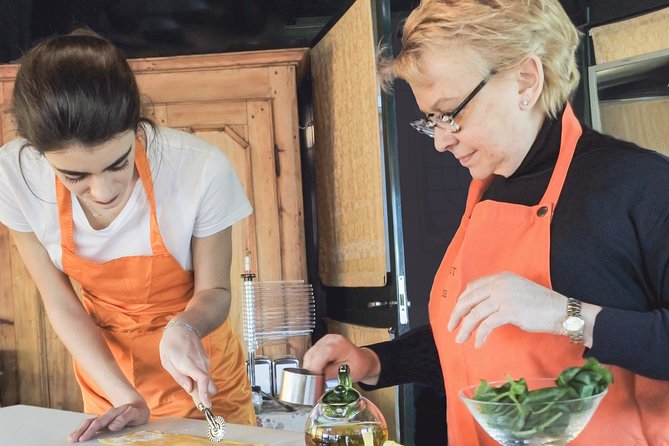
The meeting point is V. Giuseppe Dezza 47, 20144 Milano, and the big advantage is how easy it is to reach. The blue metro line is only about 20 meters from the Coni Zugna – Via Foppa stop, which matters on a busy trip. No long taxi rides, no “how do we get there” stress.
The setting is a major part of the charm. You’re not in a generic studio. You’re in a family palace home in a prestigious central area, with antique furniture and art on the walls. That glam setting changes your mindset fast. You walk in expecting a class; you stay because it feels like you’ve been welcomed into someone’s world.
Just note the practical reality: it’s a residence, so entry feels more personal than “line up at the door.” In fact, you’re welcomed personally at the entrance, and the space is set up specifically for the class inside the residential building for safety and quality.
You can also read our reviews of more tours and experiences in Milan.



Teachers: Michelin training plus a real family approach
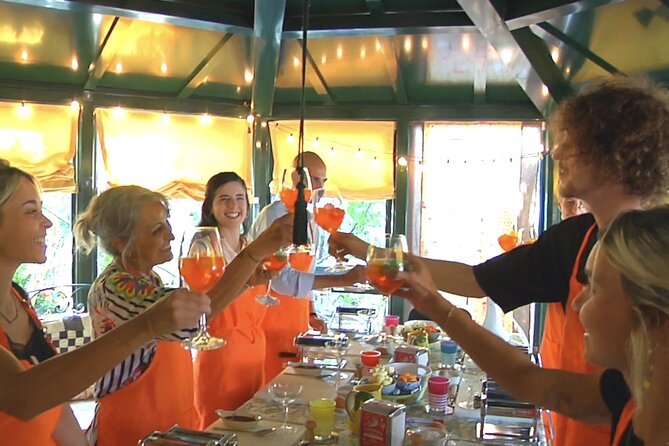
This is described as a Michelin-trained chef’s workshop, and you feel that in how the teaching is framed. Instead of “watch and hope,” you get guidance that assumes you’ll actually do the work. The goal is technique you can repeat at home.
One of the most distinctive elements is the “family cooking tradition” idea. In the story behind the class, Grandma Bruna is part of the teaching lineage, and when she’s too tired, she’s replaced by her daughter or grandchildren. That’s not just cute storytelling. It signals that the instructions are meant to be passed down, not staged.
A useful detail for planning: the lesson is in English, and the team says they also speak other languages upon request (the list includes French, German, Spanish, Ukrainian, Russian, Hebrew, and Persian). So if your Italian is limited, you’re not stuck. And if you’re traveling with a group that includes different language comfort levels, you still have a good shot at everyone understanding the key steps.
The class team also assigns teachers dynamically. You should receive an email about the teacher name within 12 hours of the start. If you want only Grandma Bruna as the teacher, they can’t promise that within the short window, so set expectations accordingly.
What you’ll cook: tagliatelle, ravioli, and tiramisù
This class is built around three Italian icons, and each one trains a different skill.
Fresh tagliatelle with tomato sauce (the real way to do it)
You’ll start with fresh tagliatelle and a traditional tomato sauce approach. The key isn’t just the ingredients. It’s the process: making the dough, working it into tagliatelle, and pairing it with a simple sauce that relies on technique and timing.
There’s also a “don’t hide behind shortcuts” feel here. Even if you’ve eaten homemade pasta before, it’s another thing to roll and cut it yourself. You’ll also finish with grated Parmigiano Reggiano, which is exactly what you want for a classic, no-flash flavor profile.
The practical takeaway: once you understand how the dough behaves and how thin you can go without tearing, you’ll feel less intimidated the next time you cook at home.
Ravioli with a 1-star Michelin filling
Next is ravioli, and here the class leans into credibility. The filling is described as coming from a 1-star Michelin chef. You’re not just stuffing random ingredients and calling it ravioli.
You’ll learn how to prepare and work with the filling, then how to finish the ravioli properly. The class adds another classic touch by putting Parmigiano Reggiano on top.
If you’ve ever struggled with ravioli at home—either they open in the pot or they turn out too thick—this kind of guided step-by-step instruction helps you learn the mechanics instead of guessing.






Traditional tiramisù: the finishing lesson
Then comes dessert: traditional tiramisù. This is where many cooking classes go vague. Here, the emphasis is on the “classic tiramisù” secrets, taught in a way that matches what you’d expect from Italian home cooking: technique, texture, and balance.
Tiramisù rewards patience and restraint. Over-soaking makes it collapse, under-mixing makes it feel heavy. When you’re shown what to aim for, you can recreate the texture at home instead of making a “good enough” dessert that never quite looks right.
And yes, it’s a satisfying end. Many people come expecting pasta and are surprised by how much the tiramisù teaches you about Italian dessert rhythm.
Limoncello in the garden and the communal dinner payoff

One of the clearest highlights is that you sample homemade limoncello made from fresh lemons in the garden. That detail matters because it tells you they’re not serving a generic bottle and calling it a day. The lemons are part of the identity.
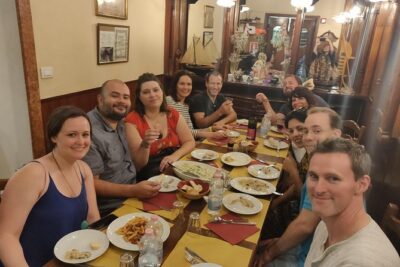
As for the meal structure, the class ends with a communal dinner built from the pasta and dessert you prepared. You typically also get wine with the meal. The rhythm is intentional: wine is tied to the end tasting moment, so you’re not distracted from the cooking.
That pacing is worth knowing for your expectations. If you want a wine-forward evening, this is more “cook first, taste together after.” If you’re okay with that—and honestly, you should be—then you’ll enjoy the shared moment more because everyone’s making the same dishes from scratch.
Also, the group becomes part of the kitchen. Many people love that light, social vibe: chatting with others from different countries while you work. It’s not a silent culinary workshop. It’s a friendly one.
A quick, honest note on hands-on hygiene
This is where you should be realistic. The format is hands-on by design. That means you’ll work with dough and ingredients in a shared space, under supervision.
If you have strong hygiene concerns, this experience might not match your comfort level, because communal cooking always involves people working close together. You can usually ask how they handle hygiene protocols before you begin—but the core approach is still hands-on and communal.
How hard is it? Timing, skill level, and group size
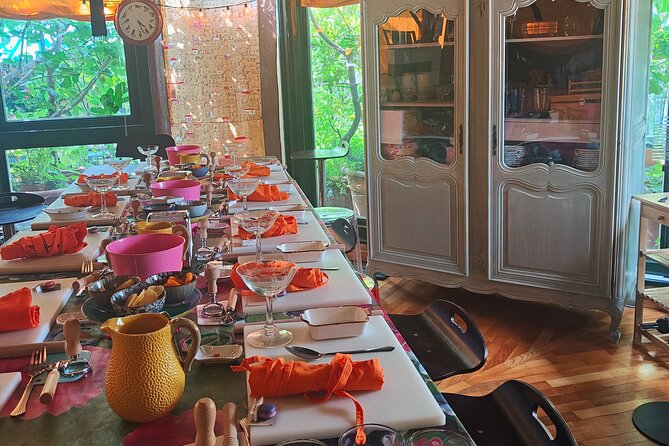
The duration is about 3 hours, and the maximum group size is 21. That’s a sweet spot. Big enough to meet people, small enough that the instructor can still correct mistakes.
From the teaching style described, this class is approachable. People with little pasta experience seem to do fine because instruction is step-by-step and focused on technique. Even teenagers often get into it, which tells me the process is structured and not overly theoretical.
Practical pacing wise, you’re usually balancing:
- making dough and shaping pasta,
- moving to filling and ravioli prep,
- finishing with tiramisù,
- then eating what you made.
So wear clothes you don’t mind getting a little messy. Even if it’s not like a kids’ craft, dough has a way of finding the cuffs.
Lunch or dinner options
You can choose lunch or dinner options, and additional timings may be available upon request. That’s helpful if you’re building your Milan schedule around museums or aperitivo plans. In general, dinner-style classes can feel more like a full evening experience, while lunch keeps your night open.
Price and value: is $90.70 worth it?
At $90.70 per person for roughly 3 hours, the price isn’t “cheap.” But it also isn’t priced like a restaurant meal.
Here’s what you’re paying for:
- Real instruction (English-led, step-by-step),
- multiple scratch-made dishes (tagliatelle, ravioli, tiramisù),
- high-quality ingredients, including Parmigiano Reggiano,
- a named Michelin connection through the ravioli filling,
- and a full tasting meal afterward with wine and limoncello.
When you compare it to the cost of buying ingredients plus time plus learning technique, it starts to make sense. You’re effectively paying for the shortcuts that don’t exist in home cooking: how to get dough right, how to shape, how to balance a classic dessert.
One more value point: the skills are take-home. You won’t just eat pasta—you’ll learn the methods that make pasta taste like pasta, not like boxed noodles.
That’s why so many people treat this as a highlight. It’s not passive. You leave with both a full stomach and a repeatable recipe you understand.
Who should book this class (and who might pass)
I’d recommend it if you want an authentic, structured Milan experience that goes beyond sightseeing. This is also great if:
- you enjoy hands-on activities,
- you want to cook classic Italian dishes using proper technique,
- you’re traveling with mixed ages (kids and teens can handle the vibe),
- you’d like to meet people while you work.
You might think twice if:
- you dislike communal hands-on food prep,
- you’re expecting wine at the start rather than as part of the end tasting,
- you want a purely observational experience with no physical participation.
Also, because it’s popular and booked about 28 days in advance on average, plan ahead. If your dates are fixed, don’t procrastinate.
Should you book this pasta and tiramisù class?
If you want a real Milan memory that isn’t just photos and gelato, book it. The combination of a palace-home setting, fresh pasta from scratch, and a classic tiramisù lesson is exactly the kind of “learn something you can repeat” travel experience that feels worth the money.
Just go in with the right mindset: this is about cooking and eating together, not a sit-down show. And if hands-on hygiene is a deal-breaker for you, ask questions before you arrive.
Otherwise, grab a seat, roll the dough, and leave with tiramisù skills that actually work.
FAQ
FAQ
How long is the cooking class in Milan?
The class is approximately 3 hours.
What dishes will I learn to make?
You’ll learn fresh tagliatelle with tomato sauce, ravioli with a special filling, and traditional tiramisù.
Is the class offered in English?
Yes. The lesson is held in English, and other languages may be available upon request.
Where do I meet for the class?
You meet at V. Giuseppe Dezza, 47, 20144 Milano MI, Italy, and the activity ends back at the meeting point.
How large is the group?
The class has a maximum of 21 travelers.
Is it lunch or dinner, or both?
You can choose from lunch or dinner options. Additional timings may be available upon request.
Do I get limoncello and wine?
You’ll sample homemade limoncello made from fresh lemons in the garden. The class ends with a communal dinner, and wine is served during the tasting moment at the end.
Is there a mobile ticket?
Yes, this experience uses a mobile ticket.
Can I request a specific teacher, like Grandma Bruna?
You can request it, but they cannot assure Grandma Bruna as the teacher within 12 hours of the start time.
What is the cancellation policy?
You can cancel for a full refund up to 24 hours before the experience starts. If you cancel less than 24 hours in advance, the amount paid is not refunded.