REVIEW · ROME
Ticket to Piazza Navona Undergrounds Stadium of Domitian
Book on Viator →Operated by PIAZZA NAVONA UNDERGROUND - STADIO DI DOMIZIANO · Bookable on Viator
Rome has a stadium under your feet.
This underground stop is fascinating because you step down into the excavations where the Stadium of Domitian once stood, and I really like that it’s paired with a self-paced audio guide instead of a rushy group lecture. The one real downside: it’s a smaller visit than Rome’s big-name monuments, so go with curiosity (not expectations for a huge complex).
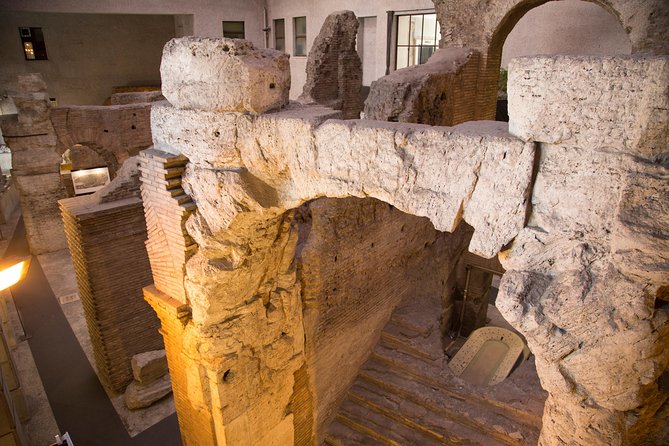
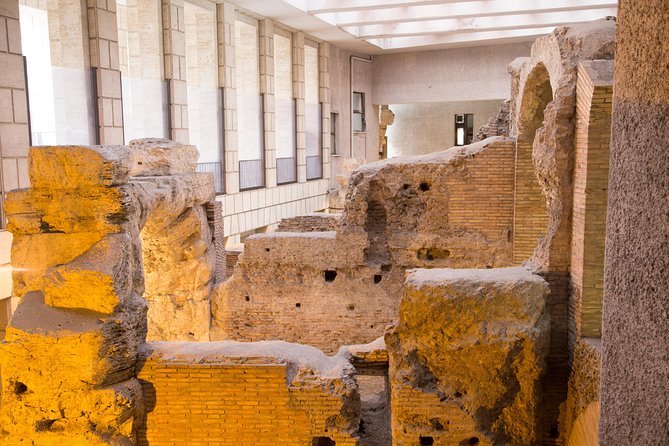
You’ll find yourself heading under Piazza Navona, a place most people experience only from street level, and instead you’ll see the remains of an ancient masonry stadium—described as the first and only masonry stadium in Roman history—plus supporting displays, images, and on-site learning tools. It opened to the public in 2014, so it feels like a modern way to understand an ancient layer of the city.
In This Review
- Key highlights at a glance
- Stadium Under Piazza Navona: what you’re really visiting
- The 5-metre descent: the experience of going under the square
- The ruins and the story of Roman sports
- Audio guide system: why it’s worth paying attention
- Timing: how long the visit really takes
- Where to meet at Via di Tor Sanguigna (and how not to waste time)
- What’s included (and what you may want to add)
- Family practicality: kids, pace, and comfort
- Group size and crowd feel: what to expect in practice
- Opening hours and when to slot it into your day
- Ticket value: is $12.10 a smart buy?
- So who should book—and who might skip it?
- Should you book the Piazza Navona Undergrounds stadium ticket?
- FAQ
- How long does the Stadium of Domitian underground visit take?
- What language is the audio guide available in?
- What’s included with the ticket?
- Where is the meeting point?
- What are the opening hours?
- Can I cancel and get a full refund?
Key highlights at a glance
- 5-metre descent below Piazza Navona: you literally go down into the Roman-era footprint under the square
- UNESCO-listed ruins in an intimate setting: you can see masonry stadium remains close up
- English audio guide for you to control: explore at your own pace rather than waiting for a group
- Family-friendly audio: there’s an audio guide for kids age 6+
- Small but well-supported exhibits: plaques, media, and even optional extras like photos/DVDs or add-on experiences
- Maximum group size of 150: generally a comfortable scale compared to Rome’s mega-sites
Stadium Under Piazza Navona: what you’re really visiting
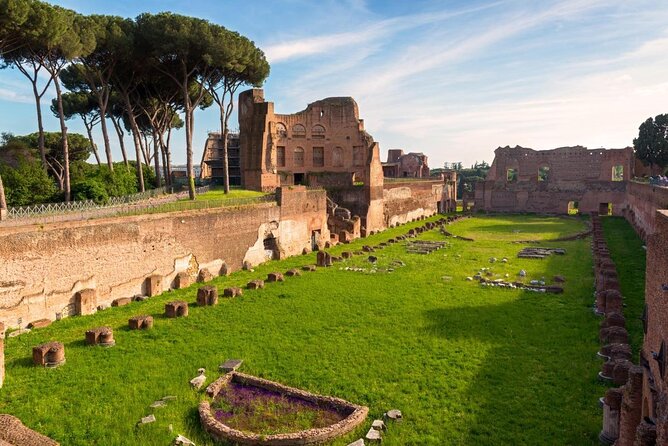
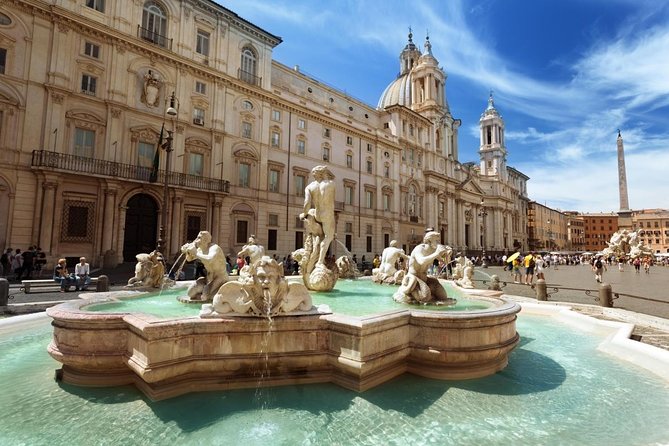
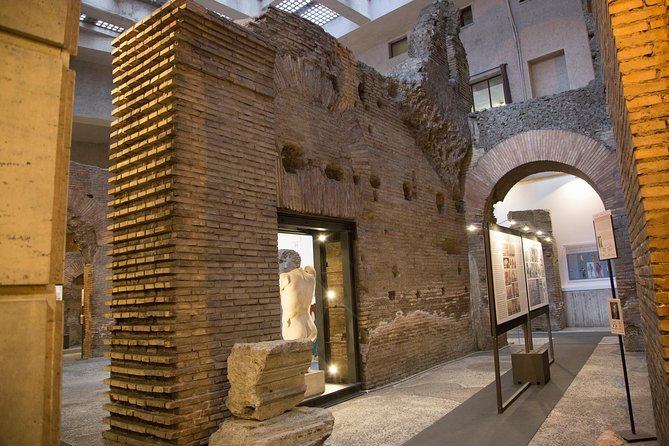
The ticket is for the underground site tied to the ancient Stadio di Domiziano under Piazza Navona. From street level, Piazza Navona looks like a classic Roman piazza full of life. Underneath it, you’re seeing something else entirely: excavations and masonry remains connected to the Stadium of Domitian, a sports venue from the Roman Empire era.
What I love about this kind of Rome experience is how it changes your mental map. Most visitors focus on a single layer—ancient, Renaissance, modern. Here, the big idea is “Rome is stacked,” and you get to experience a slice of it right away. Instead of imagining the city’s older structures, you’re standing near physical remnants and reading (or listening) to what they meant.
Also, the site is built around self-learning. There isn’t a long parade of stops where you’re squeezed into a schedule. You move through the underground spaces, listening when you want, slowing down when you’re intrigued by a wall, a column, an arch, or a reconstruction-style explanation.
You can also read our reviews of more tours and experiences in Rome.


The 5-metre descent: the experience of going under the square
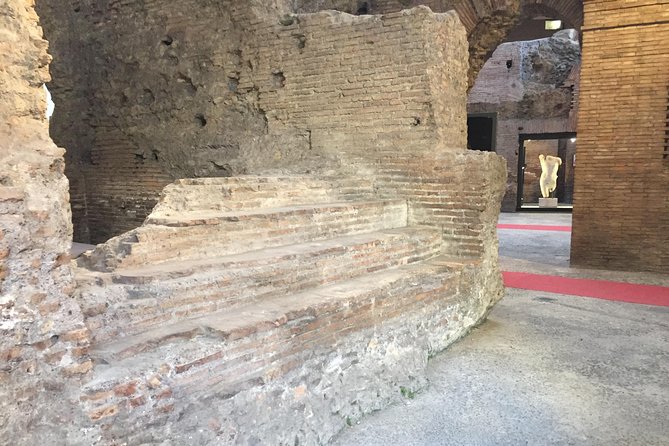
This visit starts the moment you find the entrance and head into the underground levels. The big physical detail is the descent: you go about 5 metres beneath street level into the excavations. That matters more than it sounds. It’s the practical difference between seeing ruins in an outdoor ruin field and seeing ruins in the setting where Rome’s streets were built over time.
Expect the underground space to feel cooler and calmer than the open piazza above. If your Rome itinerary includes a lot of midday sightseeing, this is a smart break. And because the visit is designed to be paced by audio guide, you’re less likely to feel rushed while you’re adjusting to the change in environment.
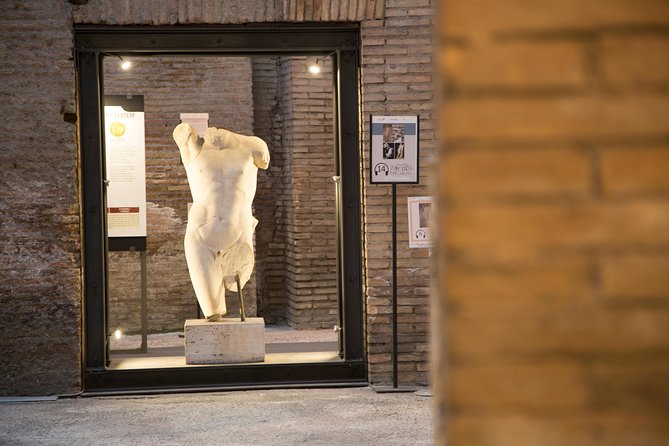
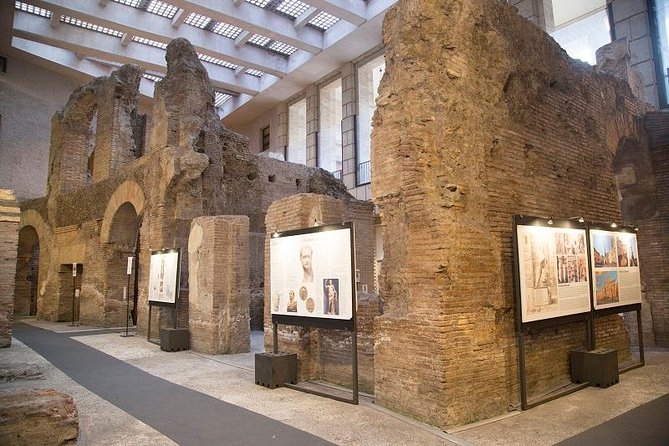
You’ll also spend time looking at what remains: the masonry stadium structures that anchor the story. Even if the visible pieces look small at first glance, the point is to connect fragments to the larger original building. The exhibits are there to help you build that bigger picture, not just stare at scattered stone.
The ruins and the story of Roman sports
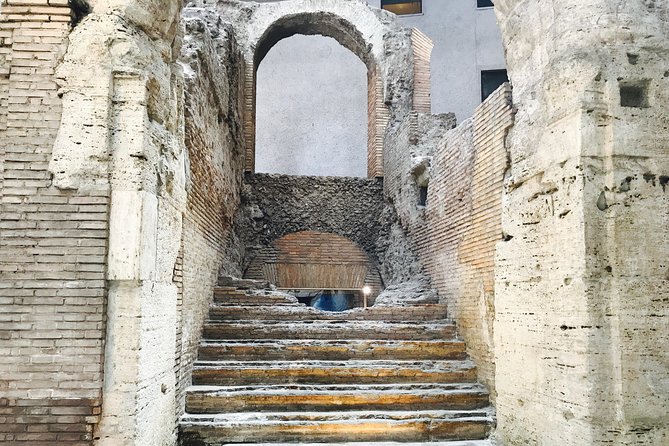
The highlight here isn’t a single statue or a single “wow” object you can photograph and move on. It’s the sports infrastructure angle—how the Romans staged events and where they put spectators.
The site is described as showing ruins of the ancient stadium, and the audio guide explains the Stadium/Piazza Navona connection and the history of Roman sports. This is one of those experiences that can be more rewarding if you’re the type who likes context: how a city organizes public life, not just how it decorates itself.
A detail that helps make the story feel more complete: the exhibits include photos and references to historical materials, described as unpublished photos in the highlights. If you enjoy seeing evidence of how historians and archaeologists interpret a site, you’ll probably appreciate having those supporting visuals as you walk through.
You may also encounter 3D-style content (one review mentions a 3D video showing changes of the stadium over time). Even when you’re standing in a relatively small space, those types of reconstructions are what help turn ruins into a place where people once gathered.
Audio guide system: why it’s worth paying attention
This ticket includes an English audio guide, and the format is geared toward self-paced walking. You get a handheld listening device and use it as you go. That works well because the underground route can’t always be “skimmed” like an outdoor monument. You’re moving through exhibits where details matter.
I like that the audio guide is thorough without forcing you into a single fixed group rhythm. It gives you permission to pause, look at a plaque, and continue when you’re ready. If you prefer reading, you’ll likely still find plenty to take in visually; the site has display text and multimedia.
A practical tip: before you walk far, make sure your device is working properly and the sound is clear. One visitor reported a device that stopped working partway through, with no immediate replacement offered, so it’s smart to check early and flag any issues quickly with staff while you’re still near the start.
For kids, the audio guide is available for ages 6+, which can turn this into a family win instead of a grown-up history chore.
Timing: how long the visit really takes
The official duration is listed as 40 to 50 minutes (approx.), and that feels about right for a self-paced audio experience in a small underground space. It’s short enough to fit between bigger monuments without derailing your day.
If you’re trying to structure your Rome plan, I’d treat this as a “cool-down block”:
- it’s conveniently sized for a break from heat and crowds
- it’s satisfying if you like contextual sites
- it’s easy to pair with nearby Piazza Navona area walking
Because it’s only one main stop and not a multi-area tour, you can also build your day with less stress. You’re not committing to half a day underground with transfers and waiting.





Where to meet at Via di Tor Sanguigna (and how not to waste time)
Meeting point is Via di Tor Sanguigna, 3, 00186 Roma RM, Italy. The practical issue for most people isn’t the tour itself—it’s locating the entrance.
At least one visitor noted that finding the entry can be tricky because signage and nearby landmark references can be confusing. So here’s how to protect your time: arrive a little early, and use your map app with the exact address rather than relying on vague descriptions.
The site is described as near public transportation, which helps if you’re routing around central Rome. But the key is still simple: don’t cut it close on timing, and plan for a quick “find the door” moment.
What’s included (and what you may want to add)
Your ticket includes:
- Admission to the underground Stadium of Domitian
- Audio guide (English)
- Children’s audio guide for ages 6+
- Taxes
Not included:
- DVD and souvenir photos (available to purchase)
- hotel pickup/drop-off
- food and drinks
That “no food/drinks” point is more important than it seems. If you’re doing this during a busy day, grab a snack or plan your meal timing so you don’t end up hunting for something nearby while you’re already underground or when you’re heading back out.
Optional extras do exist. One visitor mentions an extra AI experience at €4, and another mentions VR available for an additional cost. If those are your thing, keep an eye out on-site so you’re not surprised by an upsell after you’ve already started walking through.
Family practicality: kids, pace, and comfort
This is a good option for families partly because the experience is self-paced. You’re not trapped in a long guided format where children must sit still on command. Add in the kids audio guide (age 6+), and it gives kids something concrete to do besides watch adults nod.
Also, wear comfortable walking shoes. Underground paths and stairs aren’t usually where people want to test new shoes, and you’ll likely be moving at a modest pace for about an hour.
One nice reassurance: the site notes that service animals are allowed, which can matter for some families navigating older buildings and venues.
Group size and crowd feel: what to expect in practice
The tour has a maximum of 150 travelers. That gives you a sense of scale, and based on the general setup, the underground route is usually manageable. It’s not a massive hall with thousands funneling through at once.
Still, Rome is Rome. If you want a calmer visit, aim for an earlier time window in the day—especially in peak season. This is one of those experiences where comfort matters because you’re listening and reading, and you’ll enjoy it more if you’re not shoulder-to-shoulder.
Opening hours and when to slot it into your day
Opening hours run 10:00 AM to 6:00 PM, Monday through Sunday, with the operating period listed broadly from 2017 to 2027 (so treat the hours as the key practical guidance).
Because the visit is 40 to 50 minutes, it’s easy to plan around:
- a morning of major sights, followed by an underground pause
- an afternoon break when the sun is high above Piazza Navona
If you’re planning multiple attractions that day, I’d use this as a flexible “in-between” stop.
Ticket value: is $12.10 a smart buy?
At $12.10 per person, the value is mostly about the combination of access plus learning time. You’re not paying for a guide who talks for the whole 50 minutes. You’re paying for entry to a less common Roman layer—an underground stadium ruin site—plus a full audio guide experience included in the price.
This is also a good value if you’ve visited other major monuments already. The Colosseum and Roman Forum are big. This is different: smaller, quieter, and more about how daily Roman public entertainment was built and understood.
The best part: the ticket doesn’t force you into extra fees just to learn. The optional upgrades (photos/DVDs, add-on media like VR/AI experiences) are there if you want them, but the core experience is complete with the included audio.
One booking note: it’s listed as being booked about 22 days in advance on average. I’d use that as a gentle prompt to reserve ahead, especially if you have limited time in central Rome.
So who should book—and who might skip it?
Book it if you:
- like Roman history but want something less crowded than the headline monuments
- enjoy “city layers” experiences—Rome above and Rome below
- want a short, self-paced activity with an included audio guide
- travel with kids who can follow an age-appropriate audio track
You might skip it if you:
- only want mega-scale ruins and iconic monuments with big visuals
- prefer a highly interactive guided tour where you’re led through every detail in person
- hate audio guides and would rather read everything without listening (the exhibits still help, but the experience is built around audio)
Should you book the Piazza Navona Undergrounds stadium ticket?
Yes, with one clear mindset: treat it as a compact, high-context stop. If you go expecting Colosseum-sized spectacle, you may feel underwhelmed. If you go ready to learn how Romans staged sports events and what’s left under Piazza Navona, you’ll likely find it a smart use of time.
For most people, this is a great “Rome reset” moment—cooler air underground, fewer crowds, and a clear way to understand a surprising part of the city.
FAQ
How long does the Stadium of Domitian underground visit take?
The experience lasts about 40 to 50 minutes.
What language is the audio guide available in?
The audio guide is offered in English.
What’s included with the ticket?
Your ticket includes the admission to the underground Stadium of Domitian site and an audio guide. It also includes an audio guide for children ages 6 and above, plus taxes.
Where is the meeting point?
You’ll meet at Via di Tor Sanguigna, 3, 00186 Roma RM, Italy.
What are the opening hours?
The site operates from 10:00 AM to 6:00 PM, Monday through Sunday.
Can I cancel and get a full refund?
Yes. Free cancellation is available up to 24 hours in advance for a full refund. If you cancel less than 24 hours before the start time, the amount paid is not refunded.