REVIEW · SICILY
WalkingTour CATANIA – discovering the city of lava with a licensed guide
Book on Viator →Operated by GuidingSicily · Bookable on Viator
Catania explains itself fast. This 2 to 3 hour walking tour uses real streets and iconic stone to show how lava shaped the city’s buildings, squares, and even everyday food. You start in the heart of things at Piazza del Duomo, then work your way through major landmarks and local market life with an officially licensed guide.
What I like most is the mix of “big sights” and daily Catania. You get the Norman-meets-Baroque Duomo setting, the lava-stone liotru elephant fountain, and the town hall at Palazzo degli Elefanti—then you drop straight into the area where locals shop at the fish market. The second big win is the guide storytelling: in past groups, guides such as Titianna and Maria Luisa have been praised for clear history plus useful culture and food tips.
One thing to consider: this experience works best with good weather, and you’ll be walking on old urban sidewalks, which can feel rough in spots (especially if it’s hot).
In This Review
- Key highlights you’ll actually notice
- Meeting at Piazza del Duomo with a licensed guide
- The Duomo square: where lava symbolism meets Norman-Baroque drama
- A’ Piscaria fish market: the smell test for Sicilian everyday life
- Palazzo degli Elefanti: learning the city’s habits through its details
- Ursino Castle and the lava moat story
- Via dei Crociferi: baroque facades after the 1693 earthquake
- Piazza Università: students, courtyards, and university power (1434)
- Price and value: what $24.19 buys you in real terms
- Who this walking tour suits best
- Should you book this Catania lava walk?
- FAQ
- Where does the walking tour start?
- How long is the Catania walking tour?
- Is the tour offered in English?
- Are entrance tickets included for all stops?
- Does the tour run in poor weather?
- Can I cancel and get a refund?
Key highlights you’ll actually notice
- Official licensed guides meet you in Piazza del Duomo, so you’re not hunting around for someone without credentials.
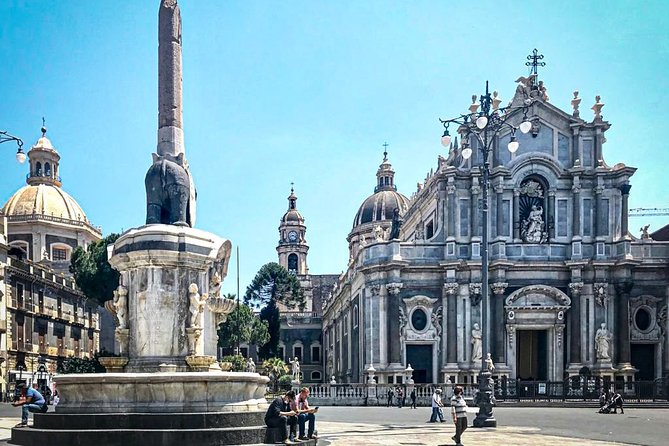
- Piazza del Duomo layout is a shortcut to Catania’s identity, with the Duomo, the Town Hall area, and the liotru fountain all grouped together.
- Fish market stops are not just sightseeing—you’ll see where fresh local food and regional staples get picked up daily.
- Ursino Castle shows lava in a very literal way, including the story of lava filling the moat and black basalt still visible today.
- Via dei Crociferi connects architecture to survival, pointing to how the 1693 earthquake reshaped the baroque facades you see now.
- You finish among student courtyards and noble palazzi, anchored by the oldest university seat in Sicily (1434).
Meeting at Piazza del Duomo with a licensed guide
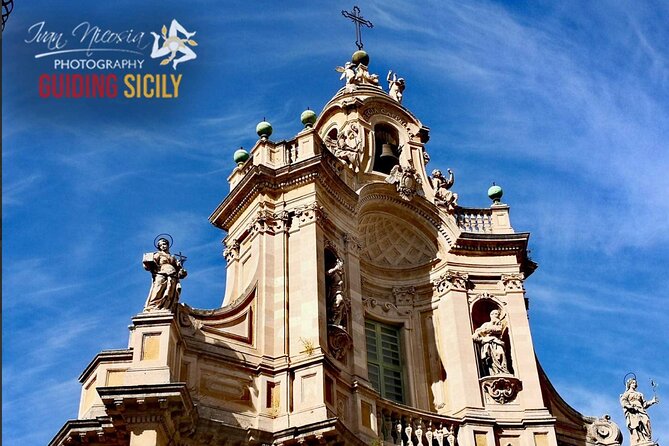
Your tour starts at Piazza del Duomo, 95100 Catania at the GS (GuidingSicily) infopoint. That detail matters more than you might think. When a guide meets you at a clear reference point, you spend less time figuring out logistics and more time paying attention—like getting your bearings fast in a city that rewards walking.
The guides are described as authorized with official licenses, which is a real confidence boost when you’re asking questions about what you’re seeing. Past feedback also shows a pattern: guides keep the pace friendly, explain clearly, and tailor the tone to the group. You’ll get history without drowning in dates, and you’ll also get practical culture—how locals think about food, tradition, and daily life.
The tour is capped at 15 travelers, so it doesn’t turn into a herd. For a walking experience with multiple stops, that small-group size often means you can hear instructions and ask follow-ups without shouting over everyone.
You can also read our reviews of more tours and experiences in Sicily.


The Duomo square: where lava symbolism meets Norman-Baroque drama
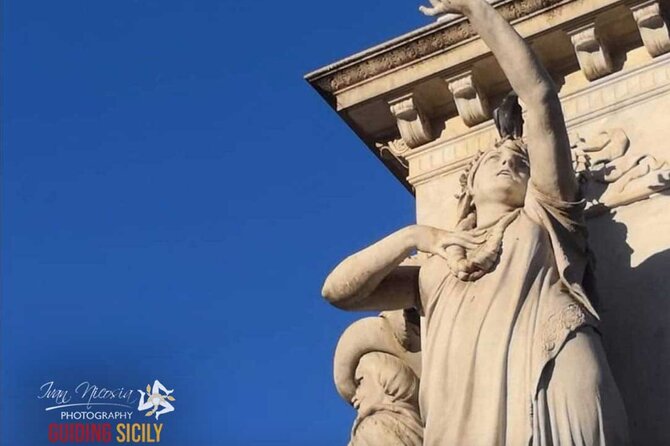
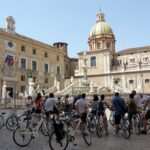
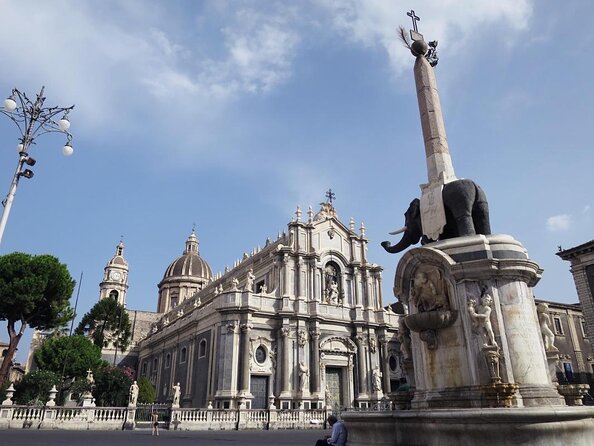
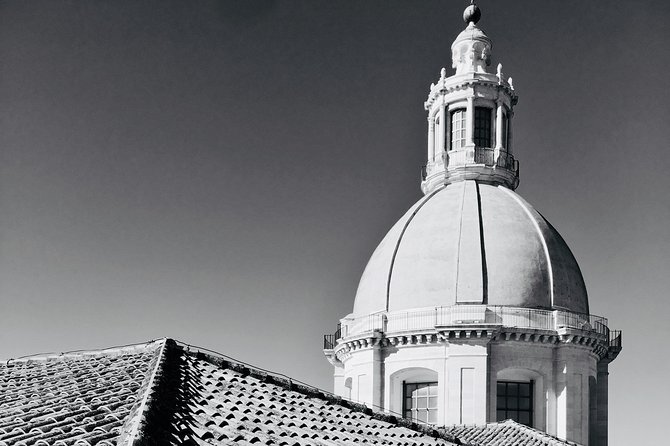
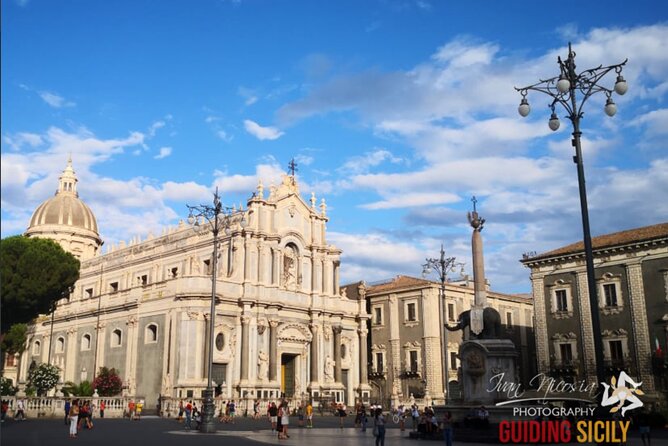
The first stop is Piazza del Duomo, where the tour story begins with the Duomo itself and expands outward. The cathedral is Norman in origin but baroque in appearance—a neat reminder that Catania is layered, not museum-still. It’s also described as an imposing building that, within a few decades, celebrates its first thousand years. Even if you’re not tracking timelines closely, the building’s scale makes the “how old is this place” feeling immediate.
Right in the same square, you’ll notice three identity markers that belong together:
- Piazza Duomo’s Town Hall area, including Palazzo degli Elefanti
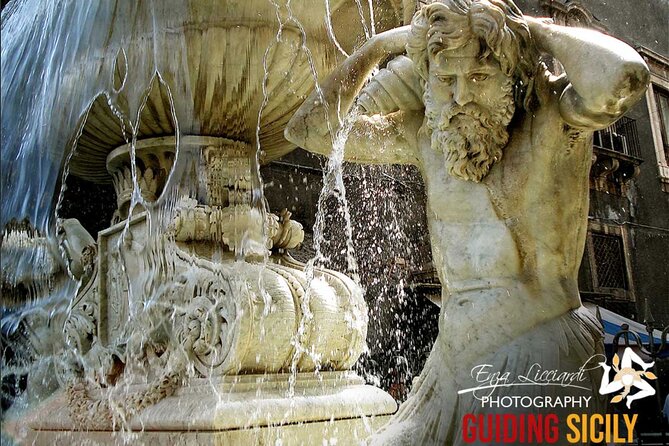
- The liotru fountain, featuring an elephant in lava stone topped by an obelisk
- The energy of the area around the cathedral
Here’s the practical value: once you understand the liotru symbol and how lava is used as building material (not just as a weather event from a distance), the rest of Catania makes more sense. You start seeing stone choices and rebuilding patterns as part of a single long conversation.
If your departure is the morning option, the tour also pairs Duomo with the nearby historic fish market area, which leads directly into the next part of the experience—seeing food culture in the real place it happens.
A’ Piscaria fish market: the smell test for Sicilian everyday life
From Duomo, you’ll head to A’ Piscaria (Mercato del Pesce), a market that runs every day. This stop is where the tour shifts gears: you stop treating Catania like an open-air gallery and start treating it like a working city.
The market focus is local and practical. You’ll see a range of local products: fish, meat, cured items, cheeses, and produce. The tour notes that the fish market is where you can find fresh displays, plus regional cold cuts and cheeses, and even fruit at very competitive prices.
What makes this stop worth your time is that it’s not just about food. It’s about how geography and economy meet. Catania’s coast and volcanic setting feed into what people buy, sell, and serve. Guides have been praised for slipping in culture and food guidance here—things you can use later when you’re trying to order, shop, or decide what’s worth tasting.
If you’re the kind of traveler who always wants to understand what locals actually eat, this market segment is one of the best uses of a short city walk. It gives you context you can carry into restaurants later that day.
Palazzo degli Elefanti: learning the city’s habits through its details
Next you visit Palazzo degli Elefanti, which is the Town Hall. The name comes from the elephant representations you can see in the gables of the balconies on the noble floor. That’s a small detail, but it’s exactly how good city guides work: you learn the story behind the design, and suddenly the building stops being generic.
The tour’s value here is the connection between civic power and local identity. The elephant theme echoes the liotru fountain, so the city’s symbol system starts to feel cohesive rather than random. You’re not only learning about one building—you’re learning how Catania repeatedly expresses its identity in stone.
It’s also a quick stop, so it doesn’t derail your momentum. You get it, you move on, and you keep the walk feeling productive.
Ursino Castle and the lava moat story
The walk continues to Ursino Castle, a Swabian castle that once overlooked the sea. Today it sits in the historic center, which makes it feel like a surprise landmark amid street life.
The standout point here is the lava detail: in the 17th century, a mighty lava flow filled the moat, wrapping the castle in a red-hot embrace. Even more compelling, the tour notes that black basalt is still visible. This is lava as physical evidence, not just a faraway volcano you’ll admire from a distance.
This stop is also where you should plan for optional cost. Admission is not included here, so if you want to go inside, you may pay separately. Still, even without entry, the exterior story is strong because it reframes the castle. It’s not just medieval architecture—it’s a landmark shaped by eruption history.
In past groups, guides have tied these scenes back to the influence of Mt Etna, which helps you connect architecture with the volcanic engine that created the materials and the rebuilding patterns.


Via dei Crociferi: baroque facades after the 1693 earthquake
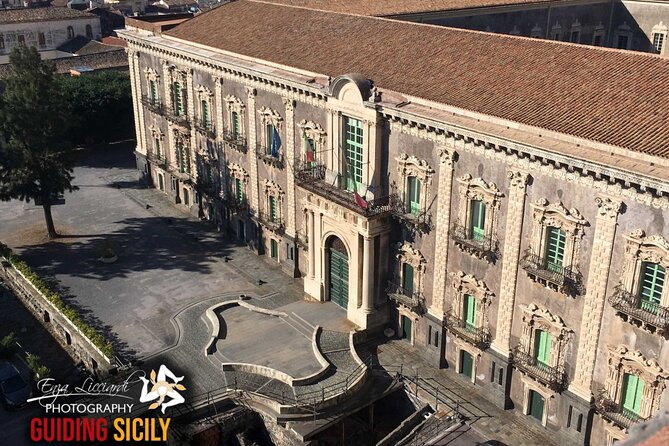
One of the most visually satisfying parts of the walk is Via dei Crociferi. The tour describes it as one church after another, one monastery after another. And the reason the street looks the way it does comes straight from tragedy: baroque facades were built after the devastating earthquake of 1693.
This stop is where you’ll really feel the city’s resilience. The street is a timeline you can walk. You see how the rebuilding created a consistent style, so the architecture feels intentional rather than accidental. You’re also given a guided lens for what you’re looking at, which matters because baroque can otherwise blur together.
Practical consideration: churches and narrow streets can get warm and crowded. On hot days, I’d prioritize sun protection and take breaks when your guide suggests them. Past feedback includes guides who were mindful about shade and pacing, which tells me the group dynamic is managed well.
Piazza Università: students, courtyards, and university power (1434)
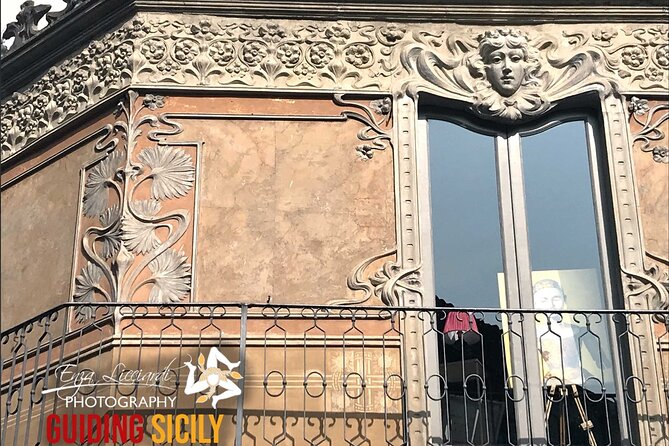
The final major highlight is Piazza Università, centered on the Palazzo del Rettorato, seat of the oldest university in Sicily (1434). The courtyard is described as a place where tens of tens of generations of students have passed over lava pebbles. That small detail is the kind of thing that makes a city feel lived-in rather than staged.
In front stands Palazzo di San Giuliano, another university seat that was formerly the home of one of the most powerful and richest families in Sicily. The tour frames these buildings as both educational and social landmarks, so you see how learning tied into power and privilege.
This ending is a smart choice for a short walking tour. You finish in a place that feels reflective and local at the same time. After the intensity of Duomo square and the market noise, the university courtyard gives your brain a calmer moment—while still tying back to lava stone underfoot and stone-built identity.
Then you return to the meeting point.
Price and value: what $24.19 buys you in real terms
At $24.19 per person for roughly 2 to 3 hours, this tour is priced like a city orientation plus a guided “why” behind the sights. That’s important because in many cities you pay more for less guidance—or you pay for access that you still don’t fully understand.
Here’s where the value shows up:
- You get an English-speaking guide with official licensing.
- Multiple stops are free admission (Duomo area, Town Hall area, and market-related visits).
- Only Ursino Castle is called out as not included, so the cost risk is limited if you skip entry.
- You get practical culture through market and local storytelling, not just photo-op monuments.
It’s also a good value play if this is your first time in Catania. In a short stay, a focused walk like this can help you decide where to spend your money next—food stops, churches you want to return to, or neighborhoods where you want to linger.
Who this walking tour suits best
This tour fits you if:
- You want a guided introduction to central Catania without committing to a full-day plan.
- You’re curious about the link between lava materials and the look of the city.
- You like history explained through streets, not through audio tours.
It may be less ideal if:
- You strongly prefer a tour with mostly indoor stops on hot or rainy days.
- You need long rests or highly polished, even-surface walking paths.
Also, if you’re sensitive to audio, one review suggested the usefulness of earphones because the guide’s voice wasn’t always fully audible. If you have them, bring them. It’s a small upgrade for comfort.
Should you book this Catania lava walk?
If you want a first-round pass through Catania’s core—Duomo square, elephant symbolism, the fish market, baroque recovery streets, and lava-linked Ursino—this is an easy yes. The small group size, the focus on practical culture, and the clear structure of stops make it a strong match for short trips.
Book it especially if you’ll be walking anyway and you’d rather pay for guidance than wander without context. And if weather is iffy, watch the forecast and be ready for the fact that the tour depends on good weather.
FAQ
Where does the walking tour start?
The tour meets at the GS (GuidingSicily) infopoint in Piazza del Duomo, 95100 Catania CT, Italy.
How long is the Catania walking tour?
It runs about 2 to 3 hours.
Is the tour offered in English?
Yes. This experience is offered in English.
Are entrance tickets included for all stops?
Several stops mention admission ticket free, including key areas around Piazza del Duomo and the market. Ursino Castle admission is not included.
Does the tour run in poor weather?
The experience requires good weather. If it’s canceled due to poor weather, you’ll be offered a different date or a full refund.
Can I cancel and get a refund?
Yes. You can cancel for a full refund if you cancel at least 24 hours before the experience’s start time.