REVIEW · SIENA
Wine Class – Tuscan Classics
Book on Viator →Operated by Papilio srl · Bookable on Viator
One good glass can change how you read a menu. This Tuscan Classics wine class in Siena turns a confusing wine list into something you can actually order with confidence. I like that it’s in central Siena for a relaxing break, and I also like the practical tasting format (swirl, smell, sip) paired with food so you taste with your senses, not just your taste buds. One thing to consider: it depends on good weather, so keep an eye on the day-of conditions.
You’ll start in the Siena city center area and get an easy “classroom” setup for about two hours. The class covers how different Tuscany wine regions and styles connect to soils and grape choices, using a map-style presentation and plenty of guided tasting. The possible drawback: at this price point ($72.59), you’ll want to enjoy wine learning plus multiple pours—if you only want one drink, it may feel like more class than party.
In This Review
- Key Points at a Glance
- Siena at 5:00 pm: the smarter way to start understanding Tuscan wine
- Getting there: Via Stalloreggi, then the tasting-focused stop in Via di Citta
- The “classroom” format: map, glasses, and guided comparisons
- What you taste: Chianti Classico, Brunello di Montalcino, and Tuscany’s key styles
- Food pairing that actually helps your palate
- How the guide turns tasting into real confidence
- Group size, pacing, and why it feels personal
- Price and value: $72.59 for a taught tasting, not just drinks
- Who should book this Tuscan Classics wine class?
- Weather, timing, and what to expect on the day
- Should you book this class?
- FAQ
- FAQ
- How long is the wine class in Siena?
- What time does it start?
- Where do I meet the instructor?
- Does the class stay in central Siena?
- Is the tour offered in English?
- How many wines do I taste?
- What food is included with the tasting?
- Is there a maximum group size?
- Is it suitable if I don’t know much about wine?
- What happens if the weather is bad?
- What is the cancellation window?
Key Points at a Glance
- Practical tasting skills: swirl, smell, sip, and compare aroma, body, and persistence
- Multiple Tuscany icons: including Chianti Classico and Brunello di Montalcino
- Central Siena break: convenient meeting area inside the historic vibe
- Food pairing that teaches: pecorino, cold cuts, bruschetta with olive oil, plus chocolate
- Small group (max 14): more attention during tastings
- No-pressure tone: focused on learning, not selling you bottles
Siena at 5:00 pm: the smarter way to start understanding Tuscan wine
If you’re spending a day in Siena’s streets and hills, your wine education usually comes too late—right when you’re already tired and wine labels start to blend together. This class hits at 5:00 pm, a time when you can take a breather, sit down, and connect the dots between what you see on menus and what’s actually in the glass.
What I like most is that it’s not just a wine sip-and-smile event. You learn the basics of Tuscan wine in a way that helps you move faster once you’re back out exploring. And the energy stays light: multiple guides are described as bringing humor and keeping the room engaged, so it doesn’t feel like homework.
The other thing I love is that you’re tasting with context. Instead of tossing random wines at you, the class connects the “why” (soils, grape choices, regional history and styles) to the “what” (how each wine tastes). That’s the difference between tasting for fun and tasting for real understanding.
You can also read our reviews of more tours and experiences in Siena.

Getting there: Via Stalloreggi, then the tasting-focused stop in Via di Citta
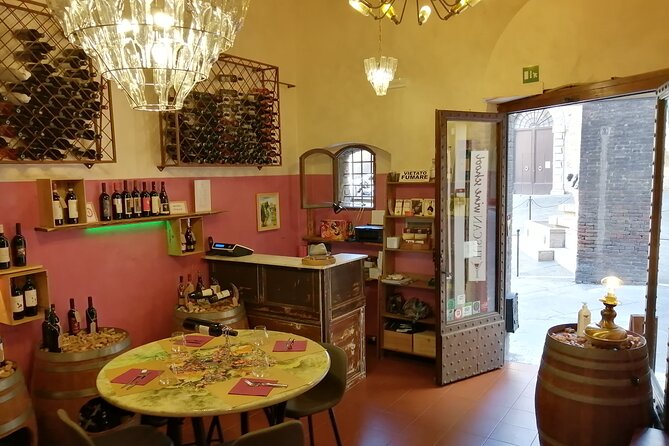
Your experience begins at Via Stalloreggi, 53100 Siena. From there, the class is centered around the Via di Citta stop, which matters because it keeps the timing comfortable—this is designed as a real break from sightseeing, not a long detour.
The location is also described as near public transportation and within the central Siena area. Translation: you don’t need a car, and you’re not fighting your way across town when the day is already full.
It lasts about 2 hours, and it ends back at the meeting point. That rhythm is great if you want to walk off dinner afterward or keep your evening flexible.
The “classroom” format: map, glasses, and guided comparisons
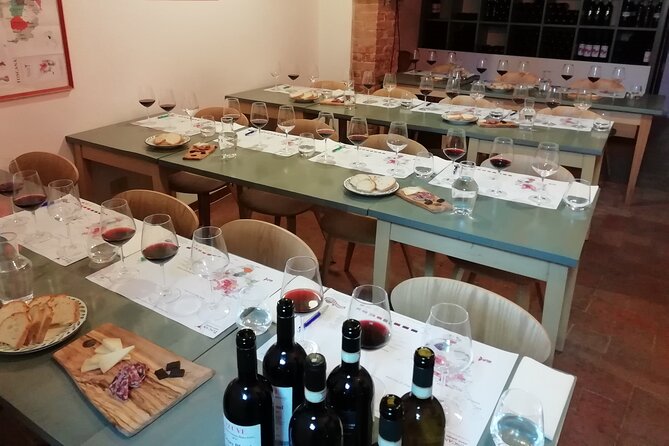
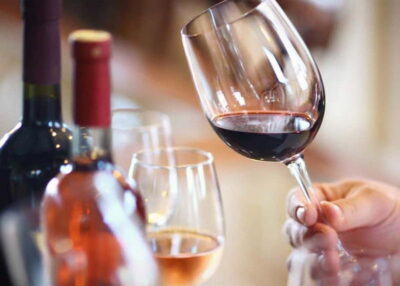
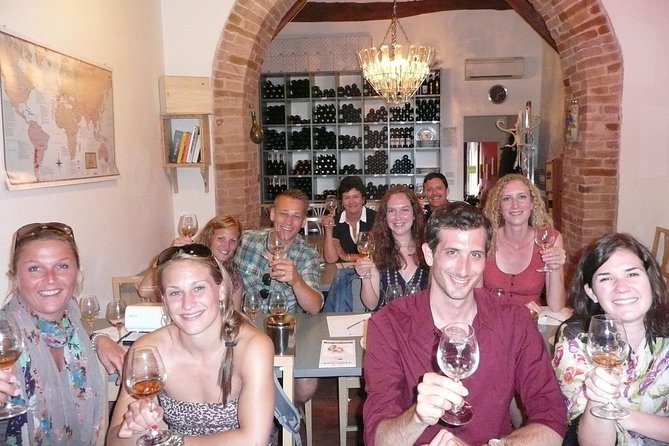
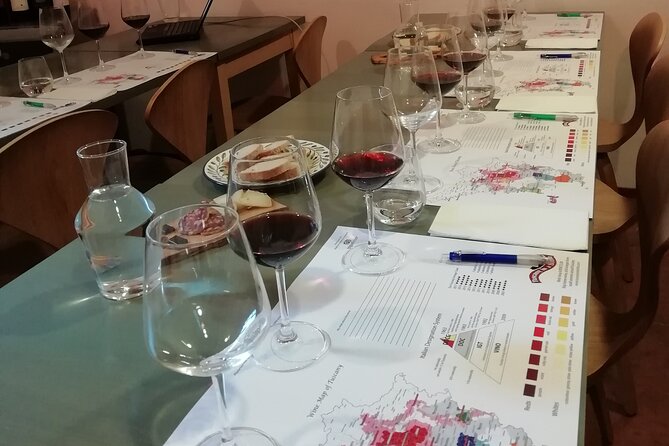
This isn’t a silent tasting with a clipboard. The vibe is described as more like a small lesson with a projector and a map-style setup. You’ll have tasting glasses ready, you’ll get short explanations you can actually use, and you’ll practice the basics: swirling, smelling, and sipping with guidance.
The class also teaches you what to pay attention to in each wine—aroma, body, persistence, and how styles and vintages change the experience. That’s especially useful in Tuscany, where a menu can list a mix of famous names and regional categories, and you need a simple way to compare them.
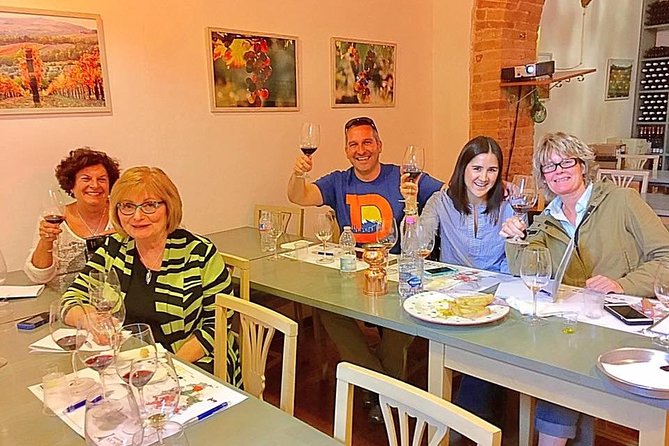
A standout theme in the descriptions is personal attention. With a maximum of 14 people, the instructor can slow down when needed and encourage refills. Some descriptions also mention the instructor remembering names, which sounds small until you’re the one person who usually gets missed in a group.
What you taste: Chianti Classico, Brunello di Montalcino, and Tuscany’s key styles
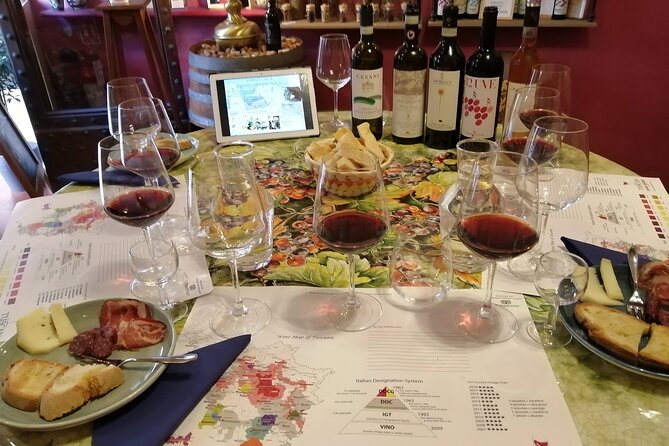
The class is built around Tuscany’s most recognizable grapes and wine identities. You’ll taste multiple local wines during the session, and the included list specifically calls out Chianti Classico and Brunello di Montalcino as part of the tasting.
How many wines? The overview talks about 4–5 different wines, while the included details describe tasting 6 different local wines. Either way, you’re working through enough pours that you can start picking up patterns—what “tends to be” in Chianti Classico versus what you usually see in Brunello di Montalcino.
Here’s why this matters for your trip: tasting these iconic labels in a structured way gives you a baseline. When you later see Chianti Classico or Brunello on a menu—or you hear someone at a table debating which one to order—you’ll know what questions to ask yourself.
And you’ll learn to recognize tasting differences instead of relying only on the reputation or the price tag. That’s one of the most repeated takeaways: people walk away feeling like they can choose wine based on year and style, not just guessing.
Food pairing that actually helps your palate
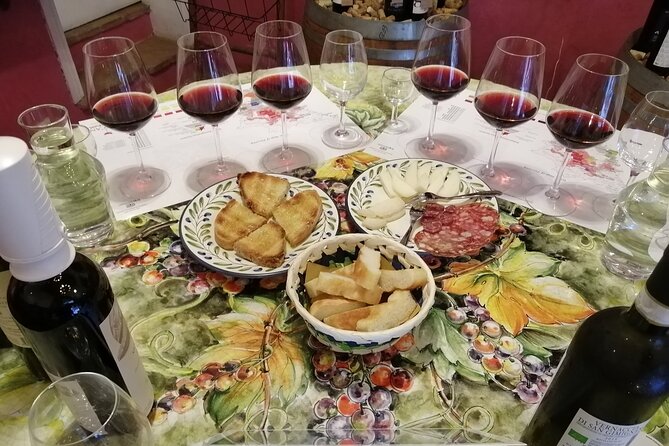
Wine classes that pair food can turn into a snack buffet. This one is different because the food is tied to the tasting. You’ll be served local cheese and cold cuts, including pecorino and cured meats, plus bruschetta with extra virgin olive oil. There’s also chocolate as part of the pairing lineup.
This kind of pairing is useful in Tuscany because it mirrors how you’ll eat locally: salty, savory, and a little fatty (cheese and cured meats) mixed with fresh bread and olive oil, plus a sweet note from chocolate. That means you get a real “before and after” effect—how a wine changes once your mouth has been reset by food.
You also get pairing tips from the instructor, which is where the class becomes practical. After a couple of tastings, you can start using the same logic in restaurants: what to match with cheese, what tends to work with cured meats, and how sweetness or richer bites can shift your perception of a wine.

How the guide turns tasting into real confidence
The single best value in this class is that you don’t just taste—you learn a method.
The instructor-led format focuses on comparing characteristics and learning what to look for in the glass. That includes how aromas change, how the wine feels in your mouth (body and structure), and how long the flavors linger. Over time, that becomes a repeatable skill.
The teaching styles described for different guides also share a theme: people feel comfortable, laughs happen, and the class is structured like a true lesson. Names that come up include Georgia, Manuel, Milo, Nina, and Giorgia—each described as energetic and supportive, with generous pours and a focus on teaching you how to taste like you mean it.
Also, a nice detail for your confidence level: there’s said to be no pressure sale. That means you can focus on learning rather than worrying about being “sold” something. If you’re the type who doesn’t want to be pitched at the end of a tour, this is a good sign.
Group size, pacing, and why it feels personal
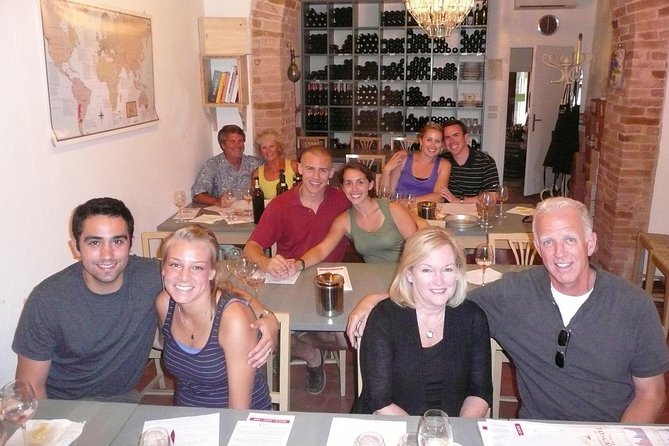
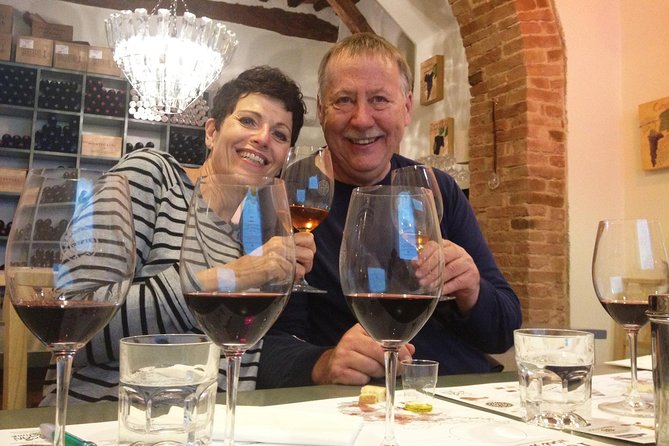
With up to 14 people, the pacing tends to stay friendly instead of rushed. You’re not standing in a long line waiting to be handed a tiny sip. You’re set up with your own glass and then guided through comparisons.
Several descriptions highlight generous pours, refills encouraged, and the instructor giving personal attention. That combo matters: it lets you actually notice differences between wines, instead of taking one sip and moving on before your palate has time to register what you just tasted.
The class is also listed as suitable for most participants, which is reassuring if you’re not a wine nerd yet. You don’t need to show up fluent in DOCG rules. You just need curiosity and enough interest to pay attention.
Price and value: $72.59 for a taught tasting, not just drinks
Let’s talk money in a way that helps you decide.
At $72.59 per person for roughly 2 hours, you’re paying for:
- an English-speaking local expert
- multiple Tuscan wine tastings (including major names like Chianti Classico and Brunello di Montalcino)
- paired snacks (pecorino, cured meats, bruschetta with olive oil, and chocolate)
- a small-group format that supports real questions and tasting practice
If you’ve ever bought a wine flight at a bar without guidance, you know how limited that can feel. This class adds structure and teaching time. You’re not only drinking—you’re learning how to interpret what you’re tasting and how to apply it when you’re choosing a bottle later.
Is it worth it? For me, it is if you want to get smarter in a short window. This is the kind of activity that can upgrade every wine order you make during the rest of your Tuscany days.
Who should book this Tuscan Classics wine class?
This works best if you:
- want a learning-focused tasting without turning it into a lecture
- enjoy trying multiple wines in one evening
- plan to eat out in Siena and want a simple way to choose wines confidently
- like guided humor and a relaxed group setting
It may not be the best fit if you:
- only want a quick drink with no teaching component
- prefer very quiet experiences where conversation stays minimal
- don’t enjoy wine tasting formats (swirl/smell/sip) and comparisons
Weather, timing, and what to expect on the day
The experience requires good weather, so if you’re visiting Siena in a season with unpredictable showers, plan a backup night or keep your schedule flexible.
Dress for a comfortable sit-down session. Even if it’s sunny during the day, late afternoon can shift in temperature once you’re in the old-city streets.
You’ll also have a mobile ticket, which keeps things easy when you’re moving around Siena.
Should you book this class?
Yes, if your goal is to understand Tuscan wine fast and enjoy a genuinely fun evening with a structured tasting. The best reasons to book are practical: you’ll learn how to taste, compare, and then make smarter choices on restaurant menus. The format is also built for comfort—central Siena, about two hours, and a small maximum group size.
If you’re unsure, consider this rule of thumb: if you’ll be ordering wine later in Siena and want to feel more confident about what you’re buying, this class is a strong start. If you mainly want a casual drink and you’re not into learning how to taste, you might find other options more your speed.
FAQ
FAQ
How long is the wine class in Siena?
The class runs about 2 hours (approx.).
What time does it start?
The start time listed is 5:00 pm.
Where do I meet the instructor?
You start at Via Stalloreggi, 53100 Siena SI, Italy.
Does the class stay in central Siena?
Yes. It’s described as having a convenient central Siena location, and the tasting stop is around Via di Citta.
Is the tour offered in English?
Yes, it’s offered in English.
How many wines do I taste?
The overview focuses on tasting 4–5 wines, and the included details list tasting 6 different local wines, including Chianti Classico and Brunello di Montalcino.
What food is included with the tasting?
You’ll get snacks such as local pecorino sheep cheese, cold cuts, bruschetta with extra virgin olive oil, and chocolate, plus pairing bites.
Is there a maximum group size?
Yes. The class has a maximum of 14 travelers.
Is it suitable if I don’t know much about wine?
It’s described as suitable for most travelers, and the class is designed to teach the basics of Tuscan wine.
What happens if the weather is bad?
The experience requires good weather. If it’s canceled due to poor weather, you’ll be offered a different date or a full refund.
What is the cancellation window?
You can cancel up to 24 hours in advance for a full refund. If you cancel less than 24 hours before the start time, the amount paid isn’t refunded.