REVIEW · ROME
Ancient Rome at Twilight Walking Tour
Book on Viator →Operated by E & D Guided Tours · Bookable on Viator
Rome at night feels different.
This Ancient Rome at Twilight walk strings together major sights after dark, when the heat drops and the buildings look cinematic. You start near the Altare della Patria, wind through the Forum-area viewpoints, and end with a Colosseum night look that’s hard to forget.
I particularly love two things: the cooler, less crowded feel compared to midday, and the steady stream of photo moments built into the route. Even the darker, story-heavy stops in the Monti area add real mood to the walk, not just sightseeing.
One consideration: if you’re sensitive to audio, note that at least one guest said there were no headsets, so hearing the guide can depend on where you stand and how loud the street noise is.
Key things I’d bookmark before you go
- Twilight timing: easier walking, cooler temps, and dramatic lighting on stone
- Small group cap: up to 15 people, with a relaxed pace and room for questions
- Forum-to-Colosseum arc: you walk through the ancient center instead of hopping by bus
- Photo-focused viewpoints: photo breaks are built into the route, not tacked on at the end
- Spooky Monti stops: Borgia-themed locations and local-style street atmosphere
In This Review
- Twilight is the right time for Rome’s ancient core
- A note on the “spooky history” tone
- Start at Altare della Patria: Piazza Venezia at dusk
- Piazza del Campidoglio and the Capitoline Hill night view
- Via dei Fori Imperiali: crossing Mussolini’s boulevard
- Rione Monti streets: Julius Caesar’s neighborhood vibe
- Scalinata dei Borgia and Torre dei Borgia: the darker stops
- Piazza del Colosseo: your Colosseum night finale
- Group pace, timing, and what 15 people changes
- Photo strategy: getting Colosseum shots without fighting the crowds
- Weather, restoration, and why messages sometimes matter
- Value check: why $37.49 can be a smart buy
- Who this twilight walk suits best
- Should you book this Rome twilight walk?
- FAQ
- How long is the Ancient Rome at Twilight walking tour?
- How much does the tour cost?
- Where do I meet the tour, and where does it end?
- What group size should I expect?
- Is the tour in English?
- Is there a mobile ticket?
- Are service animals allowed?
- What happens if it’s raining or monuments are affected by restoration?
- Can I cancel for a refund?
Twilight is the right time for Rome’s ancient core
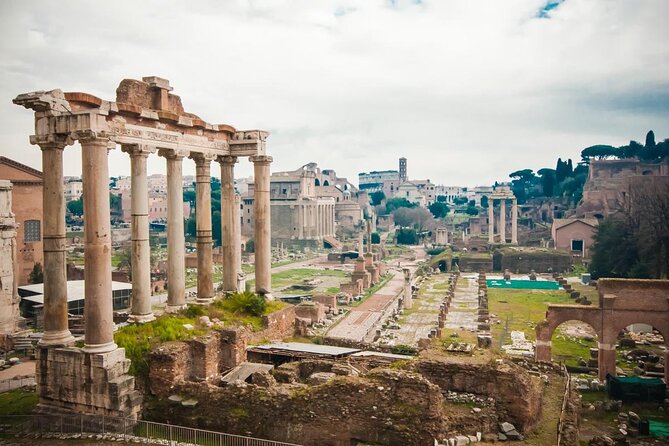
Rome’s ruins are always impressive, but at midday the experience can feel like a punch list. At twilight, the city softens. Streets are still active, but you usually get a more manageable crowd level, plus that cooler air that makes a 90-minute to 2-hour walk feel doable.
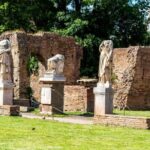
This tour is designed around that exact reality. You’re not just passing famous landmarks from a distance. You’re moving through the ancient center area when the light turns stone a little warmer and shadows do half the storytelling for you. That matters in Rome, because a forum at night reads like a scene, not a museum display.
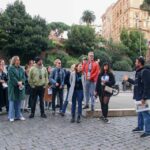
You also get a small-group setup (maximum 15). That changes the vibe. It’s not a sprint. Guides can slow down for questions, and the group stays tight enough that you can hear explanations and spot details without constantly regrouping.
A note on the “spooky history” tone
Some tours lean hard into ghosts and theater. This one leans into the darker side of the city’s past, especially around the Borgia sites. It’s fun in a human way: murders, intrigue, and power. Just keep expectations realistic. You’re hearing stories tied to places you can actually stand on, not chasing monsters through alleys.
You can also read our reviews of more tours and experiences in Rome.
Start at Altare della Patria: Piazza Venezia at dusk
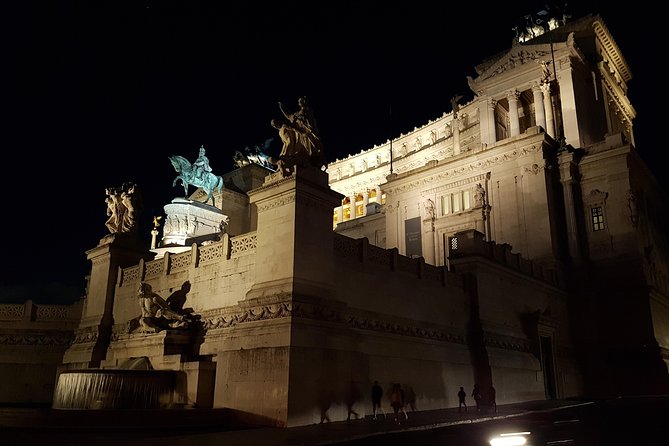
You begin near the huge white marble monument dedicated to Victor Emmanuel II, the Altare della Patria area in Piazza Venezia. From a practical standpoint, this is a smart start: it’s a well-known meeting zone, and you’ll find plenty of movement nearby, so it’s easier to orient yourself before the walk begins.
Conceptually, it’s also a neat contrast. You’re starting at a monument from Italy’s more modern national story, then quickly transitioning toward Rome’s older layers. That jump helps you understand Rome as a city of continuous overlays—new power on old power—rather than one tidy timeline.
From here, the tour builds momentum. Even early on, the guide’s goal is to make you look slower. Instead of rushing through big sights, you learn what to notice: angles, street lines, and how neighborhoods connect to the ancient core.
Piazza del Campidoglio and the Capitoline Hill night view
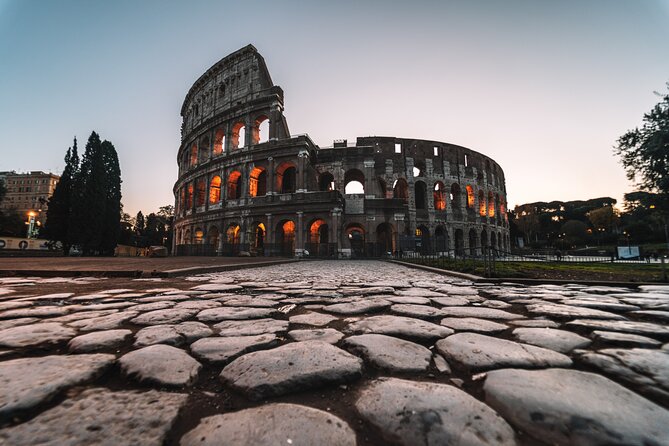
Next comes Piazza del Campidoglio and the climb up to the Capitoline Hill viewpoint. This stop is short, but it’s one of the most important moments because it sets your mental map.
At night, the Roman Forum-area view reads differently. You can see why people built cities close together here. You also start to understand the scale: not just one ruin, but a whole grid of ancient life. The guide’s stories during this segment make the view feel less like scattered stones and more like a place with daily rhythm—government, crowds, religion, and public debate.
A good sign to look for here: if your guide is the interactive type, you’ll feel the group settle in. People often stop taking quick snapshots and start listening when you hit a view like this. That’s the payoff of the twilight plan.
Via dei Fori Imperiali: crossing Mussolini’s boulevard
Then you walk along Via dei Fori Imperiali, crossing a wide boulevard built by Mussolini. This part isn’t just a transition street. It’s a reminder that Rome keeps being redesigned, even while old ruins remain in place.
Walking this boulevard at night can feel slightly eerie, especially when buildings line up in long rows. It also helps you realize something travelers often miss: ancient Rome wasn’t “lost in time.” It was actively shaped, repurposed, and built around.
In terms of comfort, it’s also a breathing zone. The route is wide enough that the group can stretch a little without everyone getting tangled. If you’re the type who likes photos, this segment gives you a clear corridor for perspective shots before you duck into the more intimate streets.
Rione Monti streets: Julius Caesar’s neighborhood vibe
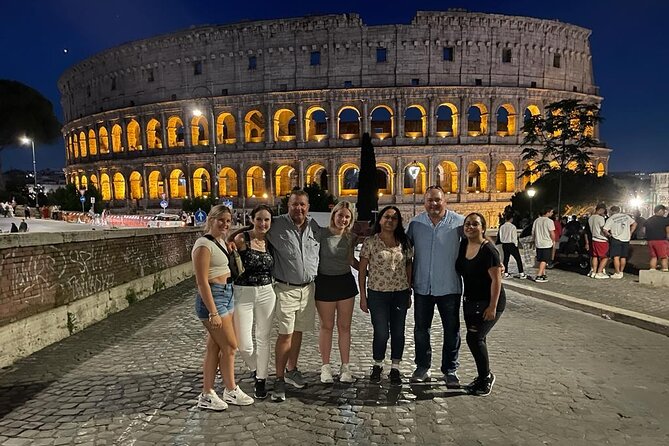
From there you move into Rione Monti, one of Rome’s most atmospheric neighborhoods. This is where the walk becomes more than monuments. You’re dealing with real street texture: tighter lanes, uneven rhythm, and the feeling that you’re passing through layers of daily life on top of ancient foundations.
This is also where the tour leans into its “dangerous ancient neighborhood” angle and the connection to Julius Caesar’s birthplace. Even if you don’t remember every Roman name, the guide’s framing helps you picture how power lived right here, not far away in a different world.
Monti at night can be a great setting if you like your history with atmosphere. You’re not standing in a sterile zone. You’re walking through a neighborhood that still feels lived-in, which makes the stories easier to visualize.
Practical tip: keep your phone cameras ready, but also keep your eyes up. This is one of those areas where the best “Rome moments” come from street corners, not only big monuments.

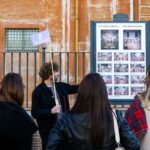
Scalinata dei Borgia and Torre dei Borgia: the darker stops
Now the tour turns moodier. You climb the Scalinata dei Borgia, described as a dark, spooky staircase leading to the courtyard tied to the residence of Pope Borgia and his mistress. If you’re into intrigue, this is a highlight. The guide’s storytelling style matters here, and several guests singled out guides like Jason, Ali, and Rebecca for making these darker tales vivid without turning it into a cheesy routine.
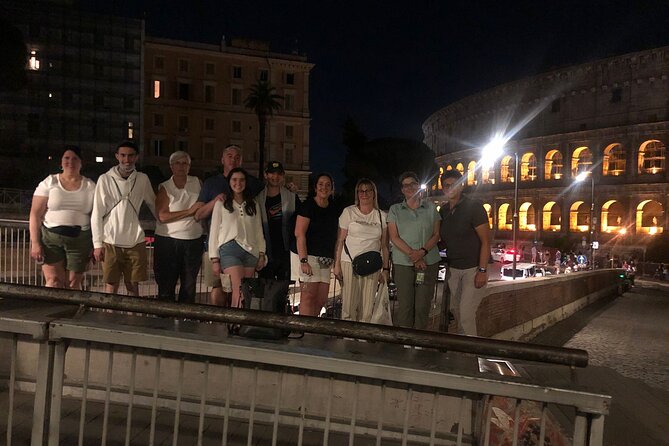
After that, you reach Torre dei Borgia. The pitch here is simple: there’s something spectacular around every corner, and your guide takes you to a secret-feeling spot where locals gather to admire the Colosseum at night.
This segment is worth taking slowly. The value isn’t only the view. It’s the way the tour uses suspense and timing. The dark staircase builds anticipation, then Torre dei Borgia delivers the payoff: a night perspective of the Colosseum framed by Rome’s living streets.
One more real-world detail: if the weather is rainy or streets are slick, step carefully on stairs and uneven pavement. A night walk is still a walk, and Rome can be slippery when it’s wet.
Piazza del Colosseo: your Colosseum night finale
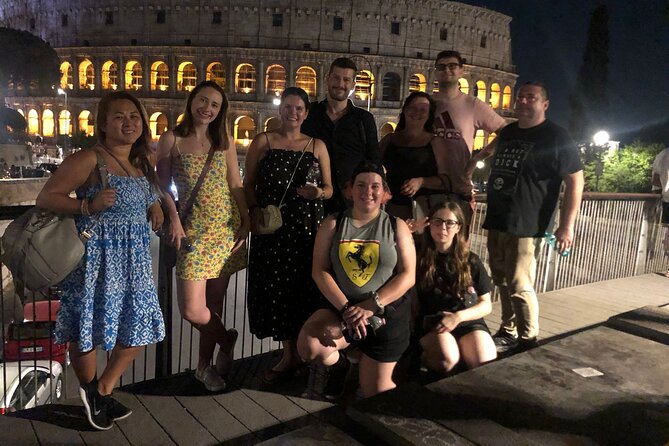
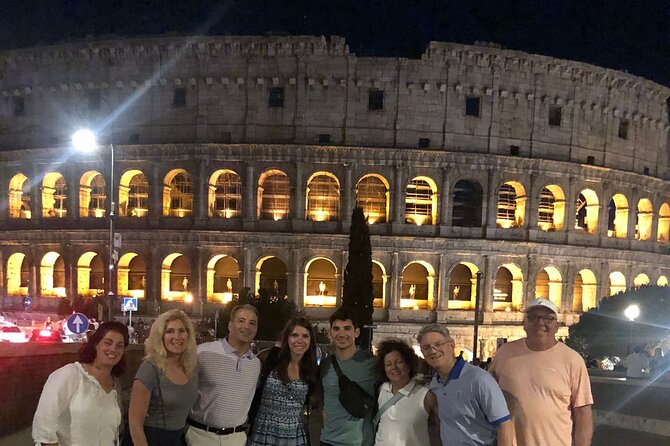
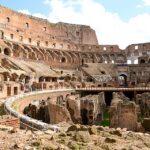
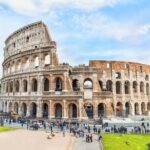
You finish in Piazza del Colosseo with an awe-inspiring view of the Colosseum at night. This is your big closing moment, and it’s also your best reminder of why twilight matters.
At night, the Colosseum tends to feel grander. Lights skim edges and texture in a way that makes the scale pop. It’s also a practical end point: you’ve arrived at the most iconic landmark, and you can keep exploring on your own afterward.
If you’re the type who likes one last photo to anchor the trip, this is it. The guide usually gives you a short window to take pictures, then you’re done. That keeps the group from lingering too long and getting tired at the end.
Group pace, timing, and what 15 people changes
This tour runs about 1 hour 30 minutes to 2 hours, depending on the group and conditions. With a cap of 15, you should expect a smooth pace where the guide can pause for questions without the group fracturing.
That small-group setup is also why some guests felt it had a private-tour feel, especially when the group was tiny. Practically, it means you’re less likely to get lost in a crowd behind someone else’s hat.
Where timing can shift: if the city is busy, or if there’s construction nearby, the walk may slow. Also, it depends on how long the group lingers at viewpoints for questions and photos. If you love learning and photos, that’s a plus. If you’re in a strict schedule, arrive with a bit of buffer for walking time.
Photo strategy: getting Colosseum shots without fighting the crowds
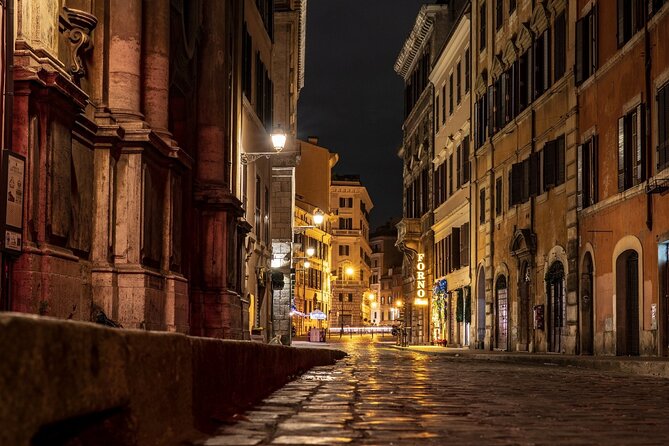
The Colosseum view is the headline, but you’ll have a few chances before the end. Here’s how to get better results without wasting time:
- Use the twilight angle: you’ll get softer lighting than midday, which makes stone texture look sharper
- Stand where the guide stops: the best views often come from specific corners or small clear spots
- Shoot, then listen: on this kind of tour, the guide’s context makes your photos more meaningful
- Bring a plan for rain: at least one guest noted rain didn’t ruin the tour, but your camera choices may need adjustments
If you’ve ever tried to take a perfect picture of the Colosseum while people stream past, you know the frustration. Night can be better because crowds are typically calmer and the lighting helps your shots. Still, be patient and let your guide manage the group’s movement.
Weather, restoration, and why messages sometimes matter
Rome weather can be unpredictable, and this tour depends on good conditions. If weather is poor, you’ll be offered a different date or a full refund.
Also, during the Jubilee period, some monuments may be under restoration. That’s not rare in Rome, but it does matter because it can shift what you see. The key is to pay attention to messages sent to you after booking. If a stop is affected, the guide will likely adapt the walking plan.
This matters most if you’re visiting during a tight window. In that case, book early enough that you have flexibility if changes happen.
Value check: why $37.49 can be a smart buy
At $37.49 per person, the value comes from the combination of: a guided route through multiple major viewpoints, a small-group format, and the fact that you’re doing the experience at a time when you usually pay less attention to logistics and more to the magic.
You’re not buying a pile of separate tickets for every stop. Instead, you’re guided from place to place, with explanations and photo chances threaded into the walk. For most visitors, that’s the difference between seeing Rome as a checklist and understanding it as a connected city.
The guide quality is also part of the value equation. Multiple names came up in feedback: Mario, Fabio, Bryan, Jason, Lara, Ali, Laura, Louise, and Rebecca. Across those guides, a consistent theme shows up: stories delivered with energy, plus lots of time to answer questions.
One caution on value: if you have trouble hearing, and your spot in the group ends up farther away, you might feel the audio is less clear. Since headsets weren’t available according to one review, choose your position early and don’t be afraid to move closer if the group bunches up.
Who this twilight walk suits best
This tour fits best if you want a first solid pass through central ancient Rome without spending all day in the heat. You’ll enjoy it if you like:
- Walking with context, not just photos
- A route that mixes big landmarks with street-level neighborhood atmosphere
- A night rhythm where the city feels more cinematic
- Guides who talk through what you’re seeing, including darker stories around the Borgia sites
It may be less ideal if you have limited mobility, since it involves walking and includes a staircase. The good news: the tour notes that service animals are allowed and most travelers can participate.
If you’re traveling as a couple, group of friends, or family, the small group cap helps you avoid the feeling of being swallowed by a bus tour crowd.
Should you book this Rome twilight walk?
Yes, if you want a smart, efficient way to see ancient Rome when it feels calmer and prettier. The route covers major viewpoint moments and ends with a Colosseum night finale, and the small-group size makes the experience feel human.
I’d skip (or at least think twice) if you’re extremely sensitive to audio and you don’t want to risk hearing challenges, especially since headsets aren’t mentioned as part of the plan. Also, if you’re arriving during a period of restoration or you’re on a super tight schedule, keep an eye out for messages and be flexible.
If you like history with atmosphere and you want Rome after dark without the midday slog, this is a strong pick.
FAQ
How long is the Ancient Rome at Twilight walking tour?
It runs about 1 hour 30 minutes to 2 hours.
How much does the tour cost?
The price is $37.49 per person.
Where do I meet the tour, and where does it end?
You meet at the Monument to Victor Emmanuel II in Piazza Venezia and the tour ends in front of the Colosseum at Piazza del Colosseo.
What group size should I expect?
The tour has a maximum of 15 travelers.
Is the tour in English?
Yes, it is offered in English. You also receive your guide’s name and number to make communication easier.
Is there a mobile ticket?
Yes, you’ll receive a mobile ticket.
Are service animals allowed?
Yes, service animals are allowed.
What happens if it’s raining or monuments are affected by restoration?
The experience requires good weather, and if it’s canceled due to poor weather you’ll be offered a different date or a full refund. During the Jubilee, some monuments may be under restoration, and you should watch for messages about possible changes.
Can I cancel for a refund?
You can cancel up to 24 hours in advance for a full refund. If you cancel within 24 hours of the start time, the amount paid is not refunded.