REVIEW · ROME
Angels & Demons Rome Scavenger Hunt: The Illuminati Escape Game
Book on Viator →Operated by Questo · Bookable on Viator
One app, 11 clues, and a Roman mystery to solve. This Angels & Demons Rome scavenger hunt turns the big sights into a game, with a downloadable smartphone quest that lets you wander with your own timing. I also love that it feels like a proper “escape game” story across iconic places, without needing a physical guide hovering over you. The main catch: it’s very app-dependent, so if your phone has tech trouble, the experience can stall.
You start at Basilica of Saint Mary of the Angels and Martyrs and end at St. Peter’s Square, moving through famous stops like Trevi Fountain and the Pantheon and then into the Vatican area. The route is built around clue-solving and short puzzle checks, but you control how long you stay once you arrive.
One more consideration: parts of Rome change fast—renovations, scaffolding, and restricted views can make certain visual clues harder to spot. If you want a fully straightforward sightseeing day with zero surprises, this might feel a bit frustrating.
In This Review
- Best Parts of the Angels & Demons Rome Scavenger Hunt
- Rome’s Angels & Demons Quest, Built for Walking at Your Pace
- Price and Value: What $6.02 Buys You in Rome
- App First: Why the Mobile Quest Is the Whole Point (and the Main Risk)
- Your 11-Stop Route Through Rome and Into the Vatican
- Stop 1: Santa Maria degli Angeli e dei Martiri (Santa Mary of the Angels)
- Stop 2: Santa Maria della Vittoria
- Stop 3: Fontana del Tritone
- Stop 4: Trevi Fountain
- Stop 5: Pantheon
- Stop 6: Piazza Navona
- Stop 7: St. Angelo Bridge (Ponte Sant’Angelo)
- Stop 8: St. Peter’s Square
- Stop 9: Obelisco Vaticano
- Stop 10: St. Peter’s Basilica (Admission Not Included)
- Stop 11: Vatican City
- Timing and Pacing That Actually Works in Real Rome
- Crowd, Construction, and Visibility: When Clues Get Tricky
- Who Should Book This Scavenger Hunt (and Who Might Skip It)
- Should You Book the Angels & Demons Rome Scavenger Hunt?
- FAQ
- FAQ
- How long does the Angels & Demons Rome scavenger hunt take?
- Is this a guided tour with a physical guide?
- Where does the quest start and end?
- Are entrance tickets included for the stops?
- Do I need to download an app?
- Is it only for my group?
- Can I play it later if I do not finish?
Best Parts of the Angels & Demons Rome Scavenger Hunt
- Smartphone quest, lifetime access: You get the app and the full storyline, and you can replay later.
- Private experience for your group: It’s just you, not a big bus tour crowd.
- A puzzle trail through the classics: Trevi Fountain, Pantheon, Piazza Navona, and more are part of the game.
- Free admission at most stops: Each location is marked, and most entries are listed as free.
- Built for your pace: You can pause your progress at each stop and keep going when you’re ready.
- Family-friendly teamwork potential: The format works well for mixed ages who enjoy solving together.
Rome’s Angels & Demons Quest, Built for Walking at Your Pace
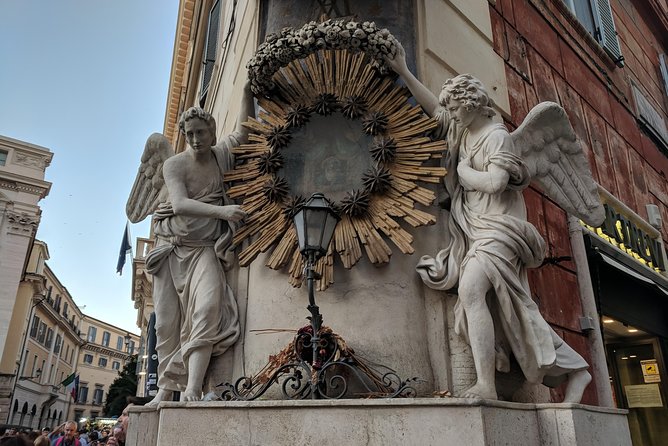
This is a self-guided adventure that uses the city like a game board. Instead of a traditional script read in a loud voice, you get step-by-step prompts on your phone. You follow clues, solve riddles, and then show up at a real place in Rome where the next part waits for you.
The fun is in the movement. You’re not just passing landmarks—you’re trying to figure out how the next landmark fits the story. That turns a normal “look, a fountain” moment into “wait, what does that clue want me to notice?”
And you can set your rhythm. The typical segment time is short, but the experience time is flexible because you can spend as long as you want at each stop until you decide to start the next clue. One of the best pieces of advice here is also the simplest: don’t treat it like a race. If you rush, the puzzles and the wandering both feel worse.
You can also read our reviews of more tours and experiences in Rome.


Price and Value: What $6.02 Buys You in Rome
At about $6.02 per person, this is priced like a cheap activity and sold like a real game. The “value” angle comes from two things:
- You’re paying for structure, not just walking. The route is planned, and the phone does the heavy lifting (instructions, story beats, and puzzle sequence).
- Most locations are listed as free admission. That matters in Rome, where entry fees can add up fast.
One practical note: St. Peter’s Basilica is listed as not included. If you want to go inside there, you should plan for that additional cost on your own.
Also, you can cancel for free up to 24 hours in advance. If your Rome schedule gets messy, that flexibility helps.
App First: Why the Mobile Quest Is the Whole Point (and the Main Risk)
This experience runs through the Questo app. Your “ticket” is mobile, and the quest instructions live on your smartphone. The upside is clear: no waiting on a meeting time, no physical guide to track, and no guessing where you should go next.
But app dependence cuts both ways. A few visitors reported problems like the app not loading or downloading issues. Others ran into difficulty when something in the area didn’t look like the clue expected—like statues hidden by scaffolding or access restrictions. So I recommend doing two things before you start:
- Check your phone battery and bring a charger if you have one.
- Start early enough that you’re not stuck mid-quest when daylight disappears or you’re tired.
If you’re not comfortable troubleshooting an app while walking, this isn’t the best “hand it to me” kind of tour. You’ll want to be okay with a bit of tech fiddling and the reality of “Rome is under repair.”
Your 11-Stop Route Through Rome and Into the Vatican
The quest moves in a clear sequence—solve a clue, arrive at a location, solve the next part, repeat. Many stops are short on paper (often around 10 minutes), but you can linger once you’re there.
Here’s what to expect at each stop and what makes each one interesting.
Stop 1: Santa Maria degli Angeli e dei Martiri (Santa Mary of the Angels)
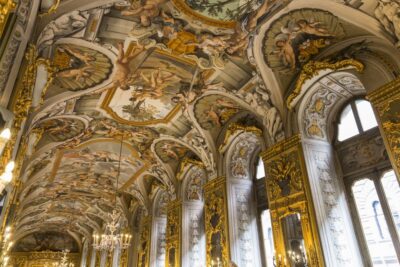
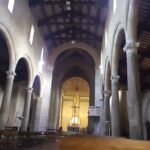
You begin at the Basilica di Santa Maria degli Angeli e dei Martiri near Piazza della Repubblica. You’ll get there by following the first clue and puzzle, then you can stay as long as you like.
Why this start works: it gives you a baseline landmark right away before you hit the more crowded, puzzle-heavy zones. It also makes the quest feel anchored in real Rome from minute one, not like you’re only chasing sights later.



Stop 2: Santa Maria della Vittoria
Next you move to Santa Maria della Vittoria, again via clue-solving. Spend time here before moving on.
This church stop is part of what gives the day its “mystery” feel—religious spaces aren’t just scenery when the app is asking you to notice details. Do note: access and visibility can vary depending on what’s going on inside and around artworks, so if you’re expecting a specific view, keep your expectations flexible.
Stop 3: Fontana del Tritone
Then comes Fontana del Tritone, followed by another short clue round before you continue.
Fountain stops are great in a quest like this because they’re visually distinct. Even if you’re not sure what you’re looking at at first, the location tends to be obvious once you’re near.
Stop 4: Trevi Fountain
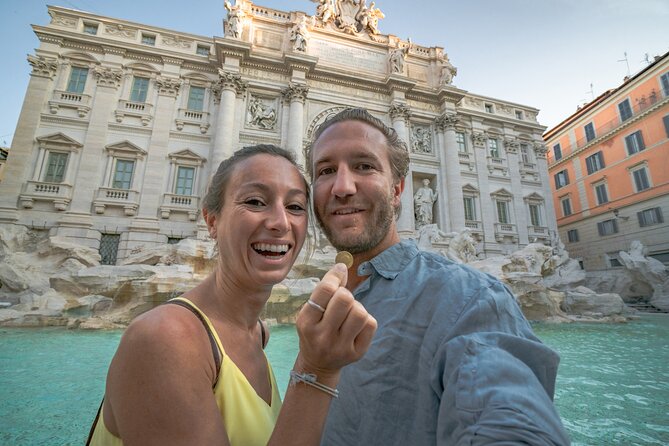
You’ll hit Trevi Fountain by clue and puzzle. You can linger, but you still have to keep the quest moving when you’re ready.
Trevi is the part where the game really changes the mood. Instead of only photographing, you’re actively trying to connect the clue logic to what you’re seeing around you. It also helps you get a few minutes of meaning out of a place that can otherwise feel like “everyone is standing in one spot.”
Stop 5: Pantheon
Next is the Pantheon. The app sends you there with a puzzle, and once you arrive, you spend as long as you wish before the next step.
The Pantheon is a strong mid-route anchor. It’s one of those locations where the architecture is already the main event, so the quest adds a layer without competing with the building. If you want a break from constant walking, this is a good moment to slow down.
Stop 6: Piazza Navona
Now you’re in Piazza Navona. Expect another clue-based push, then time on-site.
Piazza Navona is a natural fit for an app-led hunt because it’s open, easy to navigate, and full of details you can use for observation. It’s also a good place to pause for a snack—if you plan it right, you can treat it like the quest’s “rest and reset” point.
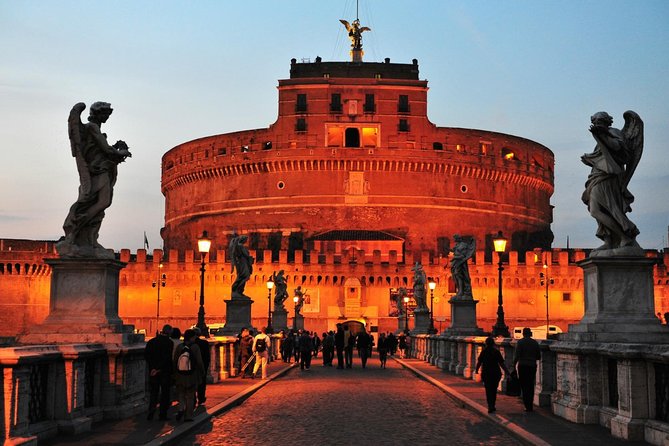
Stop 7: St. Angelo Bridge (Ponte Sant’Angelo)
You’ll be directed to St. Angelo Bridge, again using the clue trail.
Bridges are where the walking starts to feel like a journey. You get a sense of Rome’s layout, and the route feels less like you’re bouncing between disconnected monuments. If you’re doing this on a hot day, this is also where pace management matters most.
Stop 8: St. Peter’s Square
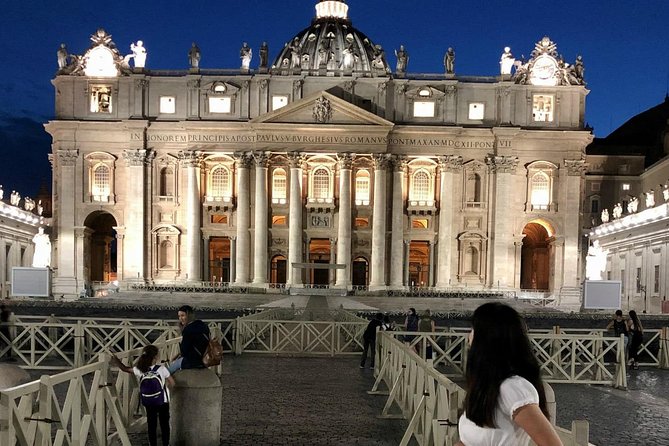
After that, you reach St. Peter’s Square. You can take your time here before continuing.
This is a turning point: once you’re in the Vatican area, you’re no longer just “in Rome.” You’re in the part of the city that feels most ceremonial and most constrained by rules, security, and crowds. For a quest, that’s fun—because the atmosphere makes the story feel heavier.
Stop 9: Obelisco Vaticano
Then the quest targets Obelisco Vaticano. It’s a shorter stop, so use it like a waypoint: solve what you need, snap any useful context photos, move on.
Obelisks are excellent for games because they’re unmistakable. When you can’t find the answer in a crowded plaza, the next best thing is usually “find the landmark first.”
Stop 10: St. Peter’s Basilica (Admission Not Included)
Next is St. Peter’s Basilica, and this is the one stop where admission is not included.
So you’ll want to decide ahead of time: do you want to spend extra money and time for entry? If you do, build that into your schedule so you don’t end up rushing at the end.
Also, because the quest pacing is puzzle-based, it’s smart to keep a buffer here. If entry queues or access delays happen, it can disrupt your timing.
Stop 11: Vatican City
Finally, you reach Vatican City for the last clue phase. It’s listed as a longer stop (about 20 minutes), and you’ll wrap the experience here.
This ending works because it doesn’t just stop at a photo spot. You finish in a place that already feels like the climax of any Rome day, and the quest format gives you a reason to take that ending seriously.
Timing and Pacing That Actually Works in Real Rome
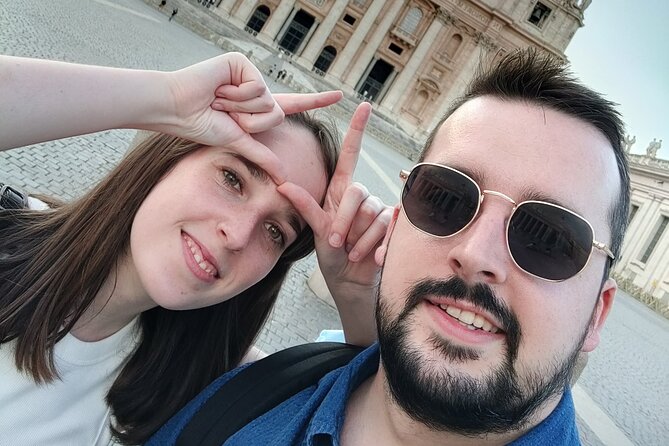
The quest is listed at about 1 hour 30 minutes to 2 hours. In practice, your time depends on how long you linger at each location and how quickly you solve puzzles.
Here’s how I’d pace it:
- Start earlier rather than later. Rome heat and tired legs can make riddles feel like homework.
- Don’t try to win. A couple of people commented that racing through felt like a waste. I agree. The value is in the wandering.
- Use “clue time” as your focus. Once you reach a stop, your job is to solve and then decide whether to stay for more sight time.
If you’re traveling with kids or a mixed-age group, this format can be a blessing because the “task” keeps everyone moving in the same direction. But you’ll still want to give the group short breaks so the walking doesn’t wear down attention.
Crowd, Construction, and Visibility: When Clues Get Tricky

Rome isn’t static. Scaffolding and maintenance are part of the deal. In this specific quest, some puzzles may depend on what’s visible at a given moment.
So here’s the practical mindset: if a clue expects something you can’t see, use imagination, look for alternate angles, and be ready to skip or adapt if access is blocked. That’s not you failing—it’s just Rome being Rome.
Also remember that some churches and artworks have restricted viewing based on daily operations. If you encounter access limits, keep moving to the next clue point rather than getting stuck.
Who Should Book This Scavenger Hunt (and Who Might Skip It)
This works best if you:
- Enjoy solving puzzles while walking.
- Want a low-stress way to cover big names like Trevi, the Pantheon, and Piazza Navona without a guide talking nonstop.
- Like travel that you can control. You can stay longer at stops you enjoy and move quickly through ones you don’t.
It’s not ideal if you:
- Hate app-based activities or don’t want to manage a phone during your tour.
- Want a guide to interpret every detail on the spot.
- Are hoping for zero uncertainty about what you’ll see at each artwork or view.
Should You Book the Angels & Demons Rome Scavenger Hunt?
If you want an active, story-driven way to see Rome’s most famous areas—plus a route that takes you through the city rather than just around the edges—this is a smart buy. The price is low, the format keeps everyone engaged, and the ability to explore at your own pace is a real advantage.
But book with eyes open. The experience depends on the app, and Rome’s construction and access issues can make some clue moments less straightforward. If you’re comfortable with that tradeoff, you’ll likely enjoy turning a sightseeing day into a mystery hunt.
FAQ
FAQ
How long does the Angels & Demons Rome scavenger hunt take?
It’s listed at about 1 hour 30 minutes to 2 hours (approx.), depending on how long you spend at each stop.
Is this a guided tour with a physical guide?
No. It’s a private, self-guided experience using the mobile app and a quest storyline. You won’t have a physical tour guide with you.
Where does the quest start and end?
It starts at Basilica of Saint Mary of the Angels and Martyrs (near Piazza della Repubblica, 8) and ends at St. Peter’s Square (Piazza San Pietro).
Are entrance tickets included for the stops?
Most stops are listed as free admission. St. Peter’s Basilica is specifically listed as admission not included.
Do I need to download an app?
Yes. The experience includes access to the mobile app and the full quest, with instructions and challenges shown on your smartphone.
Is it only for my group?
Yes. It’s private, so only your group participates.
Can I play it later if I do not finish?
The game includes lifetime access and is available 24/7, so you can play anytime after purchase.