REVIEW · ROME
Appian Way E-bike Tour with Gourmet Picnic and Catacombs
Book on Viator →Operated by The Red Bicycle Touring Organization · Bookable on Viator
If you want Rome without the traffic and crowds, this tour delivers. I love how the ride stays mostly countryside quiet and how the Bluetooth helmets make it easy to hear your guide (and family) without stress; the only real watch-out is that lunch details can vary, and the return can include busy streets and low light.
You’ll start near Aventine, roll out toward the Appian Way with minimal city fighting, and spend the morning on ancient roads, aqueduct views, and underground Christian burial sites. Expect a small group (up to 12), an e-bike that handles the work for you, and a guide who keeps you moving at a safe pace.
In This Review
- Key Highlights You’ll Care About
- Appian Way E-Bike: The Big Win Is Leaving Rome Stress Behind
- Getting Your Bearings: Meeting Point, Time, and What You’re Really Riding
- Bluetooth Helmets, Safety, and How Guides Keep the Ride Smooth
- Aurelian Walls Stop: Quick Warm-Up on Roman Stone
- Catacombs of Saint Callixtus: The Coolest, Most Memorable Hour
- Cecilia Metella and Castrum Caetani: A Scenic Break at a Medieval- Roman Mix
- Via Appia Antica: Cycling an Ancient Road Straight Into the Countryside
- Appia Antica Regional Park: Hill Views and That “Close to Rome” Feeling
- Parco degli Acquedotti and Aqueducts Claudius and Marcia (Plus Felix)
- Caffarella Park: Farmland Memories, Sheep Fields, and Water Stops
- The Gourmet Picnic: Worth It, Just Know It Can Look Different
- Riding Back Toward Rome: Bumpy Roads, Rush Hour, and Low Light
- Who Should Book This Appian Way E-Bike Tour
- Should You Book It?
Key Highlights You’ll Care About
- Bluetooth helmets with microphones so you can hear directions clearly while riding
- Catacombs of Saint Callixtus with included guided entry underground
- Via Appia Antica and aqueduct parks close to Rome, not a far-off “nowhere” day
- Picnic-style lunch in the countryside using local Italian produce (with some variation in what it looks like)
- Mostly car-free cycling, with only short stretches where cars appear more on some days
Appian Way E-Bike: The Big Win Is Leaving Rome Stress Behind
Rome can be great, but it can also be a constant shuffle: cars, scooters, crowds, and that feeling that you’re always dodging something. This tour gives you an immediate escape. Once you’re rolling, the route is designed to keep you out of the thick of city traffic and into open countryside vibes—farmlands, wooded valleys, and those park stretches where the world gets quiet for a moment.
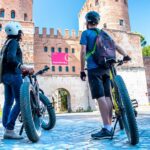
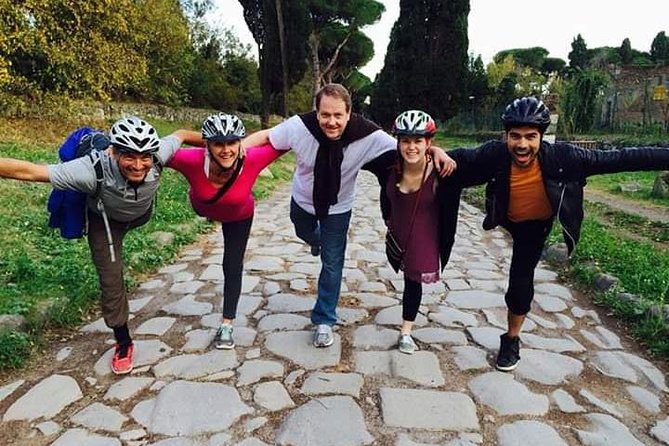
The second big win is how the ride feels “guided,” not “just rented bikes.” You get helmets with integrated Bluetooth headsets and microphones. That means you hear the guide clearly and can stay in sync with your group without having to keep turning around. For families, it’s a comfort upgrade, not a gimmick.
The trade-off? Nothing is perfect. Some people find that the lunch they hoped for doesn’t match what they receive in their specific session. And when you’re heading back, you may hit busy streets around rush hour and possibly ride back with less daylight, so you’ll want to feel confident on a bike.
You can also read our reviews of more tours and experiences in Rome.

Getting Your Bearings: Meeting Point, Time, and What You’re Really Riding
The tour starts at Viale Aventino, 35, 00153 Roma and ends back there. It runs about 4 hours 30 minutes, long enough to feel like a full morning but not so long that you’ll be dragging by the time you return.
This is built for moderate physical fitness. The e-bike does the heavy lifting, and in practice the route is not described as a brutal climbing workout. Still, it’s not a stroller stroll. You should be comfortable riding a bike, and you should expect the kind of road surfaces you’d expect on ancient paths—sometimes a bit bumpy, because that’s part of the experience.
Group size is capped at 12, which matters more than it sounds. Smaller groups usually mean the guide can slow down for traffic points, watch stragglers, and actually manage the ride instead of just herding people along like a parade.
Bluetooth Helmets, Safety, and How Guides Keep the Ride Smooth
One of the most practical features here is the helmet setup. The integrated Bluetooth headsets and microphones help the guide communicate without shouting over engines, wind, or distance. It also helps if you’re traveling with kids or with another adult you want to keep close. Instead of waving and losing track, you can listen and follow.
You’ll also feel the guide’s job as a traffic manager. In the feedback you’ll read online, a common theme is that guides stay attentive to safety, including how to handle the few moments where cars show up. You may also find that your comfort depends on your confidence level, especially if the day ends with less light.
Guide names that show up often include Hosein, Julian, Laura, Richard, Iman, and Ricardo. Even with different personalities, the consistent pattern is that they’re interactive: checking you’re okay, adjusting pace for the group, and making the history understandable without turning it into a lecture that ignores the ride.
Aurelian Walls Stop: Quick Warm-Up on Roman Stone
You’ll make a short first stop at the Aurelian Walls—ancient Roman defensive walls still standing in a pretty sturdy way. It’s not the main event, but it’s a smart kickoff. You get a quick look at the Roman gate concept and you start thinking like you’re leaving the modern city behind, not just cycling randomly through it.
This stop is brief (about 5 minutes) and free. Consider it your “start the story” moment—enough to set context without slowing the morning down.
Catacombs of Saint Callixtus: The Coolest, Most Memorable Hour
The headline stop is the Catacombs of Saint Callixtus, with included admission and a guided visit. This is the kind of site that stops being theoretical the second you’re underground. The catacombs were connected to early Christian worship and burial practices, reaching back to the first Christian community and continuing through the 3rd century.
You’ll spend about 1 hour here. Underground means it’s cooler than the surface, and that can be a real relief on hot days. If you’re visiting in summer, this is one of the few parts of Rome that actually helps your body, not just your photos.
A practical tip: this stop runs on a schedule. Don’t show up late expecting to improvise. If your group arrives behind time, you’ll likely lose precious minutes you planned for exploring.

Cecilia Metella and Castrum Caetani: A Scenic Break at a Medieval- Roman Mix
After the catacombs, there’s a quick water break in front of Mausoleo di Cecilia Metella and Castrum Caetani. This is a short pause (around 5 minutes), but it’s a nice change of mood: you move from the underground world to a striking monumental setting that feels like history stacked on top of history.
You’re also taking a real break here. In a ride like this, the pacing depends on stopping enough to reset—breathe, drink, and check you’re all together—without losing the rhythm of the day.
Via Appia Antica: Cycling an Ancient Road Straight Into the Countryside
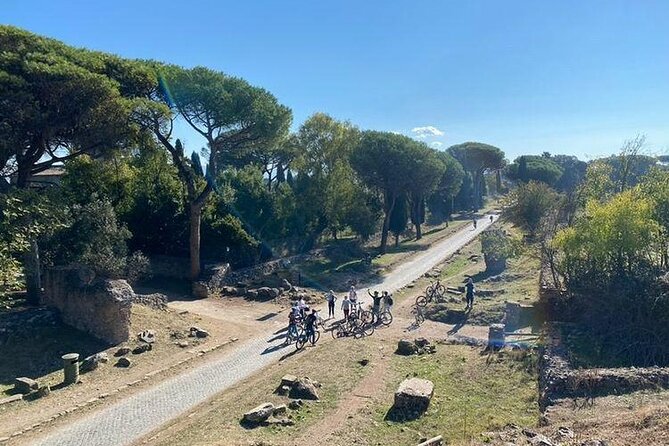
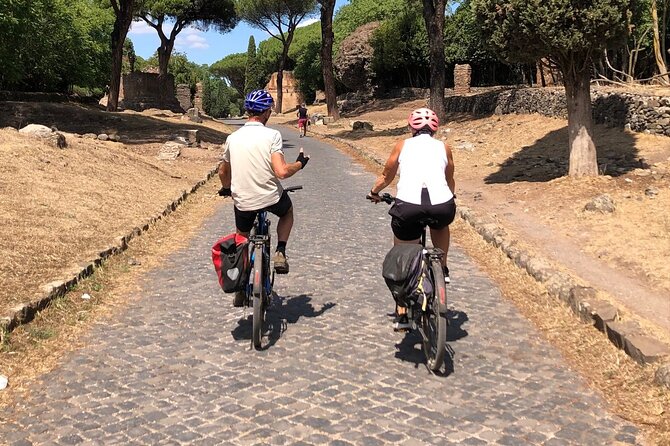
Then comes one of the most satisfying parts: a moment on Appian Way (Via Appia Antica). This is described as the easiest way out into the countryside from Rome, and you’ll feel that right away.
This stop is short (about 5 minutes), but don’t underestimate the impact. Riding on an ancient road is one of those experiences that makes you understand how people moved when Rome was Rome. It’s also a psychological shift: you’re not just seeing ruins; you’re moving along the same kind of corridor that carried travelers and goods in ancient times.
Appia Antica Regional Park: Hill Views and That “Close to Rome” Feeling
Next is Parco Regionale dell’Appia Antica, with time for a view from a little hill (around 15 minutes). The best part isn’t only the scenery—it’s the surprise that you’re doing all of this close to the city. It can look remote from the outside, but the parks sit just near enough that you’re not spending the entire day commuting.
This is also where you’ll notice the overall design of the day. Stops aren’t just random photo points. They help you understand how the Appian Way functioned: roads, villas, aqueducts, and long stretches linking Rome to the wider region.
Parco degli Acquedotti and Aqueducts Claudius and Marcia (Plus Felix)
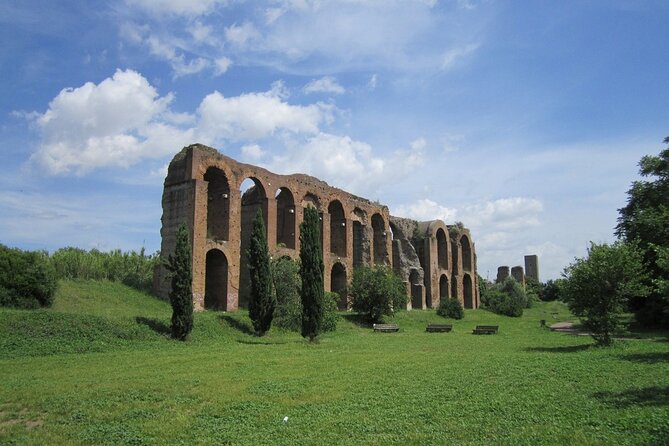
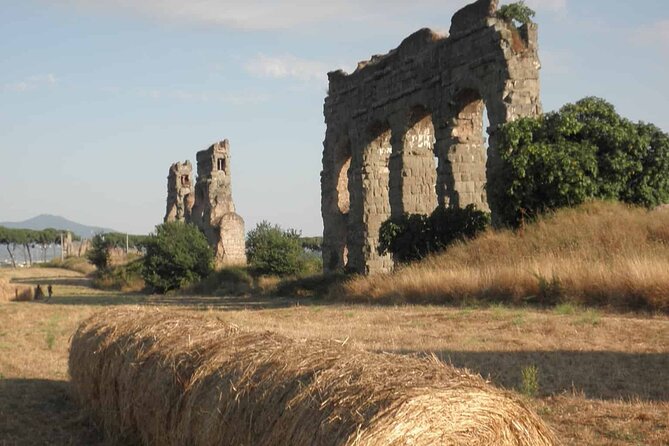
Now for the aqueduct payoff. In Parco degli Acquedotti, you’ll see remains of the Roman aqueducts Claudio and Marcia, plus the later Renaissance aqueduct Felix. This is one of the most “Rome” visuals you can get outside a museum: stone channels, lines that still make sense even when parts are broken.
Your stop here is brief (about 5 minutes), but the guide helps you connect what you see to how water shaped the city. Even for people who think they don’t care about aqueducts, this tends to click once you’re looking at the actual structures.
Caffarella Park: Farmland Memories, Sheep Fields, and Water Stops
The final countryside stretch goes through Parco della Caffarella, a park that used to be farmland. Today it’s used as grazing land, including by a sheep farmer in the area—so you get a more living, agricultural feel than you might expect from “Roman ruins” tourism.
You’ll cycle through and stop by a water fountain, and in this zone you may also see an aqueduct area plus a medieval watch tower. These moments don’t always look dramatic on a map, but they give your day balance. After the catacombs and big ancient monuments, this is where the outing feels like a real morning outdoors.
The Gourmet Picnic: Worth It, Just Know It Can Look Different
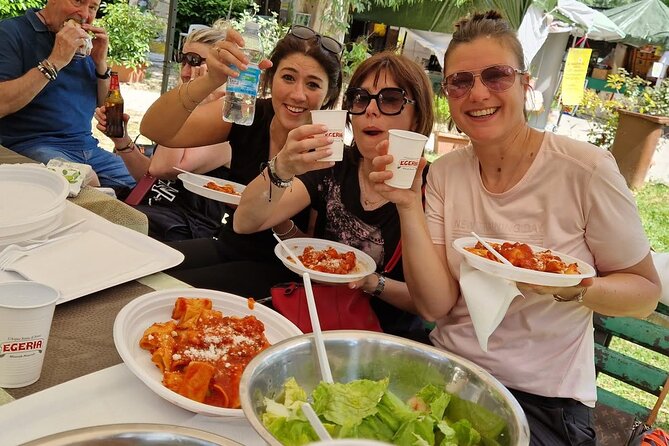
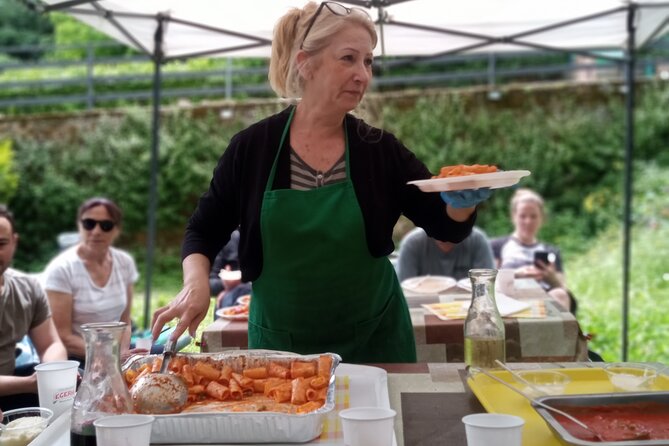
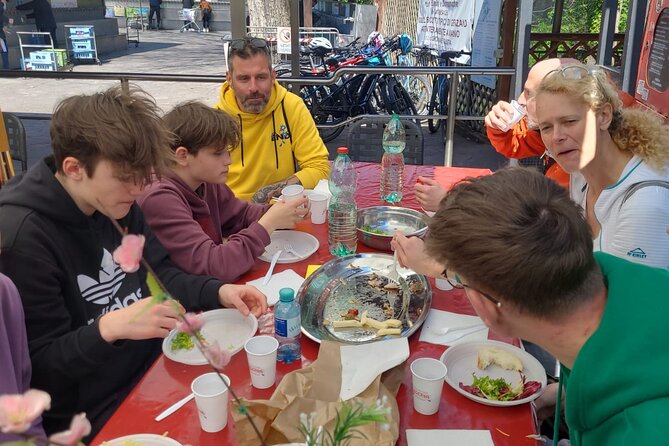
Lunch is a major part of the pitch here: a picnic in a rural setting featuring local Italian produce sourced from Quadraro. You won’t have time to visit the market itself, but you should taste the freshest ingredients through the food you’re served.
In practice, what you receive can vary. Some sessions get described as a fuller lunch experience with more substantial food, and others report a lighter setup such as pizza and a drink when they expected something more elaborate. Since the core promise is local produce and a countryside meal, I’d plan your expectations like this: you’ll eat well enough to feel the day was complete, but don’t assume the exact menu will match the most detailed description you read.
If you’re traveling with kids, the picnic setup can be a lifesaver. It’s also a good time to refill water so you can handle the ride back.
Riding Back Toward Rome: Bumpy Roads, Rush Hour, and Low Light
The route back goes through more farmland and wooded valley, then transitions into the city. This is where the tour shifts from peaceful to practical.
Some short sections can be open to cars, and this is noted as more frequent on Wednesdays. You’ll also want to be prepared for busy streets around rush hour and possibly a ride back in low light, depending on timing and season. The e-bike helps you keep steady speed, but your comfort still matters.
The best approach: wear something you can move in, keep your eyes up, and treat busy segments as brief work moments, not a scenic pause.
Who Should Book This Appian Way E-Bike Tour
This tour fits best if you want:
- Roman sights without the museum-only format
- A small-group ride with real guidance
- The Appian Way plus catacombs and aqueduct parks in one morning
- An e-bike day for people who want movement without getting worn out
It may be less ideal if:
- You’re extremely picky about lunch details and need an exact menu
- You dislike riding back near traffic or in low daylight
- You don’t feel comfortable biking at all (even with e-assist)
Should You Book It?
I think this is a strong buy if your priorities are the outdoors, the ancient corridors, and guided stops that you can’t easily recreate on your own without a lot of planning. The Bluetooth helmet communication, the included Catacombs of Saint Callixtus visit, and the aqueduct parks are the kind of combo that makes the time feel efficient and memorable.
Book it if you’re ready to ride confidently and you can accept that the picnic may show up in slightly different forms than you hoped. Skip it only if lunch sameness is your dealbreaker or if you know you’ll panic around traffic and low light.