REVIEW · ROME
Colosseum & Ancient Rome Guided Walking Tour
Book on Viator →Operated by Rome Walkers · Bookable on Viator
The Colosseum feels bigger when someone explains it. I like that this tour hits three top ancient sites in about 2 hours 45 minutes and that the tickets are included, so you’re not doing ticket math mid-trip. I also like the small-group setup (up to 25) with headsets, which helps when you’re surrounded by crowds. The main drawback to plan for is the walking: expect cobblestones, stairs, and some inclines, especially around the Palatine Hill area.
If you’re tight on time but still want the story, this is a smart way to see the Colosseum, then climb into Rome’s earliest power base on Palatine Hill, and finish in the Roman Forum’s political heart. Guides can be a big factor here, and while many guides are praised for being clear and funny, a small number of guests have found some accents tough to follow—so come ready to use the headsets and ask questions.
In This Review
- Key things to know before you go
- Colosseum focus: the Flavian Amphitheatre in real proportions
- What can be tough
- Palatine Hill: Rome’s start, plus the reason the spot was chosen
- Why this matters for your day
- What can be tough
- Roman Forum: where politics, business, and justice happened in open air
- A key reality check
- What can be tough
- Price and value: what $65.33 buys you in Rome terms
- Who gets the best value
- Meeting point, route flow, and what to do with your time
- A small-group plus headsets combo
- Guides: names you may hear, and the style to look for
- The downside to keep in mind
- What to bring so the day feels easier
- Should you book this Colosseum & Ancient Rome guided walking tour?
- FAQ
- How long is the Colosseum & Ancient Rome guided walking tour?
- What sites are included in the tour?
- Is admission included in the price?
- Does the tour include a guide and headsets?
- What is the group size?
- What language is the tour offered in?
- Where do I meet and where does the tour end?
- What documents do I need for entry?
- Is food or drinks included?
- Is the tour suitable for most people?
Key things to know before you go
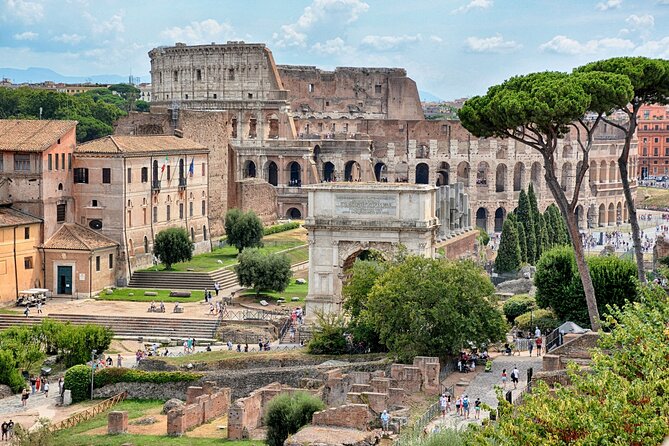
- Tickets and fees are included, including Colosseum entry plus reservation fees, which makes this good value for the time you save.
- Headsets help you hear your guide even when the group is moving through the loud, crowded parts of the ruins.
- A small-group size (max 25) generally means you’ll spend less time losing people and more time looking at the right spots.
- The Colosseum stop is built around its full scope, from its Roman engineering materials to who fought there and why the games mattered.
- You’ll cover three levels of Roman life fast: spectacle (Colosseum), power and palaces (Palatine Hill), and government and courts (Roman Forum).
Colosseum focus: the Flavian Amphitheatre in real proportions
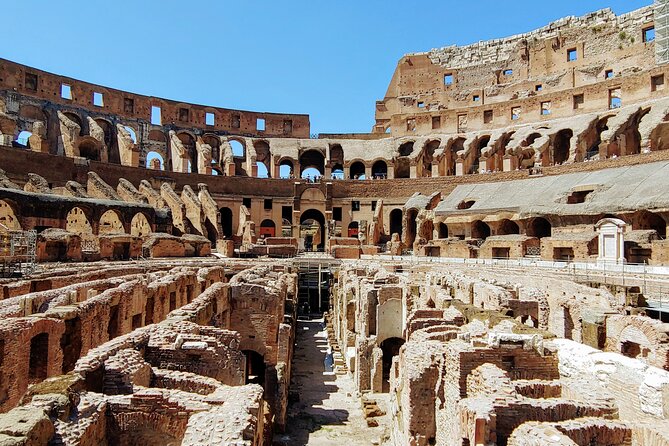
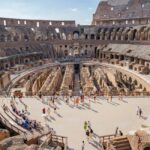
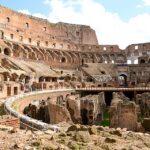
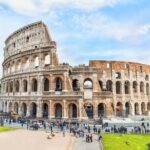
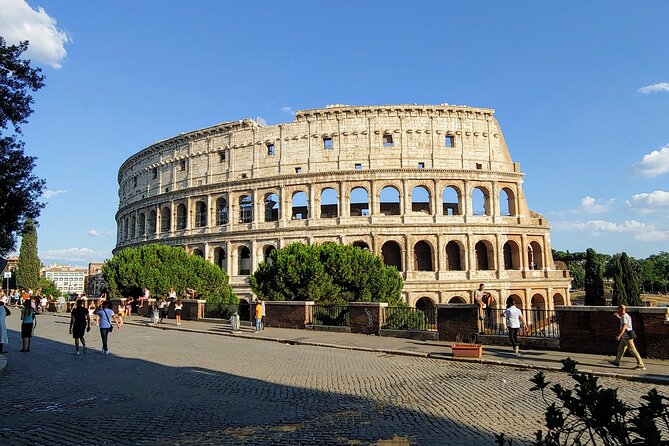
The Colosseum is the headline for a reason. It was built on the orders of Emperor Vespasian between 72 and 80 AD, and it’s best understood not just as a ruin, but as a machine for entertainment and control. Your guide frames it that way, so you walk in with questions like Why here? and Who paid for all of this?
One of the most useful things you’ll hear is how the Romans scaled the whole project. The tour shares that the amphitheatre was made with more than 1 million tons of materials, including travertine, marble, and cement. That detail helps you picture the Colosseum as an empire-sized build, not a one-off monument.
Then comes the human side. The Colosseum’s games weren’t paid by spectators—your guide explains that the Emperor funded them to show the greatness of Rome. Over almost five centuries, it’s described as the place where hundreds of thousands of gladiators, animals, and convicts fought. And if you like Roman political theater, this is a key point: the opening celebration under Titus in 80 AD lasted 100 days.
Practical tip: this stop gets crowded, and it can feel like you’re shuffling rather than learning. That’s why I like that this tour uses headsets and keeps the group moving with an organized pace. In past tours, guides have also taken short breaks for photos or brief rests, which matters when the stones are hot and your brain wants to keep up.
You can also read our reviews of more tours and experiences in Rome.
What can be tough
You’re here for a lot of spectacle, but not a long browse. The Colosseum portion is about an hour, and you’ll likely see the big story points rather than every corner of the building. Also, if you’re especially sensitive to noise or crowd density, build in patience and try to stick close to your guide so you don’t lose the narrative.
Palatine Hill: Rome’s start, plus the reason the spot was chosen
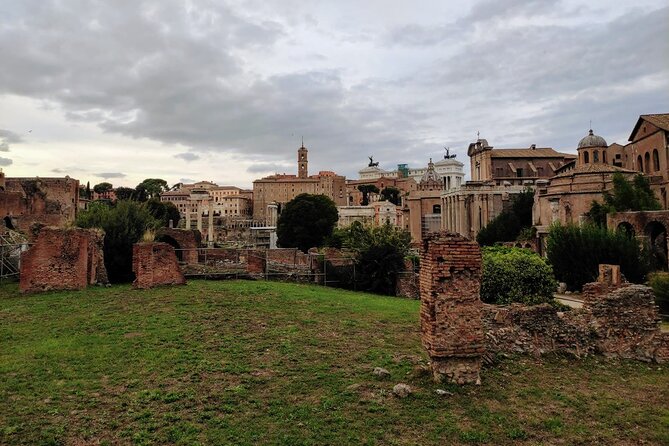
After the Colosseum, you head to Palatine Hill, and the tone changes fast. This is where Rome’s origin story lives—at least in the way Romans told it later. You’ll hear that Rome was first established here in 753 BC by Romulus, allegedly the first king of Rome.
What makes this stop more than a myth stop is the archaeological angle your guide brings in. The tour shares that archaeologists found traces of Bronze Age settlements on the hill, which supports the idea that the foundation date isn’t just fantasy. Then the perspective flips forward again to imperial Rome: today, you can still see remains of the imperial palaces.
Palatine also gets explained in terms of geography and strategy, and that part helps the hill make sense. The hill was chosen because it was central among the seven hills, and high ground near rivers mattered. Early civilizations tended to settle above flood risk, giving both defense advantages during attacks and protection from frequent flooding.
Why this matters for your day
If the Colosseum is about public spectacle, Palatine Hill is about who held power behind the scenes. You’ll connect the dots between the Emperor’s role in funding games and the elite households and palaces that sat just above the city’s core. The tour notes that Palatine was home to the houses of Rome’s kings and the palaces of emperors and notable people—so you can feel the shift from political rule to mass entertainment.
What can be tough
This area is the one where walking starts to feel like walking. You’ll face steps and inclines, and some sections can involve uneven ground. Bring water, go slow, and let the guide set the rhythm. Reviews also mention heat challenges in summer, so aim for morning light when possible.

Roman Forum: where politics, business, and justice happened in open air
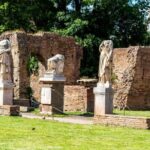
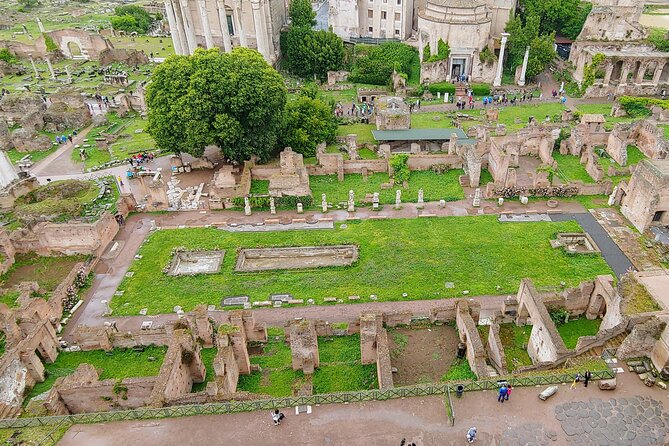
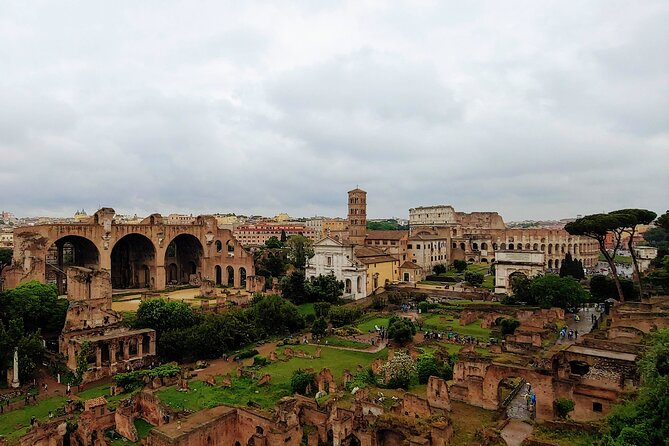
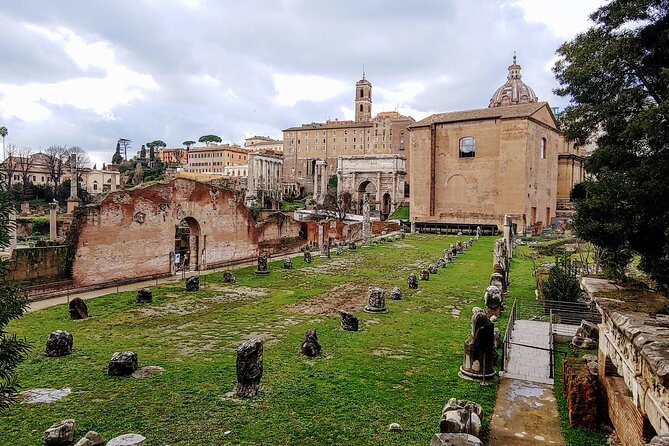
The Roman Forum is often described as the heart of ancient Rome, but on this tour it’s taught as a working place. You’re shown that it functioned like an outdoor plaza where people gathered to discuss political and civil life. Instead of just seeing columns, you’re encouraged to imagine the daily grind: proposals, arguments, commerce, and court business.
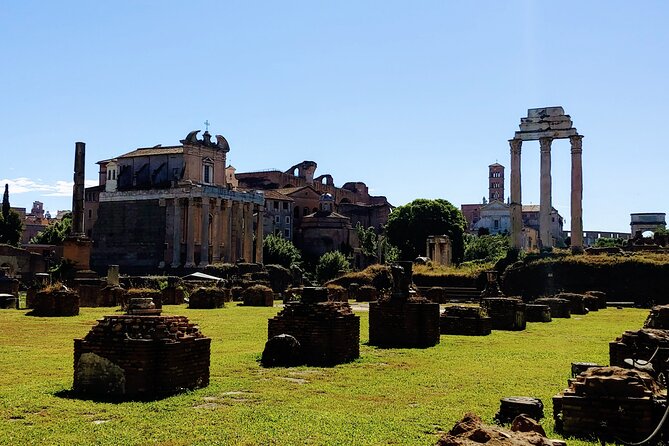
Your guide points out what was there. Temples, basilicas, and palaces of power surrounded the spaces, shaping how the city ran. The tour also emphasizes that the Forum is where politics of Rome were shaped, business made, and justice administered. If you’re the kind of traveler who likes structure, this is great: it turns the ruins into a map of institutions.
Some of the specific places named during the walk include the house of the Senate, plus temples and basilicas. By the time you reach the best viewing points, you’ll understand why people treated this area as more than architecture—it was where authority made itself real.
A key reality check
The Forum today is mostly fragments. Your guide frames that honestly: what you see is what remains, and yet it still shapes how we understand the past. That mindset helps. You stop expecting a fully intact city and start reading it like a story told from leftover pages.
What can be tough
The Forum portion is about 45 minutes, which is enough for orientation and major themes, but not enough for a long self-guided wander. If you want to linger in exactly one spot and do your own reading, you may feel the time pressure once you wrap up the guided explanation.
Price and value: what $65.33 buys you in Rome terms
The price for this tour is $65.33 per person, and the value comes from what’s bundled. The tour includes Colosseum, Palatine Hill & Roman Forum tickets and fees, plus a live guide and headsets. The listing details that the Colosseum entrance ticket is valued at €18 per person, and there’s also a Colosseum reservation fee valued at €2 per person.
In plain language: you’re paying for the big-ticket entries plus the human help to make the places click. If you’ve ever tried to piece together history while fighting crowds on your own, the guide time can save your brain. And because the group is limited (max 25), the guide can keep a tighter flow than you’d get in a huge group.
Also, you’re walking between the sites rather than hopping on transport, which is often the hidden cost of “cheaper” options. This tour compresses a lot of walking into a single plan, but it keeps that plan organized.
Who gets the best value
This is great for:
- First-timers who want the headline sites explained in a short window
- People who want structure and direction so they don’t waste time figuring out what to look at
- Families and multi-age groups, since several guides have been praised for managing mixed ages comfortably
It’s less ideal for:
- Travelers who want long, quiet self-paced time in one monument
- People who struggle with guided audio if they don’t like hearing someone talk for most of the route (one review mentioned a case where the guide talked continuously; your experience depends on the day and the guide)
Meeting point, route flow, and what to do with your time
The tour start point is L.go Gaetana Agnesi, 5, 00184 Roma RM, Italy, and it ends at the Roman Forum (00186 Rome, Metropolitan City of Rome Capital, Italy). It’s also listed as near public transportation, which is a win in Rome where getting anywhere can be half navigation.
Your experience length is about 2 hours 45 minutes. On the ground, that feels like a steady sprint with a few built-in breaks. The itinerary is built around:
- Colosseum: about 1 hour
- Palatine Hill: about 45 minutes
- Roman Forum: about 45 minutes
One extra point: this tour can’t be treated like a casual museum visit, because Colosseum timing is strict. In the general experience, arriving on schedule matters for entry. If you’re late, it can become a ticket issue and you might end up missing the guided portion even if you still have tickets.
A small-group plus headsets combo
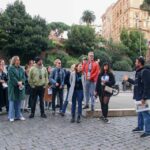
I really like the combination of headsets and group size. The headsets mean you don’t have to crane your neck or stand at the exact perfect distance to hear the guide. And with a smaller group, your attention can stay on the ruins instead of the constant task of herding your own “Where is everyone?” moments.
Guides: names you may hear, and the style to look for
One of the practical joys of this tour is the range of guides. Based on past groups, you might be led by people such as Kiara, Lumi, Juliya, Adnan, Alessandra, Max, Giuseppe, Sam, David Battaglino, Radu, or Raul. That matters because each guide has their own strengths in pacing, humor, and how they use visuals.
A few specific techniques pop up in the feedback:
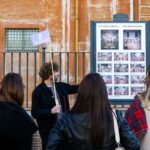
- Using a book with pictures to explain parts of the Colosseum more clearly (Lumi is noted for this)
- Keeping the group moving and finding shady pauses during hot weather (David Battaglino and others are praised for shade strategy)
- Explaining history like a story so it clicks fast for teens and adults (Radu is highlighted for keeping younger people engaged)
- Practical photo tactics, like positioning people for rail or viewing spots without turning the tour into a free-for-all
The downside to keep in mind
Not every guide lands equally for every ear. One guest noted a situation where the guide was hard to understand due to accent and the guide spoke nonstop instead of stopping for higher-impact moments. If clear audio is your top priority, come ready to use headsets and don’t be shy about asking a question when you can.
What to bring so the day feels easier
Even if the tour provides headsets and tickets, your body still handles the walking. To keep the day enjoyable:
- Wear comfy shoes with grip (cobbled pavements can be slippery)
- Bring water, especially in summer heat
- Expect stairs and inclines around Palatine Hill
- Use the headset, and stay close enough to hear without straining
Also, if you’re coming with a camera, be ready for photo moments. Guides are often aware of the best times to get shots without breaking group flow.
Should you book this Colosseum & Ancient Rome guided walking tour?
Yes, if your goal is to get oriented fast and see three heavy-hitters without losing time. The included admission tickets and reservation fees make the price feel fair, and the headsets plus small-group size help you keep up even when it’s crowded. It’s also a strong pick if you like your history with story and structure—Roman Empire power, public spectacle, and the Forum’s role in daily civic life, all in one run.
Skip it or plan extra time nearby if you:
- Want long solo exploring in the Colosseum or Forum
- Prefer minimal guidance and lots of quiet reading
- Are extremely sensitive to physical movement like steps and uneven ground
If you want the shortest path from Rome’s ruins to Rome’s meaning, this tour is a solid choice. Book it, show up on time, wear shoes you trust, and let the guide’s pacing do the heavy lifting.
FAQ
How long is the Colosseum & Ancient Rome guided walking tour?
It runs about 2 hours 45 minutes, with the main stops scheduled for Colosseum (about 1 hour), Palatine Hill (about 45 minutes), and the Roman Forum (about 45 minutes).
What sites are included in the tour?
You’ll visit the Colosseum, Palatine Hill, and the Roman Forum.
Is admission included in the price?
Yes. The tour includes tickets and fees for all three sites, including the Colosseum entrance ticket and a Colosseum reservation fee.
Does the tour include a guide and headsets?
Yes. You get a live tour guide and headsets.
What is the group size?
The tour has a maximum of 25 travelers.
What language is the tour offered in?
The tour is offered in English.
Where do I meet and where does the tour end?
The start is at L.go Gaetana Agnesi, 5, 00184 Roma RM, Italy. The tour ends at the Roman Forum area (00186 Rome, Metropolitan City of Rome Capital, Italy).
What documents do I need for entry?
Each traveler must present a valid passport or ID document that matches the full name provided at booking. If names don’t match, entry to the Colosseum and Roman Forum may be denied.
Is food or drinks included?
No. Food and drinks are not included.
Is the tour suitable for most people?
The tour notes that most travelers can participate, but it does involve walking, including stairs and inclines.