REVIEW · ROME
Colosseum Special Access Tour, with Ancient Temples & Tombs
Book on GetYourGuide →Operated by Let's See Italy · Bookable on GetYourGuide
Roman history gets real fast here. This special-access Colosseum tour combines priority entry with time inside the arena area and stops across the Roman Forum and Palatine Hill, guided with expert context. You’ll walk in the Colosseum from the Gladiators gate and learn how power, spectacle, and everyday life connected across this corner of ancient Rome.
Two things I really like: first, the payoff of choosing Underground dungeons vs the arena floor. Second, the guides run the show with clear explanations, and many people rave about how easy they are to hear thanks to over-ear audio headsets. The main trade-off is that this is a lot of steps, hills, and outdoor time, with limited chances to slow down for photos.
In This Review
- Key Takeaways Before You Go
- Choosing Underground vs Arena Floor Special Access
- Skip-the-Line Entry That Actually Helps
- From Gladiators Gate to the Arena Vantage Point
- Roman Forum and Palatine Hill: How You Get the Full Power Story
- Caesar’s Palace Rooms: Where Imperial Life Feels Less Abstract
- The Guide Experience: Hearing Rome, Not Just Seeing It
- Pacing, Steps, Heat, and Photo Reality
- Price and Value: What You’re Really Paying For
- Who This Tour Fits Best (and Who Might Feel Frustrated)
- Booking Advice: Make the Choice That Matches Your Priorities
- Should You Book This Colosseum Special Access Tour?
Key Takeaways Before You Go
- Arena floor or Underground access: pick the option that matches what you want to see most.
- Skip-the-line entry: you use a separate entrance so the start doesn’t get eaten by crowds.
- Forum + Palatine Hill in one sweep: 45-minute guided time at each major zone keeps it focused.
- Caesar’s Palace access: you get into rooms connected to Palatine and imperial Rome.
- Small group vibe: easier pacing and questions, though you still move with the flow of a major site.
Choosing Underground vs Arena Floor Special Access
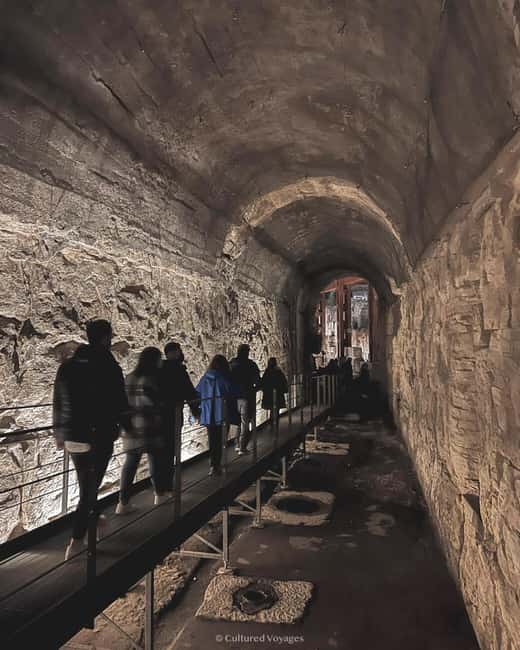
The biggest decision is simple: you select Underground access or arena floor access when you book. If you choose Underground, you’re essentially stepping into the service world under the stadium, the side of the Colosseum where staging happened before the spectacle. If you choose the arena floor option, you stand where the action played out before a roaring crowd, with trap-door and elevator-era drama in your imagination.
One practical detail: Underground or dungeon tickets are described as extremely limited. That means the Underground option can be harder to secure close to your travel dates, so booking early matters more here than on most Rome tours. If you see Underground availability when you book, grab it unless you’re sure you’d rather spend your “wow time” on the arena floor views and photo angles.
You can also read our reviews of more tours and experiences in Rome.


Skip-the-Line Entry That Actually Helps

This tour is designed around one thing: not wasting your morning in line. You get priority access through a separate entrance, then you’re guided in with the group rather than drifting through the slow lanes that eat up prime daylight.
That matters in the Colosseum area because crowds can be chaotic. Several people mention how helpful the guide is with navigating the site flow and keeping the group together, especially in dense sections where it’s easy to get separated. You’ll still share space with other tour groups, but you’ll feel the difference right when entry time would normally drag.
From Gladiators Gate to the Arena Vantage Point
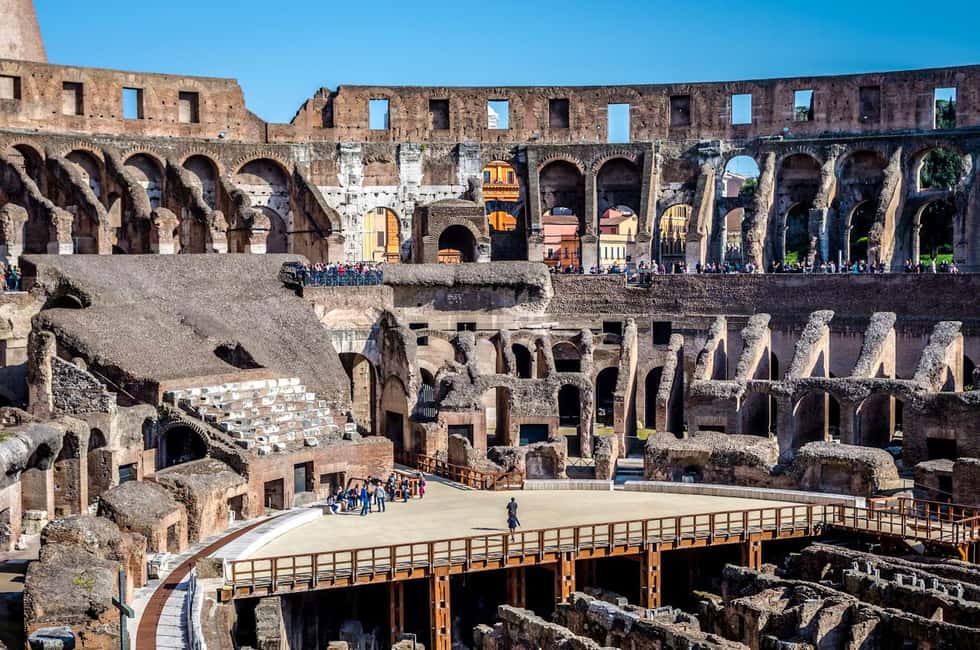
Once inside, you enter the Colosseum from the Gladiators gate. That framing is smart because it keeps you oriented: you’re not just looking at an old building, you’re walking through the logic of the spectacle—how people, animals, and performances moved into place.
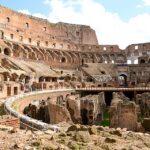
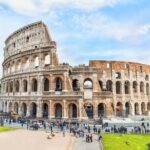
On the arena floor option, you’ll stand on the iconic ground where the brutality of the games played out. Expect a strong photo moment. The Colosseum’s geometry gives you that classic “I’m really here” angle, and standing at ground level makes scale hit differently than photos from the upper stands.
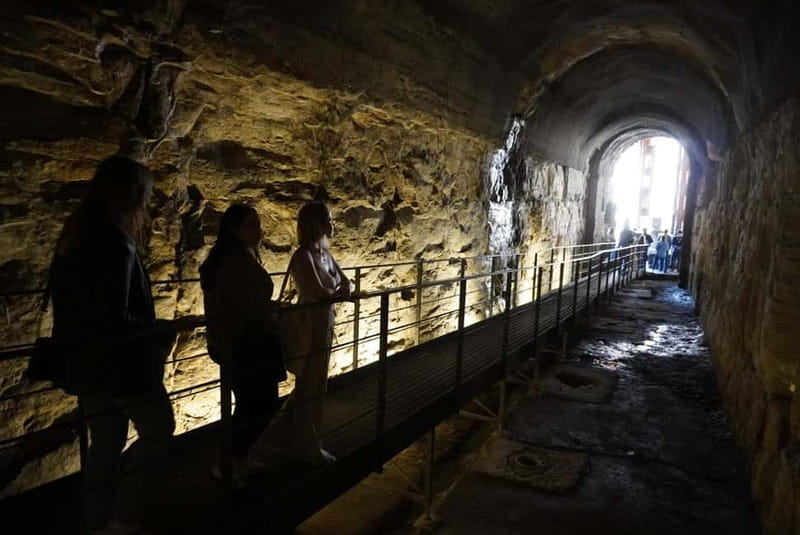
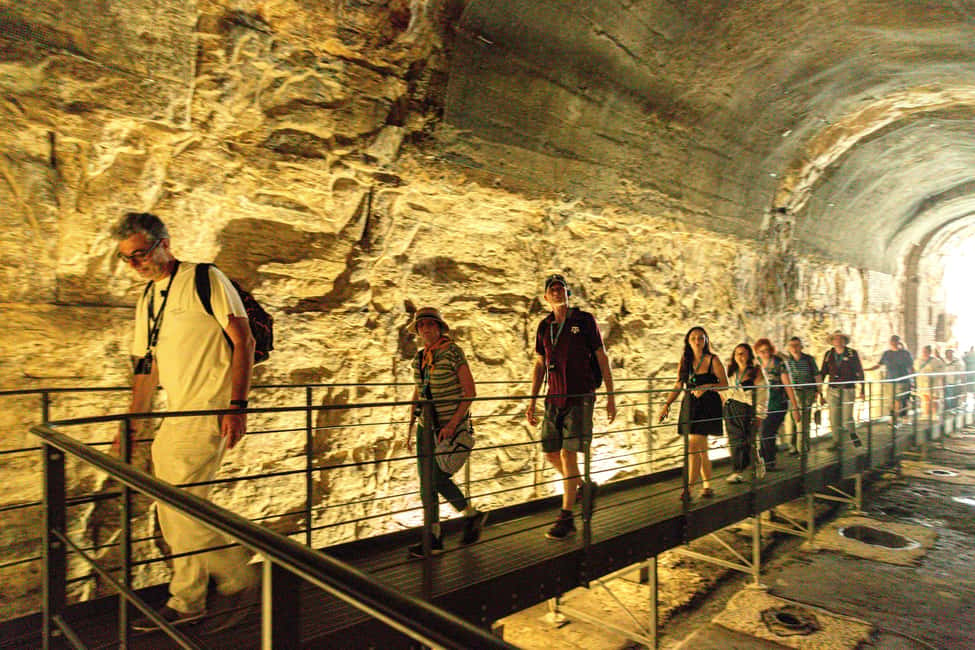
If you booked Underground access, your “wow” comes from the behind-the-scenes spaces: the corridors and dungeons where gladiators, prisoners, and the machinery of imperial spectacle intersected. People often highlight the Underground choice as the moment that turns a standard visit into something memorable, especially for history lovers who want the operational side of the Colosseum—not just the public face.
Roman Forum and Palatine Hill: How You Get the Full Power Story
After the Colosseum, the tour shifts to the city’s political heart. The Roman Forum and Palatine Hill are where you feel Rome’s leadership culture: temples, monuments, and the daily symbolism of power all layered into one walking zone.
You get a guided block in the Roman Forum first, about 45 minutes. In that stretch, you’ll see the kinds of spaces where ancient Romans argued, built status, and memorialized leaders. This portion also includes access to new exhibits, which is a real value-add. Instead of only seeing old stones, you get helpful context that explains what you’re looking at and why it mattered.
Then comes Palatine Hill, also guided for about 45 minutes, with a break and photo stop mixed in. Palatine is Caesar’s palace territory in spirit and geography, and the tour connects that imperial mood to the setting. You’ll visit key ancient areas tied to what people call Caesar’s Palace, and it’s here that the views over the Forum start making more sense, because you can finally “see the map” of where influence lived.
Caesar’s Palace Rooms: Where Imperial Life Feels Less Abstract
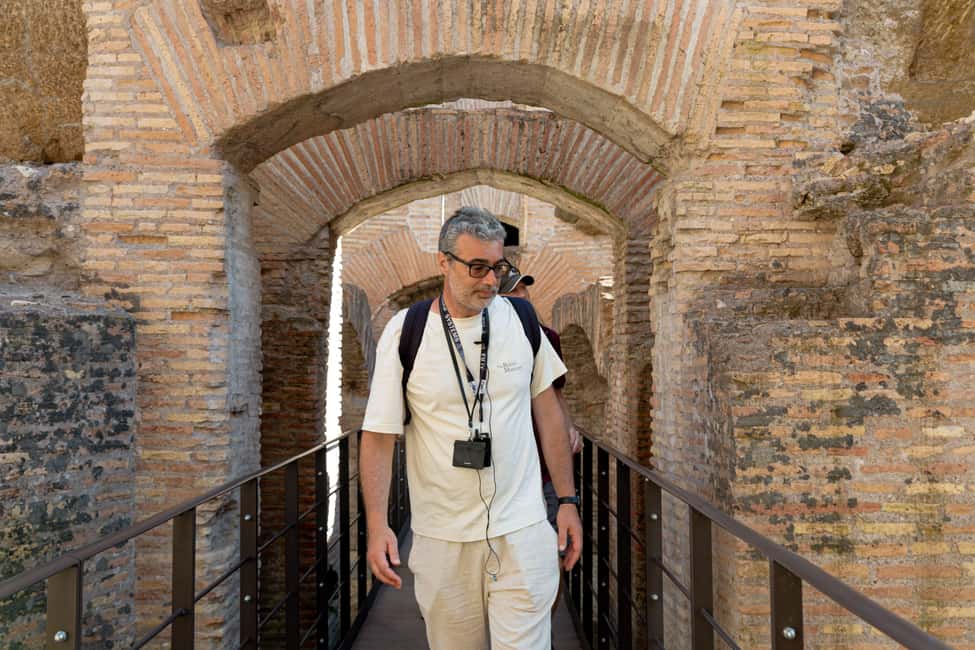
The tour includes access to rooms in Caesar’s Palace (a set of imperial spaces on Palatine). This isn’t just a scenic stop. When you enter rooms connected to the imperial story, Rome shifts from big monuments to human-scale spaces—places where leaders built legitimacy and controlled perception.
Even if you don’t memorize every name, you’ll come away with a clearer idea of how Rome used architecture as messaging. The guides are generally strong at tying what you see on Palatine to what you saw earlier in the Colosseum and Forum: spectacle above ground, administration and power messaging in the center of the city, and the machinery of control connecting it all.



The Guide Experience: Hearing Rome, Not Just Seeing It
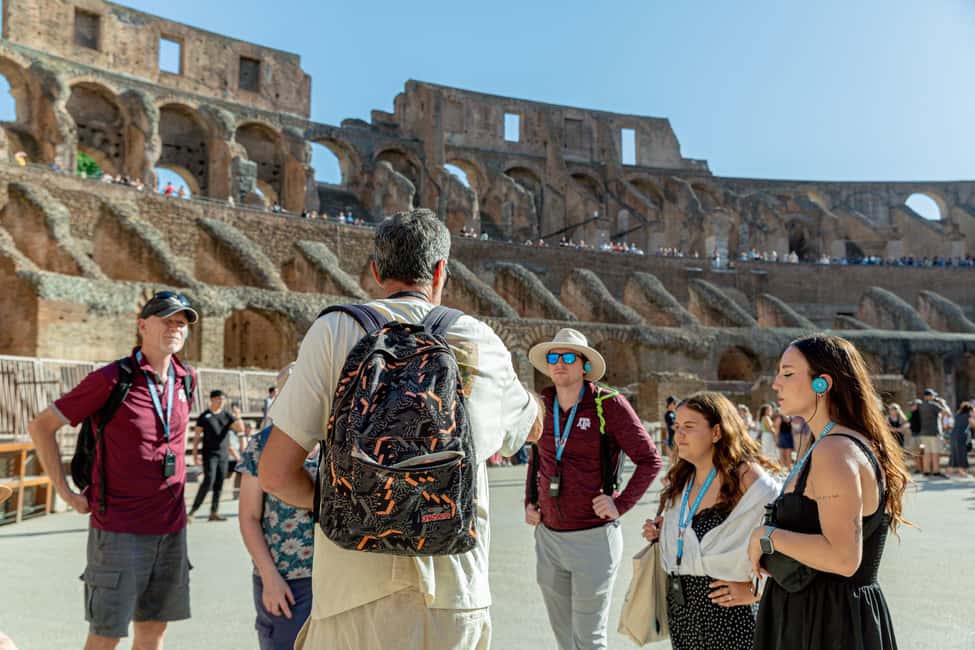
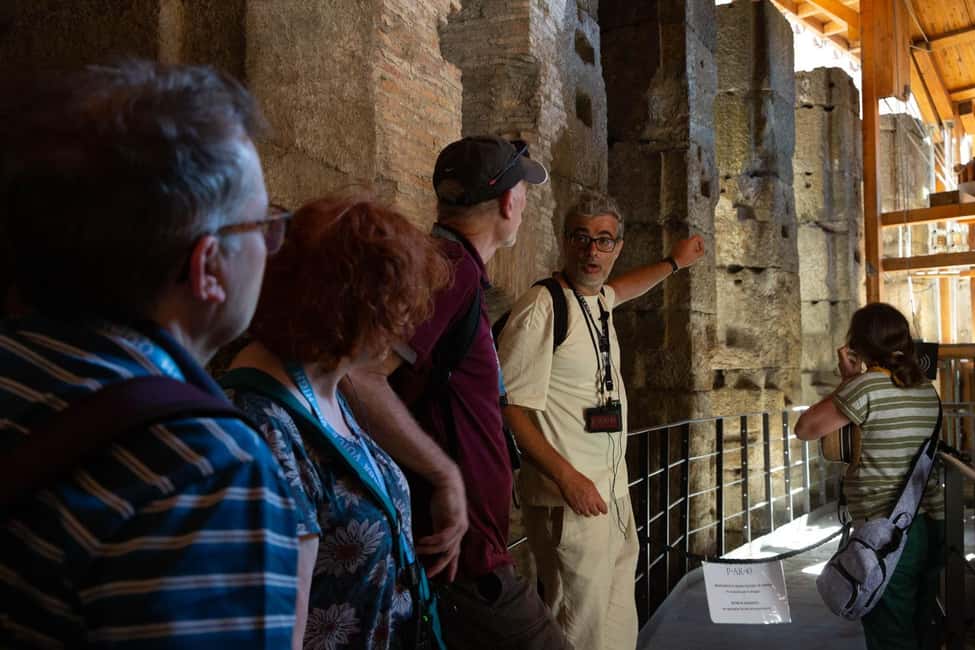
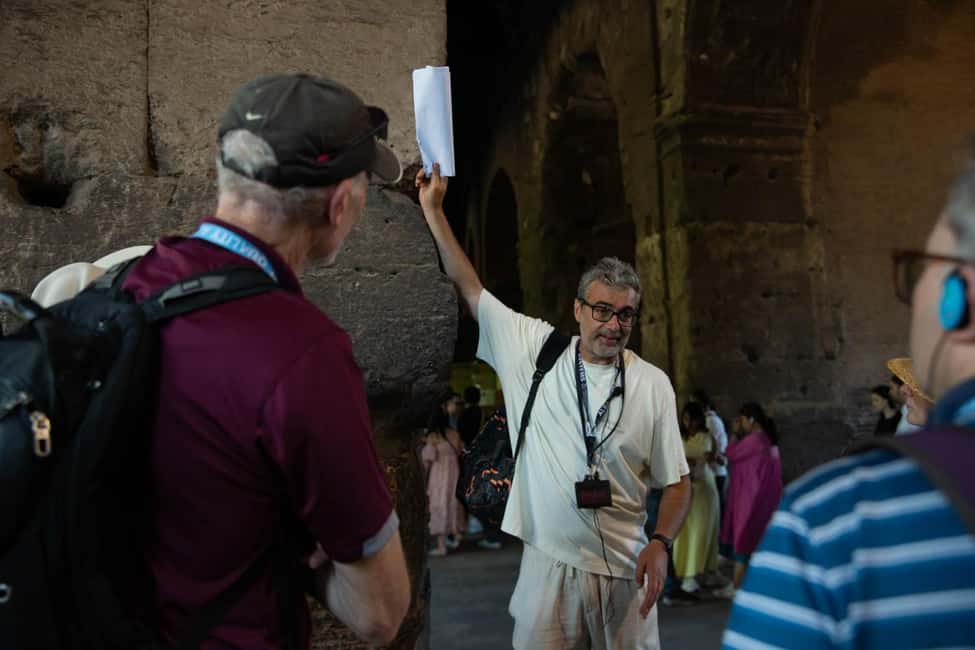
This tour lives or dies on the guide, and the feedback on this experience is consistently strong. People mention guides using over-ear microphones/headsets so the narration stays clear in crowded areas. That’s not a small detail. In Rome, noise and distance can ruin even a good tour. Here, the setup helps you keep track of the story.
Guides mentioned in recent experiences include David, Andre, Enrico, Eugene, and Polina. Different personalities, same outcome: you get energetic storytelling, clear pacing, and answers when you ask real questions. One theme that stands out is context—how emperors, crowds, and systems worked together, not just isolated facts.
A nice extra is that the tour touches culinary heritage—the kind of food-and-culture connection that makes Roman life feel less like a museum label. If you like history that connects to how people actually lived, this is where it clicks.
Pacing, Steps, Heat, and Photo Reality
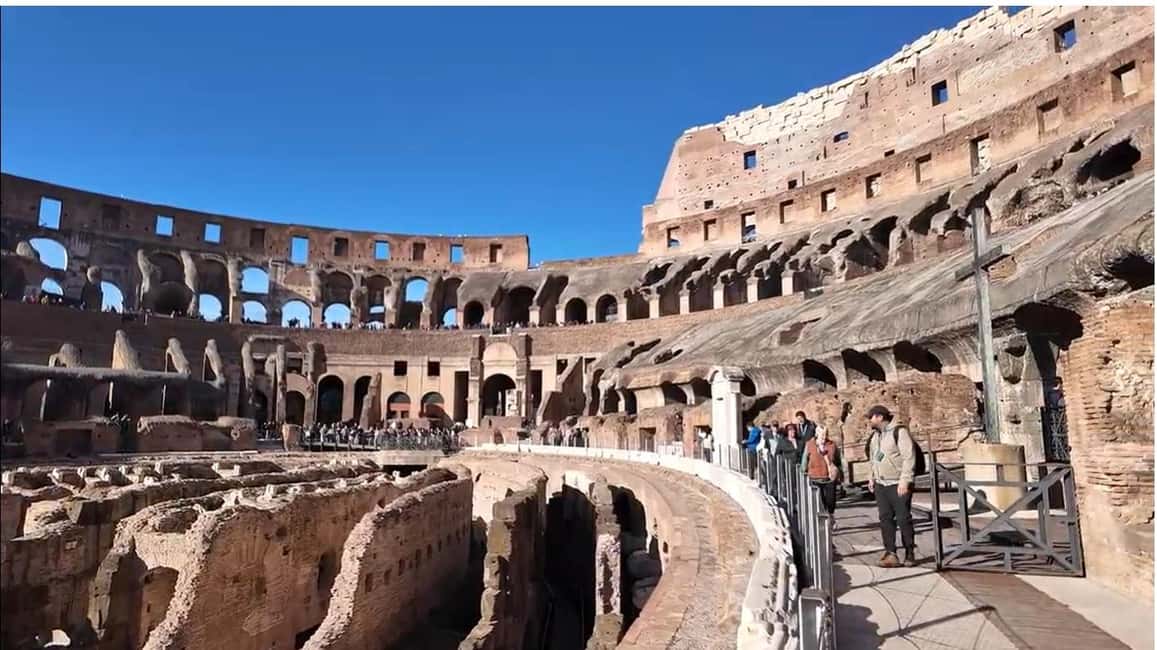
This is a 2.5 to 3 hour experience, and it includes a tight sequence of big spaces: Forum, Palatine, then Colosseum. Even with priority entry, you’re moving through crowded areas and switching elevation, which means you’ll feel it in your legs.
Expect walking, steps, and hills. Several people point out it’s tiring if you’re not used to Rome’s terrain. Also, you’ll be outdoors a lot of the time, and it can shift fast from cool to hot as you move through the open spaces—especially in warmer months.
Photo time exists, but it’s not a casual, stop-everywhere situation. People note that opportunities can be tight, so if getting the perfect shot is your top priority, you’ll want to move quickly when the guide gives you a window. A practical trick: ask your guide early where the best photo angles usually are and keep your camera ready during transfers.
Audio headsets can occasionally cut out briefly if the group spreads out, but overall they’re described as helpful. If you lose audio for a moment, it’s usually quick to recover once you’re closer again.
Price and Value: What You’re Really Paying For
At about $95.83 per person, the price isn’t just for a ticket. You’re paying for (1) a licensed local guide, (2) skip-the-line access through a separate entrance, and (3) special access to the Colosseum area you choose—either Underground or the arena floor—plus access to Caesar’s Palace rooms. You’re also getting guided time in the Roman Forum and Palatine Hill.
That combination is where the value sits. A standard self-guided Colosseum visit gives you stones and signage. This tour gives you pacing, priority entry, and the explanation that makes the spaces connect. If you’re short on time in Rome or want to avoid wasting hours, the cost starts to look reasonable fast.
The one value check I’d make: if your number one goal is lounging and slow wandering, this tour may feel too structured and time-compressed. But if you want a guided storyline through the biggest sites, and you care whether you go Underground or on the arena floor, the extra money can pay off in satisfaction.
Who This Tour Fits Best (and Who Might Feel Frustrated)
This is a great fit for you if:
- you want first-time clarity across Colosseum, Forum, and Palatine without planning every step
- you like the idea of seeing the Colosseum from the inside, not just from the outside viewpoints
- you care about the difference between the arena experience and the Underground behind-the-scenes
- you enjoy guides who can answer questions while keeping the group moving
You might skip this tour if you:
- need wheelchair-friendly access (it’s not suitable for wheelchair users)
- want minimal walking or lots of free time for wandering
- are sensitive to heat and stairs, since the schedule is active and outdoors-heavy
If you’re the type who wants a strong guide narration and a clear route through Rome’s most famous archaeology, this lands well.
Booking Advice: Make the Choice That Matches Your Priorities
If you see Underground access available, my advice is to treat that as the priority. Since those tickets are limited and harder to secure near your dates, you’ll reduce stress by booking early rather than hoping.
Also, don’t assume the timing will be identical to what you see at booking. The tour start time may be subject to change, and you’ll be notified by email or phone if adjustments happen. Build in a little flexibility.
Finally, take the ID requirement seriously. You’ll need to bring a valid ID that matches the reservation names. And you must provide the full name for each guest when booking so the physical tickets can be secured.
Should You Book This Colosseum Special Access Tour?
Yes, you should book it if you want the Colosseum experience to feel specific—either the arena floor or the Underground dungeons—and you want a guide to connect the Forum and Palatine Hill to the bigger imperial story. The special access plus skip-the-line entry is exactly the mix that turns a famous site into a focused, satisfying visit.
If you’re unsure which option to pick, choose based on your curiosity:
- Pick Underground if you want the machinery behind the spectacle.
- Pick the arena floor if you want the iconic “stand where it happened” moment.
If you’re comfortable with walking and you want your time in Rome to count, this is one of the better ways to experience the core monuments in a single, guided block.