REVIEW · ROME
Rome: City Highlights Golf Cart Tour with Local Guide
Book on GetYourGuide →Operated by Biga Tours · Bookable on GetYourGuide
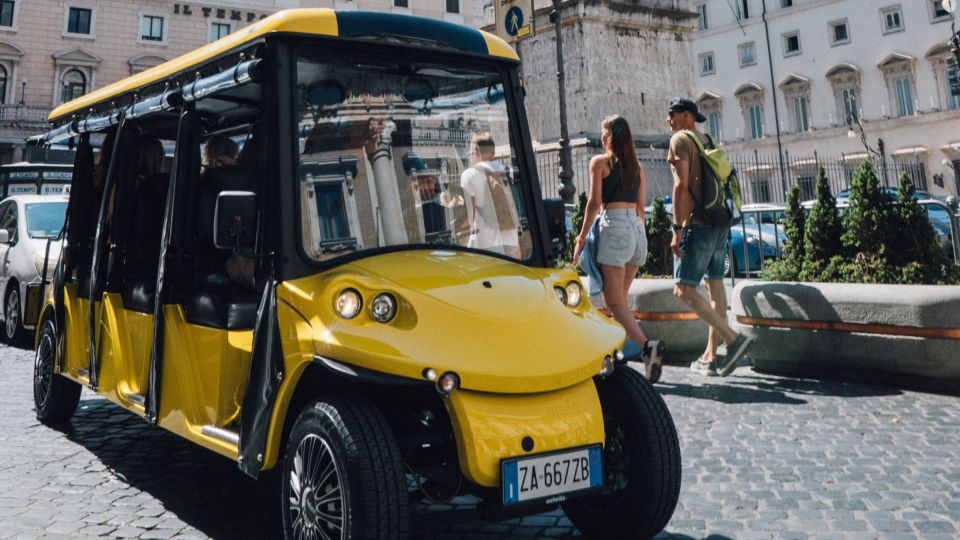
Rome highlights, minus the sweat. This 1.5-hour electric golf cart tour strings together Rome’s biggest icons with a local guide in English, plus earpieces so you can actually hear the stories as you move. You’ll cruise past the Pantheon, Trevi Fountain, the Colosseum, Circus Maximus, Piazza Navona, and more, with guides who show up by name in the reviews like Leo, Amber, Claire, and Marco.
I especially like two things about the format: the cart gets you close enough for real views without soaking up hours on your feet, and the earpiece setup keeps the narration clear even while you’re driving. The small group size (up to 14) also helps you feel less herded, and you get enough stops to grab photos without sprinting between landmarks.
One drawback to plan for: this is a highlight tour with photo stops, and it does not include entrance tickets, so you won’t be going inside the major sights as part of the experience.
In This Review
- Quick hit checklist before you book
- Why this Rome highlights golf cart tour works in 90 minutes
- The pace: quick enough, not rushed
- Meeting on Via Monterone 19: how the tour keeps the group together
- Pantheon and Piazza Colonna: start with Rome’s strongest “wow”
- Trevi Fountain coin toss: quick tradition, strong photo energy
- Piazza Venezia and the Altar of the Fatherland: big monument energy without the ticket line
- Colosseum, plus Circus Maximus: your gladiator lesson on wheels
- Teatro Marcello and Largo Argentina: ancient drama without the marathon
- Piazza Navona finish at Bernini’s Four Rivers
- Price and value: is $71 for 90 minutes fair?
- Guides in real life: what the names in reviews tell you
- Who should book this golf cart highlights tour
- Final call: should you book Biga Tours for Rome highlights?
- FAQ
- How long is the Rome City Highlights golf cart tour?
- What landmarks are included on the route?
- Does the tour include entrance tickets to attractions?
- Is it a small group?
- Where do I meet the guide, and where does it end?
- What language is the tour in?
- Is the tour wheelchair accessible?
Quick hit checklist before you book
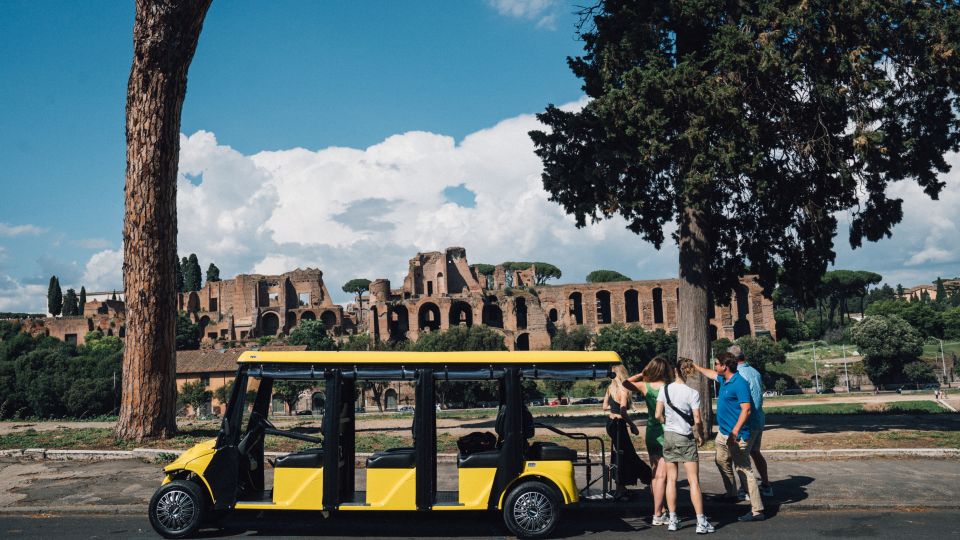
- Up to 14 people in small groups, running with up to 2 golf carts that travel together
- Earpieces included, so you hear your guide’s stories while you ride
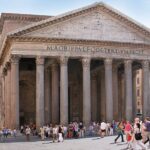
- Pantheon dome focus, including why it’s famous for being a largest unsupported dome
- Trevi Fountain tradition, with the coin toss over your left shoulder
- Colosseum storytelling, including gladiator-era context and who would watch such fights
- Finish at Piazza Navona, where Bernini’s Four Rivers fountain is the closing photo moment
Why this Rome highlights golf cart tour works in 90 minutes
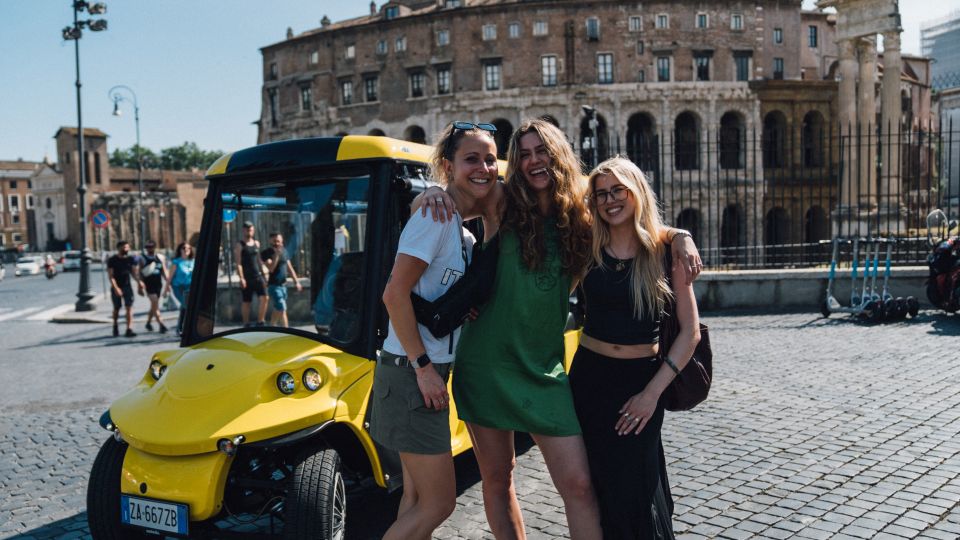
Rome can drain you fast. Pavement turns into a slow-motion obstacle course, and queues turn your “must-see” list into a maybe list. This tour is built for the opposite feeling: you get a tight loop of famous sites in about 1.5 hours, using a quiet electric cart so you can spend your energy where it matters—looking, listening, and taking photos.
The best part is that the experience isn’t just motion. The local guide drives the story. The tour is set up so you can hear architecture and big-picture context through headsets, which is a huge deal in Rome where sound carries badly between traffic noise and crowds. When guides like Leo focus on the Pantheon, or Amber and Claire add humor and pacing, the ride feels like a guided walk that happens to roll.
You can also read our reviews of more tours and experiences in Rome.


The pace: quick enough, not rushed
The schedule is paced in a way that lets you see multiple “headline” places without pretending you’ll absorb the whole city. It’s an overview you can build on. If you’re only in Rome for a short stop—cruise day, long weekend, or a first-time visit—this is the kind of first-date tour that helps you understand what you’re seeing later.
Meeting on Via Monterone 19: how the tour keeps the group together
You’ll meet inside the office on Via Monterone, 19. The road is shaped like an L, and you’re looking for the section next to Via di Torre Argentina, inside the glass-door office. The tour ends in Piazza Navona, so you finish right where you’d want to keep wandering afterward.
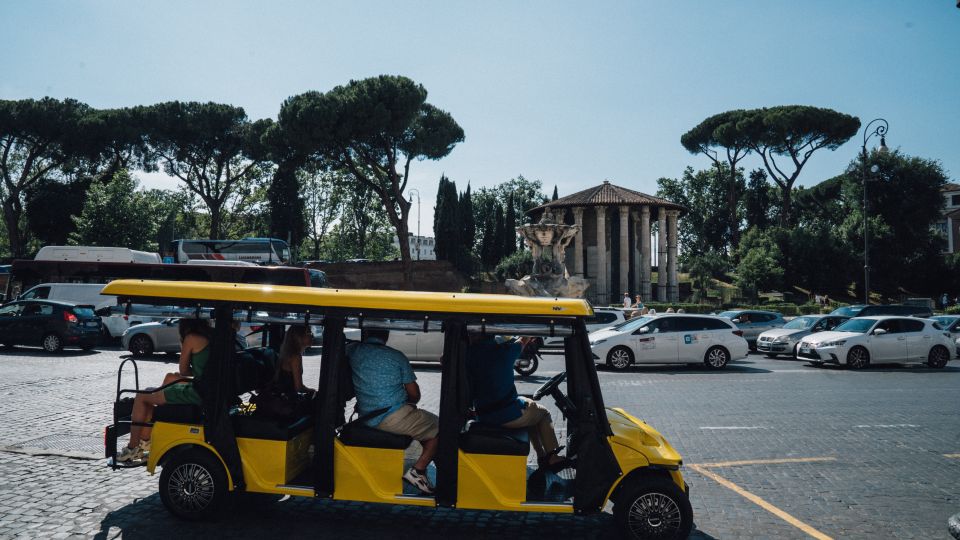
The group setup matters. Vehicles run with up to 2 carts and up to 14 participants total. Each vehicle has 7 seats, and the carts travel together like connected train carriages. You’ll all listen to the same English guide through earpieces. In some cases, if you booked together, you might be asked to split between the two carts.
Practical tip: once you’re seated, keep your earpiece secure and stay oriented toward your guide. A few reviews mention that hearing can vary if you’re not close to the cart carrying the transmitter, so being mindful of your position helps.
Pantheon and Piazza Colonna: start with Rome’s strongest “wow”
The route begins at stops that set the tone immediately. First up is the Pantheon, with a photo stop and guided commentary. This is the kind of landmark that changes how you look at Roman architecture. The guide tells you it was built to honor all deities of the Roman pantheon, and it’s famous for the largest unsupported dome in the world.
Here’s why this first stop is so smart for the tour: you’re starting with a landmark that “anchors” everything else you’ll see afterward. After the Pantheon, the rest of the city feels like part of the same long story instead of a list of unrelated attractions.
Then you move to Piazza Colonna for another photo stop and short guided sightseeing. This is a good breather moment. You’re not trying to absorb a museum inside a square—you’re getting the sense of the neighborhood layout and the way Rome’s main thoroughfares funnel you toward the big monuments.
What to watch for: this tour keeps things moving, so don’t plan on lingering like you might at a standalone guided walk. If you want “take your time and read every detail” time, you’ll still need separate time later.
Trevi Fountain coin toss: quick tradition, strong photo energy
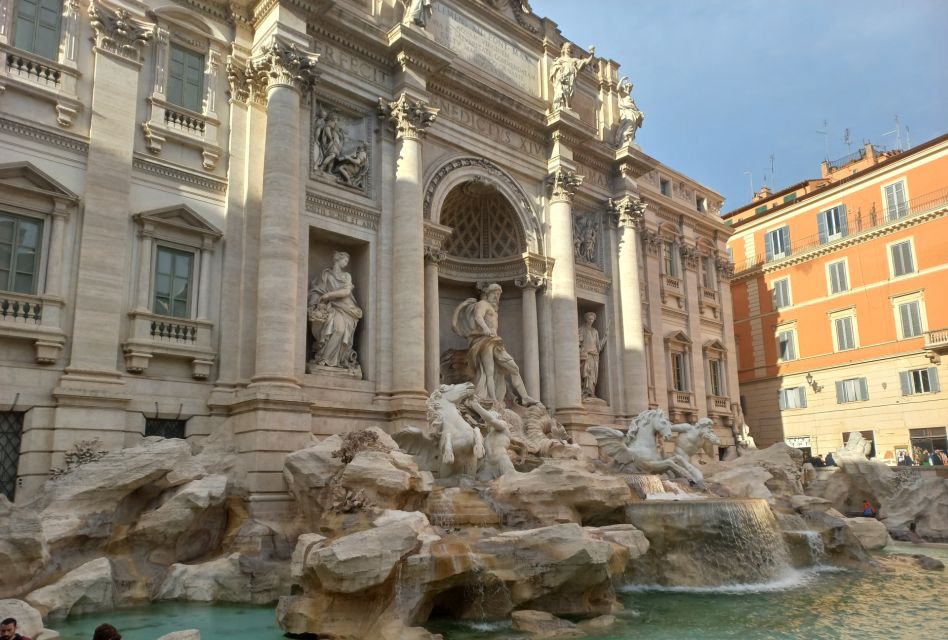
Trevi Fountain is always crowded, and that can make you feel like you’re fighting your way into the view. This tour gives you a structured moment at the fountain, with guided commentary and a photo stop—then you get to do the classic ritual without getting stuck in the crowd spiral.
You’ll get time at Trevi Fountain to participate in the age-old tradition: toss a coin into the water over your left shoulder. It’s a small action, but it turns the stop from sightseeing into a moment you’ll remember.
Afterward, the tour drives down via del Corso, a renowned shopping street, and you get scenery between monuments instead of just hopping from one crowded pocket to the next. That “between-stop” driving time is underrated. It’s where you start seeing how Rome’s streets stitch together the major sights.

Piazza Venezia and the Altar of the Fatherland: big monument energy without the ticket line
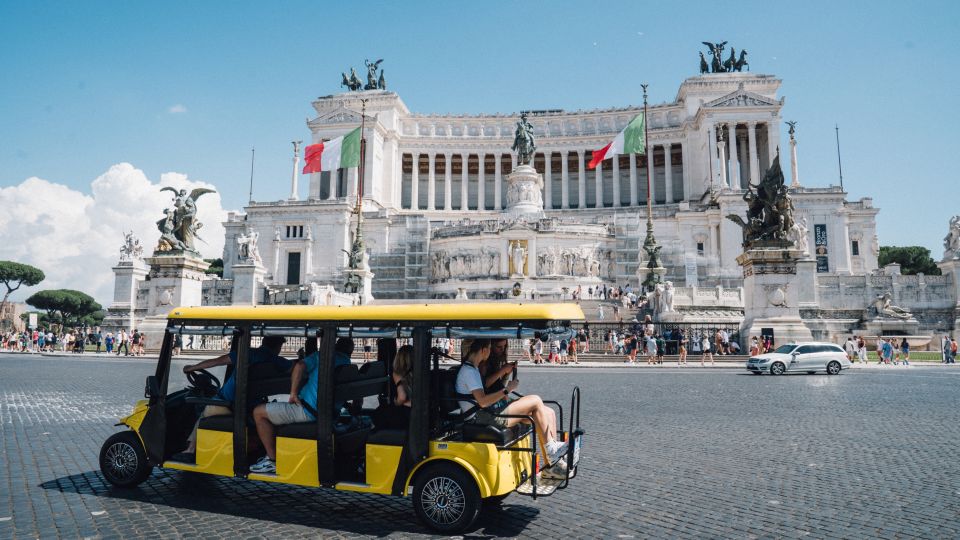
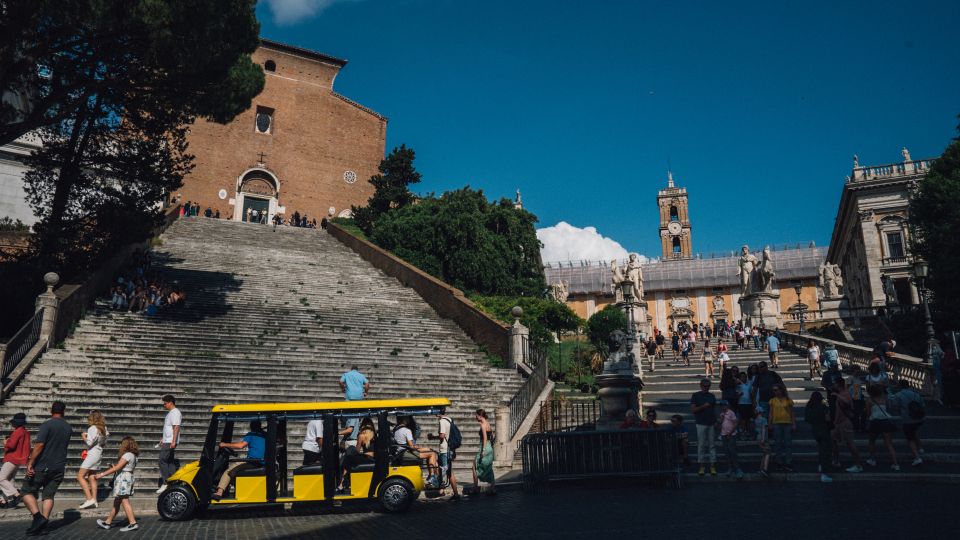
Next is Piazza Venezia, where you admire the Altar of the Fatherland, a national monument dedicated to Victor Emmanuel II. Even without entering anything, the scale of the setting hits you. The guide’s commentary helps you read the monument as a piece of modern Italian identity set into the older layers of the city.
This is also a strategic viewpoint moment. From here, the Colosseum isn’t “mysterious.” You can picture the route you’ll take and the urban logic behind why these structures sit where they do.
Colosseum, plus Circus Maximus: your gladiator lesson on wheels
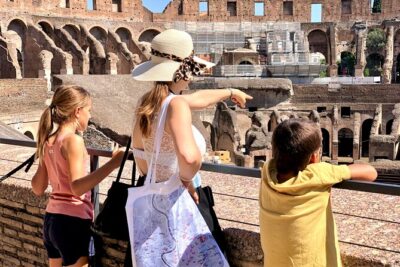
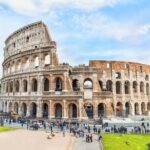
The Colosseum stop is one of the headline beats: photo stop plus guided sightseeing. The guide tells you it symbolizes Rome’s ancient history and grandeur, then adds the human side—stories about gladiators fighting for their lives, and the kinds of people who would pay to watch such fights.
That storytelling is the point. You’re not only looking at stone. You’re being handed a mental picture of what the place meant to the people who used it.
Then the tour continues with Circus Maximus for a visit and guided tour. This section is useful because it broadens your Roman worldview. The Colosseum gets all the attention, but Circus Maximus connects you to Rome’s entertainment culture beyond the arena. You see another type of venue in the same big-city ecosystem.
Potential drawback here: if you’re expecting the full “inside experience,” this tour won’t deliver it. It’s designed around seeing and understanding from the outside and via short stops, not long museum-style time.
Teatro Marcello and Largo Argentina: ancient drama without the marathon
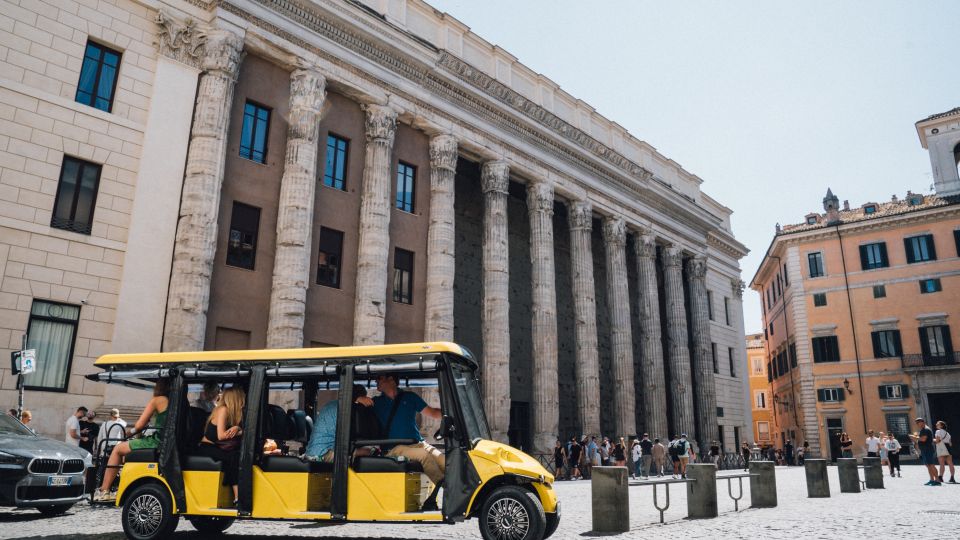
You continue to the Teatro Marcello, an ancient theater dating back to the first century BC. The guide frames it as an ancient and beautiful theater, and the value of this stop is how it expands Rome beyond the loudest landmarks. It’s a different architectural mood—less postcard center, more “you’re in the middle of the city’s history.”
After that comes Largo Argentina, where you learn about Julius Caesar’s assassination. This is one of those Rome stops that makes everything feel sharper. Suddenly, you’re not just looking at old buildings. You’re walking through the shadow of pivotal events.
Practical note: because the carts can’t stop right at every monument, you may need short walks depending on where you’re allowed to pull in. The tour is still designed to reduce walking stress, but you should expect a few small on-foot moments.
Piazza Navona finish at Bernini’s Four Rivers
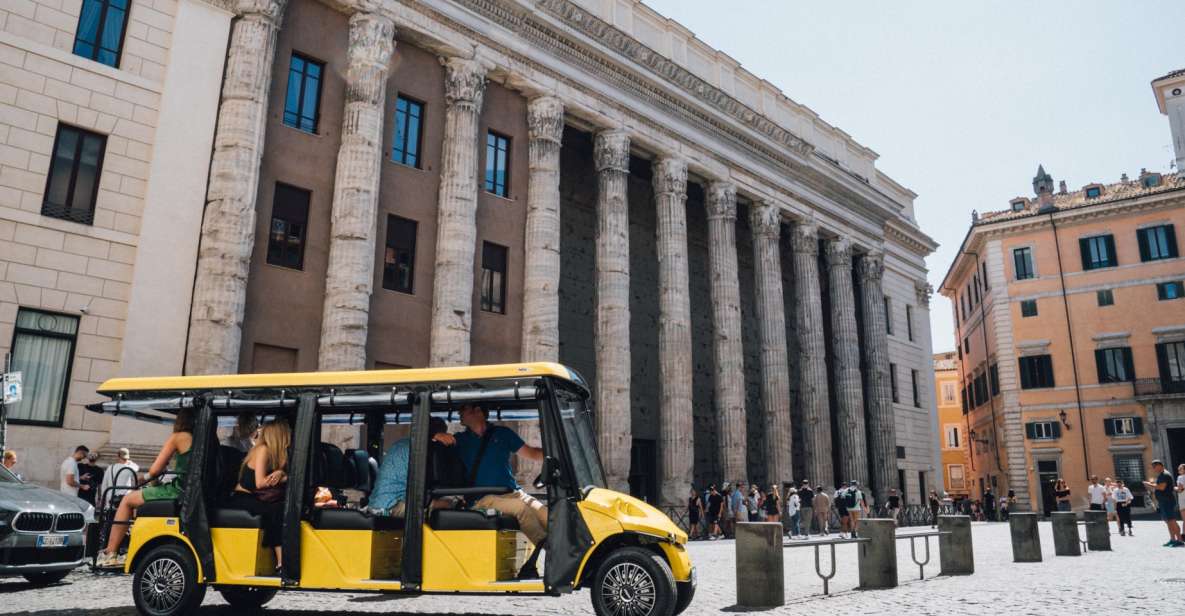
The tour ends at Piazza Navona—specifically Piazza Navona, 11—with a photo stop and guided sightseeing. The star detail mentioned for this stop is Bernini’s Fountain of the Four Rivers, sitting proudly in the square.
Why this ending works: it’s a lively open space where you can keep going on your own afterward. You’re finishing somewhere people naturally linger, which makes the tour feel like the start of a plan rather than the end of a task.
If you’re watching your day structure, this “finish in the center of the fun” matters. You avoid that awkward end-of-tour commute where you still have to figure out where to eat.
Price and value: is $71 for 90 minutes fair?
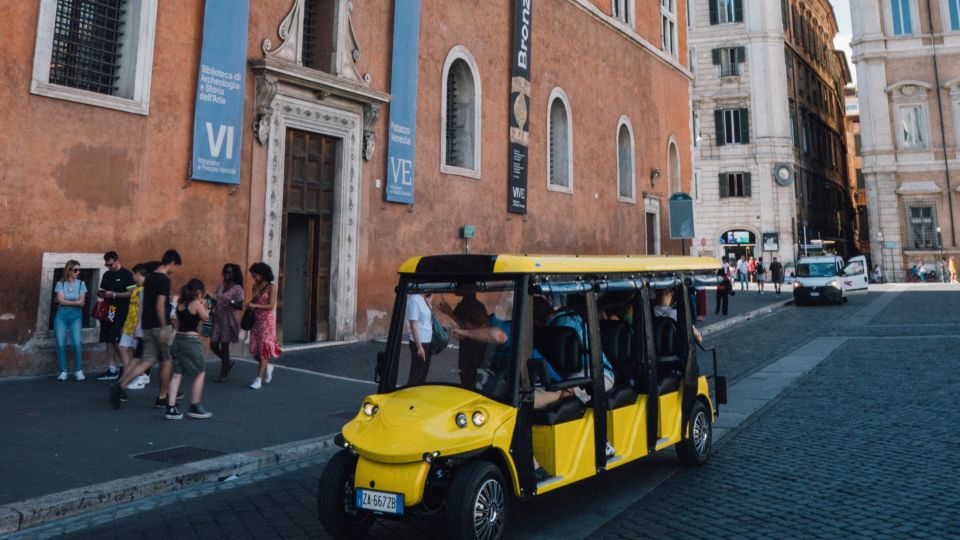
At $71 per person for about 1.5 hours, this tour isn’t trying to be a budget bus ride. It’s priced like a guided experience that solves real problems: mobility fatigue, time limits, and the noise/chaos of Rome’s street sightseeing.
Here’s what you’re getting for the money:
- Transportation by golf cart (electric) that helps you reach closer viewing areas
- A local guide in English
- Small group size up to 14
- Headsets so narration stays clear while you move
- Multiple major landmarks in one loop, including Pantheon, Trevi, Colosseum area, and Piazza Navona
What you’re not getting: entrance tickets. That means you should treat this as a high-quality overview, not a replacement for paid entry to specific attractions.
When this value makes the most sense: first-time Rome visits, people who want a strong orientation quickly, and anyone who doesn’t want to spend the day doing nonstop walking just to see “the main stuff.”
Guides in real life: what the names in reviews tell you
The tour’s quality often comes down to the guide. And the names that pop up in the feedback give you clues about the vibe: Leo and Marco are repeatedly described as high-energy and great at telling the story behind stops. Amber and Claire show up connected with guides who add extra tips after the tour and make the ride feel easy to follow.
You don’t need to hunt for a particular guide. But you should know what kind of tour this tends to be: animated, fact-forward, and structured around helping you understand what you’re seeing—especially at the Pantheon and Colosseum.
Who should book this golf cart highlights tour
This is a strong fit if:
- You’re short on time and want to cover the major landmarks fast
- You’d rather do photo stops with commentary than long hours in line
- Your group includes people with different walking speeds
- You want a first-day “get your bearings” experience
It may be less ideal if:
- You want to enter major sights during this outing (entrances aren’t included)
- You prefer slow, deep, museum-style pacing
- Your ideal Rome day is mostly wandering without a planned route
Final call: should you book Biga Tours for Rome highlights?
Yes, I’d book it if your goal is simple: see the top sights, learn what matters, and avoid turning Rome into a footrace. The small group, earpiece guidance, and electric cart format make it especially practical when you want a lot of landmarks in a short window.
Skip it only if you already have specific tickets and you’re planning to spend most of your day inside key sites. In that case, this works better as a “before or after” companion to your entry plans.
FAQ
How long is the Rome City Highlights golf cart tour?
It lasts 1.5 hours.
What landmarks are included on the route?
You’ll see major stops including the Pantheon, Trevi Fountain, Colosseum, Circus Maximus, Teatro Marcello, Largo Argentina, and Piazza Navona, plus other photo stops along the way.
Does the tour include entrance tickets to attractions?
No. Entrance tickets are not included.
Is it a small group?
Yes. It runs with a maximum of 14 participants, using up to 2 vehicles, with 7 seats per vehicle.
Where do I meet the guide, and where does it end?
You meet at Via Monterone, 19 and the tour ends at Piazza Navona.
What language is the tour in?
The guided portion is in English.
Is the tour wheelchair accessible?
The tour is described as wheelchair accessible, but wheelchair users are asked to leave their chair in the office at the meeting point, and guests are expected to be able to get on and off without staff assistance.