REVIEW · ROME
Discover the Jewish Ghetto of Rome on a Small Group Walking Tour
Book on Viator →Operated by Roman Vacations · Bookable on Viator
Rome has secrets you can’t miss. In about two hours, this small-group walk threads you through layers of ancient Rome, Renaissance art, and the Jewish Ghetto’s long, complicated story. Jewish Rome meets major landmarks like Piazza del Campidoglio, then the route drops into the streets around the Tempio Maggiore area.
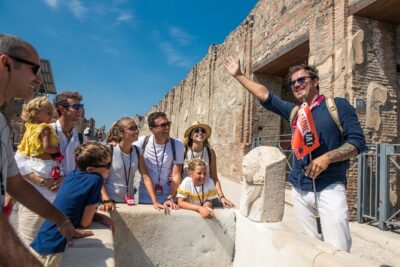
I especially like the way the tour keeps things easy to follow. With a maximum group size of 15, guides can pace the walk so you actually catch the details, from Rome under the popes to what life was like inside the ghetto walls. I also like the included break for an authentic kosher gelato or coffee, which gives you a real taste of the neighborhood and a short reset in the middle of the walk.
One thing to consider: meeting-point confusion can happen if you arrive unsure of the guide identity. One guest described a mix-up caused by signage showing Roman Vacations instead of what they expected, so I’d recommend you review the meeting spot carefully and double-check how the guide will identify themselves before you start walking.
In This Review
- Key takeaways before you book
- A Two-Hour Walk That Connects Rome’s Past to Real Streets
- Foro Traiano and Piazza Venezia: Starting with Power and Planning
- Teatro di Marcello: The Little Colosseum That Explains Roman Living
- Fontana delle Tartarughe and a Kosher Gelato Reset
- Tempio Maggiore di Roma: The Oldest Ghetto Story Starts Here
- Il Portico di Ottavia: Augustus, a Fish Market, Then the Ghetto Entrance
- Isola Tiberina Finish: From the Ghetto to Trastevere in One Step
- Price and Value: When $48.37 Makes Sense
- Who This Tour Suits Best (and When It Might Not)
- Tips for Getting the Most Out of It
- Should You Book This Jewish Ghetto Walking Tour?
- FAQ
- How long is the Jewish Ghetto of Rome small group walking tour?
- What is the price per person?
- What language is the tour offered in?
- What is the maximum group size?
- What is included in the tour price?
- Is admission to the Tempio Maggiore di Roma included?
- Where does the tour start and end?
- Are service animals allowed on this tour?
Key takeaways before you book
- Small group size (max 15) helps you hear the guide and keep a steady pace
- Included kosher gelato or coffee turns history into a real-life stop you can enjoy
- Multiple eras in one route: Trajan-era Rome, Renaissance fountains, and the Ghetto’s later story
- Tempio Maggiore is nearby but not fully included (admission is not part of the tour)
- Ends on Tiber Island, so you’re positioned to continue into Trastevere easily
- Guides like Jamie, James, Paul, Angela, Daniel, and Brian are repeatedly praised for making the story clear and human
A Two-Hour Walk That Connects Rome’s Past to Real Streets
This is the kind of tour that makes you change how you see a city. Instead of treating Rome as a museum with ticket lines, you walk from one meaningful site to the next, and the story keeps moving forward. You’ll start with big imperial Rome energy, then slide into the Ghetto area where centuries of rules, survival, culture, and community all show up in what you see and what you learn.
The best part for me is the balance: you get history without losing the street-level feel of Rome. You’ll notice how ancient ruins sit beside modern life, and you’ll hear how the Jewish community built a culture under restrictions that were meant to limit them. Guides (including names like Paul, Angela, and Daniel) are repeatedly described as both structured with facts and sensitive with the heavier topics, including the WWII era and persecution.
If you’re the sort of traveler who wants to understand a neighborhood, not just collect photos, this format fits you well.
You can also read our reviews of more tours and experiences in Rome.


Foro Traiano and Piazza Venezia: Starting with Power and Planning
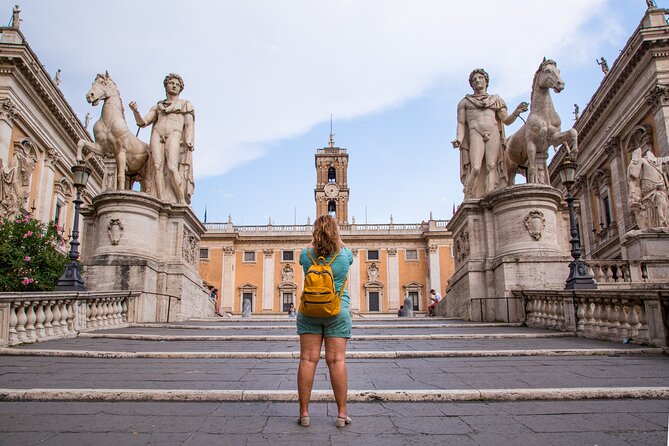
You begin at Foro Traiano (Trajan’s Forum area). Even before you reach the Jewish Ghetto, the route sets your brain up for how Rome worked: emperors built monumental spaces, and later generations repurposed them. From there, the walk threads toward Piazza Venezia, then climbs gently up steps toward Piazza del Campidoglio.
This is where you get a major visual lesson. Piazza del Campidoglio is the kind of place where design tells you something about authority and intention. It’s also linked to the work of Michelangelo, so you see how Renaissance Italy didn’t just restore the past; it reimagined Rome’s center.
What I like about starting here is timing. In roughly the first 15 minutes, you get “big Rome” so the later shift into the Ghetto feels grounded, not like you suddenly teleported into a different world.
Practical note: this is a walking tour with small steps and short distances, but there is some uphill movement at the beginning. Wear comfortable shoes and expect cobblestones.
Teatro di Marcello: The Little Colosseum That Explains Roman Living
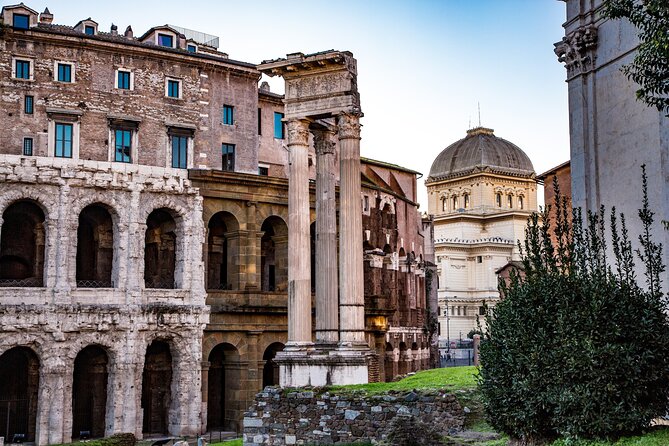
Next comes the Teatro di Marcello, often joked about as the little Colosseum. Architecturally, it gets you the same Roman “this is how public life looked” feeling, but it’s older, dating back to 12 BC. The key difference: it wasn’t built for the blood sports associated with later Roman entertainment.
Now here’s a Rome twist you’ll appreciate. Today, the structure sits under the everyday world—some residents live in apartments above the theater. That contrast helps the story land: Rome’s ruins aren’t frozen in time; they keep being used, adapted, and lived alongside.
This stop is brief (around 10 minutes), but it’s smart. You learn what the building was for, then you immediately see what it has become. It’s a fast way to get context for how the city changes while its bones remain.
Fontana delle Tartarughe and a Kosher Gelato Reset

Before you reach the heart of the Ghetto area, you stop at Fontana delle Tartarughe, the Turtle Fountain. This late Italian Renaissance fountain is famous for how quickly it was constructed—built in one day. Standing there, you get a visual “wow” moment that’s a nice break from the more intense historical themes that follow.
The tour also pauses around the neighborhood’s food world. You’ll see local restaurant streets, then you get your included taste: kosher gelato or coffee. This is one of those details that seems small until you realize it’s doing two jobs:
1) it gives you an authentic, lived-in flavor of the area, and
2) it creates a natural moment to slow down and regroup.
In a city where you can walk all day and never feel fed, that stop is genuinely practical.
If you’re sensitive to sweet stops or you’re watching your sugar, choose coffee instead. You’ll still get the “included” benefit without overdoing it.
Tempio Maggiore di Roma: The Oldest Ghetto Story Starts Here
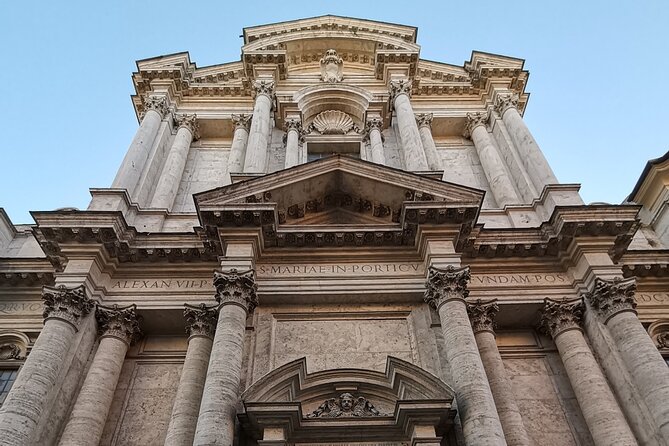
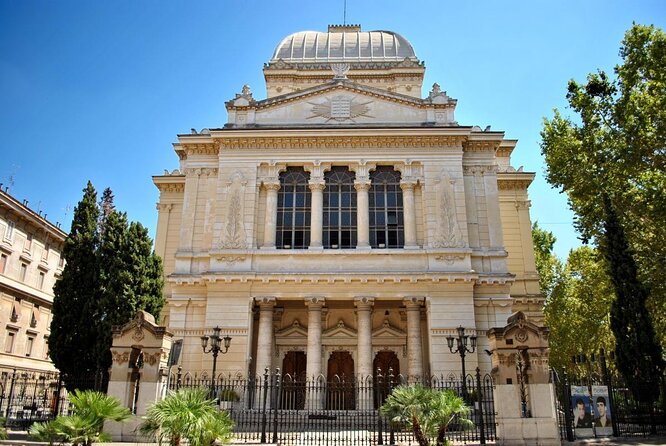
The most important historical node on the route is the Tempio Maggiore di Roma area, tied to the oldest Jewish Ghetto dating to 1555. This is where the tour shifts from “Rome as a place” to “Rome as a political system,” because the restrictions placed on the Roman Jewish community shaped daily life.
You’ll hear how the pope revoked earlier rights, including limits that barred Roman Jews from many trades and the ability to own real estate. Yet the story doesn’t end with limitation. Inside those walls, the community built real life through commerce and culture—something you’ll feel through the way the guide frames food, language, and community life as forms of resilience.
The guide also points to the Great Synagogue, which still operates today as a place of prayer and a cultural reference point. It’s described as the third largest synagogue in Europe and plays a role far beyond a tourist visit.
One important detail: Tempio Maggiore admission is not included. You’ll likely see the exterior and get the context, but if you want museum or full interior time, you’d need to arrange that separately.
Emotion note: multiple guests mention that guides handle heavy WWII-era persecution with care and empathy, especially when describing what happened to Jewish families during the Nazi period. If you prefer lighter history, this tour may still feel emotional, but the pacing and framing are part of why people recommend it.
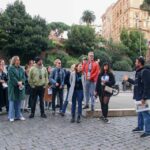




Il Portico di Ottavia: Augustus, a Fish Market, Then the Ghetto Entrance
After the synagogue stop, you move toward Il Portico di Ottavia (also called Porticus Octaviae). This is another “Rome layers itself” moment. Built by Emperor Augustus in honor of his sister Octavia, the structure later became home to Rome’s fish market from the 15th century to the early 20th century.
That span matters. It helps you understand the Ghetto not as an isolated box, but as a neighborhood inside a functioning urban economy. Markets, work, and everyday movement were part of the surrounding world even when restrictions limited what Jewish residents could do.
Then you enter the Ghetto itself from this area. The way the tour transitions here is one of the reasons it feels meaningful: you don’t just read about the Ghetto. You walk in the direction that residents would have recognized as part of daily life and commerce access.
Isola Tiberina Finish: From the Ghetto to Trastevere in One Step

You end at Isola Tiberina, Tiber Island, for a reason. It sits between the historic Jewish Ghetto area and Trastevere, so the tour’s finish is also your “what’s next” location.
Historically, the island was used by the ancient Romans as a hospital, with the river acting as a natural barrier to slow disease spread. Today, you’ll still find a hospital presence there, which gives the island a thread of continuity from ancient practical medicine to modern-day services.
What I like from a travel-planning standpoint is convenience. After the tour, you can pivot into Trastevere for dinner, or even go for a river walk. The island is also described as well connected to buses along the Lungotevere, so you’re not stuck backtracking with everyone else.
Price and Value: When $48.37 Makes Sense

At $48.37 per person for about two hours, the price lands in the “reasonable, not cheap” zone. Here’s why it can still feel worth it:
- You get an expert local guide who connects sites into one story rather than leaving you to figure out connections on your own.
- The group is limited to 15 people, which is not just a comfort perk. It changes how well you hear the commentary and how smoothly the walk flows.
- You also get an included kosher gelato or coffee, so some of the usual “add-on costs” disappear.
Also, several stops along the way involve free admission experiences (the route includes key exterior stops), while Tempio Maggiore admission isn’t included, so plan a little extra if you want to go inside the synagogue and/or museum areas.
Compared with doing everything solo, you’re paying for structure. In Rome, structure often saves time, and time is money, especially when you want the story to be accurate and respectful.
Who This Tour Suits Best (and When It Might Not)
This is a great fit if you want:
- a clear walking route with explanations that connect ancient and more recent history
- a small group experience that keeps Q&A possible
- an included food moment that’s tied to the neighborhood, not just a random café stop
It’s also a strong pick for families or mixed groups. Some guests specifically mention that guides kept the material age-appropriate for kids, while still addressing serious topics.
Consider it less if:
- you want a purely light sightseeing day with minimal heavy history
- you prefer long interior museum time (because the synagogue area is not fully included, and the tour is about walking and context)
Tips for Getting the Most Out of It
A few practical things will help you enjoy the walk more:
- Bring water. The route is not huge, but Rome heat can still make a two-hour walk feel longer.
- Wear walking shoes. Cobblestones and short steps add up.
- If you care about synagogue interior time, decide ahead of time whether you’ll add it after the tour. The stop is part of the story, but admission isn’t included.
- When you see the meeting point, look for the guide’s identity details and confirm it early. One guest described a sign/agency mismatch that almost caused them to miss the start.
Should You Book This Jewish Ghetto Walking Tour?
I think you should book this tour if you’re the type who wants Rome to make sense at neighborhood scale. The route moves through major landmarks first, then shifts into the Jewish Ghetto story where the details matter: restrictions, community life, culture, and the WWII-era tragedy and memory that many visitors want to understand responsibly.
Book it especially if you value a small-group pace and you want a guide who can bring both facts and human meaning to the walk. And if you’re planning dinner in Trastevere afterward, ending at Tiber Island is a smart setup.
If you’re worried about meeting-point confusion, solve it with one simple habit: verify the guide identity instructions before you leave and arrive a bit early so you’re not stressing at the first stop.
FAQ
How long is the Jewish Ghetto of Rome small group walking tour?
The tour is about 2 hours.
What is the price per person?
It costs $48.37 per person.
What language is the tour offered in?
The tour is offered in English.
What is the maximum group size?
The group size is capped at 15 travelers.
What is included in the tour price?
An expert local guide is included, plus an authentic kosher gelato or coffee.
Is admission to the Tempio Maggiore di Roma included?
No. Admission to Tempio Maggiore di Roma is not included.
Where does the tour start and end?
It starts at Foro Traiano, 84, 00187 Roma, and ends on Tiber Island (00186 Rome).
Are service animals allowed on this tour?
Yes, service animals are allowed.