REVIEW · ROME
Exclusive Tour Colosseum Arena with Archaeologist & Roman Forum
Book on Viator →Operated by TOURIKS · Bookable on Viator
Gladiator-level access changes everything. This tour pairs arena-floor entry with an archaeologist-style walk, then adds Roman Forum and Palatine Hill so you get the full Ancient Rome picture without turning your day into a scavenger hunt.
I like that you start at Piazza del Colosseo and move fast with a privileged backdoor entrance, plus you get sterilized headsets for clear commentary. I also like that you’re not locked into one rigid plan afterward: the Roman Forum and Palatine Hill tickets let you go on your own, or choose an extra guided add-on. One drawback to plan around: you’ll do a fair amount of walking on uneven ground, and the Forum area is not as wheelchair-friendly as the headline may suggest.
In This Review
- Key Takeaways Before You Go
- Entering The Colosseum With Arena-Floor Access
- Piazza del Colosseo Meeting Point and Timing That Actually Works
- Stop 1: Private-Feeling Backdoor Entry and a Guided Start
- The Colosseum Tour on the Arena Floor (What You’ll See)
- Engineering, Politics, and the Real Meaning of Gladiators
- Stop 3: Roman Forum Tickets and Your Choice of Guided or Independent Time
- Stop 4: Palatine Hill for Views, Romulus and Remus, and Empire Vibes
- Group Size, Headsets, and the Reality of a 1.5–3 Hour Walk
- What to Bring (So the Tour Feels Good, Not Grindy)
- Accessibility and Mobility Considerations (Read This Carefully)
- Who This Tour Is Best For
- Notable Guide Styles You Might Encounter
- Should You Book This Colosseum Arena Tour?
- FAQ
- How long is the Colosseum Arena with archaeologist tour?
- What’s included besides the Colosseum admission?
- Do I get access to the arena floor?
- Is there a guide at the Roman Forum and Palatine Hill?
- What language is the tour offered in?
- What ID and arrival time do I need?
Key Takeaways Before You Go
- Arena floor access for a gladiator’s-eye view, not just the usual viewing levels
- Headsets help you hear the guide clearly even in crowds
- Roman Forum + Palatine Hill included with options for guided or self-guided time
- Small group size (up to 25) makes it feel more controlled than typical mass tours
- Security and ID rules are strict, so arrive early and match names exactly
- Brisk pace: great for fitting a lot in, but you’ll want comfortable shoes and water
Entering The Colosseum With Arena-Floor Access
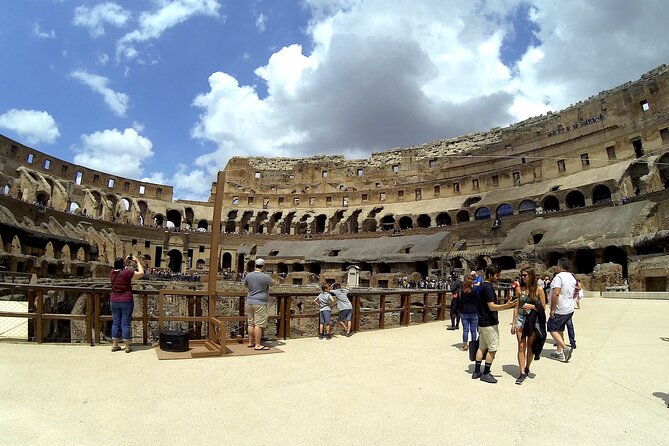
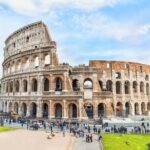
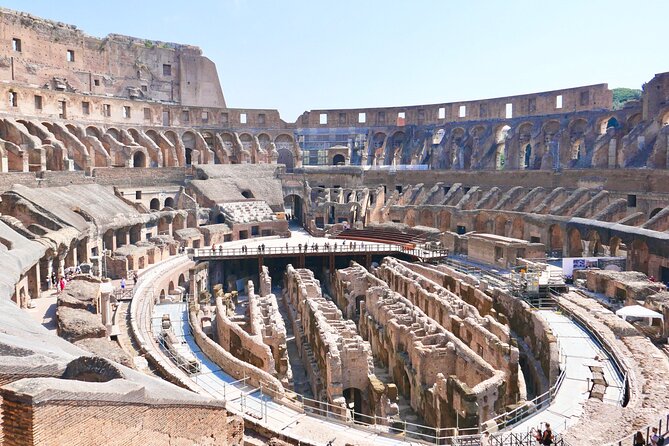
If you care about the Colosseum beyond the postcard view, arena-floor access is the reason to book. Most tours stop at the main interior routes. This one takes you into the stadium space where the action happened, so the scale clicks into place fast. You also get a better feel for how Roman engineers shaped airflow, circulation, and sightlines in a building designed for mass spectacle.
The setting also tends to feel calmer. In multiple accounts, people highlight the quieter feel on the restricted arena level versus the busier public areas. Translation for you: you’ll have more breathing room for looking up, taking photos, and understanding the space instead of constantly sidestepping other groups.
You can also read our reviews of more tours and experiences in Rome.


Piazza del Colosseo Meeting Point and Timing That Actually Works
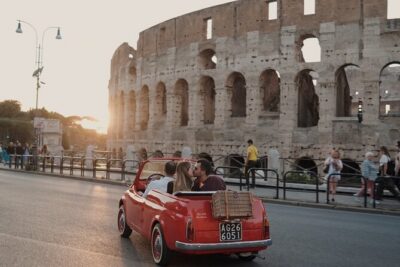
You meet at Piazza del Colosseo, 21, 00184 Rome, right by the Colosseum area. The tour ends inside the Colosseum, so you’re not doing the extra walk back out afterward. That matters because the Colosseum site is big, and your energy gets spent quickly when you’re moving between monuments.
Plan to arrive early. The official guidance is 30 minutes before your start time. In practice, I’d treat that as the minimum, especially if you’re navigating busy streets and you need to locate your group without stress. This area can be packed, and getting delayed at the start can shrink your time inside.
Stop 1: Private-Feeling Backdoor Entry and a Guided Start
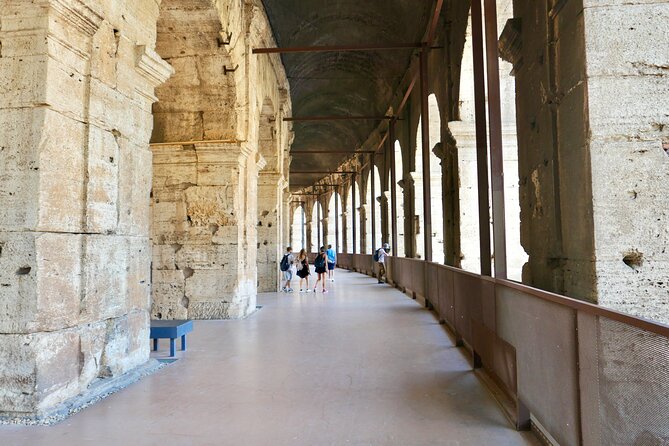
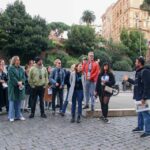
Your guide meets you at Piazza del Colosseo and gives a short introduction before you enter. The big deal here is the “privileged backdoor” entry approach paired with Colosseum admission included in the package. It’s designed to reduce time wasted in ticket lines and get you into the building loop faster.
You’ll also hear the opening context you need so the Colosseum stops feeling like a pile of old stones. That matters because the Colosseum is layered: politics, technology, and public entertainment all overlap. When someone narrates that connection early, the rest of your walk makes more sense.
The Colosseum Tour on the Arena Floor (What You’ll See)
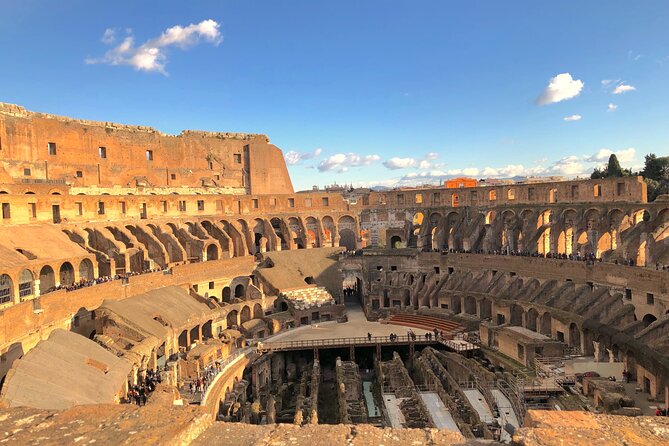
Once inside, you walk onto the arena floor and head through a key route connected with the stadium’s operation: Porta Libitinaria. Even if you’ve heard the Colosseum described as a gladiator arena, seeing these pathways helps you understand it as a working system, not just a dramatic ruin.
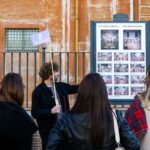
The tour is led by a professional archaeologist guide as part of the experience. People often praise how guides connect engineering and architecture to real Roman life—what the building was built to do, why it existed politically, and how the spectacle functioned socially. If you love details like how monumental construction was achieved and why the Romans built such a platform for public messaging, this is where the tour gets satisfying.
A practical note: the pace is commonly described as brisk. That’s not a dealbreaker—this is how you fit arena access plus Forum plus Palatine Hill into roughly 1 hour 15 minutes to 3 hours, depending on your chosen options and the day’s flow.
Engineering, Politics, and the Real Meaning of Gladiators
One of the best parts of this tour is how it frames the Colosseum as a tool of power as much as entertainment. You’ll learn about the reasons behind its construction and get a feel for the political and social messaging tied to the games. That’s important because gladiators weren’t just fighters. They were part of a massive public event where Rome performed authority.
You’ll also hear about the bloody games that took place there. If you’re sensitive to that topic, it helps to know you’re in the right place for history that doesn’t sugarcoat the reality. The upside is that you’ll leave with a clearer mental model for how the Roman Empire used public spectacle to unify (and control) a city of millions.
Some people also specifically mention standout views from the arena level—seeing the interior from below and noting connections to underground spaces. You’re not just looking at the building; you’re standing where the show happened.


Stop 3: Roman Forum Tickets and Your Choice of Guided or Independent Time
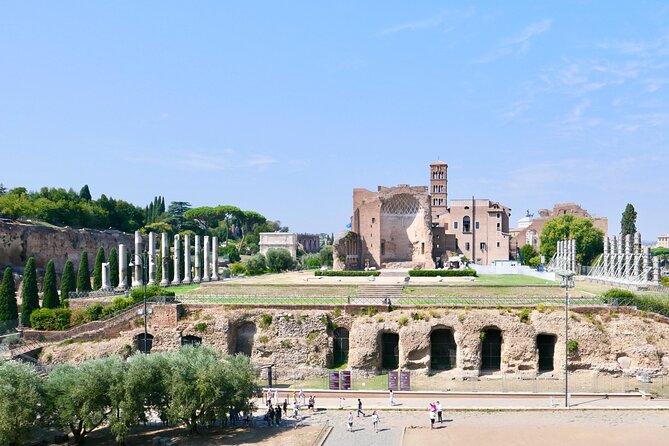
This is where the tour becomes flexible. You get admission included for the Roman Forum and Palatine Hill, and after the main Colosseum portion you can explore on your own. There is also an optional guided segment for the Forum area that you choose during booking.
If you pick the no-guide option, you’ll still be able to enter the archaeological area using your included tickets. That works well when you want freedom to set your own pace and stop for photos or quieter corners.
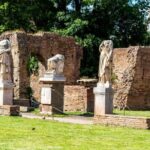
If you choose the guided option, expect an organized walk through the major landmarks: temples, paths associated with emperors and senators, and key storylines tied to how Rome governed itself. People often call out that a good guide makes the Forum’s ruins feel logical rather than random. You’ll hear about the Vestal Virgins and their connection to Vesta, plus references that link Roman institutions to later developments, including Christianity.
Stop 4: Palatine Hill for Views, Romulus and Remus, and Empire Vibes
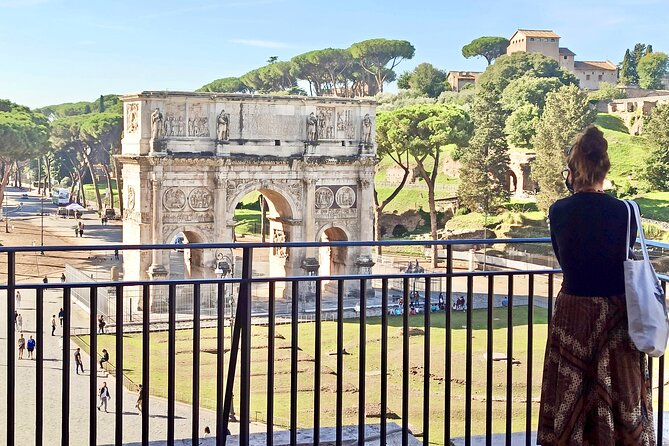
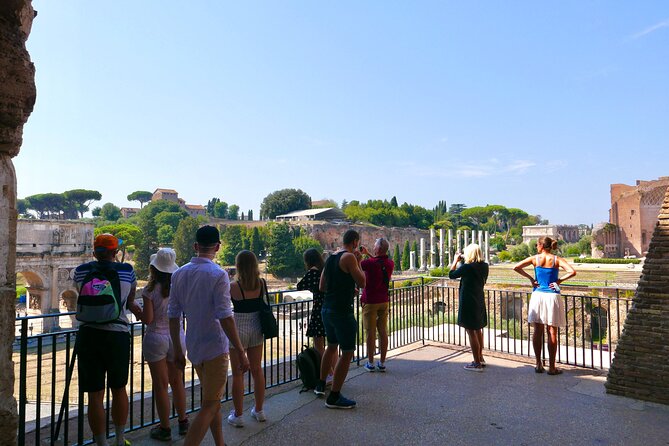
Palatine Hill is a strong closer for this itinerary because it gives you altitude. From the hill, you get a broader understanding of where everything sits—especially the views over the Colosseum and Roman Forum. That “zoomed out” perspective helps you connect the dots between monuments that otherwise feel like separate ticket stops.
You’ll walk the paths tied to Roman legend, including Romulus and Remus, then learn how the hill later became one of the most exclusive areas in ancient Rome. Expect a mix of story and scenery: the ruins are part of the lesson, but the viewpoint is what makes it memorable.
There’s also the payoff for fans of Roman city planning. From Palatine Hill, you can see over toward Circus Maximus, giving you a feel for how entertainment wasn’t one isolated venue—it was woven into daily life.
Group Size, Headsets, and the Reality of a 1.5–3 Hour Walk
This experience runs with a maximum of 25 travelers, and that typically helps with flow inside crowded archaeology spaces. The tour includes sterilized headsets, which is more important than it sounds. In Rome, guides have to compete with wind, echo, foot traffic, and other tour chatter. Headsets keep the narration usable.
That said, you’re still outdoors and walking. Even if the itinerary sounds time-boxed, the museum-muscle you’ll use is real. A recurring theme in feedback is that heat can be intense and shade can be limited. So I’d plan for a day that includes sun exposure, not just monument time.
If you’re traveling with kids, this can work well when your guide keeps a story-driven tone. People also report success with teenagers and families—mainly because the arena access changes the experience from “history class” to “wow, this is where it happened.”
What to Bring (So the Tour Feels Good, Not Grindy)
You’ll get the best day if you prepare like it’s a walk-first tour, not a sit-and-watch tour. I’d bring:
- Water (carry it only where rules allow; large bottles can be a problem)
- Comfortable shoes for uneven stone and steps
- Sun protection in warmer months
- A little patience for security lines and crowding around entrances
Also read the rules closely: strict security checks are required, and you can’t bring large backpacks or trolleys. Glass or metal bottles and sprays are restricted too. This is one of those tours where preparation reduces friction immediately.
Accessibility and Mobility Considerations (Read This Carefully)
This tour is described as wheelchair accessible, but you need to understand the practical limits. The Forum area includes stairs and uneven ground, so the experience may be harder to complete fully for anyone who can’t climb or handle rough surfaces.
If mobility is a concern, communicate it clearly when booking and arrive early so the guide team can direct you along the most suitable path. You’ll have a smoother day when you plan for the reality of ancient terrain rather than the ideal of a smooth modern route.
Who This Tour Is Best For
This is a great fit if you want:
- Arena-floor access as your main priority
- An archaeology-minded guide who connects stories to real construction and purpose
- A structured day that still lets you choose how much guidance you want later in the Forum
It’s less ideal if you’re expecting a slow, ultra-technical lecture-style tour with lots of stopping for deep reading. The pace is designed to cover multiple major areas, and some people prefer to add their own independent reading afterward if they want even more detail.
If you’re a first-timer to Rome and the Colosseum is your top must-see, this tour is an efficient way to avoid spending an entire day just “getting around.” You’ll also get the Roman Forum and Palatine Hill under the same ticket umbrella.
Notable Guide Styles You Might Encounter
Guide personality can make a big difference with a site this complex. In feedback tied to this tour, I’ve seen praise for guides like Giuseppe and Elena for energy and clear engagement, and Gabriel for a strong archaeologist-level approach and patience with questions. People also singled out Daisuke for enthusiasm and a smooth flow, and Mario for excellent Forum guiding.
You’ll see a range of teaching styles, but the common thread is that the best guides make the Colosseum make sense fast—why it exists, how it worked, and what it meant for Rome.
Should You Book This Colosseum Arena Tour?
I think you should book if your goal is a complete, high-impact Rome day: arena access first, then Roman Forum and Palatine Hill tickets to keep the story going. The value is strongest when you want both structure (guided arena time with headsets) and flexibility (independent or optional guided exploration afterward).
Skip it only if you know you need a slow, fully step-free experience, or if you’re hoping for a very technical, lecture-heavy format with plenty of wandering time. This tour is built to move and cover ground—so bring solid footwear, water, and a history brain ready to connect the dots.
FAQ
How long is the Colosseum Arena with archaeologist tour?
The duration is approximately 1 hour 15 minutes to 3 hours, depending on how your chosen options for the Roman Forum and Palatine Hill are handled.
What’s included besides the Colosseum admission?
Your ticket includes admission to the Roman Forum and Palatine Hill. The tour also includes a live professional archaeologist guide, sterilized headsets, and on-site assistance.
Do I get access to the arena floor?
Yes. The experience includes arena access with an entry route that takes you onto the Colosseum floor for a gladiator’s-eye view.
Is there a guide at the Roman Forum and Palatine Hill?
The base setup does not include a guide for the Roman Forum and Palatine Hill. You can choose an optional additional guided tour for those areas during booking.
What language is the tour offered in?
The tour is offered in English.
What ID and arrival time do I need?
You’ll need a valid passport or ID document matching the names provided at booking. Arrive 30 minutes before the starting time, and note that strict security checks are part of entry.