REVIEW · ROME
From Rome: Ostia Antica Guided Half-Day Trip by Train
Book on GetYourGuide →Operated by City Wonders Ltd. · Bookable on GetYourGuide
Roman port life feels real at Ostia Antica. This half-day outing turns a train ride into a walk through a working Roman seaport—Decumanus Maximus streets, public spaces, and everyday details you’d never guess from photos.
Two things I really like: the guide-led pacing across a huge archaeological site, and the focus on daily life (not just big monuments). You also get the payoff of leaving with a clear picture of how Ostia fit into the Roman economy and Republic-era power.
One drawback to plan around: the tour is not suitable for wheelchair users, and you’ll be doing a good amount of walking on uneven ancient surfaces. Bring shoes you trust, and don’t count on strollers for kids either.
In This Review
- Key points that make this tour worth your time
- A Half-Day Train Ride That Gets You to Roman Life Fast
- Arrival at Ostia Antica: From Station to Main Street Vibes
- The Forica (Public Washrooms): A Surprisingly Powerful Stop
- Baths of Neptune: Mosaics That Make You Look Twice
- The Amphitheater: Visualize 3,500 People at 12 BC
- Why a Guide Matters at Ostia Antica (and What They Do for You)
- Staying After: Modern Ostia, Beach Time, and the Unescorted Return
- Price and Logistics: When $58 Feels Like a Win
- Who Should Book This Ostia Antica Train Trip
- Should You Book This Ostia Antica Guided Trip?
- FAQ
- How long is the Ostia Antica trip from Rome?
- Where do I meet for the tour?
- What’s included in the price?
- Is there time to stay in Ostia after the tour?
- What should I bring?
- Is the tour accessible for wheelchair users or strollers?
Key points that make this tour worth your time

- You see Roman life, not just ruins, with stops that explain how ordinary people used public facilities and entertainment
- Forica (public washrooms) is a standout “how did they do this?” moment, including the marble bench with 20 holes
- Baths of Neptune delivers a memorable mosaic scene—sea god imagery with a four-horse chariot
- Amphitheater seating lets you visualize crowd energy from 12 BC, when it first opened for events
- Small groups (up to 12) help you keep up without feeling like you’re racing through the site
- You can stay in Ostia after the guided portion, with time to explore the modern town or add a beach stop
A Half-Day Train Ride That Gets You to Roman Life Fast
This is a simple idea executed well: leave Rome by train, walk into Ostia Antica, and spend about three hours learning what life looked like in a major Roman harbor town. It’s only four hours total, so it fits cleanly into a Rome itinerary without eating up your whole day.
Logistics are straightforward. You meet at Cafe Piramide near the Piramide Metro (Line B)—look for the café on the side with white umbrellas near the train tracks. The day starts with an easy train hop from central Rome toward Ostia Antica, and the guide stays with you for the archaeological walking portion.
The value is in what’s included. Your ticket package covers:
- return train transportation between Rome and Ostia Antica
- site entry
- a live English guide
At $58 per person, that’s competitive when you compare it to the cost of piecing everything together yourself—especially because Ostia Antica is large enough that you’ll spend time orienting unless someone helps you connect the dots. A small group (max 12) also means the guide can keep an eye on the pace and help you stop at the right places.
One practical note: the tour service ends back in Rome at Piramide Metro Station around 1:00 PM. If you decide to remain in Ostia after the tour, the return journey is unescorted, so keep that in mind if you prefer a fully guided day.
You can also read our reviews of more tours and experiences in Rome.


Arrival at Ostia Antica: From Station to Main Street Vibes
Once you reach the Ostia area, the walk from the train station to the archaeological park is quick—think a few minutes, not a big production. That matters because it lowers the “wasted time” factor and lets you start seeing ruins soon after arrival.
What you’re walking toward is a site with layers. Ostia Antica was founded in the 4th century BC, and at its peak it supported more than 100,000 residents. That’s a huge number when you’re standing in open air among remains. The guide’s job is to help you picture what filled in the spaces—street activity, commerce, and people moving through public buildings.
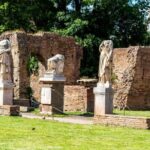
Early on, you’ll follow the Roman thoroughfare route—centered on the Decumanus Maximus. This is where the site starts to feel like a real city. Along the main street, you’ll pass around-shopfront-style spaces and architectural fragments that make sense once someone explains how the port economy worked. You’ll also notice statues lining the walkways, which helps the area feel more like “Roman city streets” and less like “random ruins.”
The pacing here is important. Ostia is spread out, and it’s easy to get lost emotionally—your brain keeps asking, “So what does this building connect to?” A good guide prevents that. Strong guidance is a recurring theme for this tour, with many past groups praising guides for keeping the group moving without losing the story thread.
The Forica (Public Washrooms): A Surprisingly Powerful Stop
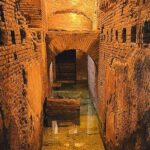
If you want one moment that makes Ostia Antica feel personal, it’s the Forica—the public washrooms. This is not just a bathroom stop; it’s one of the best “everyday life” windows you’ll get anywhere in Roman ruins.
You’ll find a large open room and a marble bench built around a layout designed for multiple users at once. The striking detail is the 20 well-spaced holes across the bench, arranged along four walls. The physical design turns something ordinary into something you can actually understand by seeing and sitting where people once did.
What I love about this stop is the mental shift it creates. It’s easy to romanticize ancient Rome as marble ideals and heroic statues. Forica drags you back to the human scale: routines, shared spaces, and the reality that public life was built into daily habits.
It also gives you a reset from “big building” sightseeing. You’re not just measuring size—you’re learning how a Roman city handled needs at scale, which is exactly what you want from Ostia, especially if you’ve already visited more famous places like Pompeii.
Baths of Neptune: Mosaics That Make You Look Twice
Next up is the Baths of Neptune, and this stop is for your eyes as much as your ears. The highlight is an impressively intact mosaic tied to the sea god—depicting the god being drawn in a scene with a four-horse chariot.
Mosaics can be tricky: you either stand in front of them for a second and move on, or you slow down and let the story connect the art to the room. With a guide, you get both. You learn what the bath complex likely meant socially and how the decoration fits the theme of the space.
There’s also a practical payoff: mosaics are a good “pause point” when the day feels hot or you’re still waking up to the idea that you’re touring in open-air ruins. One theme that shows up repeatedly in the guide experience is smart pacing—finding shade and keeping the group comfortable while still hitting the most important elements.
If you only remember one thing from the baths area, make it this: Ostia’s art wasn’t separate from daily life. It decorated spaces that people used, and the design choices were meant to be seen.
The Amphitheater: Visualize 3,500 People at 12 BC
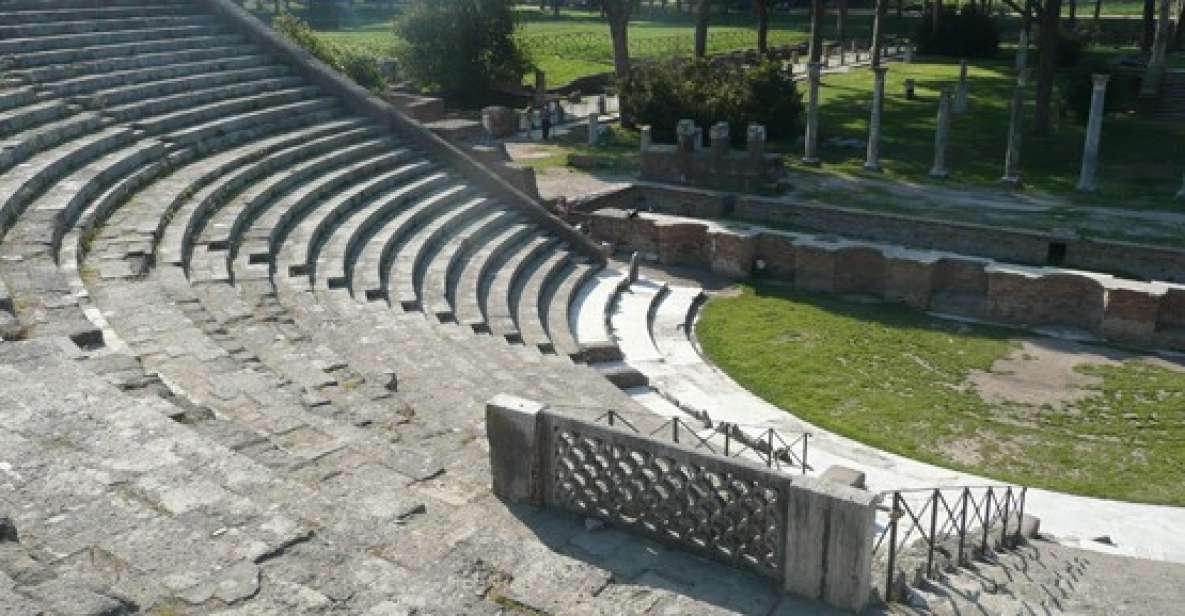
The amphitheater is where you start feeling the rhythm of the port city. It’s not just “an arena.” It’s a place that helped turn Roman entertainment into mass experience.
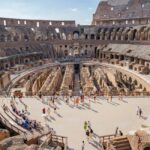
You can imagine what it was like when the theater was first built in 12 BC for an audience of about 3,500 spectators. Standing in the stands area, you get a better sense of sightlines and the scale of the crowd. And because this site is less crowded than Rome’s most famous attractions, the amphitheater moment can feel more intimate than you’d expect.
What’s worth noting for your expectations: Ostia’s power comes from its feeling of lived-in normalcy. This amphitheater isn’t set up as a museum piece—it’s the shell of where real crowds gathered. With the guide’s context, it becomes easier to picture Roman audiences coming for events, reacting together, and leaving as part of the city’s daily pulse.
This is also a good moment for photos, as long as you keep an eye on where you’re standing. Ancient sites are protected, so stick to the paths the guide uses and avoid wandering “for the perfect angle.”
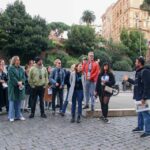




Why a Guide Matters at Ostia Antica (and What They Do for You)
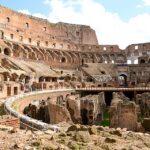
Ostia Antica covers an enormous amount of ground—enough that even motivated visitors can end up seeing only fragments. A guided half-day works because the guide does three jobs at once:
- Selects the most meaningful locations so you don’t spend hours chasing “where is everything?”
- Explains how the buildings fit together, especially as a port city tied to trade and the Roman Republic
- Turns architecture into everyday behavior, like how people would eat, work, bathe, and socialize in the same urban system
During the three-hour guided walking portion, you’ll typically cover the kind of remains that make Ostia so rewarding: commercial spaces, thermal bath structures, warehouses, tavern-style remnants, and areas that hint at entertainment and civic life.
And since your group is capped at 12 people, the guide can keep you on track without blasting you through every corner. Past guests have praised guides—like Rob, Cat (Catarina), Alberto Terrasi, Laura, and Angellina—for being organized and story-driven, including occasional reenactment-style moments that make “Roman life” stop feeling like a textbook concept.
You also get a toilet break and time for a snack or drink at a snack bar. That matters at Ostia because the open-air layout and summer heat can hit harder than you expect—especially if you’re also walking in Rome before this day trip.
Staying After: Modern Ostia, Beach Time, and the Unescorted Return
One of the smartest parts of this tour is that it doesn’t force a rigid “back to Rome immediately” mindset. When the guided portion ends, you can stay in Ostia to explore at your own pace, including the modern town area and potentially a nearby beach.
This is where the “bring a towel and beachwear” advice actually matters. If you plan to add beach time, you’ll be glad you packed it, because your last stop is no longer about standing under museum lighting—it’s about real downtime.
A few practical realities to plan for:
- The tour itself ends in Rome at Piramide Metro if you choose to return with the guide.
- If you stay in Ostia, you’ll have return train tickets, but your ride back is unescorted.
- The guided walking ends near the area of the on-site museum, so you can use the time afterward to wander.
In cooler months, some services and hours can affect what you can see. One report specifically mentioned the on-site museum closing around 1:30 PM in winter. If your trip is in winter and the museum matters to you, plan to prioritize it earlier in the day.
Price and Logistics: When $58 Feels Like a Win
Let’s talk real value. At $58 for about four hours, you’re paying for three big advantages:
- Guided interpretation in a large site where context is everything
- Entry ticket included, so you’re not juggling add-ons
- Return train transport from Rome included, which keeps the day simpler than DIY
If you tried to do Ostia on your own, you’d still get the remains. But you’d likely lose time figuring out which buildings matter most, and you’d miss the “why” behind the routes you’re walking—especially in places like the Forica and the amphitheater, where the human story is the point.
Where you get the best outcome is when you like Roman life details: public routines, commerce in a port city, and how entertainment and civic spaces worked together. If your goal is only “the top photo spots,” you might feel this is slower than you expected. But if you want understanding, this is a solid match.
Also, the small group format is a quiet value. You don’t feel like a number. You can hear the guide, ask questions, and stay together at a site that’s spread out.
Who Should Book This Ostia Antica Train Trip
This is a strong fit for you if:
- you’ve seen some of Rome’s biggest sights and want a less crowded, more human Roman experience
- you care about how ordinary Romans lived, not just emperors and monuments
- you want an easy half-day out of Rome with built-in logistics
It’s less ideal if:
- you need wheelchair access, since the tour is not suitable for wheelchair users
- you’re relying on a stroller, since baby strollers are not allowed
- you want a fully self-guided experience with no structure—because part of the value here is the guide’s selection and pacing
Should You Book This Ostia Antica Guided Trip?
I’d book this tour if you want Roman life to make sense quickly. The combo of train convenience, included entry, and a guide-led route through the most telling spaces—the Forica, Baths of Neptune, and amphitheater—is exactly what turns Ostia Antica from “ruins I saw” into “ruins I understood.”
If you can walk comfortably and you’re open to staying after for modern Ostia or the beach, this becomes even more worthwhile. At $58, it’s priced like a half-day that respects your time, not like a rushed box-check.
FAQ
How long is the Ostia Antica trip from Rome?
The total experience runs about 4 hours. The guided tour inside Ostia Antica lasts about 3 hours, with short train rides adding the rest of the time.
Where do I meet for the tour?
Meet at Cafe Piramide near Piramide Metro (Line B – blue line). The café is visible near the train tracks and the metro exit, and you can recognize it by the white umbrellas outside.
What’s included in the price?
The package includes a return train ticket from Rome to Ostia Antica, the Ostia Antica entry ticket, and a live English guide.
Is there time to stay in Ostia after the tour?
Yes. You can remain in Ostia Antica and the modern town at your leisure, and there’s also an option to head to the beach. If you stay, the return train ride is unescorted.
What should I bring?
Bring comfortable shoes for walking, plus a towel and beachwear if you plan to add beach time. Sports shoes are also a good idea.
Is the tour accessible for wheelchair users or strollers?
The tour is not suitable for wheelchair users. Baby strollers are also not allowed.