REVIEW · ROME
From Rome: Pompeii and Herculaneum by High-Speed Train
Book on GetYourGuide →Operated by Askos Tours · Bookable on GetYourGuide
Vesuvius still writes the story in stone. This day trip feels smart because it strings together a high-speed train and small-group archaeologist-led touring to fit two major sites into one long, well-managed day.
What really pulls you in is the on-the-ground look at daily life as it froze in time. You’ll see plaster casts of victims and animals in Pompeii, then shift to Herculaneum’s preserved streets and shoreline for a different, more intimate feel.
One consideration: you’re on foot for about one mile in Pompeii and around half a mile in Herculaneum, and a rushed lunch window can be a stress point if you like to linger.
Why this trip works so well
- Fast train, not a slow bus: Rome to Naples in about 70 minutes.
- A real archaeologist guide: you’re not just scanning plaques.
- Plaster casts in Pompeii: a haunting way to understand the human impact.
- Herculaneum House of Neptune and Amphitrite: famous rooms, better-preserved details.
- Headsets for the whole group: less straining, more hearing.
- Two sites, one day: great if you want Vesuvius context without spending the night.
In This Review
- High-speed Rome to Campania: how the day is built
- Where you meet in Naples (and how to stay calm)
- The Pompeii experience: plaster casts, key buildings, and the human story
- A note on pacing in Pompeii
- Pompeii free time: lunch and photos without losing the day
- Transfer to Herculaneum: a shorter ride with a different vibe
- Herculaneum highlights: the House of Neptune and Amphitrite and the preserved shoreline
- Walking reality check
- The bigger picture: what you learn when you see both sites
- Transport, timing, and comfort during the 8.5-hour plan
- Price and value: is $222.77 worth it?
- Who should book this Pompeii and Herculaneum tour from Rome
- Should you book? My practical take
- FAQ
- How long is the Rome to Pompeii and Herculaneum day trip?
- Do I need to buy train tickets separately?
- What’s included for the guided parts?
- Is lunch included?
- How much walking should I expect?
- What should I wear and what can’t I bring?
High-speed Rome to Campania: how the day is built
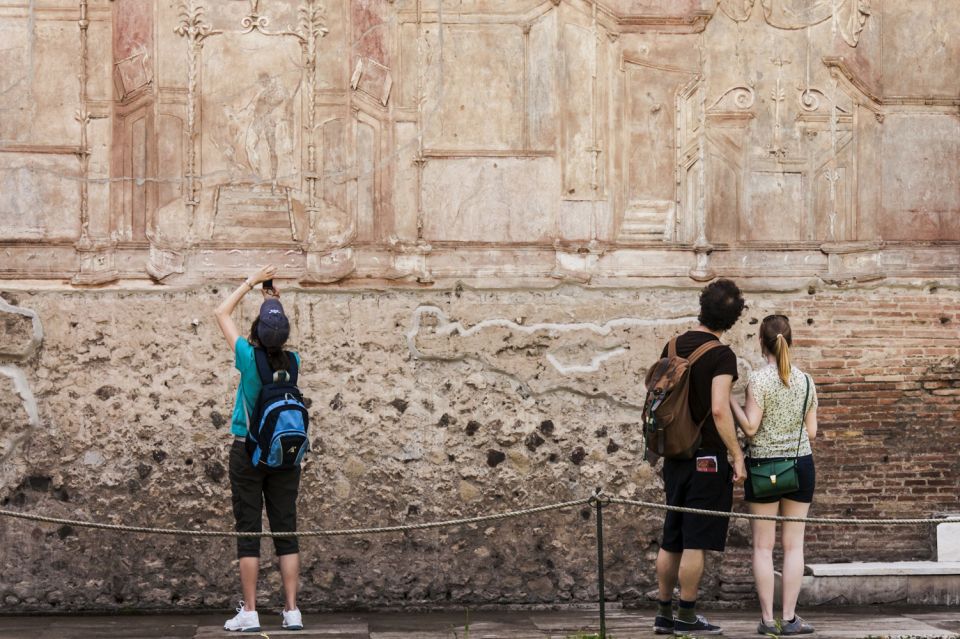
This tour is designed around one big idea: don’t waste your time getting to Vesuvius country. You start at Roma Termini, ride the fast train to Naples in about 70 minutes, then continue by minibus to the archaeological sites. That rhythm matters. It turns what could be an exhausting travel day into a day you can actually enjoy at the ruins.
The schedule also helps you see both places as part of one story. Pompeii gives you the scale of a Roman city, while Herculaneum feels tighter and more preserved. Put them together, and the tragedy becomes clearer: not just the eruption, but how different parts of the coastline and communities were hit.
Where you meet in Naples (and how to stay calm)
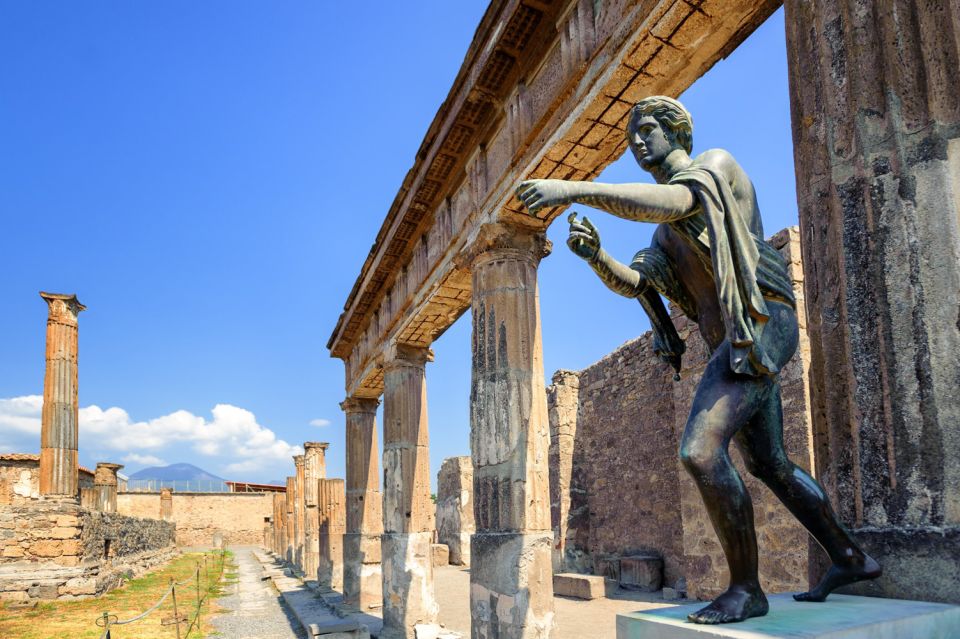
You travel independently on the train using tickets provided by the tour operator. After you arrive at Naples Central Station, you meet the guide in front of the STARHOTEL TERMINUS entrance, which sits opposite the station. The guide holds an ASKOS TOURS sign.
This is a small but important detail. Naples stations can be confusing when you’re tired and trying to find one person with one sign. My practical advice: arrive to Roma Termini early, and keep your eyes open for your sign at Naples. Once you’re with the group, everything else runs smoother.
You can also read our reviews of more tours and experiences in Rome.


The Pompeii experience: plaster casts, key buildings, and the human story
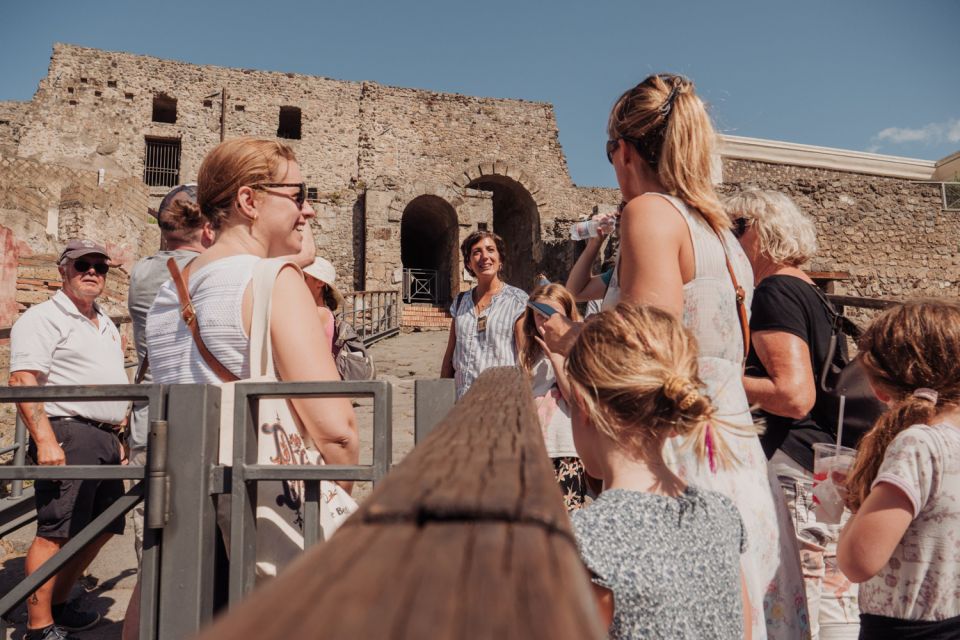
Pompeii is the headline act, and you get it with a structured, archaeologist-guided route. Expect around two hours guided around the highlights. The tour is built to show more than the postcard views.
Here’s what you can expect to focus on:
- Key buildings in Pompeii as the guide connects layout to daily life.
- Newly-opened houses (mentioned as part of the Pompeii highlights), so you get a slightly fresher feel than the most basic route.
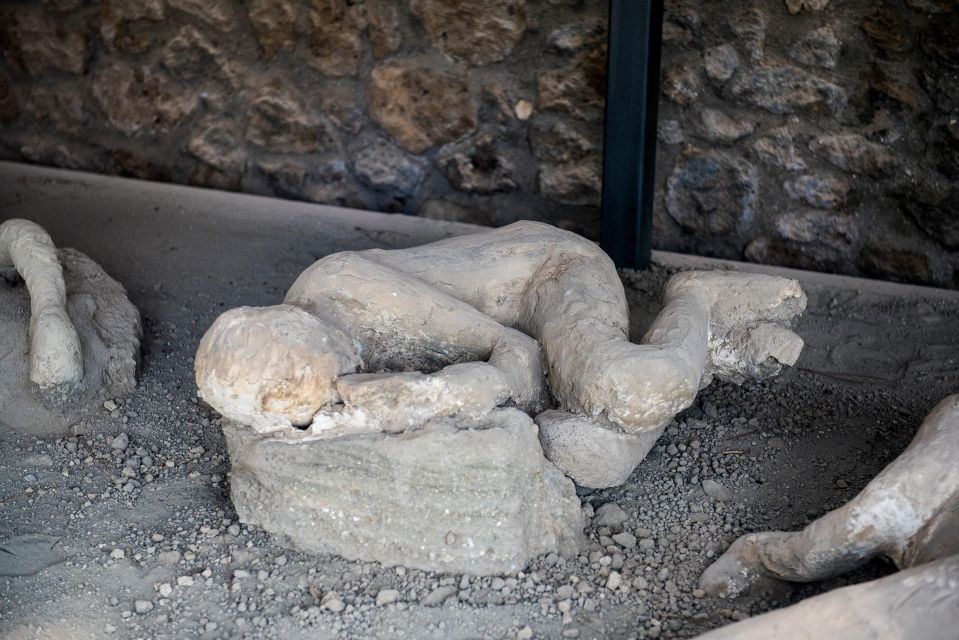
- Plaster casts of victims and animals, which is one of the most memorable parts of any Pompeii visit. These casts give a startling, physical sense of what happened when people and animals were buried by the eruption.
- The brothel is also specifically included, which helps round out the social side of Roman life rather than making everything about temples and statues.
Pompeii can overwhelm you if you wander on your own. With a guide, you’re less likely to miss the “why this place matters” parts. And with headsets, you don’t have to constantly lean in or fight for position in a crowd.
A note on pacing in Pompeii
Pompeii is huge. Even with a focused two-hour route, you won’t see everything. That’s not a flaw—it’s the tradeoff for pairing Pompeii with Herculaneum in the same day. The goal here is smart coverage of signature sections, not a full museum-level crawl.
Pompeii free time: lunch and photos without losing the day
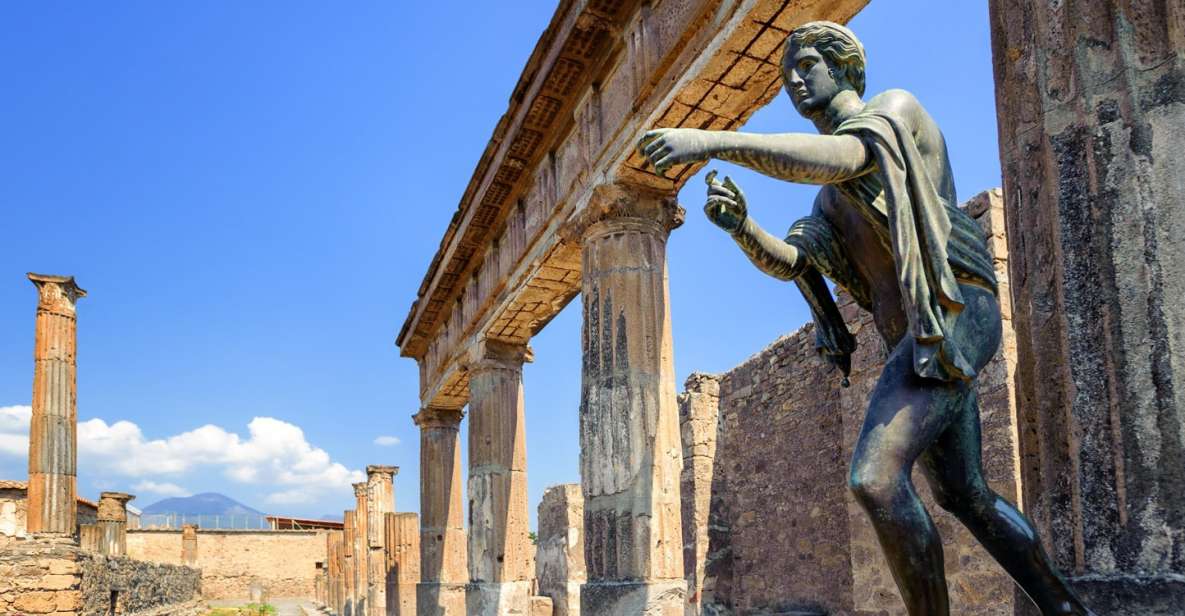
After the guided portion, you get about 30 minutes free time. That window is meant for quick shopping and/or lunch. The reality is that Pompeii is where “quick” gets tricky. People want sandwiches, sit-down meals, and photos at the same time.
If you want a smoother lunch:
- Plan on grabbing food close to where the group is moving, rather than treating it like a long sit-down break.
- Keep your phone charged and your walking shoes on.
- Think in terms of quick wins: a snack, a drink, and one round of photos you truly care about.
You’ll likely wish you had more time if you’re the type who likes to linger over details. But this tour’s value comes from seeing Pompeii and Herculaneum back-to-back, with the train connection handled for you.
Transfer to Herculaneum: a shorter ride with a different vibe
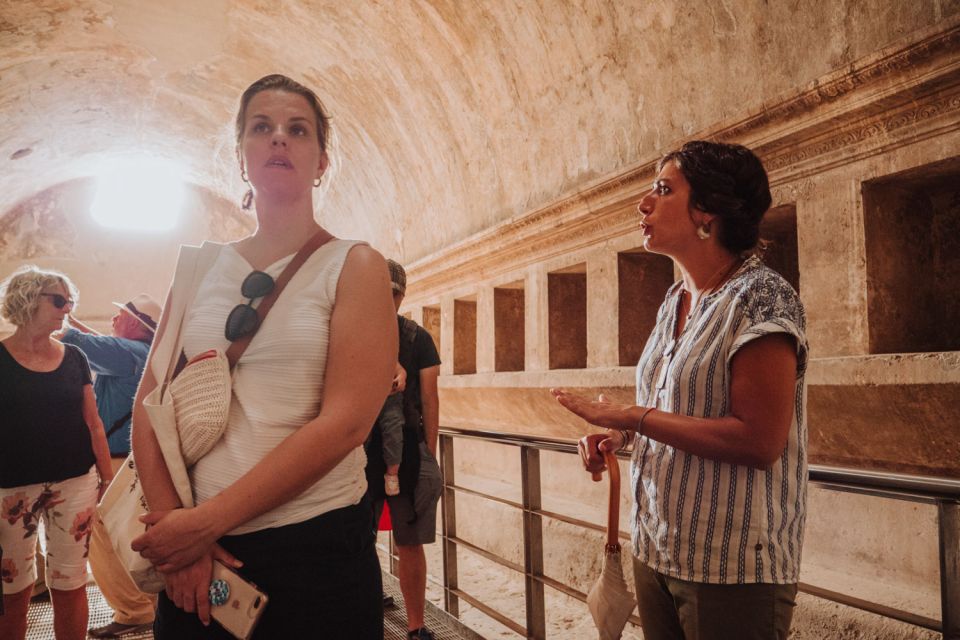
Once Pompeii wraps, the group moves by minibus to Herculaneum. The driving time is about 30 minutes (as part of the overall day plan), and then you settle in for the Herculaneum portion.
This is where the day changes tone. Pompeii feels like a sprawling city you’re walking through. Herculaneum feels like you’re stepping into preserved rooms, preserved thresholds, and preserved streets—smaller, quieter, and often more emotionally direct because of how intact many structures appear.





Herculaneum highlights: the House of Neptune and Amphitrite and the preserved shoreline
Your Herculaneum visit is about two hours guided. The tour focuses on high-impact areas, including:
- House of Neptune and Amphitrite, one of the best-known stops. It’s a strong choice because it showcases what “everyday impressive” looked like in a Roman house.
- The beach area where skeletons are preserved, which is one of the most sobering sights at either site. It makes the human cost feel immediate, not abstract.
Herculaneum is often praised for preservation. You don’t just see ruins; you see clearer context—room layout, street-level details, and a sense of how people moved through the space. It’s also a nice counterbalance to Pompeii’s broader scale.
Walking reality check
Herculaneum’s walking distance is shorter (about half a mile), but it’s still uneven and outdoors. Closed-toe shoes matter. If you’re carrying a bag, keep it minimal, since the tour notes that luggage or large bags aren’t allowed.
The bigger picture: what you learn when you see both sites
Pompeii and Herculaneum weren’t just two separate destinations. They were nearby communities under the same volcanic threat. Seeing them in one day helps you connect cause and effect across the region.
This tour leans into that “how the eruption changed everything” understanding. Guides often explain theories about the disaster, plus what the finds suggest about daily life before Vesuvius. If you want Roman history that feels like it happened to real people (not just dates and names), this pairing is exactly the right structure.
Transport, timing, and comfort during the 8.5-hour plan
This is an 8.5-hour outing, and it runs on rails and schedules. You’ll ride:
- Train from Rome to Naples (about 70 minutes)
- Minibus to Pompeii (about 30 minutes)
- Minibus back to Naples after Herculaneum (about 30 minutes)
- Train from Naples to Rome (about 70 minutes)
That’s a lot of movement, but it’s also why it’s efficient. You’re not stuck in long traffic for hours. The tour also provides headsets, which is a comfort upgrade at ruins where noise, crowds, and distance make it hard to hear.
Still, it’s a full day. You should go in with the right expectations: you’ll see major highlights, not everything. Bring water, keep your energy steady, and don’t plan anything tight right after you return.
Price and value: is $222.77 worth it?

At about $222.77 per person, the value depends on what you’d otherwise do on your own.
You’re paying for:
- Round-trip fast-train tickets between Rome and Naples
- Pompeii Express entry tickets (to help with time)
- Herculaneum entry tickets (listed as €16.00 each)
- Transportation by minibus between Naples, Pompeii, and Herculaneum
- Guided tours with an archaeologist at both sites
- Headsets for all participants
- A skip-the-ticket-line style benefit
You’re not paying for:
- Meals
- Hotel pickup and drop-off (you start at Roma Termini and meet at Naples Centrale)
For many people, the big win is mental. You show up at Roma Termini, someone handles the train + the site connections, and you get structured archaeologist-led touring across two sites. If you’ve ever tried to plan Naples-to-Pompeii logistics while managing crowds and time limits, you’ll understand why that’s worth paying for.
Who should book this Pompeii and Herculaneum tour from Rome
This one fits best if you:
- Want a one-day plan that covers both Pompeii and Herculaneum
- Care more about context and interpretation than only photos
- Prefer small-group touring with English live guidance and headsets
- Want the fast train experience without doing the heavy planning yourself
It’s not the right match if you:
- Have limited mobility or need wheelchair-friendly access (the tour isn’t recommended for limited mobility and isn’t for wheelchair users)
- Want a slow, unhurried day at one site
- Can’t handle uneven walking surfaces in outdoor ancient areas
And if you tend to snack frequently, remember lunch is not included, and the free time in Pompeii can be short.
Should you book? My practical take
Book it if your goal is a high-quality, guided “two sites in one day” hit from Rome, and you want the eruption story explained in a way that actually connects to what you’re seeing. The combination of high-speed train logistics, archaeologist-guided routes, and the contrast between Pompeii’s larger-city feel and Herculaneum’s preserved detail makes this a strong choice for first-time visitors.
Skip it (or look for an alternative) if you need more mobility support, hate tight time windows for meals, or want a full deep-digging day at just one site.
FAQ
How long is the Rome to Pompeii and Herculaneum day trip?
The total duration is listed as 8.5 hours. Exact start times vary, so you’ll need to check availability for the departures.
Do I need to buy train tickets separately?
No. Round-trip high-speed train tickets from Rome to Naples are included, and you travel independently from Roma Termini to Naples Central Station using the provided tickets.
What’s included for the guided parts?
You get guided tours with an archaeologist at both Pompeii and Herculaneum, plus headsets for all participants.
Is lunch included?
No. Meals are not included, and Pompeii includes a free time window that you can use for shopping or lunch.
How much walking should I expect?
The tour notes about one mile of walking in Pompeii and about half a mile in Herculaneum. Expect uneven, stone-paved areas.
What should I wear and what can’t I bring?
Bring a passport or ID card. Avoid sandals or flip flops, and don’t wear high-heeled shoes. Luggage or large bags aren’t allowed.