REVIEW · ROME
Ghosts Legends and Mysteries of Rome Walking Tour
Book on Viator →Operated by What About Tours · Bookable on Viator
Rome at night gets under your skin. This 90-minute walk turns famous river landmarks into a night-by-night set of legends, secrets, and Catholic-era mysteries, with a licensed guide keeping things moving after dark. You’ll start by the Tiber and end at Campo de’ Fiori, with urban legends and ghost stories woven into real places.
What I like most is how short it is, so it fits evenings when you’re tight on time, and how the stops hit big, recognizable sites like Castel Sant’Angelo and Ponte Sant’Angelo instead of vague dark alleys. The second win: the guide format is story-led and group-paced, which helps you feel safer walking Rome’s streets at night.
One drawback to plan for: this is not a Hollywood haunted-house experience. If you want jump scares or paranormal investigation, you may feel it’s more “dark storytelling and history” than truly spooky.
In This Review
- Key things to know before you go
- A night walk that uses Rome’s real landmarks as the scary part
- Meeting at Lungotevere Castello: timing and how to start smoothly
- Castel Sant’Angelo and Ponte Sant’Angelo: the river turns into a storybook
- Via Paola to Arco dei Banchi: short stops, heavy reputations
- Via Paola
- Arco dei Banchi
- Largo Ottavio Tassoni (319) and Vicolo della Moretta: art, crime, and fear in the same breath
- Largo Ottavio Tassoni, 319
- Vicolo della Moretta
- Via di Monserrato and Corte Savella: punishment inside Rome’s walls
- Via Giulia: Renaissance elegance, with history that doesn’t behave
- Santa Maria dell’Orazione e Morte: Baroque death imagery that feels too close
- Fontana del Mascherone: the mask, the water, and a crime story
- Campo de’ Fiori after dark: market lights and Inquisition shadows
- Price and tips: what you’re really paying for
- Pacing, sound, and comfort: how to get the most out of 90 minutes
- Who should book this Rome ghost legends walk
- Small practical checklist for your night out
- Should you book Ghosts, Legends and Mysteries of Rome?
- FAQ
- What time does the tour start?
- How long is the tour?
- How much does it cost?
- Is the tour in English?
- Is the ticket mobile?
- What’s included in the tour?
- Do I have to pay admission for the stops?
- Is tipping included in the price?
- Is it suitable for children?
- Are service animals allowed?
- FAQ
- Where does the tour start and where does it end?
- What’s the maximum group size?
- Can I cancel for a refund?
- Are cards accepted for tips?
Key things to know before you go
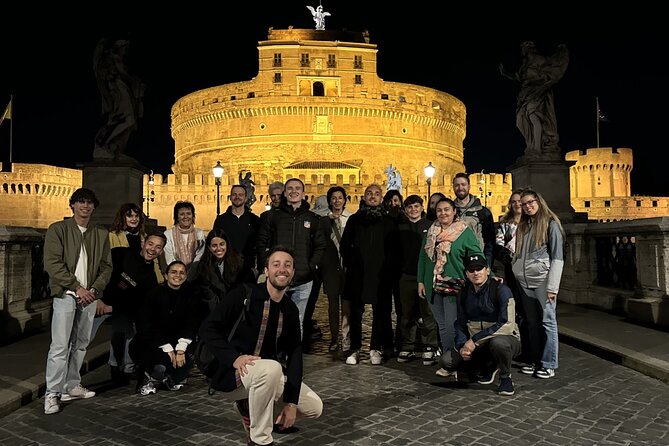
- 90 minutes at 8:00 pm: a focused evening option that won’t eat your whole day
- Licensed English guide with an emphasis on legends and mysteries, not paranormal testing
- Start at Lungotevere Castello and finish at Campo de’ Fiori for easy evening plans
- Max group size of 24: big enough to feel social, small enough to move together
- Tip-based model: the guide’s delivery matters, so wear comfortable shoes and listen closely
- Content note: graphic topics are included; it’s not recommended for kids under 12
A night walk that uses Rome’s real landmarks as the scary part
If you’re the type who loves stories with receipts, this is a fun fit. Rome already has the vibe—stone, shadows, and centuries of secrets—but this tour gives you a reason to look twice at places you’d normally just snap a photo of and keep walking past.
I also like that the pacing respects your evening. You’re not doing a long, exhausting trek. It’s an organized loop that keeps you on course from the Tiber to Campo de’ Fiori, with a story arc that’s meant to feel like one continuous chapter of Rome’s darker side.
That said, temper your expectations in a good way: you’re not going to find special effects. You’re going to get storytelling—the kind that connects art, faith, crime, and punishment—built around locations you can actually point to.
You can also read our reviews of more tours and experiences in Rome.

Meeting at Lungotevere Castello: timing and how to start smoothly
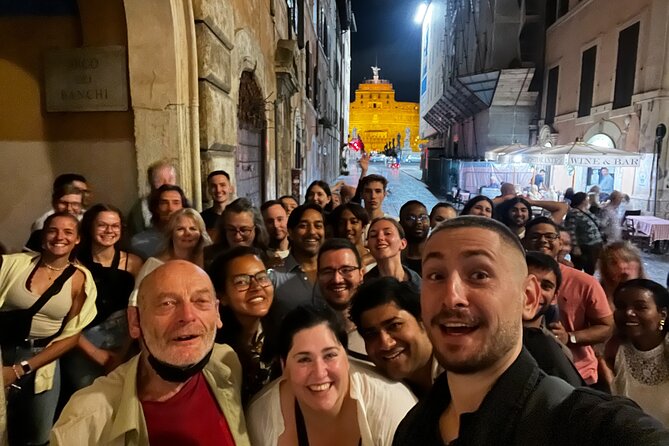
The tour starts at Lungotevere Castello, 50 (00193 Roma RM) at 8:00 pm. You end at Piazza Campo de’ Fiori (00186), a handy finish since it’s well connected by bus and taxi stands.
A couple of practical points help you avoid the most common evening-tour frustrations:
- Be a few minutes early. Night starts can get tricky, especially near big monuments and busy streets.
- Bring headphones only if your app truly stays quiet. A tour like this works best when you can hear the guide clearly at each stop.
- Wear shoes you can walk in for about 90 minutes. The route is on foot and you’ll cover more than you think once you’re moving between stops.
This tour uses a mobile ticket, and you can confirm at booking. The group size is capped at 24, so you should be able to track the guide and keep the “see-and-hear” rhythm.
Castel Sant’Angelo and Ponte Sant’Angelo: the river turns into a storybook
Your first major stop is Castel Sant’Angelo, originally Emperor Hadrian’s mausoleum, later a fortress, papal residence, and prison. It’s one of those Rome sites where the architecture looks dramatic even in daylight, and at night it feels like it’s holding its breath.
The tour gives you about 15 minutes here, and it notes admission ticket is free for this portion. That matters because it lets you experience the place without the usual “okay, we’ll just look from outside” compromise.
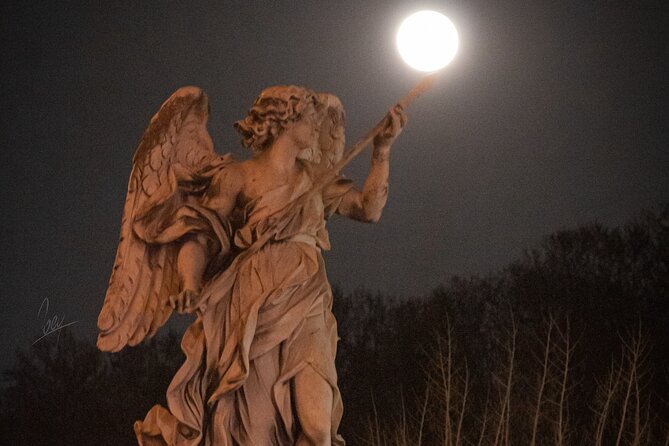
From there, you move to Ponte Sant’Angelo, the bridge over the Tiber lined with angel statues carved by Gian Lorenzo Bernini and his students. The tour leans into the idea that at night, the angels look less comforting and more watchful—each statue carrying symbols of Christ’s suffering.
This pair is smart storytelling for two reasons:
- You get context. Mausoleum to prison to papal power isn’t just a fun fact—it explains why so many legends cling to this area.
- You get atmosphere. River bridges create natural shadow lines and a sense of crossing from one world to another. Rome turns the metaphor into something you can feel.
Via Paola to Arco dei Banchi: short stops, heavy reputations
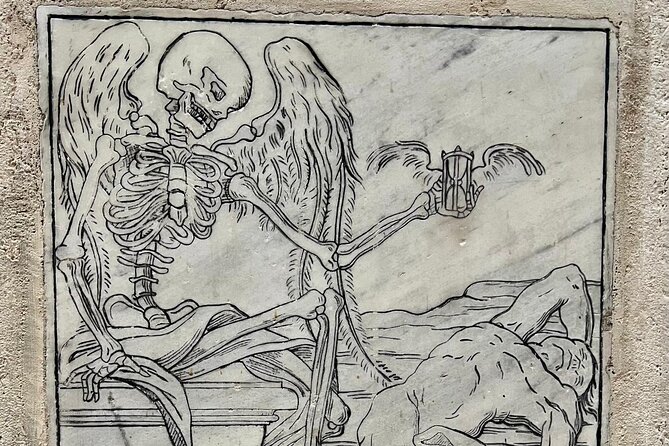
After the big landmarks, the walk drops into shorter street moments that still land with impact.
Via Paola
You’ll hear about the house of the kindest executioner in Rome. It’s a grim topic, but the point here isn’t gore—it’s how stories get attached to people, and how the city remembered what it preferred to forget. You’re basically learning how Rome’s moral logic worked in public.



Arco dei Banchi
Next comes the Haunted Arch, described as a place of prayer connected to a controversial exorcist in Rome. This is one of those stops where you may not expect much visually, but that’s the trick: the guide gives the site a narrative purpose.
A quick consideration: if you’re the type who wants constant “wow” visuals, these short stops can feel like a lot of story for a quick glance. But if you enjoy how legends assign meaning to ordinary corners, these moments are the glue that keeps the tour from feeling like only monuments.
Largo Ottavio Tassoni (319) and Vicolo della Moretta: art, crime, and fear in the same breath
Two more tiny stops bring you into the city’s darker celebrity circle.
Largo Ottavio Tassoni, 319
Here you’ll hear about Benvenuto Cellini, a 16th-century artistic genius—plus the darker side of his reputation, including serious crimes. The value of this stop is that it shows you how “great artist” and “dangerous person” can occupy the same streets. Rome didn’t separate art from its mess. The city just stored both.
Vicolo della Moretta
This is the stop tied to the haunted house of Giulia Tofana, a witch connected to stories around the holy inquisition. Again, you’re not being invited to treat this as a paranormal mystery. You’re being asked to see how fear, power, and belief shaped reputations—and how those reputations became legend.
Via di Monserrato and Corte Savella: punishment inside Rome’s walls
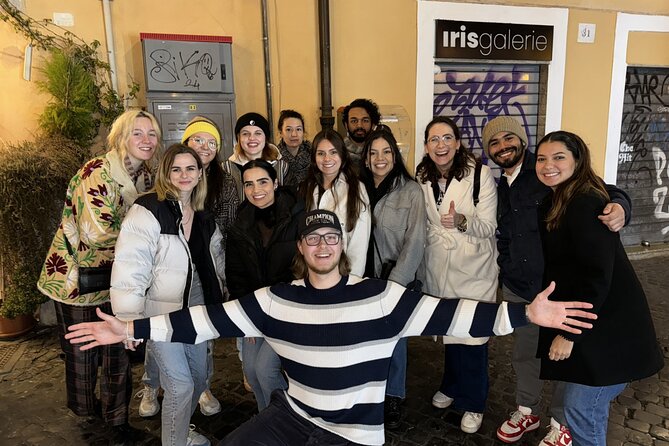
You’ll reach Corte Savella on Via di Monserrato, described as the only prison in Rome authorized to execute convicts inside its walls. The tour ties this directly to the story of Beatrice Cenci, who was tortured before her execution.
This is one of the stops where the tone turns more serious. The tour doesn’t just say “bad things happened.” It places the location within a system—who had power, where the violence was carried out, and why Rome remembers these places through stories.
If you’re sensitive to graphic or disturbing content, this is the moment you’ll want to mentally pace yourself. The tour notes that graphic information and CSA topics are included and it’s not recommended for children under 12. Even if you’re an adult, it’s good to know where the heavier content lands.
Via Giulia: Renaissance elegance, with history that doesn’t behave
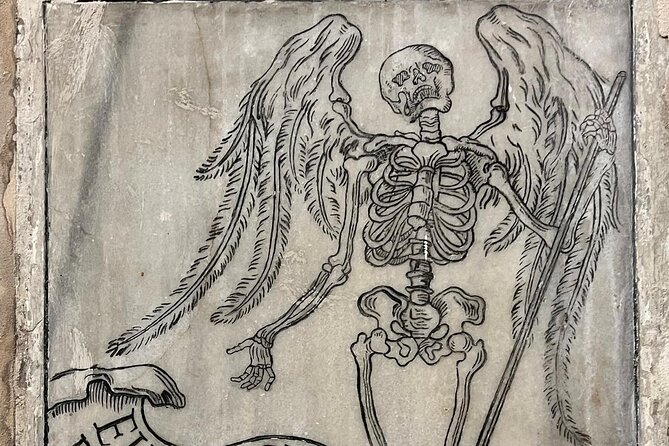
Next you walk along Via Giulia, a 16th-century street designed by Bramante for Pope Julius II. This is the side of Rome that photographs cleanly: Renaissance palaces, ivy-lined facades, and quiet courtyards tucked behind facades.
The tour gives you a useful contrast here. It’s easy to romanticize old streets. But once you hear the legends and darker associations tied to the same area, the street stops feeling like just a postcard and starts feeling like lived-in history.
This is also a nice practical moment: you get a short breathing space in the story, with visually interesting street geometry that helps you stay oriented.
Santa Maria dell’Orazione e Morte: Baroque death imagery that feels too close
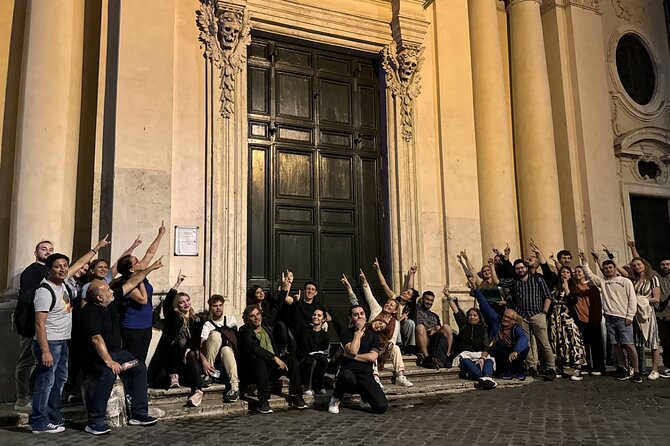
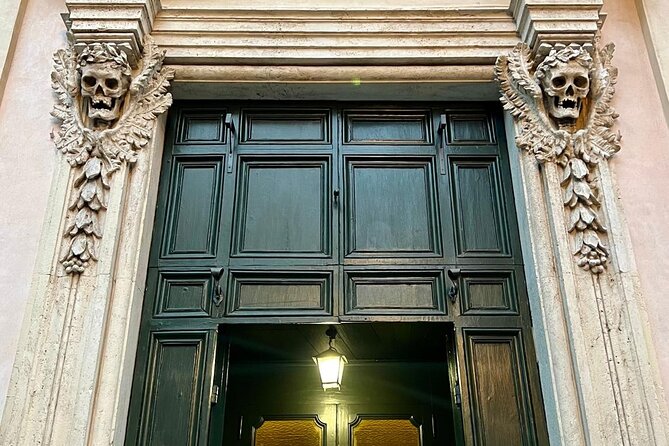
One of the more memorable stops is Chiesa di Santa Maria dell’Orazione e Morte. The tour describes it as a Baroque church tied to a confraternity dedicated to retrieving and burying abandoned corpses.
Inside, the tone shifts from legend to something like visual proof of death’s presence in daily life—skulls, bones, and symbols of death. Whether or not you’re religious, the experience is unsettling because it treats death as something handled by human hands, not something that stays far away.
If you want a “spooky” feeling that comes from atmosphere rather than theatrics, this is the stop. It turns the tour’s theme into something physical.
Fontana del Mascherone: the mask, the water, and a crime story
After the church, you move to Fontana del Mascherone on Via Giulia. The fountain features a massive stone mask that spouts water from its mouth, and the tour notes a crime tie-in: it was a crime scene involving the kidnapping of John Paul Getty III.
This is a great example of Rome’s spooky power working in two timelines at once:
- old-world symbolism in stone and Baroque design
- modern history tied to the same public space
If you like your legends with modern echoes, this stop delivers.
Campo de’ Fiori after dark: market lights and Inquisition shadows
The tour ends at Campo de’ Fiori, a historic square that’s famous for its morning market and its lively nightlife. At night, bars and restaurants surround you, and the square can feel like the heart of an easy evening plan.
But the tour also points out the darker past tied to Giordano Bruno’s statue, including executions during the Inquisition. So you finish with contrast: fun atmosphere in the present, heavy memory in the background.
This ending is practical, too. You’re in a central, connected area where it’s easy to grab dinner, hop on transit, or keep walking at your own pace.
Price and tips: what you’re really paying for
The listed price is $3.63 per person, and the tour is explicitly tip-based (tips are how guides earn). That combination can feel unusually low, so here’s how to think about value:
- You’re paying for a licensed guide’s time, plus the structure of a short, safe, story-driven evening.
- You’re not paying for a theatrical show. There are no jump scares or paranormal investigation, just guided storytelling anchored to real sites.
- Because tips matter, the guide’s ability to be heard and keep the group together affects your experience.
So if you want a great time, do two things:
- Be present with your listening. Night noise is real.
- Plan to tip fairly if the guide does a good job.
From the guide names mentioned with this tour—Ivan and Simone—the common thread is story delivery with clarity and humor, plus safety-minded group management. If you get a guide in that style, it can feel like a cheap evening that punches above its weight.
Pacing, sound, and comfort: how to get the most out of 90 minutes
This tour packs a lot into a short time. To enjoy it, you’ll want to do a little setup on your end:
- Keep your phone pocketed once you start. You’ll spot landmarks faster when you’re not constantly checking the map.
- If rain hits (Rome loves a surprise shower), plan for it. Bring a light rain layer so you can stay comfortable and keep hearing the guide.
- Expect weather and crowd noise. Night walking around Campo de’ Fiori can be lively, so position yourself where you can hear.
Some people feel the tour lands more as history-and-legend than as truly “ghostly.” That’s not a failure of the route—it’s the design. The best way to avoid disappointment is to choose this when you want dark stories tied to real places, not a paranormal event.
Who should book this Rome ghost legends walk
This tour is a strong match if you:
- love Roman history but want it told with edge
- want a short evening plan with a clear start and end
- like legends connected to art, faith, and crime
- enjoy walking in a group after dark for extra peace of mind
It may not be the best fit if you:
- need something family-friendly (graphic content is included and it’s not recommended under 12)
- want “scary” in the horror-movie sense
- are very sensitive to violent topics (the content includes torture-related stories and graphic information)
Small practical checklist for your night out
- Comfortable walking shoes (you’ll be on your feet the whole time)
- A light layer or rain protection
- A charged phone for the mobile ticket
- Cash or card for tipping, since it’s tip-based and some guides accept cards
Also, if you want to keep the evening stress low: you’re starting near the Tiber and ending in a prime dining square. That makes it easier to pair with dinner without backtracking.
Should you book Ghosts, Legends and Mysteries of Rome?
If your idea of a great Rome night is dark stories tied to real monuments, this is a smart, low-cost way to do it. The mix of Castel Sant’Angelo, Ponte Sant’Angelo, and the ending at Campo de’ Fiori gives you major landmarks plus a strong thematic finish. And because it’s only about 1 hour 30 minutes, it’s easier to fit into a packed itinerary.
But book it with the right mindset: this is storytelling, not a paranormal hunt. If that matches your taste, you’ll probably love how the city’s shadows feel when you know what you’re looking at.
FAQ
What time does the tour start?
It starts at 8:00 pm.
How long is the tour?
The duration is about 1 hour 30 minutes.
How much does it cost?
The listed price is $3.63 per person.
Is the tour in English?
Yes, it’s offered in English.
Is the ticket mobile?
Yes, it uses a mobile ticket.
What’s included in the tour?
It includes a licensed tour guide, the walking tour, haunted places, and urban legends and ghost stories.
Do I have to pay admission for the stops?
The tour notes admission ticket free for the stops listed, including time at Castel Sant’Angelo.
Is tipping included in the price?
No. It’s a tip-based tour, and tips are how guides earn money.
Is it suitable for children?
No. The tour includes CSA topics and graphic information and it’s not recommended for children under 12 years old.
Are service animals allowed?
Yes, service animals are allowed.
FAQ
Where does the tour start and where does it end?
It starts at Lungotevere Castello, 50, 00193 Roma RM and ends at Piazza Campo de’ Fiori, 00186 Roma RM.
What’s the maximum group size?
The tour has a maximum of 24 travelers.
Can I cancel for a refund?
Yes. You can cancel up to 24 hours in advance for a full refund.
Are cards accepted for tips?
The tour’s information indicates tipping is expected, and one guide response states they can accept cards for convenience.