REVIEW · ROME
Golf Cart Tour Rome Original since 2005
Book on Viator →Operated by Angel Tours · Bookable on Viator
Golf carts cut Rome down fast.
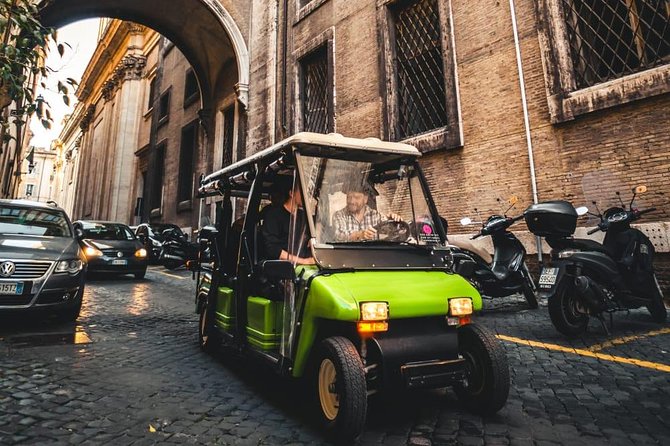
You get an easy-sitting way to see major sights without turning the day into a leg workout, and the best part is the story-driven guide approach that ties each landmark to what you’re really looking at. The main consideration is timing and access: you enter the Pantheon (ticket sold separately), and St. Peter’s Square entry can depend on traffic and security conditions that day.
This tour also works well if you want a morning or afternoon overview and still keep your evening flexible. I’d think of it as getting your bearings quickly, then using the rest of your trip for slower, deeper stops at what grabbed you most. A small tradeoff: the golf cart you get can vary, and on very hot days comfort may depend on the vehicle.
In This Review
- Key things to know
- Why a Rome Golf Cart Tour Works for Real Travelers
- Meeting at Harry’s Bar and How the 3–4 Hour Pace Fits
- Pantheon Stop: Going Inside One of Rome’s Most Detailed Icons
- St. Peter’s Square: A Guided Walk With Day-of Access Changes
- Piazza Venezia, Popolo, and Campo de’ Fiori: Rome’s Mix in Short Stops
- Spanish Steps and the Roman Ghetto: Views, Timing, and Story Detours
- Guides Who Turn Landmarks Into Stories (Salim, Sahara, Flavio, Hadi, and More)
- Price and Value: Is $227.45 Worth It?
- What You’ll See—and What You Might Skip
- Who Should Book This Golf Cart Tour (and Who Might Not)
- Should You Book It?
- FAQ
- How long is the Golf Cart Tour in Rome?
- How much does the tour cost?
- What language is the tour offered in?
- What main stops are included?
- Are admission tickets included?
- Where does the tour start and end?
- What’s the cancellation window?
Key things to know
- Small-group feel: up to 40 travelers, so the pace stays relaxed.
- Pantheon entry included in the stop: you go inside, but admission is not included.
- St. Peter’s Square may be limited: expect a guided walk area, with entry subject to day-of conditions.
- Short, efficient sightseeing blocks: you’re moving site to site rather than lingering for hours.
- Surprise story detours: there’s at least one Roman Ghetto stop, plus unlisted surprises.
- Guides make it: several named guides (Salim, Sahara, Flavio, Hadi, Riccardo, Marco, Daniele, Haidi) are praised for turning facts into scenes.
Why a Rome Golf Cart Tour Works for Real Travelers
Rome can be spectacular and exhausting on the same day. A golf cart tour solves the obvious problem: you want to see a lot, but you don’t want to spend hours in a forced shuffle. This route is built for movement first—driving between highlights—so your time goes to the landmarks themselves and the stories behind them.
I also like that the tour is designed for a simple decision: pick a morning or afternoon window, ride, learn, and then break off on your own for dinner. You’re not trapped on a fixed itinerary all day long in the way some full-day tours can feel. Even with planned stops, guides can adjust around what you’re interested in, and that matters in a city where plans change fast.
One more practical plus: you’ll be able to handle the narrow, crowded streets without constant stops and starts on foot. If your trip includes a day or two packed with museums and long lines, this kind of tour can act like a pressure release.
You can also read our reviews of more tours and experiences in Rome.


Meeting at Harry’s Bar and How the 3–4 Hour Pace Fits
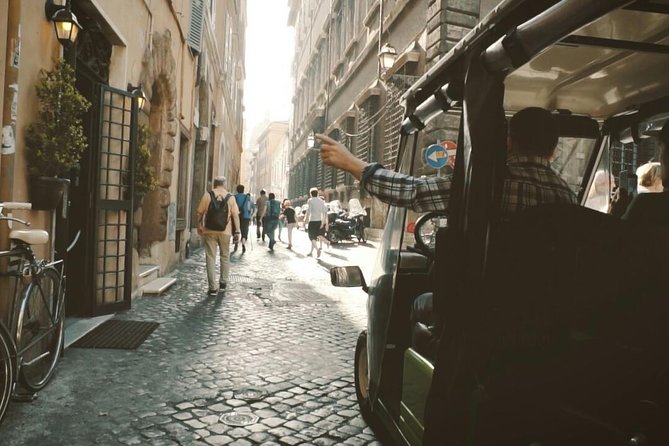
Your tour starts at Harry’s Bar, Via Vittorio Veneto 150, 00187 Roma. From the start, the plan is clear: hit several big-name sights with short guided time blocks, then end with drop-off near where you want to go next—often close to your hotel or a dinner area.
The duration is about 3 to 4 hours. That length is long enough to feel like you saw Rome, but short enough that it won’t steal an entire half-day if you’re also trying to shop, nap, or line up a Vatican visit another time.
Because the tour is in English and uses a mobile ticket, it’s also easy to manage day-of. And since there’s a maximum of 40 travelers, it tends to feel more like a guided outing than a herd-on-a-bus situation.
If you’re traveling with kids, this pacing can be a big help. Many people mention the experience holds attention better than longer walking tours, especially when the guide keeps the facts moving.
Pantheon Stop: Going Inside One of Rome’s Most Detailed Icons
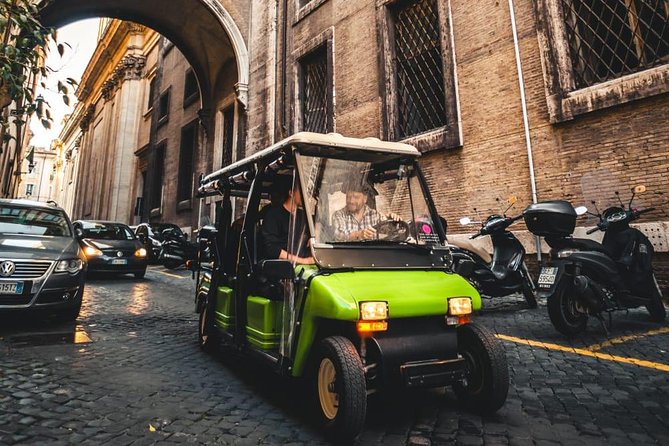
The tour’s first big moment is the Pantheon. You don’t just pass by for photos—you enter the Pantheon and talk through its history, art, and the famous stories that make people stop mid-sentence.
This is one of those stops where the guide style really matters. When the talk is tied to what you can actually see inside, the building starts making sense fast: materials, proportions, and design choices feel less like trivia and more like a reason Rome still talks about this place today.
Important detail: Pantheon admission is not included. Plan on buying the ticket separately, then your guide covers what to notice once you’re inside. The time block is listed at about 30 minutes, which usually works well if you want a real look without turning the Pantheon into your whole day.
Possible drawback? Because you’re entering and moving on, you won’t have unlimited time to wander at your own pace. If you’re the type who wants to read every inscription and take 60 photos of every angle, you may want to schedule extra independent time later.
St. Peter’s Square: A Guided Walk With Day-of Access Changes
Next up is St. Peter’s Square. The approach here is a friendly walking loop with stories and context, plus a practical reality check: the guide says they love bringing people around the square, but traffic and security situations can make it hard to enter at times.
So, what you should expect is flexibility. You’ll still get the guided explanation and the key orientation moments that help this part of Rome click. But entry into the square itself may not be guaranteed.
The stop is about 30 minutes, which is plenty time for a guided view without feeling stuck. If you’re also considering a full Vatican visit on a separate day, this stop can help you decide what deserves more time.
On a practical level, this part of the tour is also where the golf cart earns its keep. Even when you’re walking a bit, you’re not doing the full stamina test that many visitors face around Vatican-area crowds.
Piazza Venezia, Popolo, and Campo de’ Fiori: Rome’s Mix in Short Stops
After St. Peter’s Square, you’ll move through three classic Rome piazzas and a lively market area. These are shorter blocks, but they’re smart because they show different layers of the city in quick succession.
Piazza Venezia (about 15 minutes): There’s a drive around the area with explanations about unusual facts that connect ancient, Christian, and modern Rome. Think of it as a “how the city keeps changing and reusing space” lesson—built around what you can see from the cart and on a short stop.
Piazza del Popolo (about 20 minutes): This square is presented as both beautiful and entertaining, with the guide helping you read it like a stage set. With this kind of time, you’re not waiting around for long. You’re getting the essentials and then moving.
Campo de’ Fiori (about 10 minutes): This is where daytime atmosphere matters. The guide adds good stories and points you to what makes this area feel distinctly Roman. It’s also a quick way to understand why markets and squares are the heart of daily life here.
One consideration: because each of these stops is brief, you’ll want to pay attention and take notes if you’re planning to return. If you treat it like a hit-and-run photo spree, you’ll miss the point. But if you treat it like a guided orientation, these short stops can be surprisingly satisfying.


Spanish Steps and the Roman Ghetto: Views, Timing, and Story Detours
Two of the tour’s most memorable segments are the Spanish Steps area and the Roman Ghetto stop.
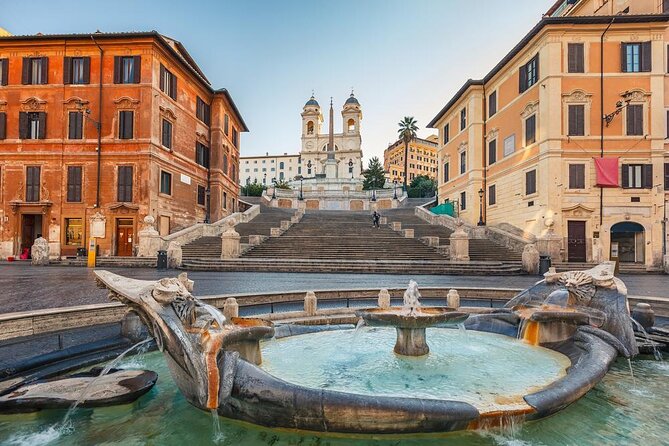
Spanish Steps (about 10 minutes): You’ll often travel over the upper part of the steps for a viewpoint over Rome. That’s a nice trick when your goal is to see the city, not just climb it. The time is short, but the angle can make it feel like more—especially if you’re early enough to catch softer light.
Roman Ghetto (about 10 minutes): This stop comes with special emphasis because the guide may include short surprise detours that aren’t listed in advance. You do get the Roman Ghetto area as a planned stop, and the intent is to keep some element of surprise so you’re not walking in already exhausted by research.
Because the time is brief, the Roman Ghetto stop works best if you’re ready to listen. The guide’s job here isn’t just to point out a landmark—it’s to connect the place to the bigger story of Rome.
If you’ve already seen other historic neighborhoods and you’re doing a lot of walking elsewhere, these cart-friendly segments can help you keep momentum without feeling drained.
Guides Who Turn Landmarks Into Stories (Salim, Sahara, Flavio, Hadi, and More)
The experience lives or dies by the guide. This is the part I’d actively shop for, even if you’re not choosing the person. Names that come up again and again include Salim, Sahara, Flavio, Daniele, Hadi, Riccardo, Marco, and Haidi.
What’s consistently praised is not just the amount of facts, but the way those facts get delivered: as stories that help you remember what you’re looking at. Flavio, for example, is described as exceptional at weaving art, history, and Rome’s personality into the route. Marco gets singled out for storytelling that moves across thousands of years in a way that’s easy to follow.
There’s also a strong theme of friendliness and humor. Salim stands out for combining deep knowledge with a sense of humor, which is a big deal when you’re sitting in a moving cart for hours. Sahara is praised for being personable and very engaging, and Riccardo is noted for accommodating requests and being compassionate when someone wasn’t feeling well in the heat.
That heat factor is real. One guide’s cart was described as older, and on a very hot day that mattered. If it’s forecasted to be brutal, your best strategy is to ask yourself whether you can handle sitting outside briefly between stops. The tour format helps, but it can’t eliminate weather.
Price and Value: Is $227.45 Worth It?
At $227.45 per person, this isn’t a budget tour. So you should judge it based on what you’re buying, not on what’s branded as a bargain.
Here’s the value math that makes sense:
- You’re paying for time efficiency: multiple major stops in about 3–4 hours, without exhausting long walks.
- You’re paying for guidance that makes the sights stick: the route is built around facts and stories, not just a drive-by.
- You’re paying for a small-group feel: max 40 travelers, which generally keeps it from feeling like a mass product.
- You’re paying for reduced friction in a city of friction: carts help avoid the worst parts of traffic and keep your energy for sight moments.
On top of that, there are no extra fees listed and no surcharge mentioned. Pantheon admission is specifically not included, but most other stops are free, meaning your overall budget won’t get crushed by a pile of site tickets.
A practical way to decide: if you only have a day or two in Rome and you want a guided overview that you can build on afterward, this price can look fair. If you’re staying longer and you prefer to wander independently for hours, you might save money by mixing free self-guided walks with a smaller number of paid museum entries.
What You’ll See—and What You Might Skip

This tour is not pretending to be a museum marathon. It’s designed for a top-to-bottom overview using short stops.
You’ll cover:
- Pantheon entry (with separate ticket)
- St. Peter’s Square area with a guided walk that may or may not include entry depending on day conditions
- Piazza Venezia, Piazza del Popolo, Campo de’ Fiori
- Spanish Steps viewpoint from the upper area
- Roman Ghetto with surprise detours
Time allocations are short enough that you’ll feel the city’s range. But you won’t get hours inside each site. That’s not a failure. It’s the design.
If you’re someone who needs deep time to feel satisfied, you’ll want to mark what you liked and plan an additional visit later. The tour works best as your first Rome “map in motion,” not your final stop.
Also, because entry into St. Peter’s Square can be affected by traffic and security, don’t build a hard plan around needing to get inside there on this specific tour. Use it as an orientation, then let your separate day planning handle the guarantees.
Who Should Book This Golf Cart Tour (and Who Might Not)
This tour is a strong match if:
- You want to see Rome’s major sights without turning your trip into leg day.
- You have limited time and want a morning or afternoon overview.
- You like history presented as a story you can remember.
- You’re traveling with kids or anyone who needs a calmer pace.
- You care about getting dropped off conveniently near dinner plans afterward.
It may be less ideal if:
- You already know the city and want long, quiet, independent time at one site.
- You’re expecting a fully guaranteed entry experience at every location, since St. Peter’s Square access can vary.
The “moderate physical fitness level” note matters too. Even with carts, you’ll still do some walking. If you need a fully no-walk day, you’ll want to think carefully.
Should You Book It?
Yes, I’d book it if you want Rome’s highlights delivered in a way that keeps you moving and informed. The best part is the guide-led storytelling, and the cart format makes it practical for real schedules—especially if you’re tight on time.
I’d hesitate only if you hate short stops, dislike weather-dependent outdoor timing, or you plan to spend most of your Rome days doing slow, single-sight deep dives. In that case, you might pick a different mix of self-guided sightseeing plus one or two targeted tickets.
If you do book, get on it early. The tour is commonly booked about 58 days in advance, and it’s popular for a reason: it’s an efficient way to learn what you’re seeing, then enjoy the rest of your trip at your own pace.
FAQ
How long is the Golf Cart Tour in Rome?
The tour lasts about 3 to 4 hours.
How much does the tour cost?
It costs $227.45 per person.
What language is the tour offered in?
The tour is offered in English.
What main stops are included?
You’ll visit the Pantheon, St. Peter’s Square area, Piazza Venezia, Piazza del Popolo, Campo de’ Fiori, the Spanish Steps area, and the Roman Ghetto.
Are admission tickets included?
Pantheon admission tickets are not included. The other listed stops are free.
Where does the tour start and end?
The start is at Harry’s Bar, Via Vittorio Veneto, 150, 00187 Roma. The tour ends in Rome, with drop-off often near your hotel or where you want to go that evening.
What’s the cancellation window?
You can cancel for a full refund up to 24 hours in advance of the experience start time. Free cancellation is offered, and poor weather may lead to a different date or a full refund.