REVIEW · ROME
Guided tour of the Colosseum, Roman Forum and Palatine in Spanish
Book on Viator →Operated by EnRoma.com · Bookable on Viator
Skip the lines, then learn Rome fast. This Spanish guided tour is built for people who want the big three ancient sights—Colosseum, Roman Forum, and Palatine Hill—in about three hours, with priority access and a guide who keeps you moving and explaining as you go. You also get headsets, so the story stays clear even when you’re shoulder to shoulder with everyone else.
I especially liked two things. First, the priority admission style of entry really helps you spend your time inside the ruins instead of parked at the front gate. Second, the headsets make a huge difference in loud, busy areas, so you can actually follow the guide’s explanation without guessing.
One consideration: this is a fast-paced route across three major sites, with set time windows, so you won’t have hours to wander slowly on your own. Add in heat and sun (Rome does Rome things), and you’ll feel the “tour pace,” even if it’s well managed.
In This Review
- Key Highlights You’ll Feel Immediately
- What You’re Really Buying: A 3-Site Roman Power Tour
- Meeting Point and Timing: How to Start Without Chaos
- How the Spanish Guide, Headsets, and Group Style Work
- Stop 1: Roman Forum on the Via Sacra (Civic Rome in Walking Form)
- Stop 2: Palatine Hill and the Idea of Rome’s Origins
- Stop 3: Entering the Colosseum With Priority Admission
- Price and Value: Is This $75.31 a Good Deal?
- Tickets, Name Matching, and Entry Rules (Read This Part)
- Getting the Most Out of This 3-Hour Route
- Who This Tour Works Best For
- Should You Book This Spanish Colosseum, Forum and Palatine Tour?
- FAQ
- How long is the guided tour?
- Does the price include tickets for the Colosseum and the other sites?
- Is the guide Spanish and do you provide headsets?
- Where does the tour start and where does it end?
- What ID do I need for entry?
- Can I cancel and get a full refund?
Key Highlights You’ll Feel Immediately
- Priority access for the Colosseum and Forum so you waste less time in line
- Spanish-speaking guide who ties design and ruins to how Rome worked
- Headsets included, which keeps you from losing the story in crowds
- Small group size (max 25) for a more personal walk through the ruins
- Timeboxed itinerary that covers the Forum, Palatine, and Colosseum in one go
- Mobile tickets and tailless ticket handling for smoother entry
What You’re Really Buying: A 3-Site Roman Power Tour
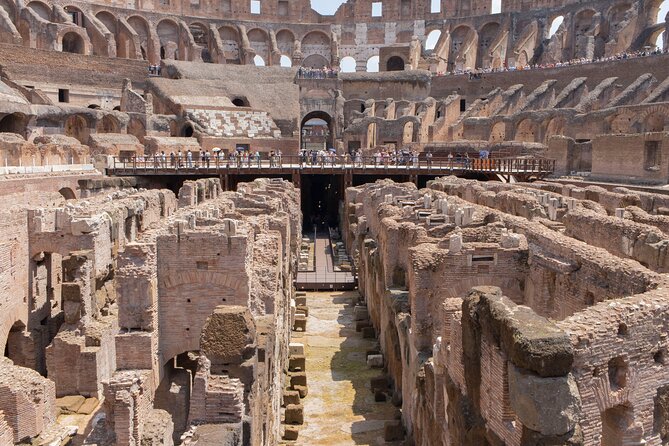
This is a guided hit list tour, the kind that makes sense when it’s your first time in Rome or you’re trying to fit the classics into a tight schedule. In roughly 3 hours, you cover the Roman Forum (where civic life, religion, and politics braided together), Palatine Hill (the origin-area idea of Rome’s beginnings), and the Colosseum (the empire flex turned into a monument you can still feel today).
You’re not just looking at stones. The tour is structured around walking key areas and getting a guided interpretation in Spanish, so you understand what you’re seeing. That’s a big deal at these sites, because the names, functions, and dates can otherwise blur into a photo-op.
One nice detail: the tour finishes inside the Colosseum, so if you want extra time in the arena area after the group concludes, you can usually stay longer rather than immediately funneling back out.
You can also read our reviews of more tours and experiences in Rome.
Meeting Point and Timing: How to Start Without Chaos
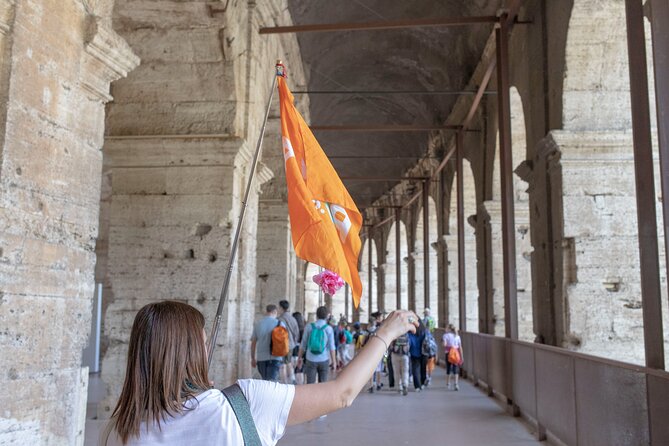
The tour starts at Largo Corrado Ricci, 00184 Roma RM, Italy. It ends inside the Colosseum at Piazza del Colosseo, 1, 00184 Roma RM, Italy.
I’d treat this like a “show up early” tour. The experience recommends arriving on time, even a few minutes before the scheduled start, and for good reason. With reservations and timed entry elements, being late can mean missing the flow—and you lose the chance to get the best out of those minutes inside.
Also note the practical reality: the ruins and entrances can be busy, and your group will be listening through headsets while moving. Being early makes it easier to meet up calmly and get everyone matched with the right entry details.
How the Spanish Guide, Headsets, and Group Style Work
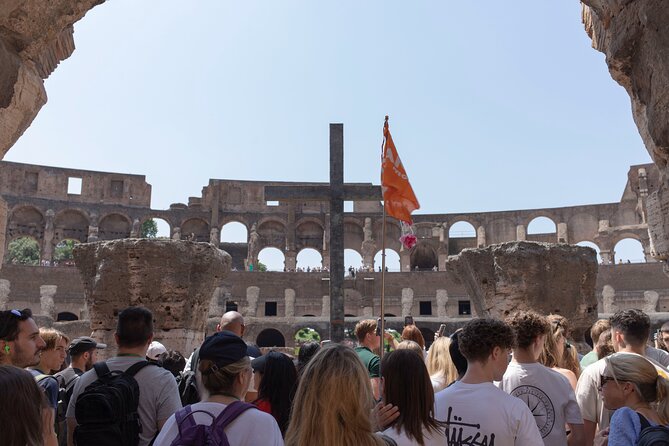
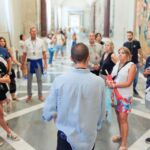
The tour includes a professional guide who speaks Spanish, plus headphones/headsets. That combo is exactly what you want in Rome’s loud, crowded ruins, where normal talking can turn into a guessing game.
You’ll likely get the most out of this tour if you lean into questions as they come up. The experience is designed for a guided walk, and the structure gives you time windows at each stop where you can ask what you’re looking at—especially at the Roman Forum and the Colosseum, where there are lots of architectural clues.
One more point that matters: the tour group is capped at 25 travelers. In places as famous as the Colosseum and Forum, that still feels like a crowd, but it’s not that endless mega-group feeling. Many people also highlight the guide experience as a strong part of the day—names like Sara, Tomas, Miriam, and Silvia come up for clear explanations and friendly answers—so if you care about understanding what you’re seeing (not just snapping pictures), this is the right format.
Stop 1: Roman Forum on the Via Sacra (Civic Rome in Walking Form)
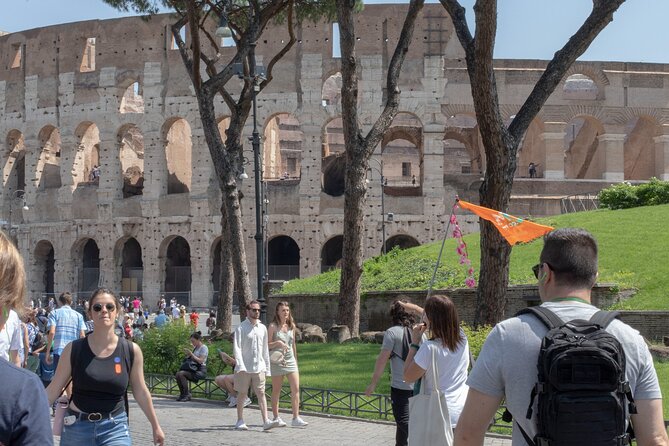
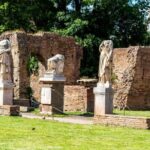
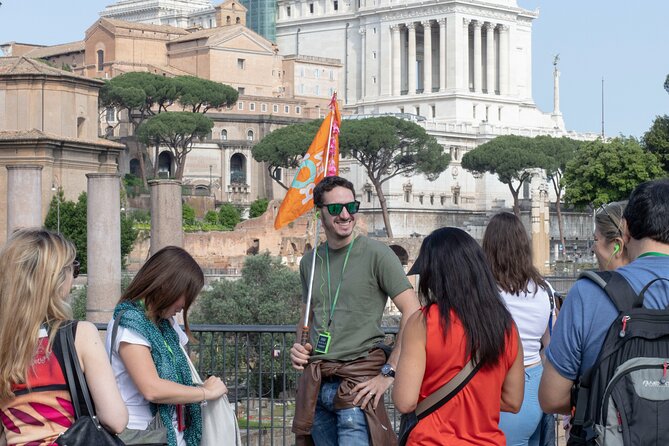
The first stop is the Roman Forum (Foro Romano) for about 1 hour, with an admission ticket included. This is where Rome’s public life played out—politics, religion, public buildings, and the constant rewriting of the city as power shifted.
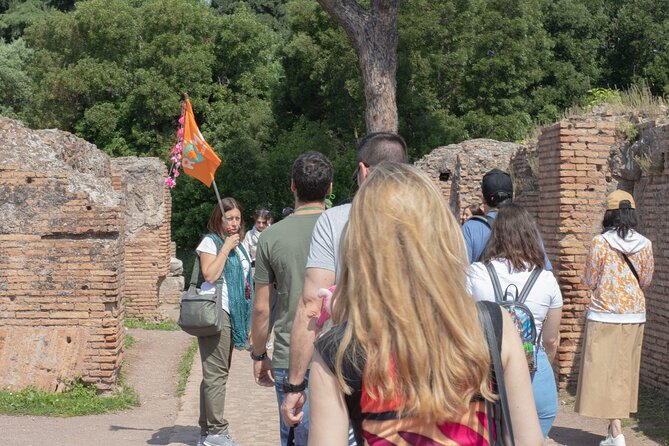
The tour walks along the Via Sacra, one of the Forum’s most famous streets. Expect a guided route that helps you make sense of the space: where the basilicas fit into civic or ceremonial life, what the Comicio area was for, and how temples and monuments reflect the city’s priorities over time.
Why I like the Forum stop on a guided fast-track: it gives you a way to “read” the ruins. Without context, you can easily end up looking at several separate fragments with no thread connecting them. With context in Spanish and a timed route, you start recognizing patterns: the way certain areas concentrate meaning, and how the architecture points to what the Romans cared about.
A drawback to be aware of: the Forum can feel exposed, and you’re walking. If you’re sensitive to sun or heat, plan for water and shade breaks where possible (your guide can often suggest micro-pauses without derailing the schedule).
Stop 2: Palatine Hill and the Idea of Rome’s Origins
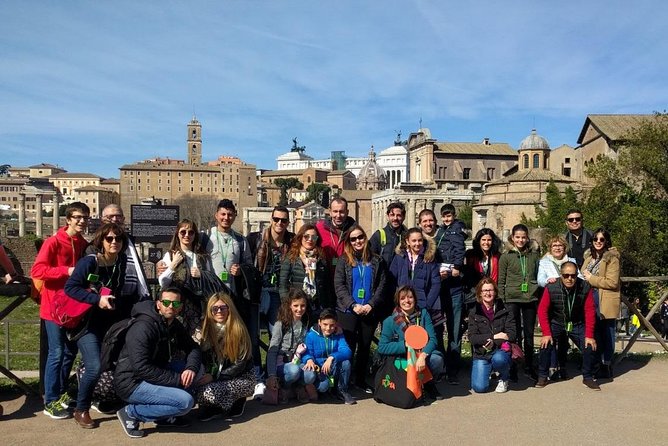
Next is Palatine Hill for about 40 minutes, with an admission ticket included. The Palatine is famous because it’s tied to Rome’s origin story, and also because it became a symbol of elite power—what the guide frames as the patriciate and the “palaces” of those exercising control.
This is the stop that often feels more atmospheric than purely technical. You’re standing in one of Rome’s foundational concepts, where the tour connects the idea of where Rome began (with the tradition around Romulus) to the way the city later grew around that early meaning.
What to watch for: in a shorter time slot, you want to focus your attention. Palatine can be broad. A guided, shorter segment helps you avoid wandering past the most explanatory zones. You’ll still get that sense of “place”—that the hill isn’t just a viewpoint, it’s an anchor for stories about Rome.
Physical note: the route involves walking over uneven terrain typical of ancient sites. The experience only asks for moderate physical fitness, but “moderate” here still means you’ll want comfortable shoes and a calm pace.

Stop 3: Entering the Colosseum With Priority Admission
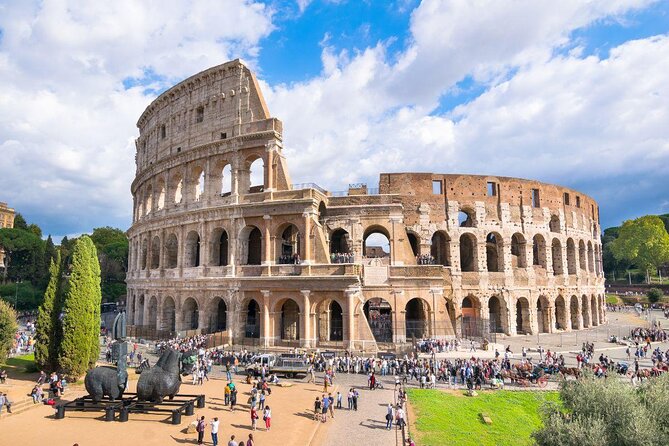
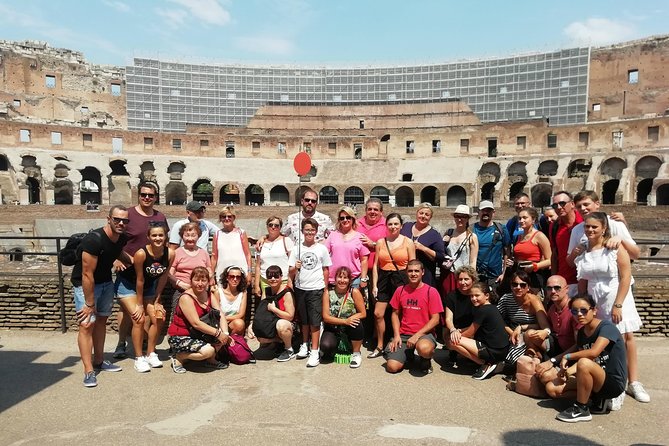
The final stop is the Colosseum for about 45 minutes, with admission included and priority-style entry designed to help you avoid some of the most punishing queues.
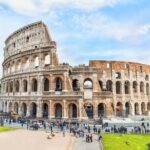
The Colosseum is the emblem you recognize from postcards, but inside it feels different. The tour frames it as an imperial monument—built to celebrate the greatness of an empire and a city that marked world history. In practice, that means you’ll get guidance that connects structure and design to what made the Colosseum powerful in its time.
Here’s why this part is worth paying for in a timed tour format: the Colosseum is famous enough that lines form constantly, and wasting time outside while your group waits can ruin the day. This experience is designed specifically to let you skip to the front and spend time inside instead.
Another benefit: the tour ends inside the Colosseum. If you want to linger, take extra photos, or just soak up the scale a little longer, this format gives you that flexibility without you needing to coordinate a second plan.
Price and Value: Is This $75.31 a Good Deal?
The price is listed at $75.31 per person, and it’s typically booked about 29 days in advance. That “book ahead” pattern matters here because these sites do not get easier as the day goes on, and timed entry slots can tighten.
Value-wise, it helps to look at what’s included:
- A professional Spanish guide
- Headsets for clear listening
- A small group tour (max 25)
- Colosseum ticket elements, including an entrance ticket valued at €18 per person and a reservation fee valued at €2 per person
- “Tailless tickets” (meaning the ticket handling is set up to keep entry smoother)
The rest of what you pay covers guide service and the tour operation that makes the day flow. If you’ve ever tried to brute-force your way through these sites solo, you know how much time gets lost to lines, confusion, and lack of context. You’re paying to avoid that friction and to understand what you’re seeing while you’re there.
Is it worth it? If you want a short Rome plan that hits the big sites with explanations, yes. If you’re the type who wants to go slowly, study every detail, and spend long hours in one place, you might prefer a less structured option. But for a 3-hour hit of three of Rome’s heaviest hitters, this pricing is in the realm of sensible.
Tickets, Name Matching, and Entry Rules (Read This Part)
To get into the Colosseum and Roman Forum, you must present valid identification (passport or ID document) that matches the name provided at booking. You’re also asked to provide the full names of all travelers when booking. If the voucher with full traveler names isn’t presented correctly at the ticket office before entry, entry can be denied.
This is not the area to improvise. Copy your name exactly as it appears on your passport/ID and keep it consistent.
There are also security restrictions on what you can carry:
- You cannot bring large umbrellas
- Large backpacks aren’t allowed
- Sharp objects aren’t allowed
If you’re planning a day with water bottles, a camera, and a light layer, keep it simple. Aim for minimal bag bulk, because it’s easier on you and on the entry process.
The tour uses mobile ticketing, which usually keeps things smoother at check-in. Still, I recommend having a backup plan on your phone battery—Rome runs on power, signals, and human habits.
Getting the Most Out of This 3-Hour Route
Three hours across the Forum, Palatine, and Colosseum is enough to understand the big picture, not enough to study everything. So go in with goals.
My practical advice:
- Focus on understanding the connections: how Rome’s civic spaces relate to elite zones, and how the Colosseum fits into imperial power.
- Pay attention to your guide’s way of describing design and function, especially in the Forum.
- Use the headsets actively. If you’re tempted to remove them for photos, put them back on right away so you don’t miss the next explained landmark.
Heat matters. Even with timed admission, you’re walking in exposed areas. Dress for the sun, carry water when allowed, and don’t underestimate how tiring it gets when you’re moving steadily for a full morning or early afternoon.
Who This Tour Works Best For
This is a strong choice if you:
- Want a Spanish-language guided experience at Rome’s top ancient sites
- Are short on time and need a plan that covers three major locations
- Prefer a guided route that reduces confusion and saves time at the entrances
- Like being able to ask questions and follow along through headsets
It might be less ideal if you:
- Need step-free, fully accessibility-adapted routes. The tour notes that the route is not adapted for mobility difficulties or for young children in a stroller.
- Want a slow, unstructured museum-like pace. This is an organized walk with time windows at each stop.
Should You Book This Spanish Colosseum, Forum and Palatine Tour?
If your priority is getting inside the Colosseum and walking the Forum and Palatine with explanations, I’d book it. The combination of priority entry, a Spanish-speaking guide, and headsets makes a noticeable difference in how much you get out of a short visit.
Book it sooner rather than later, because demand for timed access is real and the average booking window suggests people plan ahead. If you’re comfortable walking for a few hours and you’re okay with a tour pace, this is a smart way to see Rome’s most iconic ancient sites without spending your day stuck in line.
If you tell me your travel dates and whether you want morning or afternoon, I can suggest a simple strategy for pairing this tour with nearby sights and meal timing.
FAQ
How long is the guided tour?
The tour lasts about 3 hours.
Does the price include tickets for the Colosseum and the other sites?
Yes. Colosseum admission is included, and admission tickets are also included for the Roman Forum and Palatine Hill.
Is the guide Spanish and do you provide headsets?
Yes. The guide speaks Spanish, and headsets are included so you can hear the commentary even when it gets busy.
Where does the tour start and where does it end?
It starts at Largo Corrado Ricci, 00184 Roma RM, Italy, and it ends inside the Colosseum at Piazza del Colosseo, 1, 00184 Roma RM, Italy.
What ID do I need for entry?
You must bring a valid passport or ID document that matches the name provided when booking.
Can I cancel and get a full refund?
Yes. You can cancel up to 7 days in advance for a full refund. If you cancel less than 7 full days before the experience starts, the amount paid is not refunded.