REVIEW · ROME
Guided tour of the Vatican Museums and Sistine Chapel in Spanish
Book on Viator →Operated by EnRoma.com · Bookable on Viator
One ticket can buy you serious art power. This Spanish-guided Vatican tour helps you see the Sistine Chapel and the museum highlights in about 3 hours, with headphones and a small group size. I especially like that you enter faster than the usual line and that the guide keeps the pace organized even when the crowds surge. One thing to keep in mind: this is still the Vatican, so you may feel rushed in some museum rooms even with headphones and guidance.
If you’re visiting Rome for the big-ticket sights, this is a very practical way to do it without gambling your whole morning on logistics. I also like that the group is capped at 20 people, which usually makes the experience feel more human than a cattle-car script. The potential downside is that the route is not described as adapted for mobility needs or for kids in strollers, so it may not work for everyone.
You get mobile tickets, tailless entry, and a guide who speaks Spanish. I’d pack smart for security, because the rules about bags, umbrellas, and sharp objects are strict, and that can slow you down if you show up under-prepared.
In This Review
- Key highlights worth your attention
- A Spanish Vatican Tour That Fits Real Life: 3 Hours, Real Highlights
- Meeting at Viale Giulio Cesare: Arrive Ready, Not Rushed
- Sistine Chapel Stop: How to See Michelangelo Without Feeling Lost
- Vatican Museums Route: Pineapple Courtyard to Laocoön and the Maps
- Small Group Size and Headphones: The Crowds Feel Manageable
- Dress Code and Carry Rules: Security Is Part of the Experience
- Price Check: Is $110.47 Worth It?
- Who This Tour Suits (and Who Might Want a Different Plan)
- My Bottom Line: Should You Book This Spanish Vatican Tour?
- FAQ
- Is the tour guided in Spanish?
- How long is the Vatican Museums and Sistine Chapel tour?
- How big are the groups?
- Does the price include admission to the Vatican Museums and Sistine Chapel?
- Does the tour help you avoid long queues?
- Where does the tour start and end?
- What should I wear for the Sistine Chapel and Vatican areas of worship?
- Are there restrictions on bags or items?
- How far in advance should I book?
Key highlights worth your attention
- Skip the long queues with entrances without waiting
- 20 minutes in the Sistine Chapel where the art does the talking
- Headphones included so you can hear the guide clearly through crowds
- Small group limit (max 20) for a less chaotic feel than bigger tours
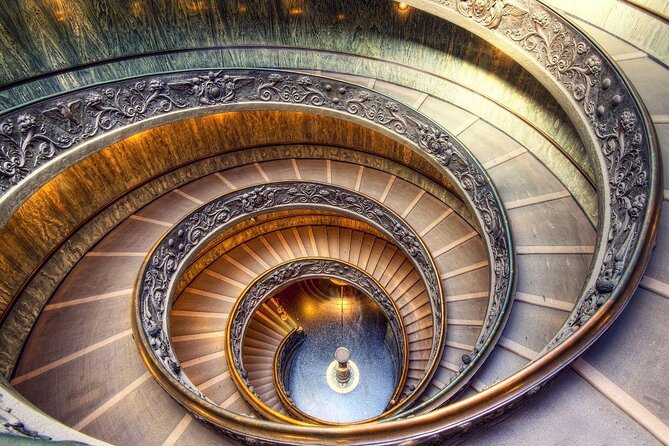
- Museum route hits the classics like Laocoön, Maps, and the Candelabra Gallery
- Raffaello rooms when flow allows it, so you might get extra value if timing cooperates
A Spanish Vatican Tour That Fits Real Life: 3 Hours, Real Highlights
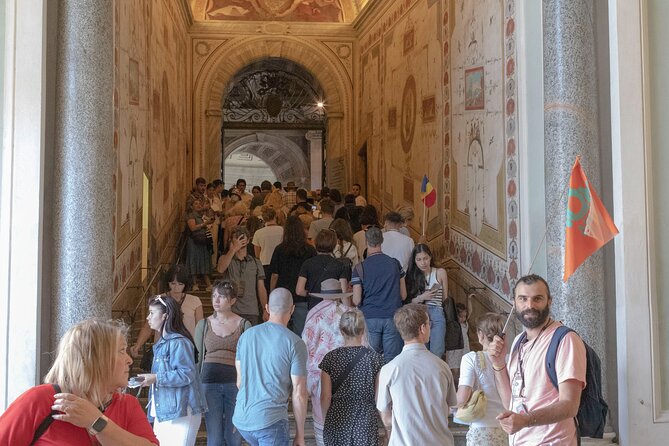
The Vatican Museums are famous for two things: world-class art and crowd-control math. This tour works because it turns that math into a plan you can follow, in Spanish, for about 3 hours. You’re not left guessing where to go first or how to read what you’re seeing.
Two parts make it especially appealing. First, you get skip-the-queue entry, which matters because the line situation here can swallow your day. Second, the route is structured around “big impact” stops, not a random wandering circuit.
Now the reality check. Even with a small group, you’ll be sharing space with many other people. Some museum sections can feel like a moving hallway, and you’ll get more breathing room in certain rooms than others.
You can also read our reviews of more tours and experiences in Rome.

Meeting at Viale Giulio Cesare: Arrive Ready, Not Rushed
The tour starts at Viale Giulio Cesare, 138, 00192 Roma RM. The end point is Saint Peter’s Square (Piazza San Pietro), so you’ll finish near the Vatican’s heart rather than backtracking.
A smart move: arrive on time, or a few minutes early. These tours are timed so the group can use every minute, and late arrivals often get stuck trying to catch up while security lines keep moving.
Also, this tour says it’s near public transportation. That’s helpful because you don’t have to build a complicated commute in the middle of a busy day in Rome.
Sistine Chapel Stop: How to See Michelangelo Without Feeling Lost
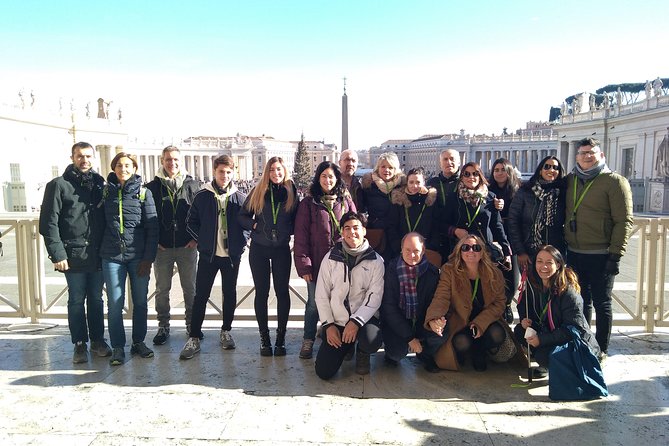
You’ll start with the Sistine Chapel, with about 20 minutes there and admission included. That time window is short on purpose: it’s enough to take in the frescoes and the scale, but it won’t turn into a slow, silent museum nap.
The guide focuses on the meaning behind the art—Michelangelo’s genius and the story arc from Creation through universal judgment. If you know the basics, this kind of framing helps you “read” the chapel instead of just staring at it.
Here’s what I’d watch for when you’re inside. Spend your first couple of minutes getting oriented—ceiling first, then the big narratives on the walls. With crowds, your eyes will try to bounce everywhere. The trick is to pick a few zones to study and let the rest be atmosphere.
One more practical note: the chapel is a place of worship. Plan your outfit so you don’t spend valuable minutes at the edge of the room dealing with rules.
Vatican Museums Route: Pineapple Courtyard to Laocoön and the Maps
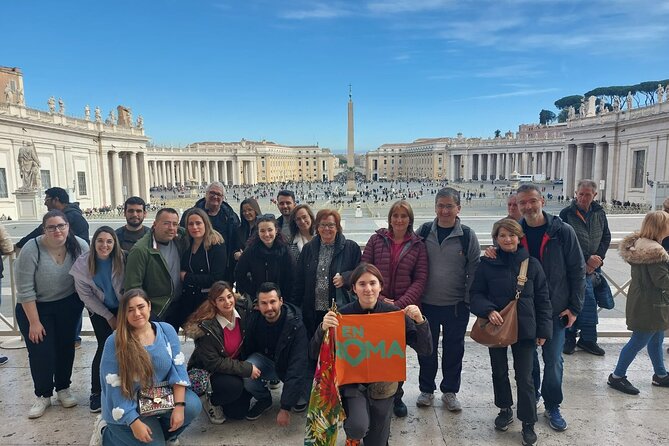
After the chapel, the visit continues for about 2.5 hours in the Vatican Museums. This part is where the tour earns its keep: it strings together several “must-see” collections so you don’t have to build your own route.
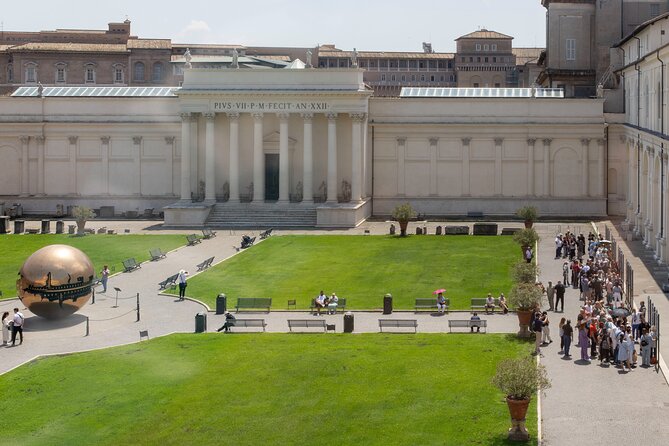
You’ll begin with the gardens and courtyard areas, including the patio of the Pineapple. It sounds like a small detail, but it’s useful: it’s a palate cleanser before the galleries start stacking up.
From there, you move into major sculpture highlights, with Laocoön called out as a key stop. This is one of those works where knowing what you’re looking at improves everything. A guide can help you catch the drama in the figures and the craftsmanship without turning it into a lecture.
Then you’ll pass through sections like the Candelabra Gallery and the Maps gallery, plus tapestries. If you’ve ever felt museum fatigue—too many rooms, too little connection—this tour’s pacing helps you avoid that. You’re being guided from theme to theme rather than drifting room to room.
And when the visitor flow allows it, you may also reach the Raffaello Stays (Raffaello rooms). That’s the kind of “bonus if timing cooperates” stop that can make a tour feel like extra value instead of just a checklist.
The main drawback of museum tours in general still applies: the building can turn into a crowd runway. The upside is that the route is built for focus, and the guide can shift attention to what’s most worthwhile when the group is moving fast.
Small Group Size and Headphones: The Crowds Feel Manageable
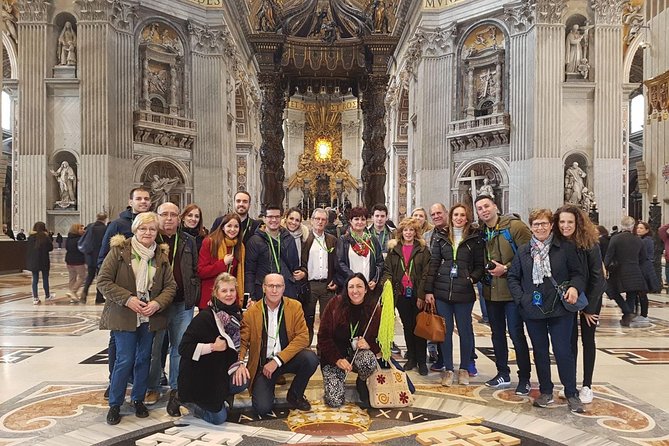
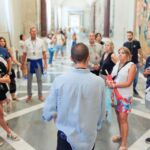
This tour caps groups at 20 people, which is a big deal at the Vatican. In my experience, smaller groups don’t just feel nicer—they move better. You’re less likely to lose the guide, and you can actually hear explanations without shouting over other tour groups.
Headphones are included, which helps in two ways. First, the guide’s Spanish is clearer even when you’re surrounded by noise. Second, you can keep your eyes on what matters instead of scanning faces to figure out what the guide said.
The tour also includes entrances without queues. That doesn’t mean no waiting ever, but it usually means you don’t get stuck in the longest line that eats the day. When time is limited, this is one of the biggest value levers.

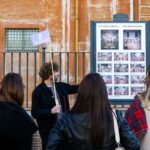
Dress Code and Carry Rules: Security Is Part of the Experience
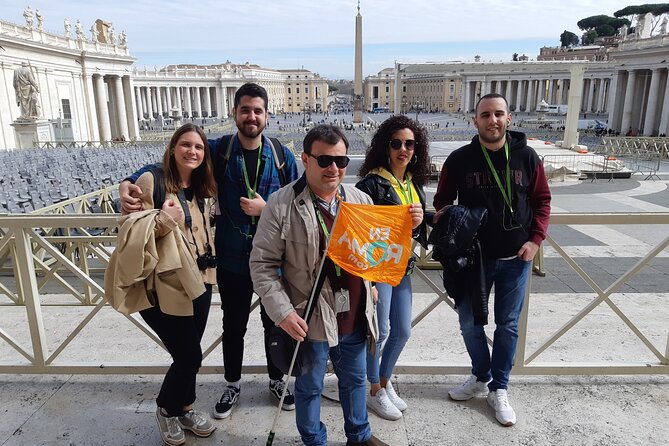
This isn’t a “show up in anything” situation. For places of worship, the rules are straightforward: long pants or long skirts and covered shoulders.
Security rules are also strict. Large umbrellas, oversized backpacks, and sharp objects cannot be carried. The simplest approach is to travel light: small bag, nothing sharp, and avoid bringing items that force you into a gear-storing detour.
If you’re traveling with kids or strollers, keep in mind the itinerary is not described as following a route adapted for mobility difficulties or for young children in strollers. That means you should plan to navigate the museum’s flow as it is—practically, not conveniently.
Price Check: Is $110.47 Worth It?
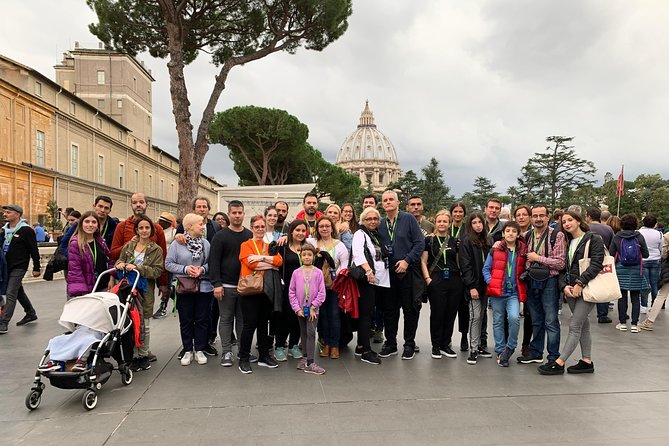
At $110.47 per person, this isn’t the cheapest way to visit the Vatican. But it’s priced for a reason: you’re paying for guided time in Spanish, priority-style entry without the standard queues, and convenience perks like headphones and admission included for the chapel and museum.
Here’s how I’d judge the value. If you’d otherwise spend a lot of time figuring out timing, ticket logistics, and where to focus, this price starts to look fair. You also save mental energy, which is worth something when you’re facing a complex site.
The tour includes professional guide in Spanish, headphones, small group entry, and admission tickets. What’s not included is transportation to the meeting point and lunch. So budget for getting there and eating after—this is a “morning or early afternoon” style plan, not a whole-day meal-and-museum marathon.
Where the price can feel like a stretch is if you personally hate crowds and rush. Even with a guide, you can’t erase the Vatican’s popularity. If you want a slow, quiet museum day, you might feel impatient with how fast the group moves through some galleries.
Who This Tour Suits (and Who Might Want a Different Plan)
This is a strong fit if you:
- Want the Sistine Chapel as a priority and only have a limited window
- Prefer explanations in Spanish and want headphones to actually hear them
- Like classic “greatest hits” museum navigation instead of building your own route
- Appreciate a small group (max 20) when famous places get crowded
It might be less ideal if you:
- Need a route adapted for mobility challenges or strollers (this tour notes it does not follow adapted paths for those situations)
- Are extremely sensitive to crowd pressure and fast-moving museum sections
- Expect lots of unhurried time in every room (you’ll get more focus in key spots than a slow walk-through)
If you’re a first-timer to Vatican City, I think this tour is a good entry point. You’ll get the context that helps the art make sense, and you’ll know what you’d like to revisit later on your own, if you want.
My Bottom Line: Should You Book This Spanish Vatican Tour?
I’d book this if your top goal is to see the Sistine Chapel and a smart set of museum highlights with minimal time wasted. The combination of Spanish guide, headphones, small group size, and queue avoidance gives you a realistic shot at experiencing the art rather than wrestling logistics.
I’d pause if you’re traveling with specific mobility needs, or if you know you can’t handle crowd momentum. In that case, you might want a different format that’s built for slower pacing or better accessibility routing.
If you’re flexible, dress properly, and arrive early, this tour offers a strong mix of meaning and efficiency. You’ll spend your scarce time where the art actually lands—and you’ll leave Saint Peter’s Square with that classic Vatican feeling: big, complicated, and completely worth it.
FAQ
Is the tour guided in Spanish?
Yes. The experience includes a professional guide who speaks Spanish, and you also get headphones to hear the explanations more comfortably.
How long is the Vatican Museums and Sistine Chapel tour?
The total duration is about 3 hours (approximately).
How big are the groups?
The group size is limited to a maximum of 20 travelers.
Does the price include admission to the Vatican Museums and Sistine Chapel?
Yes. Admission tickets are included, and the tour includes stops at both the Sistine Chapel and the Vatican Museums.
Does the tour help you avoid long queues?
Yes. It includes entrances without queues to enter the Vatican Museums.
Where does the tour start and end?
It starts at Viale Giulio Cesare, 138, 00192 Roma RM and ends at Saint Peter’s Square, Piazza San Pietro, 00120 Città del Vaticano.
What should I wear for the Sistine Chapel and Vatican areas of worship?
You’ll need to wear long skirts or long pants and cover your shoulders.
Are there restrictions on bags or items?
Yes. The rules state that you cannot bring large umbrellas, oversized backpacks, or sharp objects.
How far in advance should I book?
On average, this tour is booked about 39 days in advance, and you’ll receive confirmation at the time of booking.