REVIEW · ROME
Guided Tour Vatican Museums & Sistine Chapel with Basilica Access
Book on Viator →Operated by Saints Tours · Bookable on Viator
The Vatican can feel like a maze. This small-group tour is built to keep you moving fast, with skip-the-line entry and a guide using headset radios so the big art actually lands, not just passes by. You get a clear path through the Vatican Museums highlights and then walk right into the Sistine Chapel and on to St. Peter’s Basilica.
One catch: even with skip-the-line, you can still face some waiting, plus the day can feel time-pressured—and the walk to the entrance isn’t nothing in heat.
In This Review
- Key Things to Know Before You Go
- Skip-the-Line Start at Piazza Pio XII: how the 2.5 hours actually feel
- Cortile della Pigna: the Pine Cone courtyard that resets your eyes
- Museo Pio Clementino and the octagonal courtyard of famous statues
- Gallery of Maps (120 metres long): Pope Gregory XIII’s cartography story
- Sistine Chapel with the headset on: what to focus on
- St Peter’s Basilica access from the Sistine Chapel: your free-time payoff
- What you get for $110.06: value beyond “skip the line”
- Crowd reality, walking strain, and heat planning
- Guides that make or break the experience
- Who this Vatican Museums & Sistine Chapel tour fits best
- Should you book this tour?
- FAQ
- How long is the Vatican Museums and Sistine Chapel guided tour?
- Is this a small group tour?
- Does the tour include skip-the-line entry?
- What’s included in the price?
- Do I get access to St. Peter’s Basilica?
- Where does the tour start?
- Where does the tour end?
- Are toilets available during the tour?
- Is Wi-Fi provided?
- Are snacks or drinks included?
Key Things to Know Before You Go
- Small group size (max 16) keeps the pace manageable and helps the guide hold everyone together.
- Vatican state-licensed guide with a headset system means you don’t miss the meaning behind the art.
- Four high-impact museum stops cover the Pine Cone courtyard, Pio Clementino classics, the Gallery of Maps, and the Sistine Chapel.
- St Peter’s Basilica access when open comes after the Sistine Chapel, with time to explore on your own.
- Toilets and free Wi-Fi at the meeting point make the start easier before you disappear into the crowds.
- No snacks or drinks included, so you’ll want to plan for a long, mostly indoor-to-outdoor shift.
Skip-the-Line Start at Piazza Pio XII: how the 2.5 hours actually feel
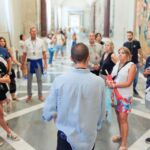
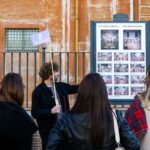
This tour starts at Piazza Pio XII, 5 in the Vatican area. From there, you’ll be guided through the Vatican Museums with a Vatican state-licensed guide, using radio headphone sets so you can hear commentary clearly without craning your neck. The whole experience clocks in around 2 hours 30 minutes, including museum highlights and the transition to St. Peter’s Basilica.
What I like about this format is the structure. You’re not just “enter and hope.” You’re funneled through major rooms in a sensible order, which matters because the Vatican Museums can otherwise turn into a wandering game of Where am I now?
At the same time, you should know the Vatican has crowd-flow rules. Even on a skip-the-line tour, you may still encounter lines with other groups. That’s why timing matters: the earlier your start, the less painful the wait tends to be.
You can also read our reviews of more tours and experiences in Rome.
Cortile della Pigna: the Pine Cone courtyard that resets your eyes
The tour’s first big stop is Cortile della Pigna, the Courtyard of the Pine Cone. It’s an open space of about 300 square metres, tucked near the museum corridors and halls. This courtyard is a smart early move because it gives you air after the initial entry crush.
If you’ve never been to the Vatican Museums, this is a good place to get your bearings. The courtyard’s scale helps you stop for a moment and look around before you’re pulled into long galleries packed with sculpture and frescoes.
You’ll spend about 30 minutes here, and if the weather is kind, it’s the moment to actually take in the space rather than treating it like another photo stop.
Museo Pio Clementino and the octagonal courtyard of famous statues
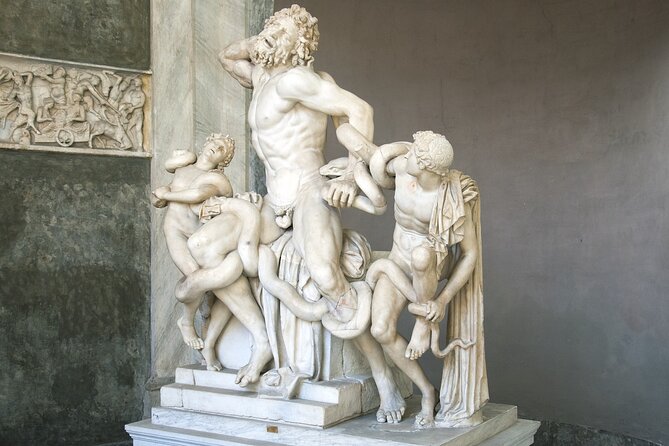
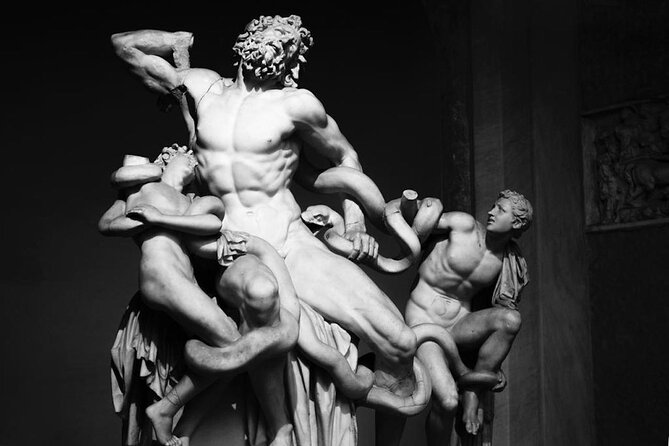
Next up is Museo Pio Clementino, commissioned by Popes Clement XIV and Pius VI for Roman and Greek masterpieces. The centerpiece is the octagonal courtyard, where several showpiece sculptures anchor your understanding of the museum’s classical focus.
This is where the tour’s guided commentary becomes more valuable than you might expect. The art is already famous, but the guide helps you connect what you’re seeing to why it was collected and how later artists and curators framed these “classics” for modern audiences.
Among the statues you’ll encounter are:
- Apollo of Belvedere, a 2nd-century A.D. Roman copy of a Greek bronze original
- Laocoon group, a 1st-century A.D. Roman copy
- Perseus with the head of Medusa by Canova (early 19th century)
- Hermes Pius-Clementine, a copy of a 4th-century B.C. Greek statue
The time here is also around 30 minutes, which means you’ll get the main beats without getting lost in side corridors. If you love sculpture, you’ll likely wish you had more time—still, the pacing keeps the day from turning into a sprint through highlights only.
Gallery of Maps (120 metres long): Pope Gregory XIII’s cartography story
One of the most memorable stops is the Gallery of Maps. This is a long corridor—about 120 metres long and six metres wide—leading toward the Sistine Chapel area. Even if you’re not a map person, the scale alone is worth it.
The gallery was commissioned by Pope Gregory XIII and created between 1580 and 1585. The frescoes were painted by Italian and Flemish artists under the direction of Ignazio Danti, who was a mathematician, astronomer, and cosmographer.
Here’s the detail that makes this stop feel more than decorative: the walls are covered with forty maps of Italian regions, with maps of major cities. And along the ceiling, you get representations of key religious events linked to each region. That combination—geography plus sacred history—turns the gallery into a guided narrative you can follow with the headset.
Again, expect about 30 minutes for this section. If your goal is to understand what you’re looking at, this is the moment the guide’s timing pays off.
Sistine Chapel with the headset on: what to focus on
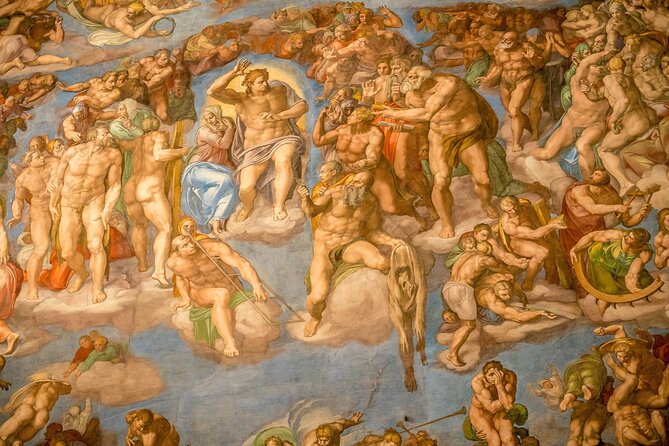
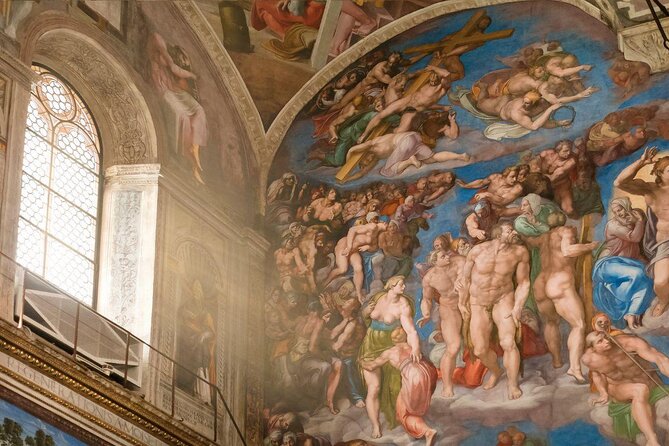
The Sistine Chapel is the big headline, with Michelangelo’s frescoes on the vault and the back wall (including the Last Judgement above the altar). It’s also the setting for official Church events such as conclave-related activities, baptism, and other ceremonial functions.
The tour gives you about 30 minutes here. In that window, your best strategy is to pick two or three focal points instead of trying to take in everything at once. With a guide’s framing, you’ll likely know where to look for the story beats the guide highlights—especially around the vault’s structure and how the composition leads your eye.
One practical note from real-world experience with this kind of pacing: 30 minutes in the Sistine Chapel can feel short if you’re the type who freezes to absorb every figure. But if you want the fastest path to seeing the Chapel’s real scale, this guided approach is a strong match.
Also, you’ll want to treat the headset as your friend. In a room this famous, it’s easy to drift into passive staring. The commentary helps you notice details you might otherwise miss.

St Peter’s Basilica access from the Sistine Chapel: your free-time payoff
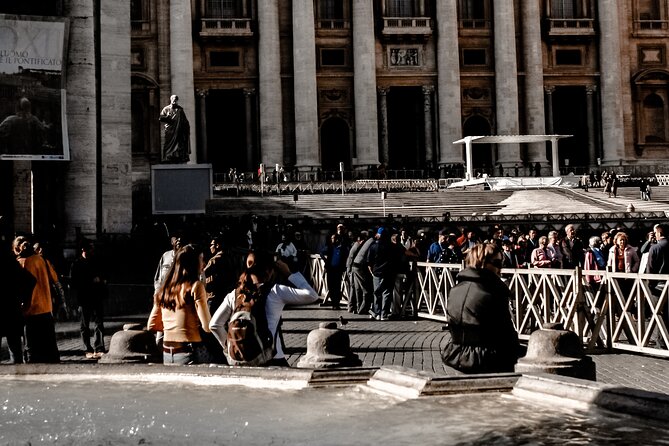
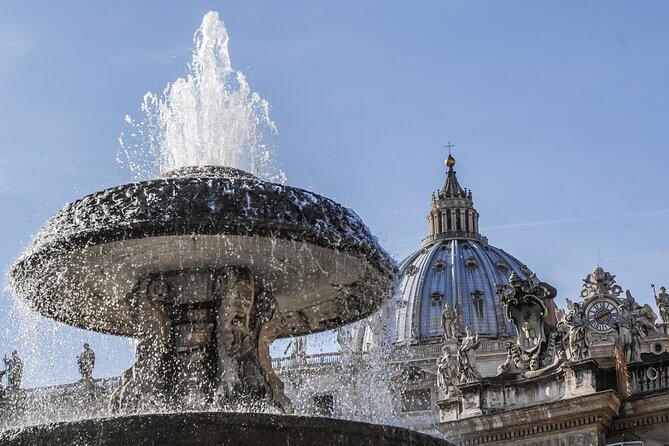
From the Sistine Chapel, you get direct access to St. Peter’s Basilica using the connection from the Sistine Chapel area. When the Basilica is open, you’ll have time to explore on your own pace after the guided portion ends.
This is one of the best parts of the day because it changes the pace. Museums are structured and guided. St. Peter’s is more open-ended—you can slow down, move toward what catches your eye, and take time with the architecture.
I also like that the tour doesn’t try to make St. Peter’s another stopwatch stop. The transition gives you a breather after the concentrated Sistine viewing and map gallery marathon.
What you get for $110.06: value beyond “skip the line”
At $110.06 per person, this isn’t the cheapest way to do the Vatican. The value comes from what’s bundled and how the day is organized.
First, the tour includes skip-the-line entrance and a Vatican state-licensed guide. Second, you get radio headphone sets, which is a big deal in a place where voices get swallowed by crowds and distance. Third, the museum admission is included for the museum stops (you’re not paying extra just to enter the core buildings you came for).
Then there’s the group size. With maximum 16 travelers, the tour isn’t a cattle-car experience. You may still share space with other tours, but it’s easier to stay oriented.
Finally, you get something many bargain tours don’t always deliver: direct passage to St. Peter’s Basilica timed from the Sistine route.
The one thing you should not expect included is comfort extras. Snacks and food aren’t included, so plan for water, a hat, and whatever you need to stay steady during a long day on your feet.
Crowd reality, walking strain, and heat planning
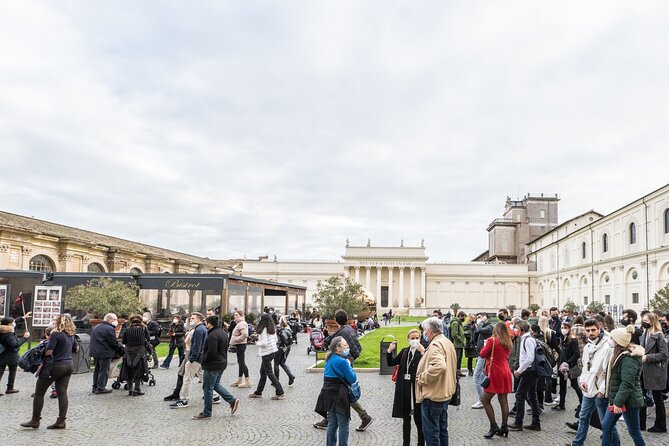
Let’s be honest: the Vatican area can be punishing in peak season. Even on a skip-the-line tour, doors may open in waves, so you can still wait while groups shuffle in and out.
On top of that, there’s the walk. The meeting point is at Piazza Pio XII, and some people found the distance to the Vatican entrance to be around 1–2 miles with an uphill feel, especially in August heat. If you’re sensitive to walking distance, or if your group includes anyone with mobility limits, consider using a taxi early rather than relying on everyone to make the trek at the pace of the group.
Also, don’t assume there will be long shade breaks or frequent stops for water. This is a tight schedule tour, so bring what you can carry and think ahead.
One simple tip: use the toilets at the meeting point before you start. That way, you’re not negotiating bathroom timing once you’re deep into the museum flow.
Guides that make or break the experience
In a place like this, the guide can turn “I saw stuff” into “I get what I saw.” This tour format puts a lot of weight on the person leading it, especially for the Sistine Chapel and the Gallery of Maps, where storytelling really helps.
From past experiences on this kind of route, guides like Vincenzo, Pietro, and Natalia are often praised for keeping groups moving efficiently while sharing history in a way that’s easy to follow. Sofia is another name that comes up for making the museum route feel smoother through crowd navigation, plus giving tips before you enter St. Peter’s.
That said, quality can vary by departure. If your guide’s pace doesn’t fit your style, the tight time window can make it feel rushed. If you’re planning a visit where you want maximum reflection time, you may want extra unstructured time on your own later in the day.
Who this Vatican Museums & Sistine Chapel tour fits best
This tour is ideal if you want a guided path through the major rooms without having to figure out the museum layout yourself. It’s also a good match if you like hearing what you’re looking at through live explanation rather than reading placards.
If you’re traveling with limited time—one afternoon that has to do it all—this is one of the more efficient ways to hit the museum highlights and reach St. Peter’s Basilica through the Sistine connection.
It may be less ideal if:
- You need frequent breaks, shade, or bathroom stops during the main museum segment
- You have strong mobility limitations and prefer to minimize walking distance
- You hate feeling rushed, since the schedule is designed to cover multiple signature spaces in one go
Should you book this tour?
Book it if you want structure, headsets, and a practical route that gets you from the Vatican Museums into the Sistine Chapel and then onward to St. Peter’s Basilica. At this price point, the best value comes from not wasting hours in line and using a guided lens to make the big sights click.
Skip it (or consider a different format) if you’re extremely sensitive to walking distance, heat, or waiting even after skip-the-line entry. In that case, you may prefer a plan that gives more time per room and fewer transitions.
If you’re on the fence, a smart compromise is this: choose this tour for the main highlights, then build in extra time on another day for slow wandering in the Vatican on your own terms.
FAQ
How long is the Vatican Museums and Sistine Chapel guided tour?
It runs for about 2 hours 30 minutes.
Is this a small group tour?
Yes. The group size is capped at a maximum of 16 people.
Does the tour include skip-the-line entry?
Yes. You get skip-the-line access to enter ahead of general queues.
What’s included in the price?
Radio headphone sets, skip-the-line entrance, a licensed and certified guide, admission tickets for the museum stops, and direct passage into St. Peter’s Basilica when open are included.
Do I get access to St. Peter’s Basilica?
Yes. After the Sistine Chapel, you have direct access to St. Peter’s Basilica with free time to explore on your own pace, as long as it is open.
Where does the tour start?
The meeting point is Piazza Pio XII, 5, 00193 Roma RM, Vatican City.
Where does the tour end?
The tour ends in Saint Peter’s Square (Piazza San Pietro, 00120).
Are toilets available during the tour?
Toilets are available at the meeting point.
Is Wi-Fi provided?
Free Wi-Fi is available at the meeting point.
Are snacks or drinks included?
No. Snacks and food are not included.