REVIEW · ROME
Highlights of Rome Bike Tour (Including Jubilee Sights)
Book on Viator →Operated by Fat Tire Tours Holdings LLC - Italy · Bookable on Viator
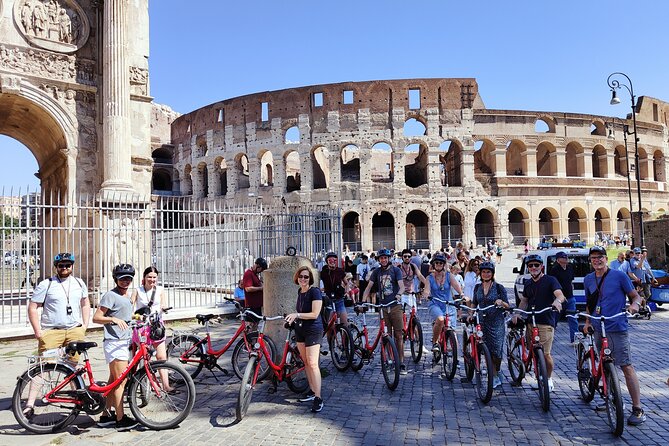
One of the best fast ways to get oriented in Rome. This small-group bike tour moves you through big-ticket sights and lesser-known corners, from the Jewish Ghetto to Trevi Fountain and Forum-area ruins. It is a good sampler of Rome’s layers, with guide storytelling designed to make you see the city like it is not just postcard views.
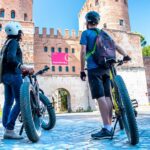
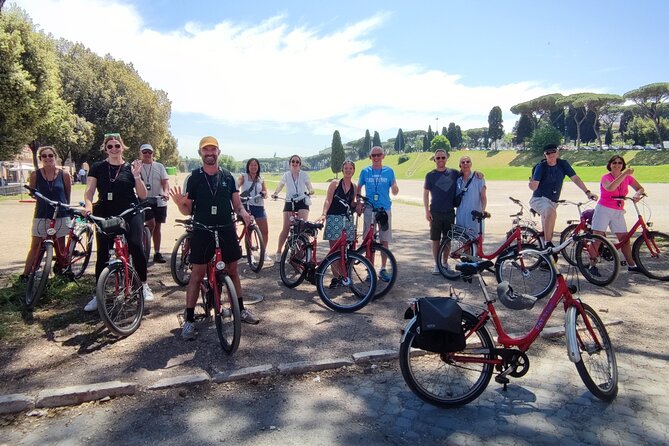
I really like the practical setup: you pick a bike that fits your pace, you get a helmet plus a front pouch and back rack for your stuff, and you can keep valuables secure without juggling bags. Guides such as Daniele, Nico, Stefano, Marika, Elena, and Sahrah come up again and again for clear explanations and keeping the group together.
The one drawback to know upfront: Rome riding has cobbled, uneven streets and real traffic. If you are pregnant, uncomfortable with uneven ground, or sensitive to loud crowds, this might not feel like a relaxing stroll.
In This Review
- Quick take: what makes this Rome bike tour work
- From Via dei Delfini to Rome’s biggest hits in 3 hours
- Gear, bikes, and the practical stuff that keeps the day easy
- Antico Quartiere Ebraico: the Jewish Ghetto of Rome, explained at street level
- Campo de’ Fiori, Piazza Navona, and the Pantheon zone: power, crowds, and geometry
- Sant’Ignazio di Loyola and Tempio di Adriano: outside views that still teach
- Trevi Fountain: why it is famous, and how the tour prevents second-guessing
- Forum-area stops: Trajan’s Forum and Piazza Venezia for the big picture
- Constantine and Circus Maximus: turning ruins into stories you can picture
- Riding in Rome: what to expect on cobbles, traffic, and stop timing
- Price and value: why this tour is a fair deal
- Who should book this Rome highlights bike tour?
- Should you book it or keep shopping?
- FAQ
- How long is the bike tour?
- What does the tour cost?
- What language is the tour offered in?
- Where do we meet, and where does it end?
- What’s included in the price?
- Are drinks included?
- Is admission to the sights included?
- What are the age and child requirements?
- Who should avoid joining?
- What is the cancellation policy?
Quick take: what makes this Rome bike tour work
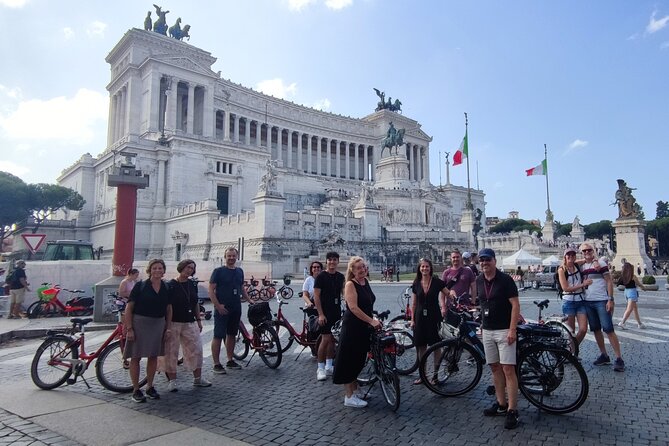
- Small group (max 14): easier pacing and more attention at stops
- Smart starter route: you get a first-time Rome overview in about 3 hours
- Stops with meaning: Jewish Ghetto origins, Pantheon context, Roman power centers
- Photo-friendly timing: short stops plus moments to look around and take pictures
- Convenient gear: helmet and built-in storage so hands stay free
- Safety focus in traffic: riders say they felt safe, even when streets got busy
From Via dei Delfini to Rome’s biggest hits in 3 hours
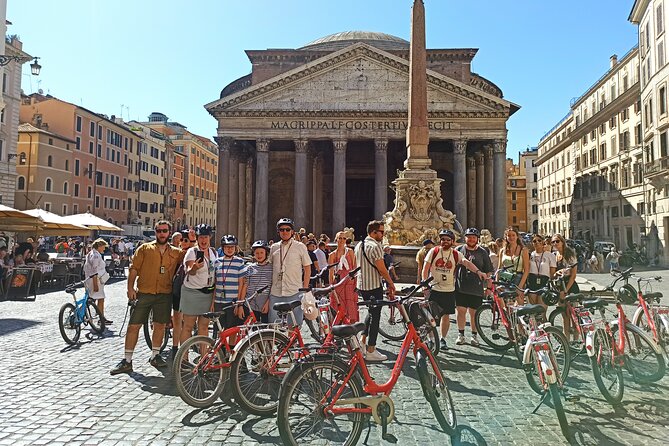
This tour is built for the moment you land in Rome and want a plan that does not require hours of map work. The meeting point is Via dei Delfini, 35, and the tour ends back there, so you do not need to worry about getting across the city afterward. Arrive about 15 minutes early. That buffer matters because the bike fitting and gear setup take a few minutes, and Rome starts feeling chaotic fast.
At roughly three hours, you are not trying to see everything. You are learning how Rome is laid out—ancient Rome, then Renaissance and Baroque, then the modern city shaping what you see today. And because it is a bike tour, the “getting between” part is handled for you. You should still expect some stop-and-go, since each sight gets a brief guided moment before you take over for photos and a quick look.
The other big reason this tour is a solid value: your ticket price includes the guide and the bike. You also get a helmet and the practical bike storage (front pouch and a rear rack setup). For many visitors, that alone saves time and hassle compared with piecing together bike rental, figuring out where to ride, and trying to coordinate all the stops yourself.
You can also read our reviews of more tours and experiences in Rome.
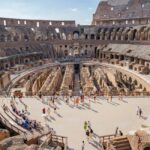
Gear, bikes, and the practical stuff that keeps the day easy
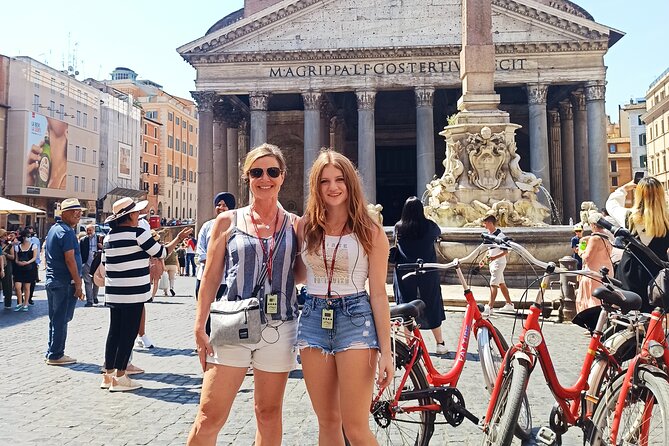
You get bike rental as part of the tour, and the operators encourage you to choose a bike that matches your pace and budget. That matters because Rome has uneven paving and some stretches can feel rough, even if the overall riding is described as mostly easy.
You also get a helmet plus a handy storage setup on the bike. You can stash your valuables in a bike bag and keep your hands free for railings, phones for photos, and the occasional moment you need both hands for balance over cobbles. Drinks are not included, so if you go in the heat, plan to buy water before you start or at a stop.
One small rider note to keep in mind: some people find it harder to hear through headsets while moving in louder spots. If you are the kind of person who hates missing details, do not tune out entirely—pause your attention for the guide moments, and treat the ride as the “transport” part rather than a lecture on the move.
Antico Quartiere Ebraico: the Jewish Ghetto of Rome, explained at street level
You start by riding into the Jewish Ghetto of Rome, a small neighborhood that often feels like a quieter secret compared with the surrounding tourist magnets. The guide frames it as one of the oldest ghetto areas in the world, second only to Venice’s, and explains how it was created in 1555 by order of Pope Paul IV.
What makes this stop click is the human detail: residents were required to live there and carry a distinctive sign of belonging to the Jewish community. You do not need a museum ticket to understand the weight of that history when you are standing in the neighborhood itself. It is a good reminder that Rome is not only monuments—it is also lived-in places with real stories behind the street.
Time here is short (about seven minutes with the ticket-free entry noted), so you are not expecting a long “deep study.” Instead, you get enough context to make the neighborhood feel legible as you ride past and later on your own.
Campo de’ Fiori, Piazza Navona, and the Pantheon zone: power, crowds, and geometry
After the Ghetto area, the tour sweeps into the center where tourists actually want to be. The route brings you through the Campo de’ Fiori area, and the guide paints the square as a day-and-night kind of place. During the day, it is known for market energy—flowers and fruit and vegetables. At night, terraces pull people back out. Even if you only catch a slice, it helps you understand why this part of Rome feels like a stage.
Then you hit Piazza Navona, one of the most dramatic Baroque squares in the city. Here, the key idea is the stadium underneath. The square’s shape traces the perimeter of Domitian’s stadium from 86 AD, built for athletics and horse racing. That “ancient outline still matters” detail is one of the best ways to learn Rome fast: you start seeing the ancient city grid and footprints hiding under newer buildings.
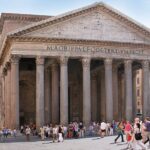
Pantheon is next, and this is where the tour really earns its reputation as a first-timer essential. The guide connects its design to the people who obsessed over lines and geometry for centuries. You also get the origin story: in 27 BC, Marcus Vipsanius Agrippa—close to Augustus—commissioned a temple in this area dedicated to “all the gods.” The important practical point: Pantheon admission is not included, so you’ll want to plan for that separately if you want to go inside.
A good strategy for this whole Navona–Pantheon area: come ready for crowds and noise. Even if your bike ride helps you skip some wandering, you’ll still be operating in a packed zone. The tour stops briefly so you can look, but you are not escaping the reality that the center is busy.
Sant’Ignazio di Loyola and Tempio di Adriano: outside views that still teach
Not every stop here is about walking into a building. Chiesa di Sant’Ignazio di Loyola is presented with a view and explanation from the outside, plus pictures. That approach can be great if you want context without committing extra time to entries and lines. You still get story and visual cues, which helps you recognize what you would otherwise miss.
Then you roll to Tempio di Adriano, a compact stop with big names attached. The guide talks about how Emperor Hadrian likely commissioned it, intended as a dedication to his wife Vibia Sabina, who was deified in 136 after her death. The works finished around 145 A.C., credited to Antoninus Pius, Hadrian’s successor.
Even if you are not an architecture nerd, this kind of stop does something useful. It shows how Roman monuments were tied directly to politics, family, and state religion. Standing near the structure makes that feel concrete, instead of like a textbook paragraph.

Trevi Fountain: why it is famous, and how the tour prevents second-guessing
The route reaches Trevi Fountain, and it is clear why it is the best known Roman fountain. The guide explains the practical ancient detail: the fountain is fed by the terminal part of the Vergine aqueduct, and it is the only ancient aqueduct that is continuously in use to this day. That is the sort of fact that turns a famous photo spot into an actual learning moment.
Trevi Fountain is also a place where you can waste time trying to fit it into your own plan. Getting there as part of a guided route saves you the stress. The stop is short, but that works if your goal is to get the iconic view, understand why it matters, then move on before you lose your afternoon to queue lines and slow-moving crowds.
It’s also a good reminder to bring patience for crowds. Trevi is busy in every season. A short guided moment can help you avoid wandering in circles while you try to find the best angle.
Forum-area stops: Trajan’s Forum and Piazza Venezia for the big picture
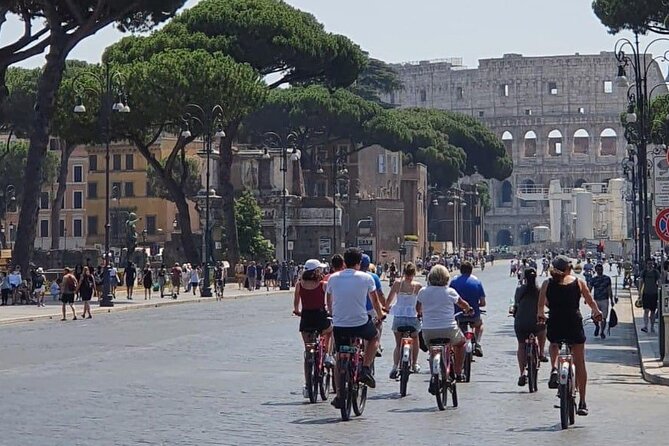
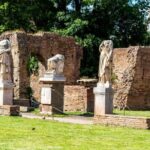
Next comes Trajan’s Forum, presented with views and explanation of the Imperial Forum area. This is a smart move on a bike tour because forums can look like “just ruins” if you do not have a guide connecting the pieces. With a brief orientation, you start to understand how the city expressed authority through architecture.
The tour then moves you to Piazza Venezia / Ancient City. Here the key detail is modern shaping ancient visibility: Piazza Venezia sits between Via del Corso and Via dei Fori Imperiali, and its current form comes from renovations carried out in the nineteenth and twentieth centuries, especially connected to the construction of the Monumento a Vittorio Emanuele II.
That detail matters because it shows you how Rome is never frozen. You are looking at layers—ancient foundations, later changes, and then modern monuments that still affect what you can see and where you feel the city opens up.
Constantine and Circus Maximus: turning ruins into stories you can picture
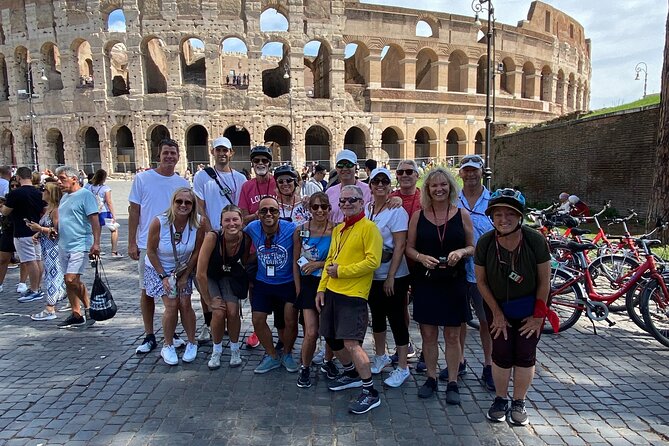
Two of the most dramatic “Roman power” stops finish the route.
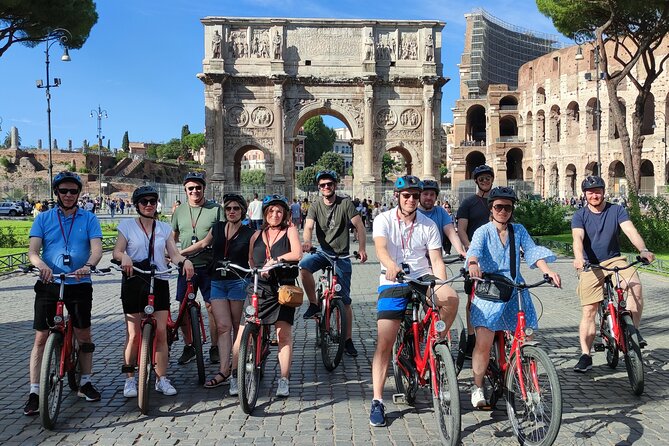
First is the Arch of Constantine, described as the largest honorary arch still standing. The guide connects it to the triumph route and explains the propaganda angle of the Constantinian era. You get the key date too: Constantine’s triumph over Maxentius happened on 28 October 312 A.D., and the arch celebrates that victory.
Then comes Circus Maximus, the largest public entertainment venue in antiquity, described with impressive scale: about 600 meters long and 140 meters wide. The guide also ties it to the city’s origins with a legend involving the Rape of the Sabine Women. You might not walk out with a full myth lecture, but you leave with a mental image of how big these spaces were—and how people lived close to monumental venues.
By the end, the route feels like a full-circle lesson in Rome’s timeline: early neighborhood life, classical monuments, imperial messaging, and the huge public spaces where crowds gathered.
Riding in Rome: what to expect on cobbles, traffic, and stop timing
The tour is designed to feel manageable. Rome is often described as flat, and many riders say the pedal effort is light. But do not confuse “flat” with “smooth.” Cobbled streets mean your tires and your feet will feel uneven pavement. The tour provider explicitly discourages pregnant women from joining due to cobbled streets, which tells you this is not just a gentle sidewalk cruise.
Traffic is another reality. Rome streets can be tight, and cars and scooters share the space. Riders who mention safety often point out that the guide keeps the group together and stays alert. Still, keep your own eyes open. If you are nervous about riding in dense traffic, you may find it stressful even with a good guide.
Timing is short at each stop—often around five to fifteen minutes, depending on the site. Some stops give extra breathing room for photos or a quick wander, but overall the pacing is built around covering a lot without wearing you out. If you want to spend longer inside museums or linger for hours at one monument, plan to come back later. This tour is for getting your bearings and building a short list of what deserves a second visit.
A note on comfort: wear shoes that can handle rough paving. Even if you are not “hiking,” you are still bouncing a bit. And if you are sensitive to sun, go prepared with hats and sunscreen. Weather-wise, the guidance is simple: dress for heat or cold, bring waterproof clothing if rain is expected, and consider gloves or a scarf in winter.
Price and value: why this tour is a fair deal
At $54.44 per person for about three hours, the value is in what’s included. You get:
- a local guide
- bike rental
- helmet
- front bike pouch and back rack
You are not paying separately for the bike, and you are not paying someone to give you route planning. For many first-time visitors, that makes this a cost-effective way to see a high concentration of major sights in one go.
The one thing not included is drinks. That is normal for tours like this, but it matters in Rome’s heat. If you skip water, the day can feel harder than it needs to.
Also, the tour is capped at 14 travelers, which usually means you spend less time waiting and more time looking. That is a value point you can feel, especially around crowded sights like Piazza Navona and Trevi.
Who should book this Rome highlights bike tour?
This is a strong fit if you:
- are in Rome for the first time and want a fast orientation
- like a mix of major icons and a meaningful neighborhood stop (the Jewish Ghetto)
- want guided context without spending half a day in one museum
- can comfortably ride a bike in a group and handle uneven surfaces
It may not be the best fit if:
- you are pregnant or not comfortable on cobbled streets
- you are easily overwhelmed by crowds and noise in central Rome
- you want long, in-depth time inside major sites like Pantheon (since entry is not included)
If you’re traveling with kids, the tour does welcome them, but they should already be riding for a while, be comfortable on different surfaces, and you should share children’s height so the right size is reserved. Under 18 must be accompanied by an adult.
Should you book it or keep shopping?
Yes, if you want the smart first step in Rome. This route hits the kind of landmarks you would otherwise struggle to sequence efficiently, and it adds enough context to make them more than photos. The small-group size helps keep things friendly, and the included bike gear makes it easy to travel light.
I would hesitate if cobblestones make you nervous, if you can’t handle traffic, or if you are expecting a slow, immersive walk-through at each site. This is a “see, learn, and move” tour.
If you can, pick a quieter time of day when possible. One rider warned about a Friday evening ride getting crowded, with slick cobbles contributing to an uncomfortable moment. In other words: choose your timing like you choose your shoes.
FAQ
How long is the bike tour?
The tour is about 3 hours.
What does the tour cost?
The price is $54.44 per person.
What language is the tour offered in?
The tour is offered in English.
Where do we meet, and where does it end?
You meet at Via dei Delfini, 35, 00186 Roma RM, Italy, and the tour ends back at the same meeting point.
What’s included in the price?
Included are the local tour guide, bike rental, helmet, and a front bike pouch with a back rack.
Are drinks included?
No, drinks are not included.
Is admission to the sights included?
Some stops list free admission tickets, while others do not include admission (for example Piazza Navona, Pantheon, and Chiesa di Sant’Ignazio di Loyola). Tempio di Adriano and Trevi Fountain are listed as free admission stops.
What are the age and child requirements?
Kids are welcome if they have been riding for a while, can handle group riding on various surfaces, and you provide their height to reserve the right bike size. Anyone under 18 must be accompanied by an adult.
Who should avoid joining?
Pregnant women are strongly discouraged due to cobbled streets.
What is the cancellation policy?
You can cancel for a full refund up to 24 hours in advance of the experience start time. If you cancel less than 24 hours before, the amount paid is not refunded.