REVIEW · ROME
Imperial Rome and External Colosseum Tour
Book on Viator →Operated by RomaTourGratis · Bookable on Viator
Rome’s power centers in one walk.
This tour strings together the big imperial names—Julio César, Augusto Octavio, and Trajano—through the streets tied to the Roman Empire’s rise, starting right at the Colosseum and working toward Campidoglio. I like that it’s built for a practical introduction: it runs about 2 hours 30 minutes, keeps the group small (max 15), and uses a mobile ticket so you’re not fumbling for paperwork.
Two things I especially appreciate: first, the route is organized around the places named for the rulers themselves, so the story feels like it moves forward instead of being random sightseeing. Second, it ends at the Capitol Square area on Piazza del Campidoglio, which is a strong final anchor point when you still want a good view and an easy place to continue your evening.
One possible drawback to plan for: Colosseum admission isn’t included (it notes an admission ticket is not included), and you also need to have your passport or ID that matches the names used at booking. If you’re not ready with your documents, you can lose time at the entry checkpoint.
In This Review
- Key Highlights That Make This Tour Worth Your Time
- A 4:30 PM Schedule That Helps You See Rome Without Rushing
- Colosseum Front Door: Flavio’s Arena and the Start of the Story
- Moving Through the Imperial Forum Road: Nerva, Augustus, Caesar, Trajan
- Trajan’s Column and Markets: Where the Story Gets Visual
- Venice Square and the Vittorio Emanuele Monument: A Different Kind of Rome
- Capitoline Hill and Campidoglio: The Wolf and the Finish Line
- Price and Value: What $17.44 Really Buys You
- Logistics You’ll Want to Get Right (Mobile Ticket and Name Matching)
- Who This Tour Fits Best (And Who Might Skip It)
- FAQ
- How long is the Imperial Rome and External Colosseum Tour?
- What is the price per person?
- When does the tour start and where does it end?
- Is the Colosseum admission ticket included?
- Is there a mobile ticket?
- What documents do I need for entry?
- Should You Book This Imperial Rome Tour?
Key Highlights That Make This Tour Worth Your Time
- Emperor-focused route with named stops tied to Julio César, Augusto Octavio, and Trajano
- Colosseum plus the Imperial Forum Road so you don’t just see one monument
- A compact 2h 30m walk that works well as an intro to Rome’s layout
- Capitoline finish at Piazza del Campidoglio, ending near iconic sightlines
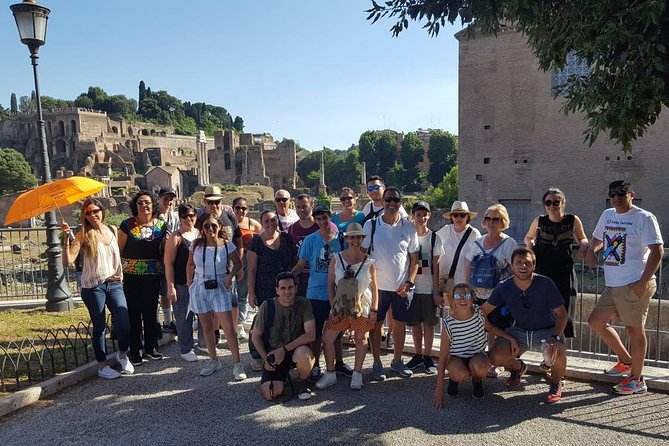
- Small group size (max 15) for a more relaxed pace
- Mobile ticket makes last-minute logistics simpler than paper-only tours
A 4:30 PM Schedule That Helps You See Rome Without Rushing
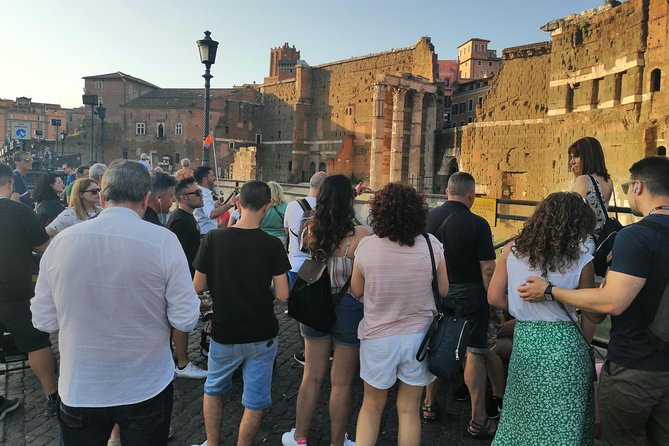
Starting at 4:30 pm is smart, especially if you’re trying to get into the city’s major highlights without losing your whole day. This kind of timing matters in Rome because you’ll walk through areas that can feel overwhelming if you’re trying to connect everything on your own. With the tour’s set path, you get order fast.
I also like the total length: about 2 hours 30 minutes is long enough to feel like you gained something, but short enough that you can still enjoy dinner plans afterward. And because it’s capped at 15 people, you’re less likely to feel swallowed by a crowd.
It’s also a good pick if you like a guided story told through actual places. The theme here isn’t just monuments for photos—it’s how intrigue and power shaped Rome, with stops designed to follow that idea along the Imperial Forum Road. You’ll get a sense of how these sites relate to each other spatially, not just historically.
You can also read our reviews of more tours and experiences in Rome.

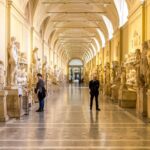
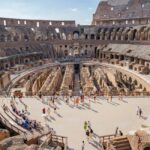
Colosseum Front Door: Flavio’s Arena and the Start of the Story
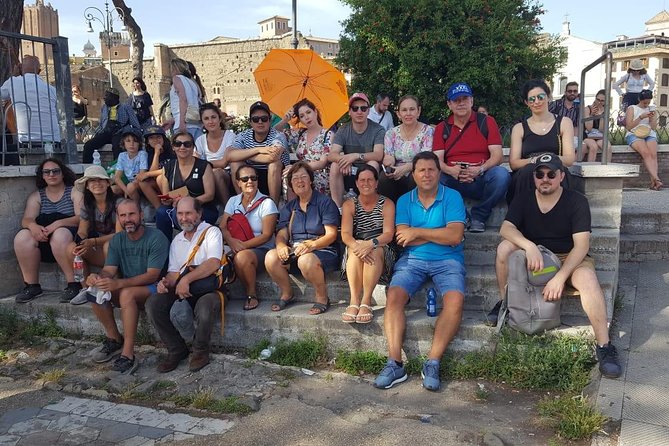
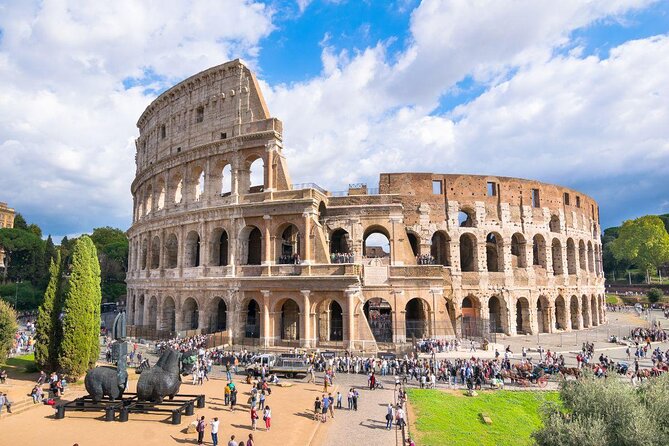
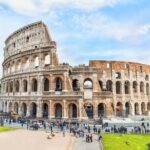
The tour kicks off at Colosseo (the Colosseum), introduced as the Flavio Antitheater. That framing is useful because it nudges you to look beyond the famous outer shell and toward the bigger question: why this site mattered so much for Roman public life and imperial messaging.
Right away, you’ll be oriented around what comes next. Even if you’ve seen pictures of the Colosseum a thousand times, seeing it as the first stop in a connected route changes how you process it. It’s not just a standalone attraction; it becomes the gateway to the imperial sites you’ll see afterward.
One important practical note: admission isn’t included. The tour indicates 10 minutes • Admission Ticket Not Included, so you should assume you’ll need an entry ticket separately for the Colosseum/Roman Forum area experience. It’s usually better to treat the price you pay for the tour as the guide + route value, not as a complete all-in ticket package.
Moving Through the Imperial Forum Road: Nerva, Augustus, Caesar, Trajan
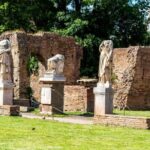
After the Colosseum, the route focuses on the Imperial Forum Road, which is basically the connective spine of imperial Rome. The names alone tell you what to expect: Nerva Forum, Augusto Forum, Julio César Forum, and Trajano Forum. This is the kind of itinerary where the title of each stop matters, because the tour is using those place-names to keep the story tied to specific rulers.
I love this approach for first-timers. When you’re standing in Rome with lots of ruins spread out, it’s easy to see “old stuff” without getting meaning. Here, the route is built to make you look for links: who these spaces were associated with, and how the sequence of forums helps you understand that Rome’s power didn’t come from one emperor—it layered over time.
You’ll also see the Trajano Markets, the Trajano Column, and the broader forum area elements grouped around Trajan’s presence. The practical upside is that you’re not hopping randomly between far-flung points. You’re walking a line that makes the city’s history easier to organize in your head.
A small consideration: the tour’s success depends on your readiness at entry points. The experience requires matching names on your ID/passport, and without that you can lose access to the Colosseum and Roman Forum portions.
Trajan’s Column and Markets: Where the Story Gets Visual
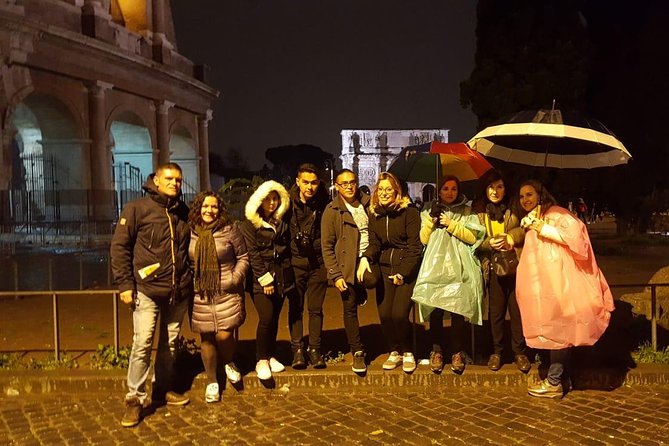
Two stops that help the tour feel concrete are Trajan Markets and the Trajan Column. Even if you’re not chasing technical details, the combo works because it shows how imperial influence could be both monumental and integrated into daily Rome.
This is one of those Rome moments where the scenery can do more than you expect. When sites are placed in sequence—forum, markets, column—it’s easier to connect the idea of empire to the visible results: architecture, public space, and a kind of messaging you can spot even as a visitor.
The tour also includes Nerva Forum and Augusto Forum before you reach the Trajan-heavy parts. That matters because it gives you a broader sweep of emperors rather than putting everything on one ruler. If you like seeing how one empire evolves instead of freezing in one peak moment, this route style fits.
Venice Square and the Vittorio Emanuele Monument: A Different Kind of Rome
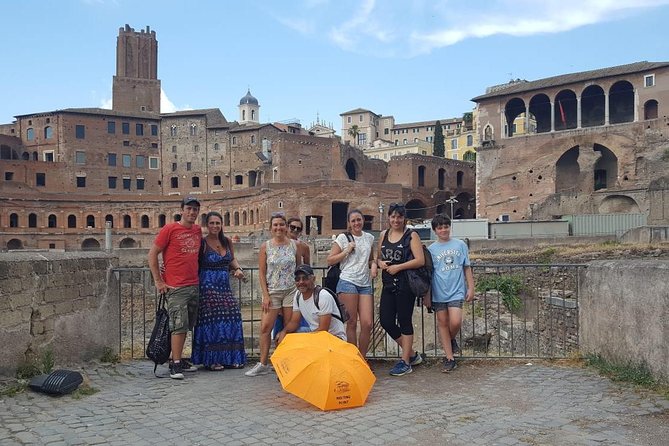
From the forum-side sites, the tour heads to Venice Plaza, tying the stop to its importance in Fascism and to the monument to Vittorio Emanuele. This is a notable contrast: after walking through imperial Rome’s ancient power, you’re also looking at how later regimes used monuments and big public spaces to project authority.
I like that this tour doesn’t pretend every “Rome monument” story is the same. You still get a coherent walk, but the meaning of what you’re looking at shifts. It helps you practice reading the city instead of just admiring it.
If you care about how political messages travel through time, this stop is a good reality check. Rome isn’t only a museum of antiquity; it’s a city where power has been staged through stone and symbols long after the ancient world.

Capitoline Hill and Campidoglio: The Wolf and the Finish Line
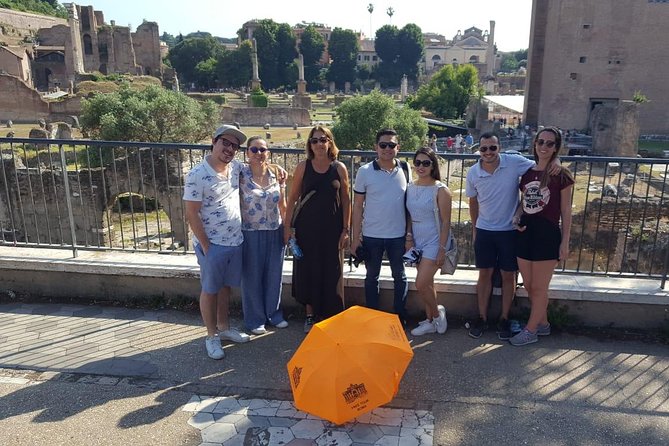
The walk culminates at Capitoline Hill and then reaches El Campidoglio, specifically the Plaza designed by Miguel Ángel Buonarroti. Ending here is smart because it gives you a strong “finish platform.” You’re not wandering into the night without a clear final landmark.
The tour also highlights the famous Loba feeding Romulo and Remo—that symbolic image is one of the fastest ways for many visitors to understand why this area became central in the story of Rome’s origins. Even if you only know the idea in passing, seeing it at the end of a walk about emperors makes the whole experience feel more rounded: you go from imperial rule to Rome’s identity stories.
Practical tip for your post-tour plan: because the tour ends at Piazza del Campidoglio (near the Capitol Square), it’s an easier place to orient yourself and choose where to eat or wander next. You’ll feel like you finished somewhere meaningful, not just somewhere convenient.
Price and Value: What $17.44 Really Buys You
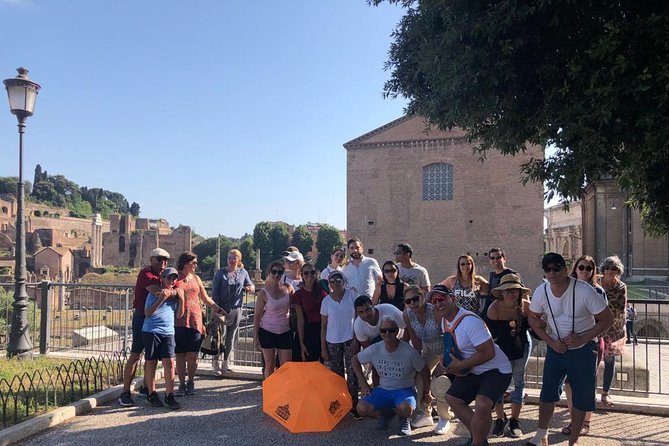
The listed price is $17.44 per person, and that’s honestly the biggest reason I’d consider this tour even if you’re comparing options. In a city where guided experiences can cost far more, paying a modest amount for a route built around major sites can be a good deal—especially when the group is small.
But there’s a catch you should budget for: Colosseum admission isn’t included. So treat the tour price as what you’re paying for the guide and the walking route/story, not the full entry cost. If you want a clean, stress-free day, set aside money for the entry tickets you’ll still need for the Colosseum/Roman Forum experience.
Also, the tour averages being booked about 18 days in advance. That’s a hint that people plan this as a “key first Rome walk.” If your schedule is tight, I’d book earlier rather than waiting for last-minute availability.
Logistics You’ll Want to Get Right (Mobile Ticket and Name Matching)
This tour uses a mobile ticket, which simplifies things the moment you reach the starting area. Still, the entry rules are strict: you must provide full names of all travelers when booking, and you must bring a valid passport or ID document that matches those names. If there’s a mismatch, entry to the Colosseum and Roman Forum can be denied.
So here’s my practical advice: double-check spelling exactly as it appears on your passport/ID. If you’re traveling with multiple people, build a habit of verifying names early. It’s the kind of small step that prevents a big headache right when you’re ready to see the sites.
The group size is maximum 15 travelers, and the tour notes that it’s near public transportation. Service animals are allowed. In plain terms: this is structured enough to be easy to join, but not so casual that you can ignore the required ID match rules.
Cancellation-wise, the experience is non-refundable and can’t be changed. It also requires a minimum number of travelers. If the minimum isn’t met, you should be offered another date or a full refund. Translation: plan with care, because flexibility has limits.
Who This Tour Fits Best (And Who Might Skip It)
This is a strong fit if you’re:
- New to Rome and want an organized route through imperial landmarks
- Interested in a story centered on named emperors and how their presence shaped space
- Planning a late-afternoon window and want a complete arc that ends at Piazza del Campidoglio
It may not be ideal if:
- You’re the type who hates ticket prep and prefers fully all-inclusive experiences
- You’re traveling with names that might be hard to match exactly to IDs (for example, last-minute spelling changes)
Because it’s capped at 15 people and lasts about 2.5 hours, it also works well when you want guidance without turning the day into a marathon.
FAQ
How long is the Imperial Rome and External Colosseum Tour?
It runs for about 2 hours 30 minutes (approx.).
What is the price per person?
The price is $17.44 per person.
When does the tour start and where does it end?
It starts at 4:30 pm at Colosseo (Colosseo00184, Rome) and ends at Piazza del Campidoglio (00186 Roma).
Is the Colosseum admission ticket included?
No. The tour notes that the admission ticket is not included.
Is there a mobile ticket?
Yes. The tour uses a mobile ticket.
What documents do I need for entry?
You need a valid passport or ID document that matches the full names provided at booking for successful entry to the Colosseum and Roman Forum.
Should You Book This Imperial Rome Tour?
If you want a focused, affordable way to connect Rome’s imperial highlights into one walk, I think this is a smart booking. Just be ready for the one big add-on: you’ll still need the Colosseum/Roman Forum admission ticket, and you should double-check ID name matching before you go. If you can handle that, the route structure and small group size make the time feel worth it.