REVIEW · LECCE
Lecce: City Highlights Guided Tour by Rickshaw
Book on GetYourGuide →Operated by Velo Service Lecce · Bookable on GetYourGuide
Lecce is made for slow gawking, and this tour nails it. Riding an electric rickshaw lets you cover big sights without wearing yourself out, while a guide connects the dots between eras of Apulia’s baroque city. I particularly love the easy wayfinding—you get oriented fast—and the comfort of sitting back while the guide does the storytelling. A small drawback: at the one-hour mark, the pace can feel a bit tight, so if you like lingering, aim for the longer option.
What makes it extra fun is how the rickshaw slips through the Old Town’s practical reality: narrow lanes, photo stops, and real street life next to major landmarks. Guides in recent rides have included Matteo, Flore, Francesca, and Antonio, and their humor and local pride show up in the explanations. One more consideration: church entry fees aren’t included, so if you plan to go inside more than the tour covers, expect a few extra euros.
In This Review
- Key highlights to look for
- Why a rickshaw works so well in Lecce
- Start at Velo Service and get your bearings fast
- Piazza del Duomo: Lecce’s baroque showpiece in motion
- Porta Napoli: the monumental entrance that tells a story
- Basilica of Santa Croce: baroque sculpture you can’t ignore
- Piazza Sant’Oronzo and the Roman amphitheater connection
- Roman Amphitheatre of Lecce: old structure, new surroundings
- How long is long enough? Choosing 1 to 3 hours
- Price and value: is $77 worth it?
- Guides matter: what the best rides sound like
- Food and breaks: when local treats fit the route
- Who this tour suits best (and who should think twice)
- Practical tips so you enjoy the ride
- Should you book this tour in Lecce?
- FAQ
- How long does the Lecce rickshaw tour take?
- Where do I meet for the tour?
- Is the tour private or shared?
- What languages are available?
- What’s included in the price?
- Are church entry fees included?
- What should I expect to see during the tour?
- Is there a minimum number of people required?
Key highlights to look for
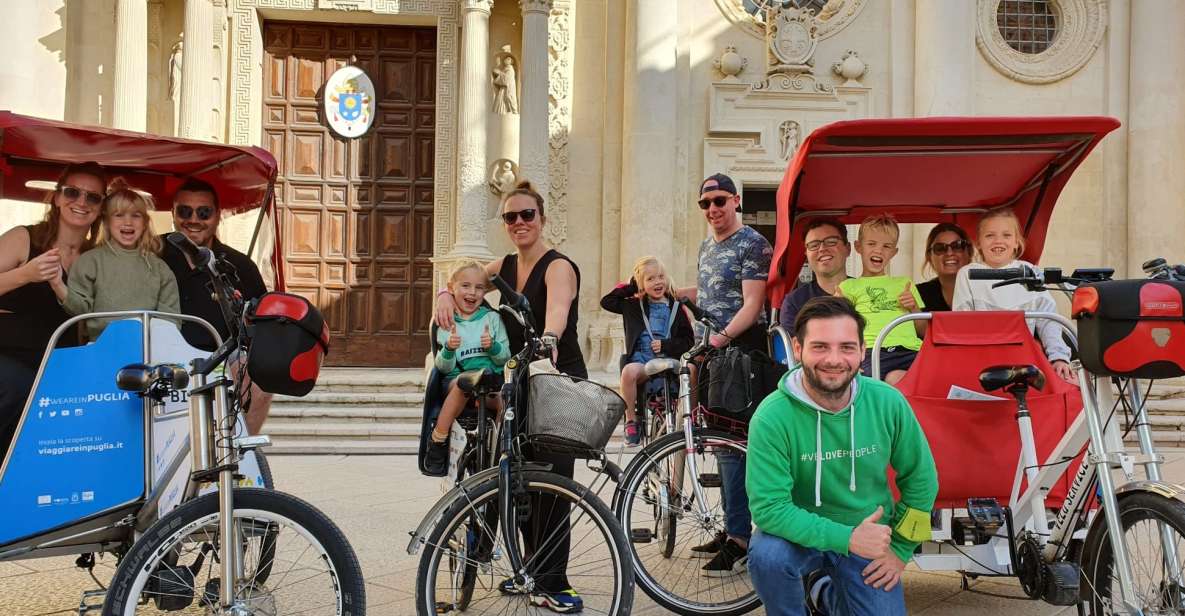
- Electric rickshaw comfort in summer heat, driven by your guide
- Major Lecce sights, tightly grouped, so you don’t waste time zigzagging
- Baroque details you’ll actually notice, explained with stories and anecdotes
- Old Town alleys and local faces, not just monuments behind ropes
- Helpful stop rhythm, including frequent photo moments
- Optional food breaks may appear, like ice cream or local coffee, depending on the guide and timing
Why a rickshaw works so well in Lecce
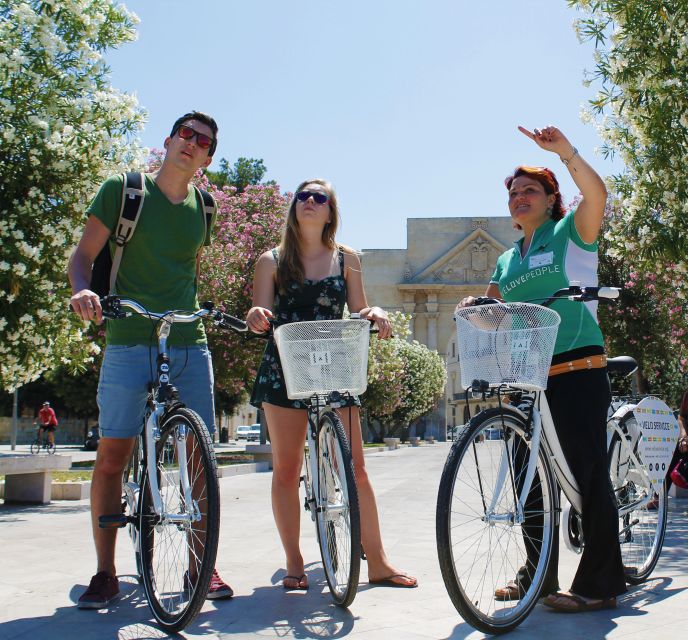
Lecce rewards you for paying attention. The facades look like they’ve been carved with a grin—flowers, faces, curls, and patterns that turn ordinary walls into a whole conversation. The problem is that the city also asks for your legs. Streets are compact, walking adds up quickly, and the sun can be rude in Apulia.
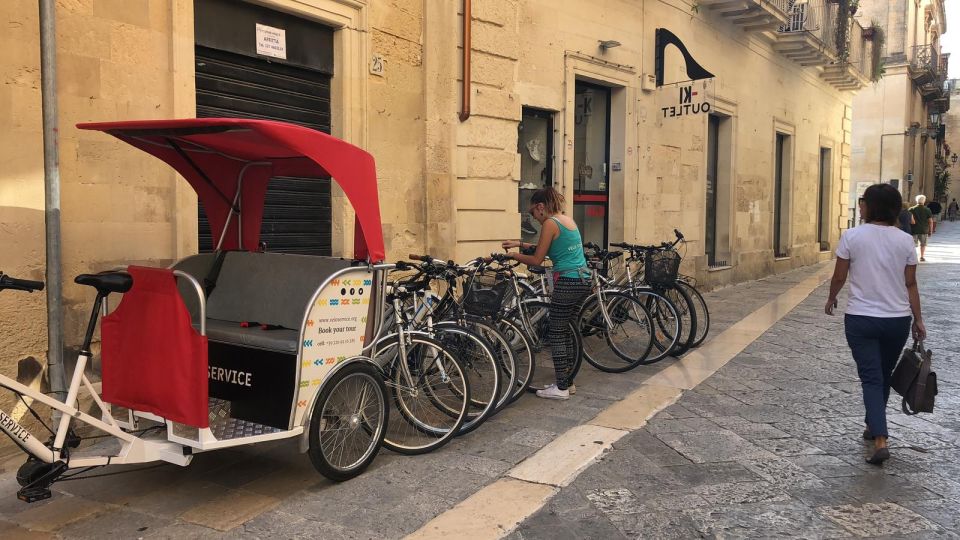
That’s where the rickshaw shines. You stay seated. You keep your energy for looking closely instead of marching between stops. And because the rickshaw is electric and driven by the guide, the whole experience feels guided end-to-end: you’re not hunting for tickets, maps, or directions every five minutes.
The ride also helps you see Lecce like a local does—moving through the old lanes at a pace that fits the city. A rickshaw is the kind of transport that naturally slows people down, and that’s exactly what baroque cities demand.
You can also read our reviews of more tours and experiences in Lecce.
Start at Velo Service and get your bearings fast
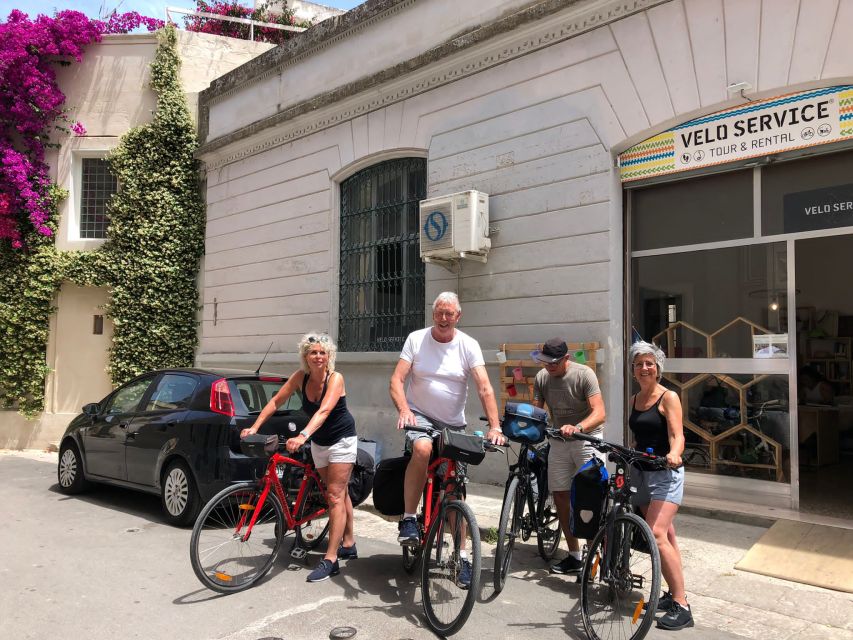
Your tour begins in the historic-center area with a pickup point at Velo Service Lecce (meet at the office at Vico de Argenteris, 16a). This matters more than it sounds. Lecce’s sights cluster, but they’re still spread out enough that arriving with a plan helps.
From the start, you’re not just “going to monuments.” You’re learning how the city is laid out—what came first, what got upgraded in the baroque era, and where Roman traces still pop up. I like this style of orientation because it changes how the next hour feels. Instead of random buildings, you start recognizing relationships: doorway to square, square to church, church to amphitheater leftovers.
Piazza del Duomo: Lecce’s baroque showpiece in motion
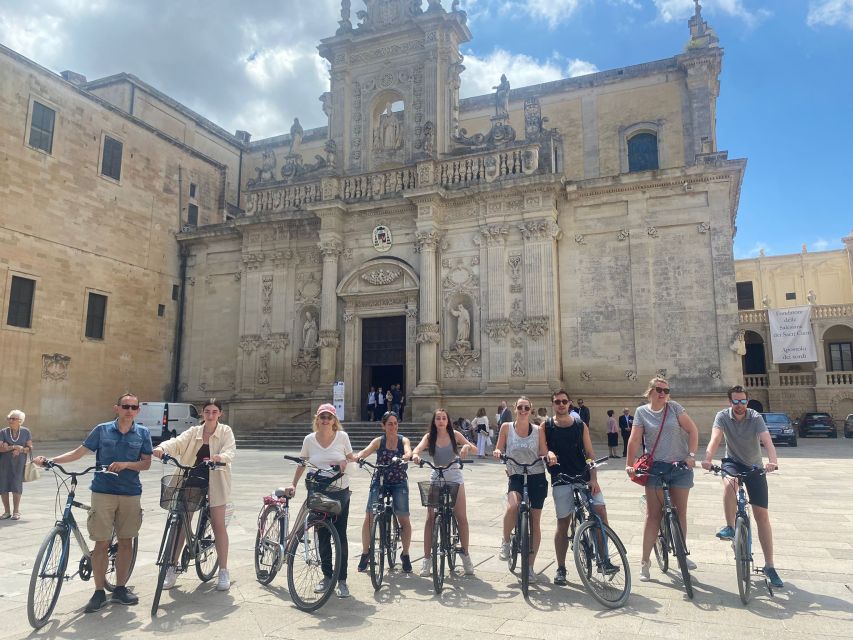
The tour’s first big anchor is Piazza del Duomo, one of Lecce’s most dramatic squares. This is where the city’s baroque identity goes into full performance mode. You get an efficient, guided introduction to the architecture without needing to manage the logistics of a self-guided walk.
What I like about this stop is the contrast. A square can look like one big postcard scene, but a good guide turns it into a lesson: why the design feels sculptural, how the baroque flourishes show civic pride, and how the city uses space to guide your attention. You’re not standing there trying to interpret stonework alone.
Practical note: this stop is great for photos, and the tour format typically includes frequent opportunities to pause and shoot. If you care about images, bring a phone strap or keep one hand free—because narrow lanes can still surprise you when you move on.
Porta Napoli: the monumental entrance that tells a story
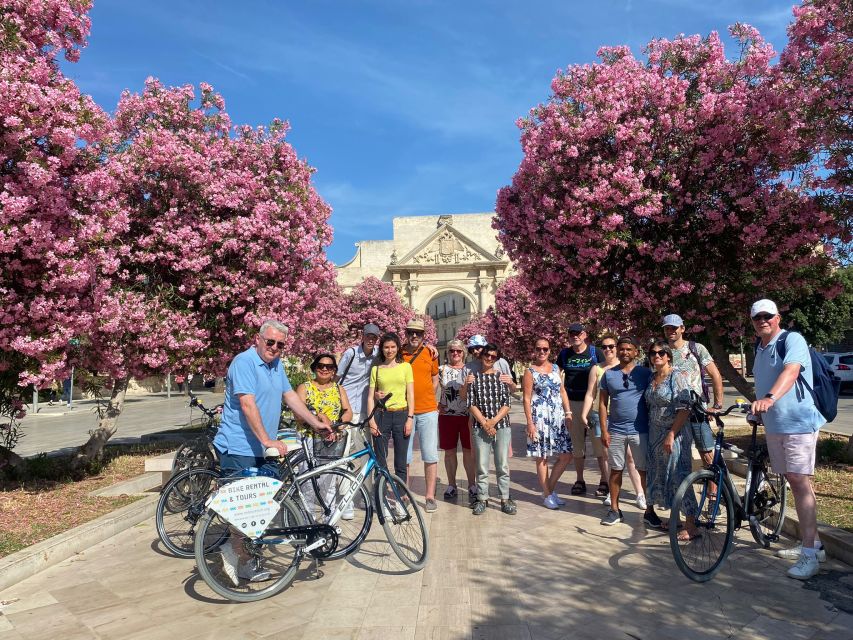
From the Duomo square, the route heads to Porta Napoli, the city’s monumental gateway. City gates often feel like background. Here, your guide frames it as a turning point. It’s not just an entrance; it’s a statement of power, trade, and city identity.
In a tour like this, the gate becomes a useful mental landmark. Once you understand it, you start seeing the city as layers rather than a single era. That’s one of the strengths of riding with a guide: you get a timeline in your head while you’re still outside in the street, not after you’ve gone back to your hotel.
Also, gates are good “breathing points.” They break up the experience between major squares and churches, and they give you a moment to reset before Santa Croce.
Basilica of Santa Croce: baroque sculpture you can’t ignore
The highlight stop for many people is the Church of the Holy Cross (Basilica di Santa Croce). This is where Lecce’s baroque style becomes physical. Instead of simple ornament, the stonework feels like it’s growing—textural, layered, and full of visual jokes and symbolism that a casual glance misses.
A strong guide turns Santa Croce into more than a name on your list. You’ll get explanations tied to the artistic development of baroque Lecce, so the details stop being random. That’s the payoff: you start noticing repeating motifs, how surfaces are used to create depth, and how baroque design pushes your eye across the facade.
One drawback to know: church entry fees aren’t included. The tour focuses on key gems and what you can see along the route, so if you want to go inside and spend more time with the interior, you’ll want to budget extra time and money.

Piazza Sant’Oronzo and the Roman amphitheater connection
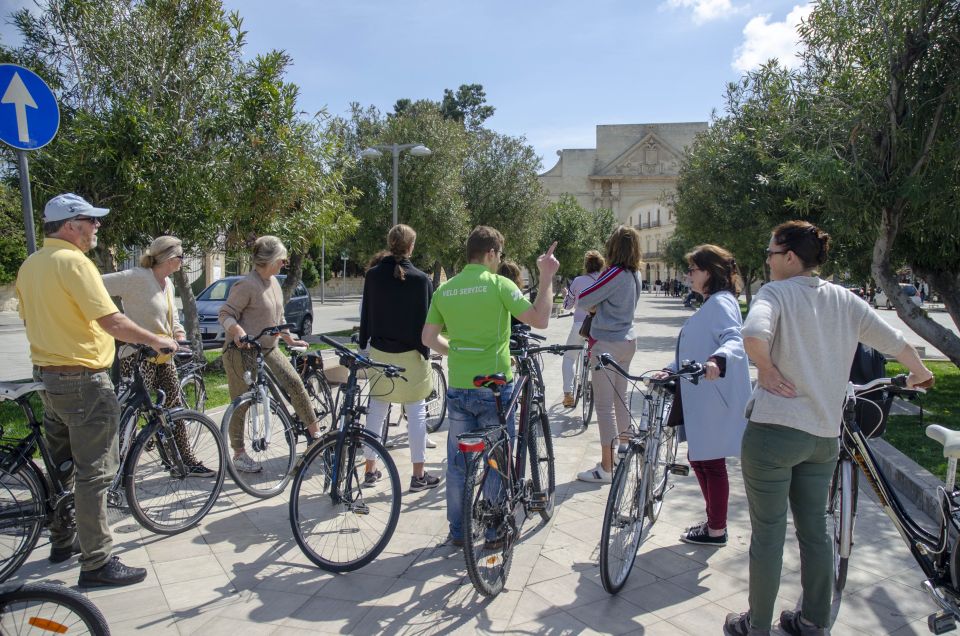
After Santa Croce, you head to Piazza Sant’Oronzo. This is another square where Lecce works like a storybook. Historic buildings and churches frame the space, and the tour uses the setting to connect the baroque era with older Roman remnants.
One of the more interesting parts is that you don’t just hear about the amphitheater as an abstract ruin. The tour ends in the same broader “area logic,” where Roman remains can feel like they’re peeking out from under later layers.
If you like city history, this is a good way to keep it concrete. You see the modern urban space, then you learn what’s underneath and around it. It’s less textbook, more street-level understanding.
Roman Amphitheatre of Lecce: old structure, new surroundings
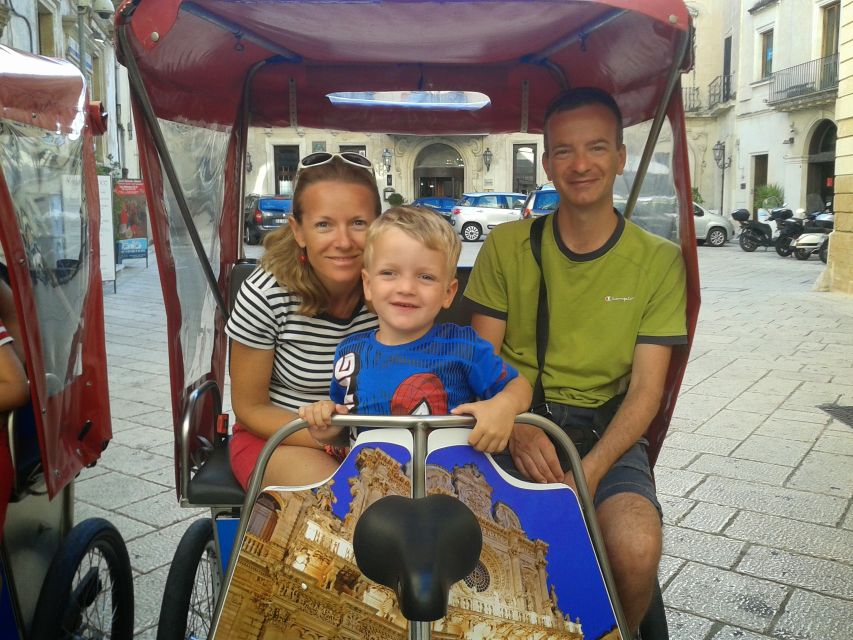
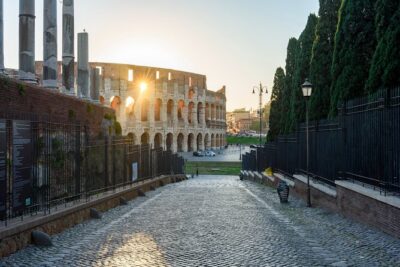
The final sightseeing stop is the Roman Amphitheatre of Lecce. It’s a strong finish because it shifts the tone. Baroque stonework is all about theatrical detail. A Roman amphitheater is built around function—space, sightlines, crowd energy—and it reminds you that Lecce’s importance didn’t start in the 1600s.
I like closing with this because it changes the way you remember everything you saw earlier. Instead of thinking the city is purely “baroque,” you remember it as a palimpsest: different eras built onto older ones, and the result is this distinctive Lecce blend.
Tip for photos: ruins can be bright and high-contrast. If your camera adjusts poorly to glare, try stepping slightly sideways for better light, and keep an eye on shadows from nearby structures.
How long is long enough? Choosing 1 to 3 hours
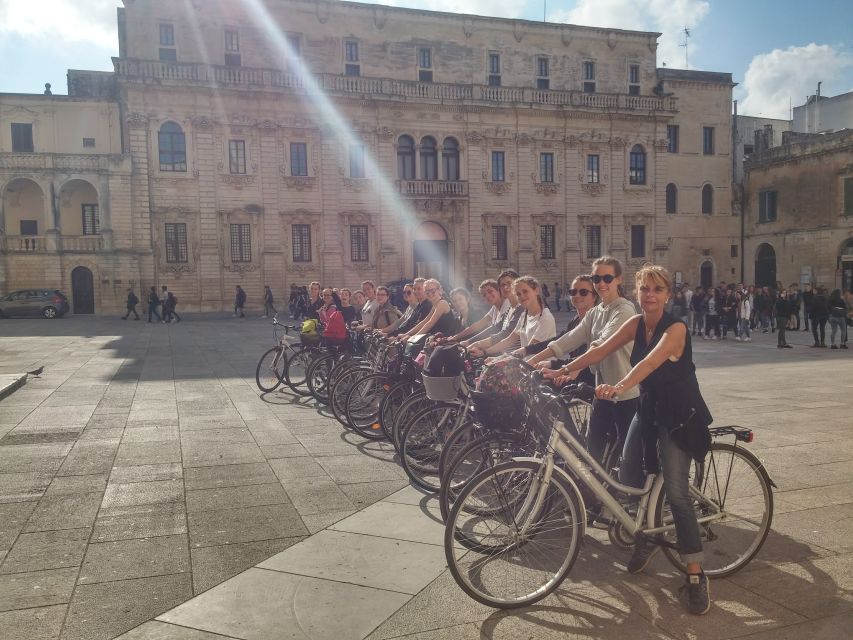
The activity runs 1 to 3 hours, and that range is real. In a shorter option, you’ll get the core monuments with less linger time. One review noted the 1-hour pace can feel a bit rushed, with less time at each site—so plan accordingly.
If you’re the kind of person who stops for one more photo, or you like asking questions, I recommend choosing more time. The rickshaw format helps you move fast, but you still need a few minutes to absorb each place. A longer slot also gives room for any extra breaks a guide may add.
Also think about heat. Multiple guides and riders mention how the rickshaw is a lifesaver in warm weather. Even if you’re fit, it’s hard to enjoy baroque stone when you’re sweating through your shirt. A seated ride helps you stay pleasant and present.
Price and value: is $77 worth it?
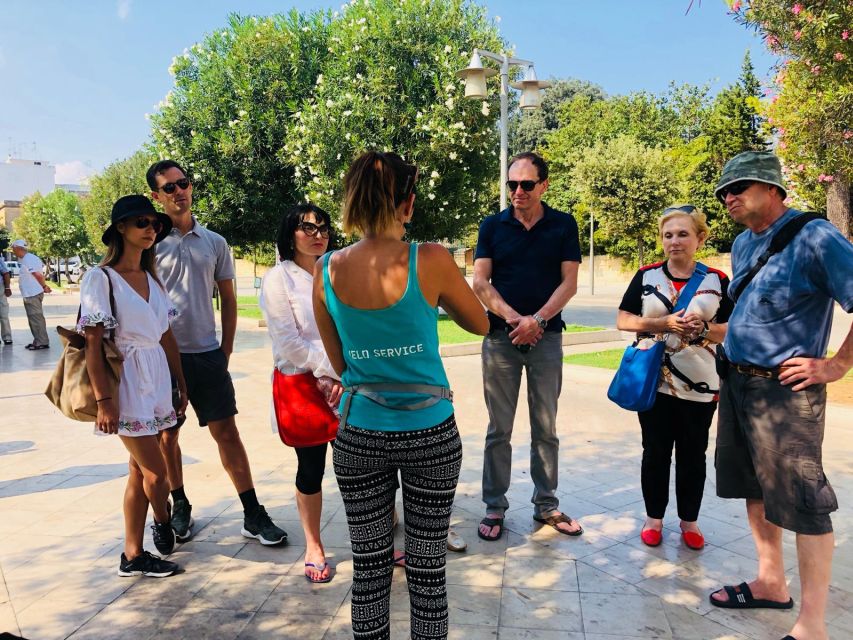
At $77 per person, this isn’t a budget “quick photo” activity. But it also isn’t just a ride. You’re paying for three things at once:
1) A live guide who explains what you’re looking at (not just where to go).
2) An electric rickshaw driven by the guide, so you’re not spending energy on logistics or route-finding.
3) A compact, efficient loop that hits major sights in a short span.
The value improves if you’re traveling with time pressure. If you only have a morning or afternoon in Lecce, this tour helps you see the big monuments without turning the day into a marathon. And if you’re staying in the historic area, you also avoid the “where do we start?” stress.
Where the price may feel less worth it is if you already know Lecce deeply and prefer to roam slowly on your own. A self-guided walk can still work. But if you want quick clarity—what to see, why it matters, and what details to look for—this is a practical spend.
Guides matter: what the best rides sound like
The quality of the tour hinges on the guide. Recent rides highlight a mix of traits that you should expect to feel: humor, personal anecdotes, and pride in local details.
Names that came up include Matteo and Mattias, described as outstanding with strong English and lots of interesting facts. Flore and Francesca were praised for friendly, passionate explanations. Antonio and Davide were also noted as easy to talk to with solid communication.
If your guide calls out a small detail in a facade—like why a particular pattern appears where it does—hang onto it. Those are the moments that make Lecce stick in your memory long after the tour ends.
One small note: there was a comment that amplifiers for commentary would have helped. That suggests you might want to position yourself well in the rickshaw, especially in louder streets or if wind carries sound away.
Food and breaks: when local treats fit the route
Several guides have added breaks that made the experience feel more like an outing than a strict checklist. Reviews mention an artisanal ice cream stop, as well as local coffee and pasticciotto. One ride even included almond milk alongside the coffee and cake.
Because food stops aren’t listed as a guaranteed included item, treat this as “often happens, depending on timing.” Still, it’s a good sign. A guide who knows when to pause can keep the tour from feeling like a sprint.
If you’re sensitive to missing meals, plan a snack or water bottle before the tour. The guided pacing can be efficient, but you’ll be grateful to have something on hand.
Who this tour suits best (and who should think twice)
This rickshaw tour is a great match if you:
- want major Lecce sights without the hassle of constant walking and navigation
- travel in hot weather and want comfort
- prefer your history tied to what you’re seeing in real time
- like tours where the guide talks with warmth and humor, not robotic recaps
It’s also ideal for mixed groups, including older travelers. One review specifically praised how guides helped elderly parents avoid heat and sun exposure, which is a big practical win.
Think twice if you:
- hate structured routes and would rather wander freely
- want long stays inside churches or museums beyond what’s covered
- need lots of time at each site and might feel rushed on the shorter 1-hour option
Practical tips so you enjoy the ride
A few simple prep moves will make the tour feel smoother:
- Pick a longer time slot if you’re a photo person or like asking questions.
- Bring water. Even with shade and seating, summer heat adds up.
- Wear shoes you can stand in quickly for photo stops—since you may step out briefly.
- Bring a light layer if you’re sensitive to AC afterward; rickshaws keep you cool enough during the ride, but you can still swing temperatures indoors.
- Plan for church fees if you decide to go inside more than the tour covers from the outside.
And if you get Matteo, Flore, Francesca, or another guide mentioned in reviews, treat it like a good conversation. The best value comes when you actually engage.
Should you book this tour in Lecce?
I’d book it if your goal is a smart, comfortable overview of Lecce’s top monuments with explanations that help you notice details. The electric rickshaw is a practical way to handle heat and narrow streets, and the route hits the city’s signature stops—Duomo square, Porta Napoli, Santa Croce, Piazza Sant’Oronzo, and the Roman amphitheater—without wasting time.
Skip it (or choose a longer, slower plan) if you’re the type who wants to spend an hour inside churches or you already have a deep self-guided plan. Otherwise, this tour is exactly what it promises: a fast, friendly way to understand why Lecce looks the way it does.
FAQ
How long does the Lecce rickshaw tour take?
The tour duration is flexible, ranging from 1 to 3 hours. Check available starting times for the option that best fits your schedule and how long you like to spend at each stop.
Where do I meet for the tour?
You meet at Velo Service Lecce, at Vico de Argenteris, 16a. There are car parks listed near the Velo Service office and the historic center.
Is the tour private or shared?
It can run as a private tour or in small groups, depending on your booking.
What languages are available?
Live guide tours are available in English, Italian, and Spanish.
What’s included in the price?
The tour includes a live guide and use of the electric rickshaw, driven by the guide.
Are church entry fees included?
No. Church entry fees are not included.
What should I expect to see during the tour?
You’ll pass and stop at key Lecce highlights such as Piazza del Duomo, Porta Napoli, the Basilica of Santa Croce (Church of the Holy Cross), Piazza Sant’Oronzo, and the Roman Amphitheatre of Lecce.
Is there a minimum number of people required?
Yes. A minimum of 2 adults is required to start the tour.